
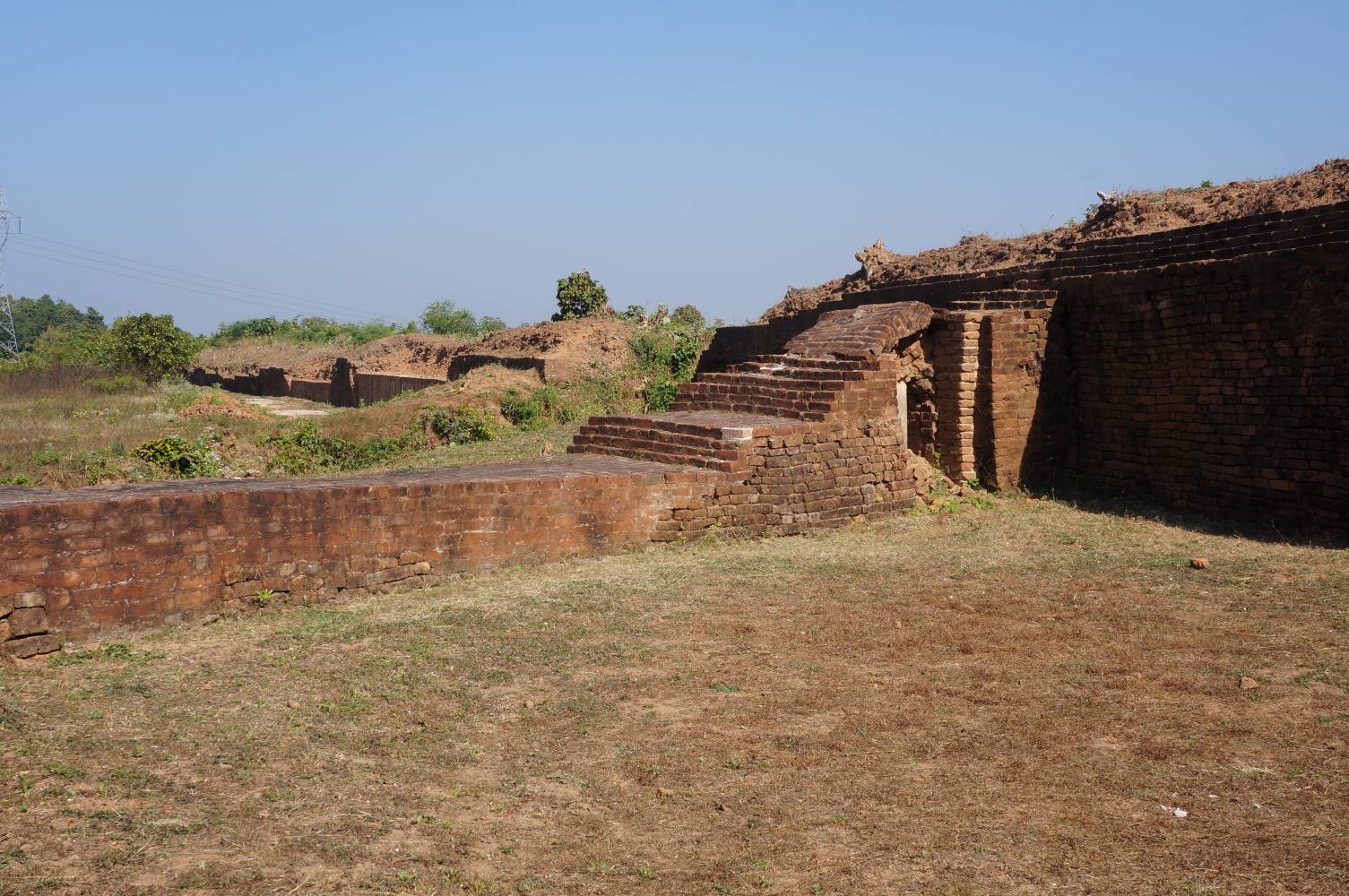
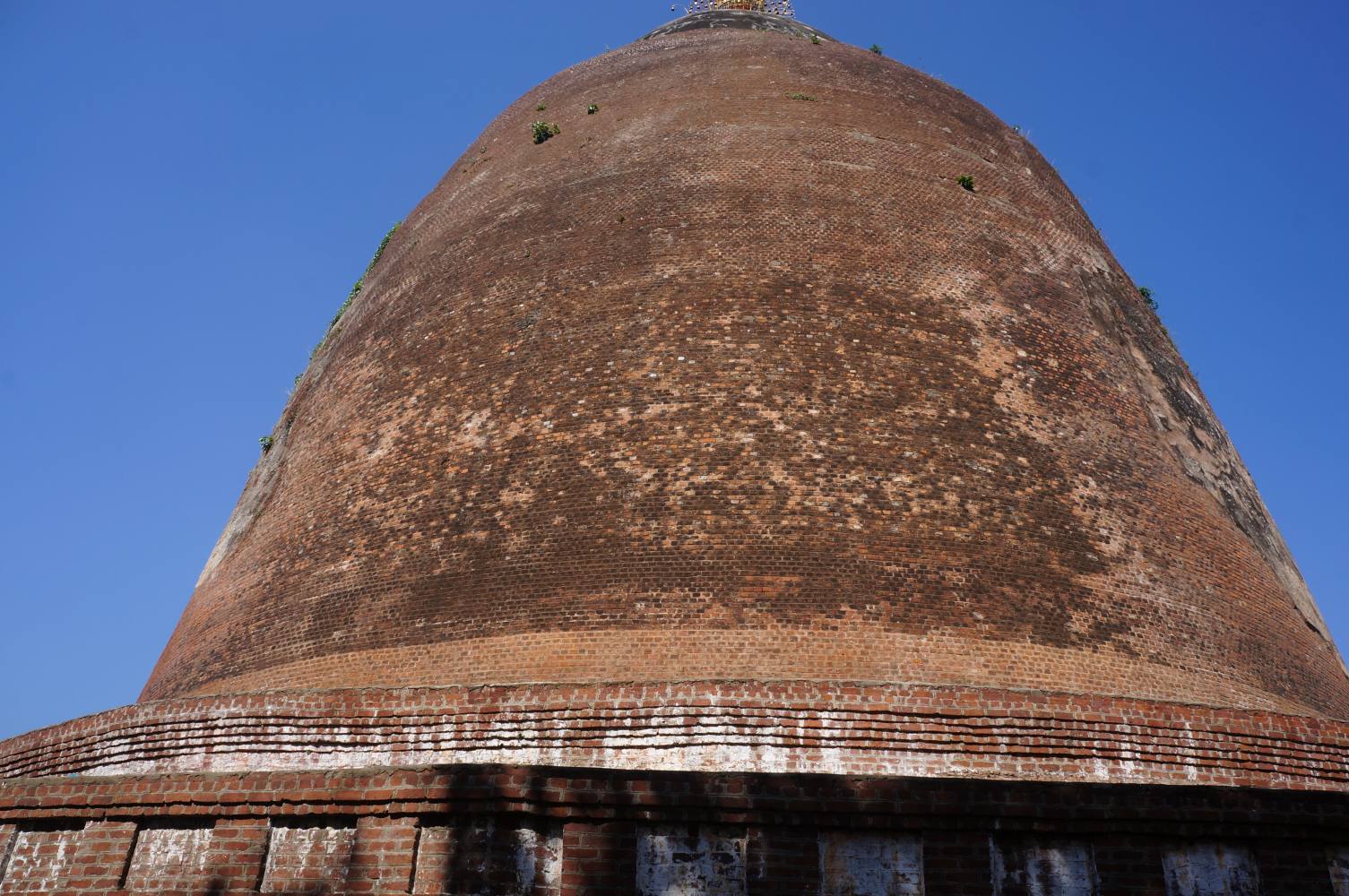
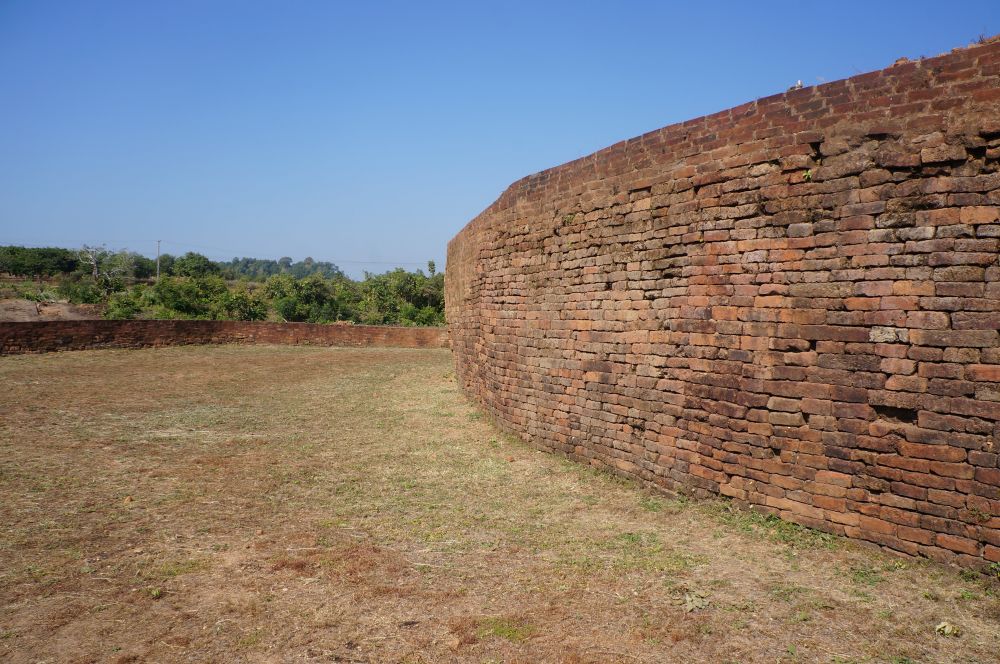
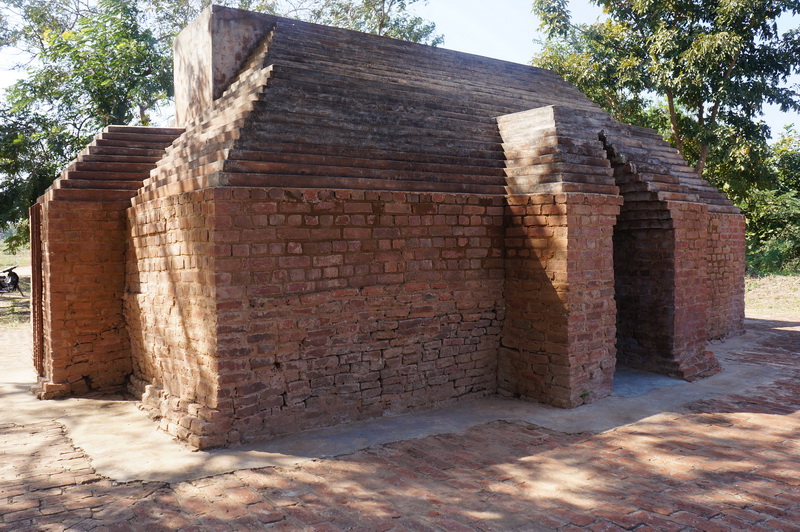
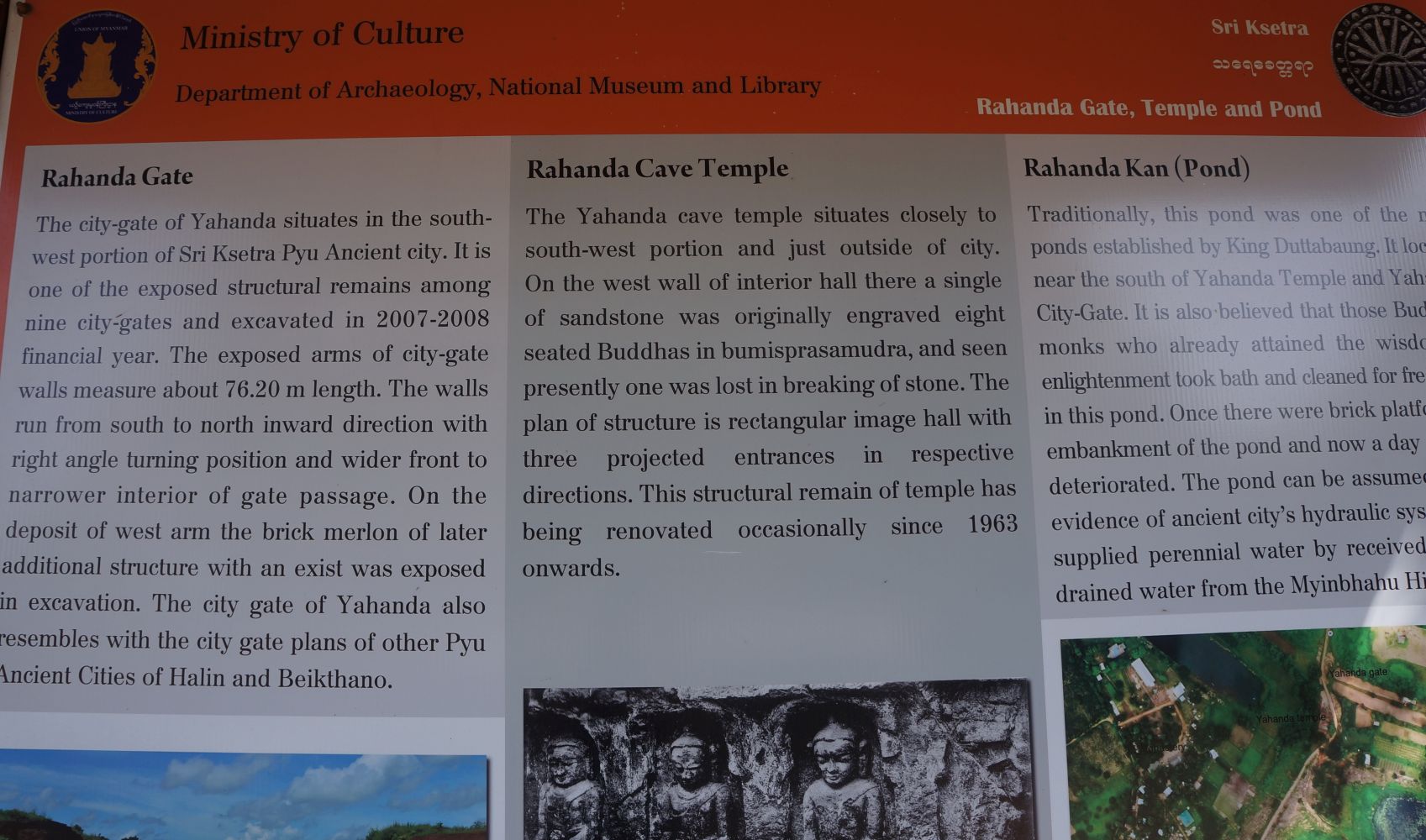
Pyu Site – Sri Ksetra Burmese Ancient City
References to the Pyu Site – Sri Ksetra Burmese Ancient City mentioned in the Manshu texts provide critical insight into the geopolitics of southwest China and the Nanzhao Kingdom during the Tang Dynasty era.
The preservation of the Manshu texts is highly fragmented following the loss of several sections during the fifteenth century. Eighteenth-century Chinese scholars undertook the task of reconstructing the Manshu texts by extracting surviving segments from secondary translation. The editors of these eighteenth-century compilations openly acknowledged that assembling the fragmented passages from disparate sources resulted in numerous textual errors and inaccuracies in the final consolidated version.
Professor Bhone Tint Kyaw of Yangon University presents an analysis of the Pyu references found within the Manshu texts. His paper challenges the established Manshu translations produced by Gordon H. Luce, the author of Old Burma, Early Pagan and a foundational scholar of first-millennium Burma.
Pyu Site – Sri Ksetra Burmese Ancient City
When evaluating Professor Bhone Tint Kyaw’s research, it is important to note that significant archaeological discoveries have occurred since Gordon H. Luce left Burma in 1964. Recent fieldwork by archaeologist Elizabeth Howard Moore and other scholars provides updated context on the Pyu period. For further reading, Moore’s research, (pdf can be downloaded through this link), The Pyu Landscape: Collected Articles, directly examines the complex links and relationships between the Pyu and the Nanzhao Kingdom.
Gordon H. Luce Author of Old Burma – Early Pagan
Born in 1889, Gordon H. Luce moved to Burma in 1912 to work as a lecturer in English literature at Government College, Yangon. He remained in this role until 1942, when the outbreak of World War II forced him and his wife to flee to India. He returned to his teaching position in 1946.
In 1964, the military regime forced Luce and many other foreign residents to leave the country. He spent the final fifteen years of his life in Jersey, where he died in 1979 at age 89.
Luce focused his career on early Burmese history, Buddhist art and iconography, and linguistics, producing highly cited books, maps, and photographic records. Following his death, the National Library of Australia acquired the Luce Collection in 1980, which comprises over 2,000 books alongside manuscripts stored across thirty-two boxes and twenty-two folios. His original, unpublished research, including personal transcriptions of Burmese inscriptions, is preserved at the SOAS University of London.
While Gordon H. Luce’s fifty-year tenure in Burma yielded pioneering contributions to the study of early regional history, recent scholarship provides a critical reassessment of his source material. Professor Bhone Tint Kyaw examines Luce’s heavy reliance on the ninth-century Manshu texts by Fan Chuo, a source Luce cited as his primary evidence for the Nanzhao destruction of the Pyu Kingdom in his publication “Old Kyaukse and the Coming of the Burmans“.
Pyu Kingdom in 832 AD.
Professor Bhone Tint Kyaw points out significant geographical discrepancies within the Manshu concerning Pyu territorial boundaries, suggesting that Luce’s dependent conclusions require correction. Furthermore, the Manshu texts accessible during Luce’s career were severely fragmented, with substantial portions missing. This preservation crisis left many mid-twentieth-century scholars struggling to extract accurate translations regarding the precise political relationship between the Nanzhao and Pyu realms.
The historical consensus established by Gordon H. Luce regarding the timeline of the Pyu collapse has faced scrutiny from contemporary scholars. While Luce’s paper, Old Kyaukse and the Coming of the Burmans, argued that the Nanzhao invasion of 832 CE caused the absolute destruction of the Pyu capital and left a total geopolitical vacuum, Professor Bhone Tint Kyaw questions this interpretation. By analyzing the original Man Shu sources, Bhone Tint Kyaw demonstrates that the Pyu population and state infrastructure survived the onslaught, directly contradicting Luce’s thesis of total destruction.
Bhone Tint Kyaw says that in the Manshu texts, there is no mention of the name of the town or the region which was besieged, and the texts did not mention that it was the Pyu capital, Pyu Garrison town, ordinary Pyu Town or the inner part of Pydor (?? possibly today’s Nay Pyi Taw) a town of other aboriginal tribes under Pyu or near the Pyu border. The names of the besieged places are unknown. So, it may be inaccurate to say that either the Pyu capital or the Pyu Kingdom was destroyed.
Luce himself also mentioned in his English translation of Manshu that there was no clear evidence that the Nan Zhou had reached the Pyu border.
Reference: Professor Bhone Tint Kyaw, The Ancient History of Pyu-Byam-mar Before A-Naw-Ra-Htar (Available via Academia.edu).
This paper reviews Gordon H. Luce’s foundational English translation of the Man Shu, published by Cornell University Press in 1961 as “Man Shu: Book of the Southern Barbarians“. During the mid-twentieth century, the available textual traditions of the Man Shu were poorly annotated and uncollated, which introduced significant errors into early translations.
Although Luce collaborated with Chinese linguistic scholars, many geographical locations remained unidentifiable, an outcome Luce himself found unsatisfactory. Due to the pressures of concurrent research commitments, Luce prematurely concluded the project, resulting in a published translation that remains somewhat unrefined and ambiguous.
Manshu records of Man People
Records of the Man people, also known as Yunnanzhi (Records of Yunnan) is a classical work of 10 volumes, offering a reasonably accurate comprehensive historical depiction of the kingdom of Nan Zhao during the middle and late Tang periods.
Translation of Manshu texts by Mr. Bu Shaoxin (deceased 2016)
A later translation of the Manshu texts by the late Professor Shaoxin Bu, a native of Hequing, Dali, and professor at Dali University for several years, was partially completed in 2015 and approved by the Ministry of Education in May 2016 before his untimely death in January 2016. The translation was eventually published in 2018. Some of the English translation, annotations, and indexing work were not completed fully before his death.
According to Professor Bu Shaoxin – “Luce tried twice to translate the Man Shu text into English. The first draft was destroyed in the chaos after the Japanese invasion of Burma. On his return to Burma after the war, he made a second attempt and chose two separate 18th-century editions known as “Jianxicunshe Cong shu” and “Haining Yangwensun (Yunshi) Shuzhengzhai” as the source text. Both of these editions were transcriptions made from Neiju Zhenben (Mandarin) during the early republic era”.
Professor Shaoxin Bu’s translation of the Manshu texts referencing the Pyu of Burma is as follows:
“The Kingdom of Pyu is a 75-day journey distant to the south of Yongchang city of Nanzhao. Emperor Geluofeng opened trade with the Pyu kingdom, where the people used gold and silver for trade. Their green bricks form a circular city wall, taking a day to circumvent. The population lives within the walled city which has twelve gates, with the king’s residence at the front gate. There is an elephant seated in the open air, over a hundred feet high and as white as snow”. Note: The elephant’s height is likely an error in the Manshu translation or that it was exaggerated in the original text).
Note: Geluofeng was the fifth ruler of the Nan Zhao Kingdom, eventually shifting his allegiance from the Tang to Tibet.
According to the Manshu translation by Shaoxin Bu it would seem the relationship between Nan Zhou and the Pyu people was peaceful, the texts state that “the Pyu treasured honour, they are amiable and of few words and faithful to the Buddhist doctrine, with no butchering in the city. There is much fortune telling by astrology. If one litigates against another, the king will order them to burn incense in front of an elephant and introspect their right and wrong before they retreat. Should any disastrous epidemic disease or anything unqsettling occur, the king will as well burn incense in front of an elephant, remorseful and repentant. Men usually wear white kapok apparel, while women, with a tall bun adorned with gold and silver and pearls atop the head, are clad in a green ceiba silk skirt and a silk cloak as well that drapes over the back, with a fan in hand if walking outdoors. Women of a noble family will invariably have three- or five persons holding fans by their sides”.
However, it is recorded in the Manshu texts that in the 6th year of Taihe (832AD) the rebels of Nan Zhao plundered Pyu, capturing three thousand or so of its folks, and deporting them to Zhidong to fend for themselves. Today the offspring who also eat fish, insects, and the like are their descendants.
Note: In other writings, it is mentioned that the Pyu people did not wear silk, as it meant killing the silkworm, which they were opposed to the killing of living things, instead they wore silk made from the ceiba seeds. The ceiba seeds when cracked open expose a white substance that is twisted up into threads, after which they are knitted in square fabrics for robes. This cloth was worn by the people from Mandalay and Pyu people.
Referenced: Professor Shaoxin Bu’s translation
To Conclude:
Professor Bhone Tint Kyaw’s Theory regarding the destruction of the Pyu Kingdom presents an interesting point of view and questions whether the Pyu Kingdom was actually destroyed by Nan Zhou or not.
The New Tang History mentions that there were thirty-two Pyu cities, nine garrison towns, and two hundred and ninety-eight other tribes and their regions under Pyu, in addition to the Pyu Capital. Professor Bhone questions which town or region did Nan Zhao attack in 832 AD
“Did Nan Zhao attack a town of Pyu or a tribe under Pyu? Nothing is certain, to confirm that the Pyu Kingdom as a whole was attacked and destroyed or that a tribe under Pyu near the Pyu border was attacked and destroyed by Nan Zhou”.
According to New Tang History, it is not sure if the invaders are Nan Zhao or the barbarians under Nan-Zhao. If the invaders were the barbarians under Nan Zhou, robbery was likely the main motive because they were small tribes. Even if the Pyu had been destroyed Luce could not be sure in stating that the entire Pyu Kingdom had been destroyed because the period of the war was short-lived, no longer than a year.
If a Pyu town was destroyed it would very likely have been rebuilt by the many other Pyu Towns. How could the barbarian tribes under Nan-Zhao destroy forty-two strong Pyu towns and nine garrison towns as well as the Pyu capital within a year?
The later translation of the Manshu texts by Professor Shaoxin Bu related to the Pyu mentions vaguely what happened to the Pyu population, he mentions that they only took around 3,000 prisoners back to China. At that time there would have been several thousand Pyu inhabitants, it is likely that the Pyu people felt vulnerable to future raids by the Chinese and found refuge under King Anawrahta of Pagan which left the Pyu city-states uninhabited.
Note: In the Manshu texts translated by Professor Shaoxin Bu the current Mandalay area is a 60-day journey to the southwest of Nan Zhao’s city Yongchang, whereas the Pyu Kingdom is a seventy-five-day journey South of Yongchang. In the 9th year of Dahe (835AD), three years after the raid on the Pyu, Nan Zhao conquered the kingdoms around Mandalay, looting gold and silver and driving two or three thousand of their clan folks into exile to the Lishui River to pan for gold.
The Ancient History of Pyu (Byammar Kingdom) By Bhone Tint Kyaw can be sourced on Academia.
https://www.academia.edu/