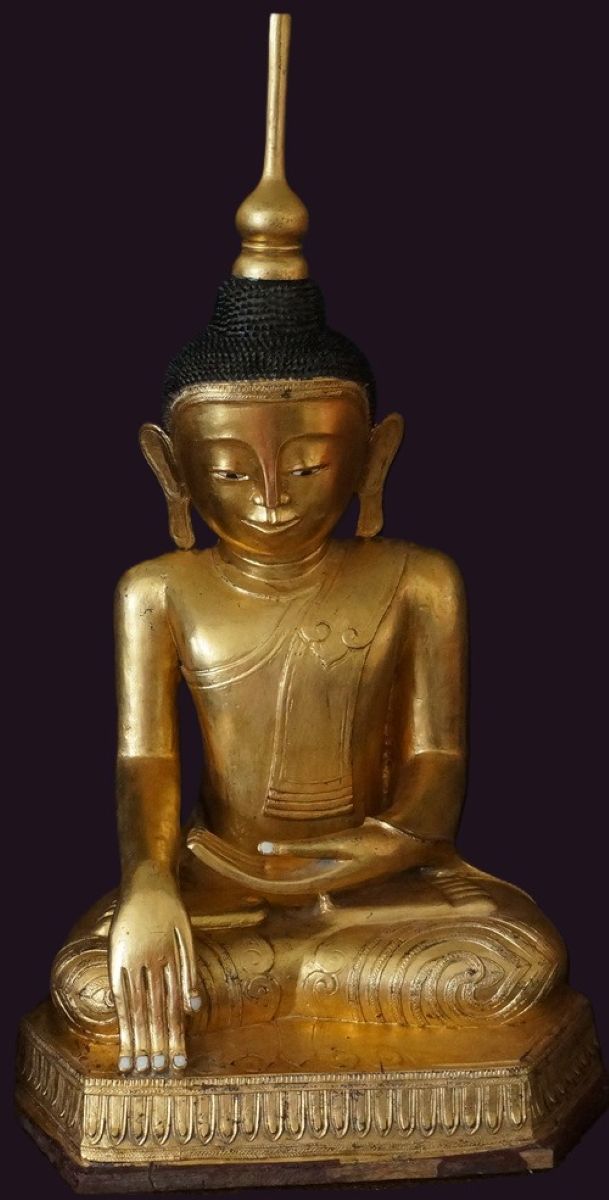
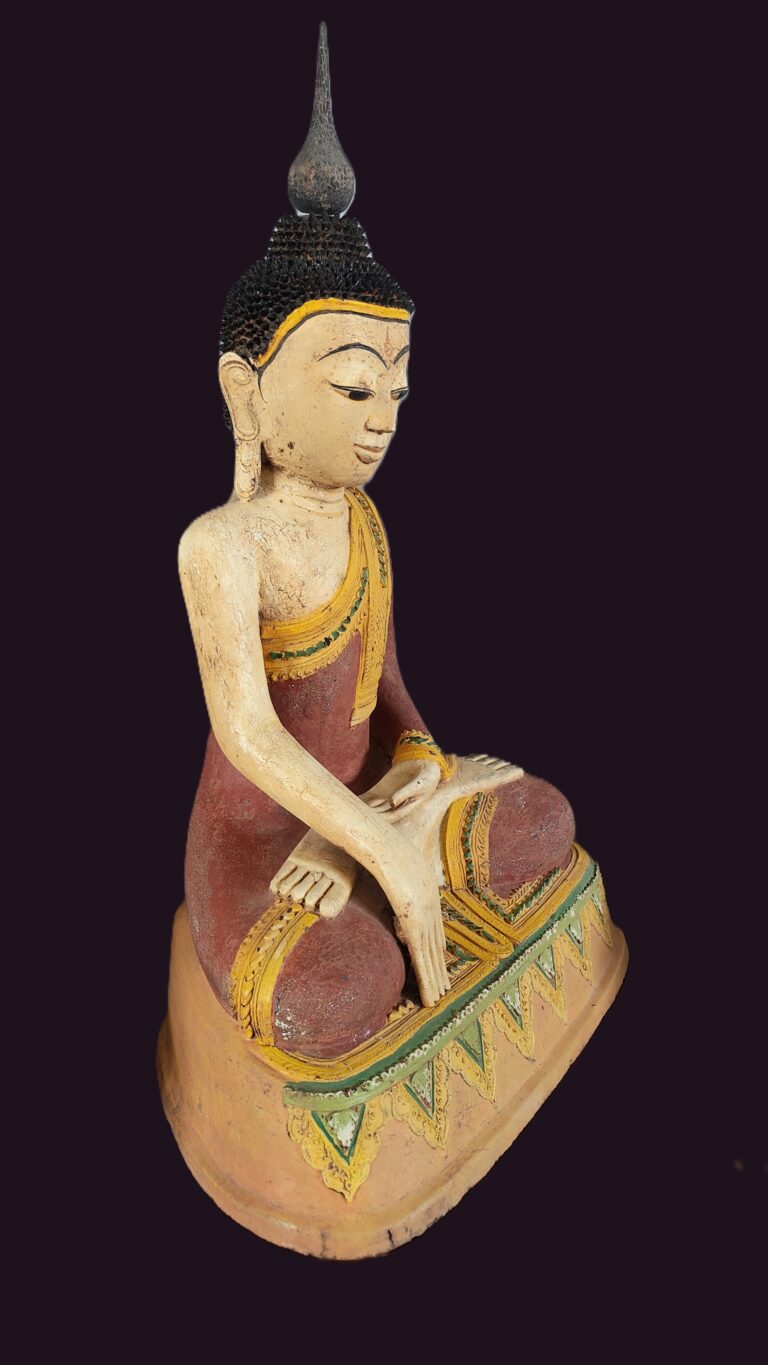
Hollow Lacquer Buddha Statues
The crafting of hollow lacquer Buddha statues in Burma became less popular in the first quarter of the 20th century due to the intensive labour and time required to make them. There was however a revival in the latter part of the 20th century using less labour intentsive methods when the government set up an Institute of Lacquerware to preserve the traditional handicraft.
The older method of crafting hollow lacquer Buddha statues in Burma required extensive labor techniques. Artisans began by shaping a clay core over a wooden foundation. They then wrapped this core with fabric strips saturated in raw lacquer sap, applying an initial wash of fine ash followed by thayo lacquer, a workable paste made from lacquer sap and teak sawdust.
After these outer layers hardened, the maker scraped out the internal clay core before sealing, polishing, and gilding the lightweight shell. Thayo allowed craftsmen to shape fine details like facial features, tight curls of hair, and flowing drapery. Separate carved components, such as a wooden finial (rhne-pway), were fitted at the final stage, and many pieces featured mirrored or foil-backed glass along the garment borders.
Originating in China, this dry-lacquer method (mān-paya) became widespread across Burma by the 18th century. Because these sacred figures were light yet durable, communities could preserve and restore their surfaces across generations of worship.