Burmese Polychrome Hollow Lacquer Buddha
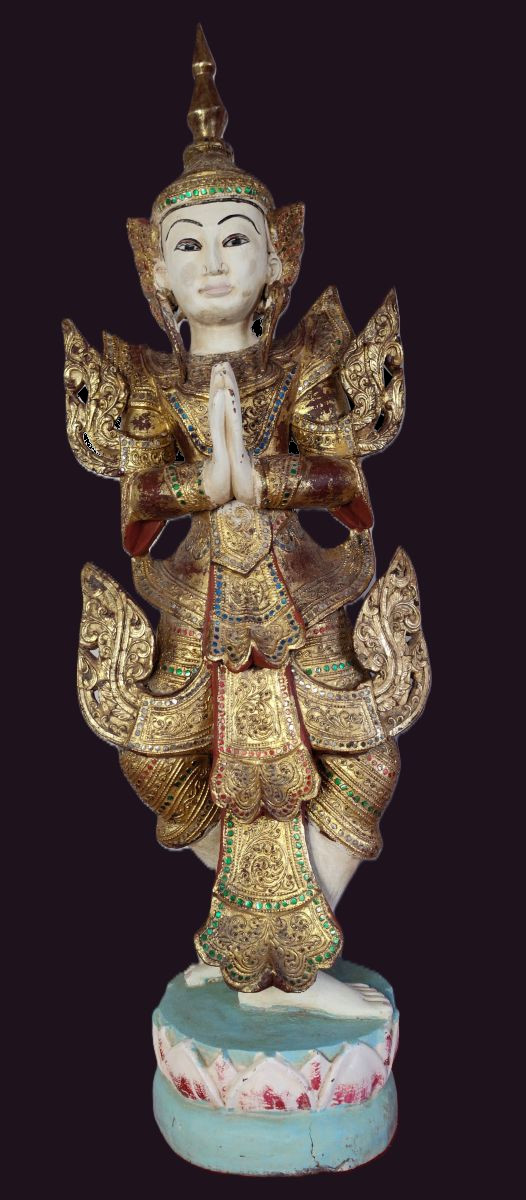
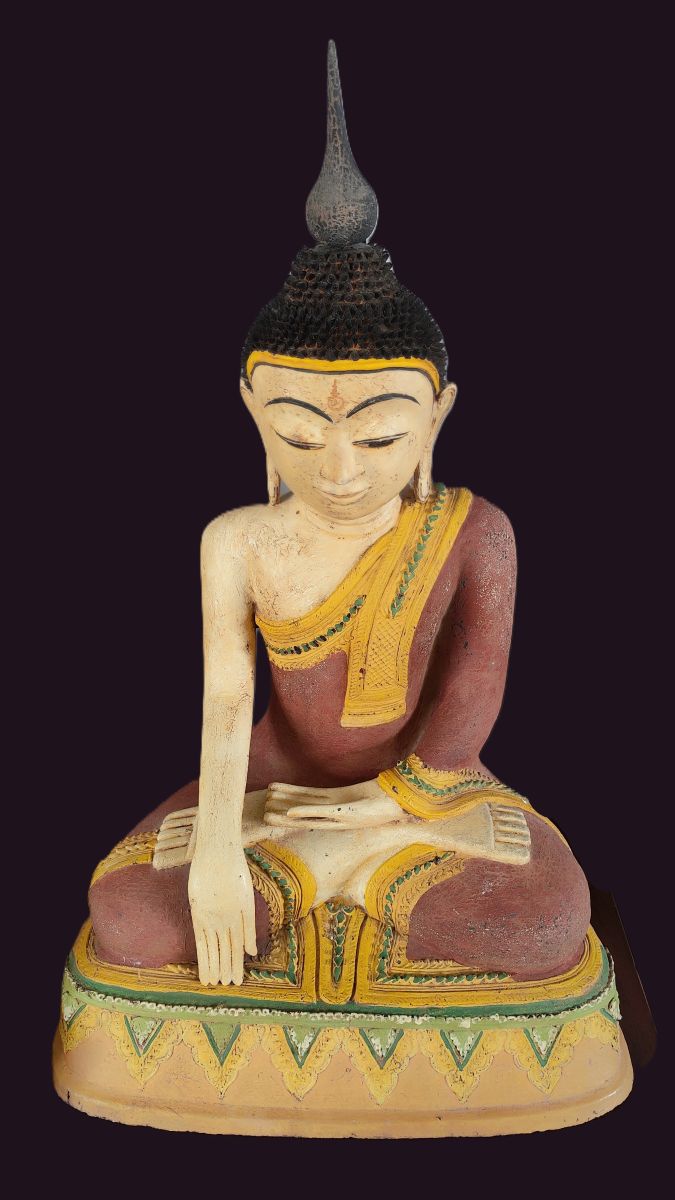
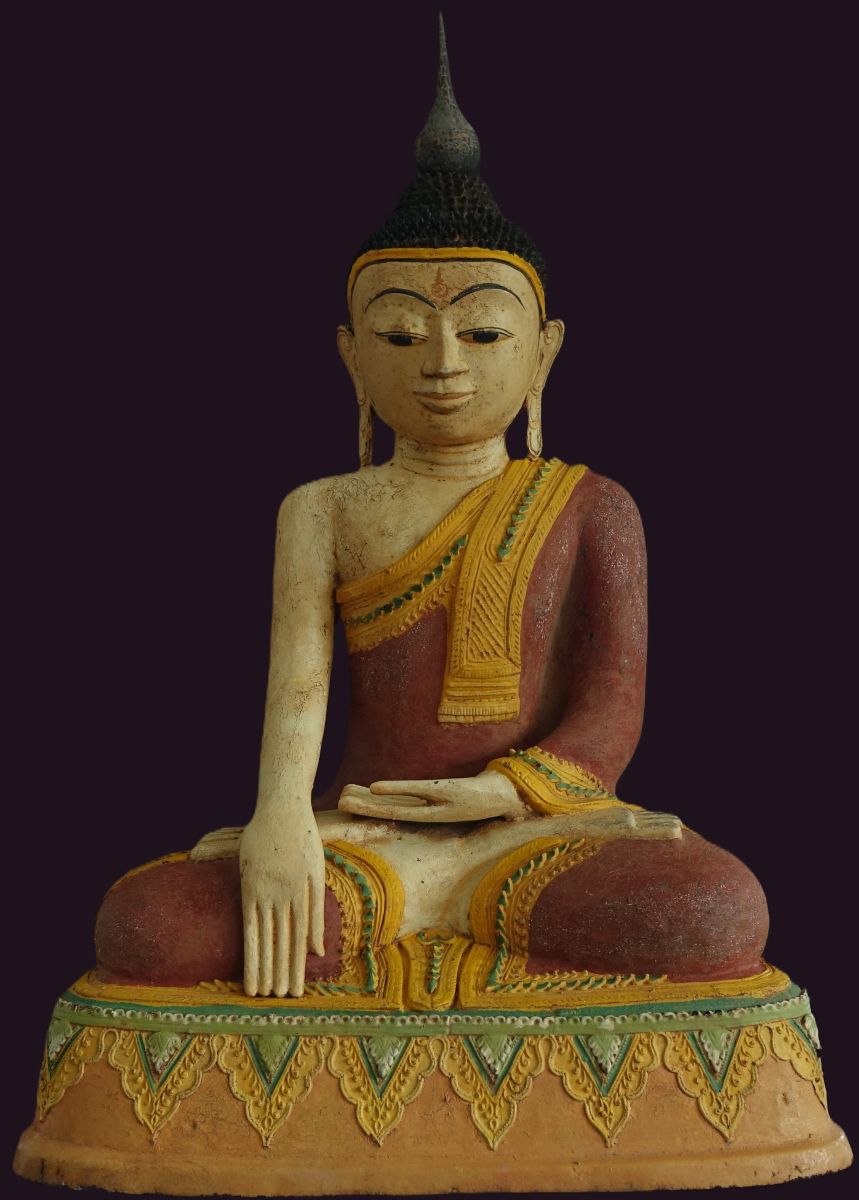
Burmese Polychrome Hollow Lacquer Buddha in the Mandalay-style likely dating to the late 19th century, early 20th century.
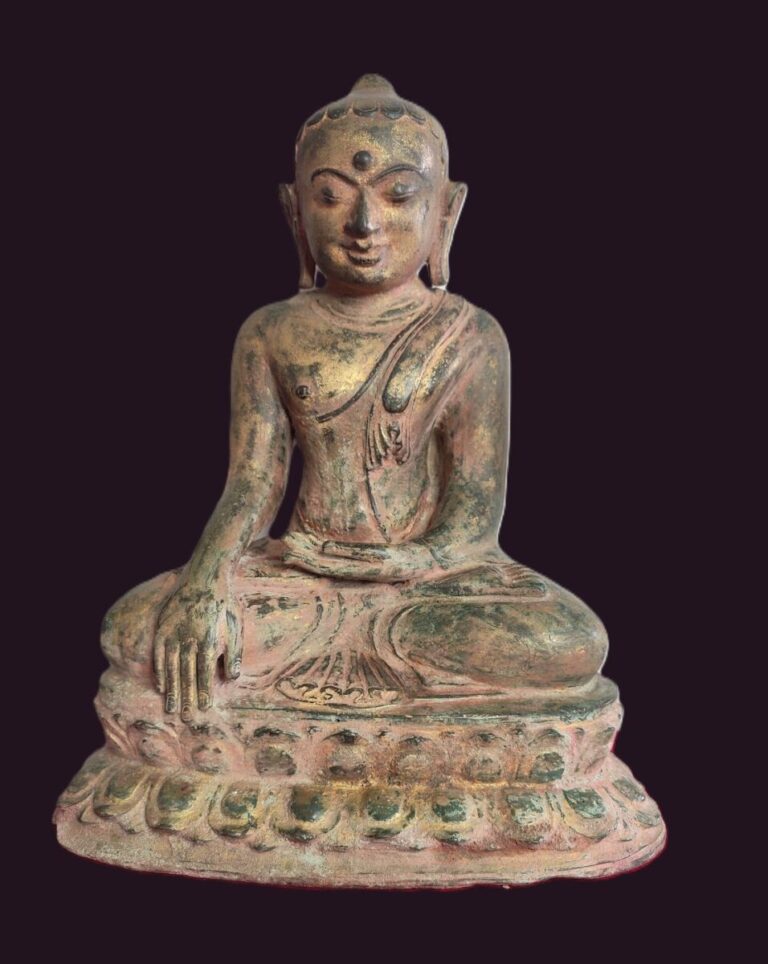
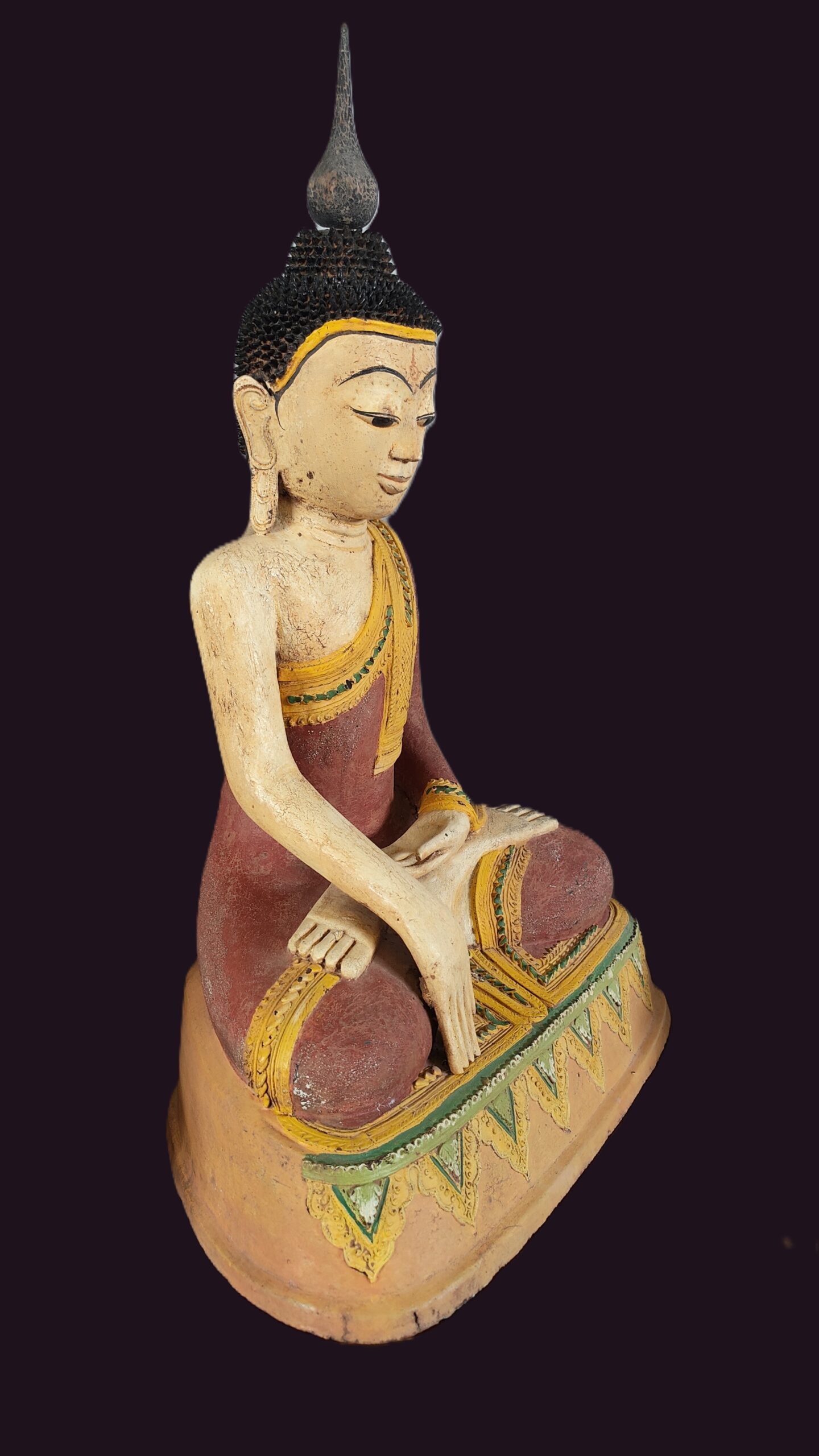
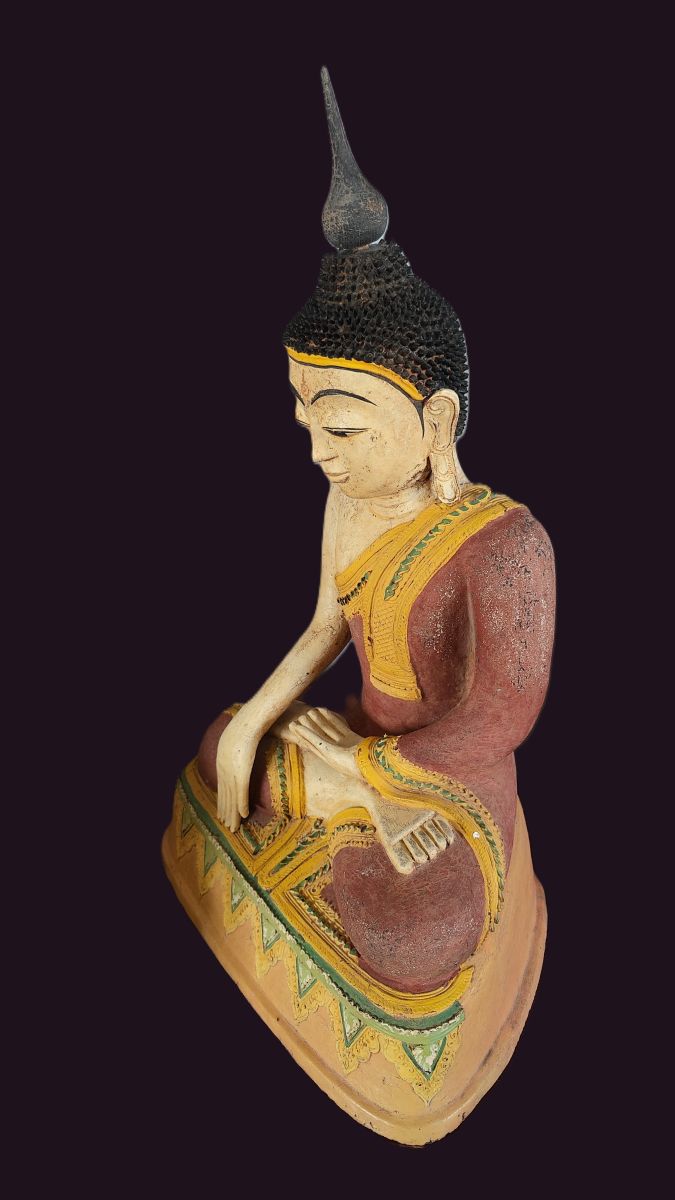
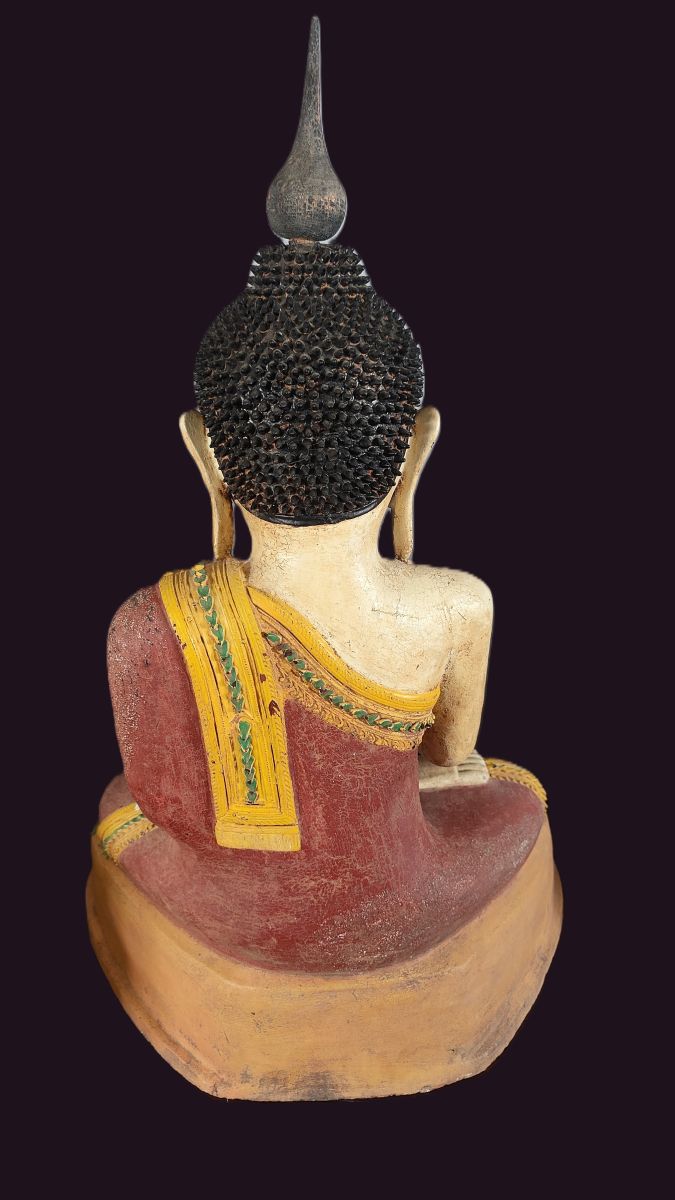
The Ushnisha and Finial: The hair consists of small, tightly packed cone-like curls, rising to a broad, low ushnisha (cranial bump). It is topped by a tall, smooth, stupa-shaped or flame-like finial (hnget-pyaw-bu).
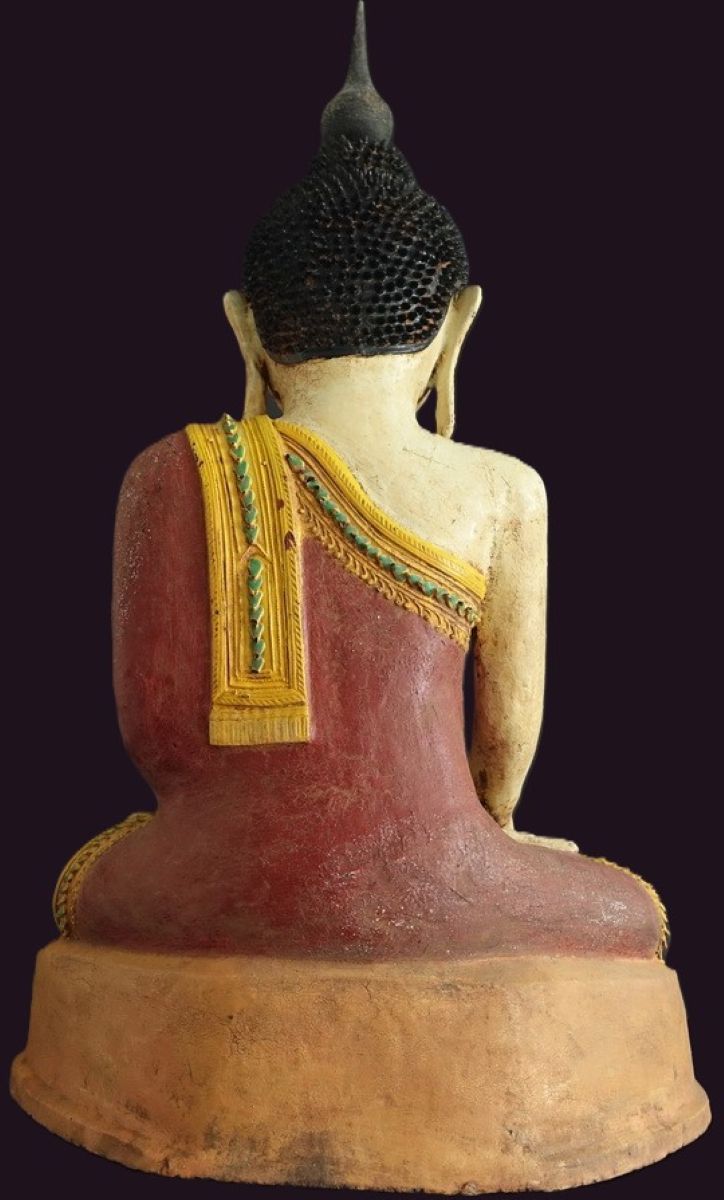
The Drapery (Civara): The robe is worn over the left shoulder, leaving the right arm bare. The borders of the robe (uttarasanga) and the over-shoulder sash (sanghati) are decorated with thayo lacquer relief work.
Mudra: The figure is seated in Bhumisparsha Mudra (the earth-witness gesture). The right hand extends over the right knee, fingers pointing downward to touch the earth, while the left-hand rests palm-upward in the lap. This represents the moment of the Buddha’s enlightenment under the Bodhi tree.
Padmasana: (the full lotus position), the legs are tightly crossed with the soles of both feet turned upward, seated on a pedestal with thayo lacquer decoration representing stylized lotus petals.
SPECIFICATIONS:
- HEIGHT: 67 cm
- WIDTH: – 43cm
- DEPTH: – 30m
- WEIGHT: – 2.6 kg
#2021
Burmese Polychrome Hollow Lacquer Buddha
Material and Technique (Man-Paya)
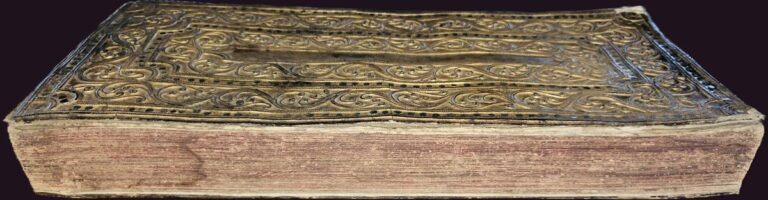
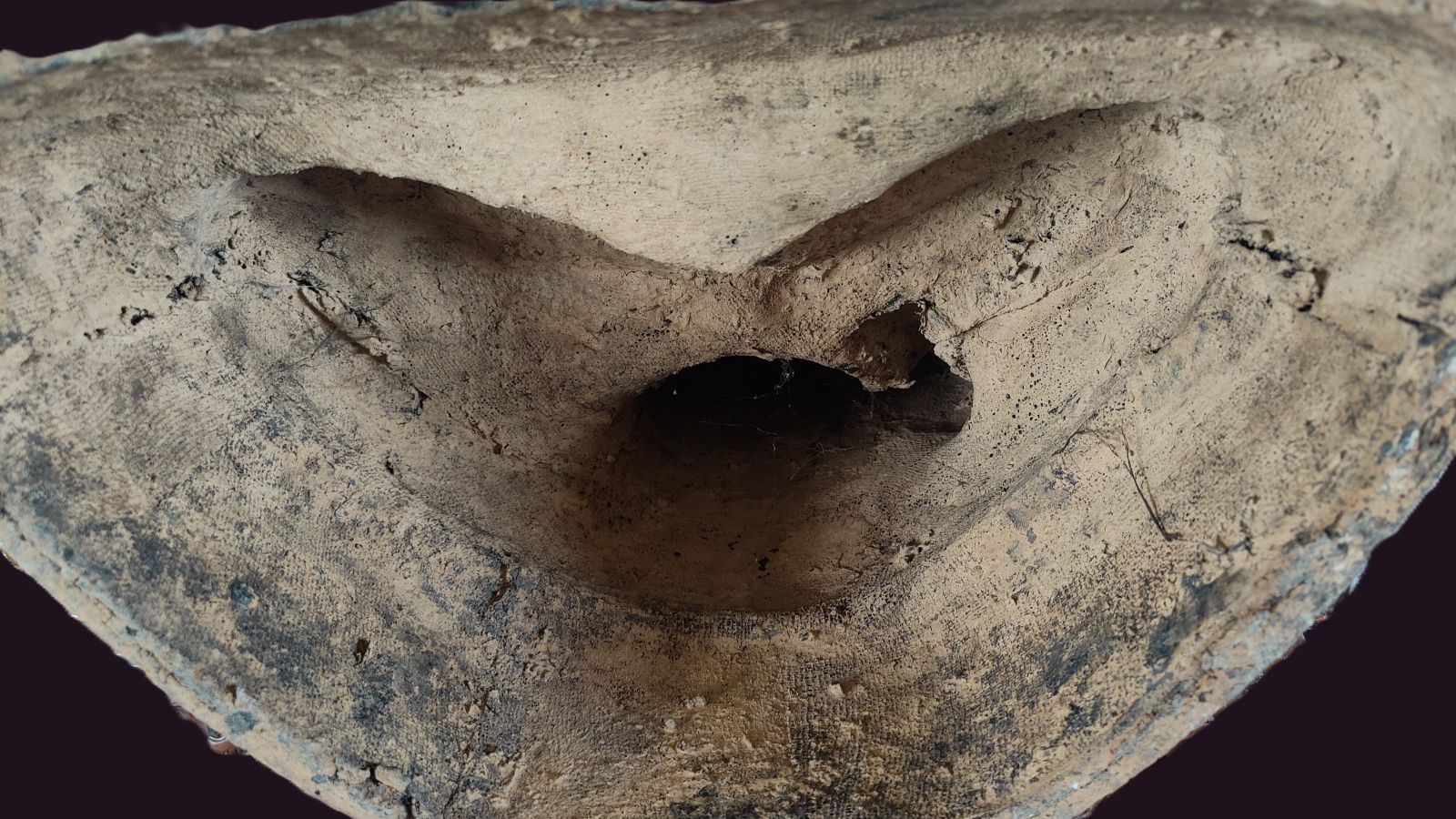
- The Interior: The interior cavity shows the coarse texture of the lacquered cloth matrix. This technique involves creating a clay core, wrapping it in cloth strips soaked in wood oil (thitsi or lacquer paste), smoothing it over with a paste made of lacquer and bone ash, and then removing the clay core through a hole in the bottom or back once the outer shell has cured.
- Surface Work: The borders of the robes and the base patterns are built up using thayo (a malleable lacquer putty mixed with ash or sawdust) that was molded and applied to the surface before painting.
Color and Patina (Polychrome)
This piece stands out due to its painted polychrome finish rather than standard full gilding:
- The cream-white flesh tones, deep iron-red/burgundy robe, and yellow-ochre/green accents on the borders are traditional paint pigments applied over the lacquer base.
- The surface shows fine, age-appropriate crazing, crackling, and minor flaking across the paint layers, particularly on the chest and arms. The exposed dark areas underneath reveal the underlying black and brown thitsi lacquer coats. The interior shows accumulated dust, cobwebs, and dry, stable texture consistent with an object that has aged naturally over a century.
Sources of information related the the hollow lacquer technique
Myanmar Lacquer Techniques – Other hollow lacquer Buddha statues on our website