Tibetan Newari Avalokiteshvara Tsa-tsa
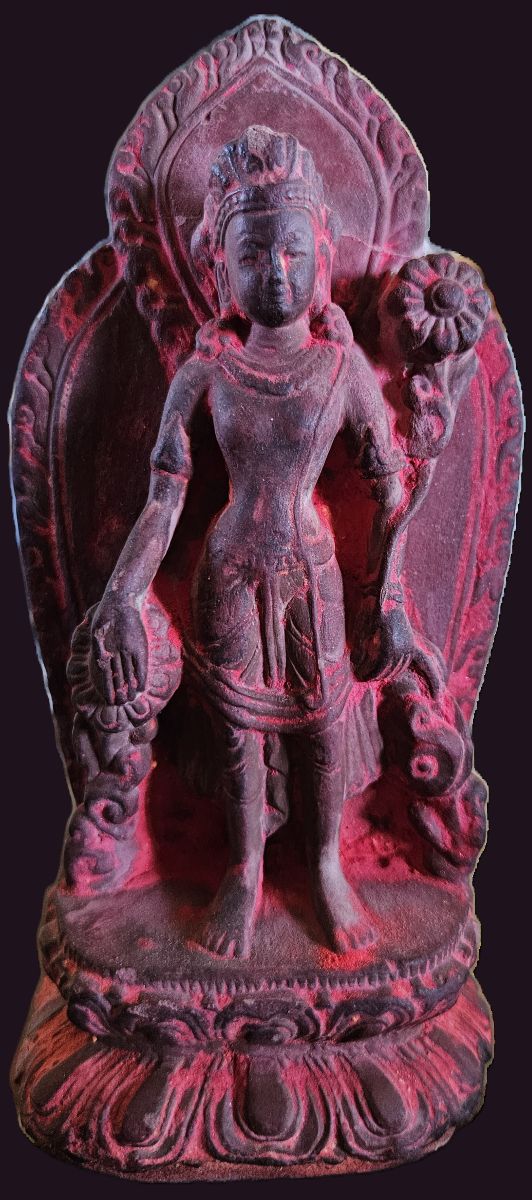
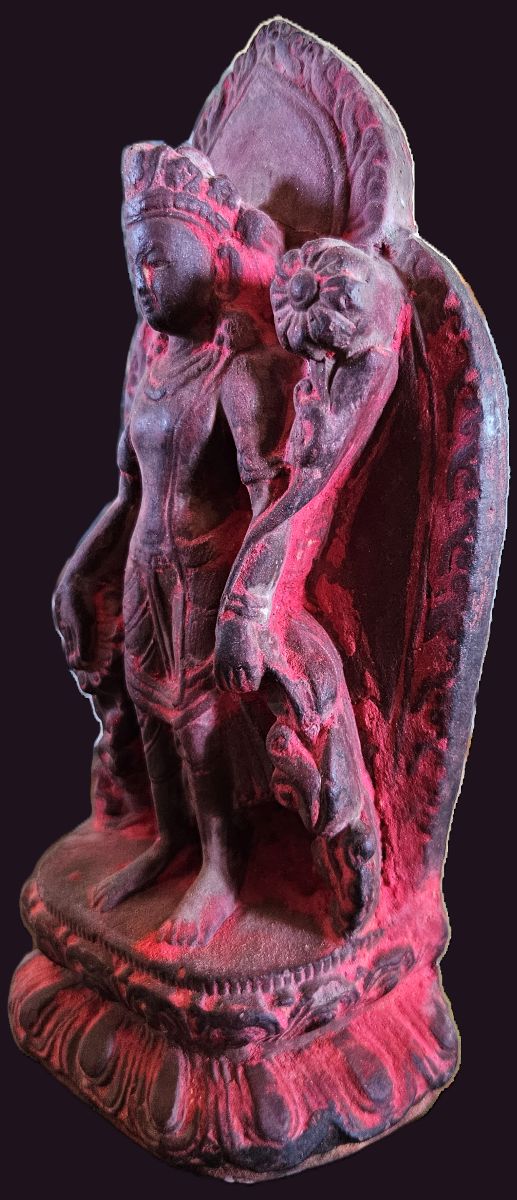
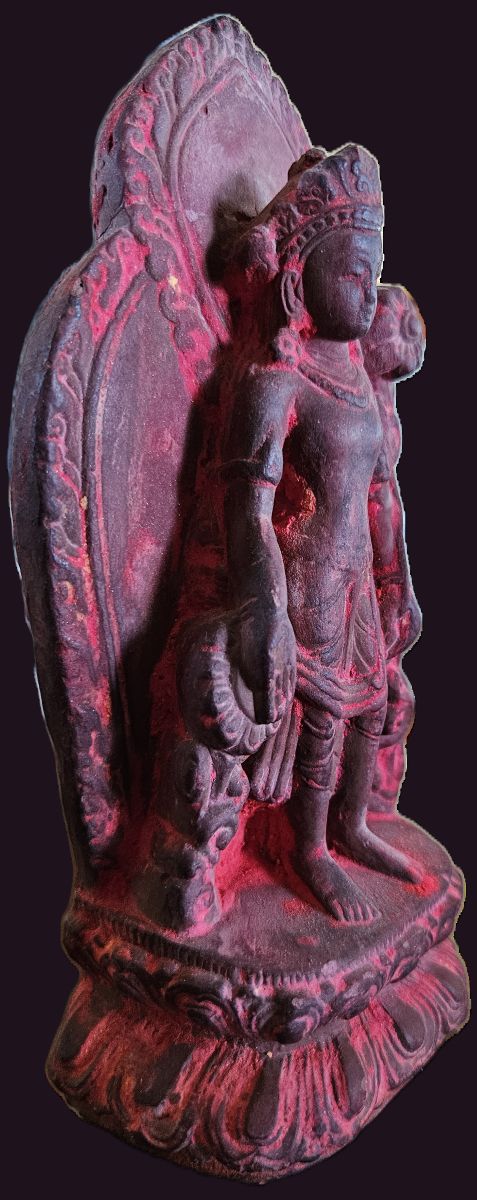
Tibetan Newari Avalokiteshvara Tsa-tsa, a Himalayan devotional votive pressed-clay votive offering depicting the Bodhisattva Avalokiteshvara (specifically in his Padmapani or lotus-bearing form), also known as the Bodhisattva of Compassion.
The Posture: He stands in a graceful tribhanga (triple-bent) or slight samabhanga (straight) posture on a double-lotus pedestal, backed by a flame-bordered mandorla (prabhamandala).
The Attributes: The left hand is raised to shoulder level, holding the long stem of a blooming lotus flower (padma). His right hand extends downward in the varada mudra (the gesture of granting boons or charity). He wears the traditional dhoti, fine necklaces, armlets, and a prominent three-pointed or five-pointed crown typical of early Himalayan representations.
SPECIFICATIONS:
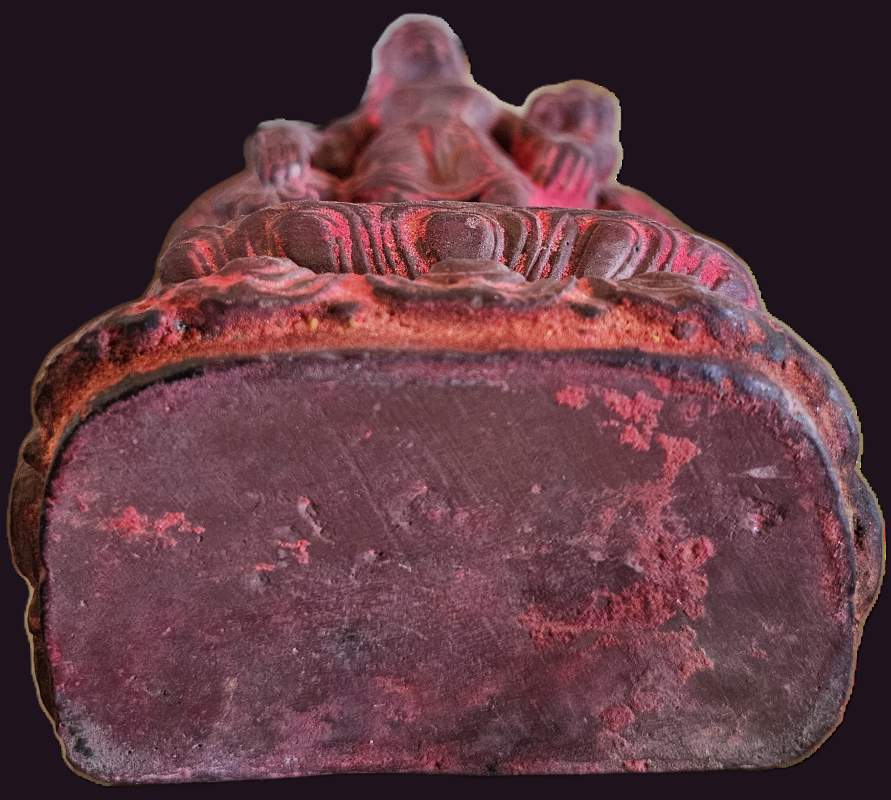
- HEIGHT: 19 cm (larger than the average tsa-tsa)
- WIDTH: 9.5 cm (widest Part)
- BASE: 5.5 cm (depth)
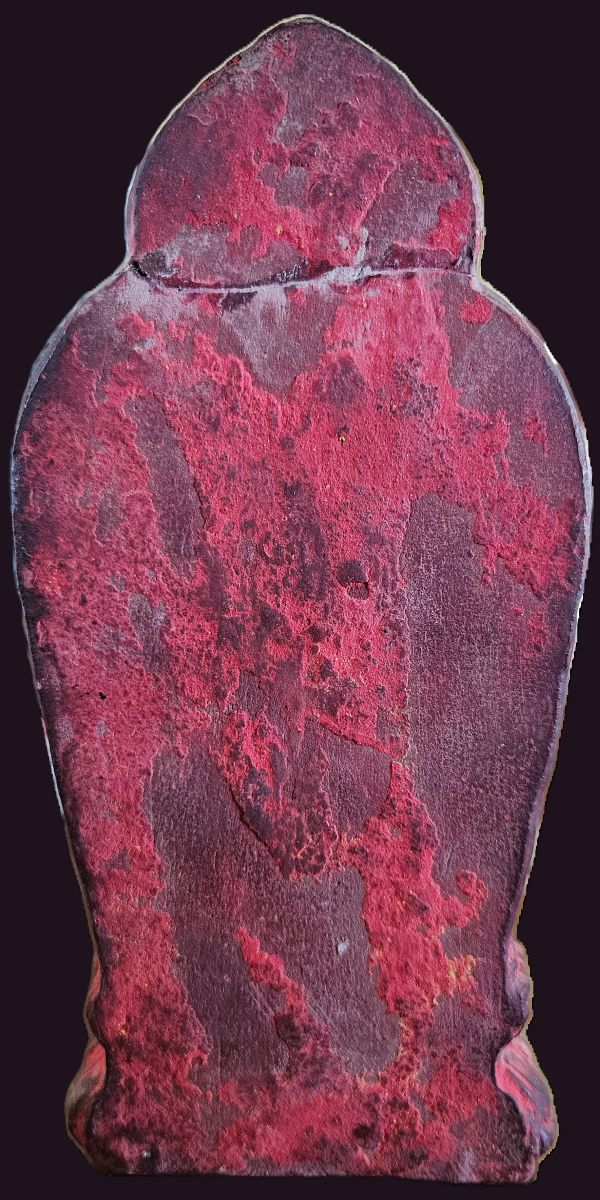
- CONDITION: This piece has had a break on the top section of the mandoria (see images)
Tibetan Newari Avalokiteshvara Tsa-tsa
The Tibetan Tsa-Tsa Tradition
Whilst Nepal is famous for its masterfully cast bronzes and stone carvings, this specific tza-tza lean toward a Tibetan origin.
The Production Method
Tibetan tsa-tsa were made by pressing damp, tempered clay into a single-sided, open metal or wooden mold matrix that featured an intricately carved negative image of a deity or stupa. The artisan or monk worked the clay firmly into the cavity by hand, often using their fingers or tools to smooth out the back and ensure the front captured every fine, sacred detail of the relief. Once compressed, the wet clay tablet was carefully pried or tapped out of the mold to dry in the sun or undergo low-temperature firing, resulting in a portable, durable votive plaque ready for ritual dedication.
Ritual Use
Tsa-Tsas were mass-produced by monks or pilgrims to accumulate spiritual merit. They were used to fill the interiors of hollow stūpas (chortens), placed inside portable amulet boxes (gau), or left as offerings at sacred caves and shrines.
Heavy Vermilion/Sindu Coating
The most striking visual element is the intense, chalky red powder covering the surface. This is vermilion (or sindoor), a sacred mercuric oxide pigment used extensively across the Himalayan Buddhist world. Over decades or centuries of ritual use, devotees repeatedly throw, rub, or dust this powder onto sacred images during daily worship (puja). In this particular tsa-tsa the way the red powder is packed deeply into the crevices of the lotus base and the mandorla while wearing thin on the exposed nose, chest, and knees indicates a long history of ritual touching and devotional handling.
Himalayan art market consensus attributes the stylistic attribution of this piece to the 15th century, with the clay pressing showing rich signs of multi-generational ritual devotion, it exhibits classical 15th-century Pala-Newari proportions, consistent with a highly regarded monastic mold matrix of the early Ming/Tibetan golden age.
Video courtesy of the Rubin Museum. Original source available at Tsa Tsa Making | Project Himalayan Art.