Circa 1880-1910 Burmese Marble Phitsanulok Buddha
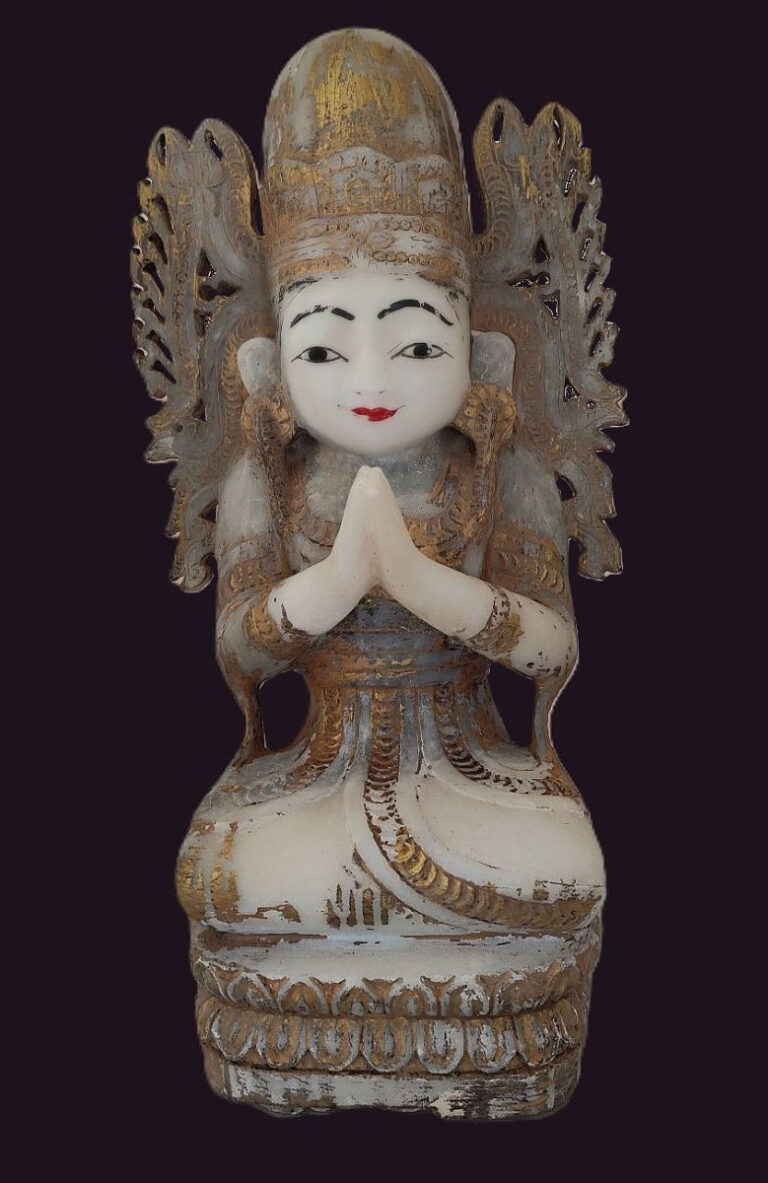
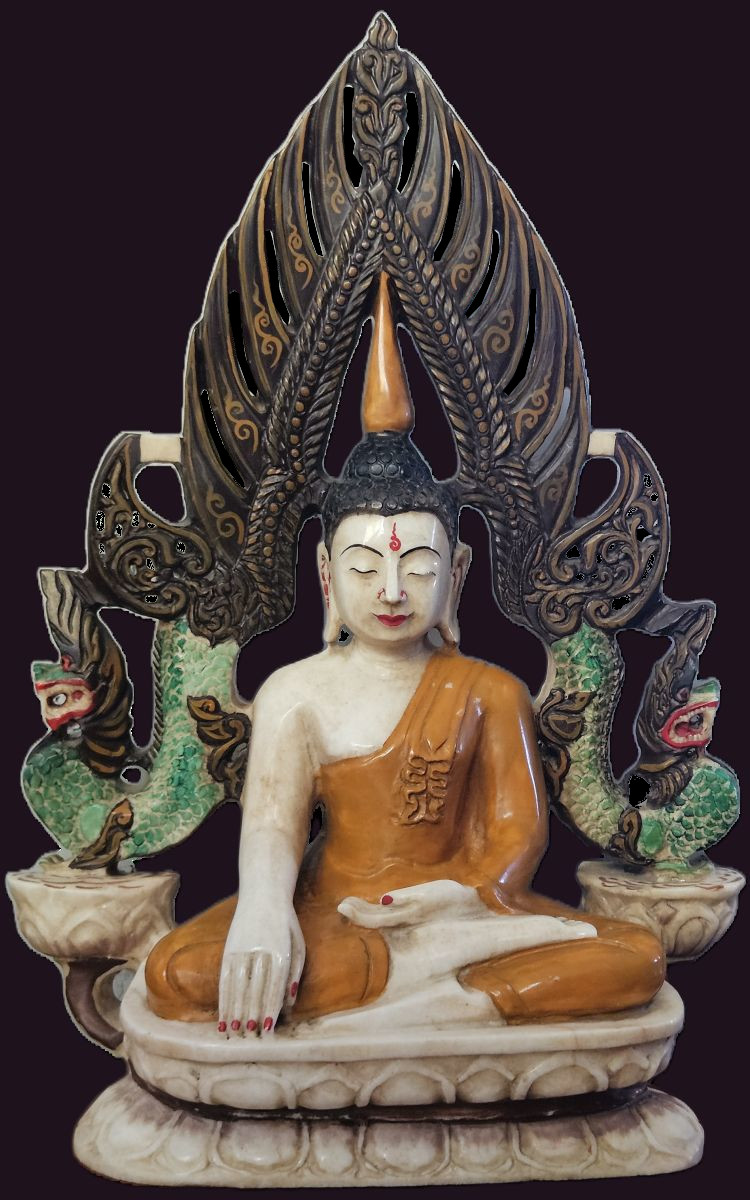
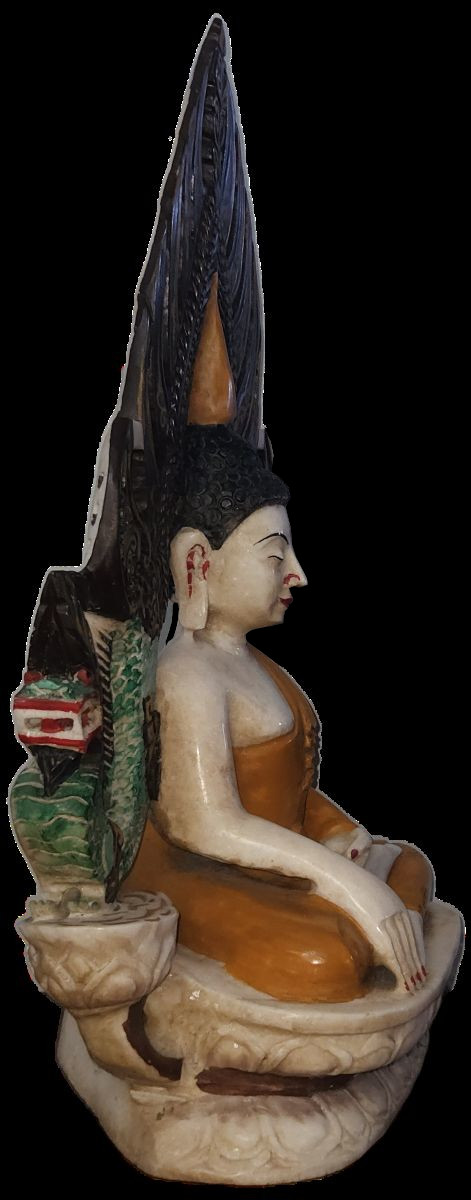
This is a rare Circa 1880-1910 Burmese Marble Phitsanulok Buddha Statue (63cm) made in Burma in the style of the Phra Buddha Chinnarat image from Wat Phra Si Rattana Mahathat in Phitsanulok.
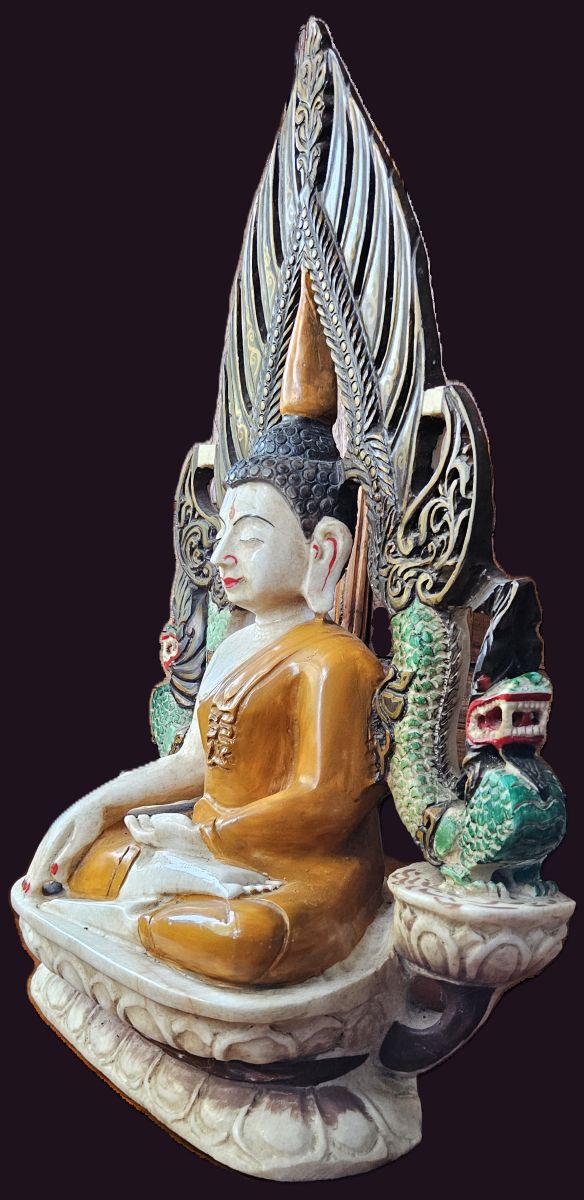
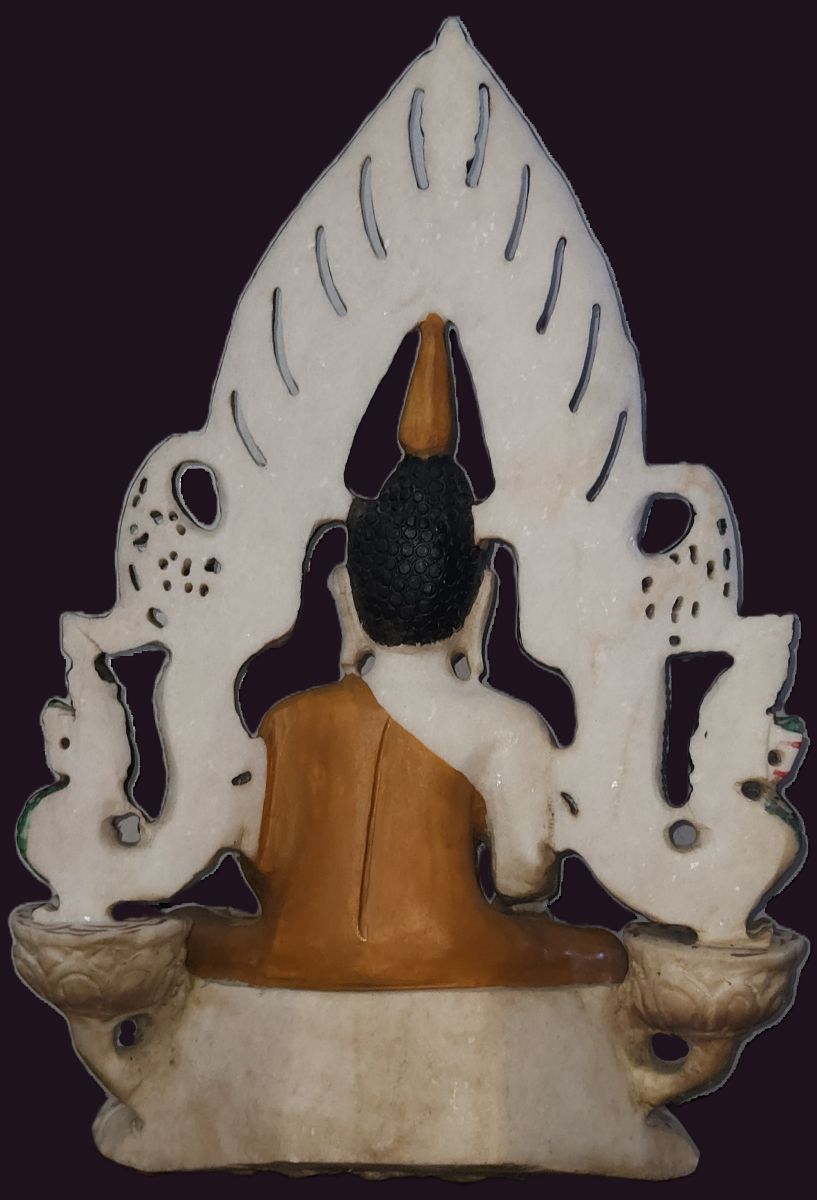
The Phitsanulok Iconography: This statue captures the defining traits of the classic 14th-century Sukhothai/Phitsanulok style. It features the prominent flame ushnisha (finial), the Marpawichai (Bhumisparsha/earth-witness) mudra with fingers of equal length, and the highly distinct Ruan Kaew, the elaborate, flame-like aureola arches populated by two guardian creatures (Makaras or Nagas) at the base.
The Mandalay Craftsmanship: While the style is Thai, the physical handling is undeniably Burmese workshop tradition. The facial features in Phitsanulok Style the gently curved, painted black eyebrows, the red lips, the distinct shape of the eyes, and the smooth, full cheeks which strongly reflect late Konbaung or early post-Konbaung taste. The choice of material, Sagyin white marble, is the signature medium of the Mandalay stone-carvers’ quarter.
The hybrid style: Mandalay workshops regularly produced pieces for Shan, Kayah, and border-region patrons during the Konbaung dynasty who had cultural and commercial ties to northern Thailand. This statue at 63cm tall along with the complexity involved in its making could only be accomplished by a master craftsman which makes this Buddha statue a significant commission piece and extremely rare in marble.
SPECIFICATIONS:
- HEIGHT: 63 cm
- WIDTH: 43 cm
- DEPTH: 20cm
- WEIGHT: 29.7 kg.
- #861
Circa 1880-1910 Burmese Marble Phitsanulok Buddha
Carving this Burmese Phitsanulok style Buddha statue out of a single block of marble presented immense structural challenges, which the carver handled in a very specific way:
- The Openwork Challenge: In Thailand, the Phra Buddha Chinnarat model is traditionally cast in bronze. Bronze allows for completely open, airy, detached flame aureoles because metal possesses high tensile strength. Marble does not.
- The Solution: The artisan had to leave significant stone webbing between the Buddha’s torso, the finial, and the outer flame arch to keep the structure from snapping. To mimic the open look of bronze, they painstakingly pierced holes through the marble (openwork piercing) and used dark paint on the front to create the optical illusion of deep, open space within the flame details.
Historical Context
During the 19th century (Yandabo period through the late Konbaung dynasty), there was significant movement of artisans, monastic missions, and diplomatic gifts between the Siamese (Thai) courts and the Burmese capital. Royal workshops in Mandalay frequently received specific commissions from foreign pilgrims, Shan states, or local patrons who favored regional styles.
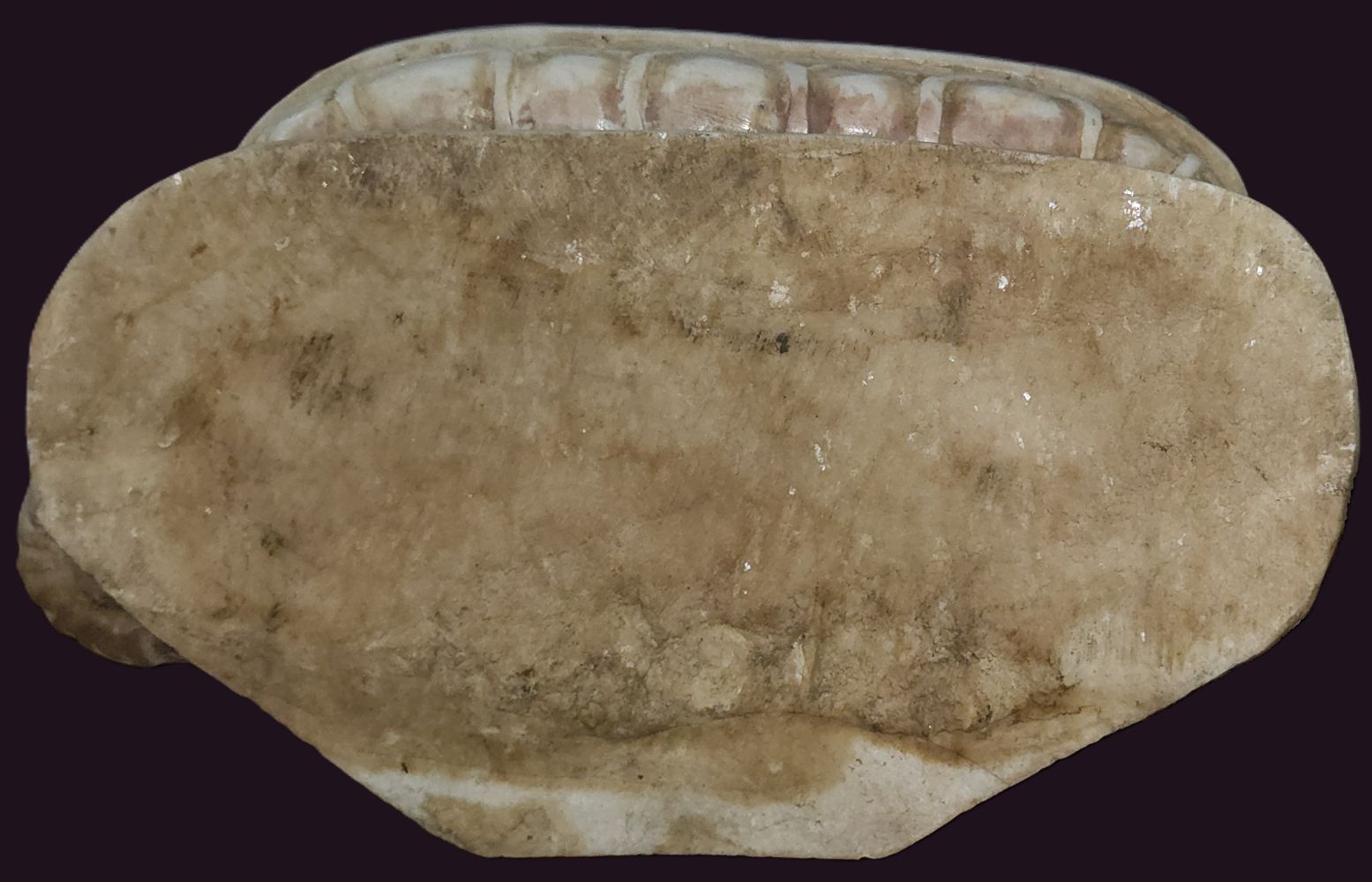
The underside shows hand chiselled tool marks and a smooth, naturally aged, brownish grey patina.
Coloured Pigments: The orange-gold paint on the robe and the green on the Nagas show minor flaking, but they retain a uniform sheen. In Mandalay marble work, older pieces were typically decorated with gold leaf (shwe zawa) and natural lacquers. The current bright paint layers are likely later devotional restorations which is a very common practice in Southeast Asia where old statues are regularly repainted to keep them “fresh” for merit-making.