Burmese Mandalay Lokapala – Deva Nat
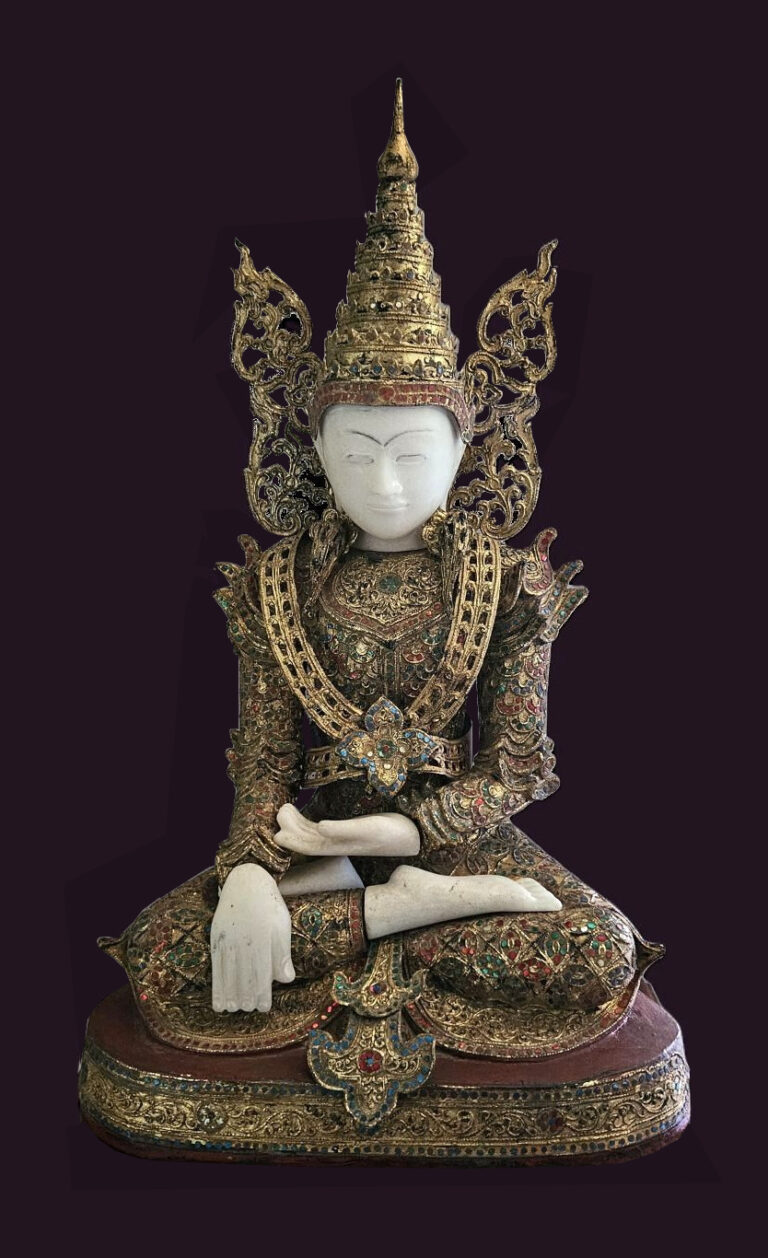
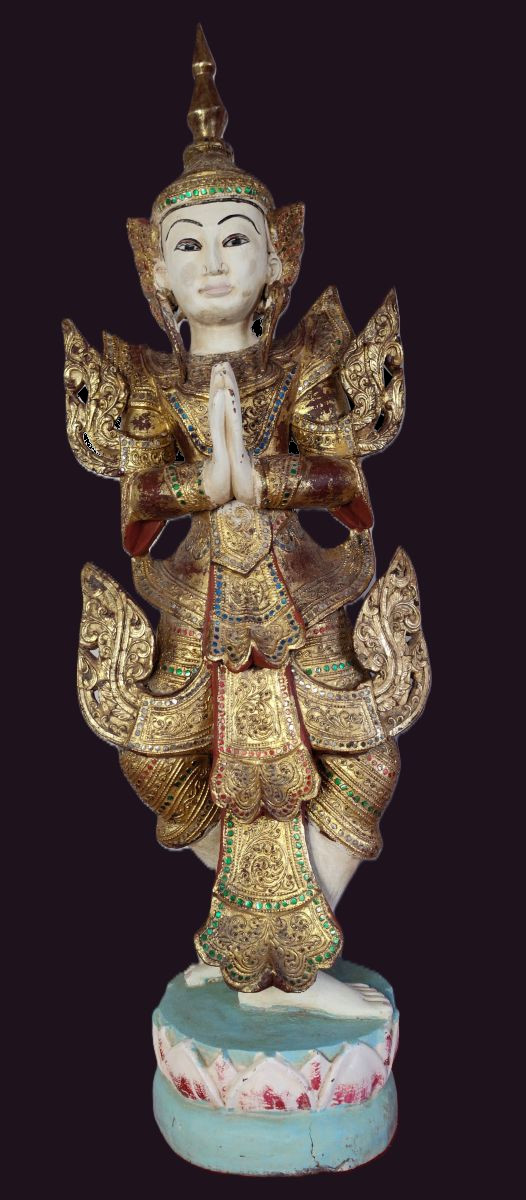
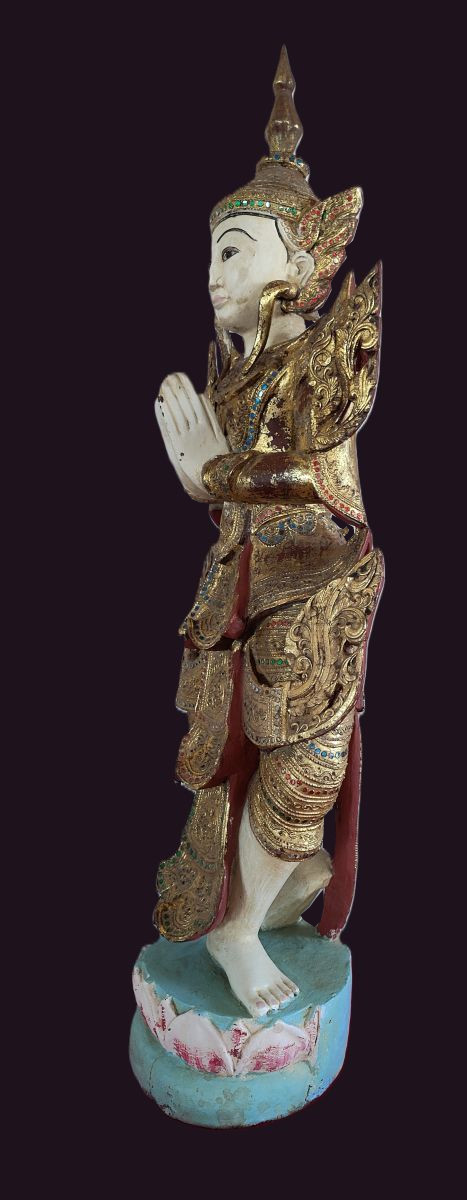
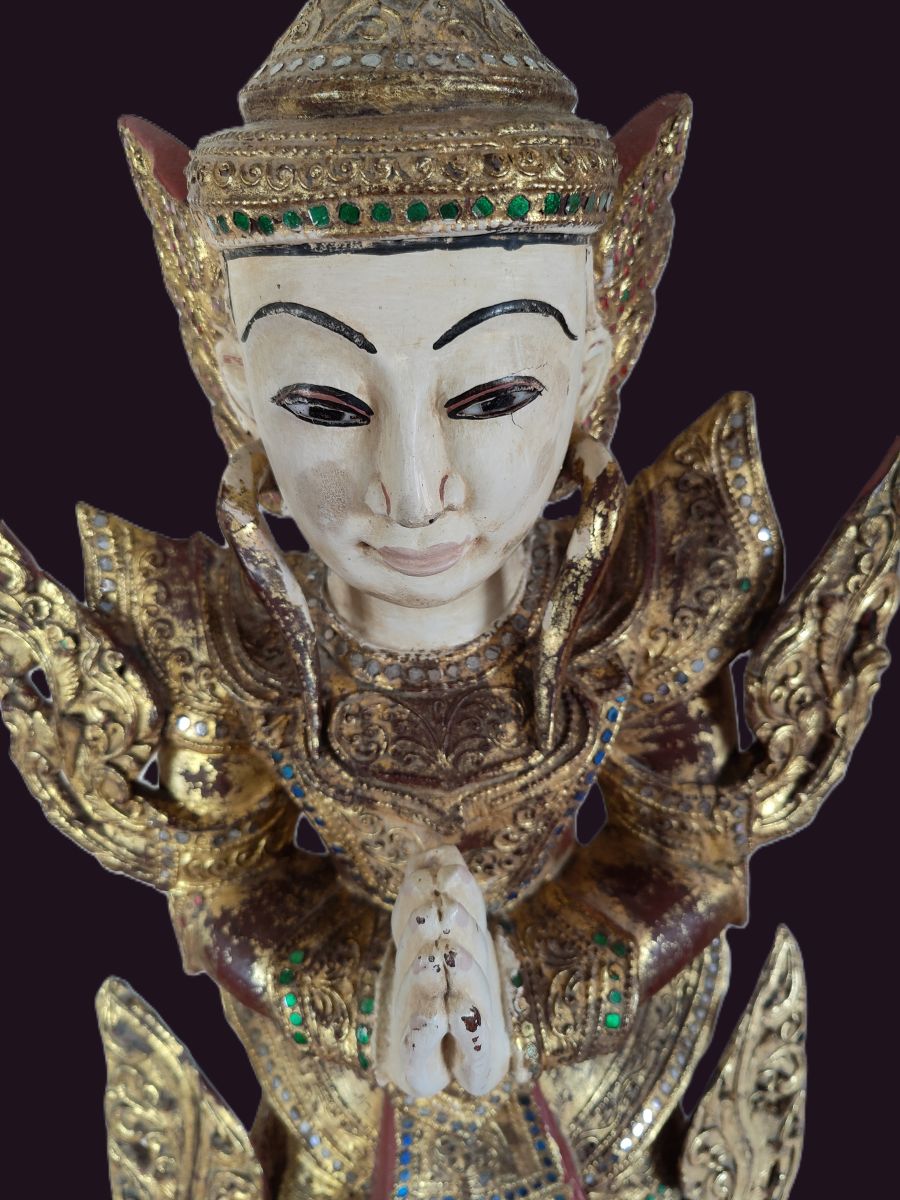
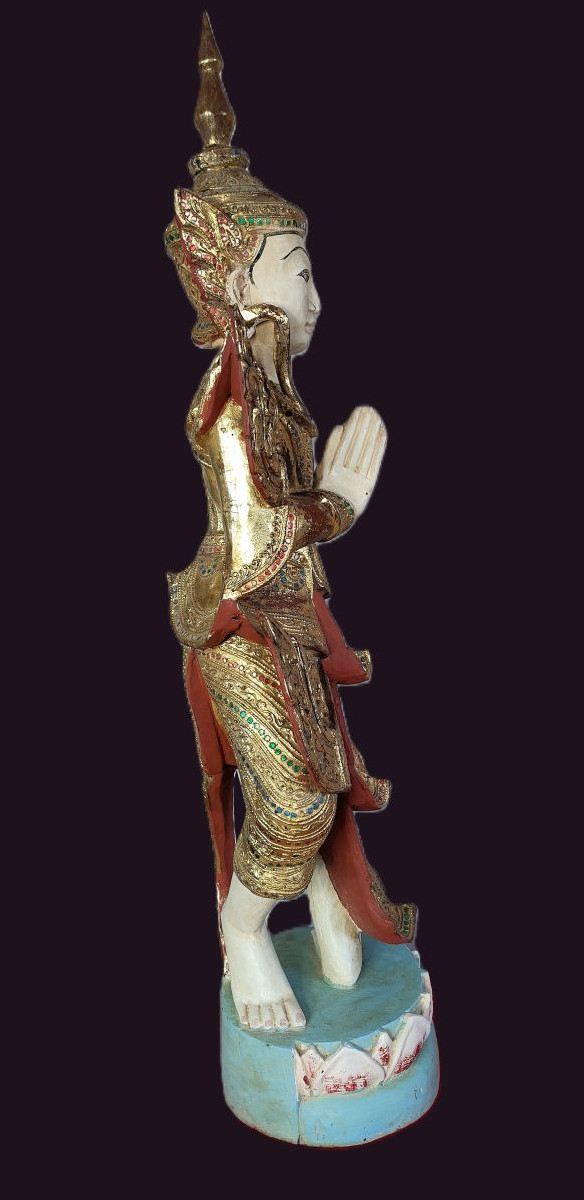
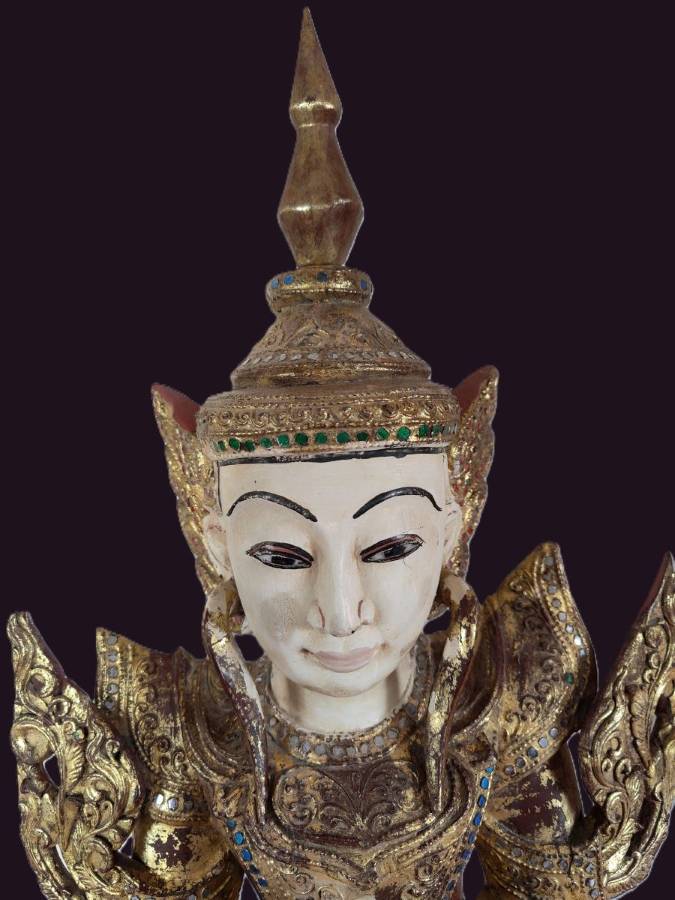
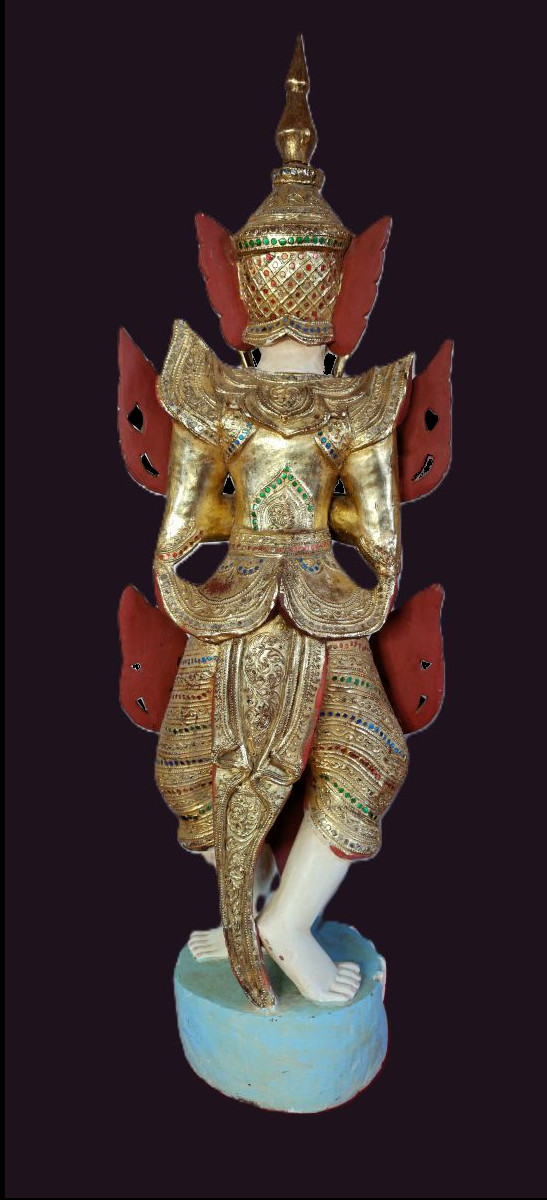
An antique Burmese Mandalay Lokapala – Deva Nat carved from teakwood stands on a single lotus pedestal. The face, hands, feet, and pedestal feature original natural pigment paint, while the eyes are inlaid stone. Vivid green and red glass mosaics embellish the traditional attire.
In Burmese art, these celestial figures are closely aligned with the concept of the Lokapala, the directional guardians who protect the Buddhist realm.
In the 11th century, King Anawrahta integrated the pre-existing animist Nat spirits into Theravada Buddhism by placing Thagyamin (the king of the 37 Great Nats, derived from the Buddhist deva Sakra/Indra) at the head of the pantheon. By doing this, the Nats were formally cast as protectors of the Buddhist faith. When a Nat is depicted in royal attire with celestial wings, it functions visually and conceptually just like a Lokapala or a guardian Deva of the cardinal directions.
The Flanges (Shin-na-htat): Rigid, wing-like wooden extensions projecting from the hips and shoulders simulate the layered, floating textiles of royal palace dress. In sculpture, they immediately signify that the entity belongs to a higher, celestial realm (either a Deva or a high-ranking Nat acting as a guardian).
SPECIFICATIONS:
- AGE: Late 19th Century
- HEIGHT: 105cm
- BASE DIAM: 21cm
- WEIGHT: 12.9
- #509b
Burmese Mandalay Lokapala – Deva Nat
Within Burmese cosmology, the nat pantheon represents a complex system of animist spirit worship, populated by the spirits of historical or legendary figures who met untimely, violent deaths (sein). Anthropological analyses, notably by Paul Strachan, indicate that the standardized historical canon of the “37 Great Nats” underwent significant evolution and consolidation between the 13th and 17th centuries.
In indigenous belief, dying a sudden or traumatic death prevents immediate transition into the Buddhist cycle of rebirth (samsara). This leaves the deceased tethered to the earthly plane as a volatile, potentially malevolent entity. Consequently, the establishment of shrines (nat-sin) throughout Myanmar are visible within both rural landscapes and monastic complexes, and serve a dual apotropaic function.
Domestically, the propitiation of nat imagery remains a widespread practice, intended to pacify these powerful forces, secure localized protection, and cultivate worldly prosperity.
Age Attribution:
The Attire (Kha-wut): This Wooden Deva Nat displays the elaborate court dress of the Konbaung dynasty. The stiff, multi-layered, upward-curving hip ornaments (shin-na-htat) and the pointed shoulder epaulets mimic the heavy, gold-embroidered silk ceremonial costumes worn by the Burmese royalty and celestial beings in theatrical and religious art of the 19th century.
The Hman-zi Shwe-cha Decoration: The surface ornament relies heavily on hman-zi shwe-cha, the traditional technique of applying relief molded lacquer paste (thayo) to create scrolling floral patterns, which are then gilded and inset with cut glass mosaics (hmandaw). The prominent use of green, red, and clear glass borders to accentuate the edges of the garments is a hallmark of late 19th-century workshop production in Mandalay.
Facial Features: The oval face, softly arched eyebrows, distinct downcast eyes, and small, serene mouth reflect the idealized, gentle realism that became dominant in the late Konbaung period, moving away from the more stylized or austere expressions of earlier centuries.
The Headdress (Magite): The figure wears a tiered, conical crown (magite) with distinctive ear-flaps (na-pan), reserved for royalty and heavenly devas.
The lotus base: specifically the rounded, distinctively painted pink and white upturned petals is typical of the late Konbaung and early British colonial transition period.
While the Burmese tradition blends these guardians with indigenous spirit worship, the Chinese tradition evolved its own distinct martial and demonic imagery; you can explore the difference in our article on the Chinese Lokapala.