Ming Dynasty Lokapala: The Shuanglin Connection
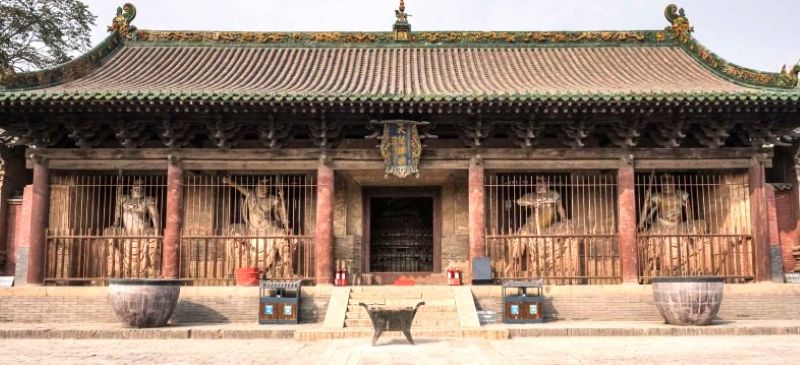
The Ming Dynasty Lokapala and the Shuanglin connection: The temple was originally constructed on a grand scale during the Northern Wei Dynasty; the original temple was subsequently destroyed by fire during wartime. It was later restored during the Song Dynasty and rechristened ‘Shuanglin’ (Twin Trees) Temple, a name referencing the twin sala trees under which Buddha attained Nirvana.
According to the inscriptions on the oldest surviving artifact at the complex, the ‘Aunt’s Tablet’ – (or Stele for Nuns), erected in 1011 CE erected during the Northern Song Dynasty reveals that the sanctuary was already undergoing a major restoration as early as 571 CE, proving the site’s spiritual authority had already been established for centuries before the current Ming figures were even conceived.
In traditional Chinese culture, Buddhist nuns were often colloquially or respectfully referred to by locals as Gugu, which translates directly to ‘Aunts.’ Because the temple was heavily supported, managed, or inhabited by an order of devout Buddhist nuns during the Song Dynasty, the stone monument recording their contributions became known locally as the ‘Aunt’s Tablet.‘
The “Chaste Hall”: Because of the prominent role these holy women played in keeping the sanctuary alive during centuries of political turmoil, a specific hall (the Guzhao Hall or Chaste Hall) was eventually tied to their legacy.
Shuanglin temple houses hundreds of sculptures such as guardian figures and other Buddhist Mahayana deities, many of them were crafted during the Ming dynasty. While the large-scale clay figures were reconstructed using Ming clay techniques to look like Song guardians, smaller wooden counterparts provide a tactile reference for that original Song power crafted in wood.
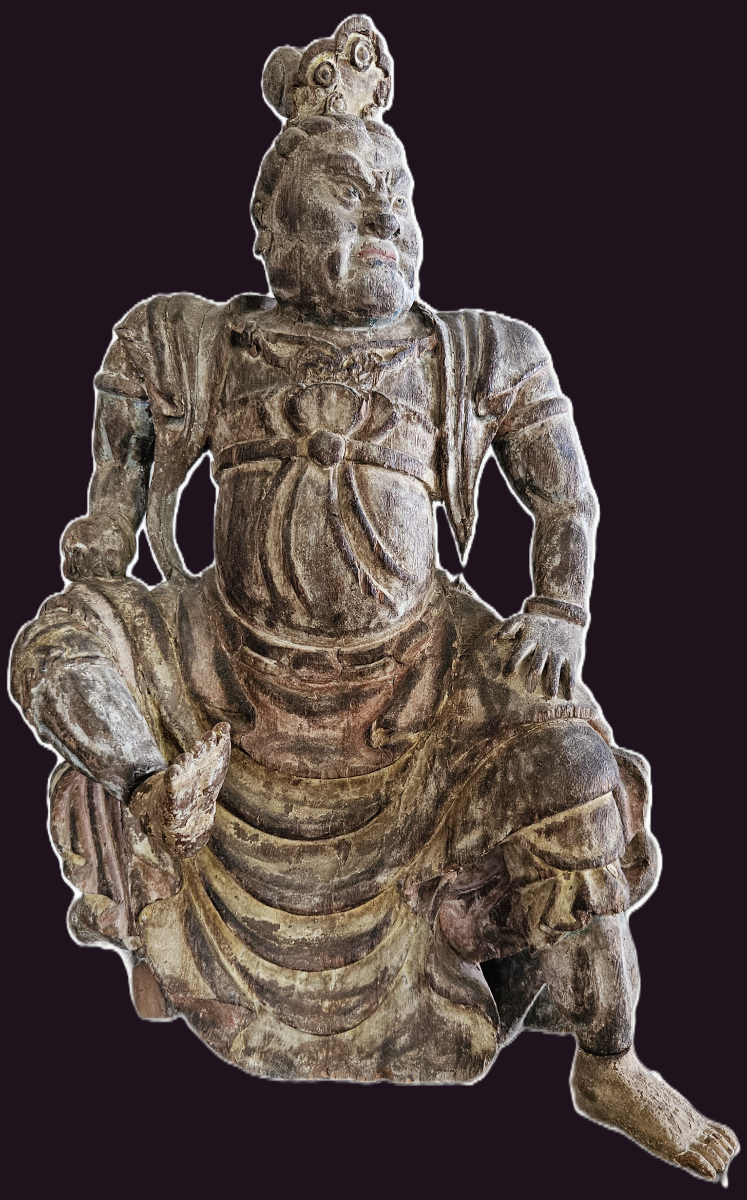
Identical Mirror images of the Shuanglin Ming Dynasty figures sourced in Luang Prabang
We purchased these four figures many years in Luang Prabang, Laos, since then our imagination has often run riot over how they ended up in a country house outside of Luang Prabang. We wondered if a Laotian craftsman saw the famous three-meter-tall versions at the Shuanglin Temple in China, returned home, and managed to replicate them in such precise detail but given the distinct material signs of age, the localized tool marks, and the sheer quality of the carvings, that scenario is highly unlikely.
We were intrigued by the striking resemblance of our four wooden Heavenly King figures to the four Lokapala guardians that reside outside the Heavenly Hall at Shuanglin. In every iconographic detail, these Lokapala are identical to the monumental guardians of Shuanglin Temple, though they have unfortunately lost their original Faqi (Dharma instruments). The evidence of these ritual implements remains: each figure still features a clenched hand in which a ball sits with a precise interior socket, designed to hold the removable attributes that once identified them, each of their feet are removable and held in place by a nail.
Assumptions and theories, which are just that – our imagination
One compelling possibility is that these figures were rescued during China’s Cultural Revolution. When Red Guard factions systematically targeted temples, mosques and churches across the country, destroying traditional heritage. Temples were forcibly closed and repurposed for secular use a fate that Shuanglin Temple did not escape.
Countless sacred and cultural objects, libraries and ancient artworks were systematically destroyed, some were hidden or smuggled out of the country by those fleeing persecution. It is highly possible that a devoted monk or fleeing resident carried these Lokapala across the southern border to safety, ultimately finding a refuge for them in Luang Prabang.
It is highly plausible that these Lokapala were among those smuggled across the southern border to safety, ultimately finding a quiet refuge in Laos and we feel privileged to be the caretakers of these beautiful striking statues.
Even those temples that had been left open for sightseeing purposes, such as the great Buddhist Lama and Taoist temples of Peking, were barred from worship and their statues, altars and other furnishings were removed.
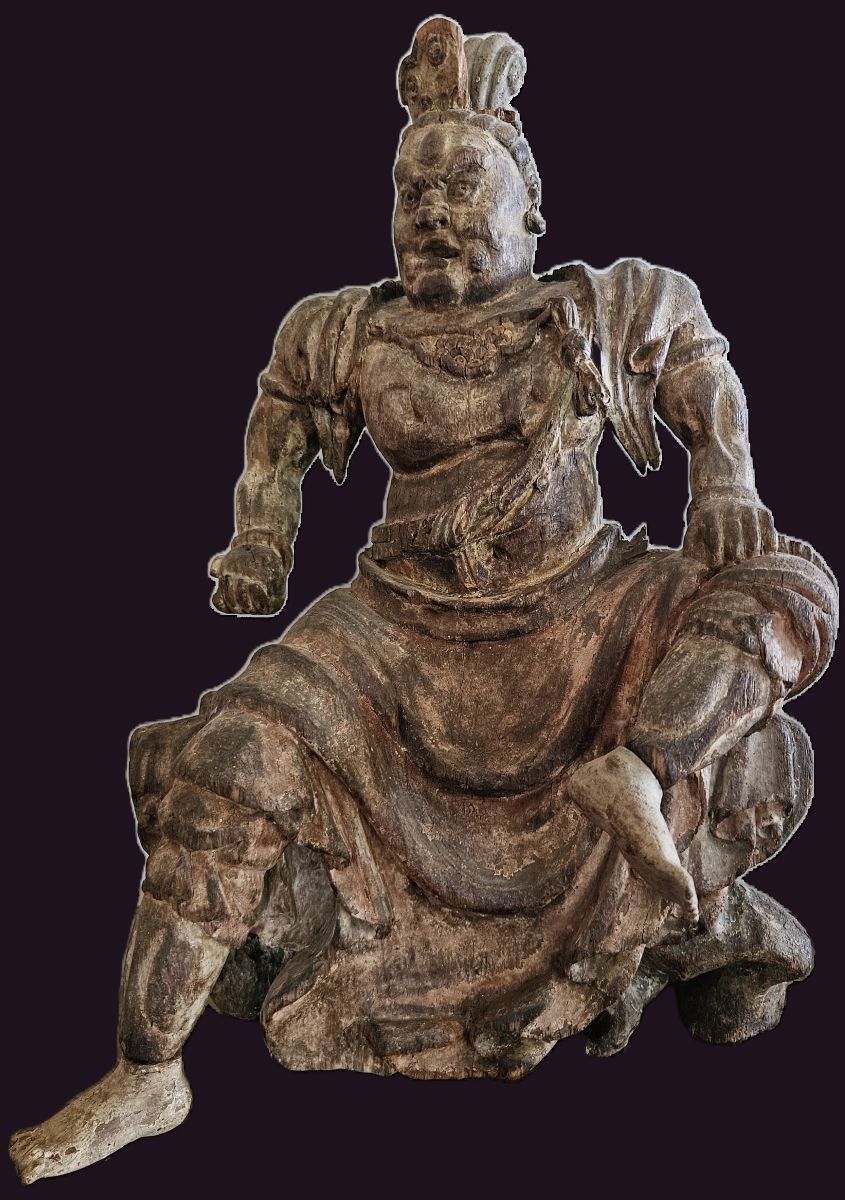
Other possibilities on how these Lokapala ended up in Luang Prabang
The Tea Horse Road & Caravan Trade
Luang Prabang was a critical hub on the southern routes of the Tea Horse Road (Chamadao). For centuries, caravans from Yunnan which borders Laos and shares deep cultural ties with the northern Shanxi styles through imperial influence moved goods southward.
Merchant Altars: While 3-meter statues are built for temple architecture, 50cm figures are the ideal size for a wealthy merchant’s private family altar or a guild hall (Huiguan).
The Diaspora: Chinese merchant communities (Hokkien, Cantonese, and Yunnanese) established themselves throughout Laos. They often commissioned or brought devotional items from China to maintain their spiritual traditions in a foreign land.
The 1887 “Black Flag” Invasions: During the late 19th century, Chinese “Black Flag” marauders occupied Luang Prabang. While they destroyed much, they also brought their own cultural and religious artifacts, some of which remained in the city after they were repelled.
Religious Syncretism: In the 19th and early 20th centuries, it was common for local Lao temples to accept gifts of Chinese statues from resident merchant families, placing them as “secondary guardians” at the entrance of the sim (ordination hall).
The Shanxi Merchant Connection
During the Ming and Qing dynasties, merchants from Shanxi were among the most powerful in China. They established a massive network of Merchant Guild Halls (Huiguan) across Southeast Asia to facilitate trade in tea, silk, and silver.
Portable Devotion: While the 3-meter originals at Shuanglin were immovable clay, merchants often commissioned high-quality wooden replicas of famous deities from their home province. At 51cm, this set was likely the centrepiece of a Merchant Guild Altar or a wealthy trader’s private residence in Luang Prabang.
The Route: These items typically travelled from Shanxi through Yunnan province and down the Mekong River into northern Laos. Luang Prabang was a key stop for these caravans.
Buddhist Syncretism (Mahayana in a Theravada Land)
While the people of Laos are predominantly Theravada Buddhist, Luang Prabang has historically been a cosmopolitan religious centre.
Royal Gift or Patronage: The Lao monarchy frequently exchanged gifts with Chinese emissaries.
Shared Iconography: The Lokapala (Heavenly Kings) exist in both traditions, though the “armoured general” style seen here is distinctly Chinese Mahayana. It is quite common for these to be integrated into local Lao temples or private collections as “protectors of the Dharma,” regardless of the specific sect.
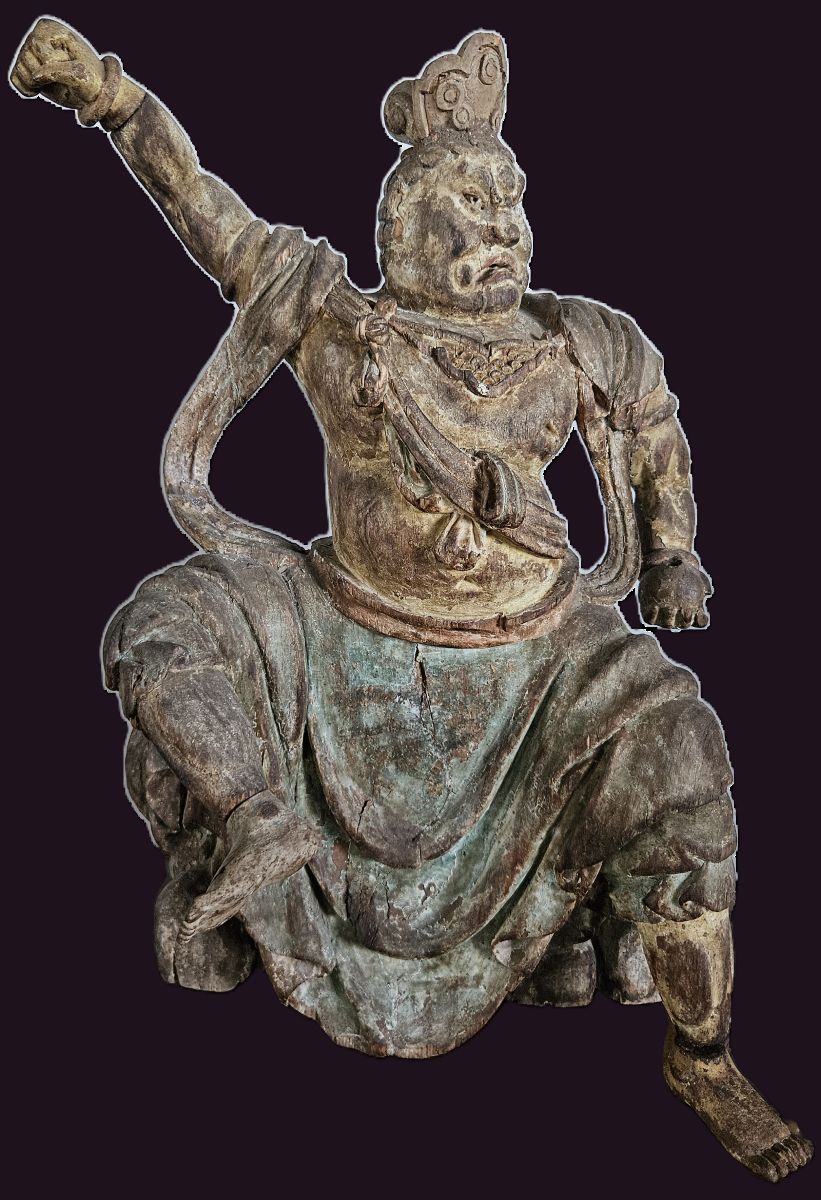
The Artistic Influence of the “Shanxi Style”
Workshop Models and Portability
In ancient Chinese scriptural workshops, master carvers frequently created smaller wooden versions of grand temple statues. These served as precision “blueprints” for larger projects or were commissioned as high-quality devotional pieces for wealthy patrons. Because of their size, these smaller wooden pieces were highly mobile and far easier to transport during times of political upheaval in China, frequently moving through the porous borders of Northern Laos.
This specific set of the Four Heavenly Kings (Tianwang) represents a rare, scaled-down wooden iteration of the monumental three-meter clay guardians found in the Shuanglin Temple in Shanxi Province. While the Shuanglin originals are world-renowned examples of Ming Dynasty realism and “dynamic stillness,” these 51cm figures serve as portable devotional versions of that exact stylistic school.
The Shanxi Merchant Connection
Their presence in the former Lao royal capital Luang Prabang points to the deep-reaching trade networks of the Shanxi Merchant Guilds. Merchants from the north often commissioned these high-quality wooden replicas to anchor private altars or guild halls (Huiguan) as they established trade outposts along the Mekong.
Conservation and Surface Recovery
Prior to professional conservation, the original polychrome on these Lokapala or Heavenly King carvings was obscured by centuries of surface accumulation, smoke, and environmental exposure. The careful conservation process successfully stabilized the surface and revealed the surviving mineral pigments, bringing the figures’ vibrant, historic detail back to light.
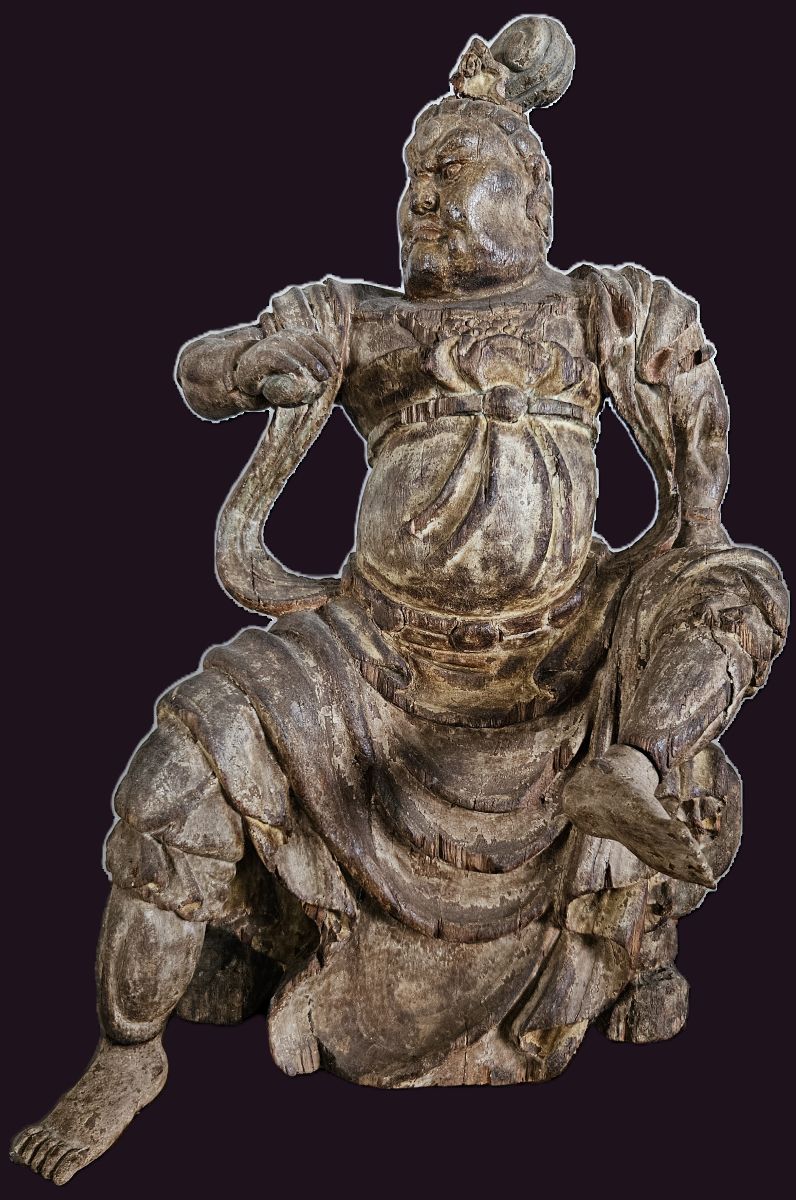
Similarities to Japanese Lokapala
When examining the specific rendering of these figures, there is a fascinating stylistic dialogue that hints at regional exchange. While standard Tang and Ming conventions often present the Lokapala in rigid, static body armor, the Shanxi artistic tradition best exemplified by the monumental clay guardians at Shuanglin Temple presents a more fluid, dynamic approach. At Shuanglin, the fierce martial armor is softened by voluminous, wind-swept robes, flowing celestial sashes, and dramatic drapery lines that create an imposing yet fluid silhouette.
This specific synthesis of martial power and fluid drapery shares a remarkable affinity with Japanese depictions of protective deities (Shitennō) refined during the Kamakura and Muromachi periods.
The historical pipeline for this artistic exchange is well-established. Throughout the Song, Yuan, and early Ming eras, Mount Wutai in Shanxi served as the ultimate northern pilgrimage destination for Japanese monks venturing into China. Renowned travelers like Jōjin in the late 11th century and Enni Ben’en in the mid-13th century journeyed from southern maritime ports across the North China Plain to reach this sacred peak. Positioned strategically along this primary thoroughfare, Shuanglin Temple (then known as Zhongdu Temple) functioned as a vital sanctuary for prayer and respite.
Visiting monks and traveling artisans undoubtedly encountered the dramatic, robe-clad martial guardians of Shanxi’s clay-sculpture tradition, carrying these visual impressions back to Japan to influence their own evolving vision of Buddhist protector deities.