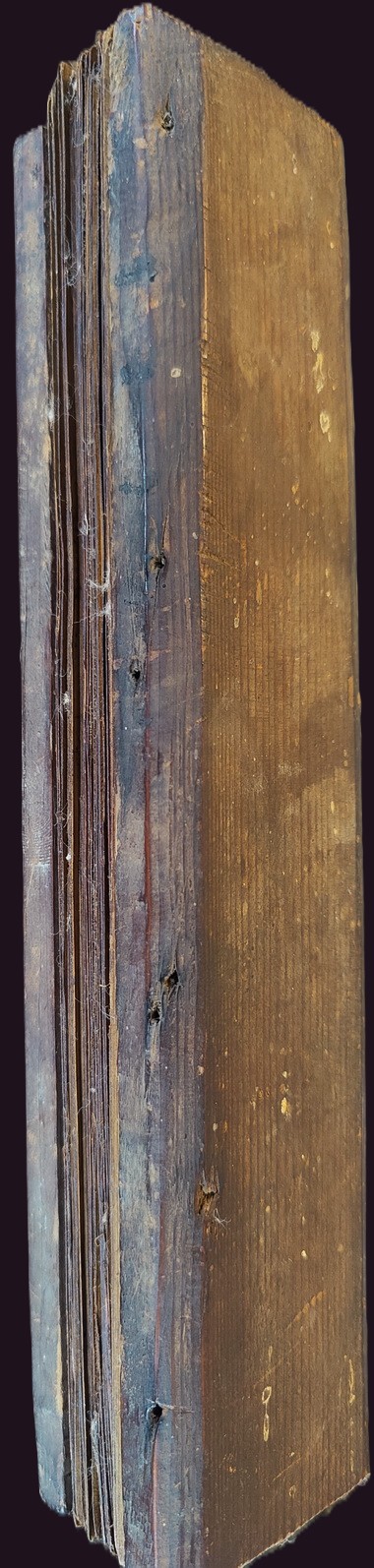
Burmese Zata Palm Leaf Horoscope
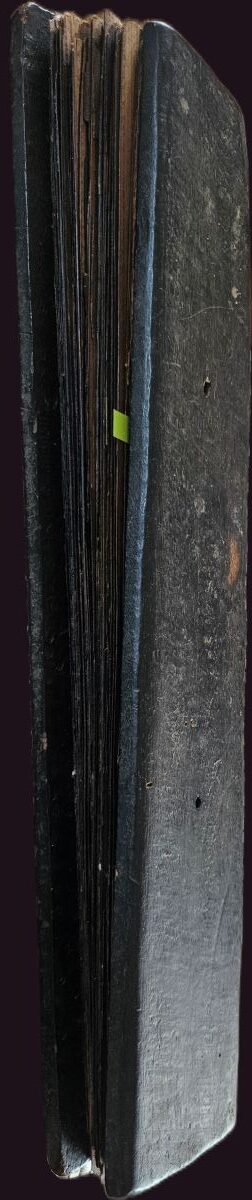
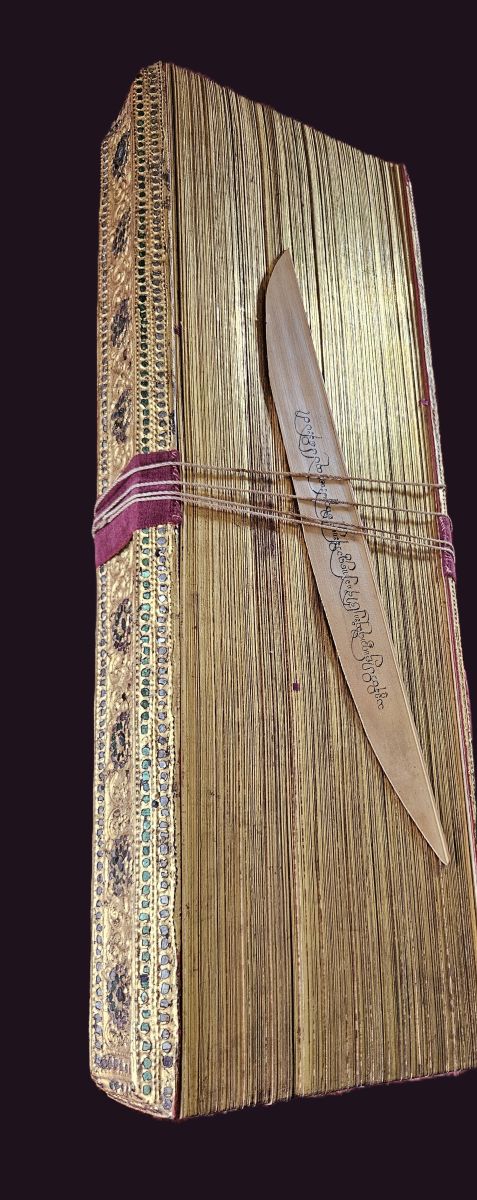
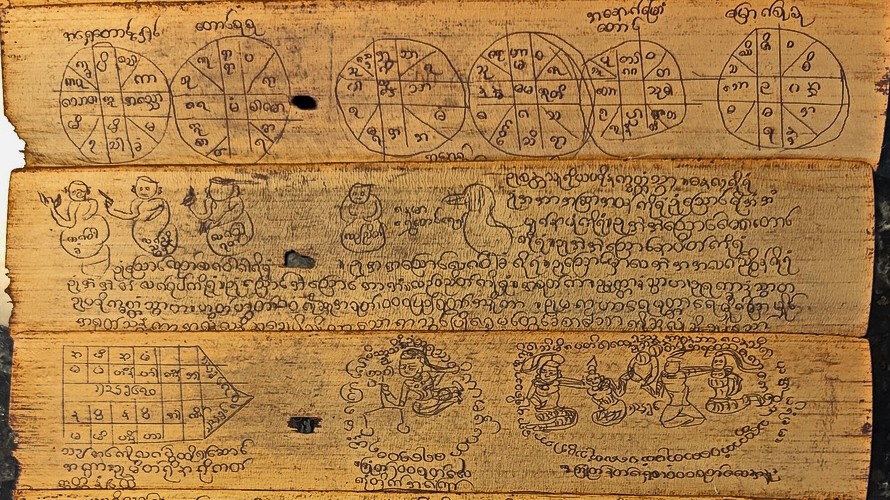
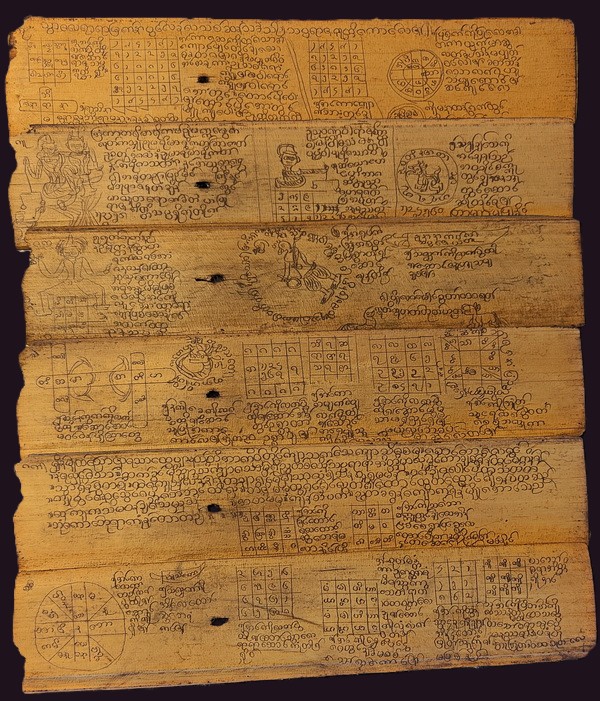
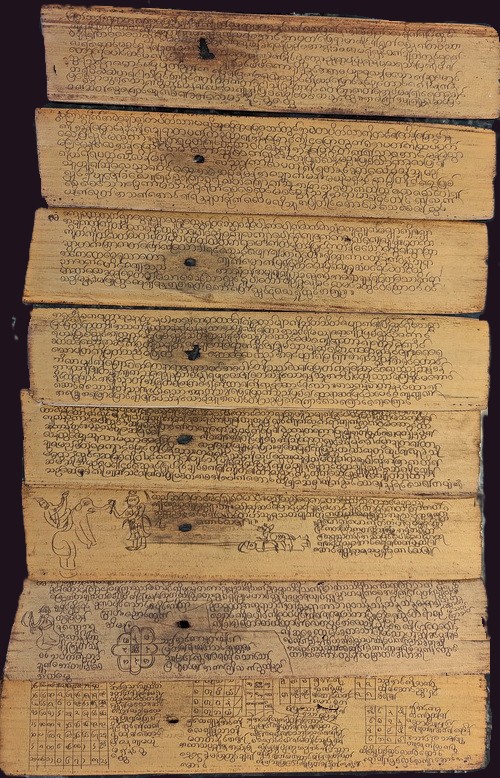
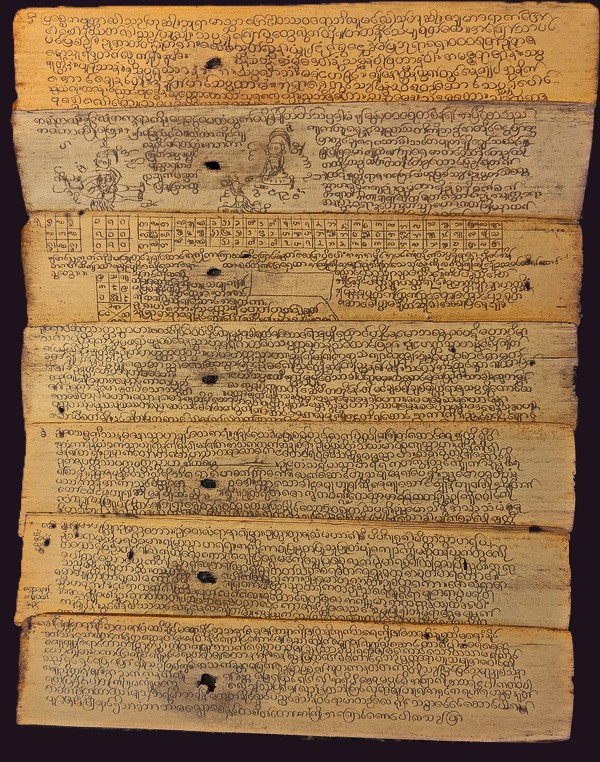
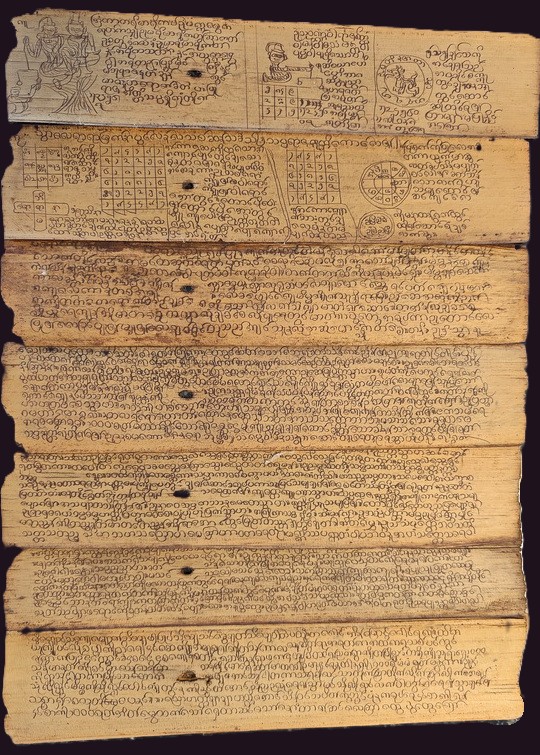
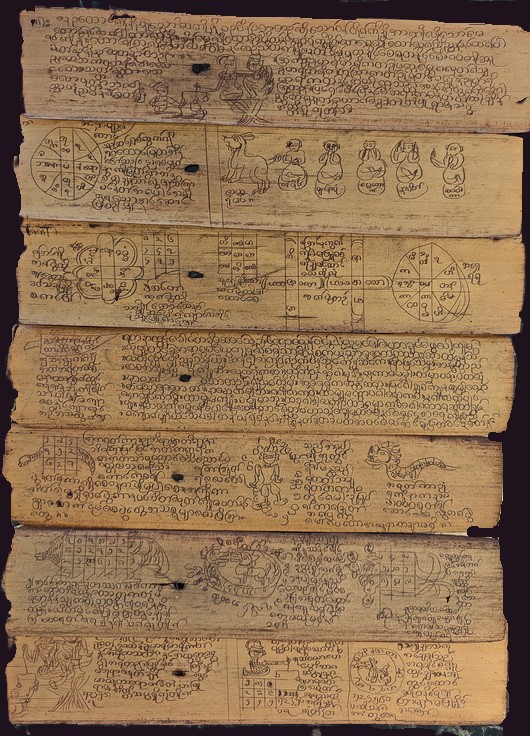
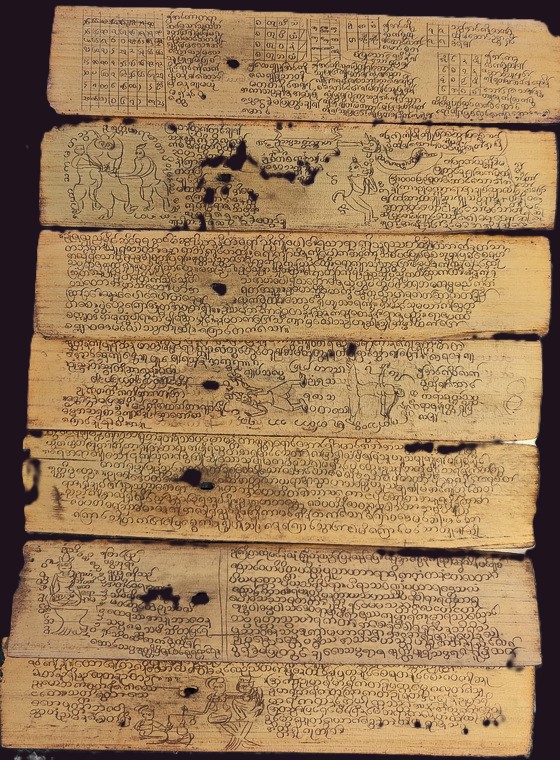
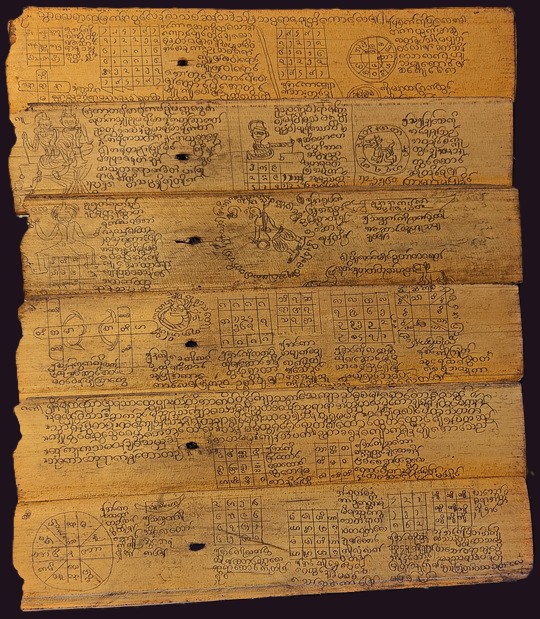
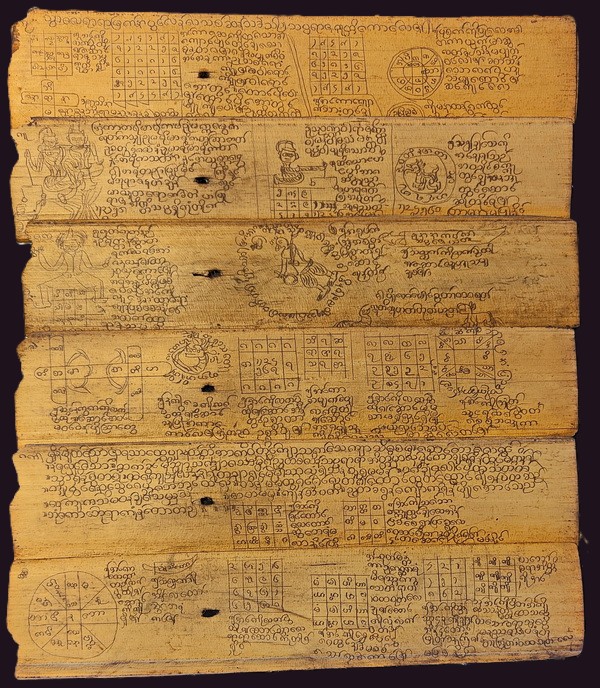
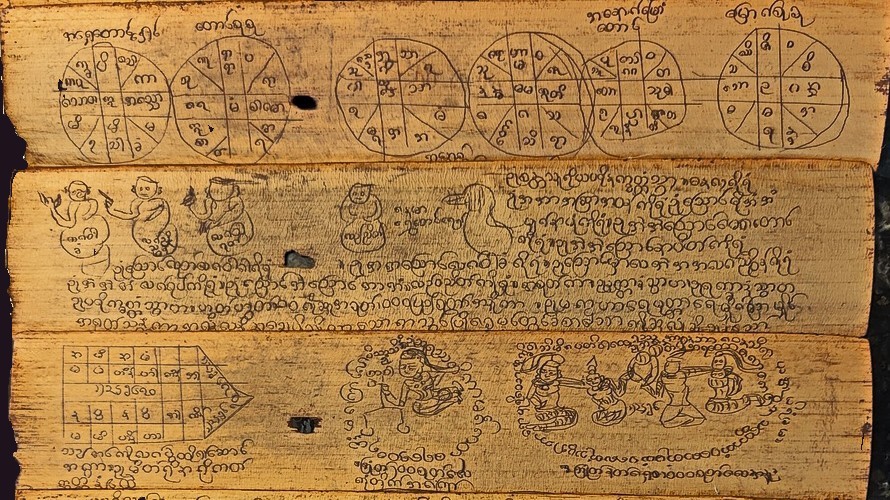
This Burmese Zata Palm Leaf Horoscope is incised on both sides of the 30 palm leaves, contained between two crudely fashioned wooden covers. The content is extensive and highly detailed, featuring intricate circular charts, diagrams, drawings, and text written in traditional Burmese script. Several blank leaves protect the text at both the beginning and the end of the manuscript or that they were intended for later use.
Given the depth and volume of the astrological content, the manuscript was likely created by a Buddhist monk possessing specialized astrological expertise. The sheer amount of information suggests it was commissioned for a local individual of significant merit or standing within their town or village. It is unclear whether this specific document represents a single lifetime birth horoscope.
Deviation from Standard Birth Horoscopes: Standard Burmese birth horoscopes typically consist of only two palm leaves bound together. The 30-leaf volume of this piece indicates a much more comprehensive astrological work or a collection of multiple charts.
SPECIFICATIONS:
- AGE: – Likely 20th century
- LENGTH: – 26cm
- WIDTH: – 6cm
- PALM LEAVES: – 30 leaves with script, charts and diagrams + 8 Blank leaves
- #380
This palm leaf birth horoscope has some worm holes in a few pages (see images)
Burmese Zata Palm Leaf Horoscope
In Myanmar, when a child is born an astrological chart is drawn up where the birth date is calculated along with many other factors. These calculations take into account the day of the week the child is born, the location of the stars, moon and sun and the time of delivery in accordance to the Myanmar lunar calendar. These Calculations are referred to as Zartar, stemming from the Pali word Zati which means birth.
The name of the child given by the astrologer, and the name of the parents along with all the information that the astrologist has calculated is then inscribed onto a palm leaf with a stylus. After the palm leaf has been inscribed it is rubbed lightly with oil, this acts as a deterrent to insects and rodents and also gives the palm leaf a nice colour with the script more pronounced.
Many people in Myanmar still place a lot of faith in Zarta (za-dah) and believe that the time and day of their birth greatly influences their life. The name given by the astrologer at birth is also important to the parents as they believe that the name, he or she is given can affect their behavior, lifespan and many other aspects of their life.
n Myanmar astrology, each day of the week corresponds to a specific animal. A person’s character traits are traditionally believed to align with the distinct qualities of the animal assigned to their birth day.
Myanmar Zodiac Animals
- Elephant with and without tusks
- Rat
- Garuda
- Lion
- Tiger
- Dragon
- Guinea pig
The seven birth signs included in the Zarta depends on the day and year of birth and believed to have an influence on one’s fate.
The seven signs:
- Adphipadhi – sign of fame
- Ahtun – the sign of brilliance
- Thike – the sign of wealth
- Raza – the sign of glory
- Marana – the sign of weakness
- Bingha – the sign of unrest
- Puti – the sign of failure.
Cultural Significance and Usage
Parents carefully preserve a zata in a secure location, frequently placing it within the family’s Buddha shrine room. When the child reaches adulthood, the parents pass the manuscript on to them for safekeeping.
During a child’s upbringing, parents regularly consult astrologers or fortune tellers, bringing the zata to seek predictions regarding the child’s health and future prospects. In Myanmar, astrological consultations remain a standard practice for navigating major life events, including illness, marriage, and business decisions.
Astrological Calculations and Content
An astrologer determines these predictions by calculating the exact time, date, and planetary alignments at the moment of birth.
This specific 30-leaf manuscript may have served as a running record, with new calculations and information appended as the individual grew into adulthood. The inclusion of certain illustrations supports this ongoing usage:
- Illustrations of a Couple: Several drawings appear to depict a married couple, suggesting the manuscript was updated to calculate marriage compatibility or family milestones.
- Buddhist Iconography: Distinct Buddhist elements throughout the drawings reflect the traditional intersection of local astrology and Buddhist merit-making.