



Burmese Mandalay Jambupati Royal King Buddha
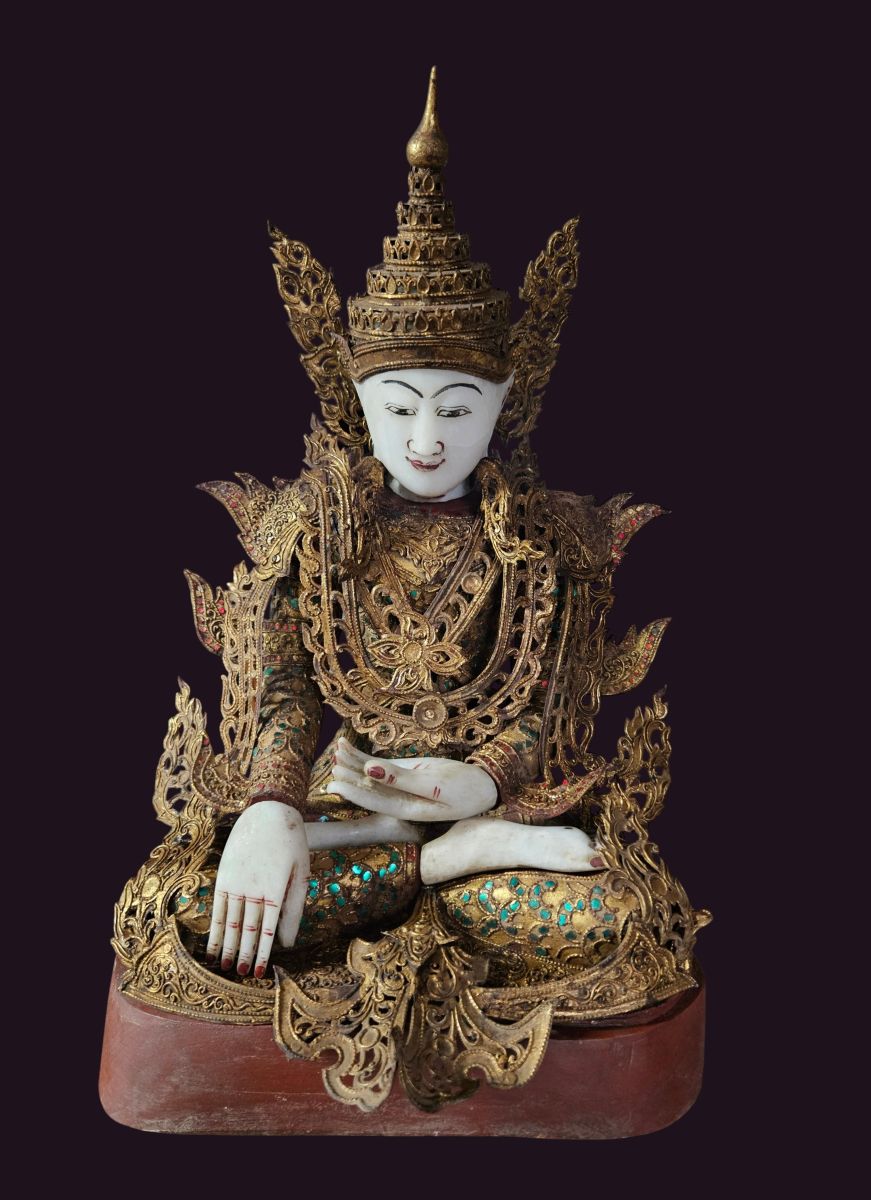
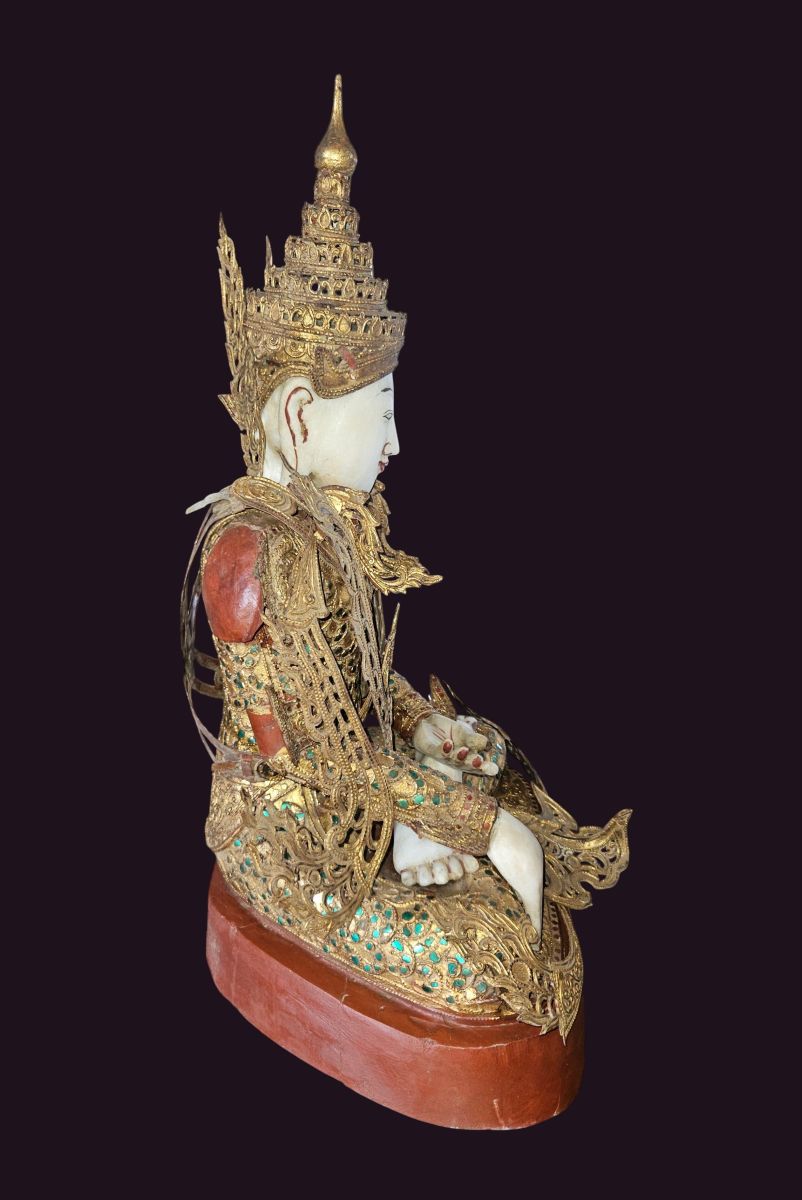
This Burmese Mandalay Jambupati royal king Buddha statue exemplifies mid‑Konbaung period artistry. The figure combines alabaster and wood construction, with each alabaster element carved separately and integrated into the whole.
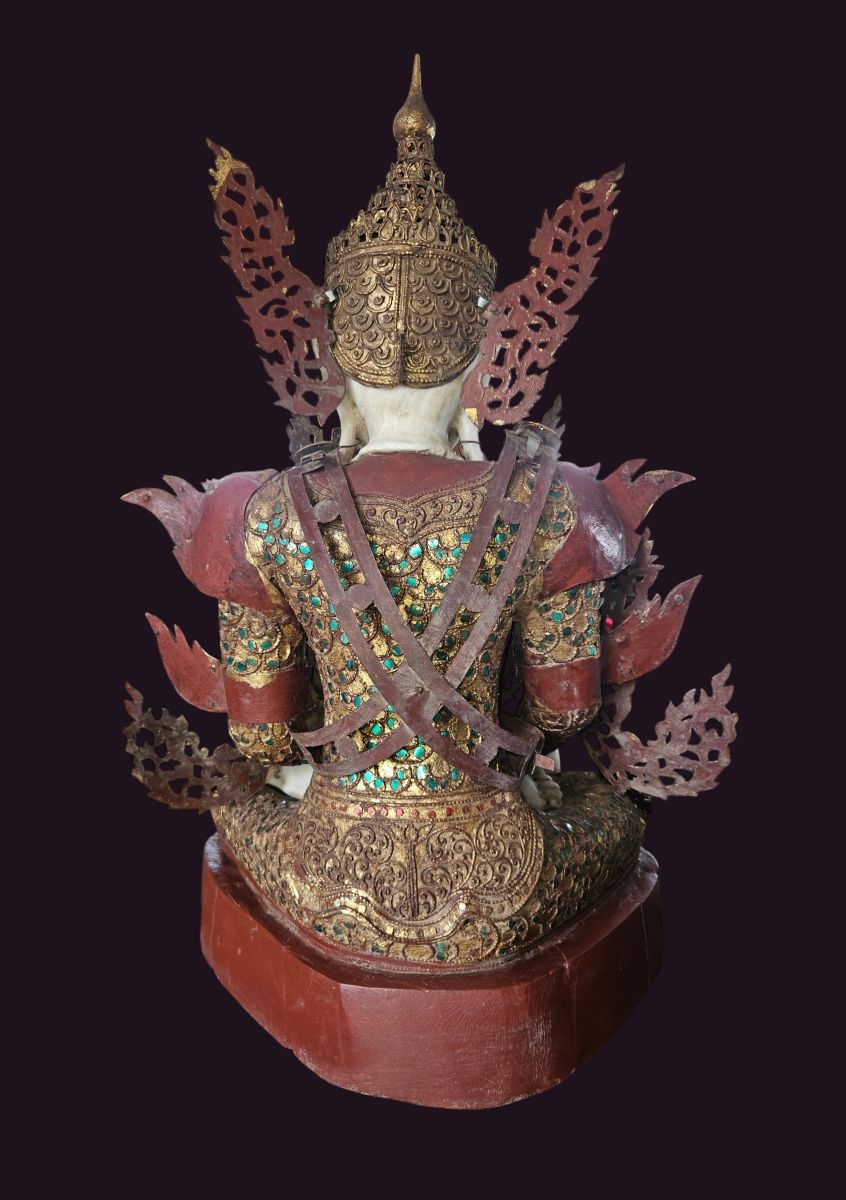
The regalia is fashioned from metal, likely copper, the body is decorated with mirror mosaic inlays, thayo lacquer forms a fish scale type pattern on the body with a decorative floral pattern around the neck. Painted nails, eyes, and mouth lend a lifelike presence to the serene white face.
The tall crown and elaborate attire reflect the royal iconography of the King Buddha tradition, while the mixed‑media technique highlights the ingenuity of Mandalay workshops during this era.
Core Structure: The main body and throne base are carved from a dense wood, likely teak, which provides structural weight.
Pigment Details: The lips, heavily lined eyes, distinct arched eyebrows, and fingernails are finished with painted accents, bringing a vivid, lifelike quality to the meditative expression.
SPECIFICATIONS:
- AGE: Konbaung Period 1853 – 1878
- HEIGHT: 60 cm
- WIDTH: 37 cm
- DEPTH: 26 cm
- WEIGHT: 13.3 kg
- CONDITION: authentic signs of age consistent with a mid-to-late 19th-century monastic or private shrine object. The combination of separate alabaster components with a wooden core, paired with genuine openwork metal regalia rather than the more common glass-and-thitsi paste substitutes of the later colonial era, makes this an important and highly collectable example of true Mandalay craftsmanship.
- #909
Burmese Mandalay Jambupati Royal King Buddha
Royal Regalia & Ornamentation
The iconography illustrates the narrative of the Buddha manifesting as a universal monarch (Chakravartin) to humble the arrogant King Jambupati.
- The Regalia – Repousse Method: Instead of being cast in solid metal or molded from fragile lacquer paste (thitsi), the metal plates were placed face-down on a soft bed of pitch. The artisan then used punches and hammers to beat the intricate floral scrolls and patterns from the reverse side, creating the raised, three-dimensional relief. Note: The regalia are all made from separate pieces of metal which slot into each other.
- The Openwork Cutouts: After the relief work was hammered out, the negative spaces within the scrolling vine patterns (ka-nyut) were pierced and cut away entirely which make the regalia very light.
- The Layered Construction: The tiered crown isn’t a single piece. It is constructed from concentric, overlapping bands of this beaten metal, stepped upward to form the spire.
Burmese Mandalay Crowned Buddha statue – Asian Art Museum