18th-19th Century Burmese Alabaster Buddha

18th-19th Century Burmese Alabaster Buddha
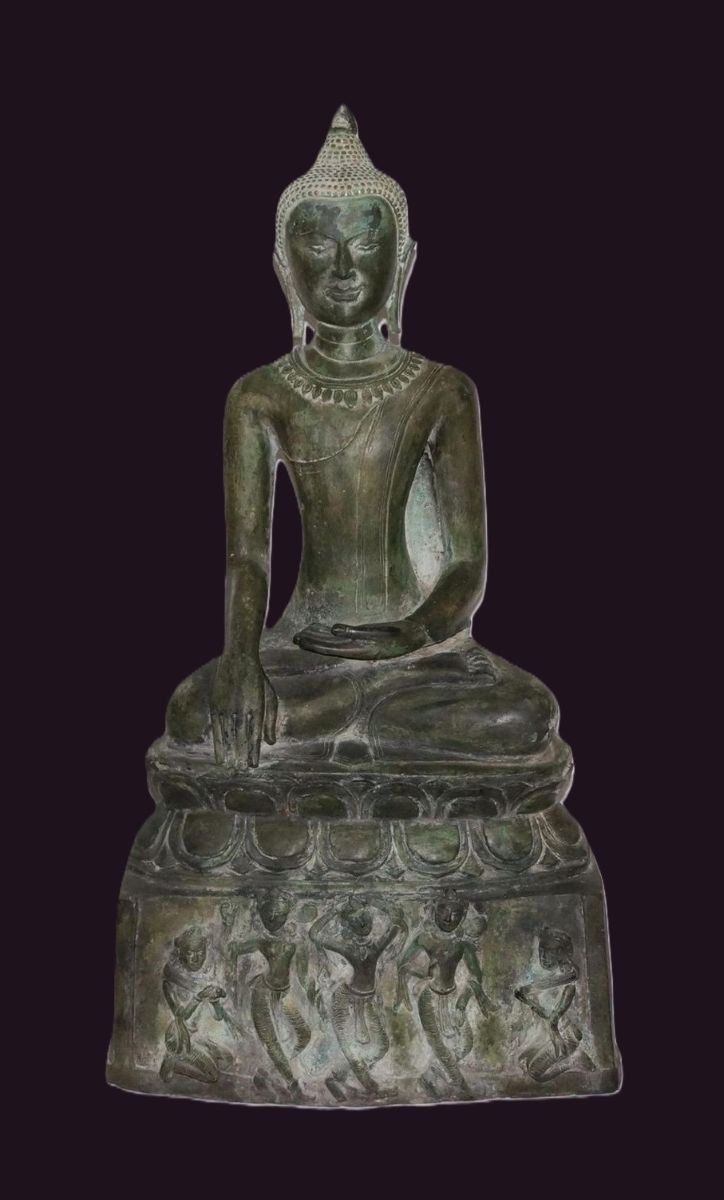
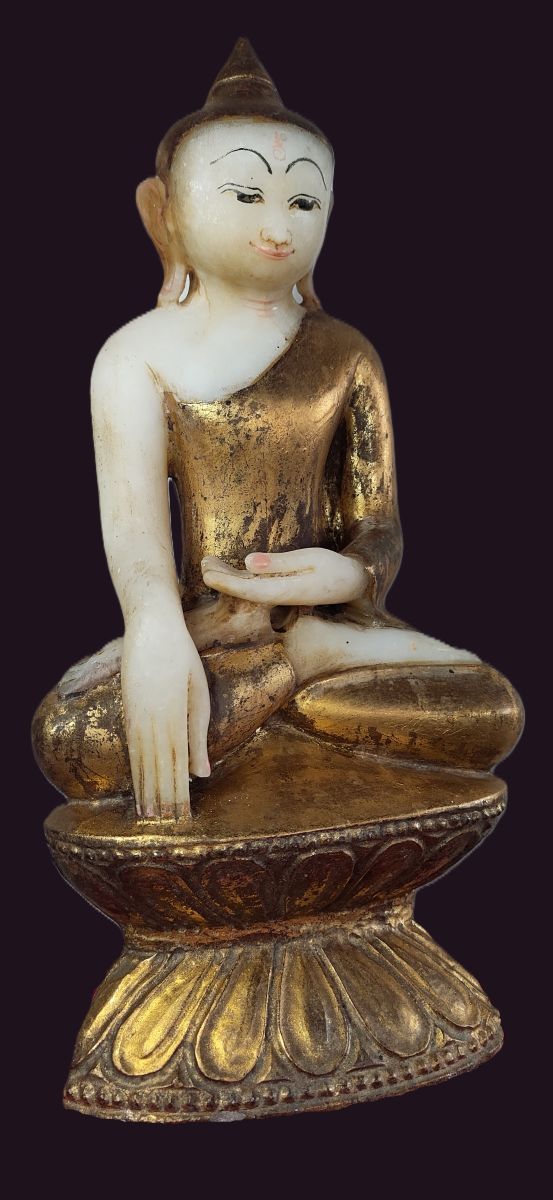
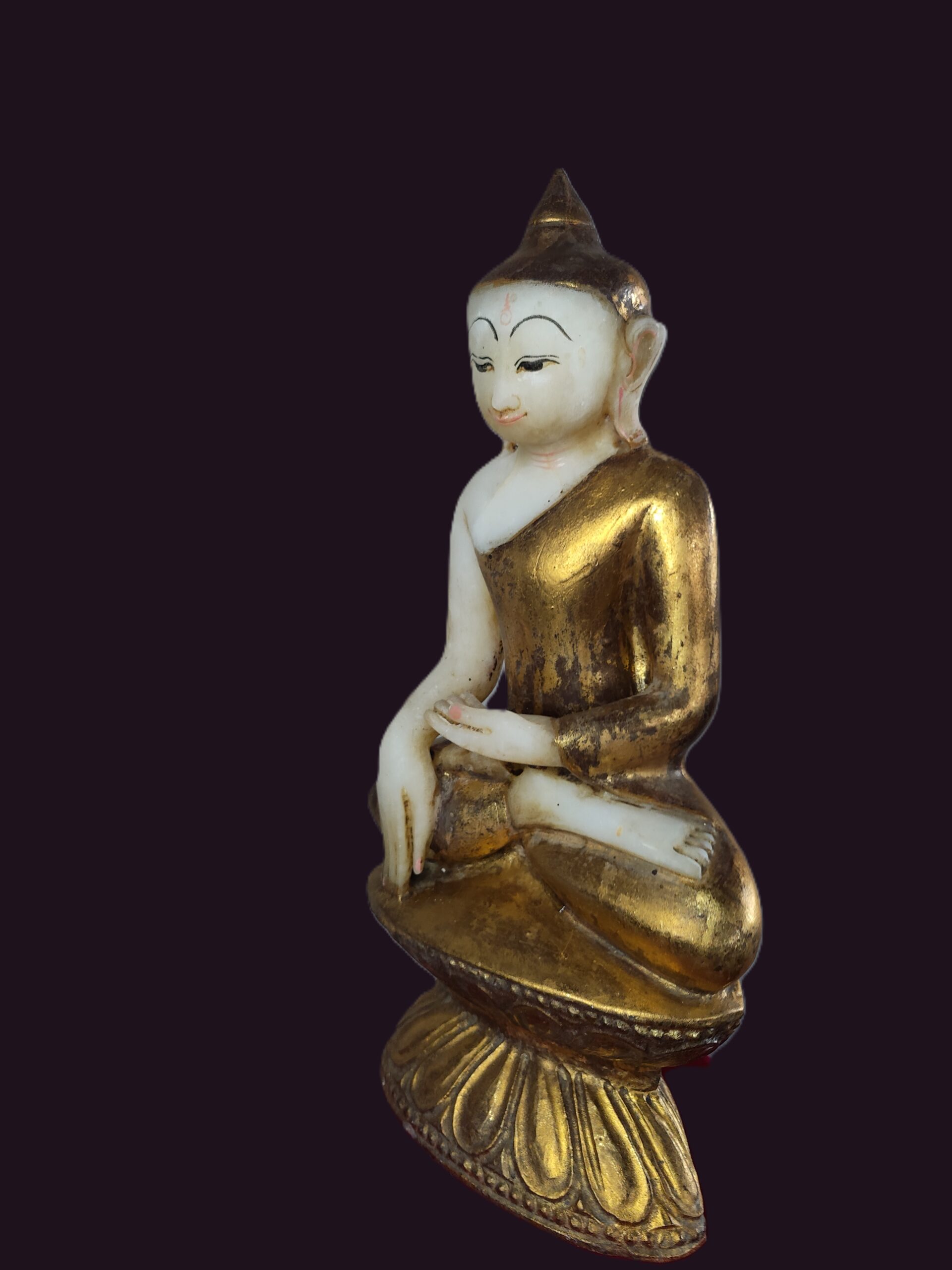
18th-19th Century Burmese alabaster Buddha statue is a quintessential example of Shan craftsmanship. While central Burmese styles (like Ava and Mandalay) began to dominate the region, this piece retains the distinct “ethnic Shan” characteristics that define the spiritual art of the eastern plateau.
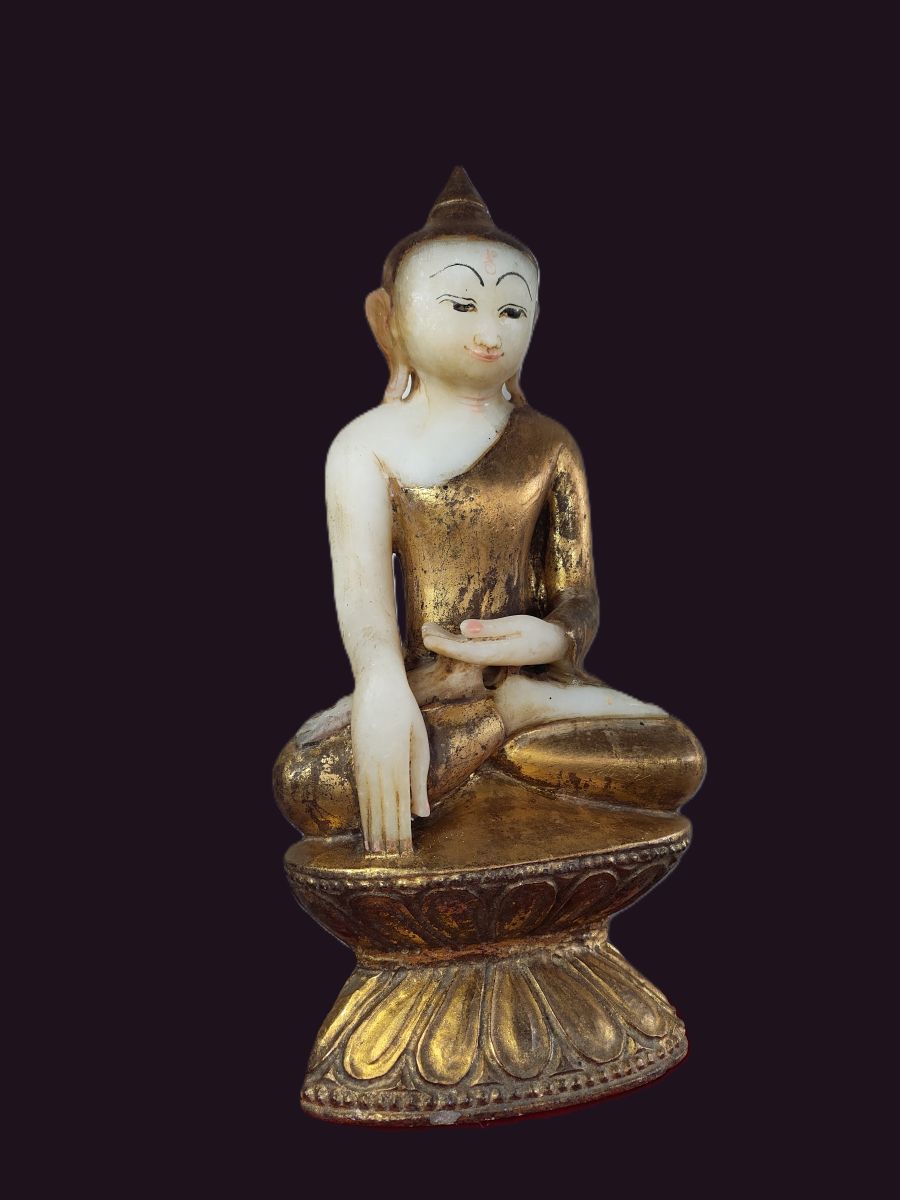
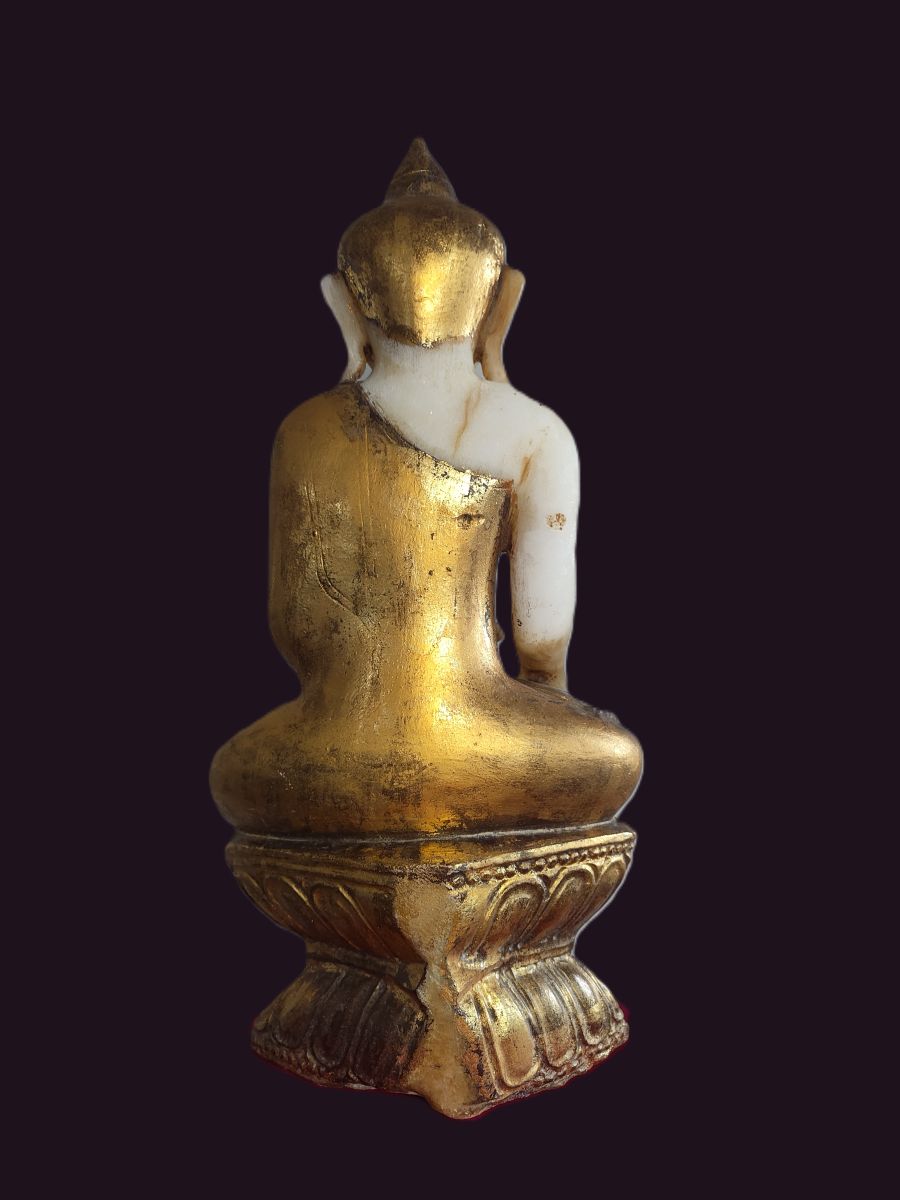
Double-Lotus Design (Vishwa Vajra-Asana Style): The pedestal is divided into two distinct, symmetrical horizontal sections of carved lotus petals. The upper tier features upward-pointing petals (upward lotus), while the flared lower base mirrors it with downward-pointing petals (downward lotus).
Elongated, Slender Petal Carving: The individual lotus petals are carved with distinct vertical elongation. Unlike the shorter, stubbier lotus markings found on early pieces, these petals are long, clean, and separated by crisp, incised vertical ridges, which is a characteristic of later Shan and Ava-style craftsmanship.
Flared, Waisted Profile: The throne has a pronounced “hourglass” or waisted shape. It starts with a rounded rim directly beneath the legs, pinches slightly inward at the center seam where the two lotus tiers meet, and then flares out dramatically toward a wide, stable circular base.
Gilded Lacquer Finish: The pedestal is heavily finished in gold leaf over a dark lacquer base layer. The natural wear on the high points of the lotus ridges reveals the dark under-layer, creating a beautiful depth that highlights the three-dimensional quality of the carving.
SPECIFICATIONS:
Late 18th -19th Century Burmese Alabaster Buddha
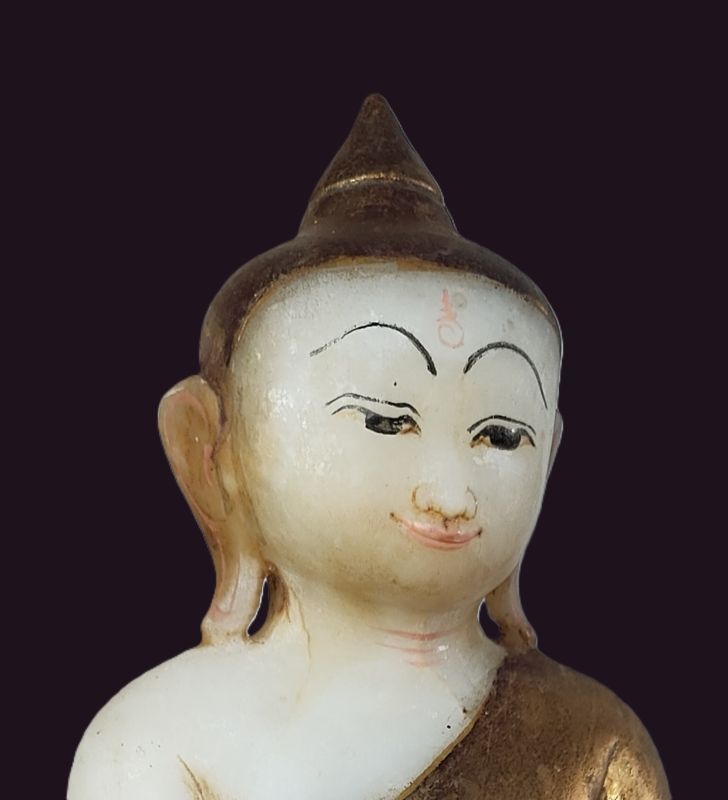
This 18th-19th Century Burmese Alabaster Buddha statue is notable for its features which distinguishes it from more angular provincial styles. This “moon-faced” serenity is a classical trait of the late Ava (Innwa) period, suggesting the piece was carved by a master artisan influenced by the royal court styles of central Burma while retaining the distinct sculptural motifs in Shan tradition.
Stylistic Markers
- The Countenance: The face is beautifully proportioned with soft, rounded cheeks and a gentle, level gaze. This fullness conveys a sense of youthful vitality and supreme equanimity, typical of high-quality 18th-century carvings.
- Pedestal: While the face leans toward the central Burmese “Ava” ideal, the waisted double lotus pedestal remains classic Tai Yai a thin waisted double lotus high pedestal with a thin waist.
- Alabaster: Carved from a single, substantial block of white alabaster, the piece shows incredible fluidity. The transition from the rounded face to the graceful, tapered fingers of the Bhumisparsha mudra (Earth Witness) is seamless.
- Gilded Patina: The statue is dressed in original gold leaf over red lacquer. The natural thinning of the gilding on the most rounded surfaces like the cheeks and the knees highlights the underlying translucency of the stone and confirms its long-standing age.