Crowned Shan (Tai Yai) Buddha – 19th Century

Crowned Shan (Tai Yai) Buddha – 19th Century
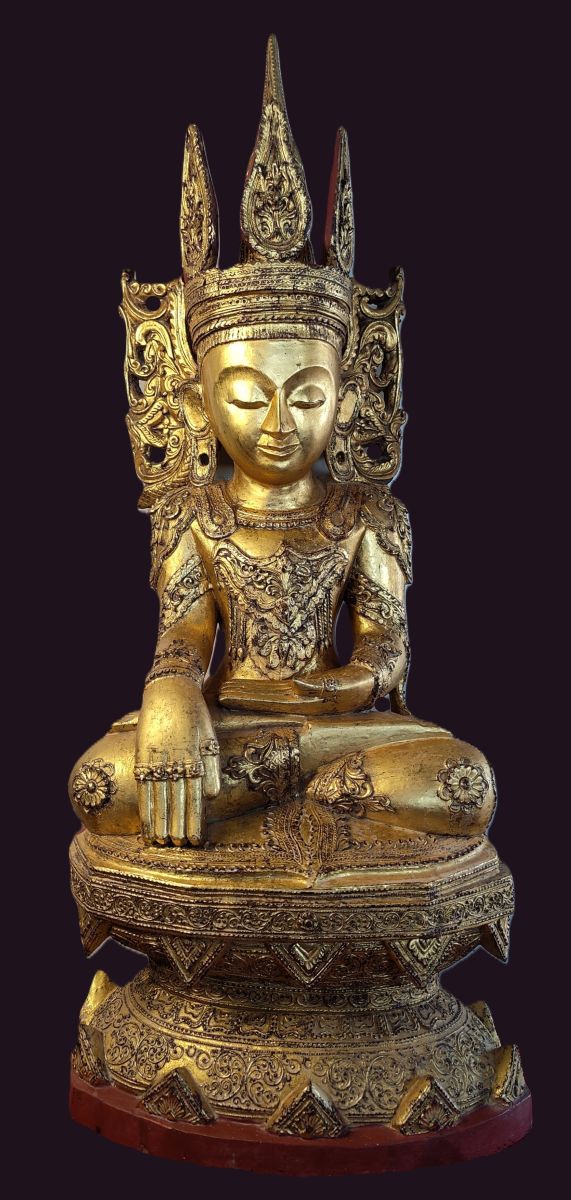
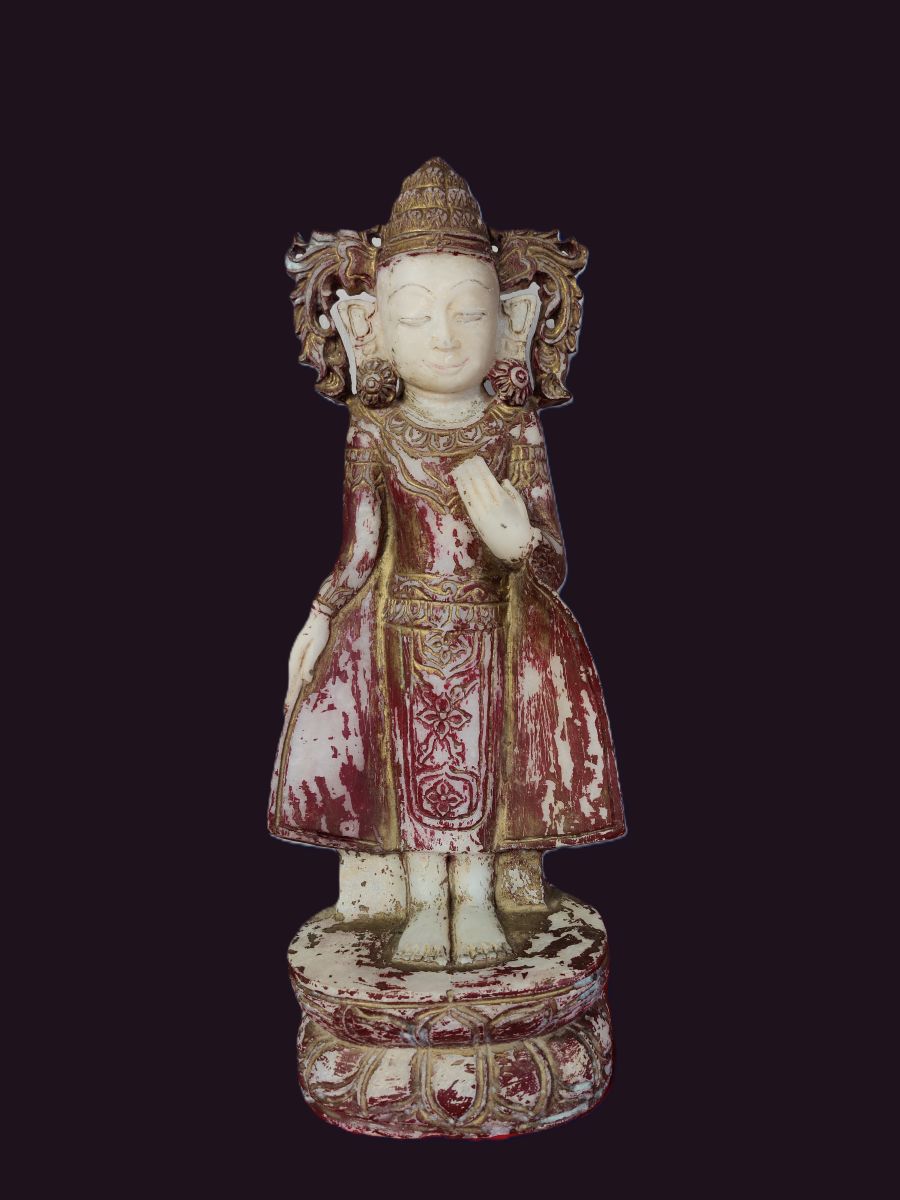
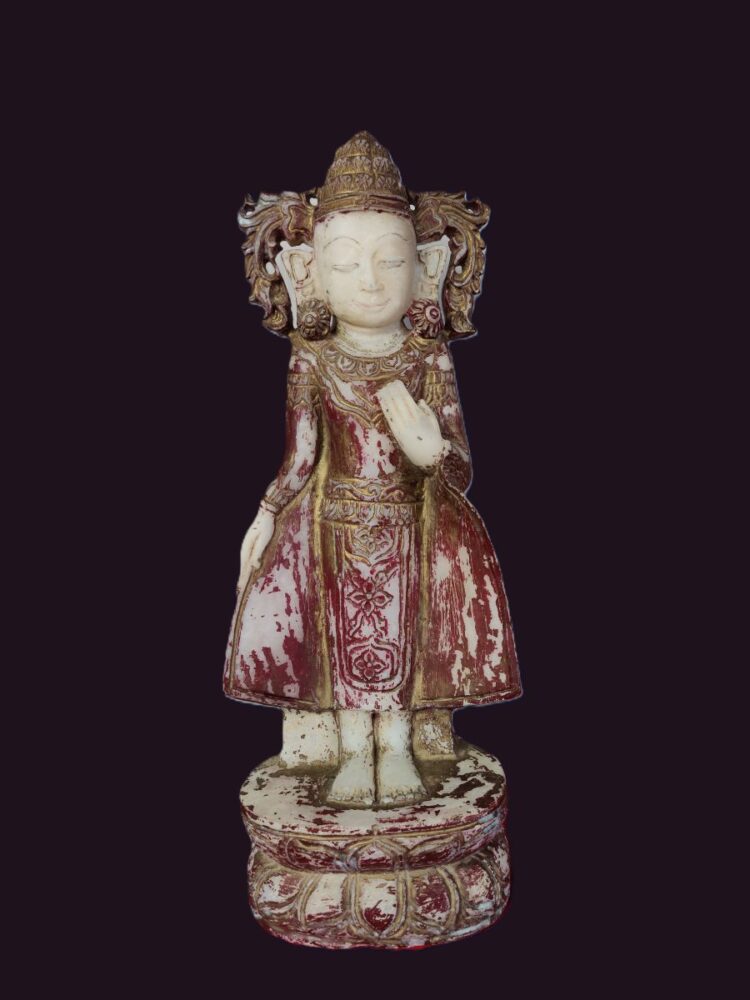
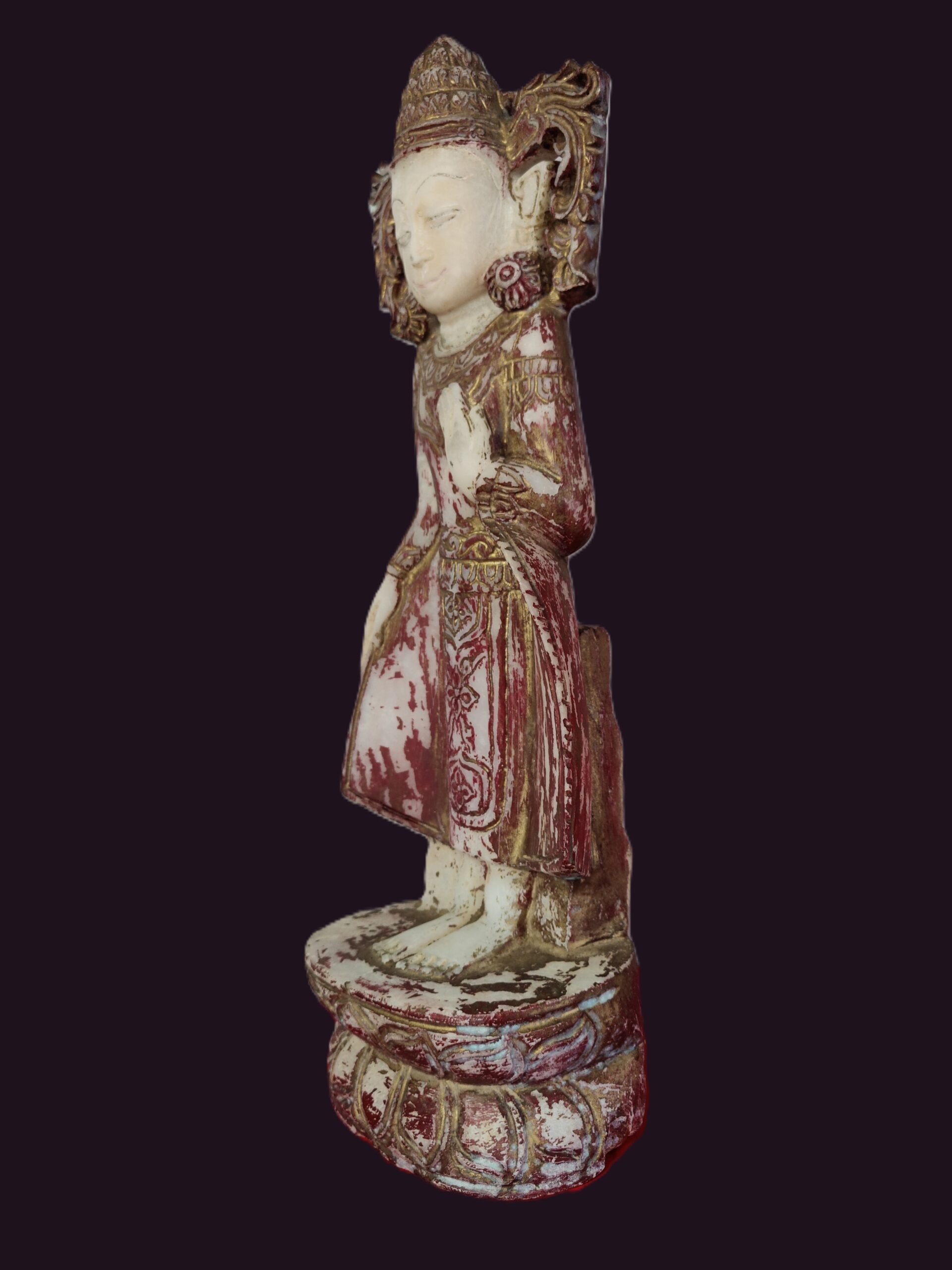
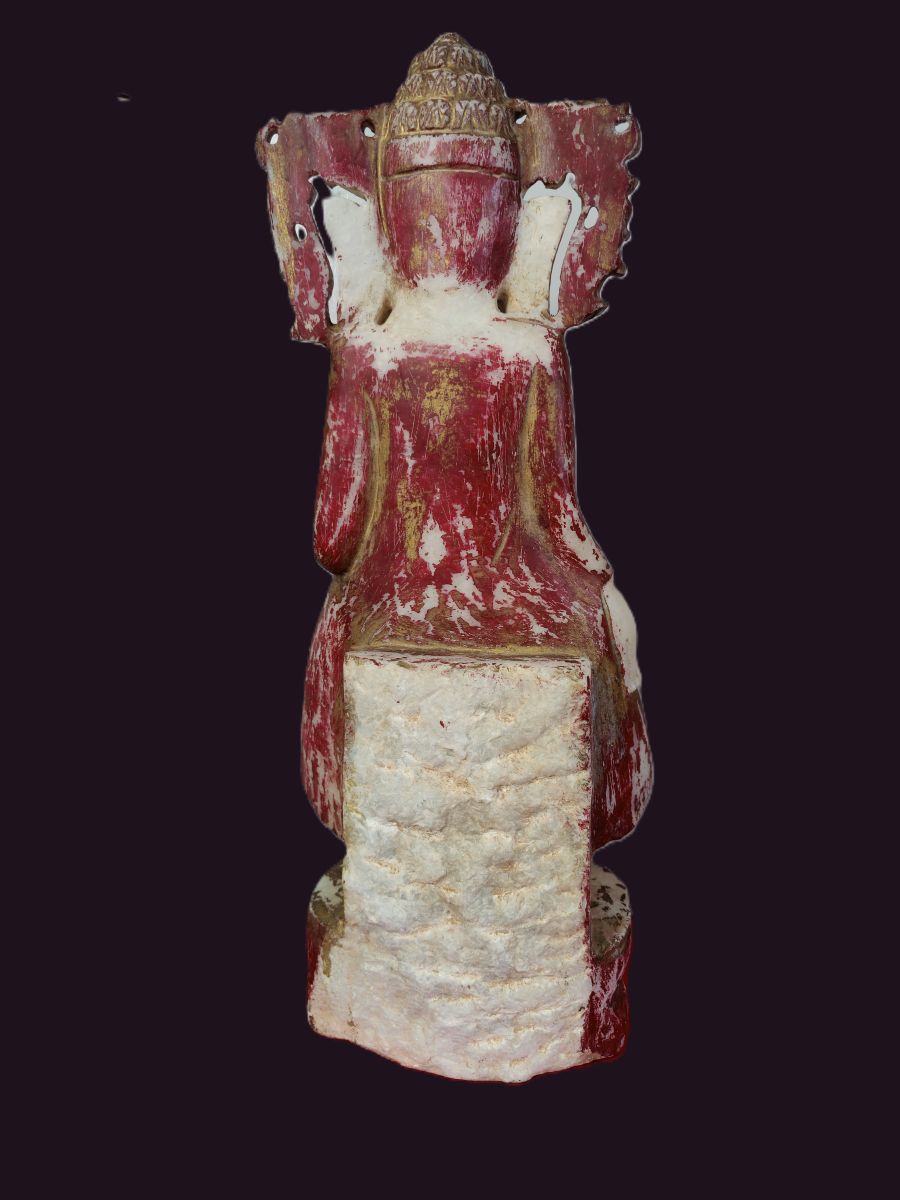
Crowned Shan (Tai Yai) Buddha -19th century sculpture representing the Jambupati Buddha or royal king Buddha. Carved from Burmese alabaster, the figure is an example of the Shan (Tai Yai) aesthetic, which sought to harmonize the Buddha’s spiritual transcendence with the visual splendor of royalty.
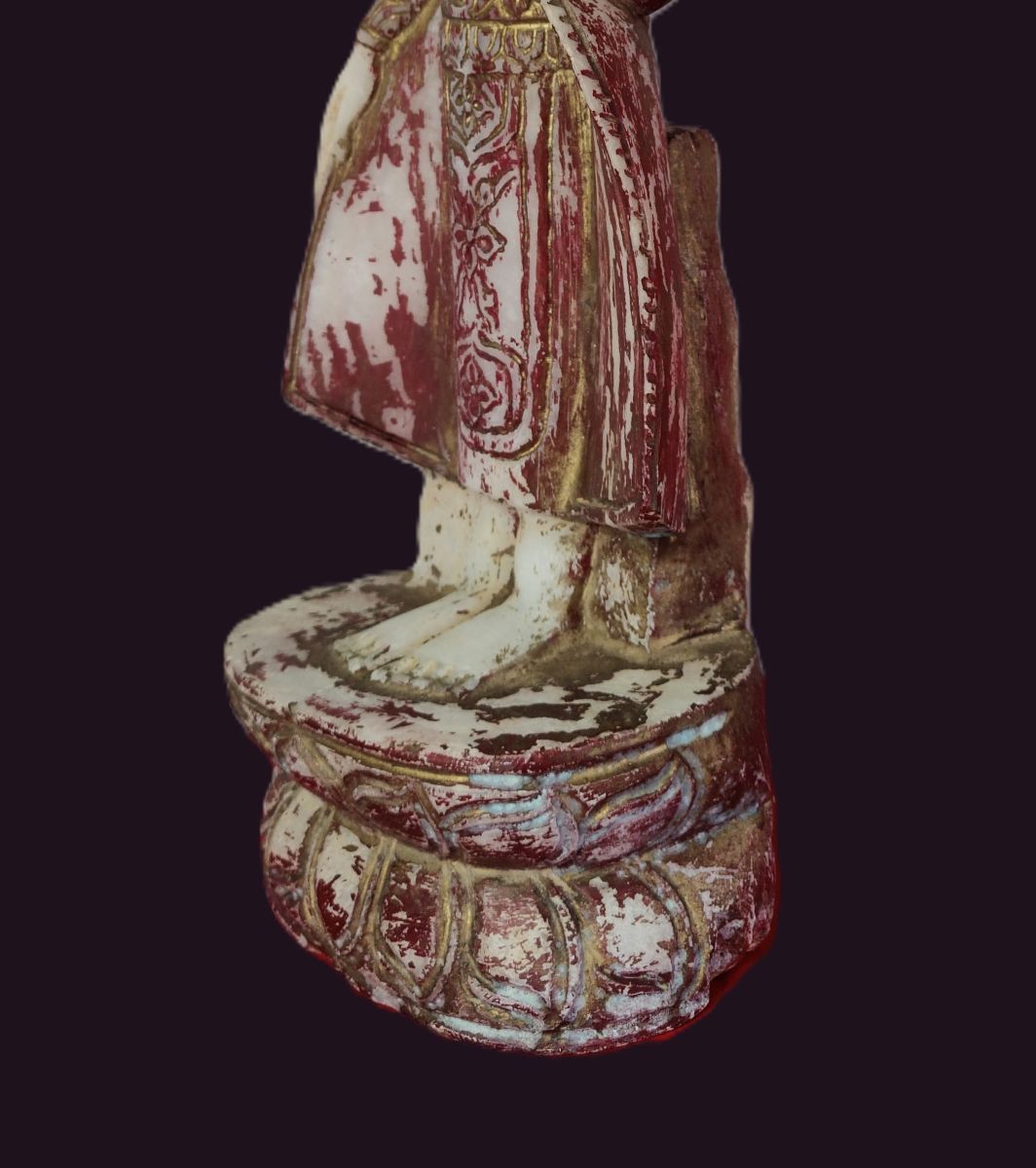
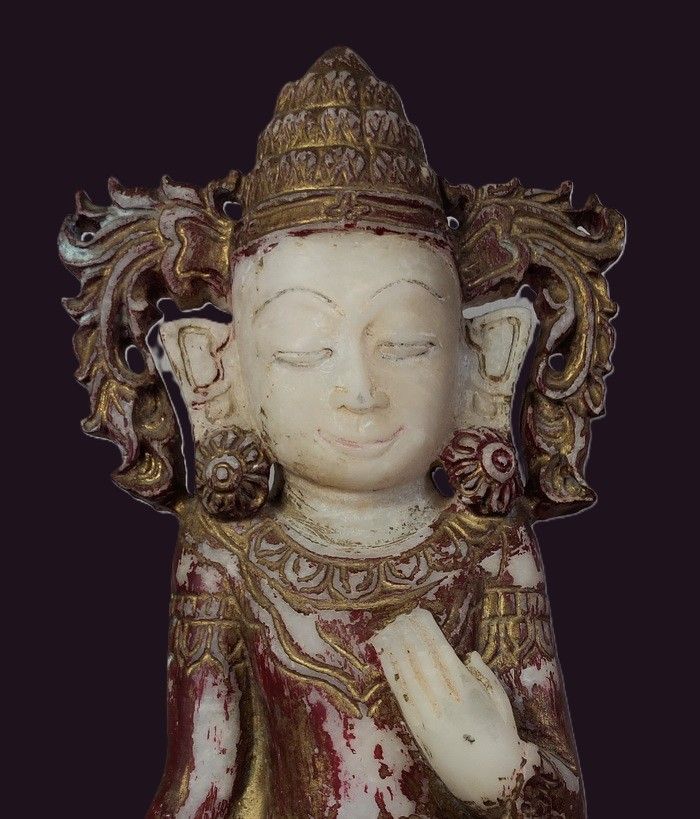
The statue is finished with a traditional deep-red lacquer (hansi), often used as a protective and adhesive layer for gold, with traces of the original gilding still evident. The contrast between the pristine white alabaster of the face and the rich crimson of the royal vestments emphasizes the Buddha’s serene, meditative expression.
SPECIFICATIONS:
Crowned Shan (Tai Yai) Buddha – 19th Century
Iconographic Excellence
The Royal Crown & Regalia: The Buddha wears a multi-tiered crown characterized by expansive, ornate side flanges (nabaun), symbolizing his sovereignty over the earthly and spiritual realms. The iconography features a three-tiered incised crown under a semi-pointed $usnisha$. Three floral incised medallions decorate the center panel of the robe and headband, while a single row of lotus petals accentuates the waist, neckline, and armbands.
The Gesture of Great Compassion: The left hand is raised to the chest in the Maha Karuna Mudra. This rare gesture signifies “Great Compassion,” a reminder of the Buddha’s vow to alleviate the suffering of all sentient beings from a place of inner truth.
The Functional Grace of the Right Hand: The right hand is depicted gracefully grasping the hem of the royal robe (sanghati). This functional gesture serves to “open” the heavy vestments, revealing the intricate floral incisions beneath while providing a structural anchor for the dramatic, flared silhouette.
The Pedestal: The figure stands upon a tall, double-lotus pedestal (Padmasana) with deeply incised petals, flanked by ornately carved side flanges that emphasize the Buddha’s celestial presence.
Historical Context
This piece is a quintessential example of the late Konbaung dynasty’s influence on the Shan States. It captures the moment the Buddha assumed the form of a universal monarch to humble the proud King Jambupati, proving that spiritual power far exceeds even the grandest earthly sovereignty.
A definitive representation of the Shan Royal style, where the craftsmanship of the 1800s brings a timeless theology into physical form. the timeless peace of the Dhamma.