Mid 19th Century Mandalay Bronze Buddha
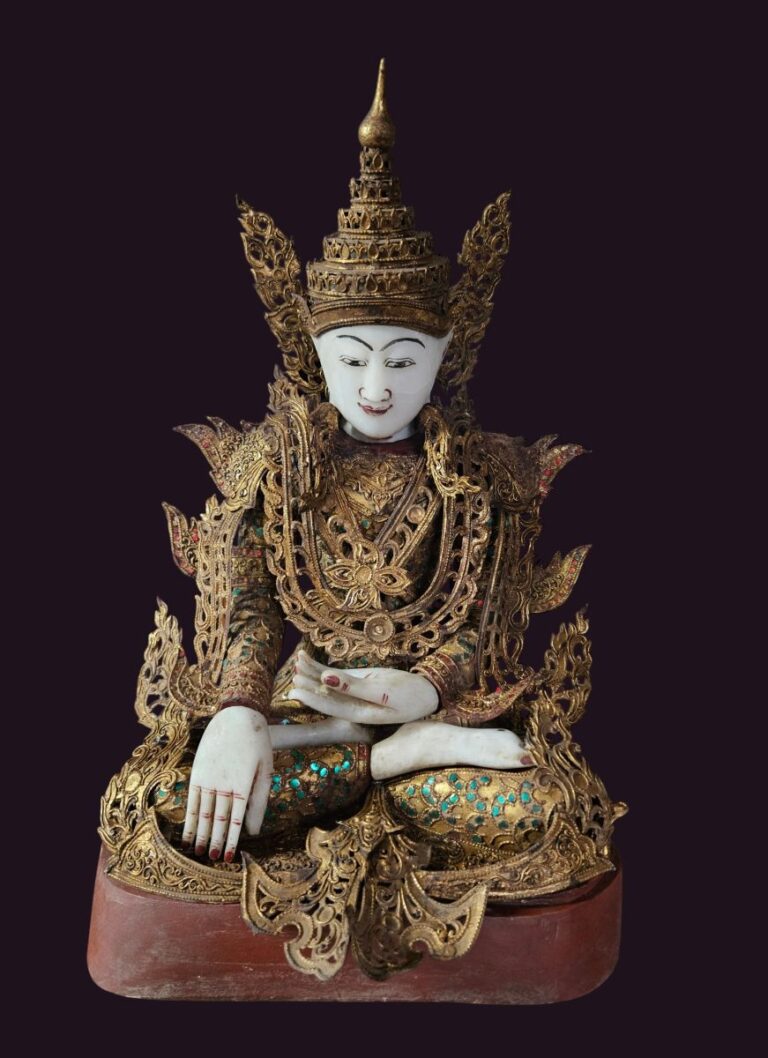
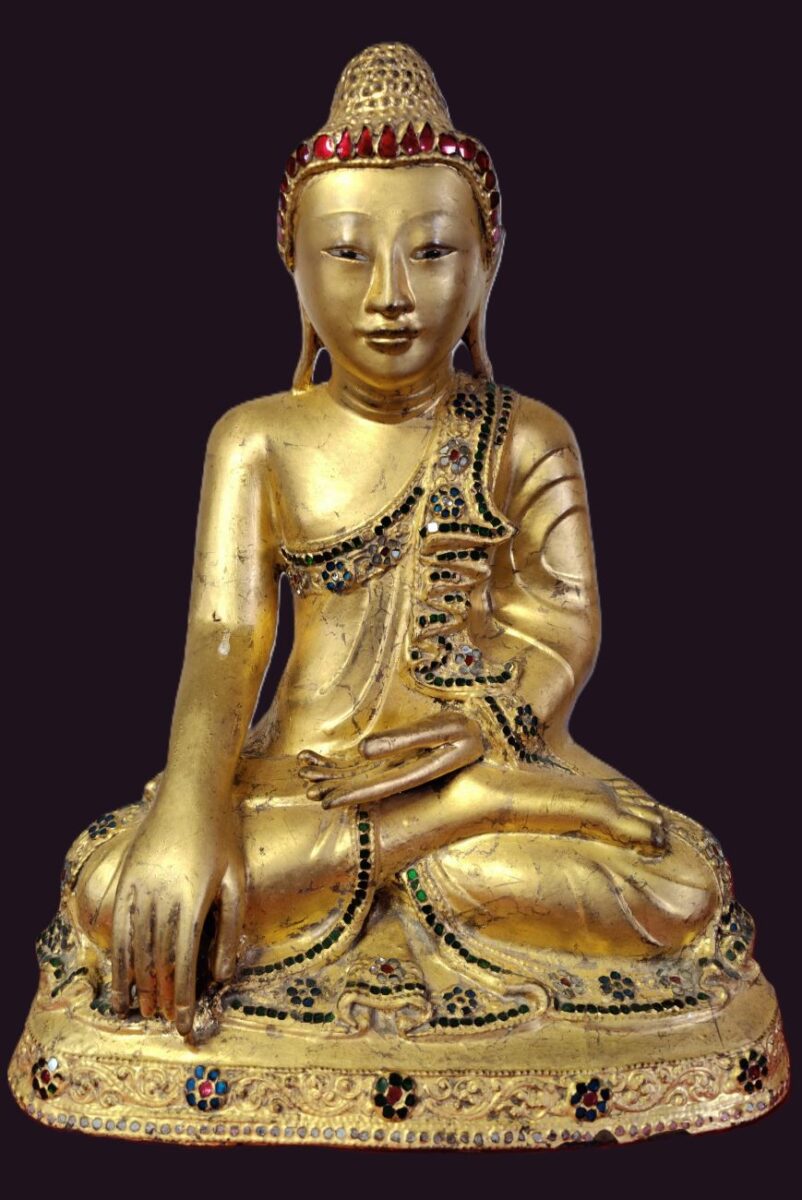
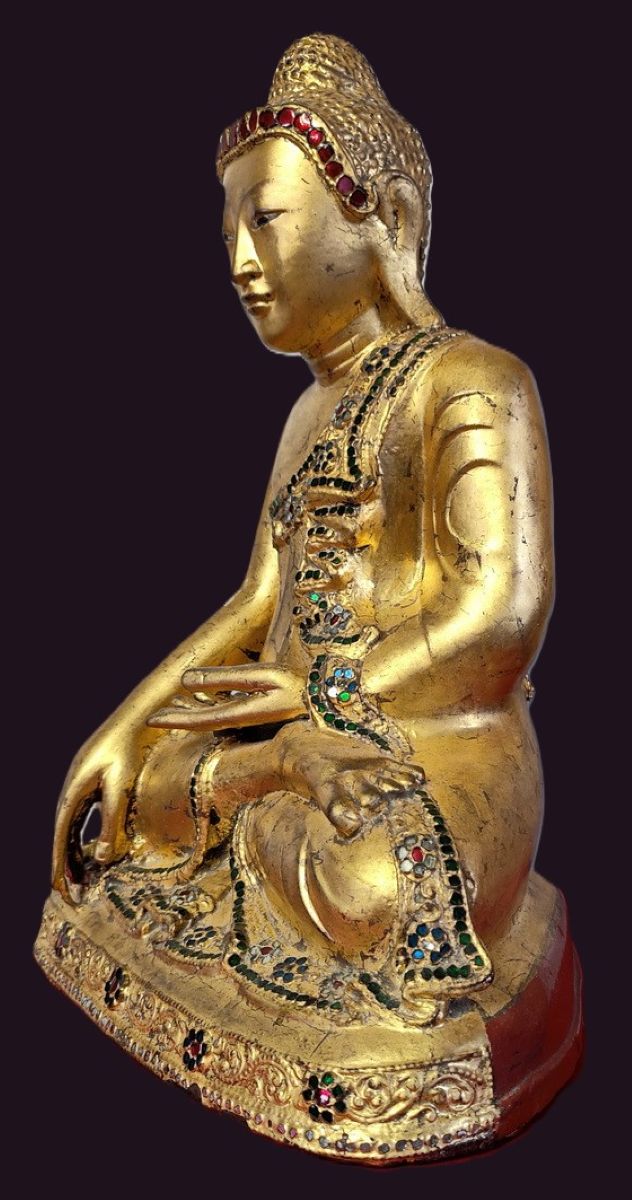
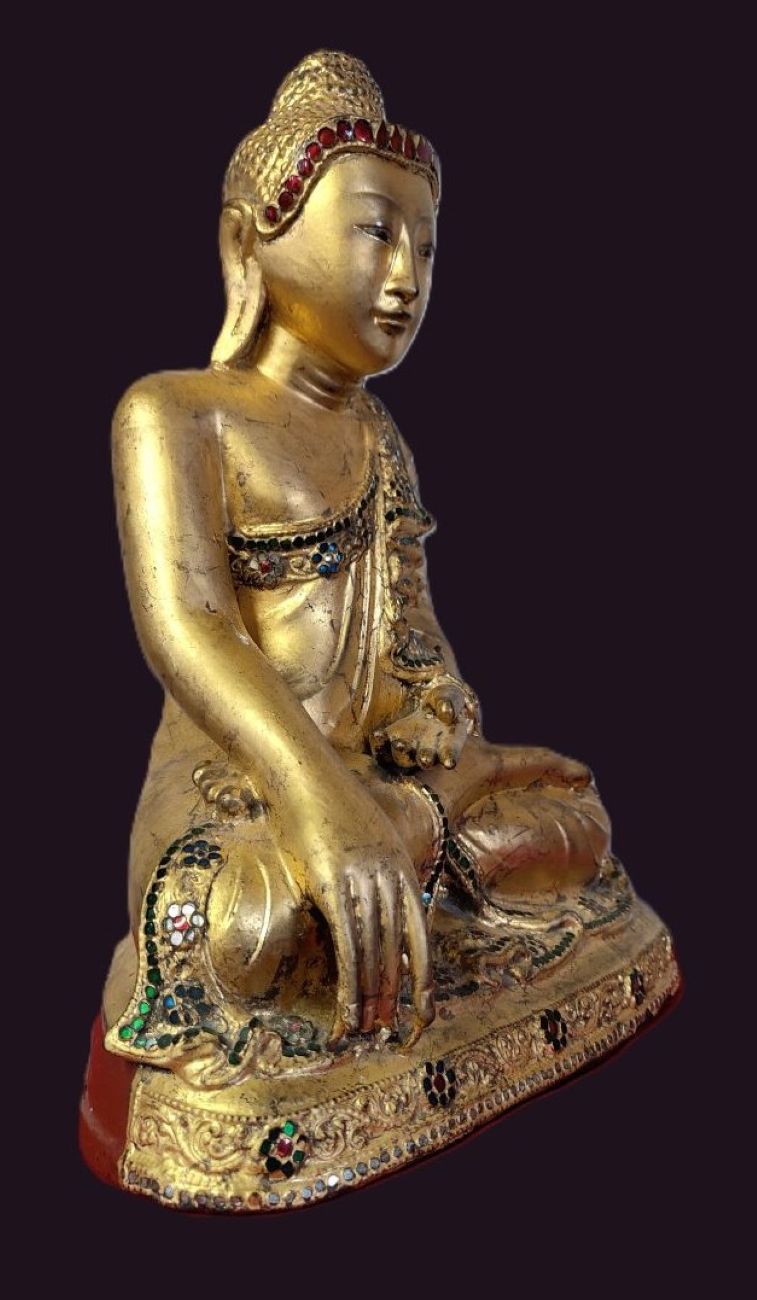
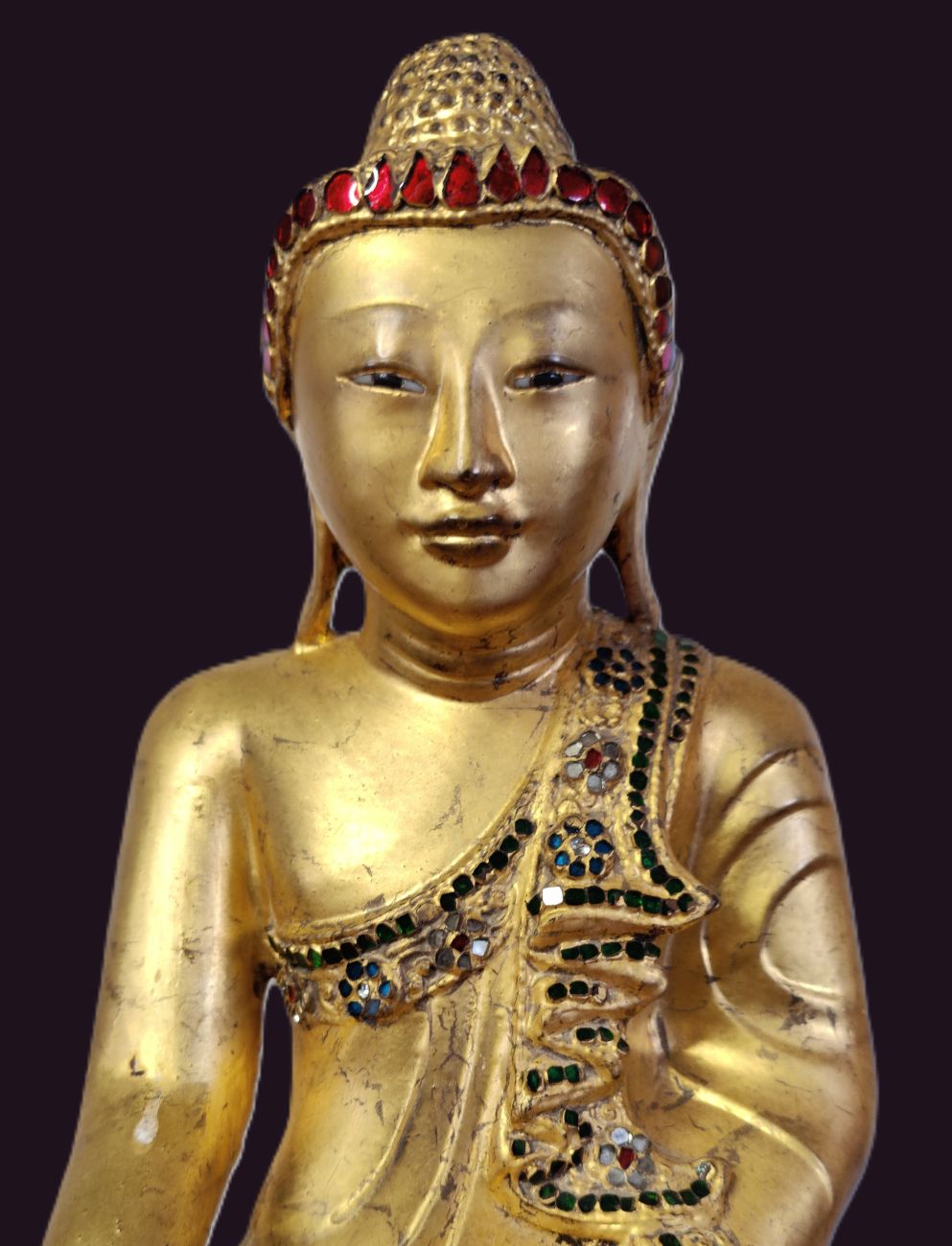
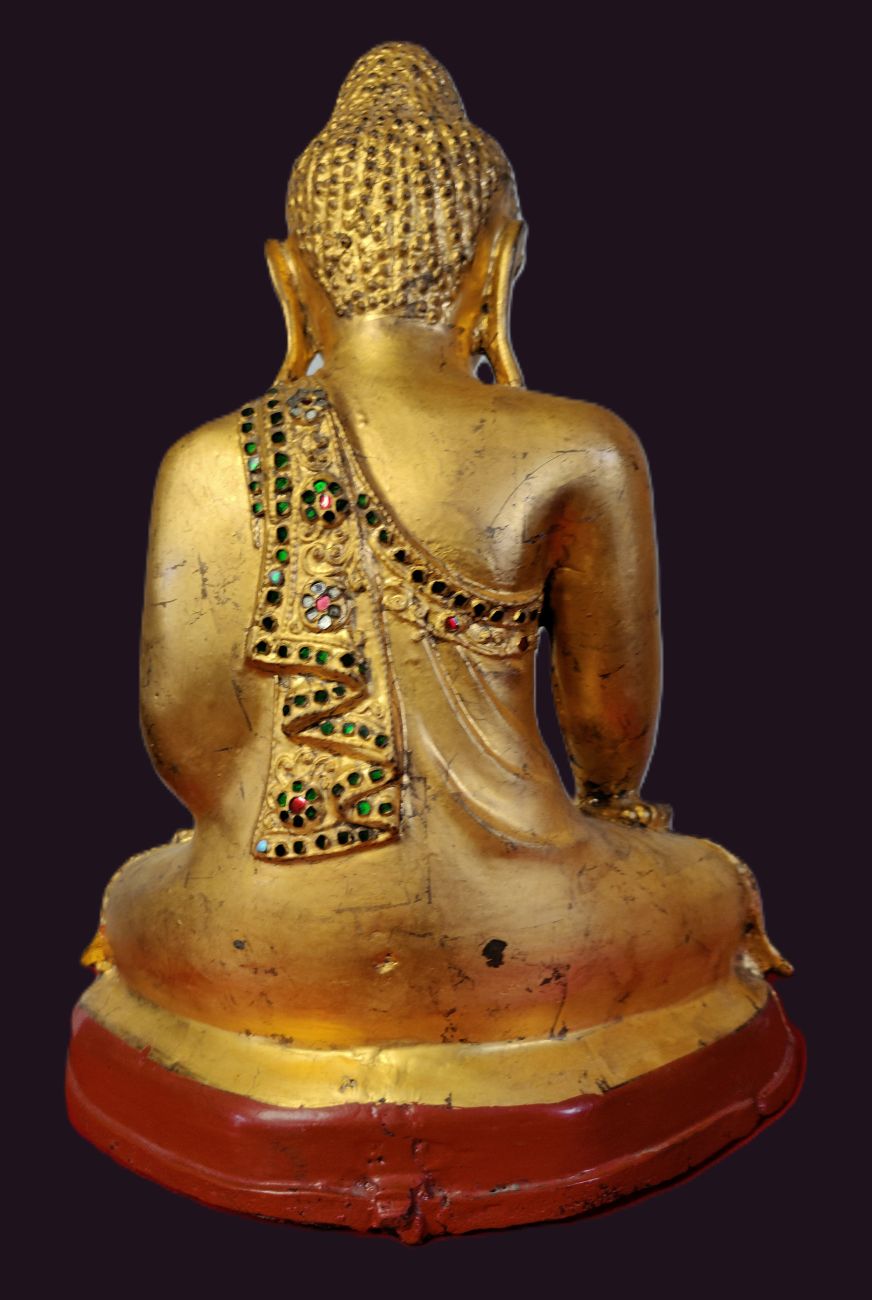
This Mid 19th Century Mandalay bronze Buddha represents the transitional aesthetic of the Early Mandalay Period. The Buddha is depicted in the Vajrasana (diamond or lotus) posture, with the right hand performing the Bhumisparsha mudra (the “Earth Witness” gesture), while the left-hand rests in the lap with the palm oriented upward.
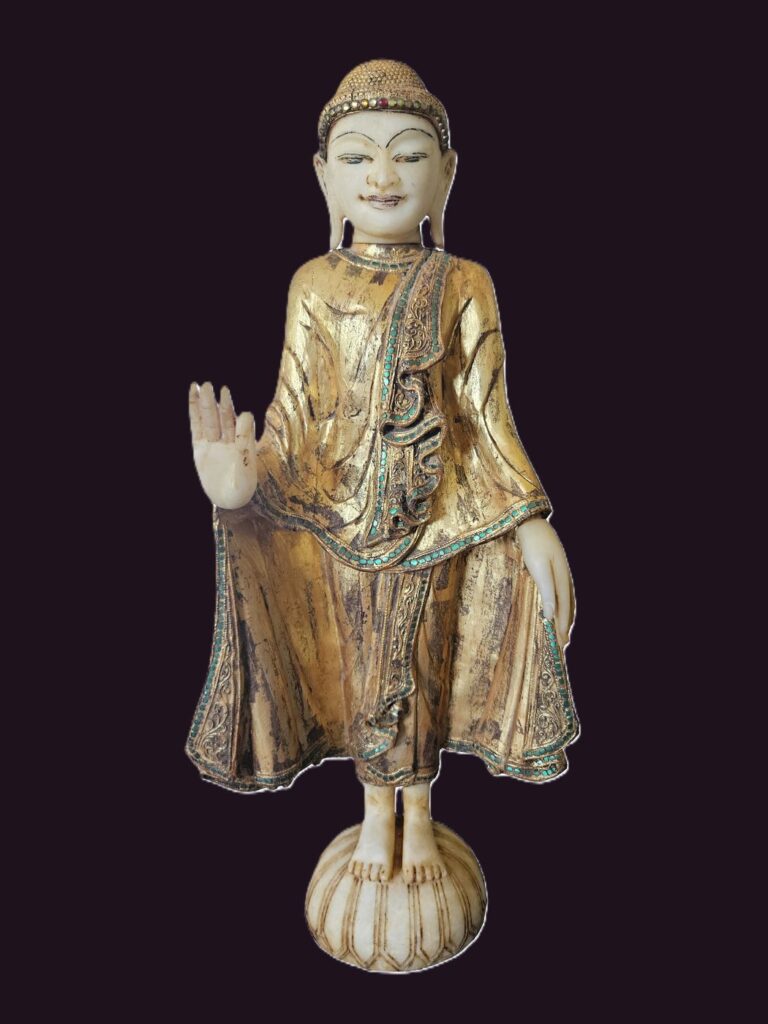
The robe is decorated with genuine gold leaf and complemented by intricate hman-zi shwe-cha (glass mosaic and gold) ornamentation. A row of ruby-red glass segments defines the forehead, while the robe (sanghati) and the tiered pedestal feature a border of glass mosaics in a polychromatic palette of green, blue, red, and white a row of medallions sits above, a hallmark of the period’s penchant for detailed craftsmanship.
Facial Features: The eyes are fashioned from glass or ceramic, lending a lifelike quality to the visage.
Stylistically, the piece bridges the Late Ava (Innwa) and Early Mandalay traditions. This is evidenced by the broad forehead and tapering chin, coupled with a robust, thick torso. Notably, the ushnisha (cranial protuberance) is slightly more pronounced and pointed than the more uniformly rounded silhouettes characteristic of the later, matured Mandalay style.
SPECIFICATIONS:
- HEIGHT: 39cm
- WIDTH: 30cm
- DEPTH: 17cm
- WEIGHT: 7.4 kg
- #133
Mid 19th Century Mandalay Bronze Buddha
Early Mandalay Iconography
The Mandalay Style: (commencing roughly with the reign of King Mindon in 1853 is often regarded as the “Baroque” period of Burmese art. Here are the key technical developments during this era:
The Transition from Ava to Mandalay: The earlier Ava style was characterized by a more elongated face and a prominent, often pointed usnisha. Early Mandalay pieces, like yours, bridge this by softening the features. The torso becomes thicker and more “fleshy,” reflecting a move toward human-like proportions.
The “Frontlet” (Forehead Band): One of the most identifying features of the Mandalay period is the decorative band across the forehead. In earlier periods, the hairline met the forehead directly. The Mandalay style introduced a wide band, often inlaid with glass (thayo work), to separate the hair from the face, as seen in your description.
Materiality and Inlay: The use of glass and ceramic for the eyes and the heavy application of “jeweled” borders on the robes signify the era’s wealth and the patronage of the Royal Court. This was the “Golden Age” of the thayo technique, where a mixture of lacquer and bone ash was used to create relief patterns before gilding and inlaying glass.
The Robe (Sanghati): While earlier styles showed the robe as a thin, clinging garment, the Early Mandalay style began to render the robe with more realistic, heavy folds. These folds provided the perfect “canvas” for the intricate glass mosaics you noted.