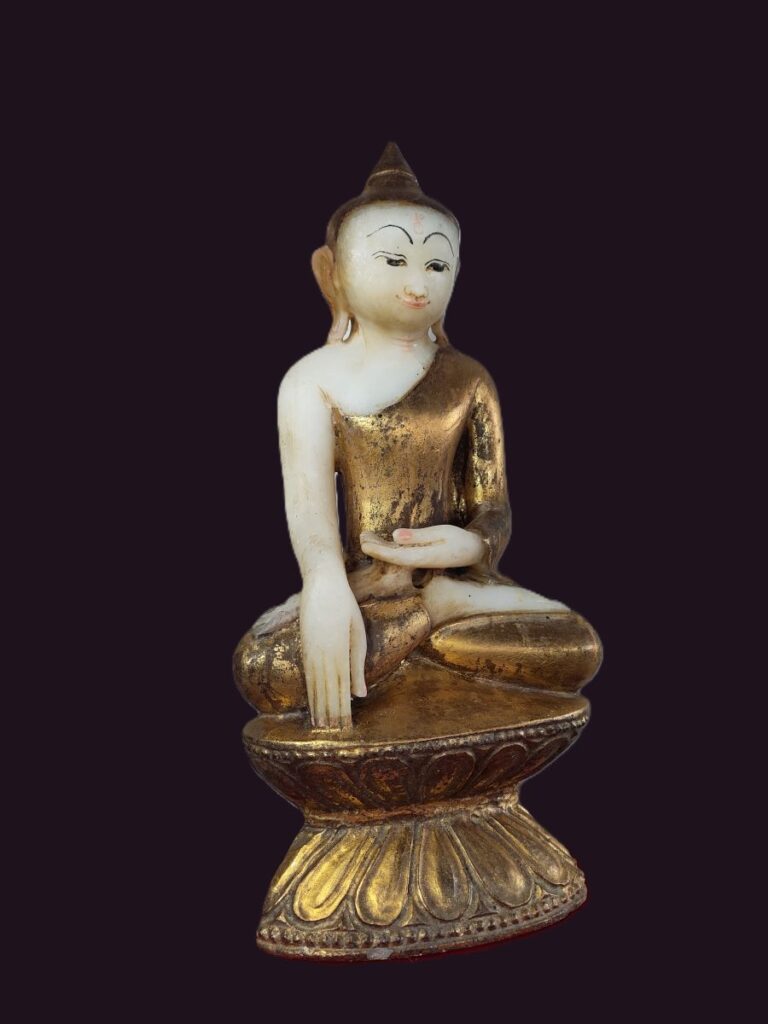
Shwe bo Style Early Konbaung Buddha
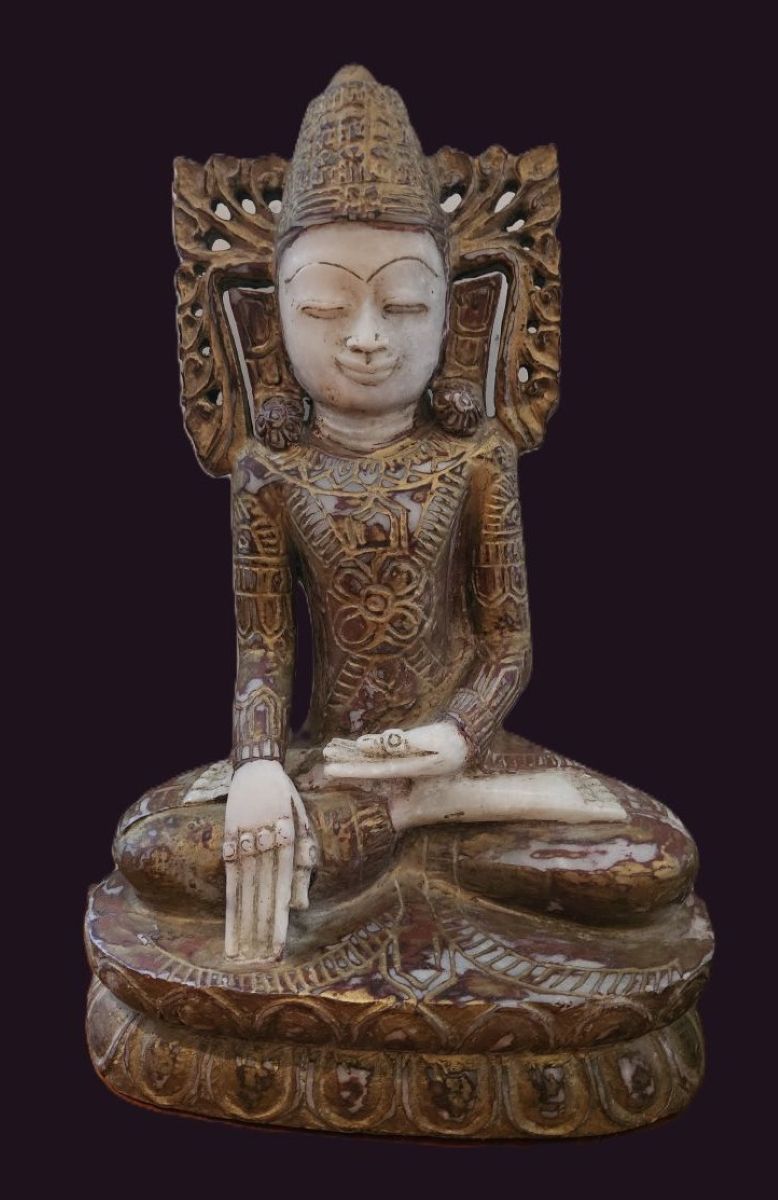
Shwe bo Style Early Konbaung Buddha
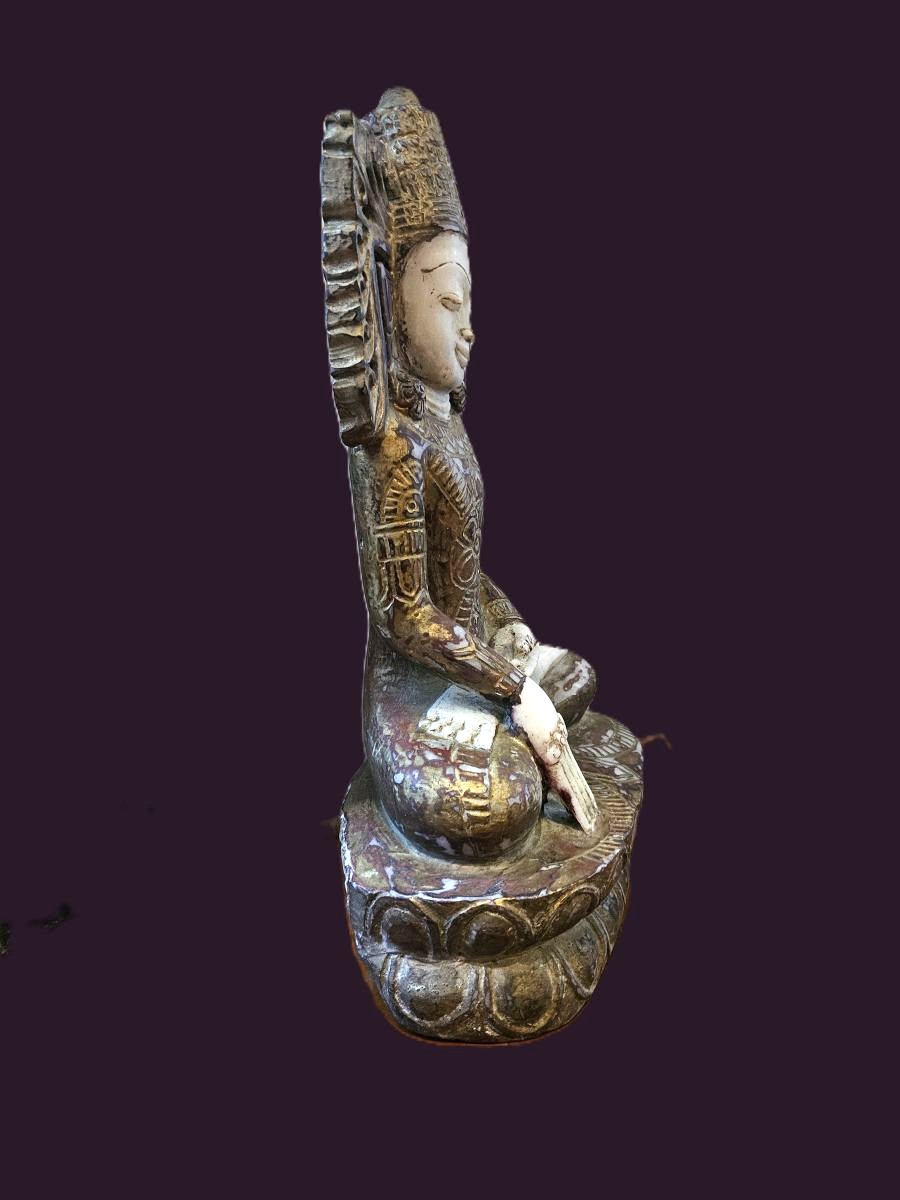
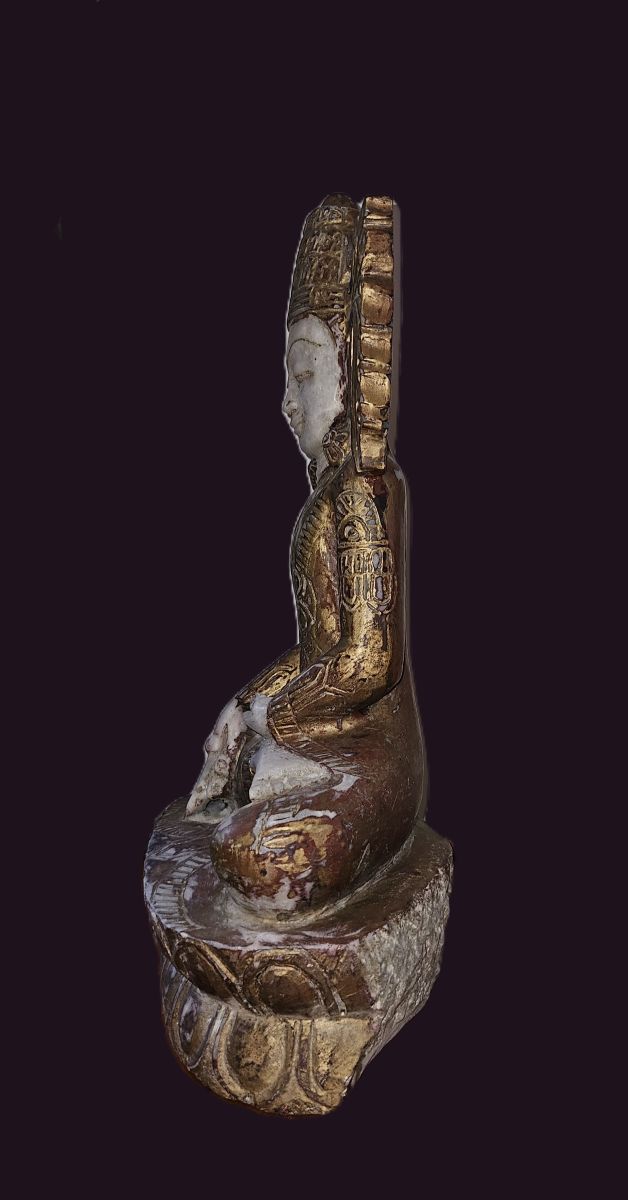
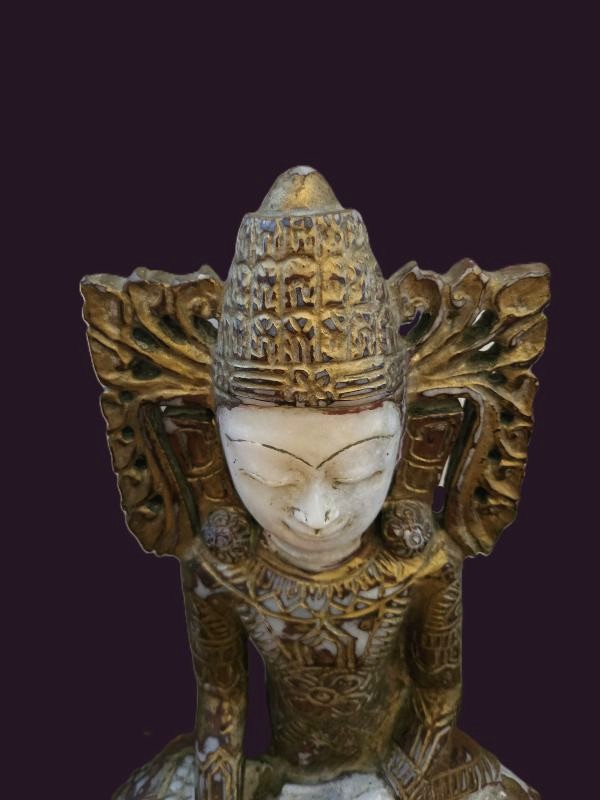
This alabaster Shwe bo style early Konbaung Buddha statue depicts the Buddha as Jambupati royal king Buddha, the universal monarch. Adorned in elaborate royal regalia, this form represents a pivotal moment in Burmese tradition when the Buddha transformed himself into a divinely crowned king to humble the pride of King Jambupati. The imagery serves as a visual testament that spiritual sovereignty reigns supreme over all earthly power.
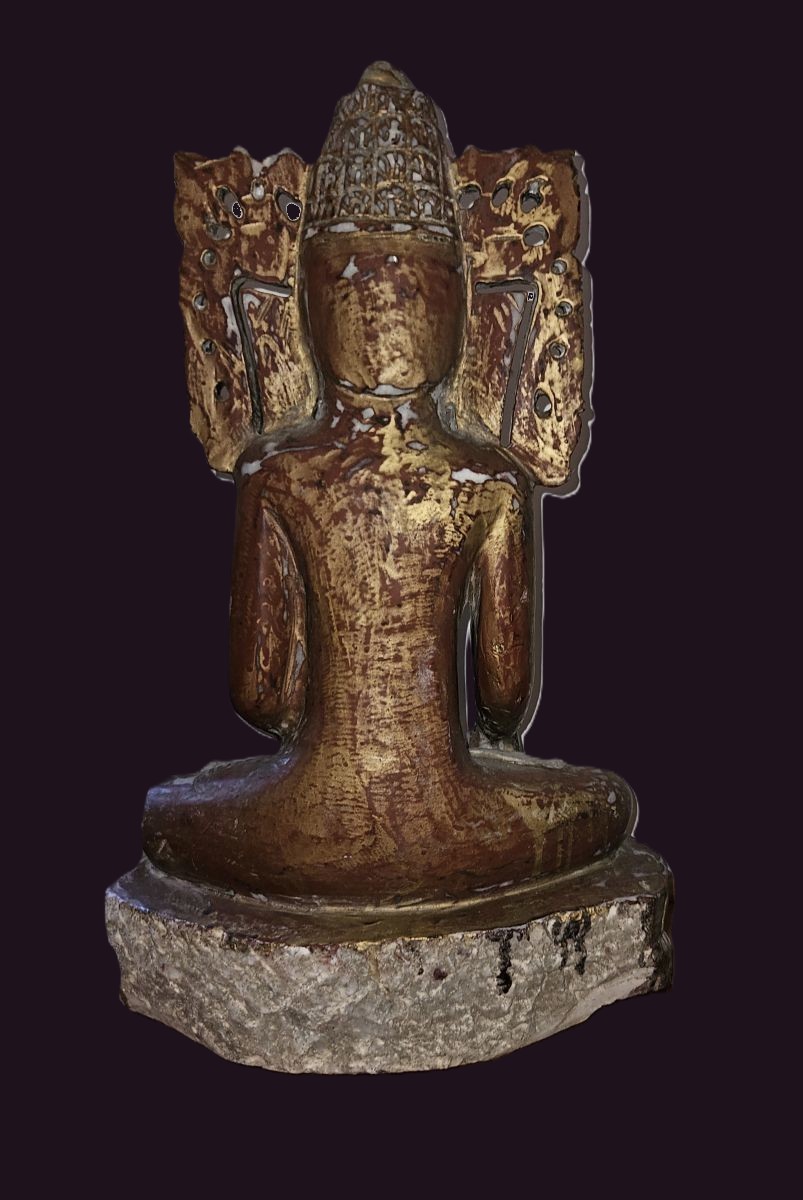
The figure is adorned in the Salwe (royal orders), intricate courtly robes, depicted in the carved incised royal regalia. The flaring ear-flaps (Naga-nwe) and the tiered, conical crown are hallmarks of the early Konbaung period, reflecting the sartorial splendor of the Shwe bo court.
SPECIFICATIONS:
Shwe bo Style early Konbaung Buddha
Artistic & Historical Significance of the Shwe bo Period
The Shwe bo Era (also known as the Alaungpaya Period marks the beginning of the early Konbaung Dynasty (1752–1885), the final and most powerful monarchy in Burmese history.
This era is fascinating because it represents a “reset” of Burmese culture. It was a time of intense nationalism, military expansion, and a stylistic transition in art from the older, more “restrained” Ava styles to the grander, more ornate Mandalay styles.
This Shwe bo Style early Konbaung Buddha statue carved from alabaster (often referred to as “white marble”); the stone’s natural luminescence provides a serene, ethereal quality. Seated in Virasana, the Buddha performs the Bhumisparsha Mudra (Earth Witness gesture). This posture signifies the moment of Enlightenment, where the Buddha calls upon the earth to witness his merit.
The facial features are characteristic of the mid-18th century, serene and rounded with a gentle, introspective smile. The torso is broad and powerful, decorated with remnants of traditional lacquer and gilding that highlight the intricate brocade patterns of the royal attire.
The Rise of King Alaungpaya
Shwe bo, located roughly 60 miles north of Mandalay, was the birthplace of the Konbaung Dynasty. At the time of its founding, the Ava-based Toungoo Kingdom had fallen, and the Hanthawaddy Kingdom controlled Lower Burma. Alaungpaya, who would eventually unify the country, was then merely the village headman of Moksobo. He refused to submit to southern rule and turned his village into a fortified city. He eventually reunited all of Myanmar, founded the Konbaung Dynasty, and established Shwe bo as the first capital.
Shwebo is known in history by five names:
- Moksobo (The original village name, meaning “Hunter Chief”)
- Yadana Theinkha (The formal Pali-derived title Ratanāsiṅga, meaning “Center of Treasure”)
- Konbaung (Meaning “land-ridge”, which gave the dynasty its name)
- Yangyi Aung (Meaning “Conquering a Great Foe”)
- Shwe bo (The modern name, meaning “Golden Leader”)
For more insights into Burmese antiquities and the stories behind our acquisitions, subscribe to my Substack newsletter.