Burmese Mrauk-U Period Wood Buddha Statue
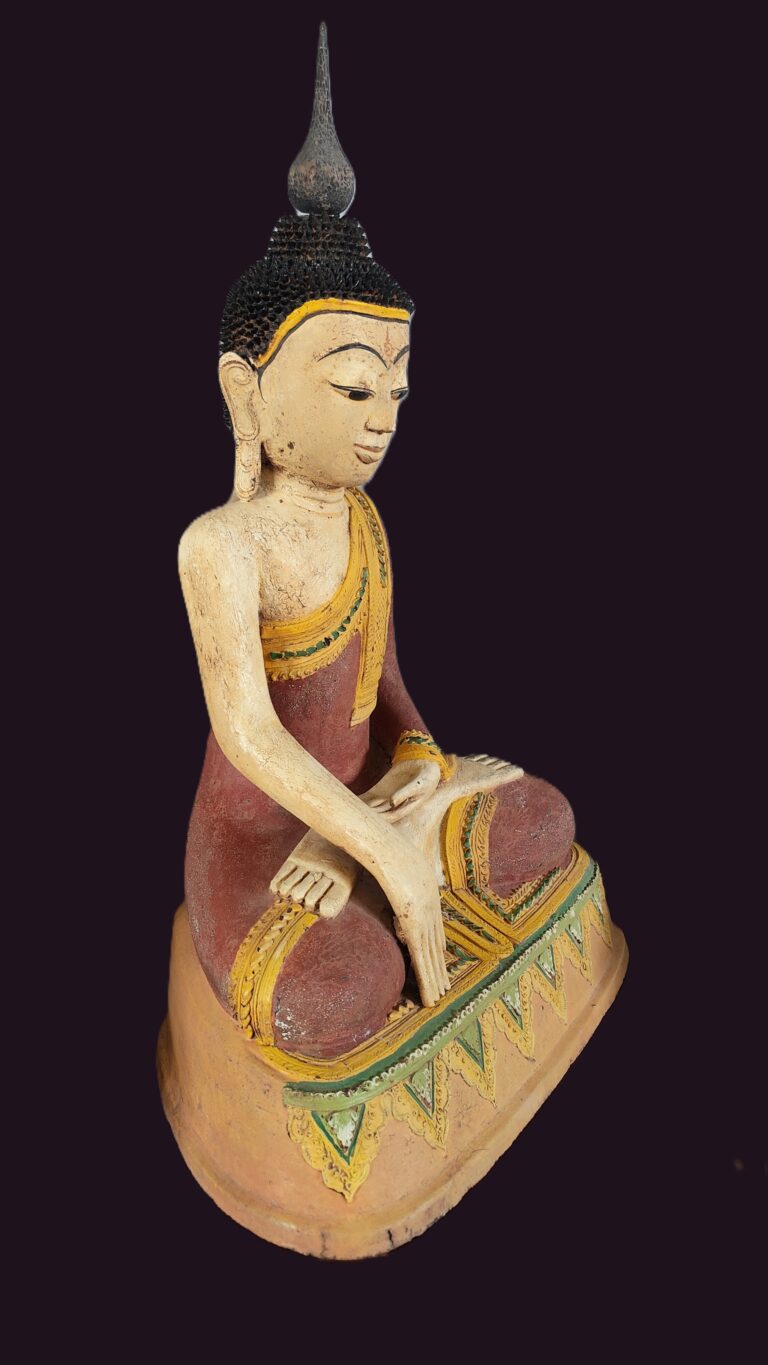
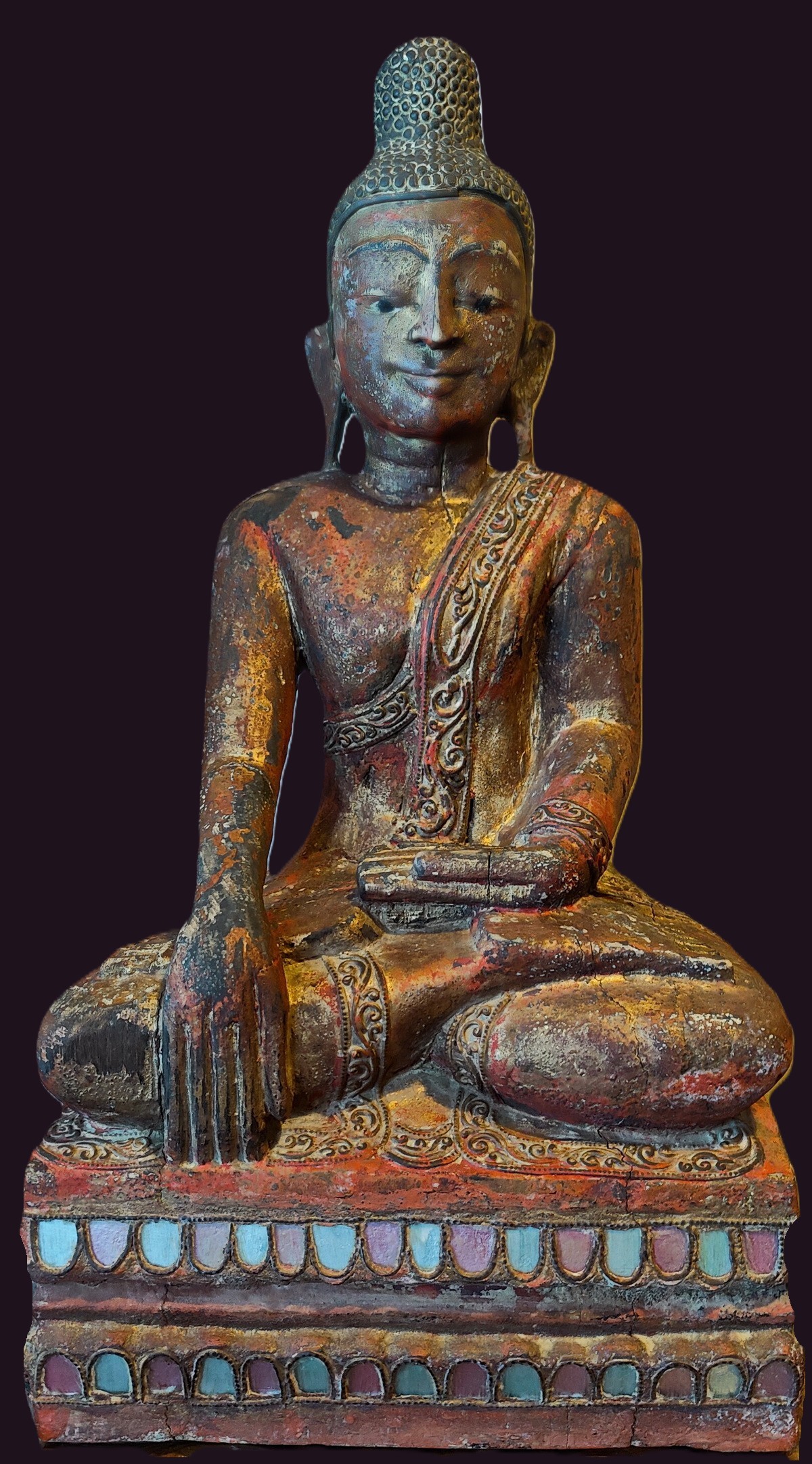
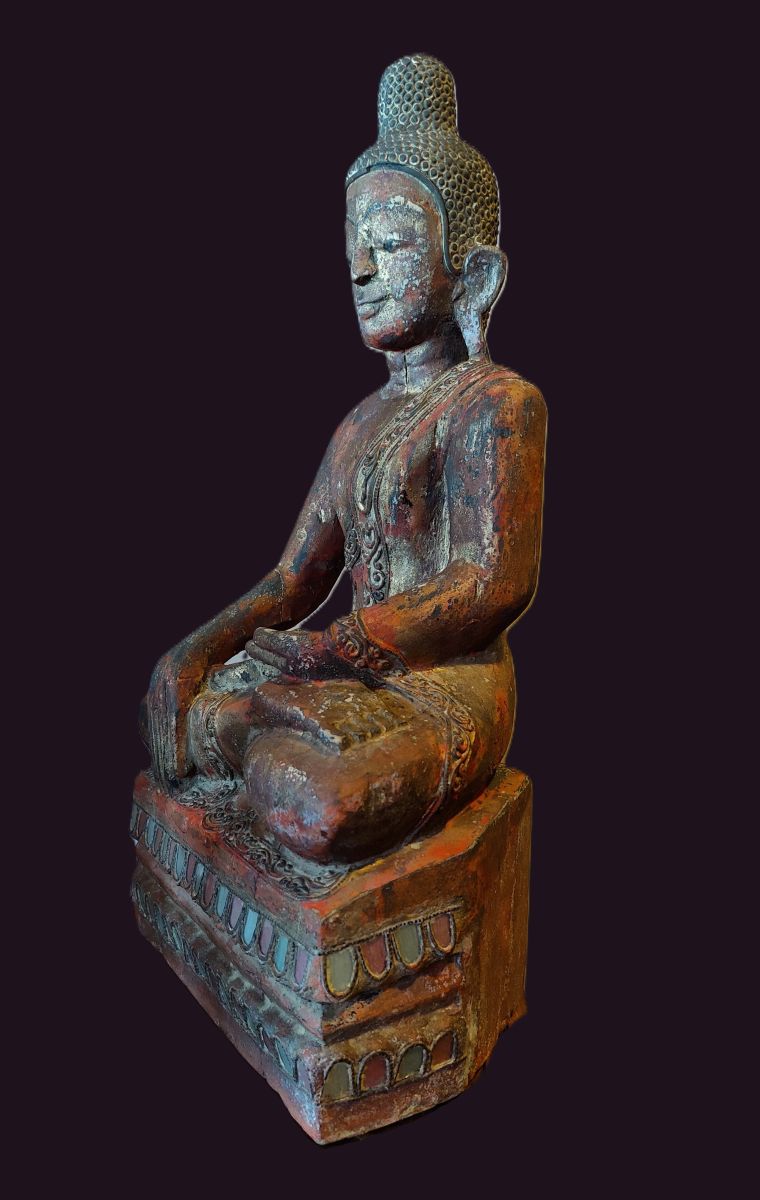
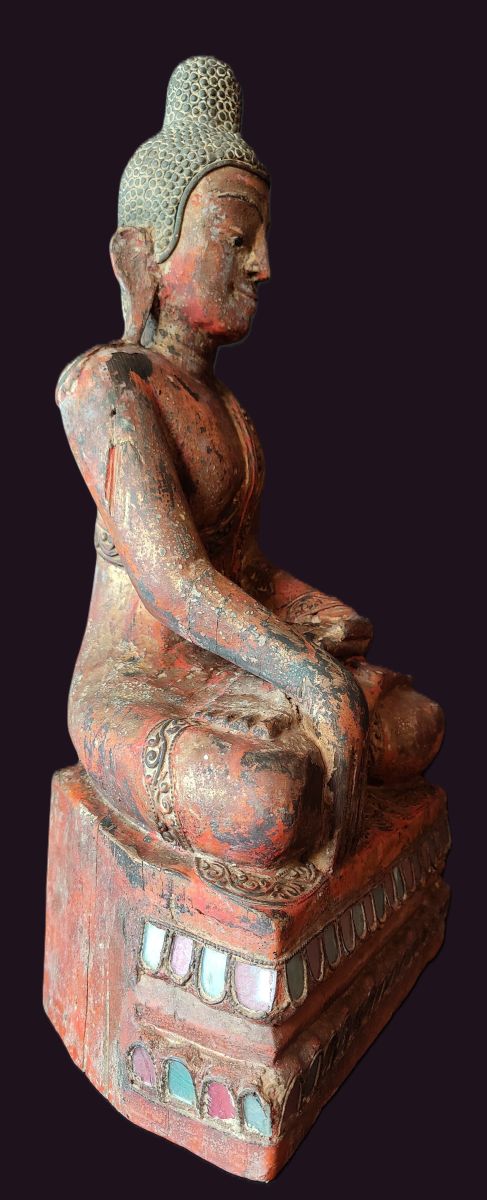
16th – 17th Century Burmese Mrauk-U Period Wood Buddha Statue originating from Rakhine State, Northwest Myanmar with painted downcast eyes and earlobes touching the shoulders.
Iconography and Stylistic Features
The figure is carved from solid teak or other hardwood and depicts the Buddha in the Bhumisparsha Mudra (earth-witness gesture).
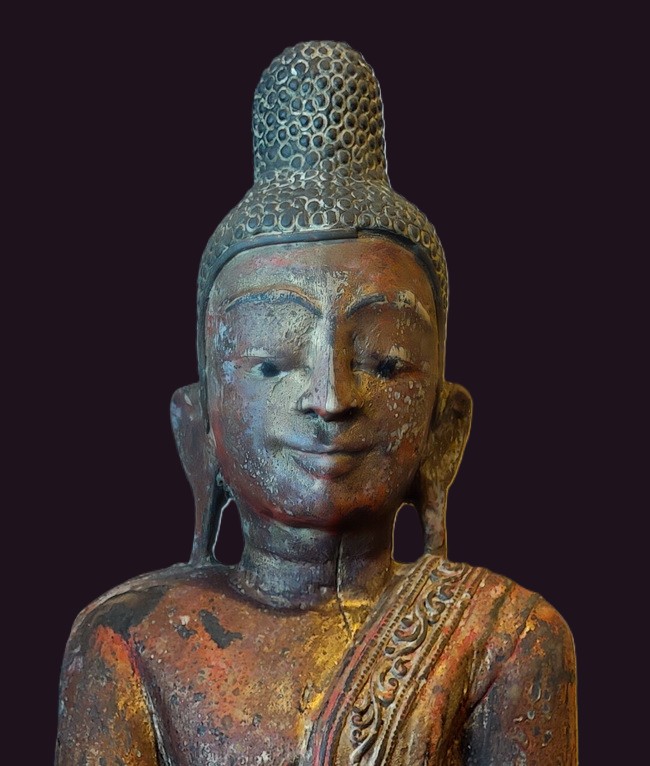
Cranial Features: The head is surmounted by a prominent, tall, rounded ushnisha, with the cranial curls meticulously represented by thayo lacquer applications.
Facial and Aural Detail: The countenance features painted, downcast eyes expressing meditative serenity, and elongated earlobes that extend to the shoulders.
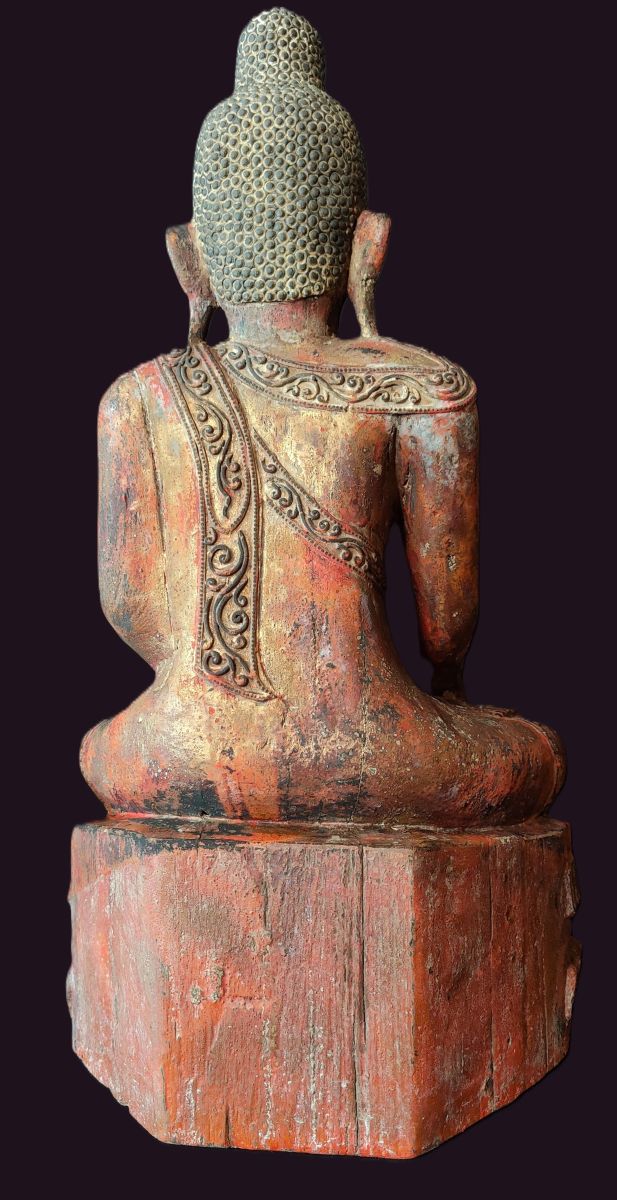
Vestments: The sanghati (monastic robe) features a decorated lapel embellished with intricate thayo lacquer scrollwork. There are areas where the theyo lacquer has fallen away eg: a small section on the hairband and small areas on lapel.
SPECIFICATIONS:
- AGE: – Between 16th – 17th Century
- MATERIAL: – Teak Wood
- HEIGHT: – 58cm
- WIDTH: – 31cm
- DEPTH: – 20cm
- WEIGHT: – 7.7 Kg.
- #915
Burmese Mrauk-U Period Wood Buddha Statue
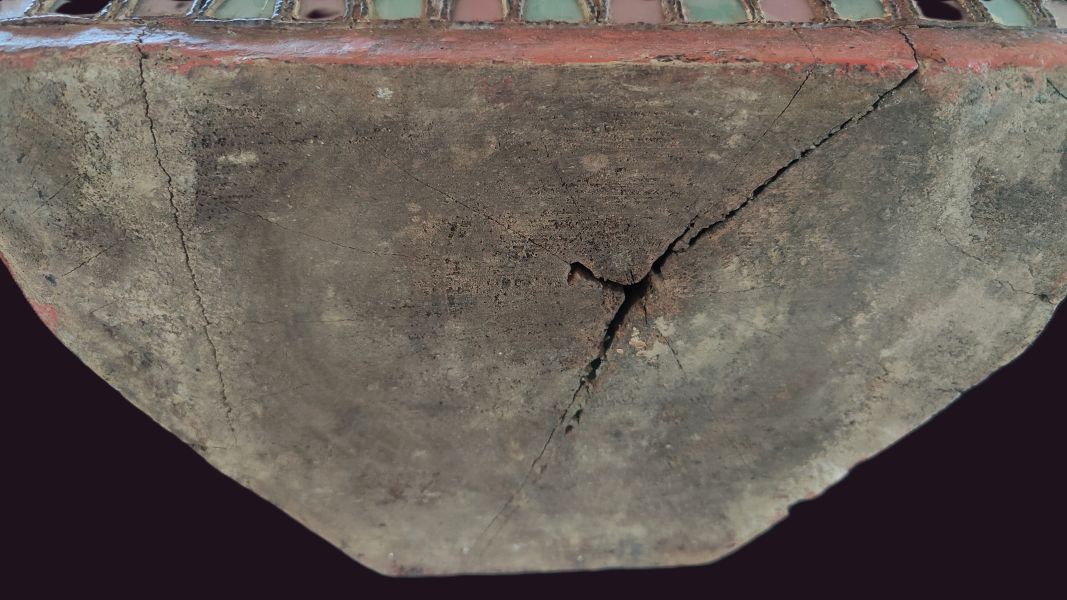
The physical composition provides evidence of significant antiquity and historical craftsmanship:
Surface Treatment: The timber substrate is treated with a foundational layer of black resin (lacquer) and red underlay, referred to as cinnabar-red lacquer which served as a base for gilding. This statue shows all of these layers with traces of original gilding. The current weathered state reveals the underlying layers, consistent with long-term devotional use. The red base acts as a “bolus” or ground that enhances the luminosity of the gold leaf. Because gold is reflective, the warm red tone underneath provides a rich, deep glow that a neutral or black base cannot replicate.
Lapidary and Inlay Work: A double row of coloured glass inlay inserts decorate the front panel of the pedestal on which the Buddha sits. The “rough” texture and de-vitrified surface of the glass petals are diagnostic indicators of 16th-17th century maritime trade glass. The integration of these materials into the aged lacquer suggests a high-status commission from a period of significant regional prosperity.
In Burmese culture, the act of gilding is a meritorious deed. Using cinnabar, which was historically expensive and imported via maritime trade, signified a high-status commission and increased the spiritual value of the artifact. The pigment is typically mixed with thitsi (the sap of the Melanorrhoea usitata tree) to create a durable, adhesive lacquer layer. This mixture secures the gold leaf while protecting the underlying teak or resin
True cinnabar was often sourced from regions with volcanic activity. In later or provincial pieces, lower-cost red earths or iron oxides might be used, but the “Golden Age” Mrauk-U and high-quality Mandalay pieces almost exclusively utilized cinnabar for its vibrant permanence.
The red pigment is integrated into the final “gold-sizing” lacquer layer. In some instances, specialized additives like tung oil were included to adjust the drying time and flexibility of the lacquer.