


Tibetan Buddhist manuscript 1890 – 1950
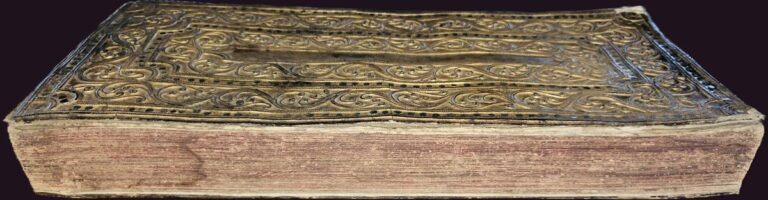
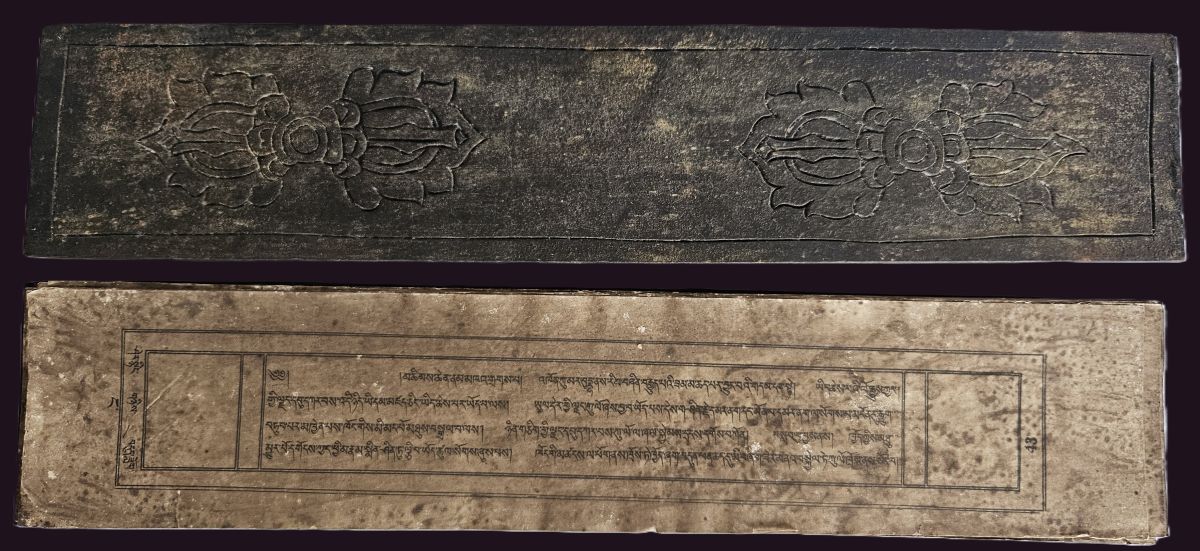
Representing a tradition in transition, this Tibetan Buddhist manuscript 1890 – 1950 offers clear insight into late 19th- to mid-20th-century printing styles. This partial woodblock-printed pecha contains 82 pages, starting at folio 43 and ending with the concluding colophon on page 124.
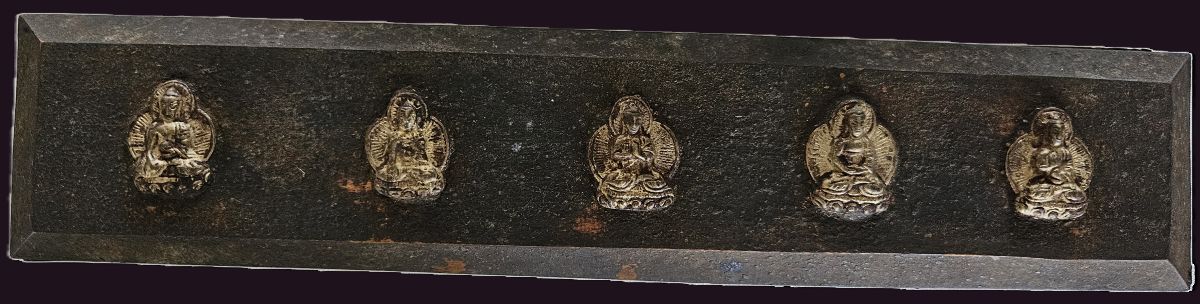
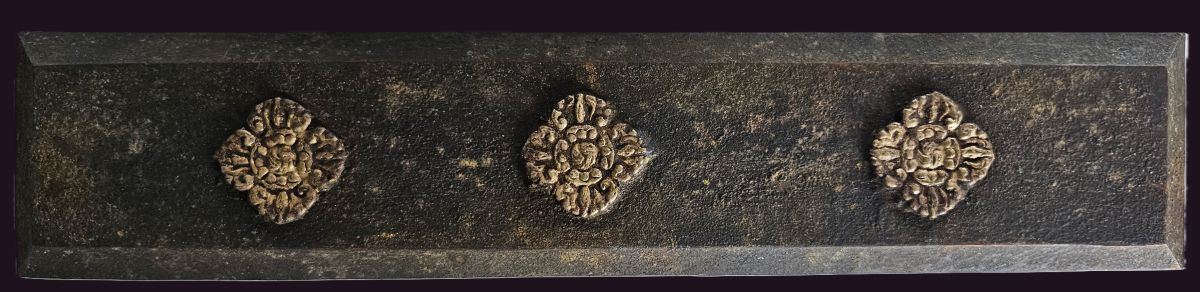
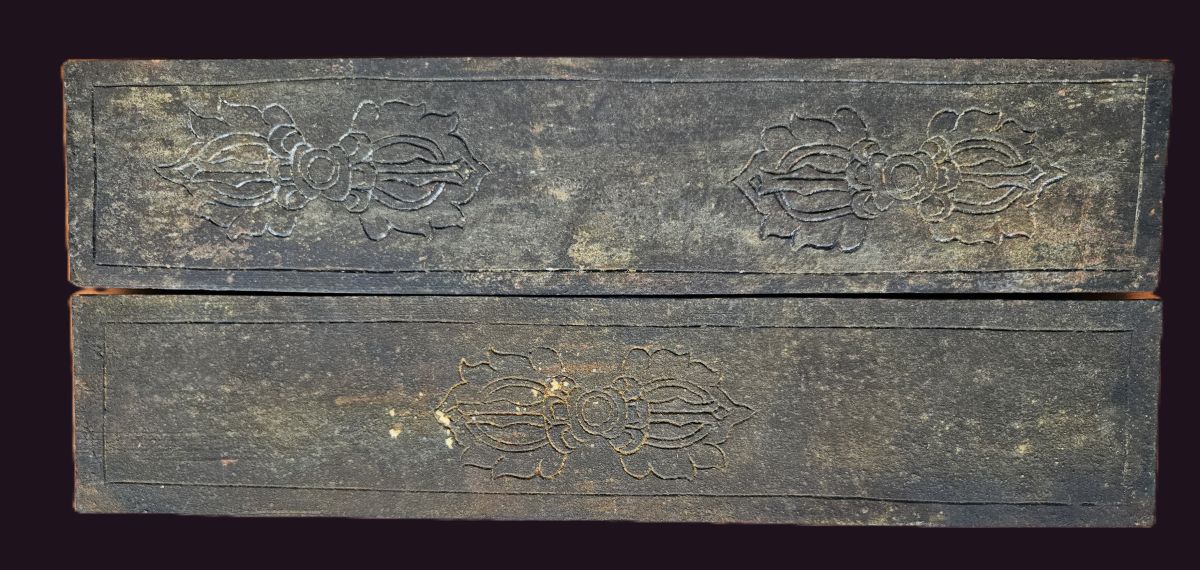
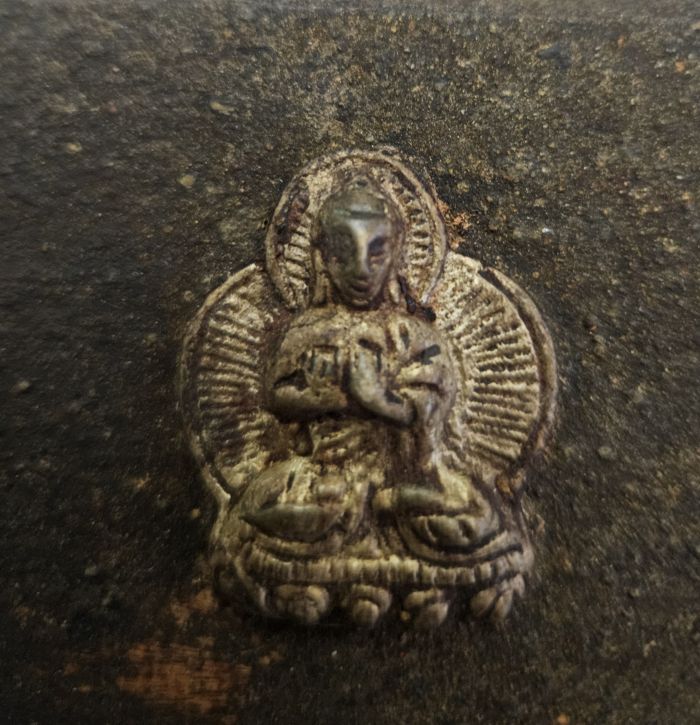
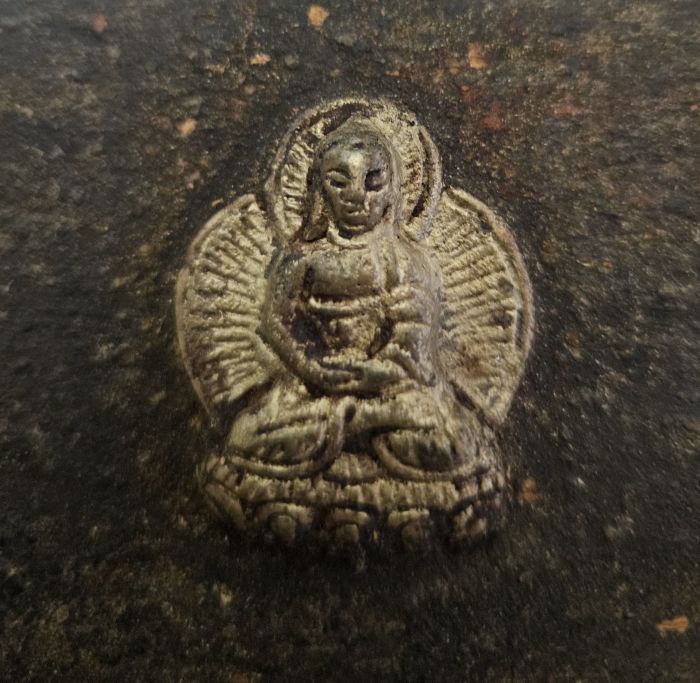
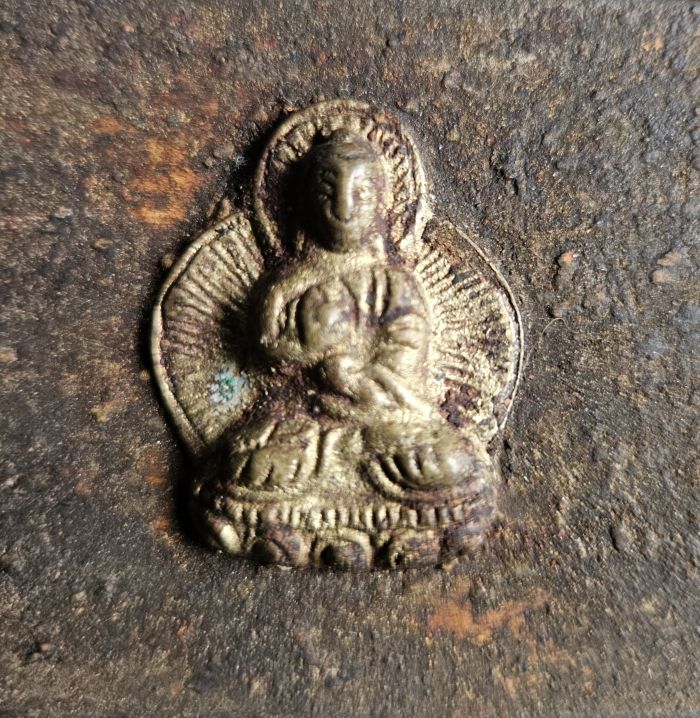
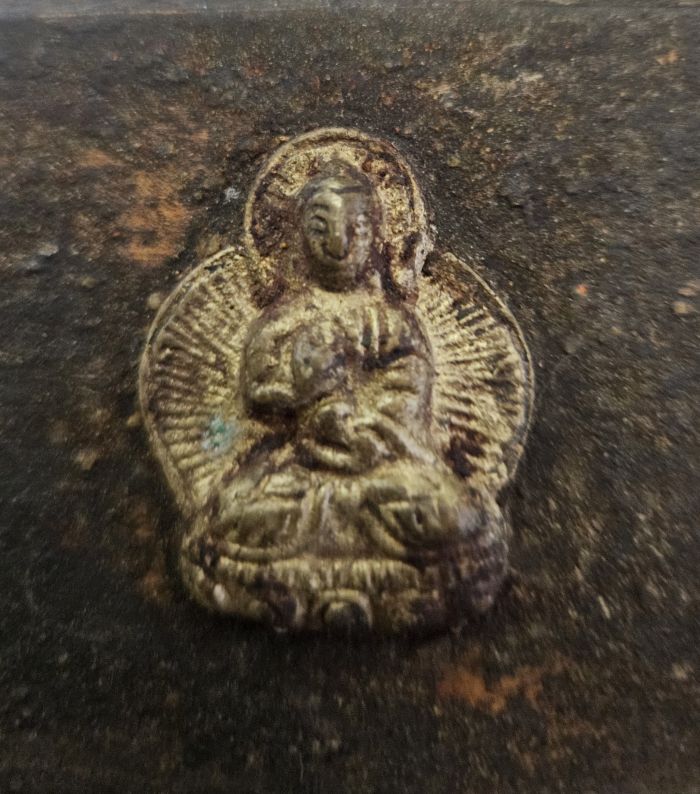
Housed within a pair of heavy, dark-patinated wooden protector boards featuring inset metal images of the Buddha on the front and metal plaques on the back with carved images of the vajra on the inside panels. This set demonstrates how traditional sacred book production adapted to global shifts at the turn of the twentieth century.
The internal text block consists of a continuous run of loose-leaf folios printed using hand-carved wooden blocks (par ma). The text is set within a precise double-bordered frame line enclosing four lines of crisp Uchen script, the standard formal typeface reserved for liturgical and classical works.
The most diagnostic feature for dating this print sits on the right margin of the opening page: a standard Western Arabic numeral “43” on the first page. The previous pages are missing.
SPECIFICATIONS:
- LENGTH: Wooden end pieces 38cm – Folios: 37 cm
- WIDTH: Wooden end piece: 8cm – Folios: 7.5
- PAGES: 82 – first 42 pages missing and runs continuous to 124 with the final colophon.
- CONDITION: Covers potentially older than the internal folios. The exterior metal decorations retain traces of original gilding; under a loupe or close inspection, they show a silvery patina as captured in the photographs.
- #17
Tibetan Buddhist manuscript 1890 – 1950
The Ritual of the 400 “Four Hundred Offerings”
The text in this Tibetan manuscript is derived from the White Beryl (Vaidurya Karpo), a massive 17th century treatise on astrology and divination written by the Regent of the 5th Dalai Lama. It contains a specific ritual called Gya-Zhi (The Four Hundred Offerings). This is a powerful healing and protective ceremony used to dispel the “Four Maras” (obstacles like illness, negative spirits and death). Page 85 of this bundle marks the formal title page for the new section ending with the colophon on page 124.
The Paper Matrix: Script, Typography, and Datable Markers
The internal text block in this Tibetan manuscript consists of a continuous run of loose-leaf folios printed using hand-carved wooden blocks (par ma). The text is set within a precise double-bordered frame line enclosing four lines of crisp Uchen script, the standard formal typeface reserved for liturgical and classical works.
The most diagnostic feature for dating this print sits in the right margins which shows standard Western Arabic numerals.
Traditional Tibetan manuscripts use letters of the alphabet or spelled-out words in the left margin for pagination. The presence of Western typography carved directly into these printing blocks indicates a specific production period between the late 19th and mid-20th centuries, roughly dating from 1890 to 1950.
During this era, printing operations in Himalayan border towns like Darjeeling and Kalimpong, along with certain monastic centers in Lhasa, began integrating Arabic numerals into large-scale publishing projects. This dual-numbering system allowed Western libraries, catalogers, and traders to systematically index complex, multi-volume collections without needing a deep understanding of traditional Tibetan shorthand pagination.
Textual Alignment with the Great Treasuries
The left margin of the folios bears the vertical inscription (gter mdzod), meaning “Treasury” or “Treasury of Terma.” This indicates the text is a component of a major canonical collection, most likely the Rinchen Terdzod (The Precious Treasury of Revealed Teachings). Compiled in the 19th century by the scholar Jamgön Kongtrul Lodrö Thaye, this massive compilation brought together hundreds of dispersed ritual texts into a single, organized printing initiative.
The Structural Envelope: Iconographic Wooden Covers
While the printed paper pages document the modernization of Tibetan publishing, the accompanying wooden end covers root the object in an older lineage of ritual craftsmanship. The heavy, bevelled boards serve a dual purpose: they mechanically compress the loose-leaf pages to prevent warping from humidity, and they seal the sacred text within a protective cosmological frame.
The Front Cover: The Five-Buddha Mandala
The exterior face of the top cover has five distinct metal or gilt-bronze plaques. Rather than carving directly into the timber, the maker applied small, independent sculptural figures across the horizontal plane.
Each plaque depicts a seated deity or Buddha positioned on a lotus throne, backed by a finely detailed, radiating aureole (mandorla). The natural wear and softening of the details along with remnants of surface gilding are consistent with continuous handling during monastic ceremonies.
The Back Cover: The Triple Cross-Vajra
The back cover features a different symbolic arrangement, utilizing three metal plaques shaped as cross-vajras (vishvavajra).
In Himalayan iconography, the cross-vajra represents absolute stability, protection, and an unshakeable foundation. Placing this motif on the rear exterior board effectively seals the manuscript, symbolically protecting the esoteric teachings contained inside from spiritual and physical degradation.
The Interior Panels: Concealed Carvings and Sacred Boundaries
Both inside panels feature a carved perimeter border framing stylized, low-relief vajra (dorje) symbols:
- Front Panel: Contains two horizontally oriented vajras spaced to balance the composition.
- Back Panel: Features a single, prominent vajra centered within the frame.
The vajra represents the diamond-hard nature of absolute reality, indestructible, unchangeable, and capable of cutting through spiritual ignorance. Carving these emblems on the inside serves a protective, energetic function. When the loose pecha pages are stacked between these boards, the sacred text is literally sandwiched between these symbols, sealing the wisdom within an impenetrable spiritual boundary.