Burmese Shan Concertina Parabaik Manuscript
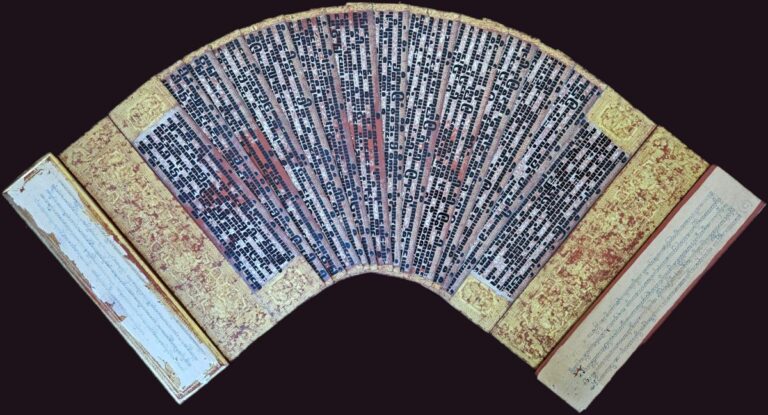
This Burmese Shan concertina Parabaik manuscript exemplifies a book format with deep historical roots, long established in Burma well before the 19th century and still flourished up until the early 20th century. The parabaik was traditionally made from thick, handmade paper derived from mulberry bark, the pages were folded accordion-style to create a continuous, double-sided writing surface.
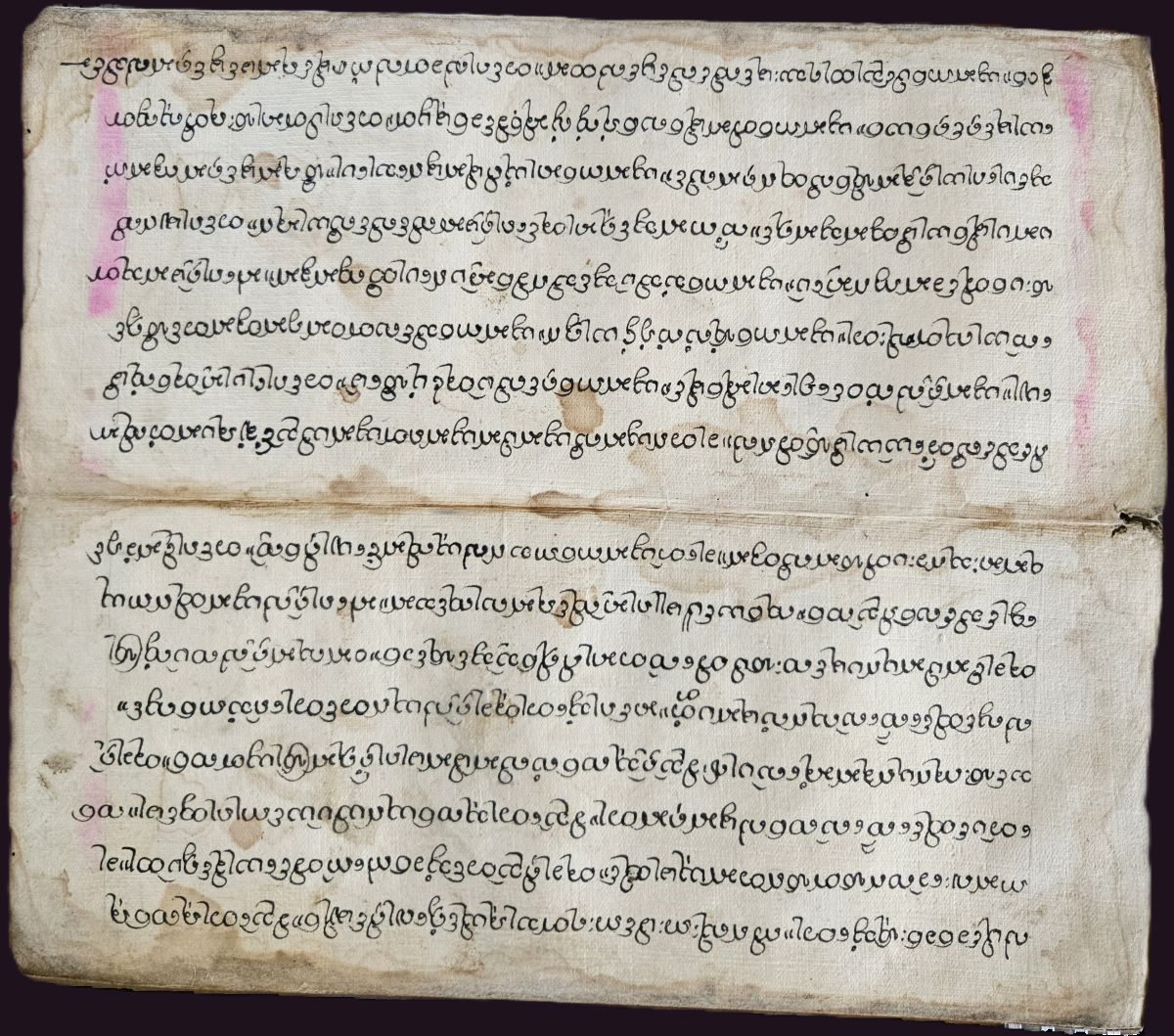
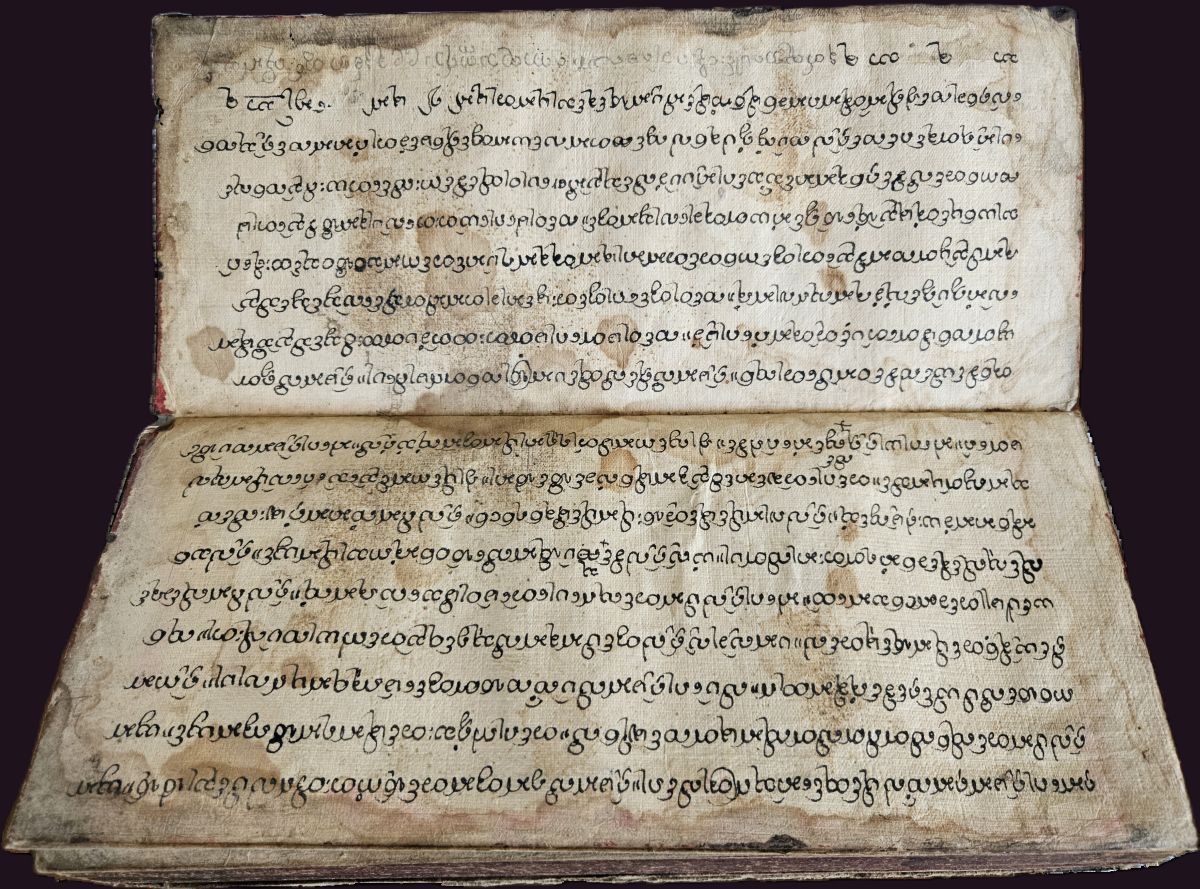
This specific example is a white parabaik (parabaik phyu), a format traditionally reserved for sacred Buddhist texts, monastic chronicles, and official records. The text is written across the unfolded panels in a neat, rounded Burmese script using black ink (typically carbon‑based) applied with a pen or brush.
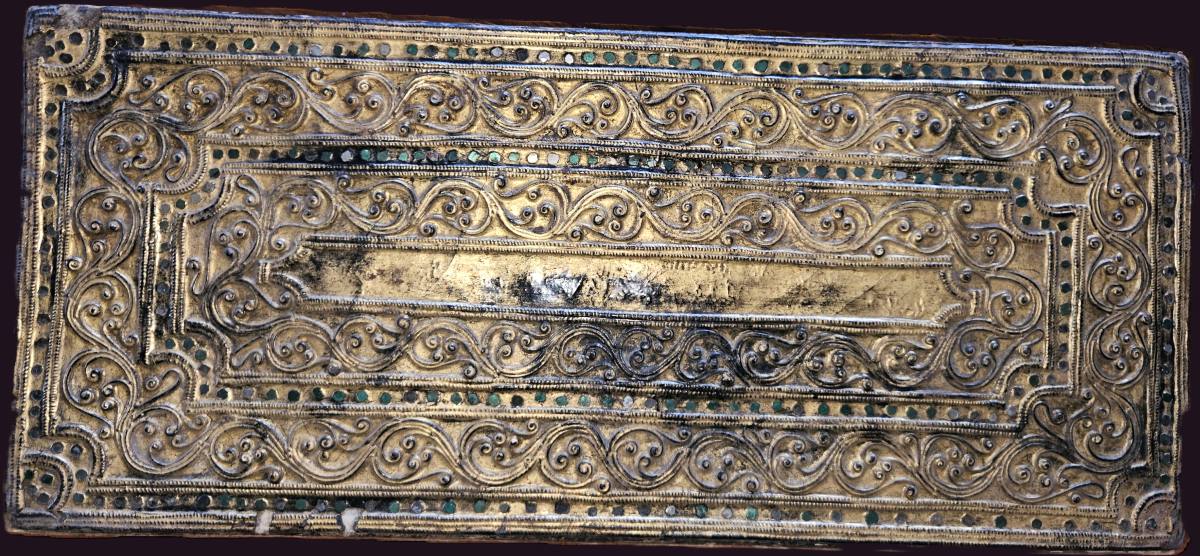
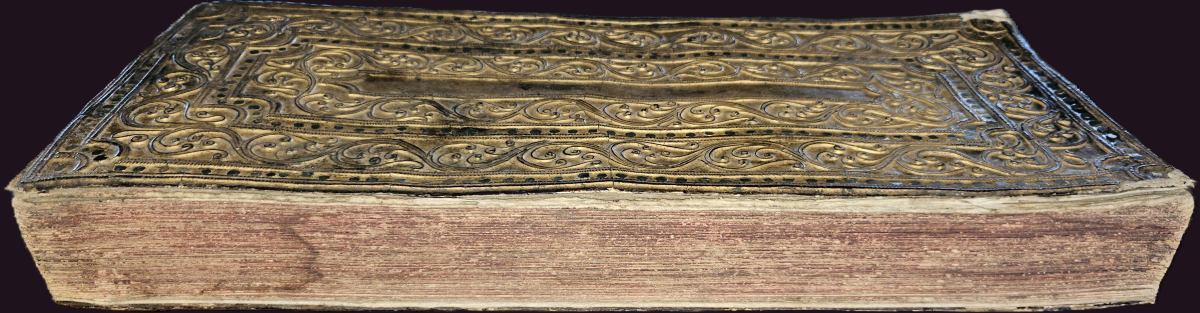
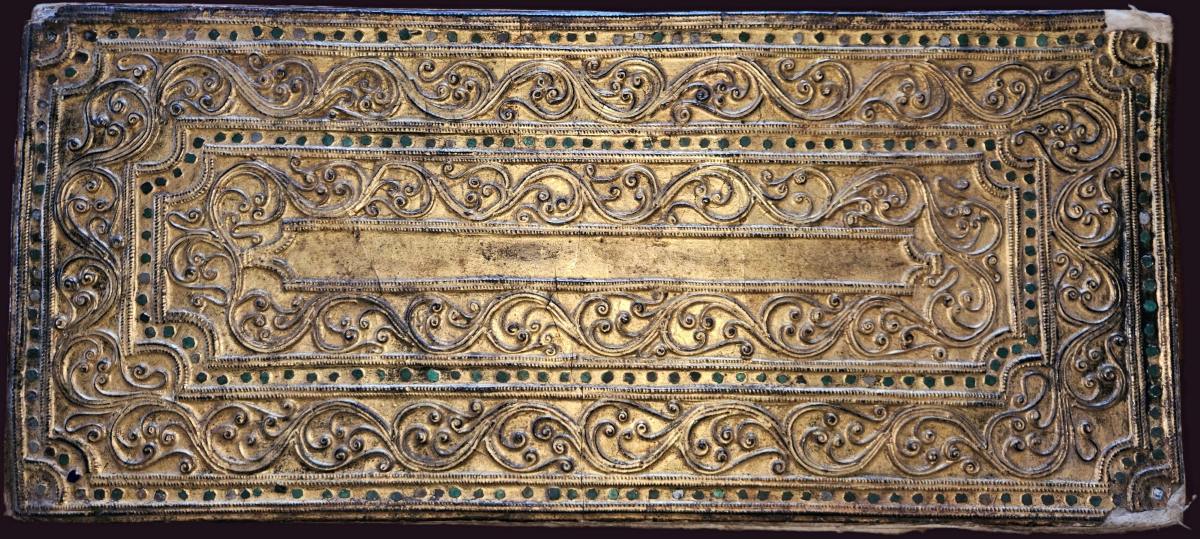
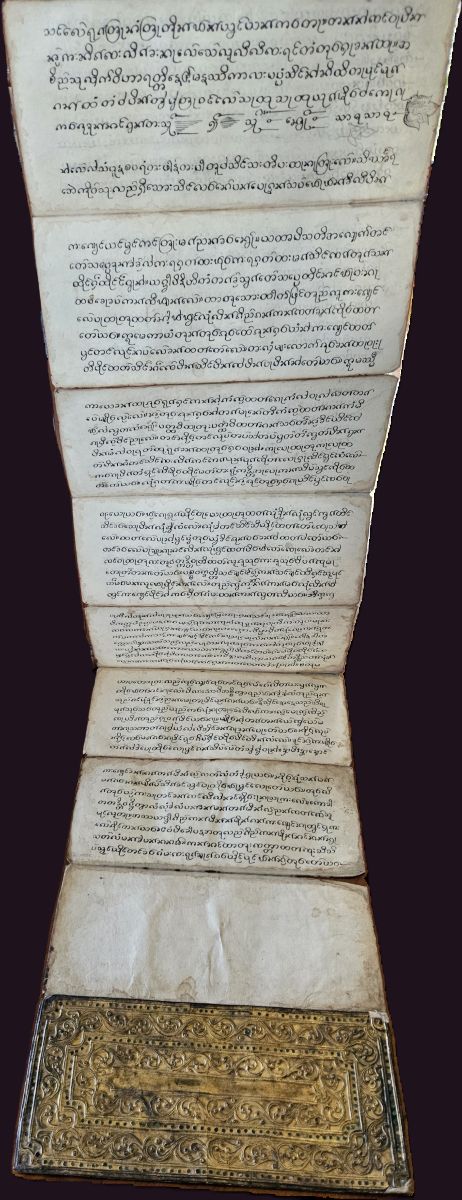
The outer covers on this Burmese Shan Concertina parabaik show the intricate craftsmanship typical of late Konbaung and early British colonial era religious art. Artisans decorated the surface using thayo lacquer, a technique where a pliable paste of lacquer resin and ash is rolled and molded into raised, relief patterns. Here, the thayo forms a dense border of scrolling vines and floral tendrils. The entire cover was gilded with gold leaf and inlaid with small glass mosaics (hmanzi) to catch the light, a costly and labor-intensive embellishment meant to reflect the sacred nature of the contents.
SPECIFICATIONS:
- AGE: Between Late 19th to Early 20th Century
- LENGTH: 42 cm
- WIDTH: 19 cm
- DEPTH: 5 cm
- WEIGHT: 1.5 kg.
- CONDITION: Edge and corner wear on covers. Pages: Most pages clean with yellowing with staining of first four pages (two folds).
- FORMAT: Double-sided folding book (parabaik) of 69 physical folds; each fold is divided into two panels, totaling 276 pages of text across both sides.
- #1691
Burmese Shan Concertina Parabaik Manuscript
This parabaik likely dates between 1880 and 1920, a period of significant transition after the British annexation of Upper Burma in 1885. Despite the fall of the royal court, traditional monastic workshops in centers like Mandalay continued to produce high-quality manuscripts for wealthy patrons seeking spiritual merit. The thickness of the folded paper stack and the preservation of the detailed lacquer relief indicate that this volume was a substantial commission, built to withstand regular handling and reading inside a monastery library.
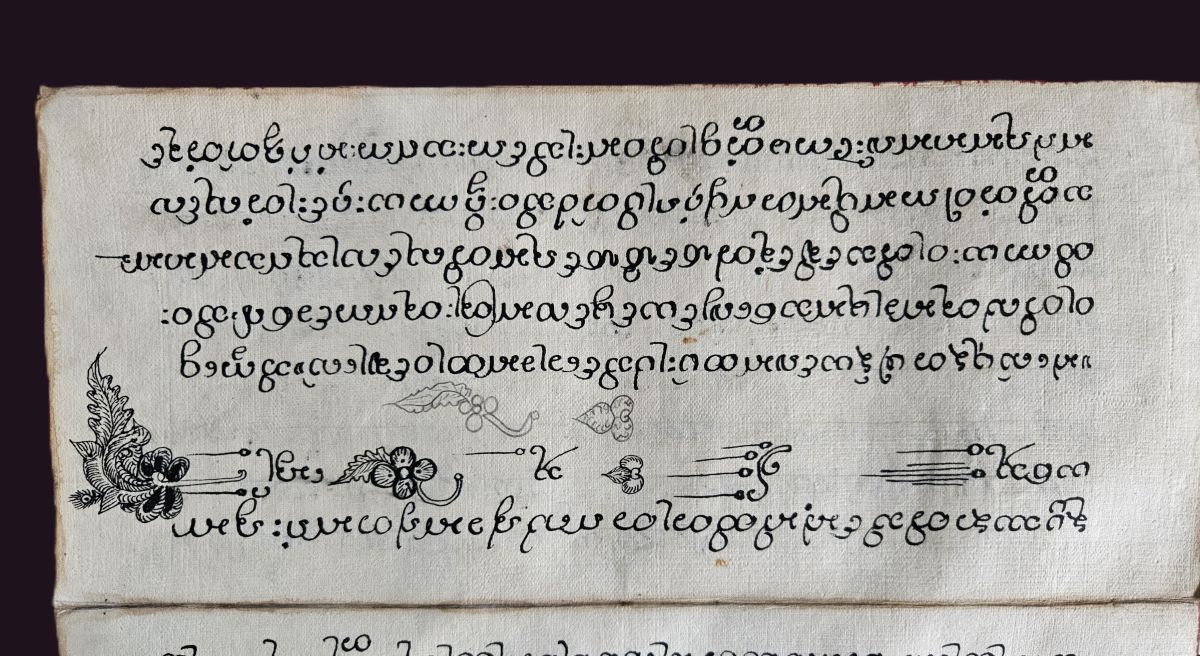
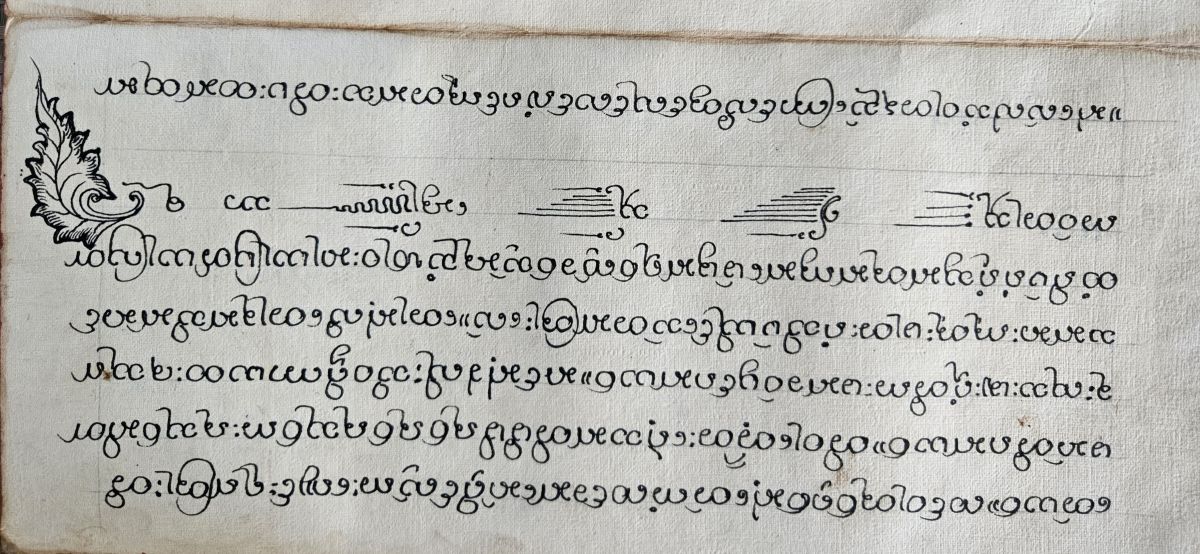
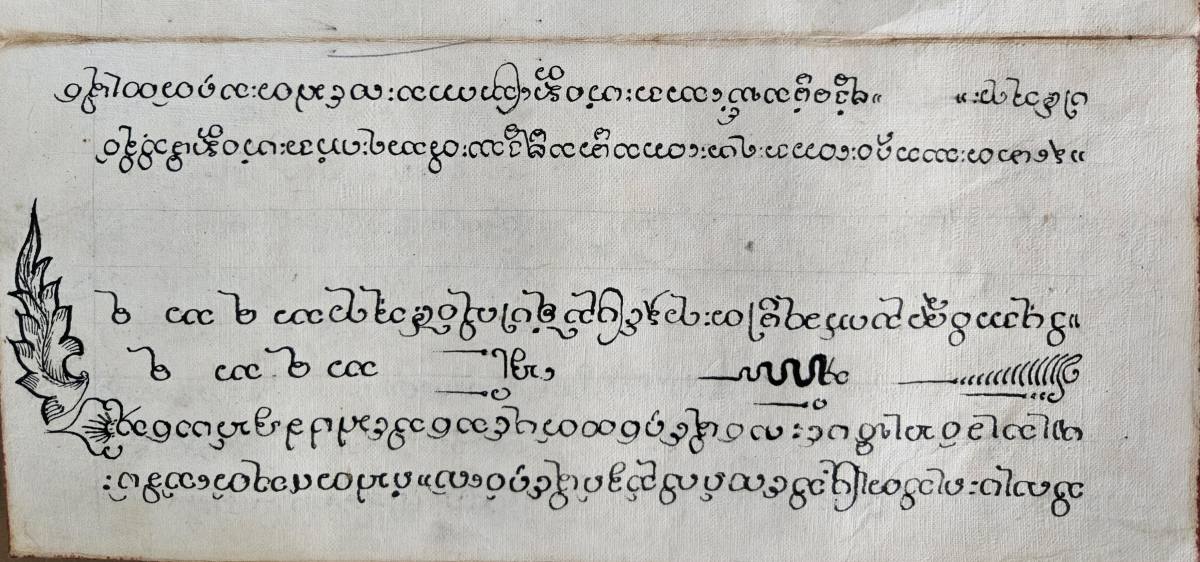
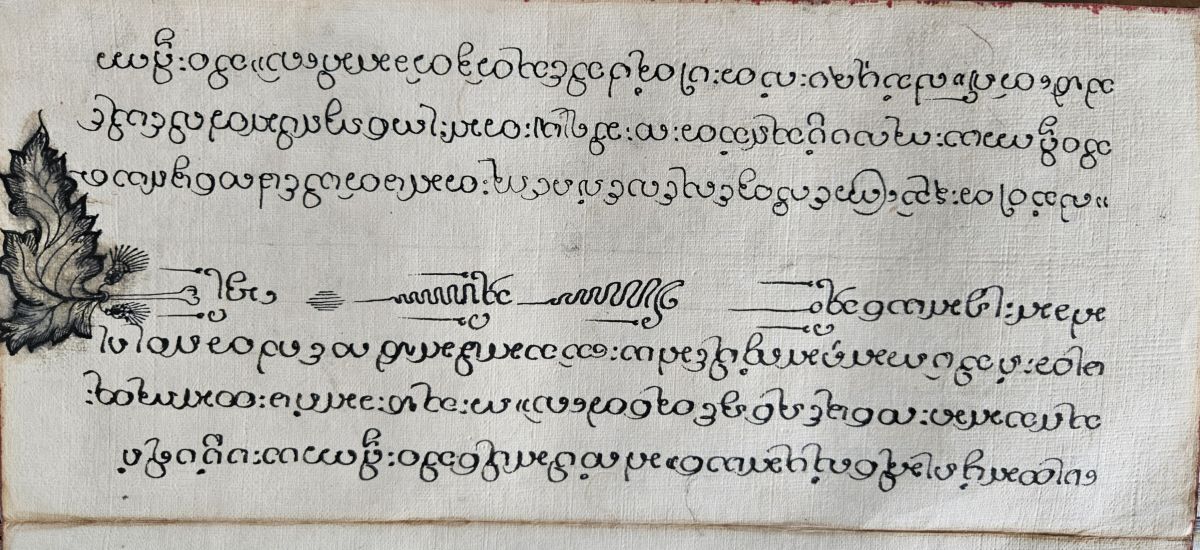
The Use of Space Fillers: The stylized drawings along the bottom-line on some pages function as calligraphic fillers. When a scribe finished writing a section mid-line, they used these small floral motifs and trailing horizontal lines to occupy the empty space. This kept the layout uniform, so the final row matched the width of the main text block.
The Terminal Marker: The large, scrolling floral design on the far left on some pages acts as a structural tailpiece. It serves as a visual boundary to let you know the text has concluded.
Script Identity and Manuscript Type
- The Shan Script: The text is written in the Shan script, specifically Lik Tai or Lik Long, rather than Burmese. While both scripts feature circular letterforms inherited from a shared Mon Burmese origin, the character structures here are distinctly Shan. It is identifiable by the open loops on specific letters and the regional tone markers, such as the punctuation that looks like a colon.
- The Folding Book Format: Because the text is in the Shan language, this is a Shan concertina book, known traditionally as a pap thap or pap tup. Like Burmese parabaiks, craftsmen manufactured these volumes using thick, layered paper made from the bark of the local paper-mulberry tree, known regionally as sa.
The Asia and Pacific Museum in Warsaw Poland’s dedicated museum for Asian and Oceanian cultures houses a collection of over 20,000 ethnographic objects, traditional textiles, and historical artifacts. You can access their collections and current exhibitions directly through the Asia and Pacific Museum Website.