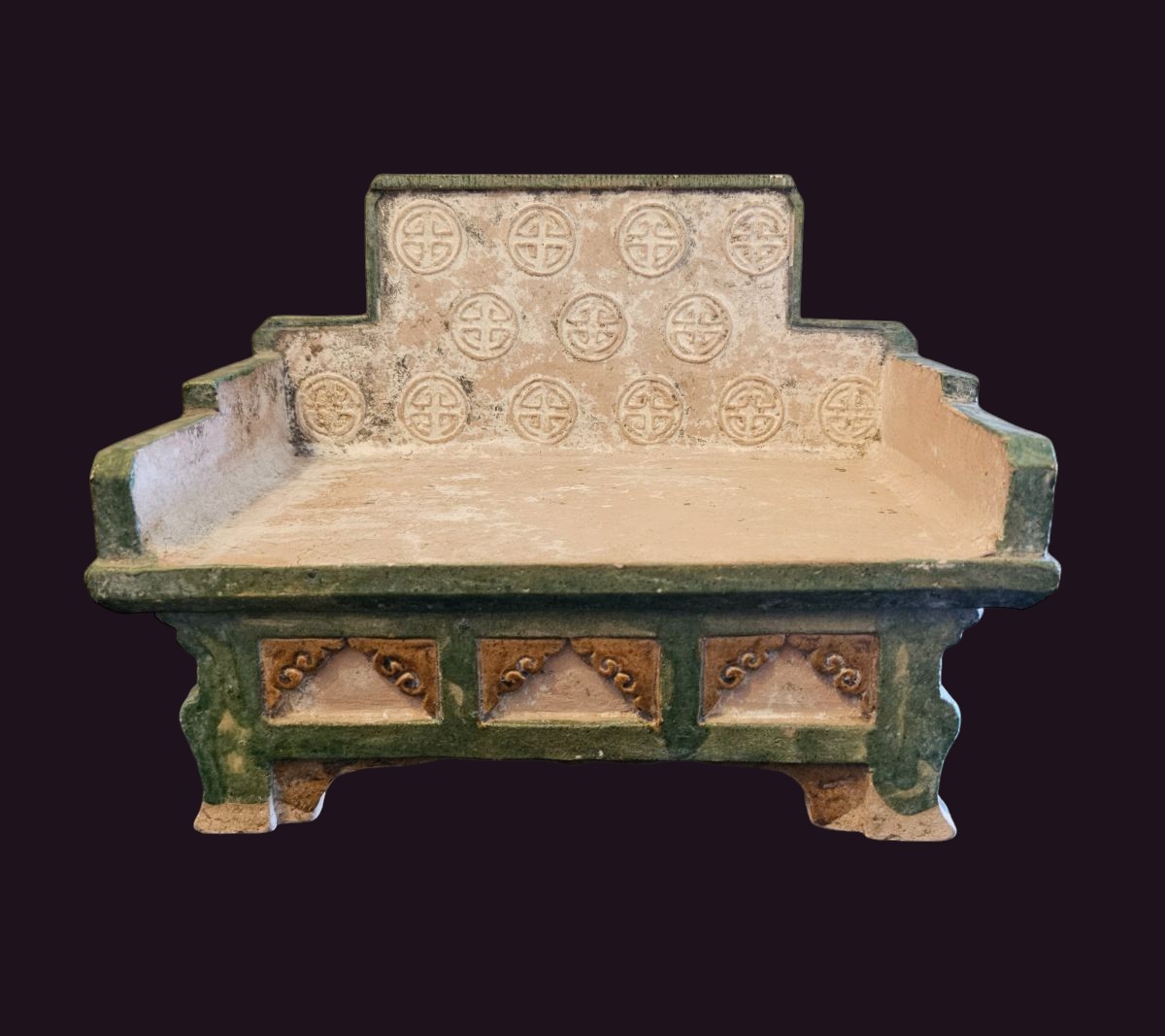
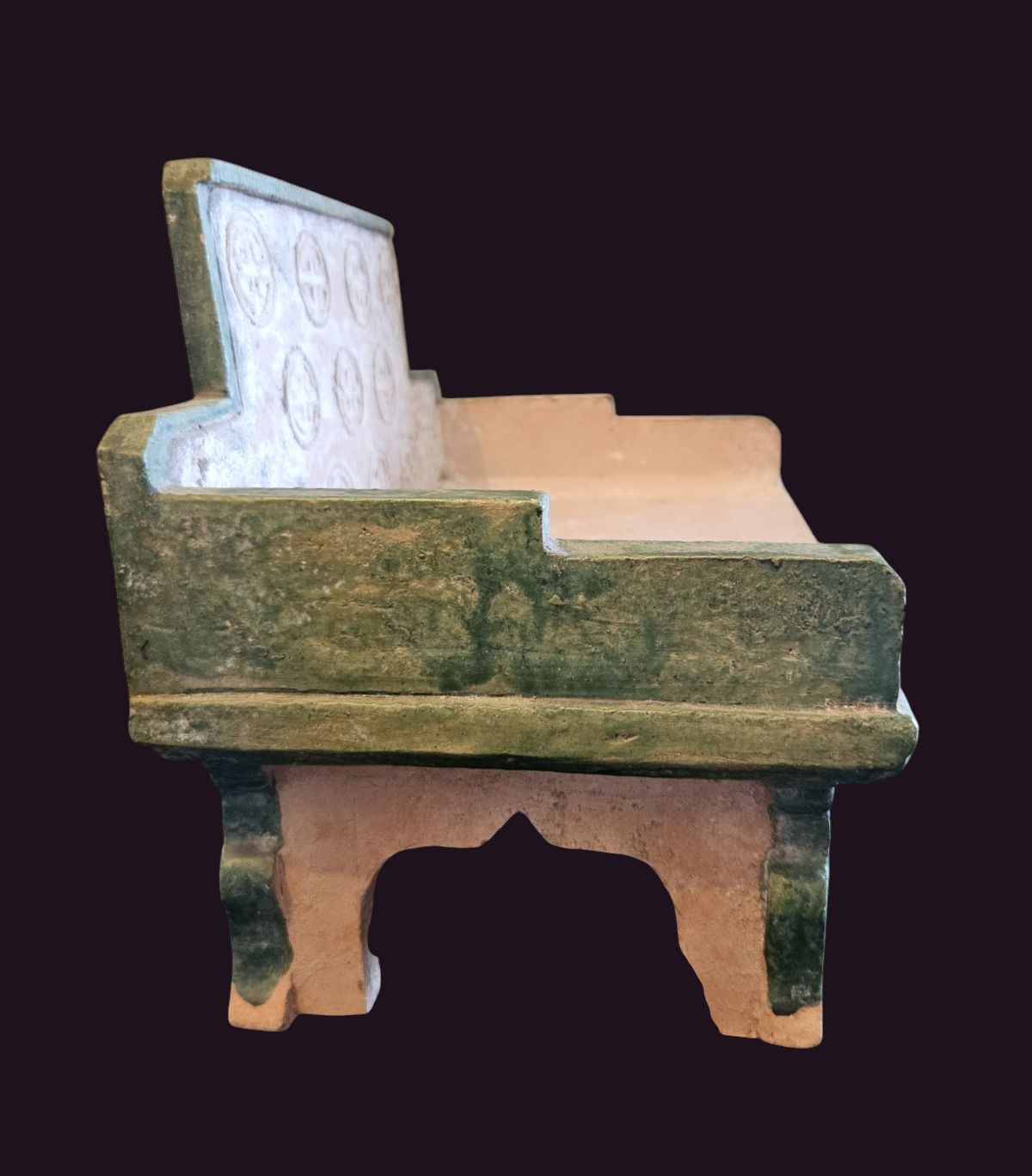
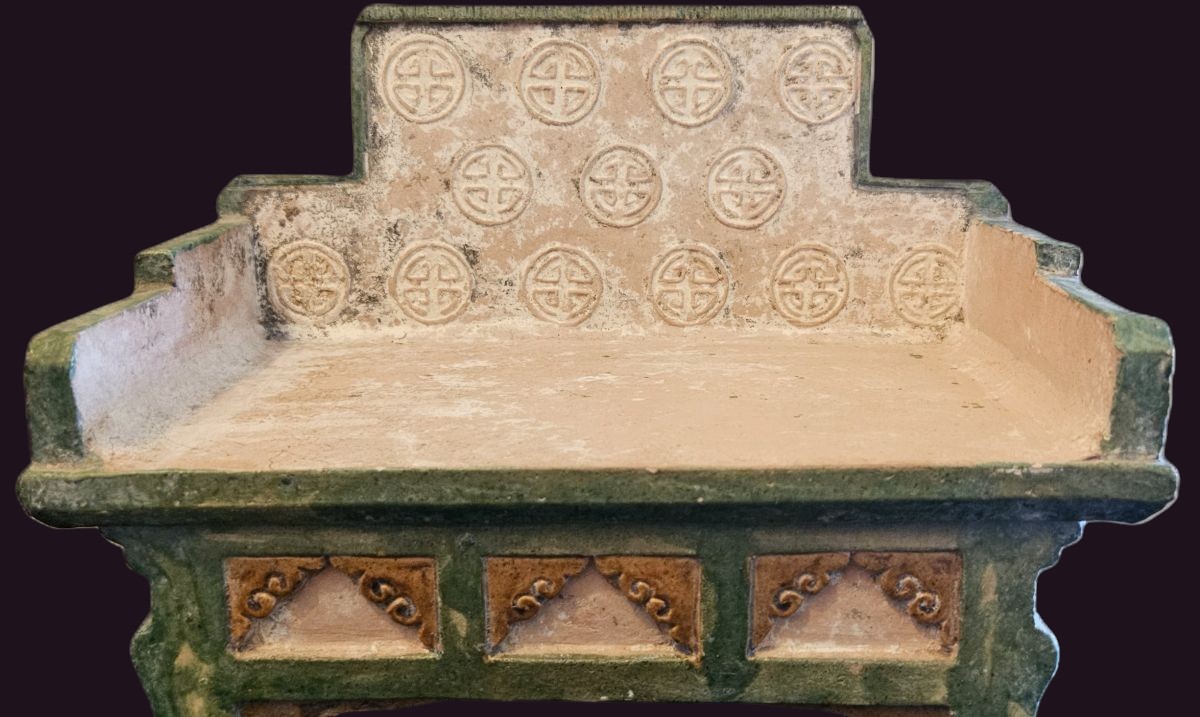
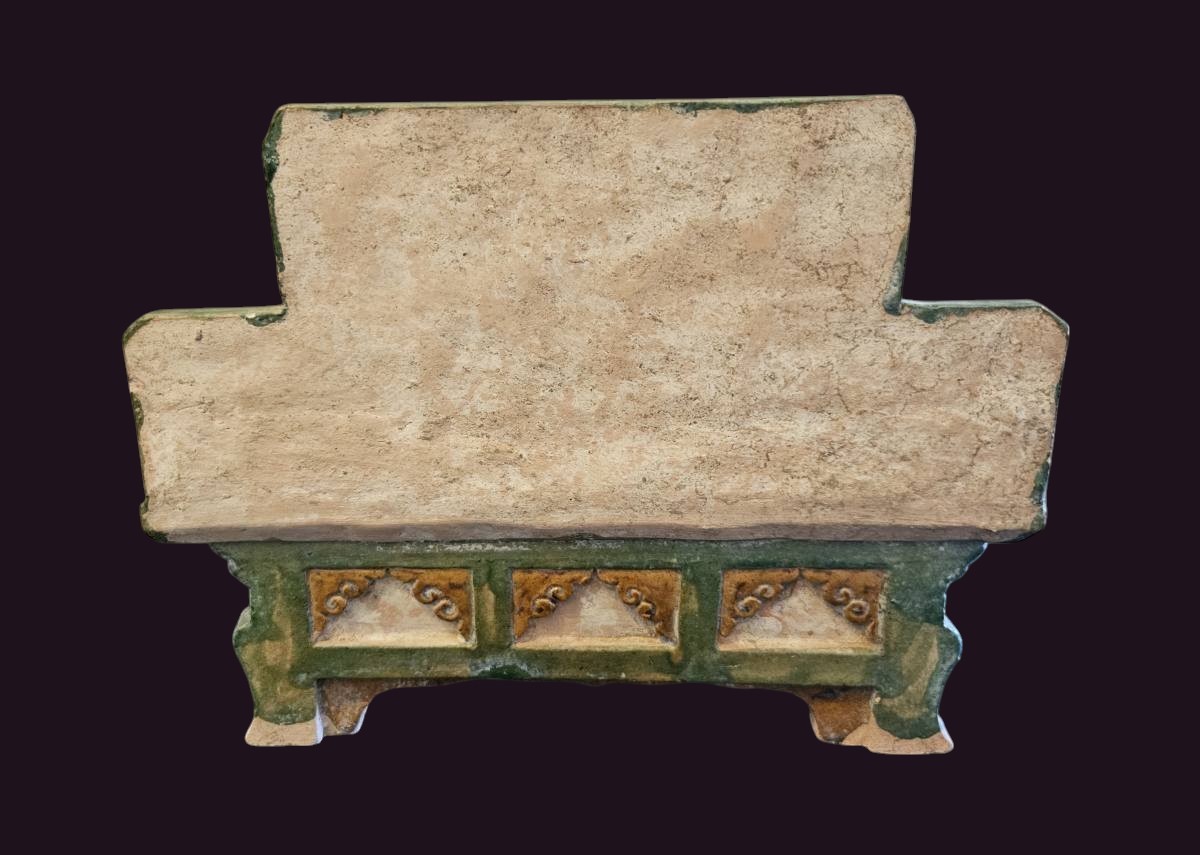
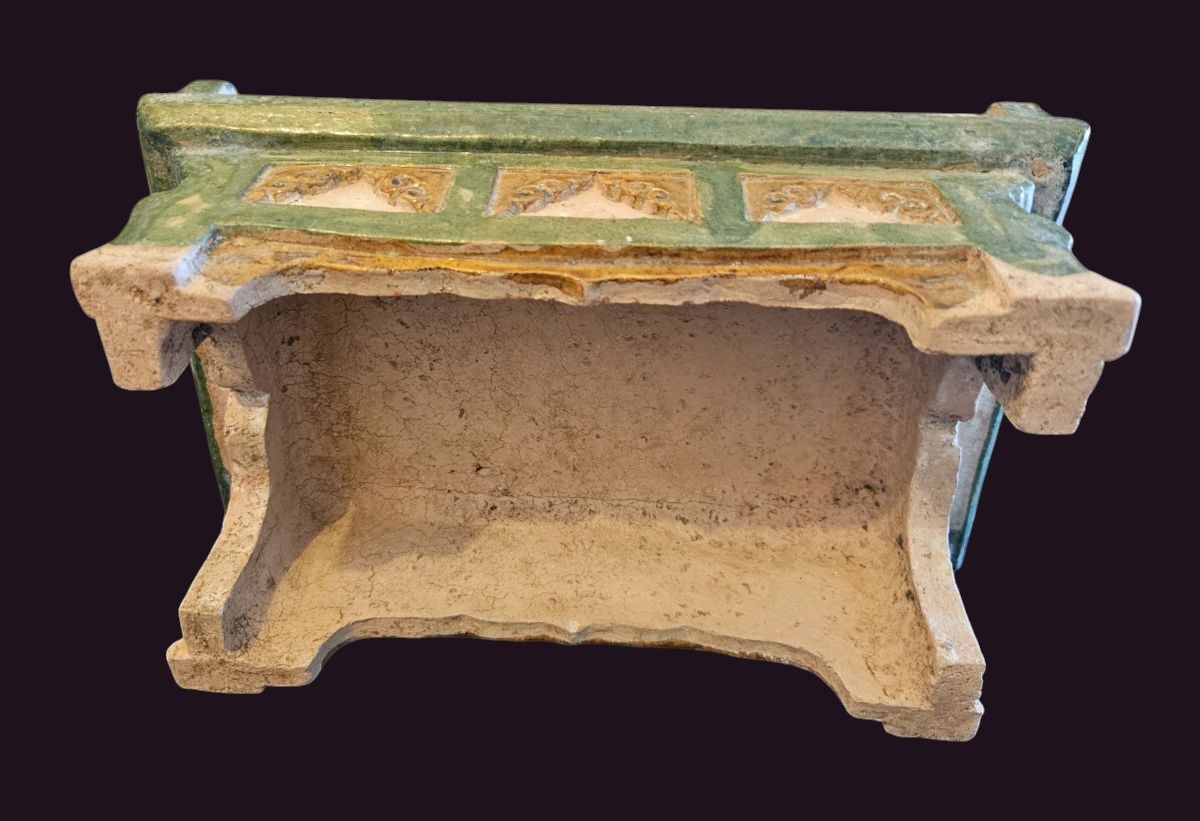
Ming Dynasty Mingqi revival – terracotta couch
Ming Dynasty Mingqi revival – terracotta couch made for the afterlife represents one of the most evocative categories of Chinese funerary art. These miniature wooden or ceramic furnishings such as chairs, beds, tables, cabinets, and household accessories were crafted specifically for burial, intended to provide the deceased with comfort, status, and familiarity in the next world.
Produced between the 14th and 17th centuries, mingqi objects reflect the domestic ideals of the Ming period, offering a detailed glimpse into elite interior life while fulfilling deep‑rooted beliefs about continuity between the earthly home and the spirit realm. Today, these pieces are valued not only for their historical significance but also for their role in illustrating ancient Chinese concepts of ancestor care and the afterlife.
SPECIFICATIONS:
- HEIGHT: – 20cm
- WIDTH: – 27cm
- DEPTH: – 16.5cm
- WEIGHT: – 2.9 kg.
- #4210
Ming Dynasty Mingqi revival – terracotta couch
Although mingqi (funerary objects) were produced in vast quantities from the Han dynasty through to the Tang dynasty for explicit use in burial chambers to accompany the departed into the afterlife, the tradition declined significantly between the 10th and 14th centuries. This period saw a shift in funerary customs, with fewer grave goods being interred alongside the deceased.
Other items included domestic utensils, food offerings, architectural models of houses, and animals, all to accompany the departed into the afterlife. These objects were not merely decorative; they embodied deeply rooted beliefs about continuity between earthly life and the spiritual realm, ensuring that the deceased would be provided for, protected, and surrounded by familiar comforts in the world beyond. The renewed production of mingqi during the Ming period reflects both a resurgence of ancestral veneration and a reaffirmation of long‑standing Chinese cosmological views regarding the afterlife.
Changing Mortuary Practices in China, 10th–14th Century
The dramatic reduction in mingqi and other grave goods between the late Tang and the early Ming period was the result of several overlapping historical developments. After the fall of the Tang dynasty in 907, China entered a period of political fragmentation and warfare (the Five Dynasties and Ten Kingdoms period), during which lavish burials became impractical and often unsafe. Tombs were frequently looted, and the instability of the era discouraged families from investing in elaborate grave assemblages.
At the same time, Buddhism and Neo‑Confucianism reshaped attitudes toward death and the afterlife. Buddhist teachings emphasised merit‑making, scripture recitation, and charitable acts over material offerings placed in tombs. Later, during the Song dynasty, Neo‑Confucian scholars promoted moral restraint, frugality, and simplicity in burial practices, criticising the extravagant tombs of earlier dynasties as wasteful and superstitious. These intellectual currents had a profound influence on elite behaviour, leading to simpler interments with fewer objects.
Economic and technological changes also played a role. The Song period saw rapid urbanisation, commercialisation, and a shift in ceramic production toward domestic and export markets rather than funerary wares. Kilns that once produced large quantities of tomb goods increasingly focused on tableware, storage vessels, and luxury ceramics for everyday use.
By the Yuan dynasty (1271–1368), Mongol rule introduced new cultural influences and further reduced the emphasis on traditional Chinese funerary customs. As a result, the centuries between the 10th and 14th represent a long decline in the production of mingqi and other grave goods.
Only with the rise of the Ming dynasty in 1368 along with a renewed interest in ancestral rites and classical Chinese cosmology did the practice of mingqi funerary objects enter into a revival phase, leading to the reappearance of miniature terracotta furniture, architectural models, and symbolic offerings in tombs such as this piece.