Lombok Lontar Palm Leaf Manuscript
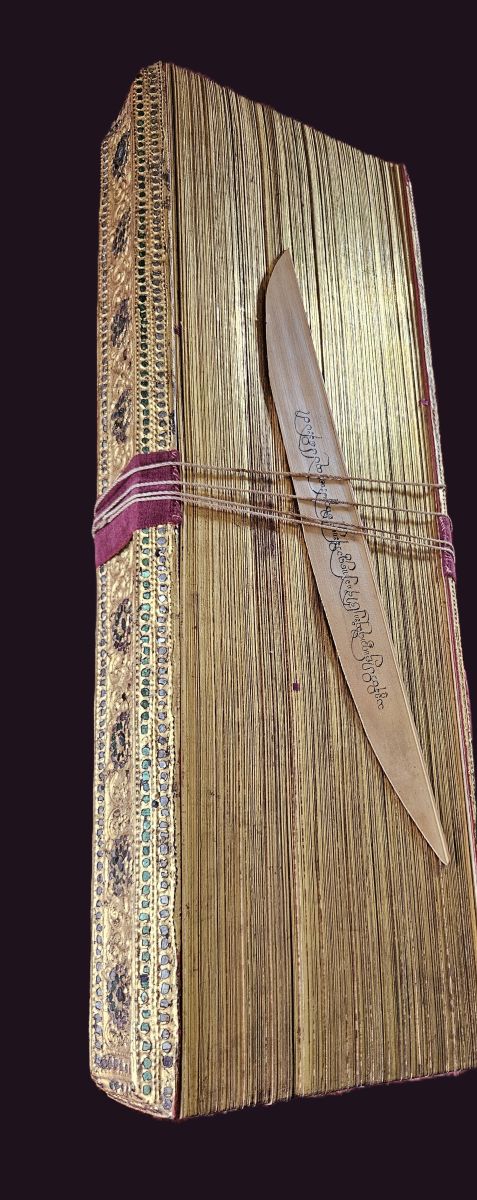
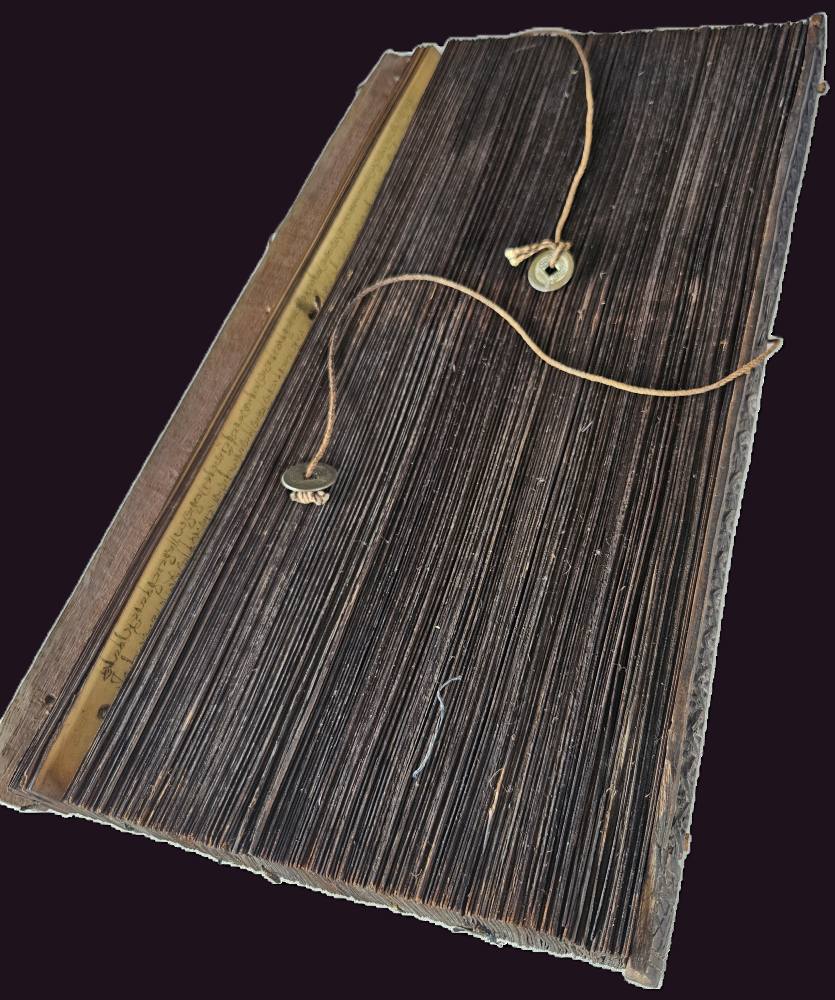
This complete and authentic Lombok Lontar Palm-Leaf Manuscript with a carved wooden end cover on one side and plain on the other represents a significant tradition of Indonesian literary and material culture. Originating from Lombok, this piece showcases the distinctive cultural intersections unique to the region.
The manuscript consists of a complete bundle of incised palmyra palm leaves, traditionally known as lontar, securely protected between two wooden outer covers (kropak). The text is incised with a sharp metal stylus and blackened with natural soot to reveal a highly fluid, cursive script known as Sasak (or Aksara Sasaq). Because sharp angles would split the natural grain of the palm leaf, the script evolved over centuries into these elegant, rounded forms. The text itself is composed in Kawi (Old Javanese), the Sasak language, or a poetic blend of both the traditional languages for Lombok’s historical, religious, and epic literature.
Lontar manuscripts from Lombok traditionally preserve vital regional texts, including the Menak Cycle (indigenous Islamic epic adventures adapted from Persian and Javanese traditions), Babad (historical chronicles of ancient Sasak kingdoms like Selaparang), or classic poetic romances.
With its rich patina on the bronze, wear on the string, and well-preserved palm leaves, this manuscript stands as a genuine artifact of Southeast Asian bookmaking, illustrating centuries of trade, religion, and literature bound together in a single object.
SPECIFICATIONS:
- AGE: Assuming 19th century or earlier
- LENGTH: 48 cm
- WIDTH: 4 cm
- WEIGHT: 1 kg.
- #378
Lombok Lontar Palm Leaf Manuscript
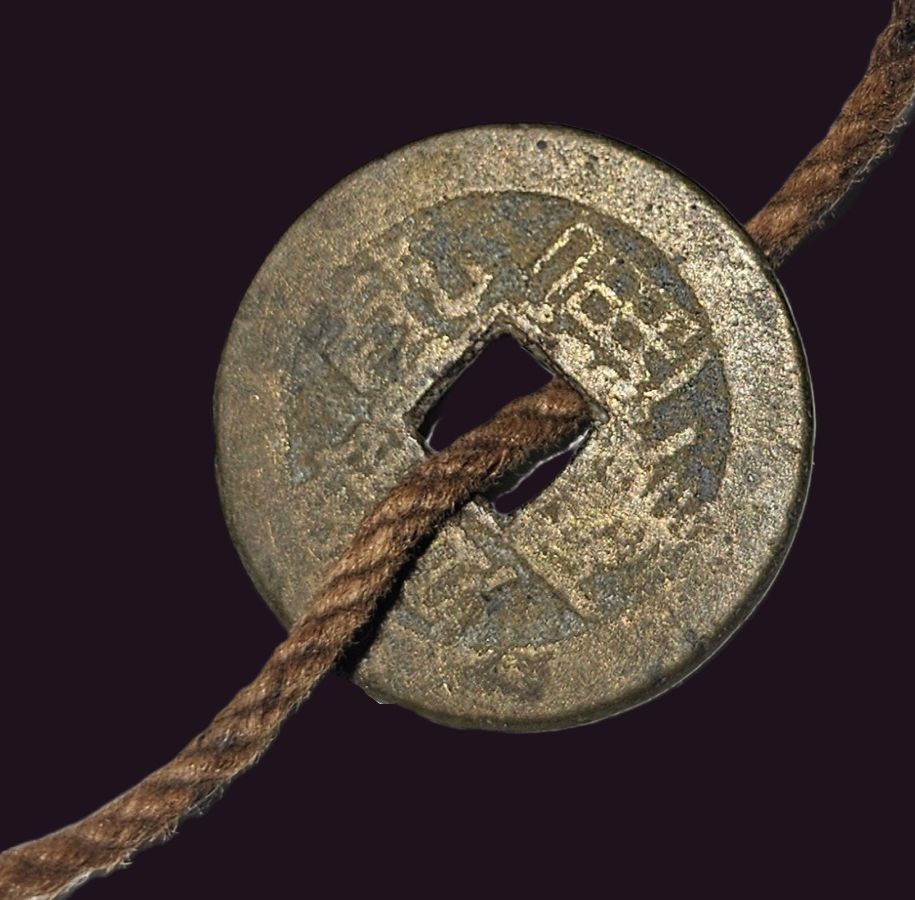
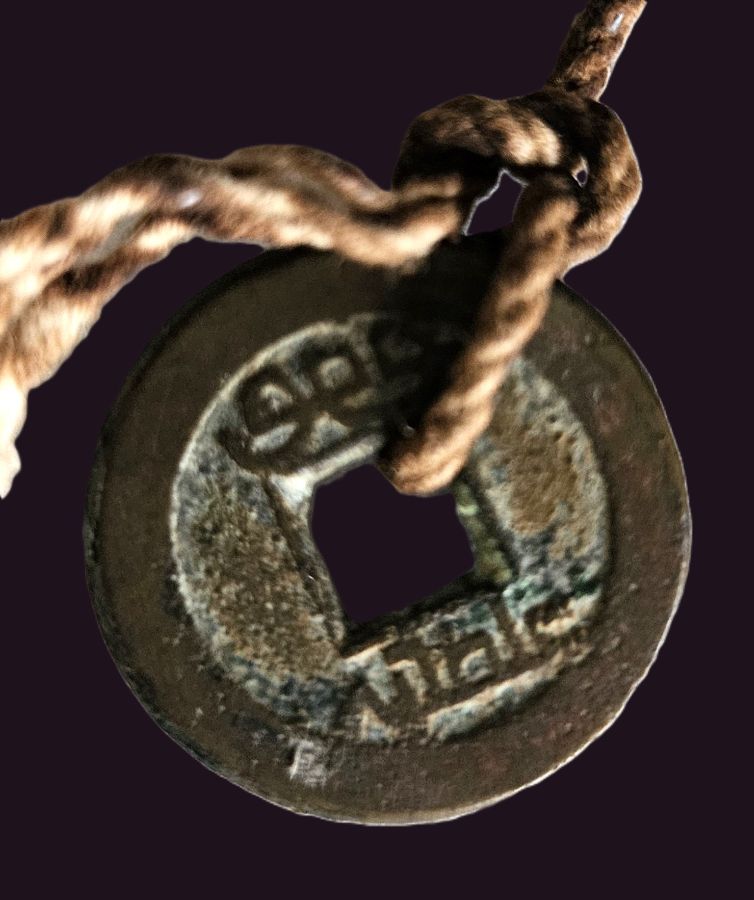
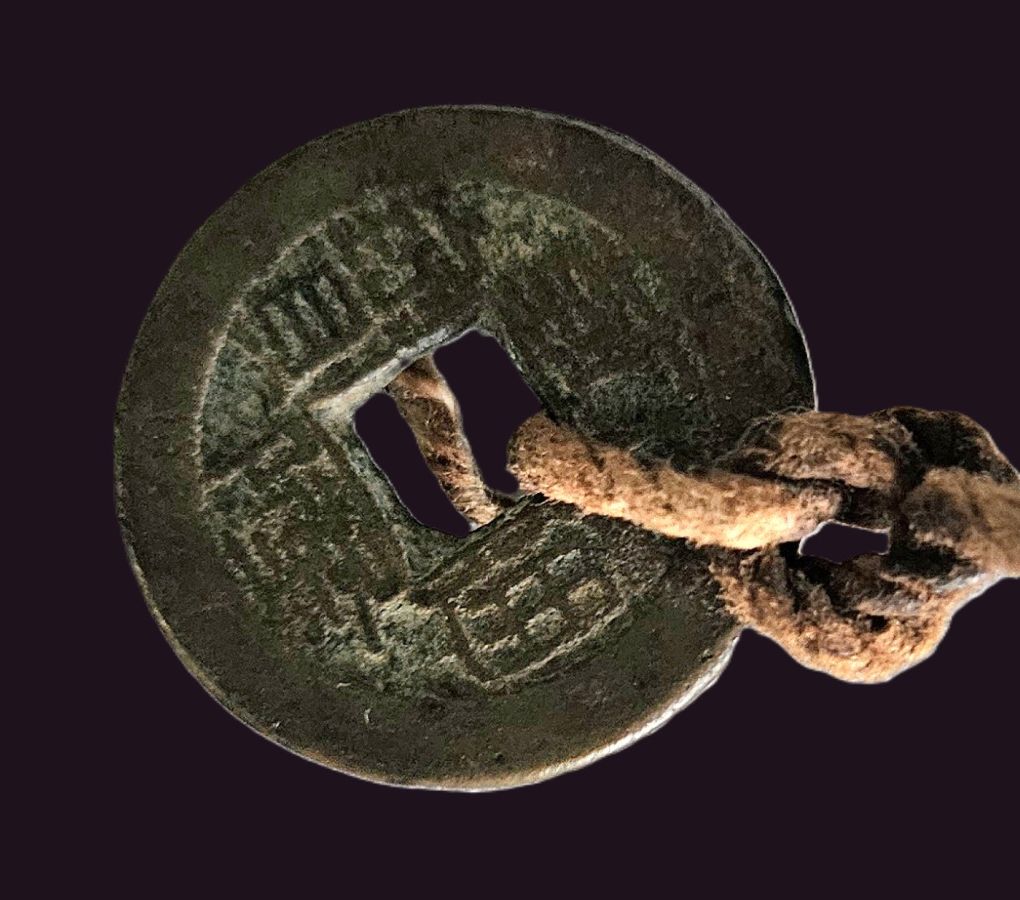
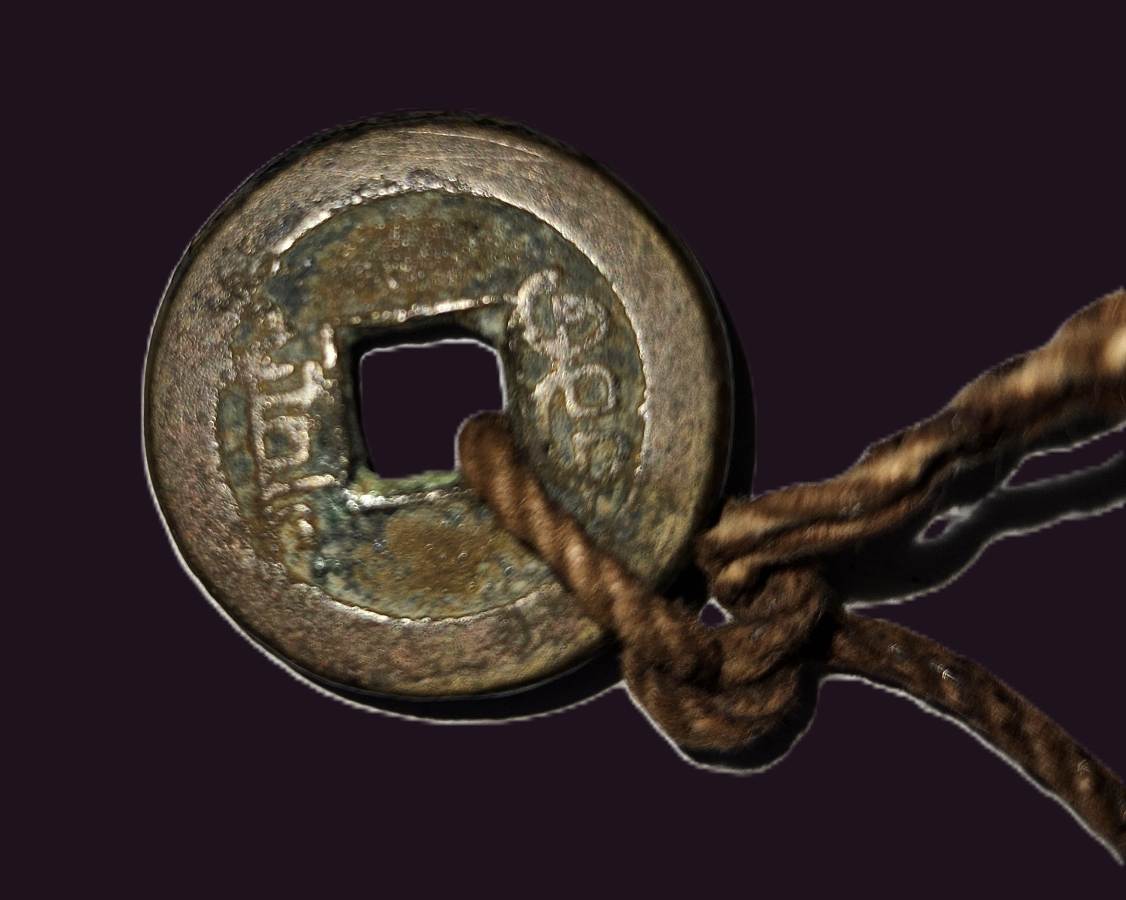
A particularly compelling feature of this Lombok Lontar Palm Leaf Manuscript is its original cord threaded through the leaves, anchored by genuine Chinese cash coins (kepeng or pis bolong) threaded on the string to prevent it from slipping through the leaves.
- Obverse Inscription: One clearly legible coin reads “康熙通寶” (Kangxi Tongbao), identifying it as currency minted during the reign of the Kangxi Emperor of China’s Qing Dynasty.
- Mint Period: The coin itself dates precisely between 1661 and 1722.
- Reverse Inscription: The reverse features formal Manchu script indicating the specific provincial mint responsible for casting the bronze.
While Chinese currency arrived via maritime trade routes and circulated as standard legal tender across the Indonesian archipelago for centuries, the coins retained deep spiritual and ritual significance long after their commercial use ceased.
Chinese Coins on a Lombok Manuscript
For centuries, Chinese cash coins were the primary everyday currency across the Indonesian archipelago, especially in Bali and Lombok. They arrived via robust maritime trade routes.
Even after they stopped being used as legal tender, they retained immense spiritual and practical value. In regional culture, these coins are considered sacred and are used in Hindu-Buddhist rituals, to construct ceremonial statues, and mechanically to secure the cords of lontar bundles.
While the coins themselves were minted between 1661 and 1722, it does not automatically mean the text was written in the 17th century. These coins remained in active circulation and ritual use for hundreds of years. However, the deep patina on the bronze, the wear on the square central hole from the cord, and the condition of the twisted cord itself strongly point to an authentic, old family or village manuscript rather than a modern tourist reproduction.