
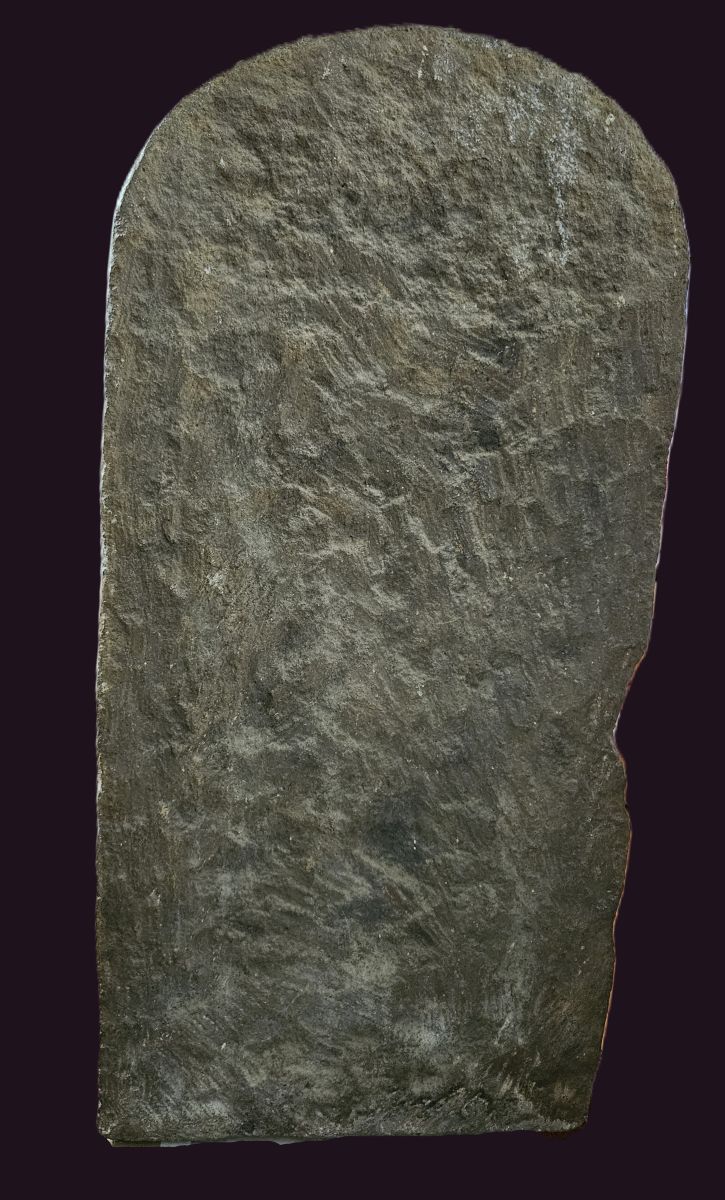
East Javanese Agastya Andesite Stone Stele
This East Javanese Agastya andesite stone stele dates to approximately the 13th century. It belongs to a diverse group of stone sculptures, architectural niches, and esoteric texts found throughout Indianized kingdoms. These works demonstrate how Agastya’s identity adapted across South and Southeast Asia, shaping the sacred geography of the region.
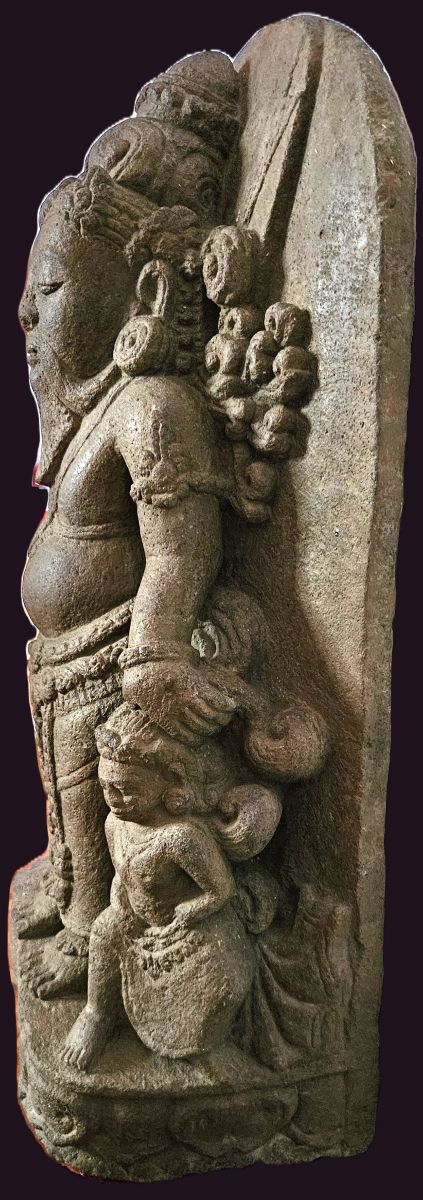
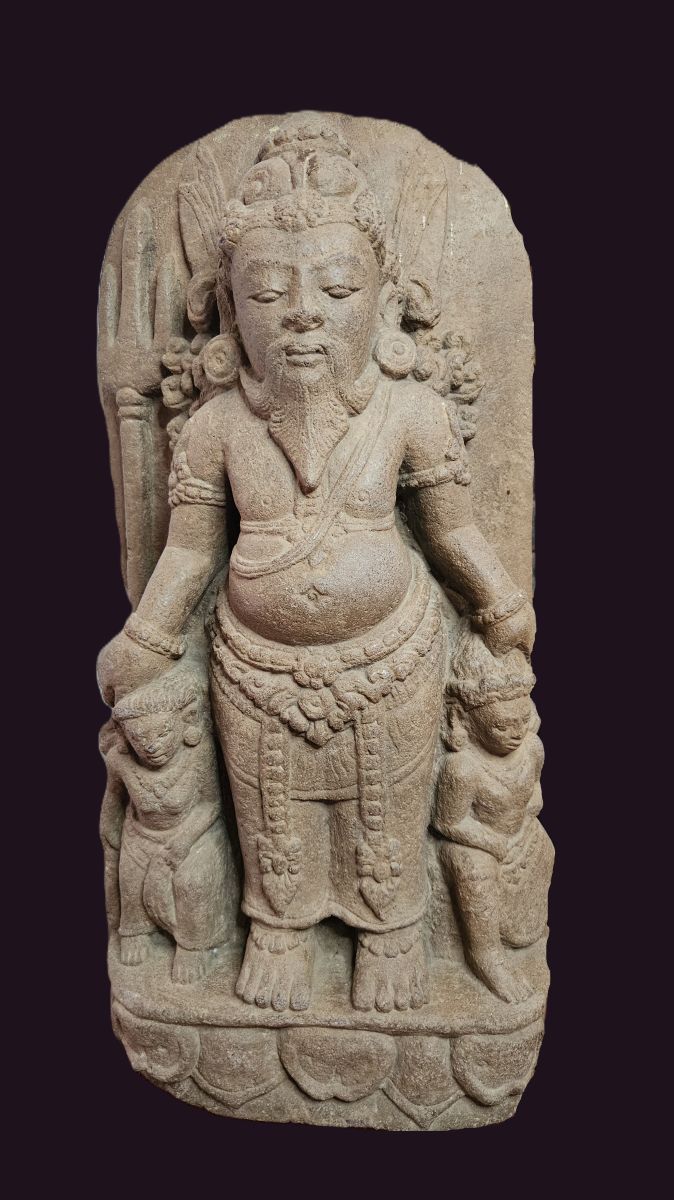
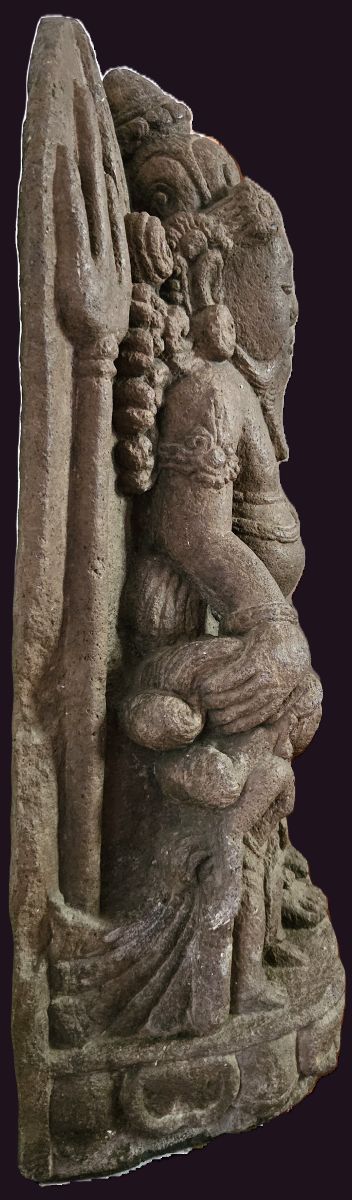
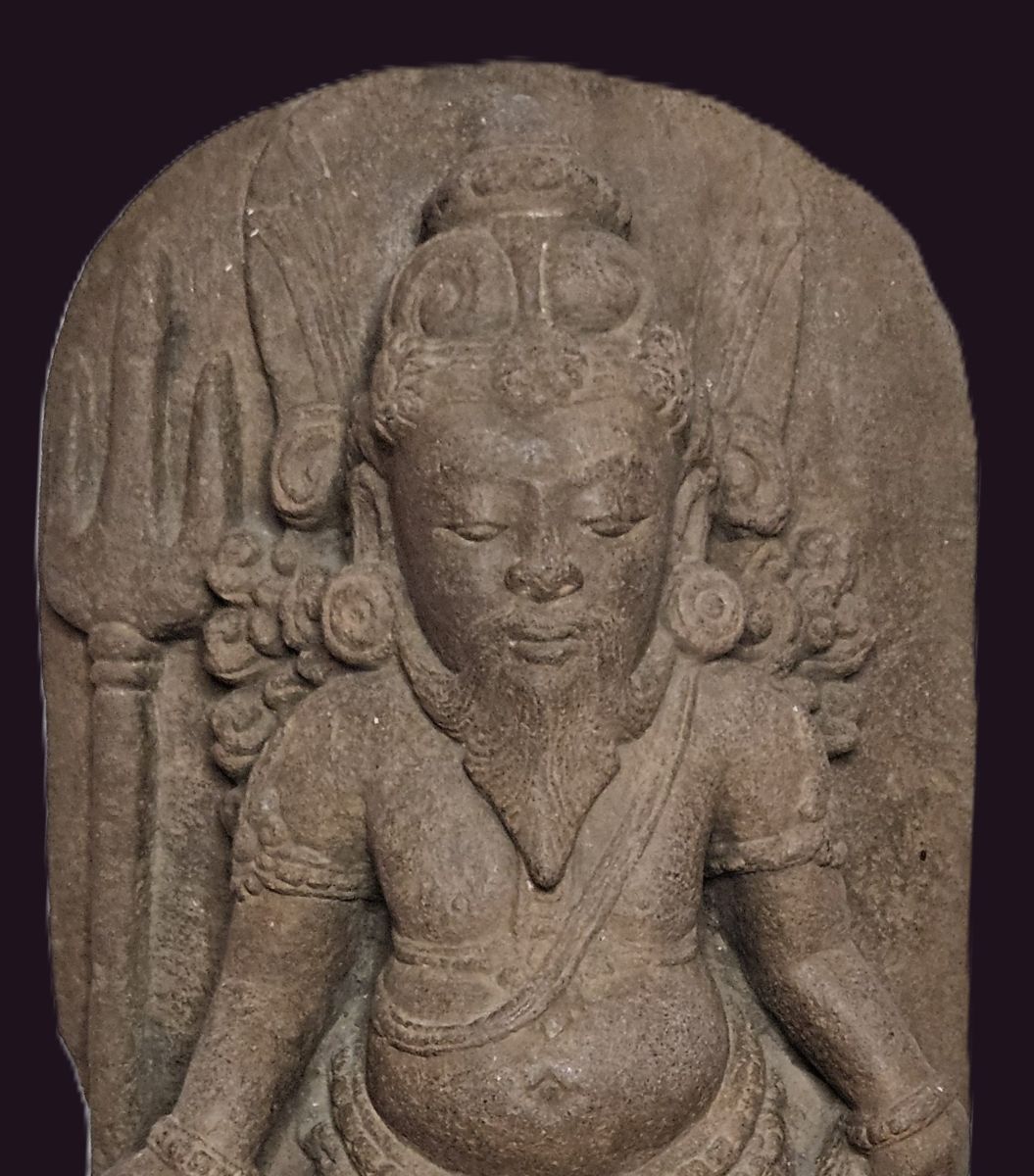
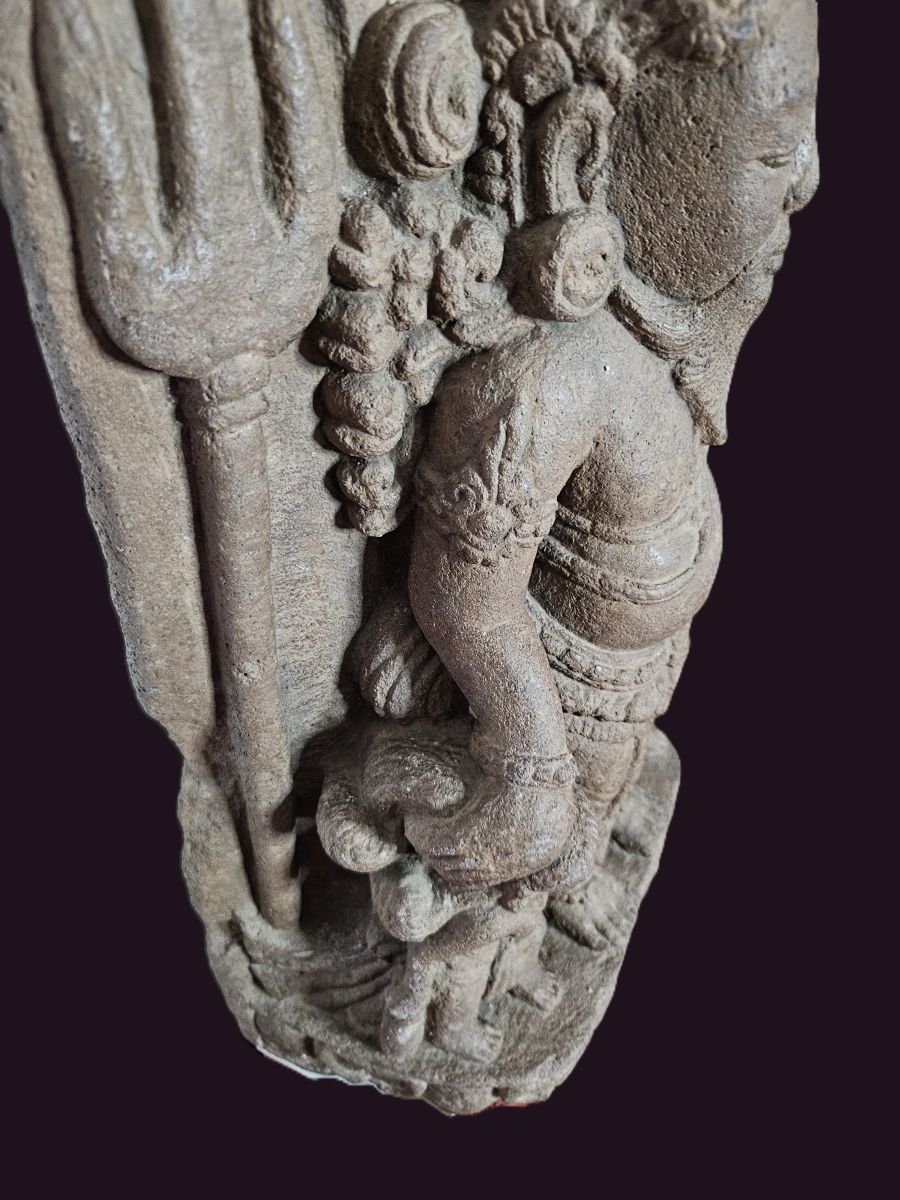
This Andesite Javanese Agastya stele depicts the cosmic sage with his traditional beard, prominent belly, and a trident (trisula) in the background. In a distinctive regional variation, rather than holding his usual attributes, his hands rest directly on the heads of two flanking attendants, wrapping his fingers around the hair at the back of their heads in a gesture of spiritual initiation typical of the late Singosari or Majapahit periods.
FEATURES:
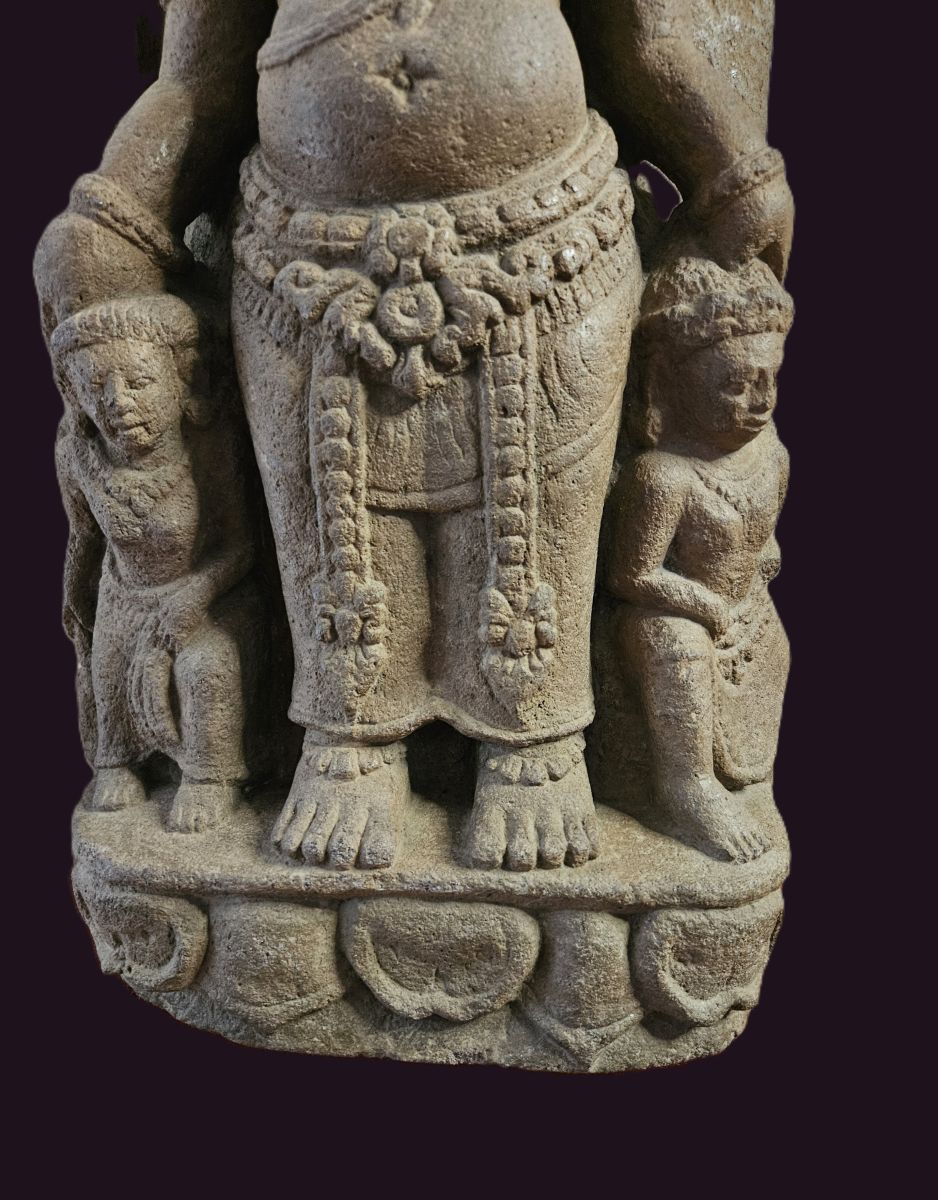
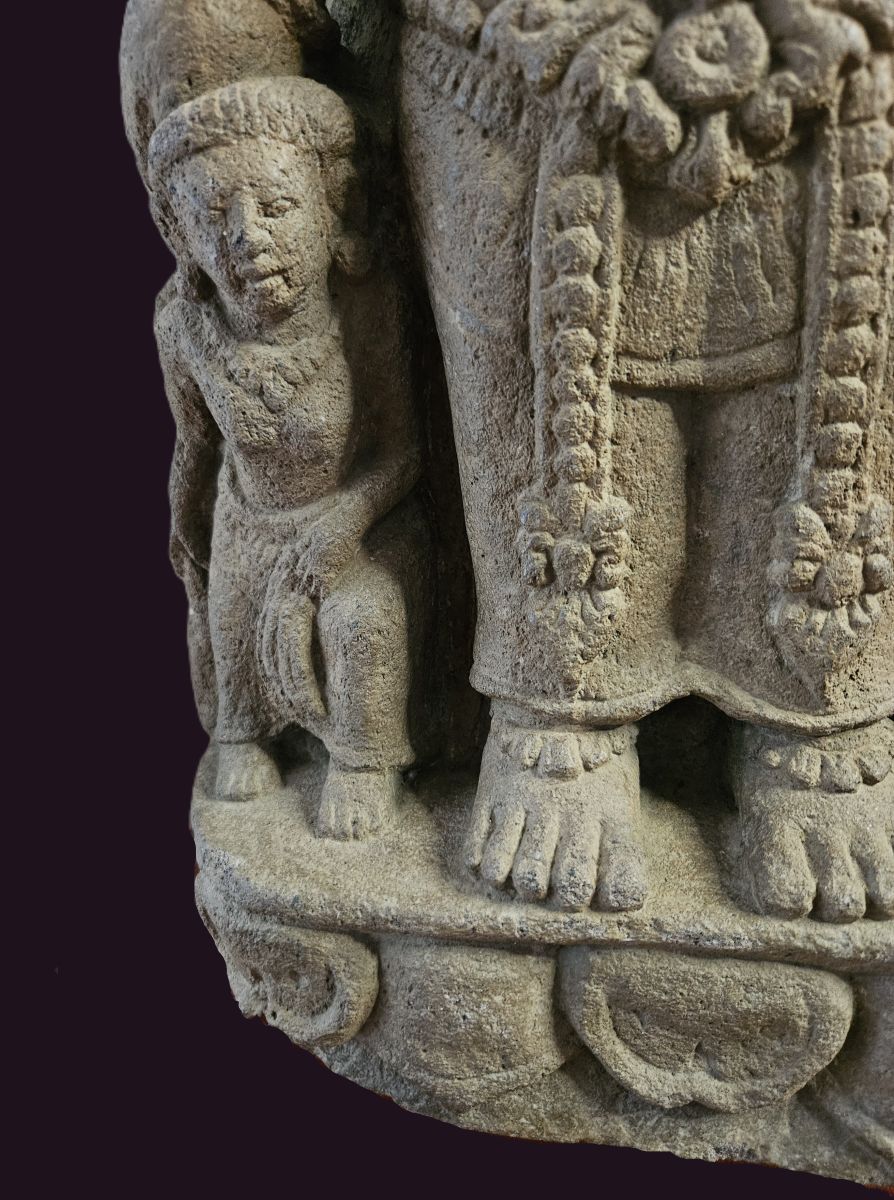
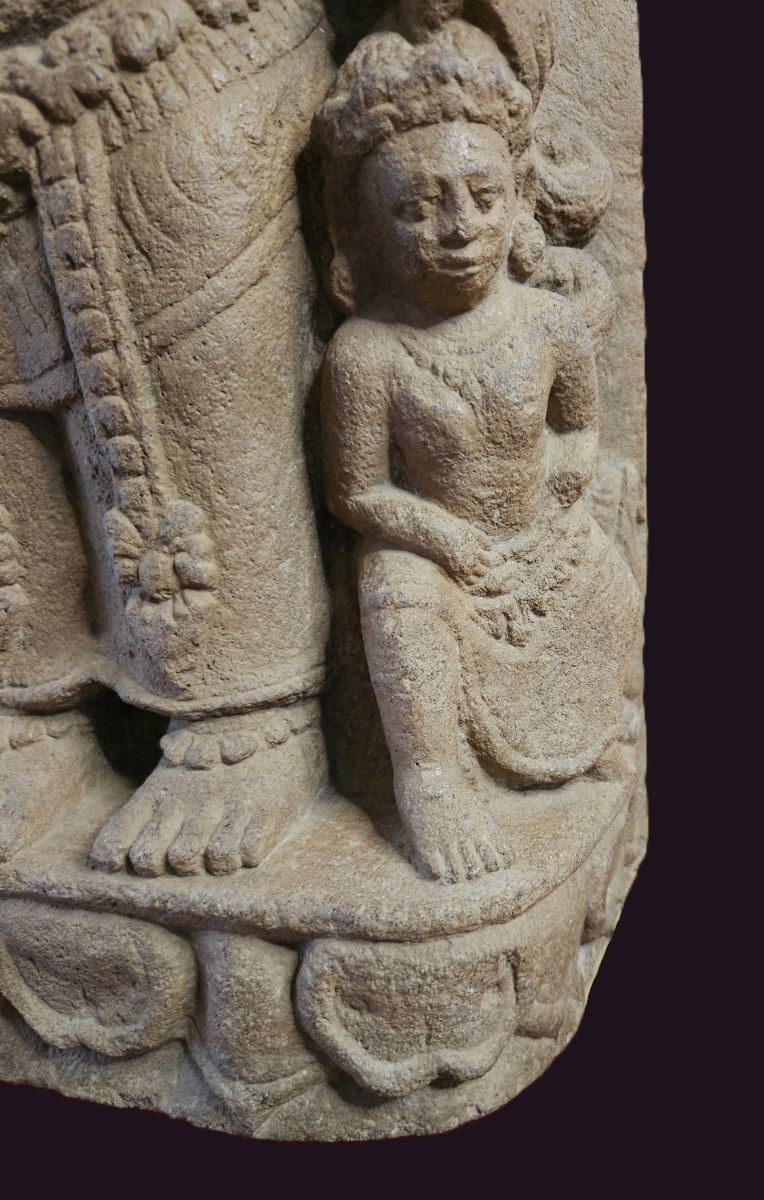
- The Attendants: Unlike standard standalone niche images of Agastya, this stele includes two flanking, kneeling attendants (ganas or disciples) at his feet. They are carved with traditional Javanese features, wearing basic dhotis and standard jewellery. In this depiction of Agastya, he is shown with his hands intertwined with the hair of the two smaller figures by his side. In some iconographic sculptures the physical grasping of hair by a teacher is an intimate gesture of transmission or authority.
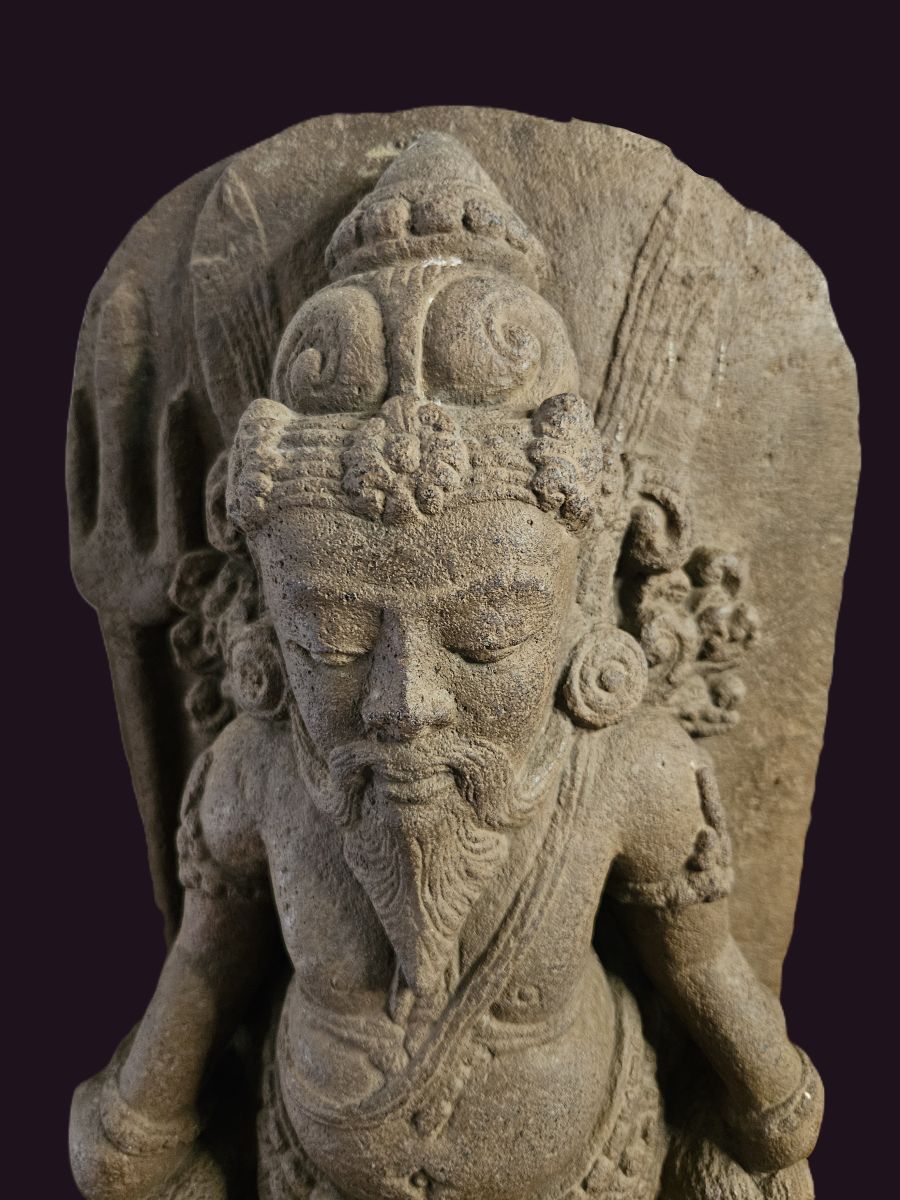
- The Trident (Trisula): To his right (left side of the image), a large, distinct trisula is carved into the background slab. This is a vital attribute linking him directly to the Shiva pantheon, as he represents Shiva in the form of the supreme teacher.
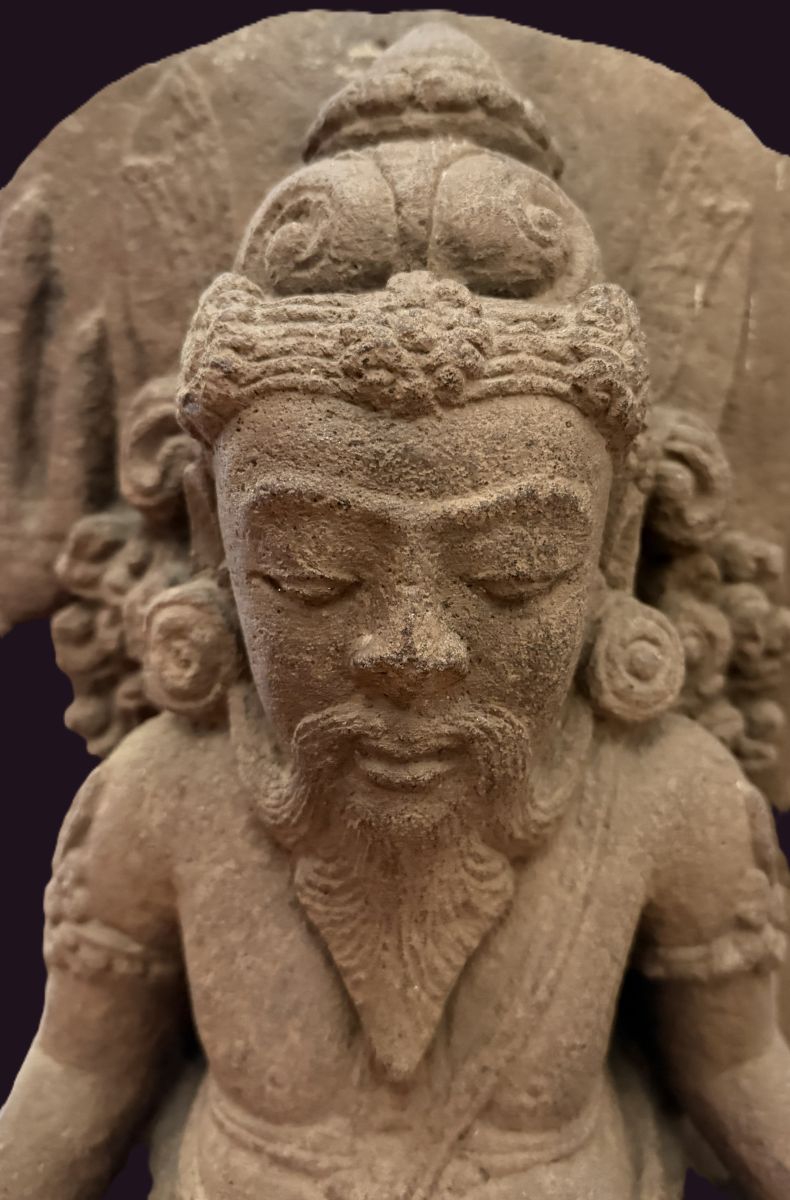
- The Facial Features and Hair: The close-up of the head shows the characteristic pointed beard and curled moustache of the elderly rishi. His eyes are downcast in deep meditation. The hair is bound up into a high, tiered jatamakuta with a distinctive spiral motif at the base of the topknot.
- The Garments and Jewellery: The lower body features an elaborate belt assembly (mekhala) with hanging pearl loops and floral clasps, characteristic of early Javanese royal and divine costume design.
SPECIFICATIONS:
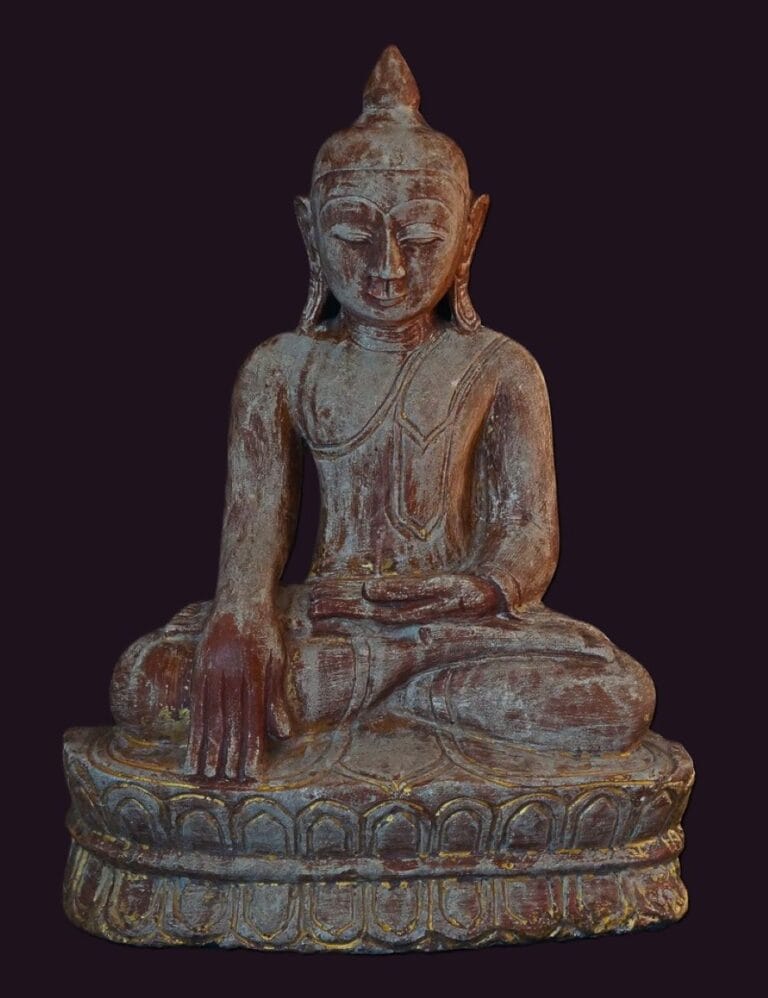
- Acquired 40 years ago whilst residing in Indonesia along with this Lava stone Buddha head
- AGE: Approximately 13th Century
- HEIGHT: 62 cm
- WIDTH: 30 cm
- DEPTH: 29 cm
- WEIGHT: 41.6 kg.
- #5019
East Javanese Agastya Andesite Stone Stele
Regional Stylistic Links
- The Face and Crown: The softening of the features on this andesite stone Agastya’s and the deeply heavy eyelids, the specific shape of the floral crown piece (jatamakuta) directly reflect the classic Central Javanese artistic canon.
- Within the context of classical Central Javanese art, this andesite stele exhibits a distinctive narrative complexity through the inclusion of two flanking, kneeling attendants at the base of the deity. In standard Indian iconographic prototypes, Agastya is conventionally depicted as an isolated figure within the temple niche; however, this Indonesian manifestation reflects a highly localized theological adaptation, likely drawing from indigenous traditions later codified in the Old Javanese Agastyaparva.
- Rather than serving as mere stylized decoration, these figures represent his premier disciples, frequently identified in Javanese lore as the rishis Jegata and Marici, rendered in a posture of intense devotion (upasana). Compositionally, the monumental form of Agastya anchors the vertical axis of the slab, while the drastically reduced scale of the crouching attendants creates a sharp hierarchical contrast that emphasizes his supreme spiritual authority.
Historical and Cultural Context
- The Mataram Kingdom (Sanjaya Dynasty): This was the ruling power in Central Java during the 9th century. While the nearby Shailendra Dynasty built Buddhist monuments like Borobudur, the Sanjaya rulers were devoutly Hindu (Śaivite) and built complexes like Prambanan.
- The Role of Agastya (Shiva Guru): In Javanese Hinduism, Agastya holds a far more prominent position than he typically does in India. He is revered as the divine teacher who brought Vedic culture and irrigation techniques across the ocean. He was seamlessly integrated into the state religion to legitimize the spiritual authority of Javanese rulers.
Iconographic and Stylistic Analysis
- Central Javanese Style vs. Indian Prototypes: While the iconography originates from Southern India (Pallava and Chola styles), Javanese execution is distinct. The figures have a softer, more rounded, and fleshy modelling, particularly evident in Agastya’s prominent belly (tundila) and the gentle, downcast facial expressions.
- Architectural Integration: These steles were not intended to be viewed in the round. They are high-relief carvings designed as architectural components to fit into the outer wall niches (relung) of volcanic stone temples (candi).
Disciples/Sages: Jegata and Marici (The Primary Javanese Identification)
- In local Javanese texts and oral traditions regarding Shiva Guru (Agastya), he is frequently described as traveling with his closest disciples or companion sages who helped him spread Vedic knowledge, language, and agricultural techniques across the seas to Java.
- The most prominent pair named in Javanese lore are the rishis Jegata and Marici (or variant local spellings like Yagata).
Puranic Tradition: Drdhasyu and Lopamudra
In traditional Hindu Puranic tradition, these two figures likely represent his immediate spiritual household:
- Drdhasyu (Idhmavaha): Agastya’s son, who was born so spiritually advanced that he was said to recite the Vedas from the womb. He became a great sage in his own right and is often depicted as a young ascetic at his father’s feet.
- Lopamudra: Agastya’s wife, a renowned philosopher and ascetic who accompanied him on his journey south and lived a life of severe penance alongside him.