Western Han Dynasty Painted Pottery Court Lady – Mingqi
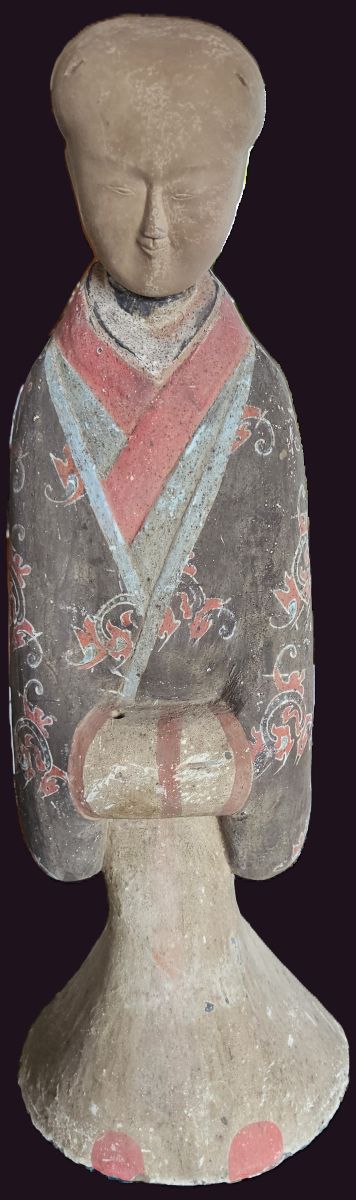




Han Dynasty Painted Pottery Court Lady – Mingqi
This impressive 66 cm Western Han Dynasty painted pottery court Lady – Mingqi figure represents a rare and highly collectible variation of classic Han tomb sculpture. While many figures from this era feature a lighter, buff-colored paste, this statue boasts a distinctive, deeper clay body that sets it apart from more common examples.
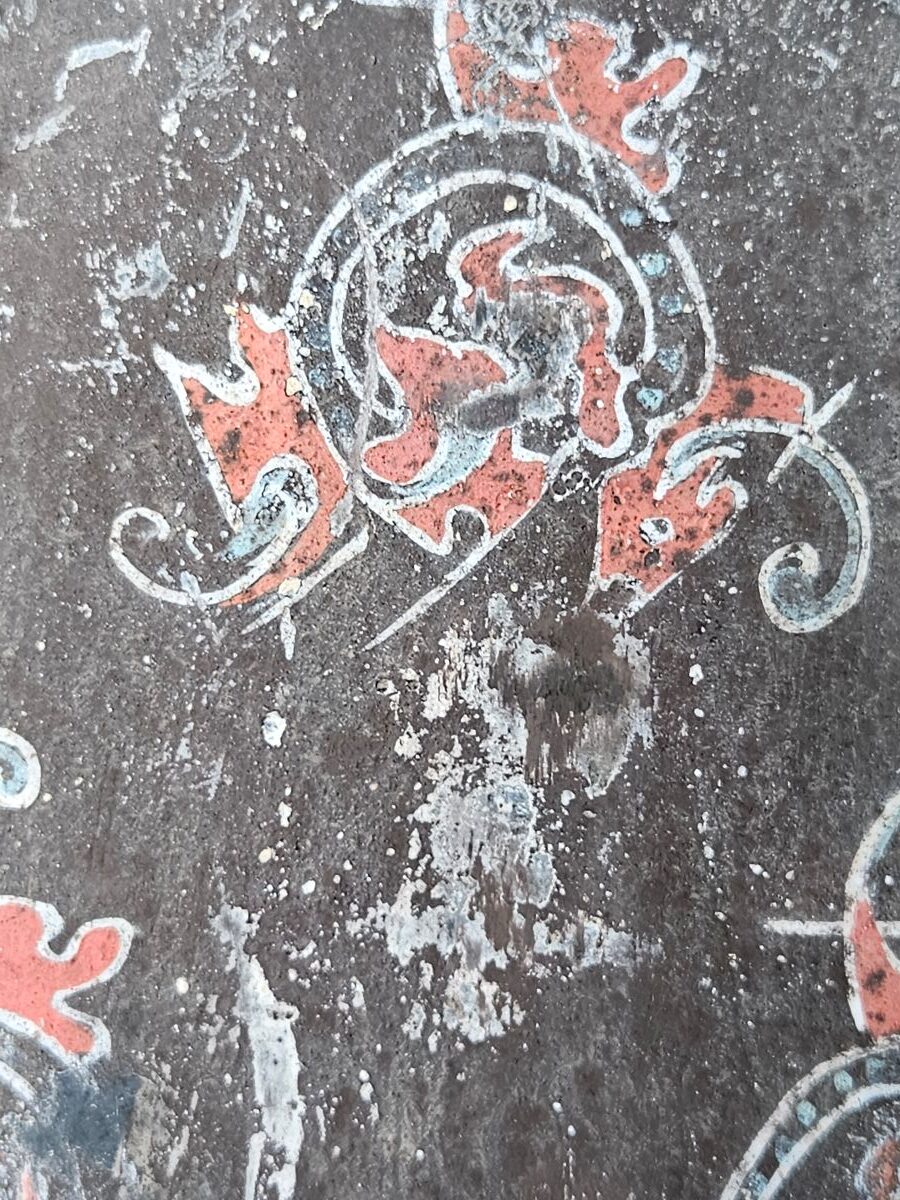
Adding to its rarity, the sophisticated painting style on the robe features fluid cloud and scroll motifs. This specific decorative work is rarely seen on figurative sculptures, mirroring instead the prestigious designs usually reserved for high-status Han dynasty ritual vessels and cocoon jars.
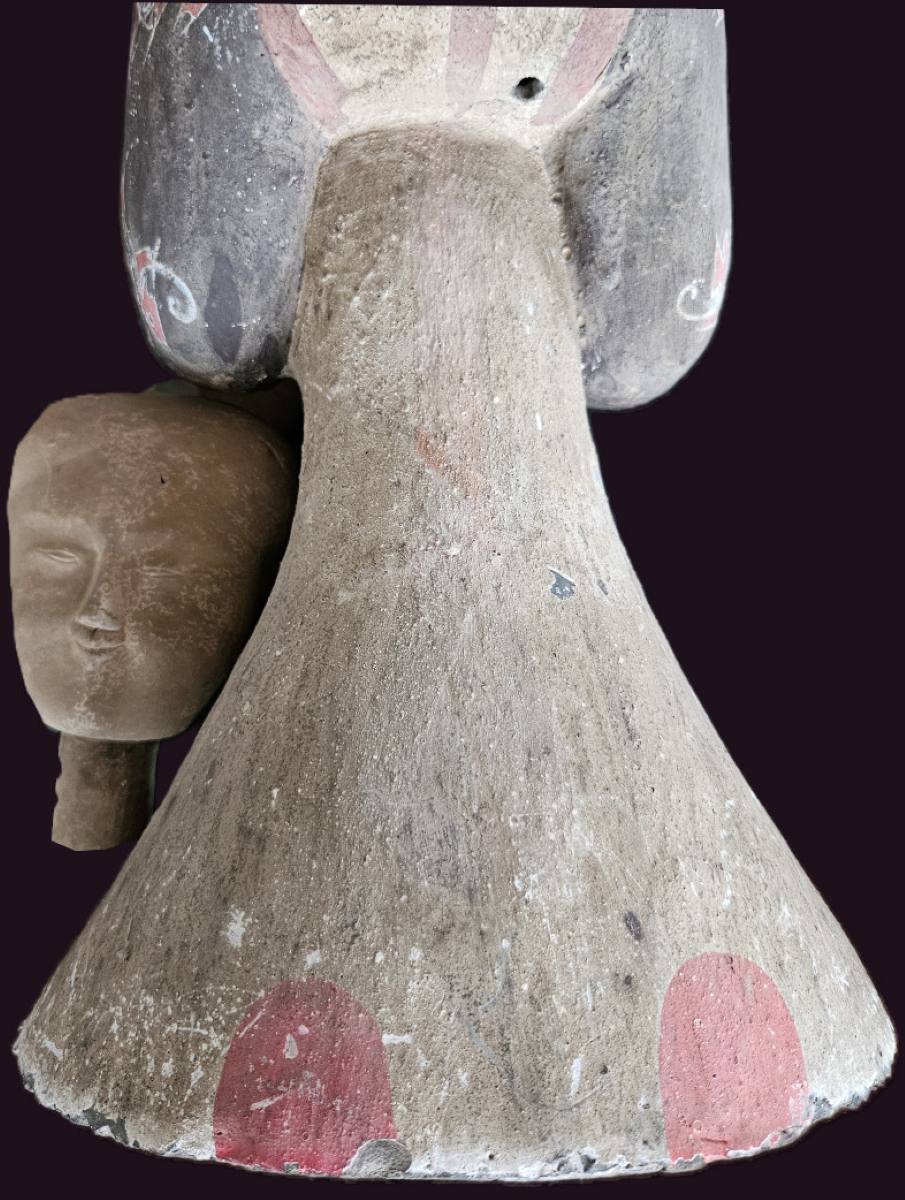
True to the complex history of ancient terrestrial finds, the head may be a well matched historical replacement that beautifully completes the elegant silhouette of the statue. This large-scale figure offers an exceptional opportunity to acquire a distinct and structurally fascinating piece of early Chinese ceramic art.
SPECIFICATIONS:
- AGE: Western Han (206BC – 24AD)
- HEIGHT: – 70cm
- BASE WIDTH:– 25cm
- #4389
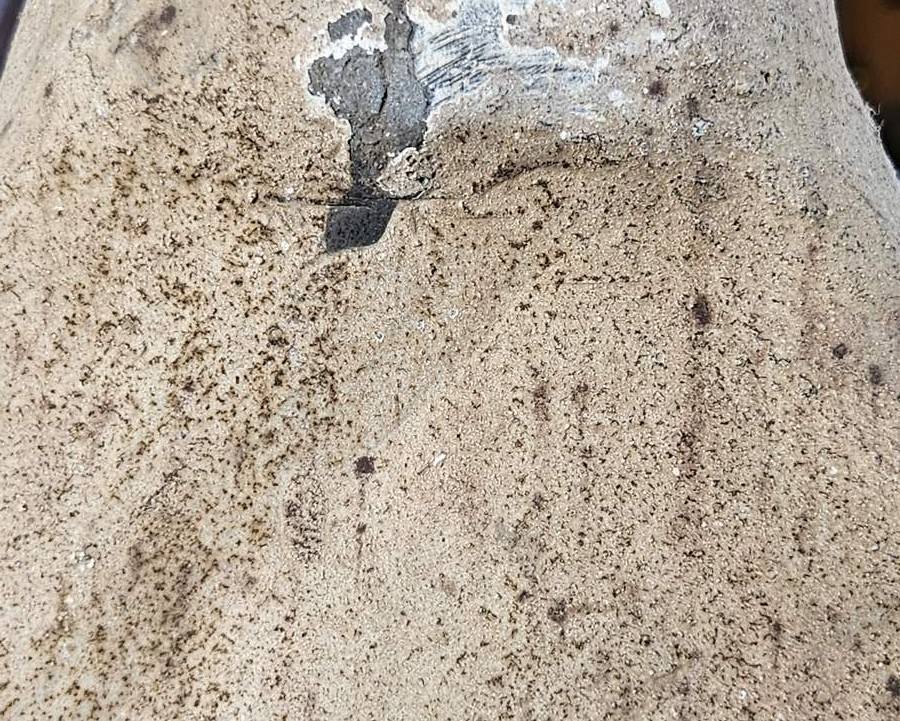
Texture and Composition: The paste features the coarse, granular texture characteristic of authentic Han pottery. It contains natural inclusions like fine sand, dark mineral specks, and minuscule white particles. This gritty composition was essential to prevent the clay from cracking or warping during the low-to-medium temperature firings of the period.
Color and Kiln Dynamics: The light grey to buff-beige body visible on exposed surfaces is standard for Han huatao (painted pottery). Subtle variations in tone point to natural atmospheric shifts inside a traditional wood-fired kiln, a contrast to the perfectly uniform color produced by modern electric kilns.
Fracture and Oxidation: Exposed breaks reveal a dark grey core beneath a lighter, weathered exterior. This indicates incomplete oxidation which is a common trait in Han kilns where fires were smothered at the end of the cycle to produce grey wares. The brittle, porous nature of the clay structure confirms a genuine low-fired earthenware or stoneware body rather than a highly vitrified modern reproduction.
Mineral Incrustations: The white spots and light-colored deposits scattering the surface appear to be genuine caliche or calcium carbonate accretions rather than painted-on fakes.
Material and Paste Consistency
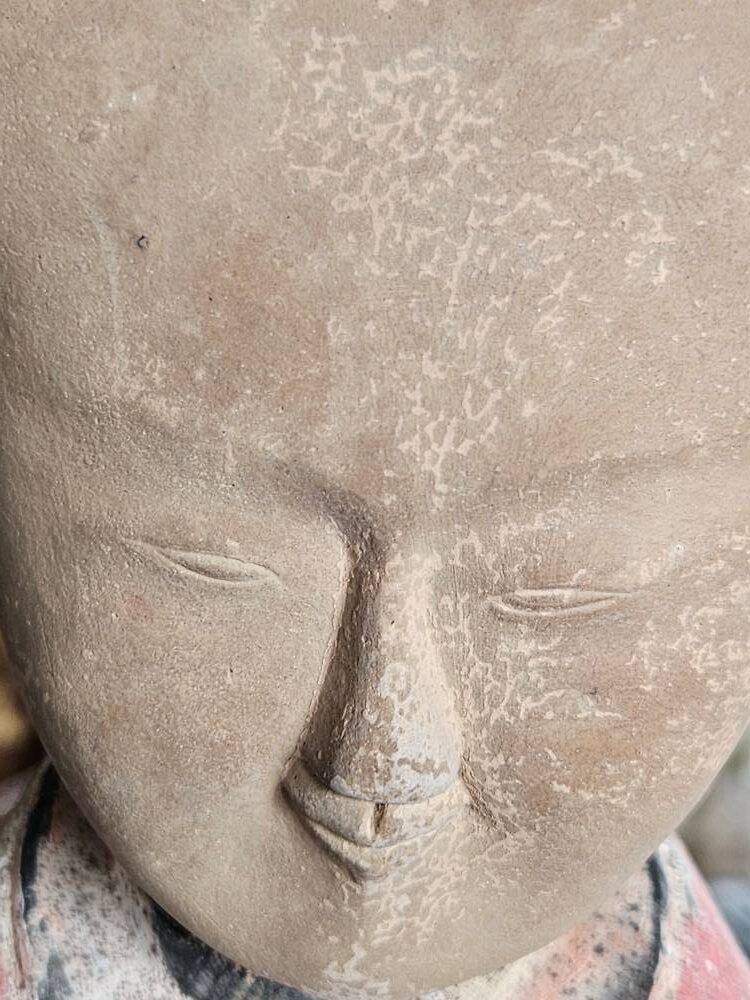
- Clay Composition: The paste of the head shows a fine, granular, buff-beige stoneware structure that perfectly matches the rest of the figure. The density and sandy grit texturing are identical across the entire piece.
- Surface Weathering: The face displays matching micro-pitting, fine crazing, and pale caliche crusts. These mineral deposits are heavily concentrated in the recessed areas around the eyes, the bridge of the nose, and the contours of the mouth, where soil minerals naturally accumulate over centuries of burial.
Discolored Pigment and Binder Residue
- Pigment Composition: While the robe features robust red and white mineral pigments, the faces of these figures were typically coated with a flesh-toned mixture of white clay, pink or red iron oxides, and an organic binding agent like animal or hide glue.
- Decay and Carbonization: Over centuries of burial, these organic binders decay, carbonize, and absorb minerals from the surrounding soil.
- Surface Staining: This process permanently stains the porous clay, turning what was once a pale flesh tone into a deeper, mottled brown or tan patina that clings to the face.
Soil Contact and Micro-Environments
- Uneven Environmental Exposure: When a pottery figure is buried, it does not experience the subterranean environment uniformly.
- The Body: The heavy layers of paint on the robe act as a partial barrier, protecting the underlying clay from direct soil staining. Where that paint has flaked away over time, the clean, unexposed grey or buff paste beneath is revealed.
- The Face: Featuring thinner pigmentation, the face was often directly exposed to the surrounding earth. Over two millennia, the porous clay has actively leached iron oxides and organic tannins from the damp burial soil, permanently baking a darker brown patina into the skin areas.
- An Indicator of Authenticity: Modern fakes are frequently sprayed with a uniform chemical wash to simulate aging, whereas this figure displays a distinct, localized variation in color based on how different surfaces reacted to the ground.
- The Body: Because the torso and limbs were meant to be fully covered by thick mineral paints depicting robes, the underlying clay required less surface refinement during production.
- The Face: The face shows a much smoother, finer appearance than the body. Potters frequently applied a distinct, iron-bearing clay slip to these exposed skin areas, which fired to a warmer, browner tone than the grey structural paste beneath.
Stylistic and Sculptural Features
- Han Dynasty Typology: The facial features strongly conform to Western Han Dynasty (Han Yangling style) or Eastern Han ceramic figures (mingqi). The elongated, slit-like eyes, the subtle, integrated ridge of the nose, and the enigmatic, gentle smile are classic diagnostic markers for court attendants, dancers, or bureaucrats of this era.
- The Coiffure: The broad, flattened, and flared hairstyle is typical of Han Dynasty female or courtly figures. The clay surface on the top of the head shows the same natural degradation, tool marks, and minor historical scuffs consistent with the base fragments.
Structural Support During Form Building
Note: Han Dynasty figures of this scale were typically constructed using two-piece molds for the exterior halves, or by slab-building the lower body. When working with wet, heavy clay at a height of 85cm, the walls of a hollow figure will sag, collapse inward, or buckle under their own weight before the piece can dry. To counter this, ancient potters built an internal structural column or thick clay strut up through the center of the hollow cavity to shore up the torso and anchor the form.
Preventing Warping and Cracking in the Kiln
Clay shrinks significantly as it dries and fires. For large, hollow shapes, the uneven distribution of weight and heat often causes the piece to warp or crack across the base. The solid, curved column seen inside the figure is to:
- Distribute the vertical load of the heavy upper torso and head directly down to the thickest part of the base.
- Act as an internal brace, keeping the thin outer walls from warping inward due to the intense heat and draft of the kiln.
Internal Evidence of Ancient Production
- Rough, Untooled Interior: The inside walls and central support column are completely unfinished, showing rough clay, finger impressions, and squeezed excess paste. Ancient potters spent no time smoothing out areas hidden from view.
- Organic Construction: The central rod is hand-rolled and slightly curved, showing how it was manually manipulated into place to clear the narrower passages of the upper robe.
- Dark Mineral Seams: The dark, resinous black streaks running horizontally across the interior are remnants of slurry, iron-rich slips, or organic matter that pooled in the crevices during assembly and carbonized during firing.
This type of internal structural engineering is standard for oversized Han mingqi and is highly consistent with authentic, handmade fabrication processes of the period.
A similar style of cold painted decoration seen on a Han Dynasty Mingqi horse housed at the San Antonio Museum