


Burmese Kammavaca Gilded Buddhist Manuscript
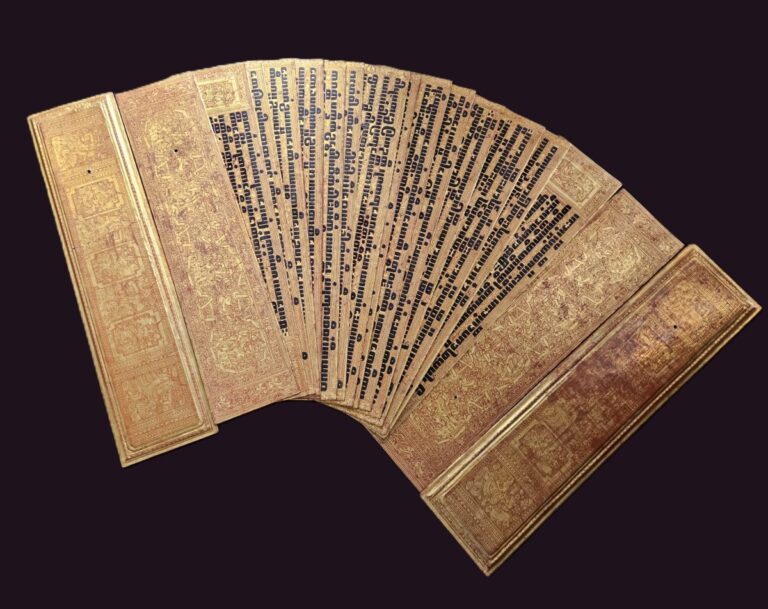
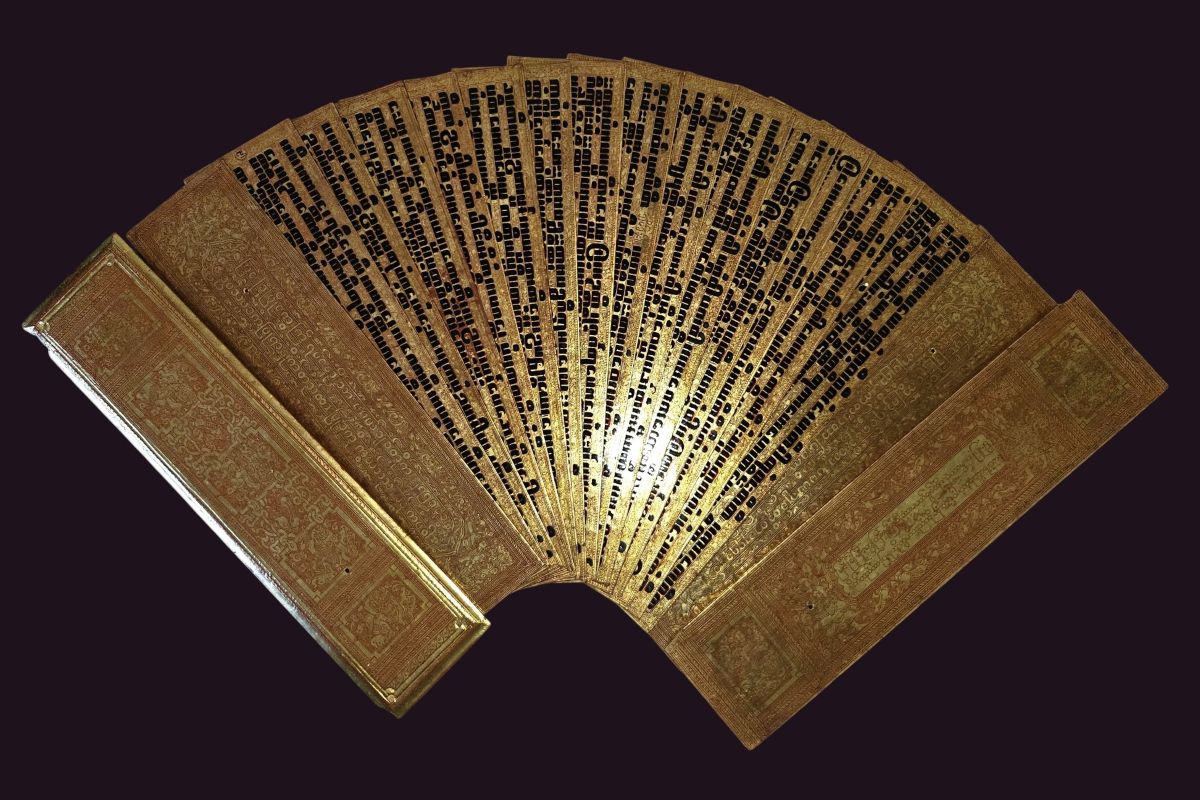
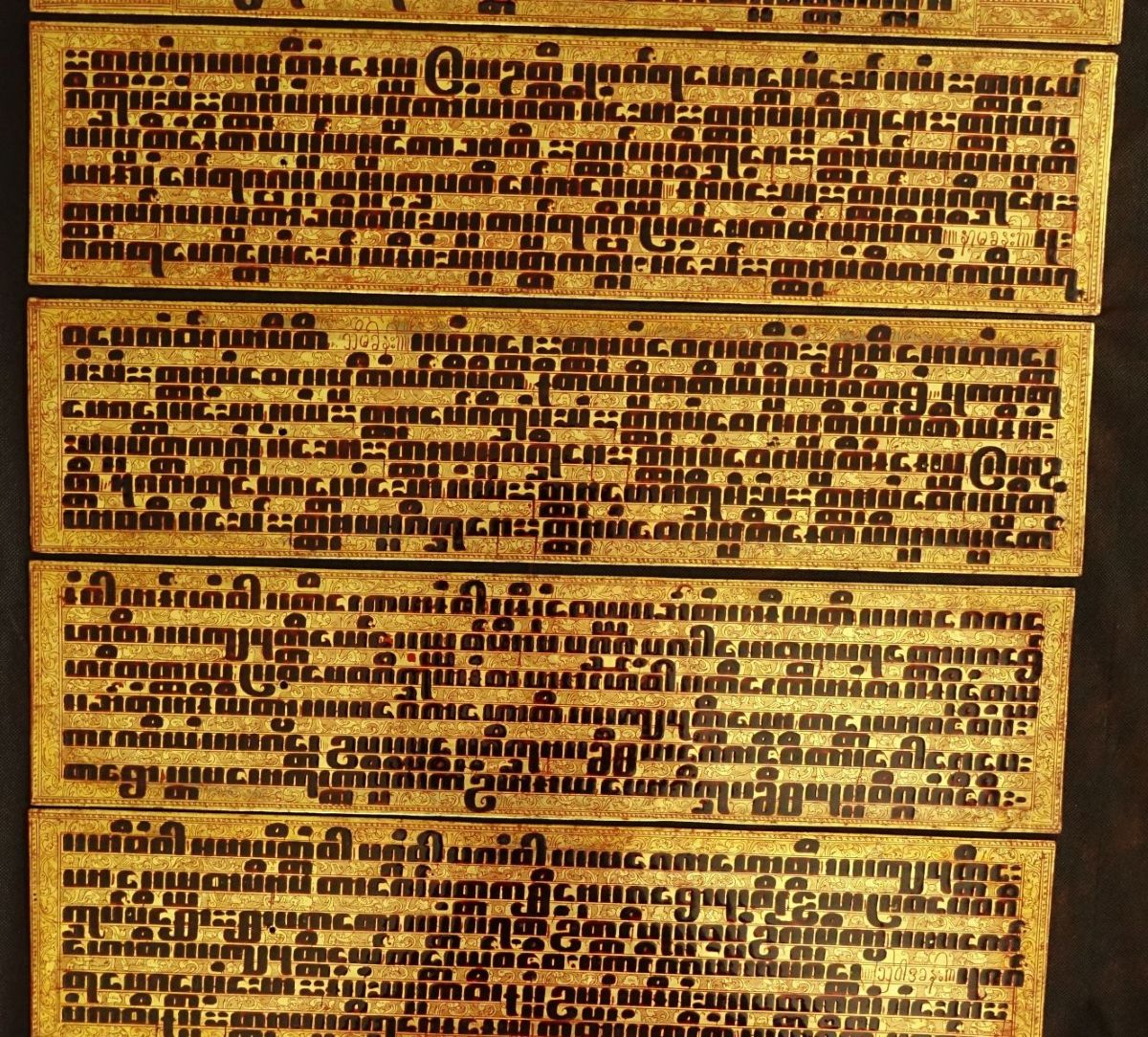
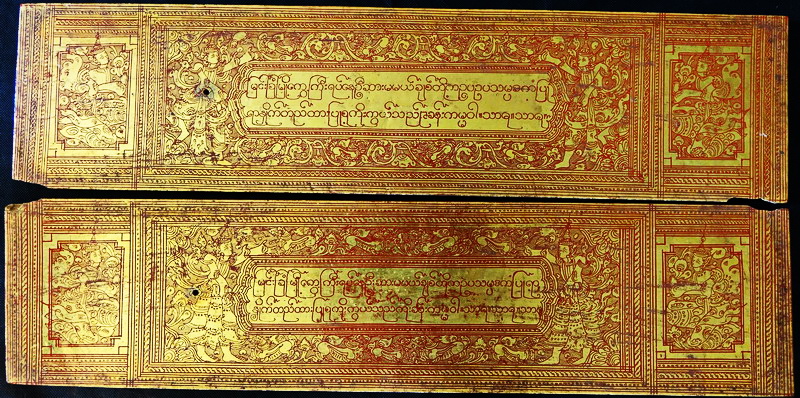
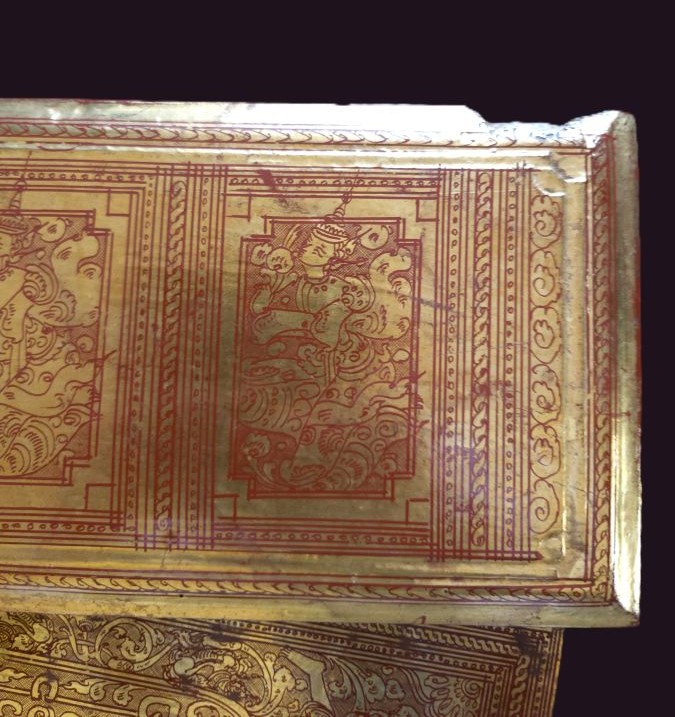
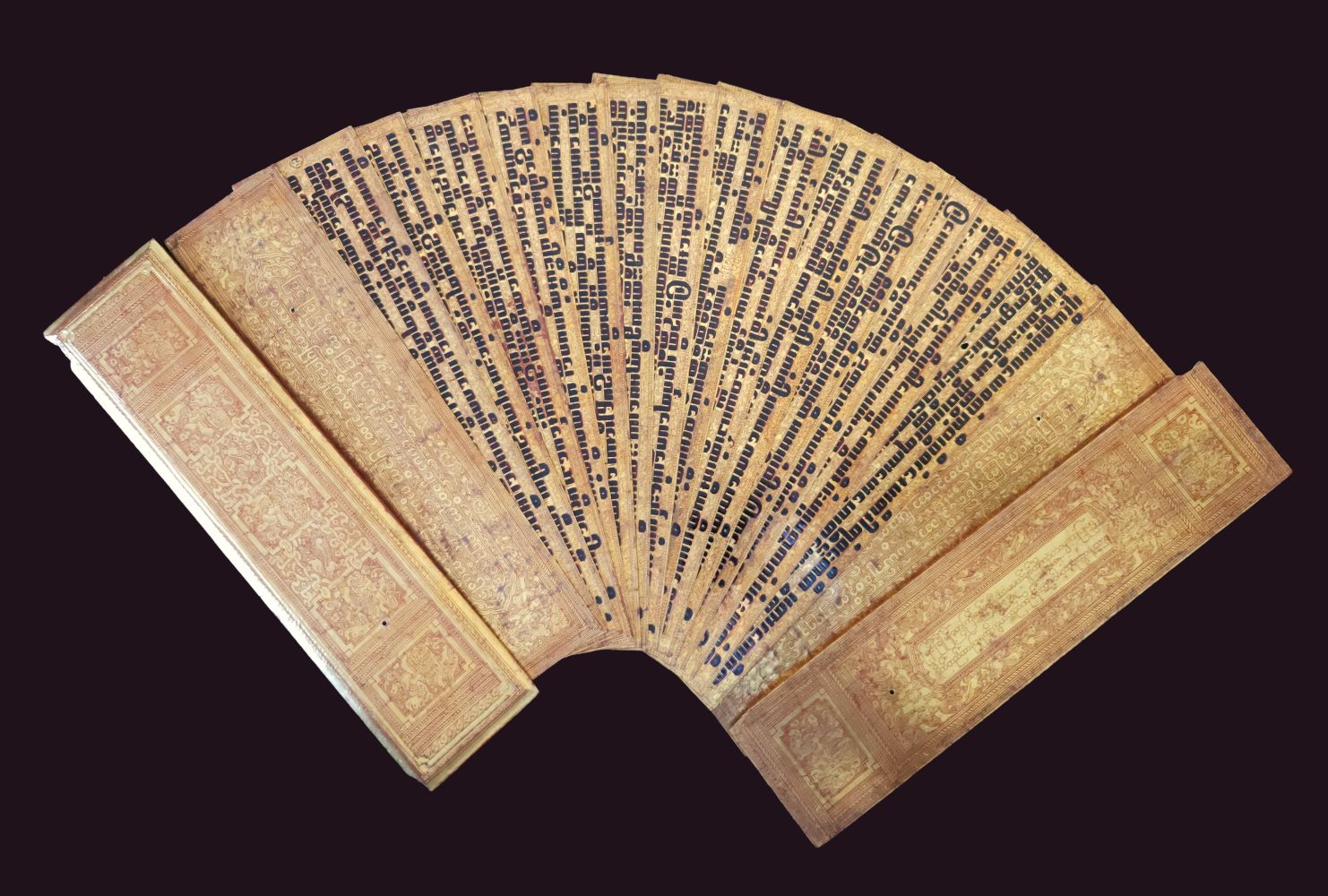
This Burmese Kammavaca gilded Buddhist manuscript is a beautifully preserved, complete sixteen‑leaf example from the 19th century, notable for its larger‑than‑average dimensions. Executed in the traditional shwe‑zawa gold‑leaf technique on lacquered cloth, it features thick, lustrous black script made from thitsi, the resin of the Melanorrhoea usitata tree, one of the defining characteristics of these manuscripts. The precision of the calligraphy and the distinctive scrolling foliage (ka‑noke) framing each panel are classic hallmarks of late‑Konbaung and early colonial‑period workmanship
The Text Formulation: To achieve the distinctively thick, raised, three-dimensional texture seen on the pages of the kammavaca, the raw black lacquer is mixed with a thickening agent. Traditionally, artisans blend the lacquer with ash (often from burnt bone, straw, or cloth) or fine sawdust to create a dense, malleable paste called thayo lacquer, this lacquer is also used in the decoration on Buddha statues.
The Lettering Style: When applied to the gold leaf surface of the kammavaca using a flat spatula or broad stylus, this mixture retains its shape without running, drying into the solid, raised characters known as the “tamarind seed” script (ma-un-za).
SPECIFICATION:
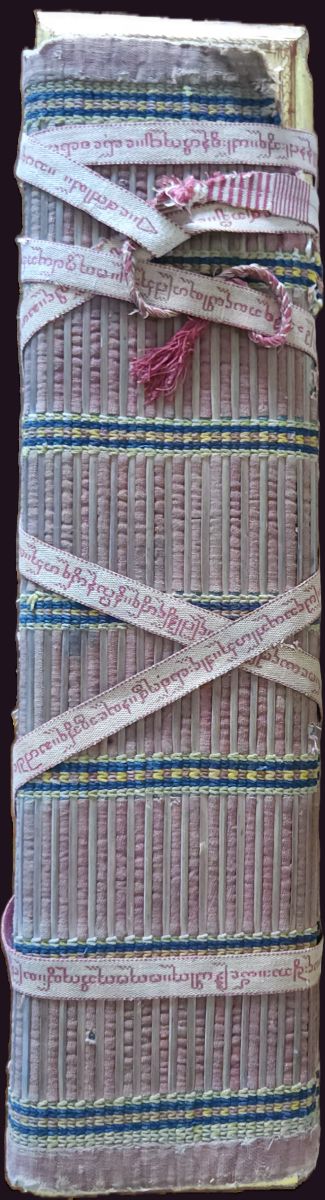
- COMPLETE KAMMAVACA: 16 leaves with original covering and sasigyo, the woven ribbon binding the kammavaca (ribbon has woven Burmese script running along the length of it.
- AGE: 19th Century
- LENGTH: 60 cm
- WIDTH: 15cm
- WEIGHT: 3.45 kg
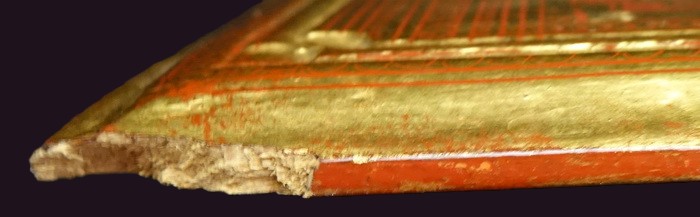
- CONDITION: Damage to two corners of one cover , minor damage to corner of one page
- #10
Burmese Kammavaca Gilded Buddhist Manuscript
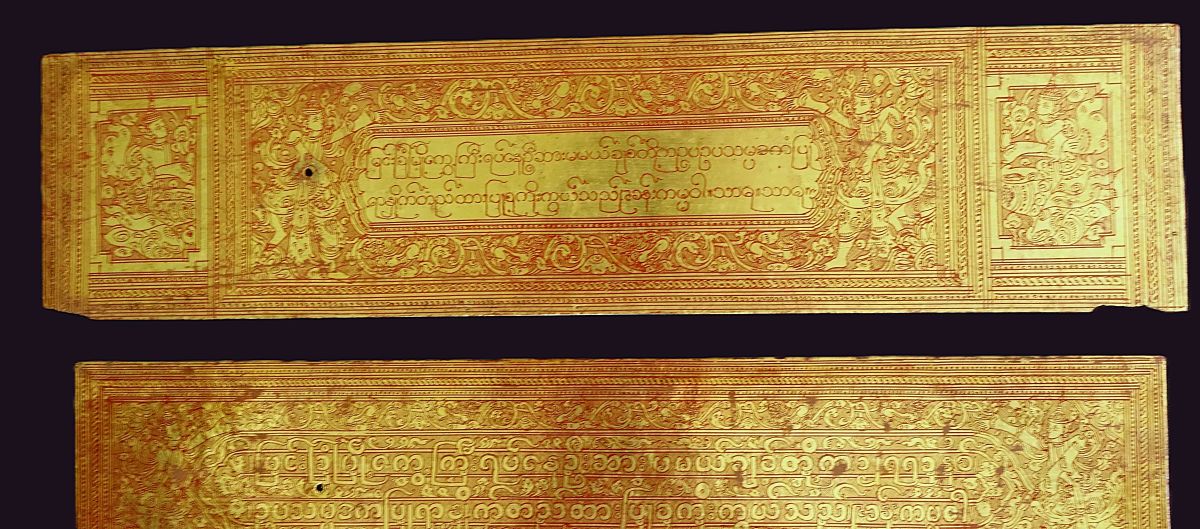
DONOR DEDICATION SCRIPT INSIDE COVERS – INTERPETATION
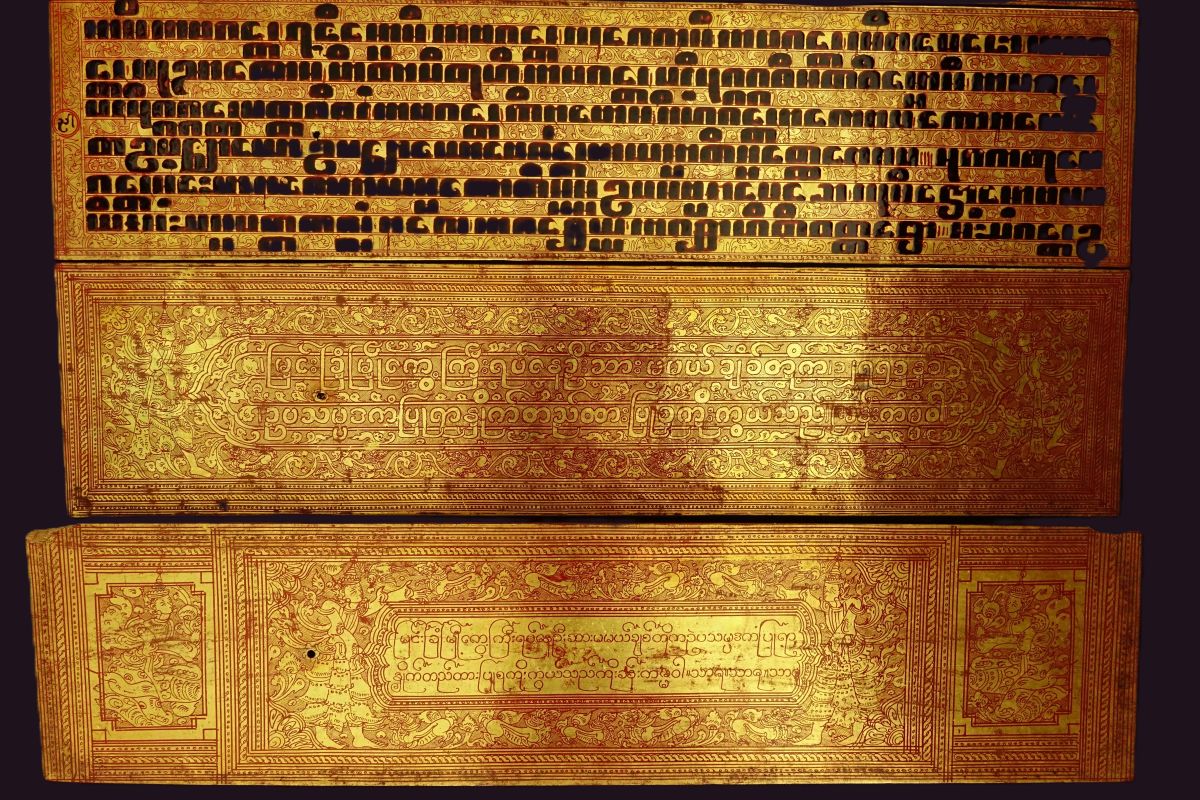
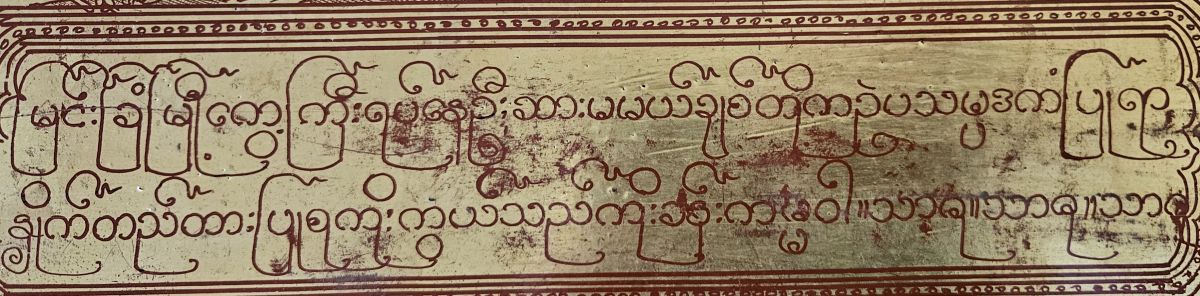
The wholesome meritorious deed performed by U Thar and his wife Ma Chit Tုံ, residing in Kyaw Gyi ward, Min Khဲ town. Having established, crafted, and revered [this manuscript], please praise [this deed]. Sadhu! Sadhu! Sadhu! The donor script on the inside board on the end is the same with a slight varation with the word Sadhu written twice instead of three times due to the space limit.
- Min Khဲ town (မင်းခဲမြို့): The geographical location or town where the donors lived.
- Kyaw Gyi ward (ကျောကြီးရပ်): The specific neighborhood or quarter within that town.
- U Thar and wife Ma Chit Tုံ (ဦးသားမယားချစ်တုံ): The husband and wife who paid for the creation of the Kammavaca. U is the honorific for an adult male; Ma is for a female.
- Meritorious Deed (ကုသိုလ်): The act of commissioning a sacred text to support the Buddhist Sangha (monks).
- Sadhu! Sadhu! Sadhu! (သာဓု။ သာဓု။ သာဓု။): A traditional Buddhist exclamation meaning “Well done” or “Excellent,” used by onlookers to share in the spiritual merit of the donors.
The opening and end leaves of the Kammavaca bears the donor’s dedicatory inscription.
The kammavaca manuscript opens and ends with a dedicatory leaf, inscribed with the donor’s name and offering. Unlike the previous two panels on the inside of the wooden end covers, the text is integrated directly into the detailed red lacquer line work rather than sitting inside a completely open, plain gold cartouche. The scribe used a slightly formalised, taller variation of the cursive script to match the surrounding floral borders and translates:
“The wholesome meritorious deed [for the purpose of] the Upasampada ritual performed by U Thar and his wife Ma Chit Tုံ, residing in Kyaw Gyi ward, Min Khဲ town. Having established, crafted, and revered [this manuscript], please praise [this deed].”
- Upasampada Kam (ဥပသမ္မဒကံ): This is the precise Buddhist Pali term for the higher ordination ceremony where a novice monk (samanera) becomes a fully ordained monk (bhikkhu).
- Significance: Kammavaca manuscripts contain the legalistic texts read aloud by presiding monks during these formal sangha rituals. The inclusion of Upasampada Kam confirms that U Thar and Ma Chit Tုံ explicitly commissioned this specific text to be used for a monk’s higher ordination ceremony, which is considered an exceptionally high form of merit-making in Burmese Theravada Buddhism.
- The Text Layout: The text ends directly after “please praise [this deed]” (chee kyoke par), omitting the final Sadhu exclamations seen in the other panels, likely due to the tight spatial integration with the right-hand scrollwork.
- To learn more about the Burmese Kammavaca this is an excellent resource
Note: Burmese transcription and English translation assisted by AI
Paysa vs. Kammavaca: Understanding Two Burmese Manuscript Traditions
Although both belong to the Burmese manuscript tradition, paysa (palm‑leaf manuscripts) and kammavaca serve very different purposes and are produced in distinct ways. Paysa are the classic palm‑leaf manuscripts used for everyday religious and literary texts, including the disciplinary rules and regulations that guide the monastic Sangha. The text is incised directly onto dried palm strips and then rubbed with soot or pigment to darken the cut lines, creating a durable and practical format for regular study and recitation.
The format of the Paysa is long, narrow, and practical, intended for regular handling and study. Kammavaca, by contrast, are ceremonial manuscripts produced as formal offerings to monasteries. Instead of palm leaf, they are made from lacquered cloth panels gilded in shwe‑zawa technique and written with thitsi resin. Where paysa are functional and modest, kammavaca are highly decorative, ritual objects created to mark acts of merit and important religious occasions.