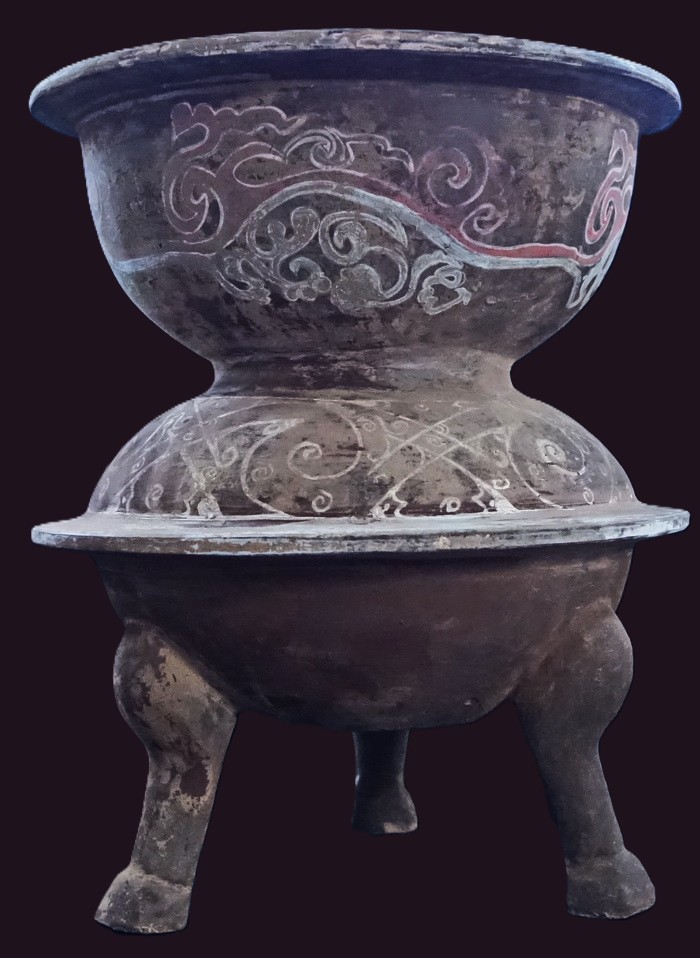
Han Dynasty Tripod Mortuary Vessel
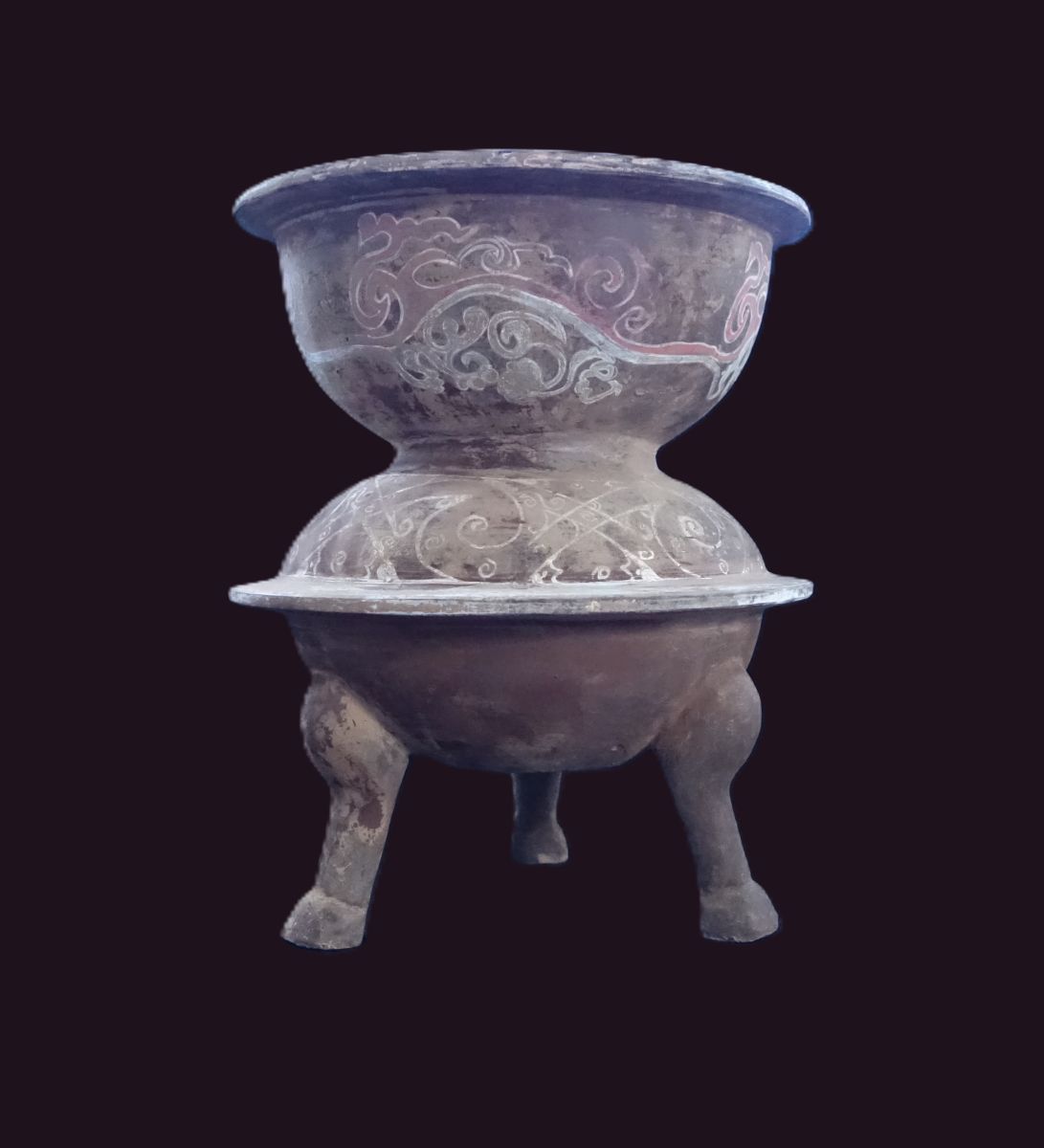
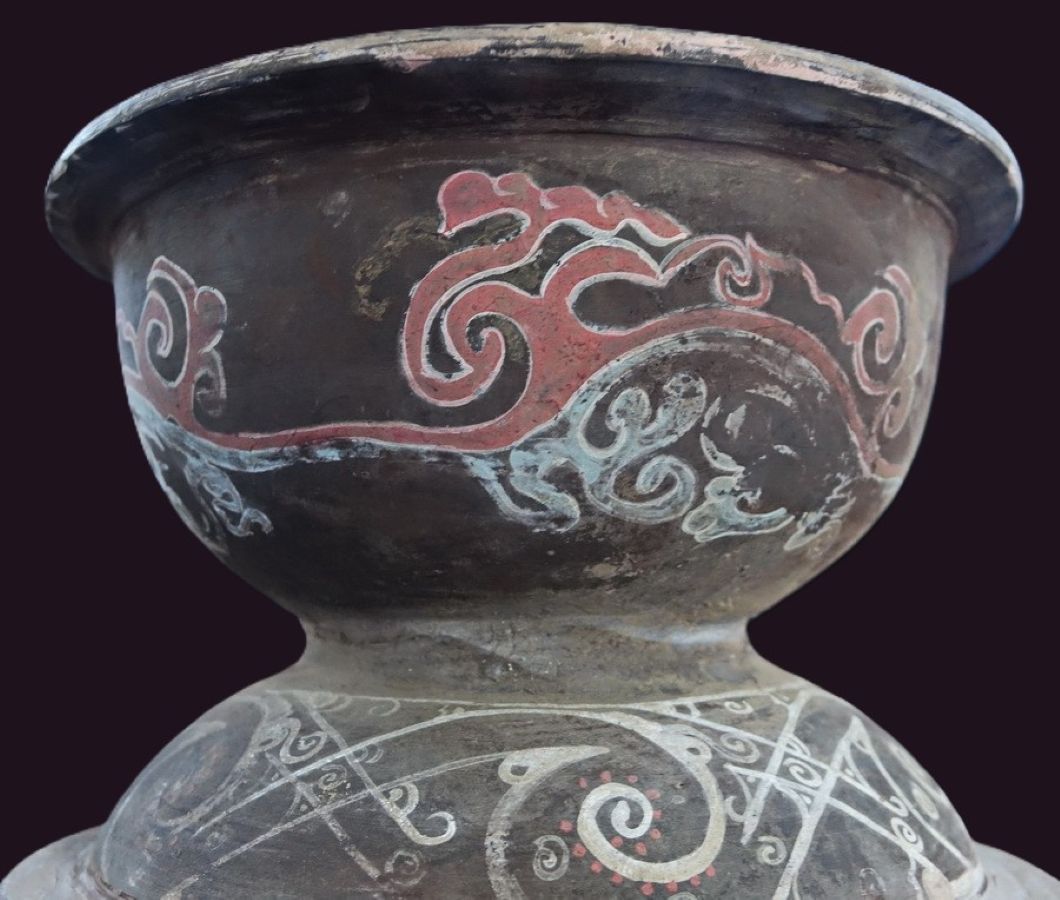
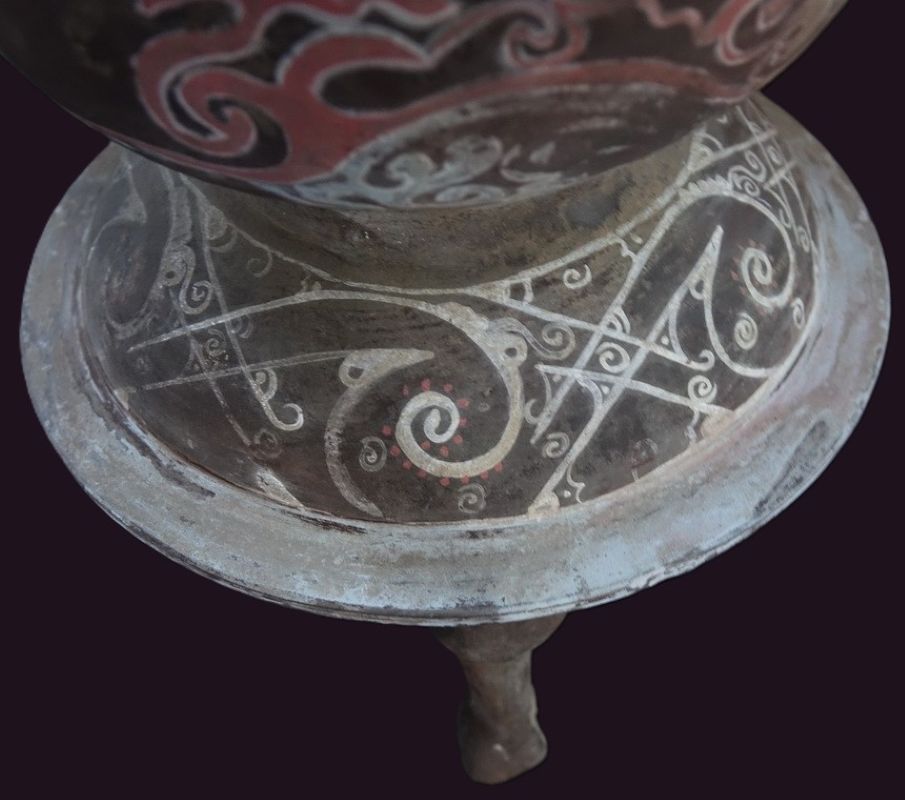
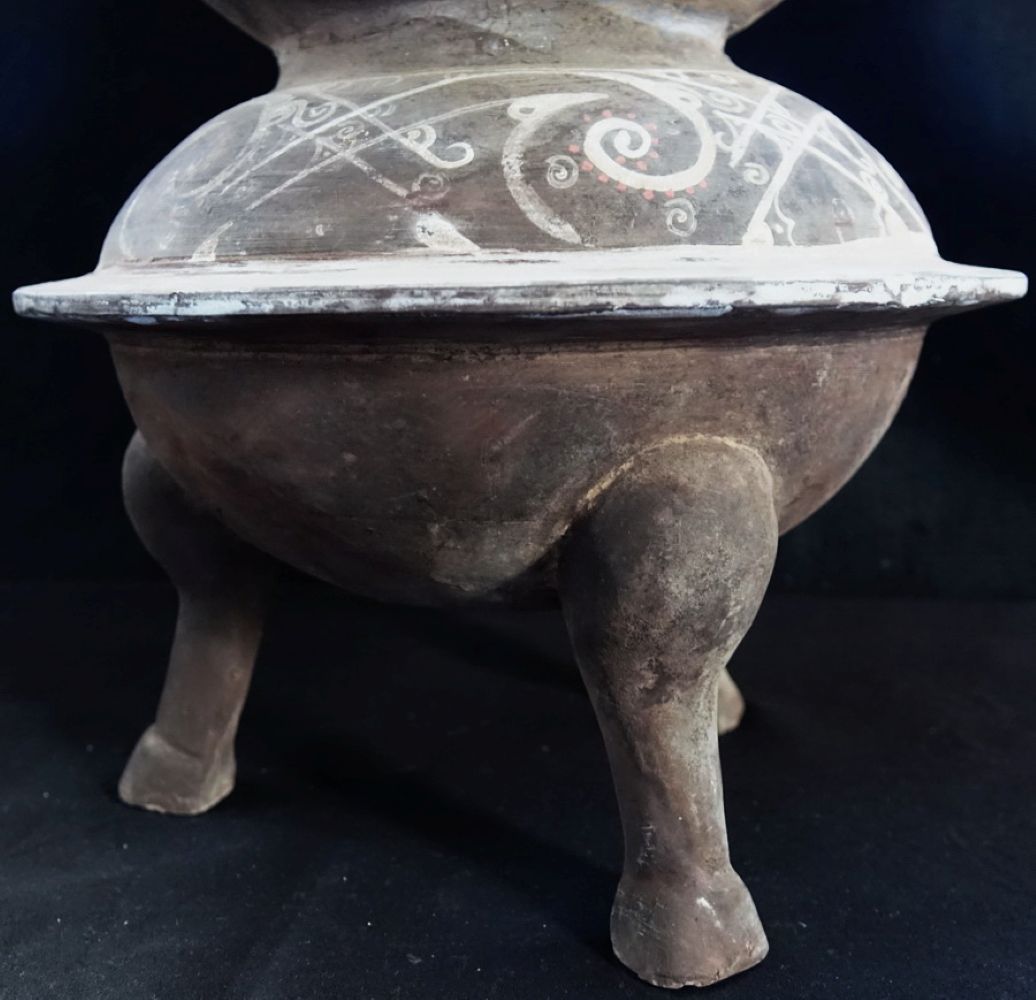
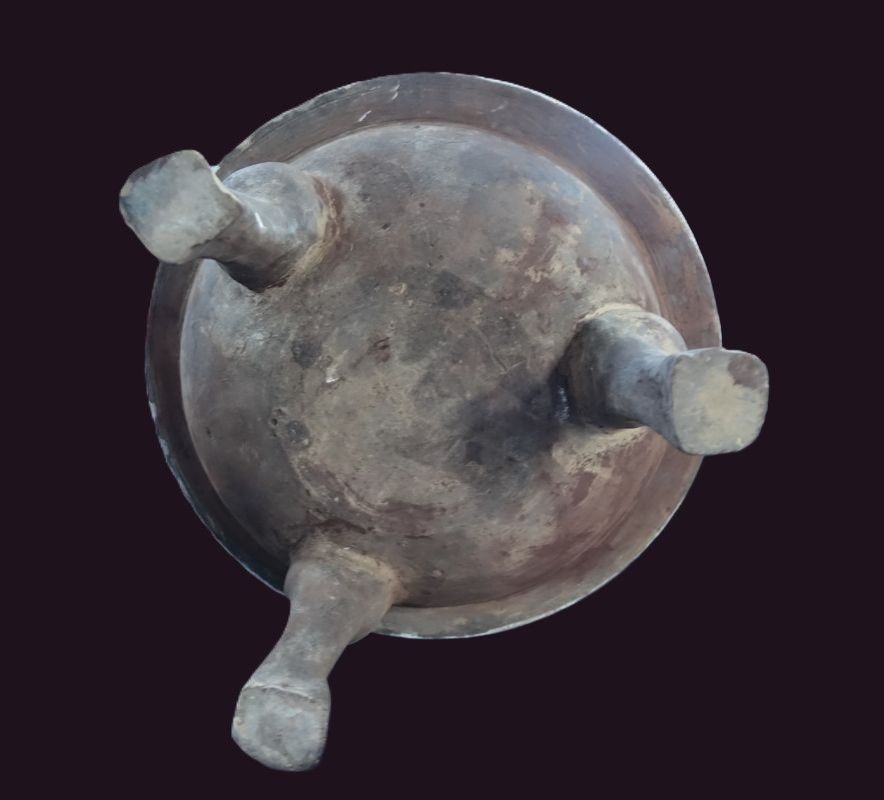
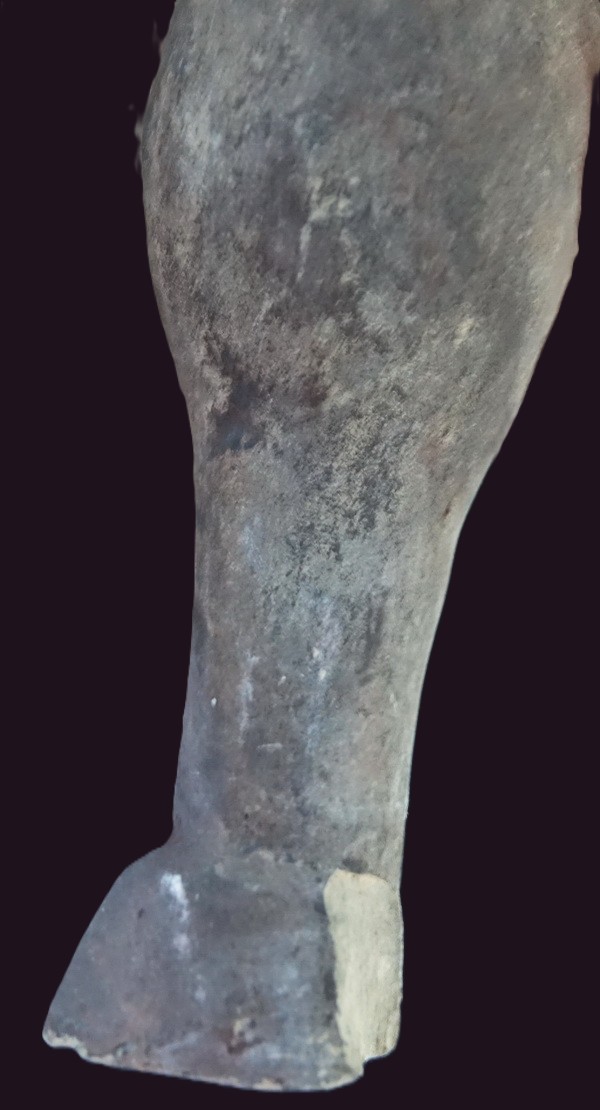
A finely modelled Han dynasty tripod mortuary vessel, commonly known as mingqi, distinguished by its slender, cinched waist that separates the upper and lower sections of the body. The upper register is decorated with white, blue, and rose‑coloured swirling motifs, while the lower section carries a white geometric band accented with red dots, a decorative scheme characteristic of Eastern Han tomb pottery.
The Han dynasty (206 BCE–220 CE) is widely regarded as a golden age in Chinese history, marked by cultural refinement, technological innovation, and flourishing artistic traditions. It is traditionally divided into two major periods: the Western Han (206 BCE–9 CE) and the Eastern Han (25–220 CE).
Archaeological discoveries from Han‑period tombs and burial chambers have provided invaluable insight into the daily life, beliefs, and social status of the people of this era. Mingqi such as this vessel were created specifically for funerary use, intended to accompany the deceased into the afterlife and reflect the prosperity and cultural sophistication of the Han world.
SPECIFICATIONS:
- AGE: – Han dynasty 220 – 280 AD
- HEIGHT: – 32cm
- TOP DIAMETER – 26cm
- WEIGHT: 4 kg.
- #4321
Han Dynasty Tripod Mortuary Vessel
During the Western Han period (206 BCE–9 CE), many burial goods and art objects were items that had been used in daily life while the owner was still living. By contrast, during the Eastern Han (25–220 CE), most wares and artworks were produced exclusively for funerary purposes. These objects were intended to serve the needs of the deceased in the afterlife and were never used in everyday life.
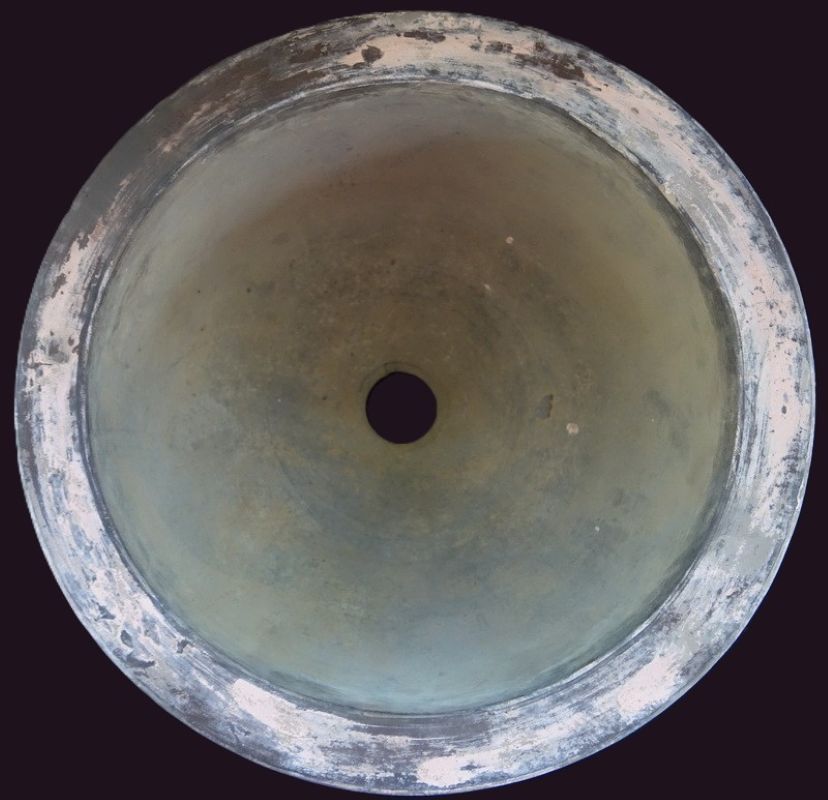
Utilitarian vessels of this form were likely associated with heating or warming functions. Hot water may have been poured into the lower chamber, with the item to be heated placed in the upper section. This functional logic suggests that vessels of this type may originally have been fitted with a lid, although this particular tripod shows no signs on the lip of the vessel that it may have had a lid at some time.
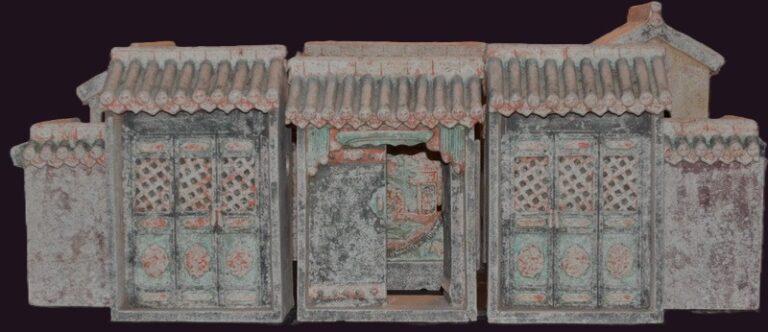
Throughout the Han dynasty, mortuary vessels often imitated the shapes of everyday utilitarian wares, reinforcing the belief that the afterlife required the same provisions as the world of the living. Tombs frequently contained miniature earthenware models of farm animals, buffalo, horses, pigs as well as replicas of houses, granaries, wells, and domestic furnishings. Almost any object used in daily life could be reproduced in miniature form, ensuring that the departed soul entered the afterlife fully supplied and symbolically protected.
It was believed that such objects would provide the deceased with comfort and a sense of familiarity during the journey into, and upon arrival in, the afterlife. These mortuary goods are collectively known as “mingqi”, a term often translated as “brilliant artefacts” or “spirit‑articles,” and in some contexts as “fearsome artefacts.”
In many cases, the burial chamber itself was constructed to resemble a domestic dwelling, echoing the layout and proportions of the walled courtyard homes found above ground. This architectural mirroring reinforced the idea that the afterlife should reflect the world of the living, providing continuity, protection, and a sense of place for the departed soul.