


Late Konbaung Period Buddha -Tiered throne
Late Konbaung Period, circa 1850–1900
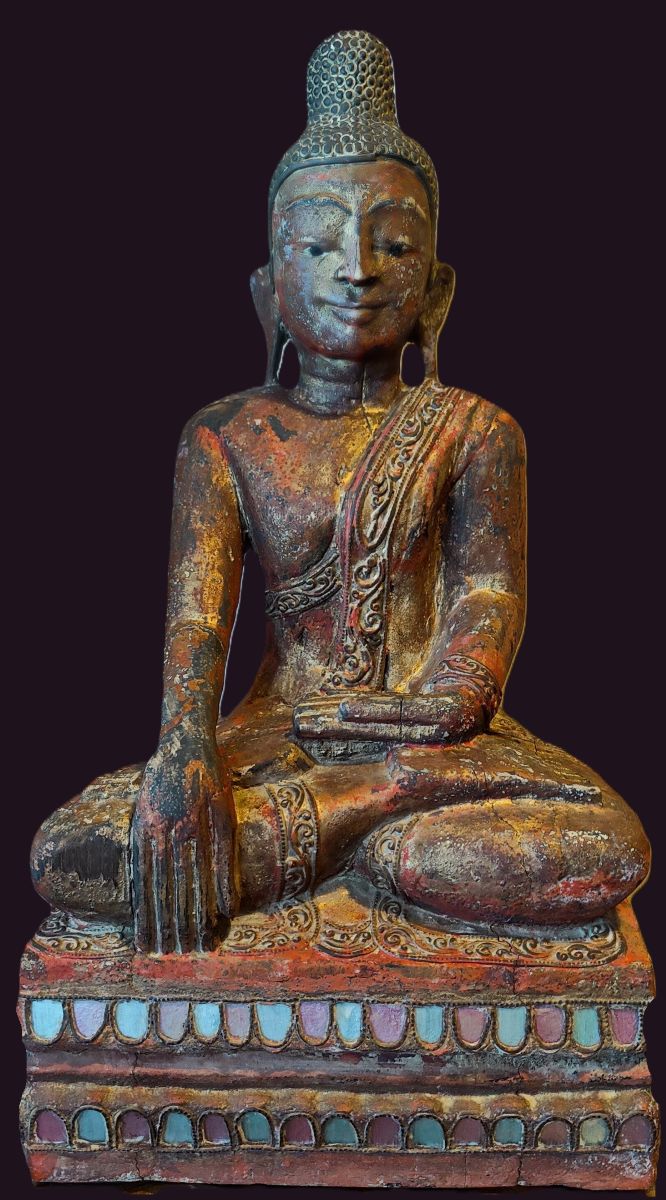
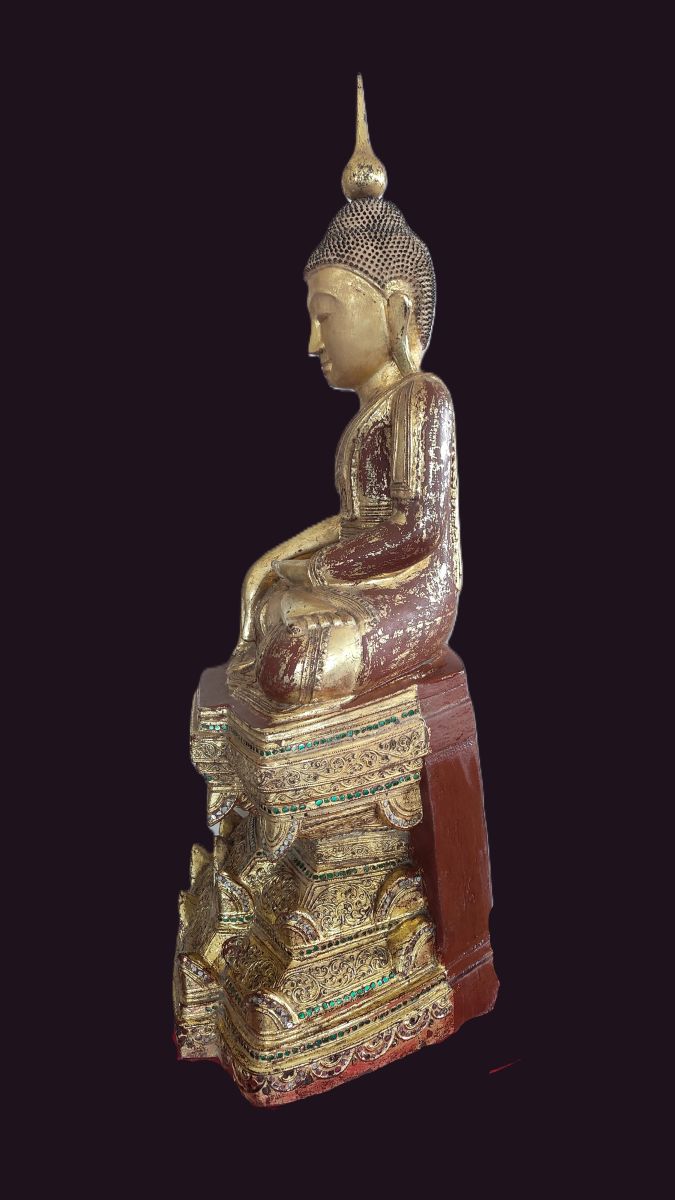
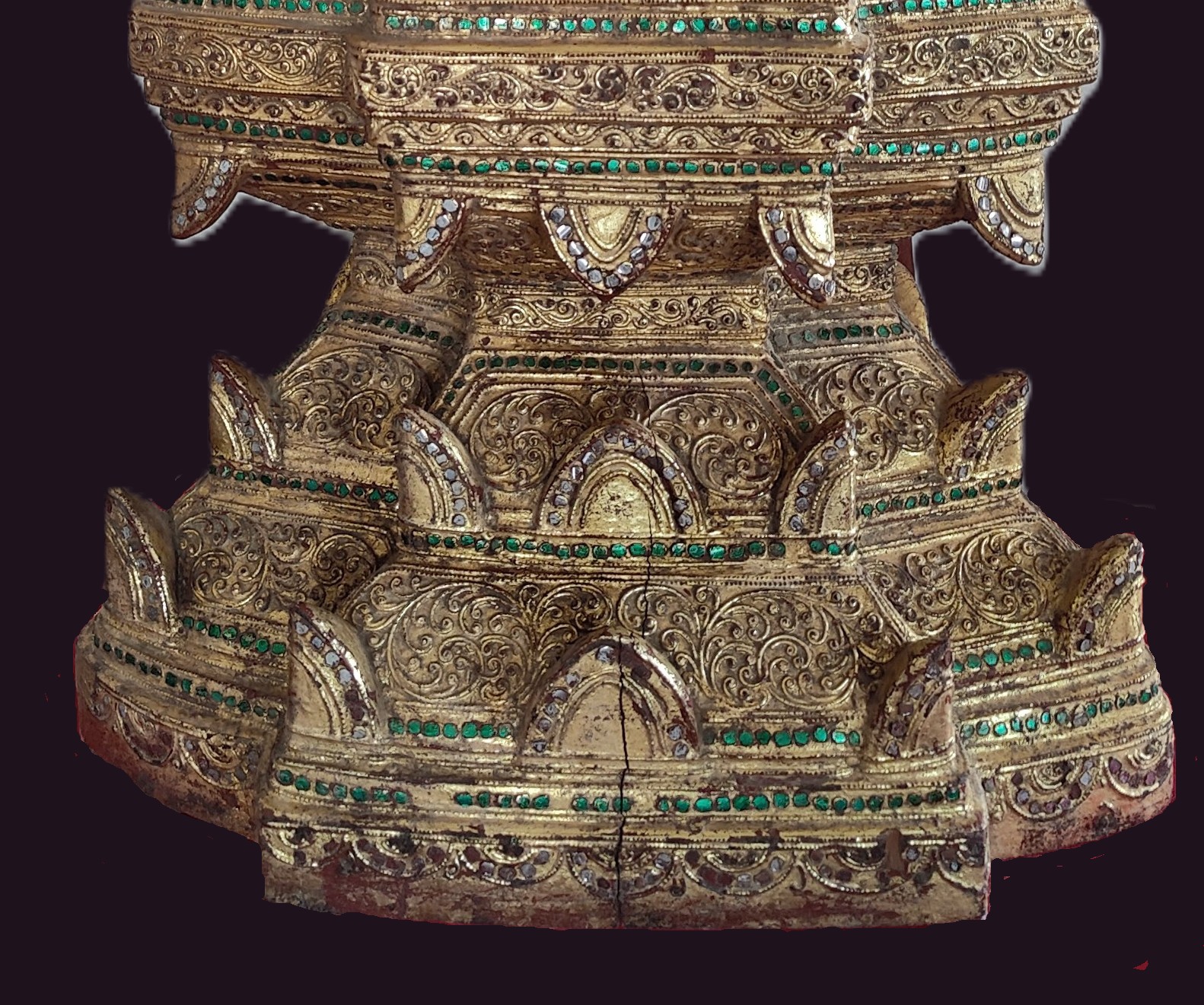
This Late Konbaung Period Buddha seated on a tiered throne is carved from a single block of wood and richly finished in gold leaf over red lacquer, the Buddha sits in serene meditation upon a richly decorated tiered throne inlayed with green and white glass mosaics and thayo lacquer floral motifs. The figure is depicted in the classic Bhumisparsha mudra, the right hand extended to touch the earth, symbolising the moment of Enlightenment.
The face is softly modelled with downcast eyes, arched brows, and a gentle, introspective smile. The ushnisha rises to a flame‑shaped finial, a hallmark of late Konbaung aesthetics. The monastic robe is worn in the Parupana style, drawn smoothly over both shoulders and falling in elegant, unbroken folds across the torso.
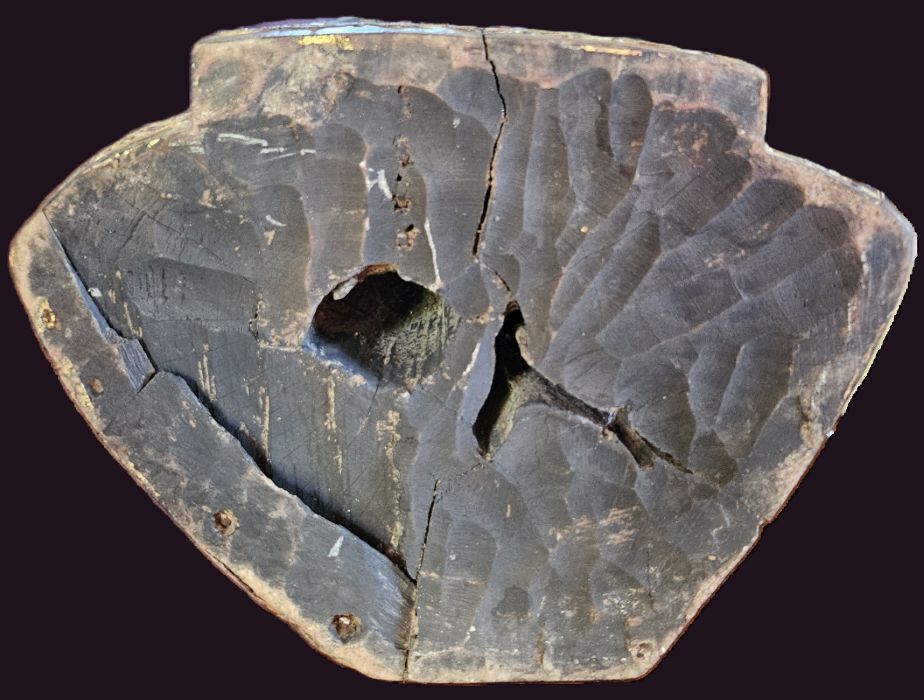
The reverse shows the expected relic chamber (hta‑pan‑hna), a rectangular consecration cavity traditionally filled with sacred deposits during the statue’s original enshrinement. The surface retains traces of original gilding.
SPECIFICATIONS:
- AGE: – 19th Century
- HEIGHT: – 88cm
- WIDTH: – 42cm
- DEPTH: – 32cm
- WEIGHT: – 19.15 kg.
- DESCRIPTION: – Very impressive Late Konbaung Period Buddha statue seated on a tiered throne. Age related wear, small vertical crack from the base up (see picture). Some glass mosaics missing and wood chipped on the base, gild worn in places exposing lacquer underneath.
- #15
Late Konbaung Period Buddha -Tiered throne
The Mandalay style emerged in the mid‑19th century during the final decades of the Konbaung dynasty, a period marked by renewed royal patronage of Buddhist art and a desire to standardise religious imagery across the kingdom. Workshops in and around Mandalay developed a distinctive aesthetic characterised by smooth, idealised modelling, serene facial expressions, and richly decorated thrones embellished with glass mosaic inlay.
This decorative style drew on earlier Ava and Amarapura traditions but refined them into a more polished, courtly idiom. The use of gilt lacquer over wood, combined with inset coloured glass, became a hallmark of the period, reflecting both the wealth of the royal court and the devotional culture that flourished in the monasteries surrounding Mandalay.
By the late 19th century, this style had become the dominant sculptural language of Upper Burma. The Buddha was typically shown in the Bhumisparsha mudra, recalling the moment of Enlightenment, and robed in the Parupana style, with the monastic mantle drawn smoothly over both shoulders.
The inclusion of a consecration cavity (hta‑pan‑hna) at the back of the figure continued a long Burmese tradition of inserting sacred relics or mantras during the statue’s enshrinement. Even as the Konbaung dynasty fell to British annexation in 1885, Mandalay workshops continued to produce devotional images in this refined style, preserving a visual continuity that linked the final Burmese monarchy with centuries of Buddhist artistic heritage.