


Dayak Brunei Naga Dragon Bronze Kedor Kettle
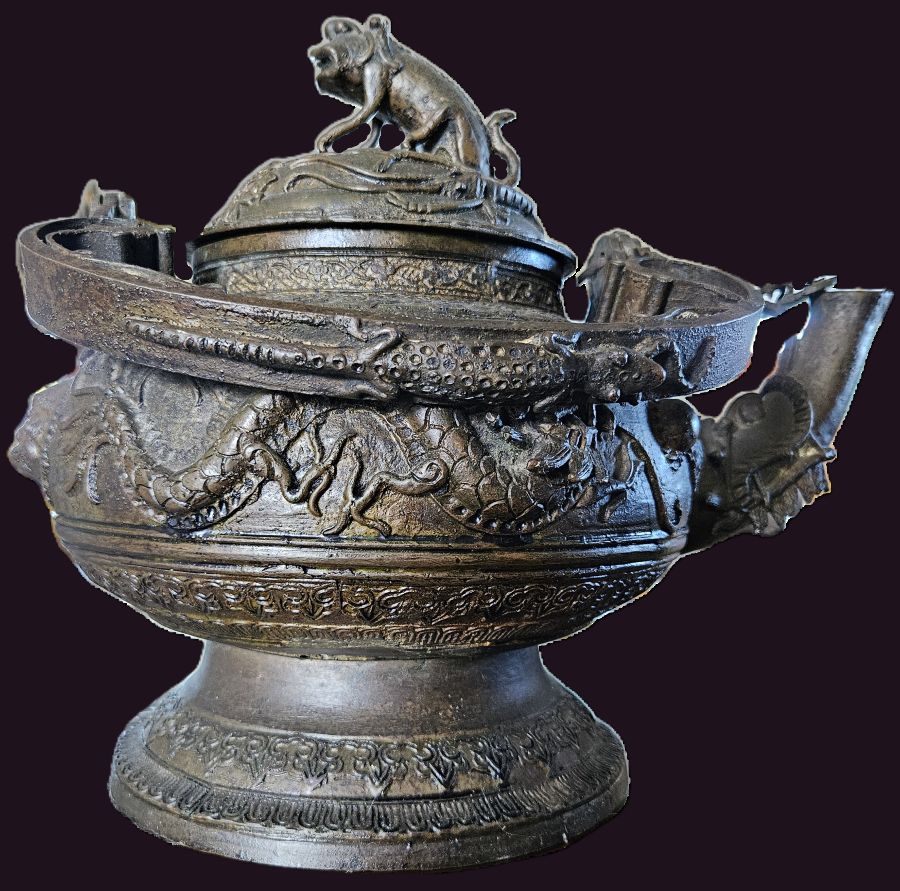
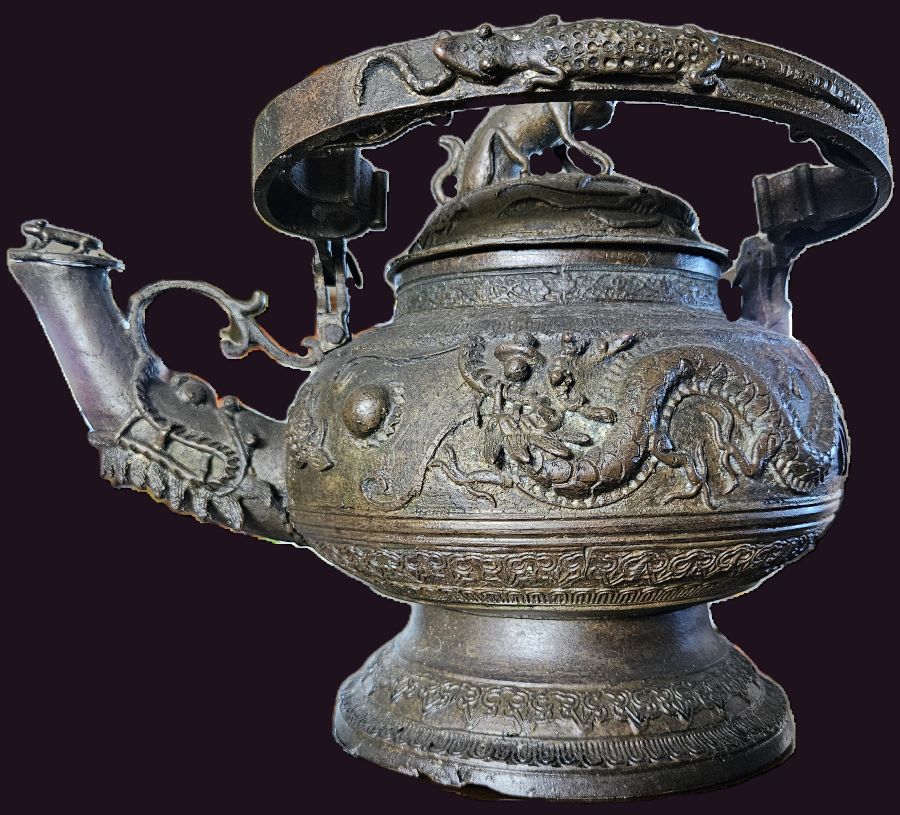
This Dayak Brunei Naga Dragon Bronze Kedor Kettle is an excellent example of Dayak and Brunei-Malay casting traditions from Borneo. Vessels of this type, often referred to as kedor or guri, served as functional items for water, tea, or rice wine, but their primary value lay in their status as family heirlooms (pesaka).
Among the indigenous peoples of Sarawak, such as the Iban and Bidayuh, bronzes like this were used for dowries, ceremonial exchanges, and as a visible measure of a family’s wealth and prestige.
Pieces in this style were traditionally cast using the lost-wax (cire perdue) method by Brunei-Malay smiths or by localized Dayak artisans heavily influenced by Islamic Brunei coastal trade.
For centuries, Brunei was the dominant center for bronze casting in northwest Borneo, supplying the interior tribal groups with prestige brass and bronze ware.
The vessel is richly modelled with zoomorphic motifs characteristic of Bornean metalwork, where animal forms drawn from the surrounding environment serve both protective and animistic functions. The handle takes the shape of a sinuous lizard‑like creature, its body coiling along the arch in a posture of alert vigilance. Many of the decorative elements evoke aquatic creatures, underscoring the region’s deep cosmological ties to water and riverine life.
SPECIFICATIONS:
- AGE: Between 18th and 19th Century
- HEIGHT: – 30 cm
- WEIGHT: – 5.25 kg.
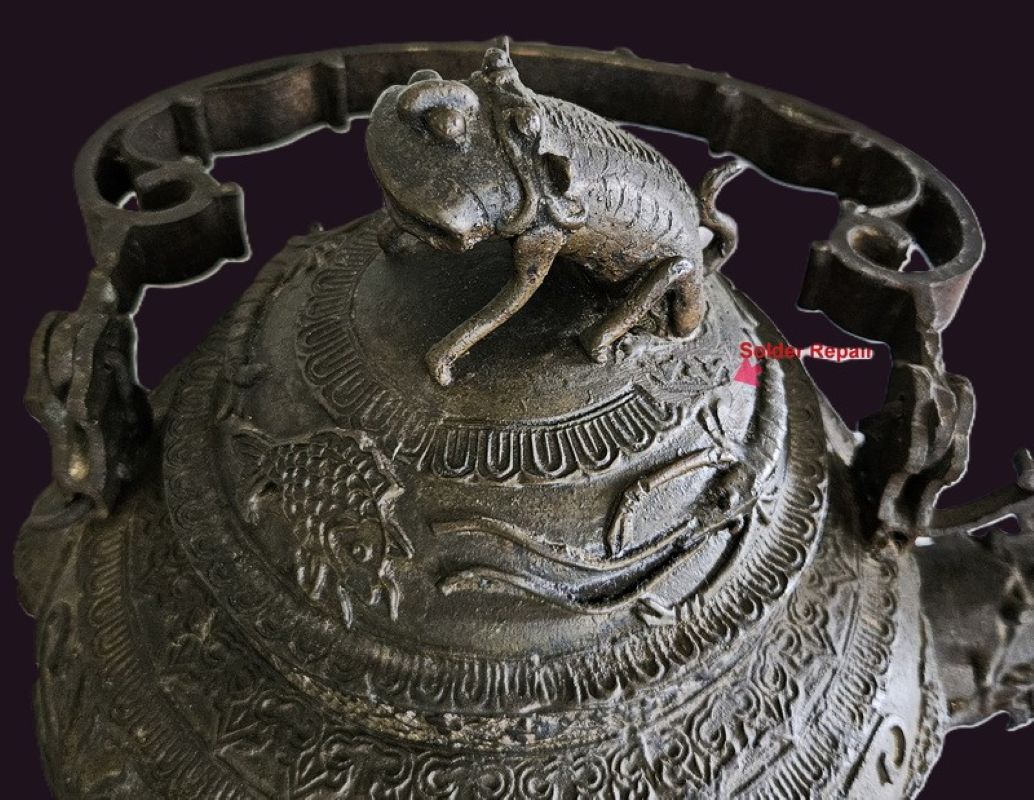
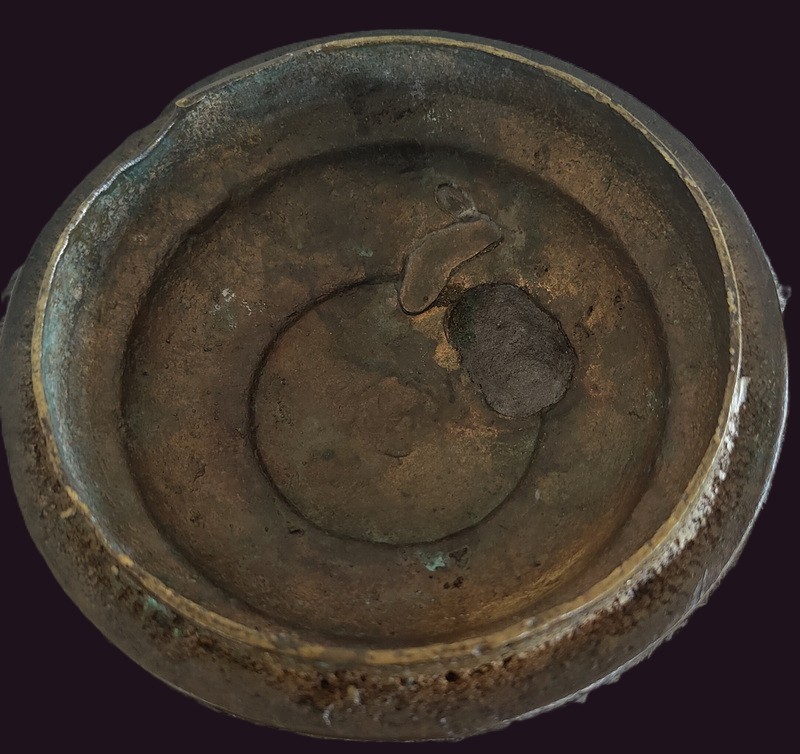
- CONDITION: Age related wear with a couple of soldering repairs to the base and a repair on the handle (see images)
- This kettle was collected by us 50 years ago whilst residing in Borneo
Dayak Brunei Naga Dragon Bronze Kedor Kettle
Iconographic Details
- The Dragon/Naga Motif: The body in most of these Kedor kettles features a prominent, high-relief dragon or naga on both sides. In Borneo mythology, the naga is a powerful underworld deity associated with water, fertility, and protection. The execution here shows a clear Chinese influence. Centuries of maritime trade and pottery exchange (such as Martaban jars) blended with local Dayak stylistic conventions. The dragon appears to chase or guard a flaming pearl or circular medallion surrounded by “sun rays” a cosmological emblem expressing the unity of sky and water in core Bornean cosmology.
- The Spout: The spout emerges from the mouth of a stylized creature, a classic feature of Bornean zoomorphic metalwork. A tiny, secondary animal figurine resembling a frog rests on a moveable flap which slides to close the spout of the kettle.
- The Lid: The lid is topped with a three-dimensional creature which on first looking looks like a frog but is likely a hybrid of a four-legged creatures. The likely motif is that of the “aso“, a major protective motif in Dayak art, frequently used to ward off malevolent spirits. “Aso” is often translated literally as “dog” in various Dayak languages, though it can also mean “dragon-dog”) and is one of the most powerful and ubiquitous motifs in Dayak art and iconography. Far from being a simple depiction of a domestic animal, the “aso” is a complex, stylized mythical creature that represents protection, status, and the spiritual connection between the physical and spirit worlds.
- The Handle Articulation: The heavy, arched overhead handle is joined to the body by robust, pivoting hinges. The top of the handle is decorated with a detailed, long-bodied lizard or crocodile in high relief. In local belief systems, crocodiles are revered as powerful river spirits and judges of tribal law.
- Decorative Bands: The upper neck and the flared, pedestal foot are cast with intricate repeating patterns. These bands resemble stylized scrolling vegetation or could be an Islamic influence.
You can read more about this regional casting technique in this article Malay Brassware by Fong Peng Khuan available online