Burmese 1 mtr Gilded Carving – Main Life Events

Burmese 1 metre Gilded Carving – Main Life Events
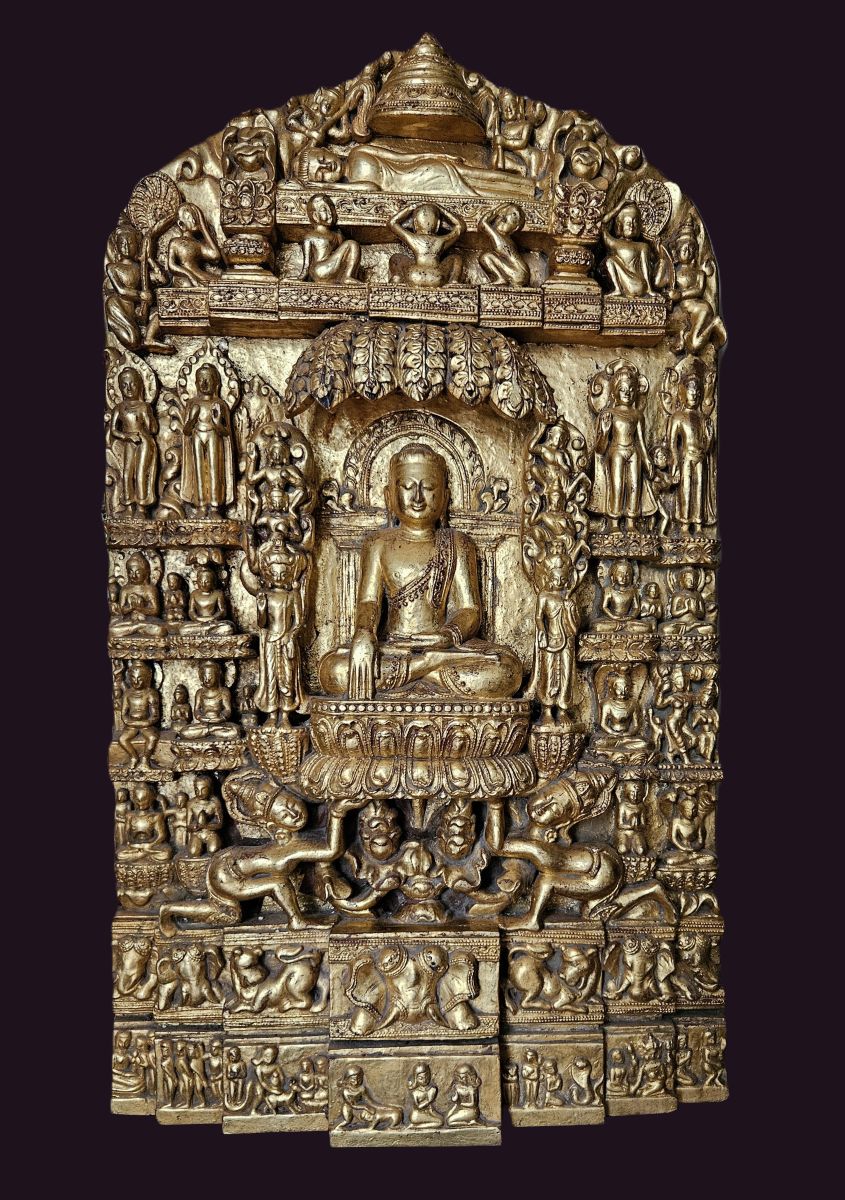
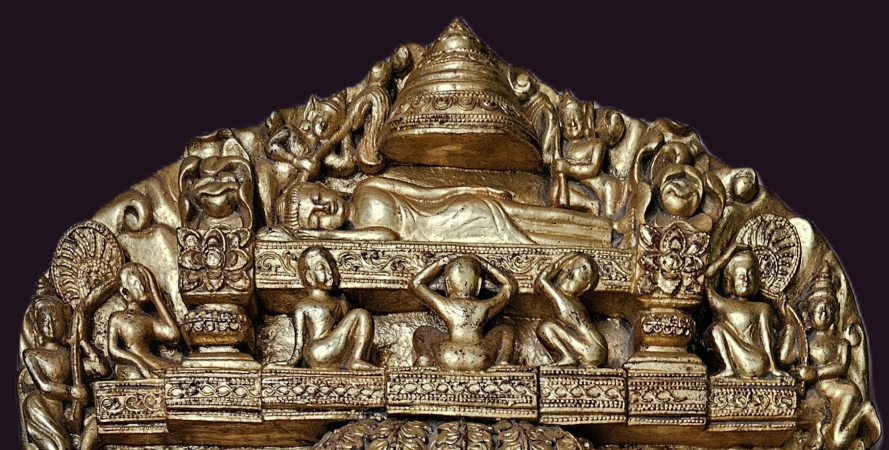
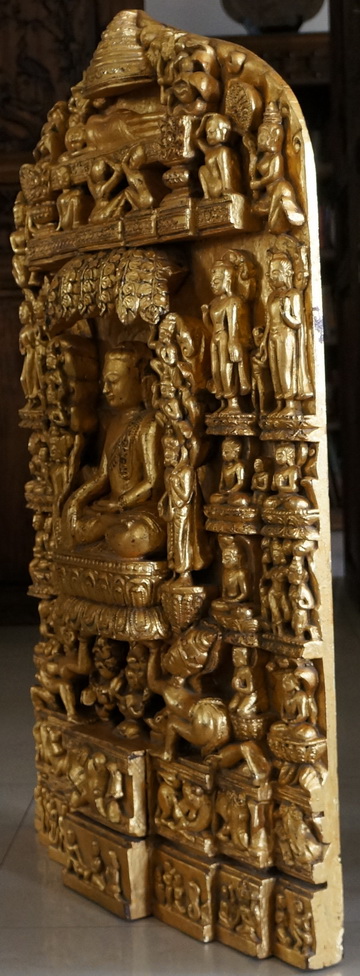
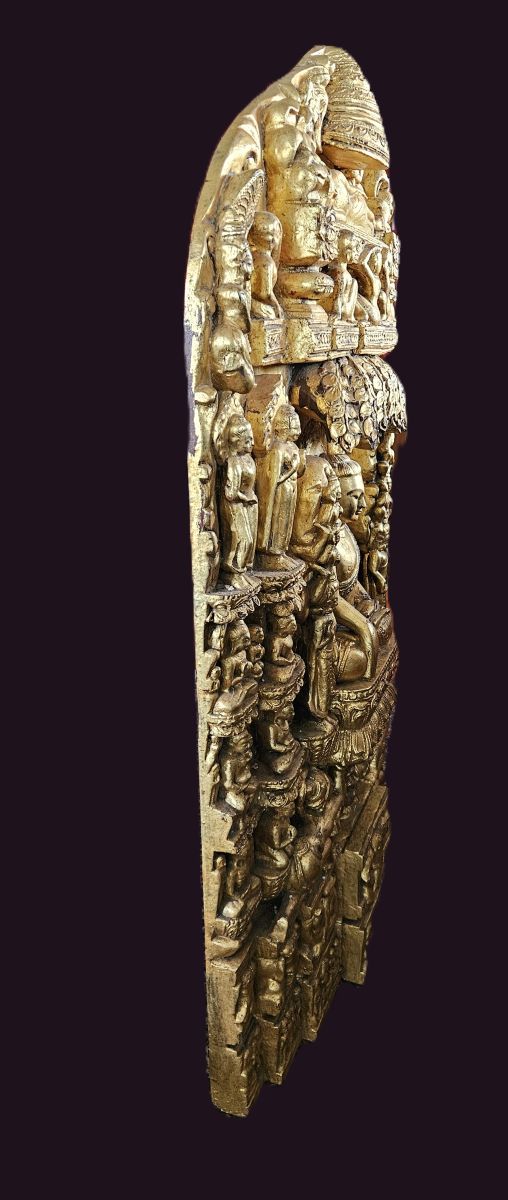
Burmese 1 mtr Gilded Carving – Main Life Events, beautifully detailed and intricately hand carved wooden stele, with scenes related to the Buddha’s enlightenment, leading up to his death with the Buddha seen lying in Parinirvana (top centre), with his disciples around him, a scene that is common to many of these carvings and similar to the rare Pagan andagu stone stele
Traditional Construction & Tooling
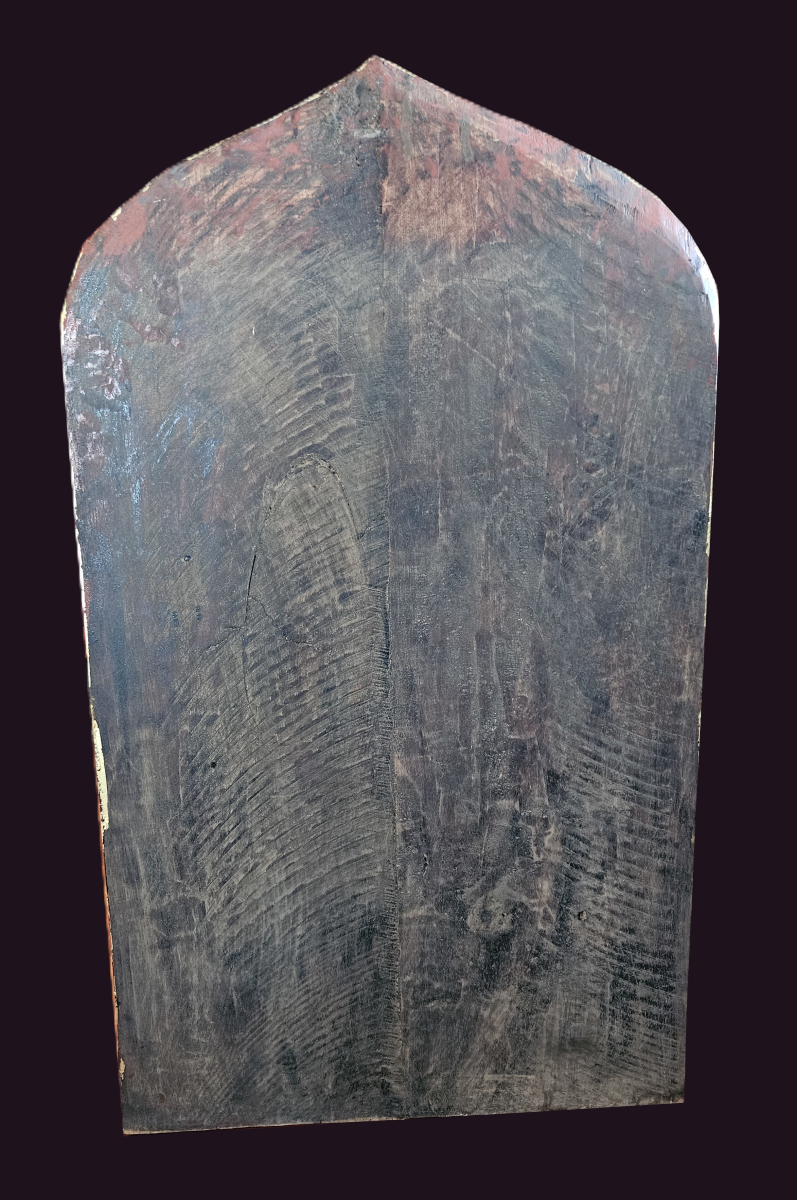
Hand-Sawn Teak Slab: The back of the carving features irregular, sweeping diagonal marks characteristic of a large hand-powered frame or pit saw. These variations in depth and angle confirm the wood was converted from a log into a slab by human hands rather than industrial machinery.
The Master Axis: A perfectly straight vertical line is visible on the reverse, which “fizzles out” just before reaching the top peak. This is a scribe line, a master axis struck by the carver to ensure the precise symmetrical alignment of the central Buddha and the surrounding Eight Great Events.
Structural Integrity: The absence of a glue line at the peak and the lack of fluorescence under UV light suggest the piece was carved from a single, massive block of heartwood teak. Any stabilization or restoration likely utilized thit-si (natural lacquer), maintaining the piece’s traditional chemical profile.
Historical Alterations: Small, filled points on the reverse indicate where the stele may have originally been pegged into a temple shrine or a larger architectural assembly.
SPECIFICATIONS:
Burmese 1 mtr Gilded Carving – Main Life Events
Traditional Burmese steles of the Eight Great Events in the life of the Buddha generally fall into two compositional layouts. The first style focuses strictly on the eight major events culminating in the Buddha’s enlightenment. The second style expands on this iconographic program by adding the seven weeks of meditation that immediately followed his enlightenment.
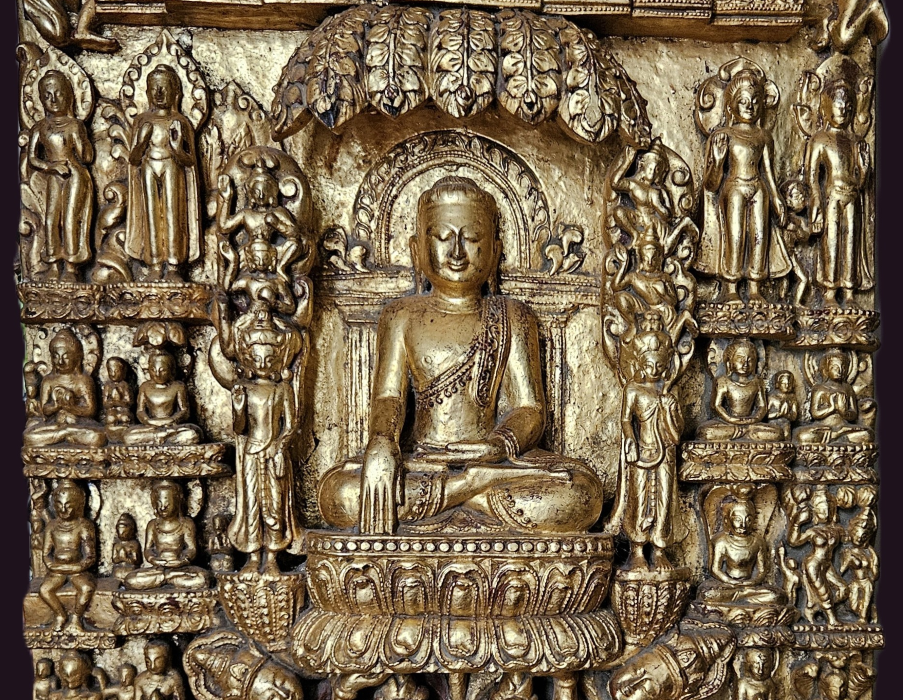
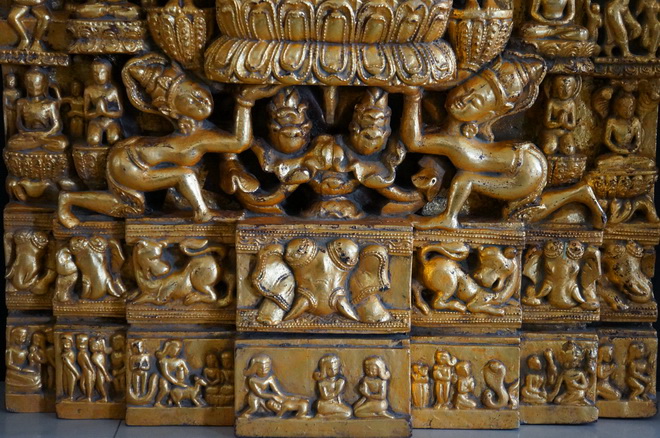
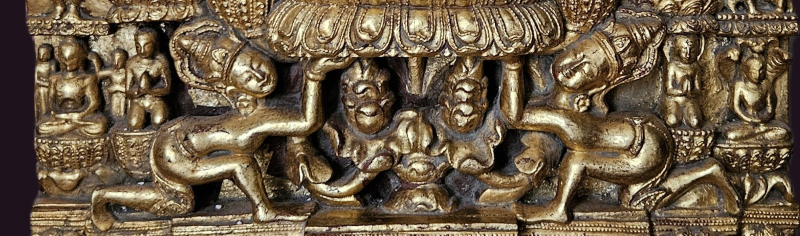
Enlightenment Scene: This composition features an enlightened Buddha at its center, seated on a double-lotus throne supported by two prominent Naga Kings below. The scene captures the pivotal moment beneath the Bodhi tree: the Buddha touches the earth, calling upon the Earth Goddess to bear witness to his triumph over the temptations unleashed by Mara and his demon army.
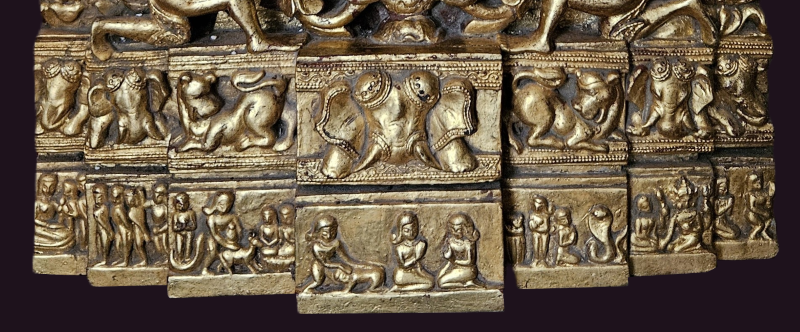
The Nativity Scene: On the proper outside left of the stele (right side looking face on) on the second tier is Maya, Siddhartha’s mother holding onto the Sal tree with one hand, with her arm around her sister who is supporting her whilst giving birth. The small Siddhartha is seen on the right of Maya taking his first steps after birth.
Surrounding Scenes: The carved figures seen around the outside of the stele are those that relate to the eight weeks prior to his enlightenment, whilst the inside figures represent the events in the seven weeks after his enlightenment. The figures on the lower tier are, monks and other Buddhist deities, with the top tier depicting the elephant and lion, animals that were meaningful in the life story of the Buddha.
Devas & Bodhisatva: Devas are frequently depicted flanking the Buddha to show that even the highest beings in the heavenly realms acknowledge his supreme wisdom. In late 19th-century pieces, these figures often reflect the courtly style of the period, acting as royal attendants who offer protection and service to the “Great King of Dhamma.” The Deva act as a link between the terrestrial world of the monks and the celestial world of the Apsaras.
Apsaras: These are celestial nymphs who descend from the heavens to scatter flowers and play music in honor of the Buddha. Their presence signifies the joyful and divine nature of the Enlightenment event at Bodh Gaya.
Vidhyadharas: These “wisdom bearers” are often shown in pairs or groups, flying toward the central figure. They are typically depicted in dynamic, aerial poses, which creates a sense of movement in the carving.