18th Century Shan Tai Yai Crowned Wood Buddha Statue
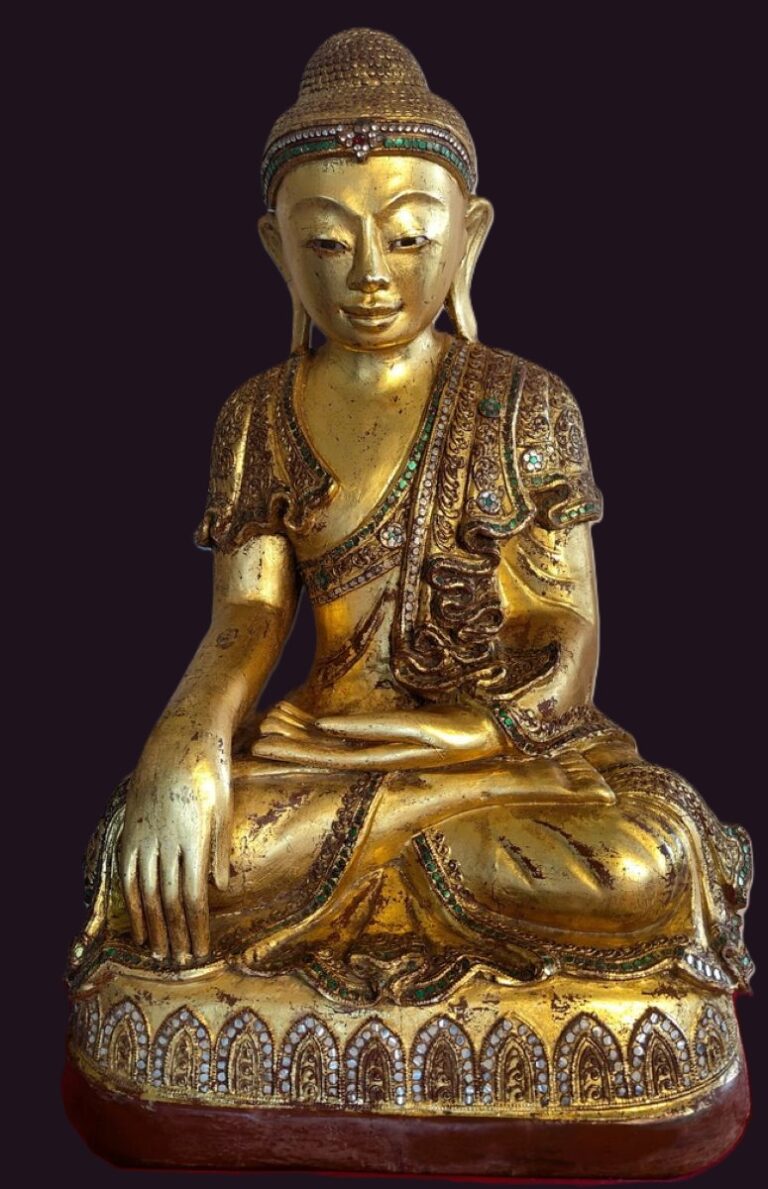
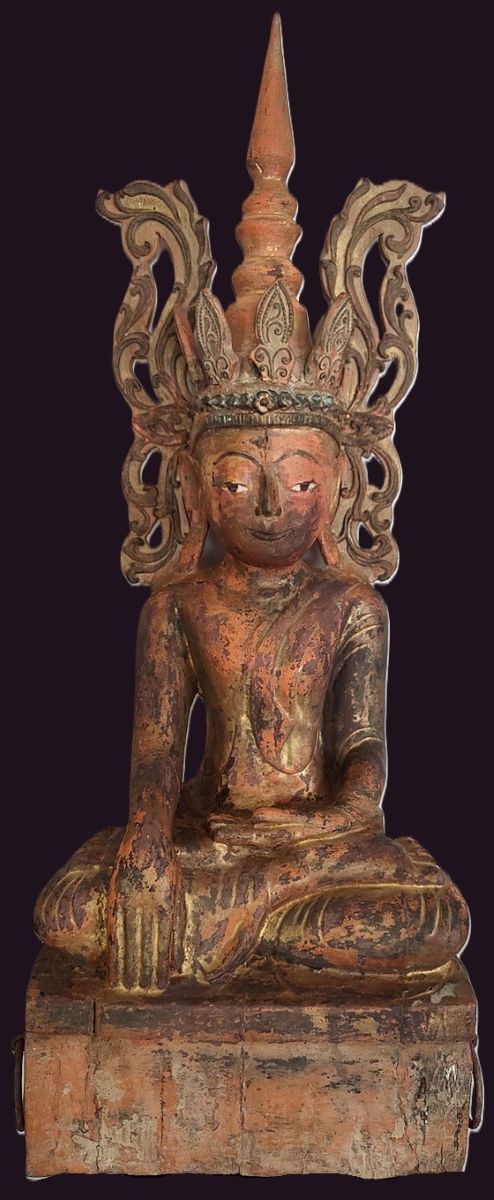
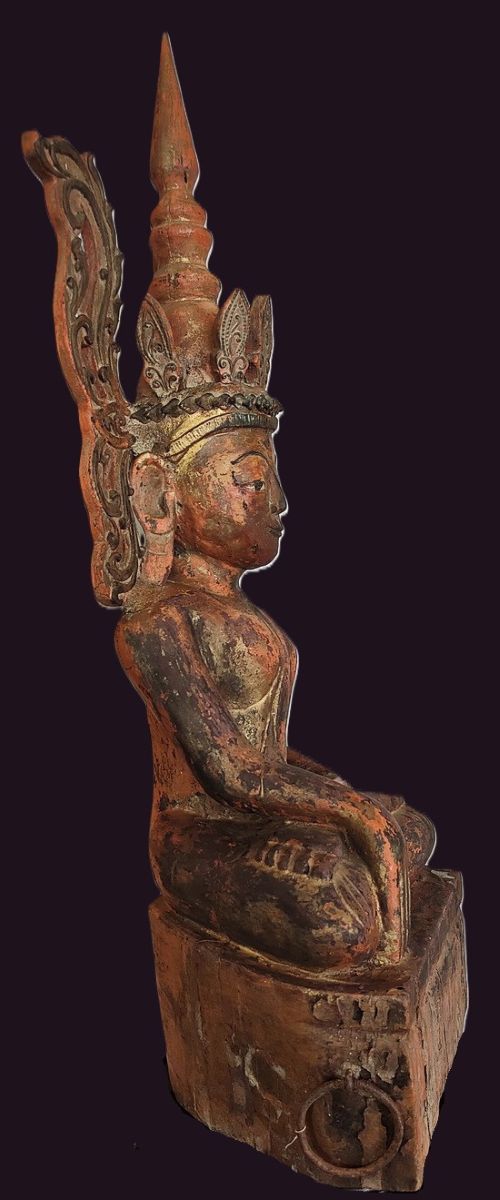
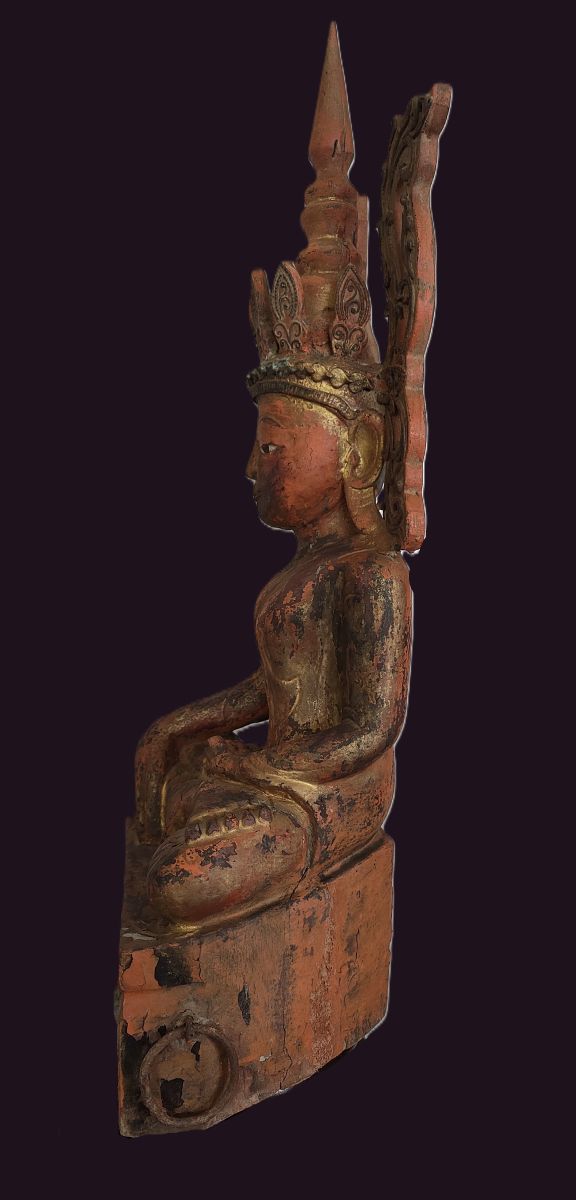
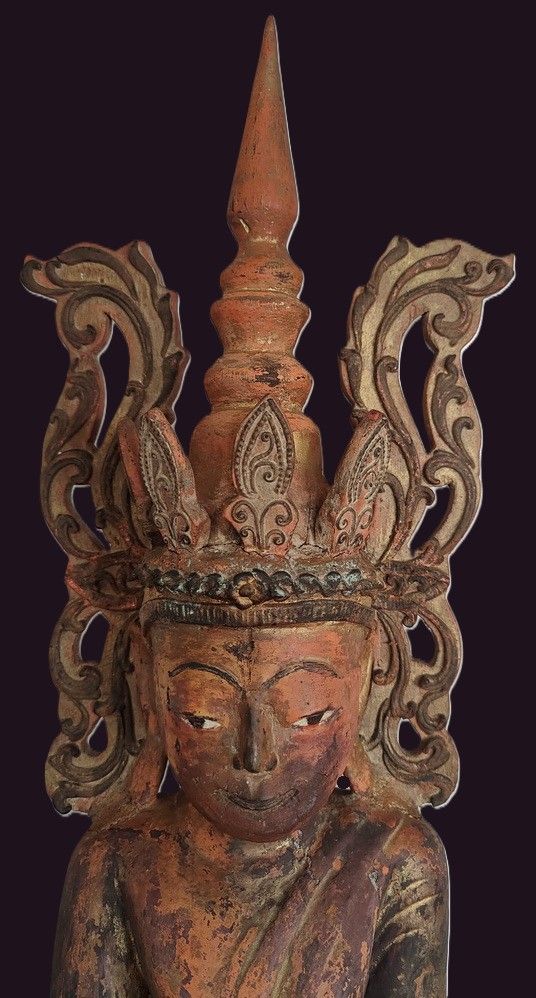
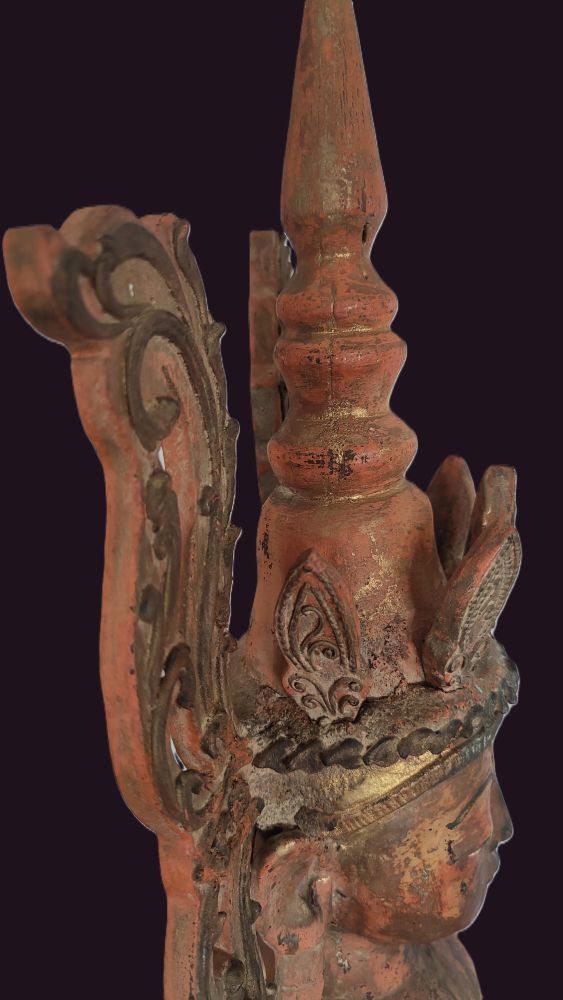
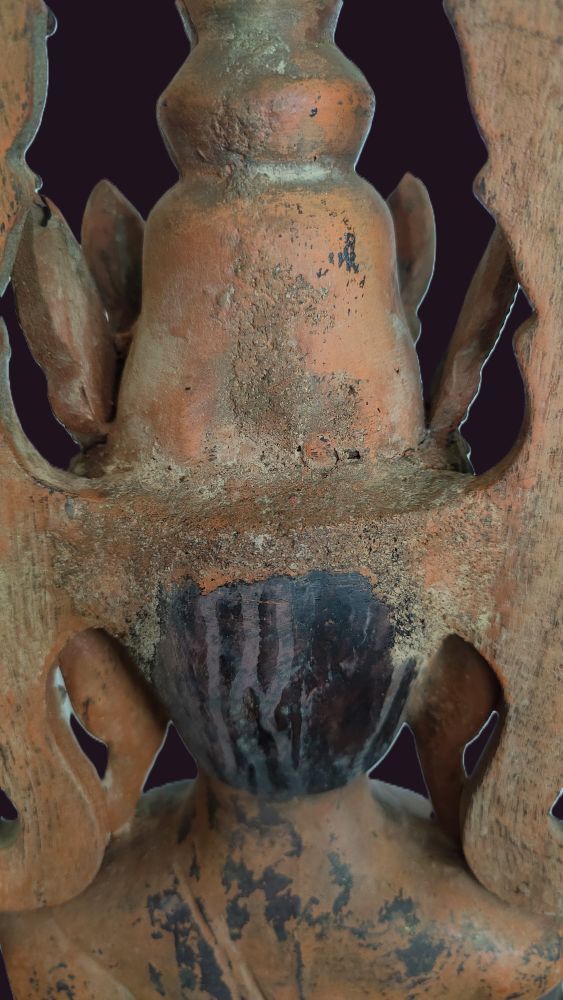
This 18th-century or earlier wooden Burmese Shan Tai Yai King Buddha statue features detailed thayo lacquer embellishments across a five-pronged crown shaped like lotus buds. The Buddha wears a simple monastic robe and displays the bhumisparsa mudrā (earth-witnessing gesture). The face exhibits a subtle curve to the narrow lips, sharply arched eyebrows, and painted almond eyes, set above a solid upper torso, broad arms, and a slender waist.
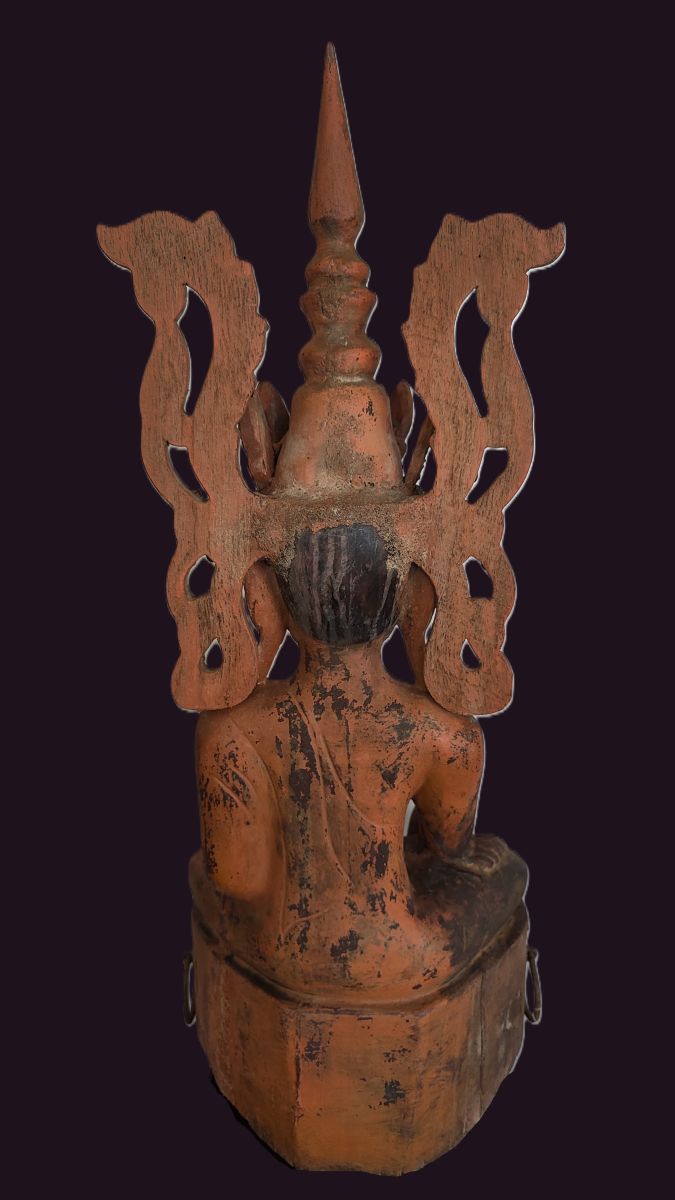
The metal rings on either side of the base suggest this figure once served as a sacred processional statue, fitted with poles so devotees could carry it during temple festivals. Like many venerated images, it reflects a living history, earlier statues were periodically embellished with fresh gilding, new lacquer, or updated crown flanges as acts of ongoing devotion. The body of this statue has been left in its natural aging state whilst the crown and flanges are likely later additions.
Likely crafted during the early Konbaung period, the sculpture embodies a refined, classic approach to the royal King Buddha image. The timber has been fully inspected, treated, and certified in line with Australian quarantine standards. While showing the natural wear of age, the figure remains compelling, distinguished by its powerful facial expression, balanced proportions, and dignified presence.
SPECIFICATIONS:
- AGE: – 18th Century
- HEIGHT: – 74cm (Including finial)
- WIDTH: – 29cm
- DEPTH: – 20cm
- WEIGHT: – 7.9 kg.
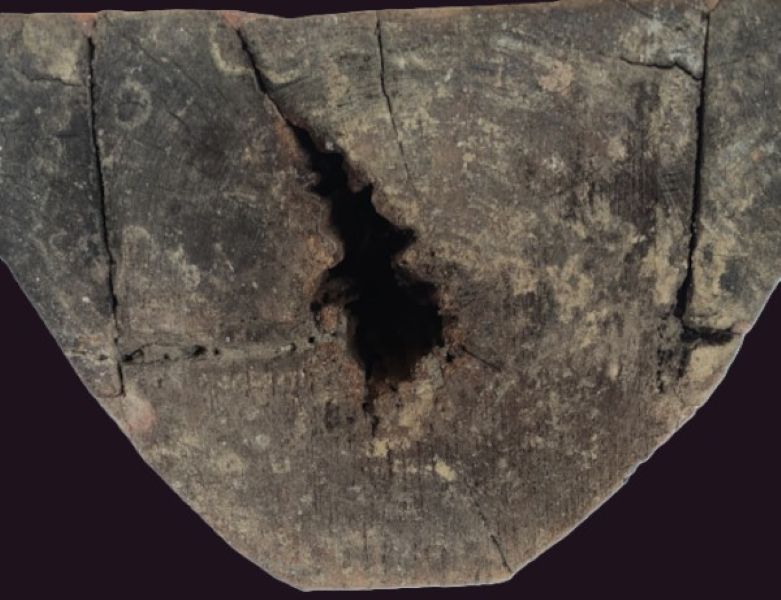
- CONDITION: The carving is finished in a rich red cinnabar over black lacquer (thit-si). Traces of original gold leaf remain in the deep recesses indicating that the image was once fully gilded. The flanges are likely a later addition, the material used to adhere the flanges to the head can be seen on the back and sides of the head (my assumption).
- #919
18th Century Shan Tai Yai Crowned Buddha Statue
During major village celebrations in Myanmar such as the annual Poi Sang Long festival or the consecration of a new monastery the sacred Jambupati King Buddha statue is brought out from the inner shrine to lead the community in procession. To prepare the heavy wooden figure for its journey through the village, lay leaders slide long, polished bamboo carrying poles through the iron rings attached to either side of the base. Raised onto the shoulders of four devoted bearers, the statue sways gently above the crowd, its gilded crown catching the tropical sunlight while a ceremonial gold umbrella (hti) is held overhead to shield the sacred image from the elements.
Accompanied by the rhythmic thunder of long drums, brass cymbals, and traditional Shan gongs, the procession winds its way along the dusty roads toward the monastery grounds. Villagers line the path with bowed heads and folded hands (anjali), tossing fragrant jasmine petals and sprinkling scented water beneath the statue’s path to earn spiritual merit (kutho). The iron side rings ensure the venerated Buddha remains firmly anchored during the procession, serving as a physical link between the bearers and the sacred object as it is carried to bless the surrounding homes and land.
Note: The Poi Sang Long festival originated as a rite of passage within the Shan (Tai Yai) ethnic group, whose traditional homeland spans the Shan State of eastern Myanmar and the borderlands of Northern Thailand. In the Shan language, Poy Sang Long roughly translates to “the festival of the jewel princes” or “ordaining the novice monks.
The Shan/Tai Yai people living in Northern Thailand for generations migrated across the border into Myanmar in large numbers during the 19th and 20th centuries, the Poi Sang Long festival has become one of the most famous annual events in Northern Thailand.
The most prominent processional use of portable Tai Yai Shan Buddha statues occurs at the end of the Buddhist Rains Retreat (Vassa / Awk Phansa) during the Chong Para Festival.