

18th Century Burmese Kammavaca Manuscript
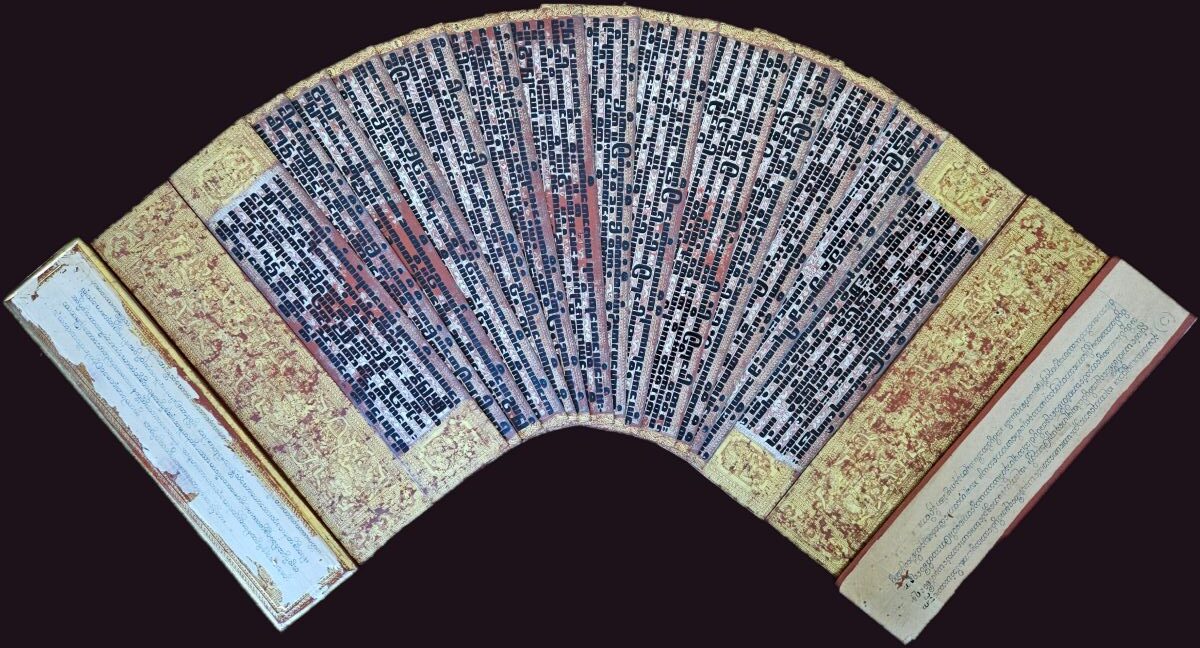
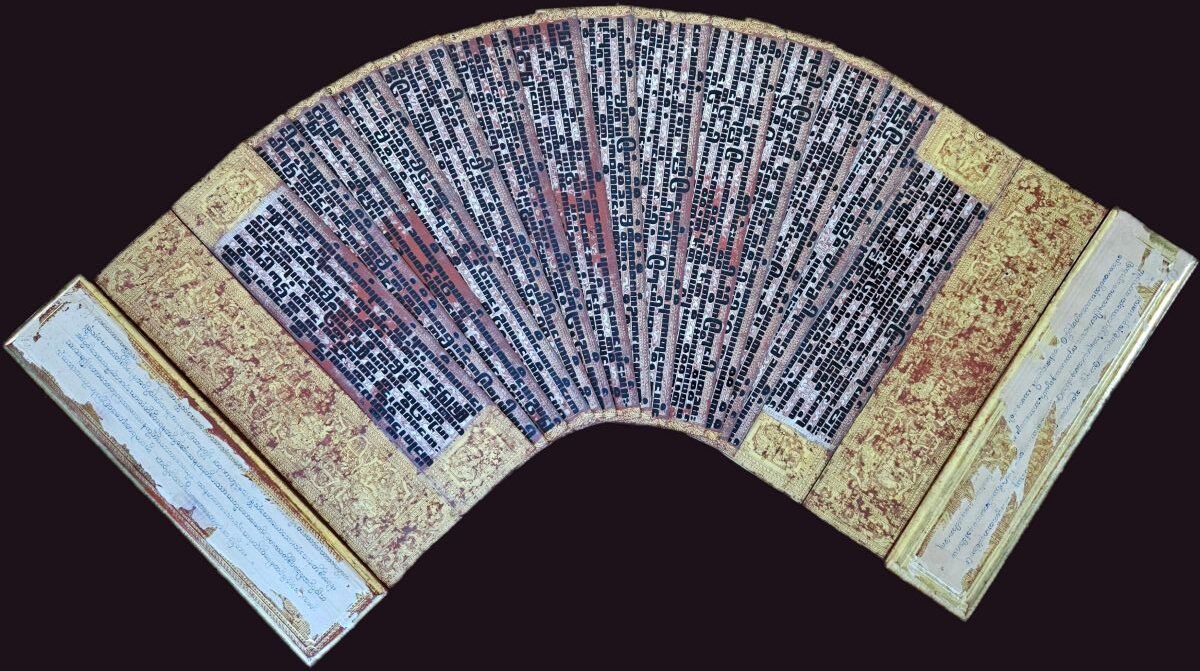
This complete 16 leaf Konbaung‑period, 18th‑century Burmese kammavaca manuscript is an exceptional example of Myanmar’s traditional liturgical art, preserved in its entirety without loss to the pages other than thinning of the metal pigments from two hundred years of handling.
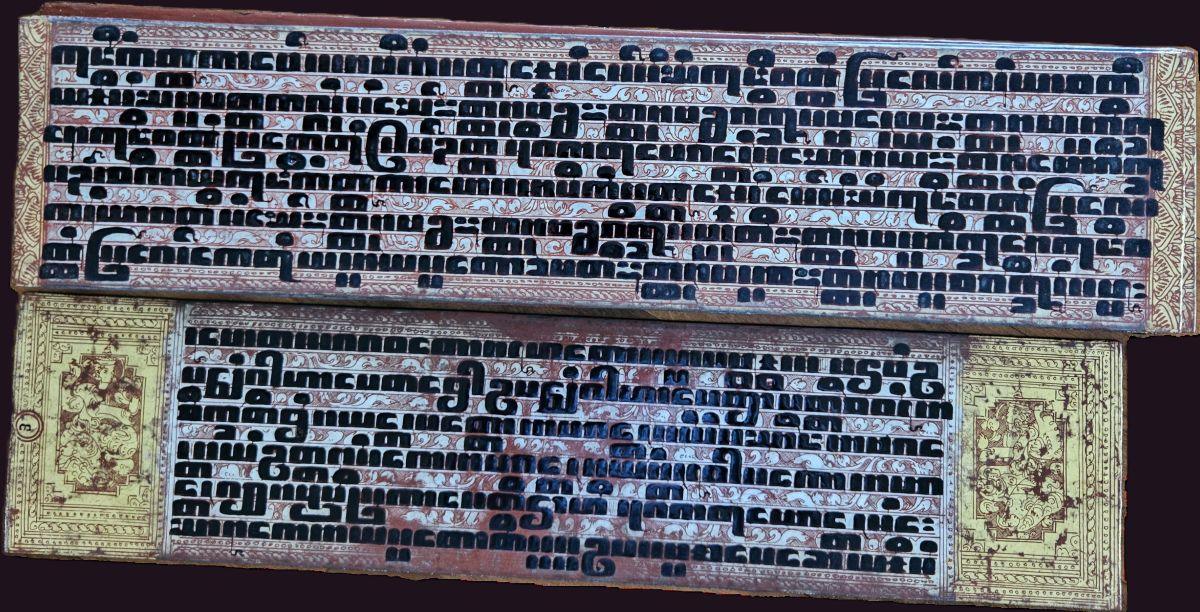
The manuscript is characterized by its bold black lacquer script and a distinctive metallic finish highlighting the script that has matured into a sophisticated silvered patina, indicative of the high-quality gold-silver alloy pigments employed during this period.
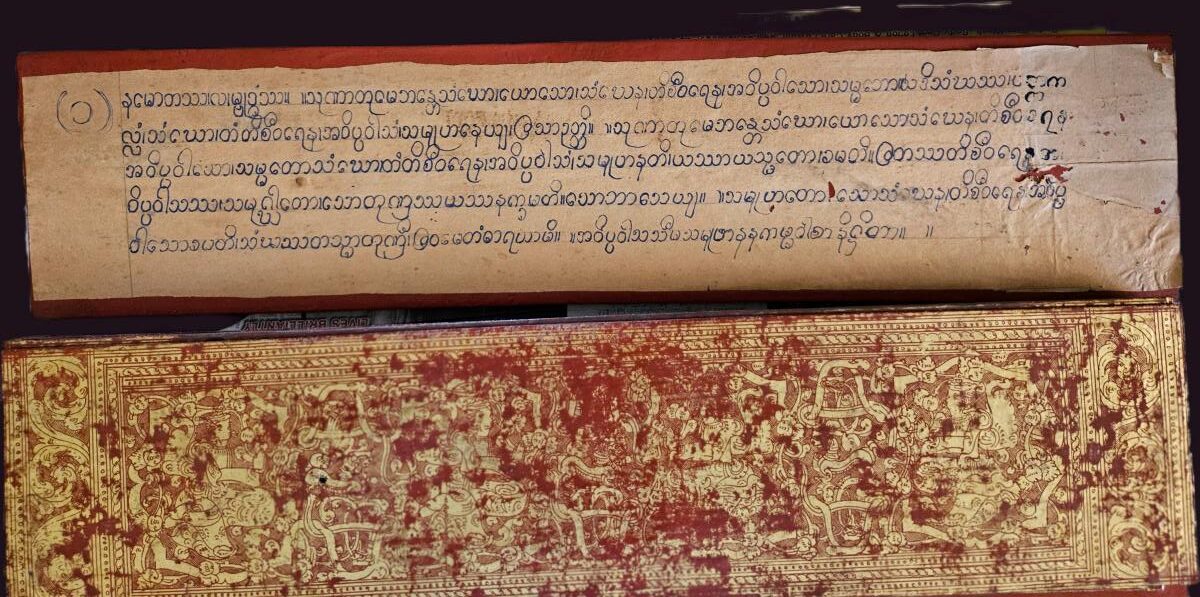
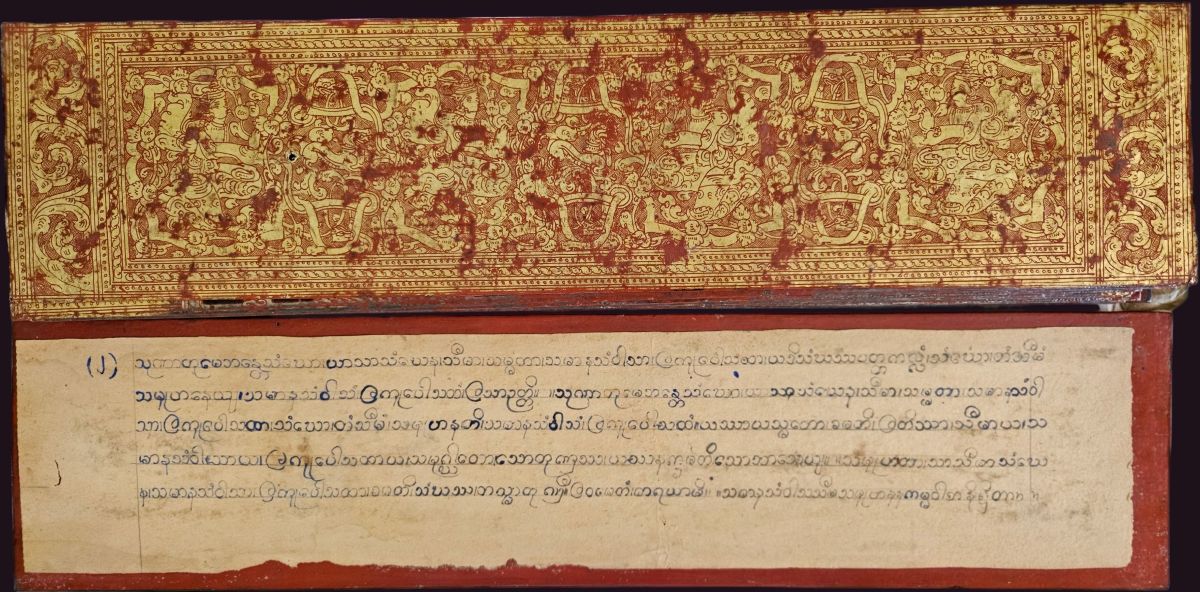
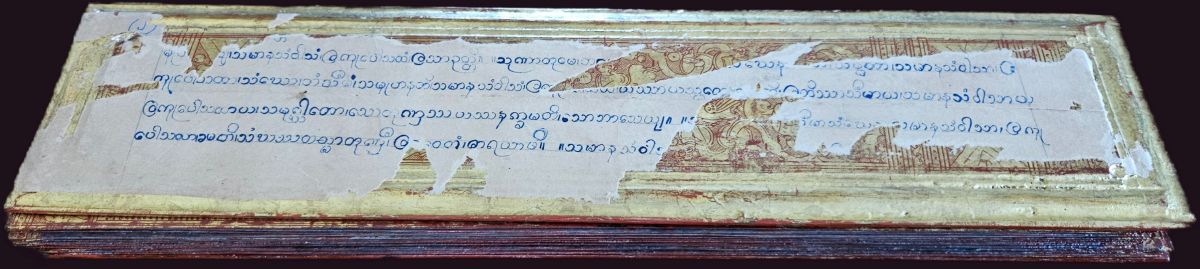
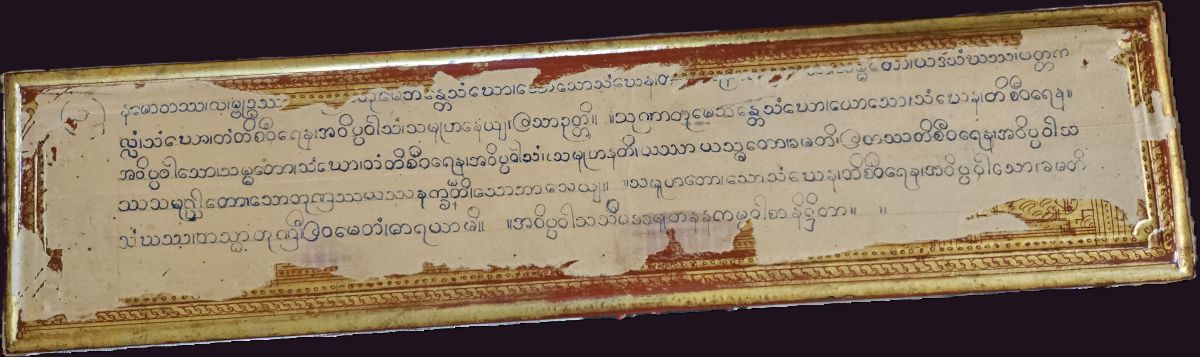
Beyond its artistic merit, the piece serves as a primary historical document. The presence of original Burmese script annotations on the inner and outer covers provides direct evidence of the manuscript’s long-term, active use and that it has been taken care of within a monastery could be indicative that it was possibly a special kammavaca.
Rather than detracting from the piece, these inscriptions represent the authentic, lived history of the object, offering a rare, tangible connection to its importance. This manuscript remains a rare, complete survival from the 18th century, maintaining its original integrity and historical context.
SPECIFICATIONS:
- AGE: 18th Century
- LENGTH: 57cm
- WIDTH: 14cm
- WEIGHT: 2.8 kg
- CONDITION: No chips or cracks Full set 16 folios and two wooden end covers
- #19a
18th Century Burmese Kammavaca Manuscript
The Burmese kammavaca’s were highly formalized ritual texts used specifically for monastic ordination and ecclesiastical acts. Almost all kammavaca include specific Pali passages from the Vinaya Piṭaka, especially:
- Mahāvagga and Cullavagga sections relating to:
- Upasampadā (Higher Ordination) and Pabbajjā (Novice Ordination): These are core components of Kammavaca manuscripts. Because these texts were often commissioned by families to mark a son’s entry into the monastery, they specifically contain the necessary liturgical formulae for both novice initiation and the higher ordination of monks.
- Pabbajjā (novice ordination): This ceremony, which marks the initiation of a novice, is a core component typically included in Kammavaca manuscripts.
- Liturgical Purpose: Because these manuscripts were frequently commissioned by families to commemorate a son’s entry into the monastery, they specifically feature the required liturgical formulae for both novice ordination and the subsequent higher ordination of monks.
- Kathina Robe Ceremony: The Kammavaca often includes passages related to the bestowing of robes, which encompasses the Kathina ceremony.
- Sanghakamma (Formal Acts of the Monastic Community): Yes, the Kammavaca contains the procedures for Sanghakamma. The Upasampadā ceremony itself is a form of Sanghakamma, and the manuscript serves as the official text used by the chapter of monks to perform these legal acts.
- Confession and Disciplinary Procedures: While the broader Vinaya Pitaka (from which these extracts are drawn) governs all aspects of monastic discipline and confession, the Kammavaca focuses specifically on the formulae required for the performance of ceremonies.
These texts are formulaic, consisting of the exact Pali required for legally valid monastic acts.
The text written on each side of the kammavaca leaf are written in the Pali language using the lacquer from the ‘tamarind seed’ (magyi-zi). The internal pages are protected by ornately painted and gilded wooden covers, although in this kammavaca the covers have a layer of paper applied with additional annotations. The kammavaca manuscript s are usually stored in a special receptacle or kammavaca chest within the monastery and taken out and used on special occasions.
These ornate manuscripts are largely a Burmese tradition, and it was customary for a Burmese family to commission or donate a Kammavaca on the ordination of their son when he officially becomes a monk, or donated to the monastery as an act of merit.
Kammavāca manuscripts were used only during formal ceremonies. Their elaborate decoration, gold, lacquer, incised ornamentation, sometimes ivory or metal covers reflects their ritual prestige, not the breadth of their content.
Unlike the Burmese palm leaf pay-sa they were not study texts and did not contain narrative, medical, historical, astrological or literary material. This is an excellent website related to the Burmese Kammavaca preservation and storage.