
18th Century Burmese Ava Marble Buddha Statue
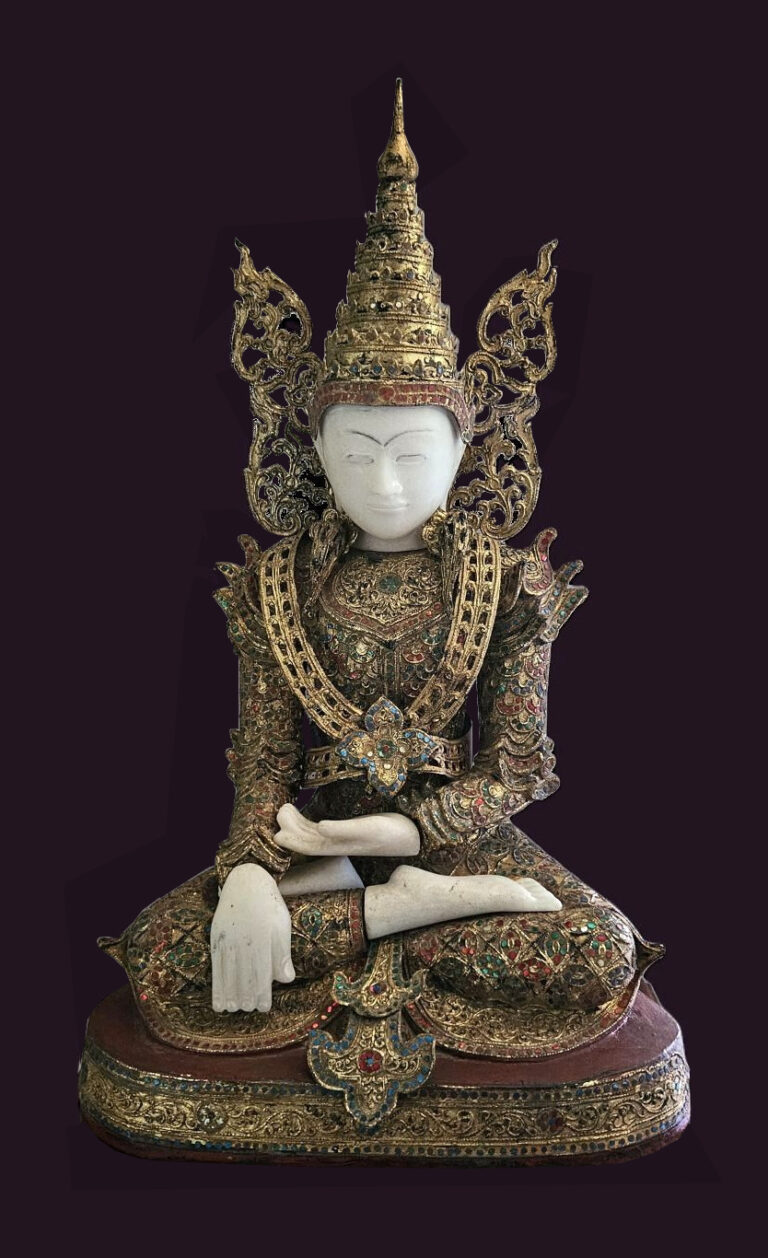
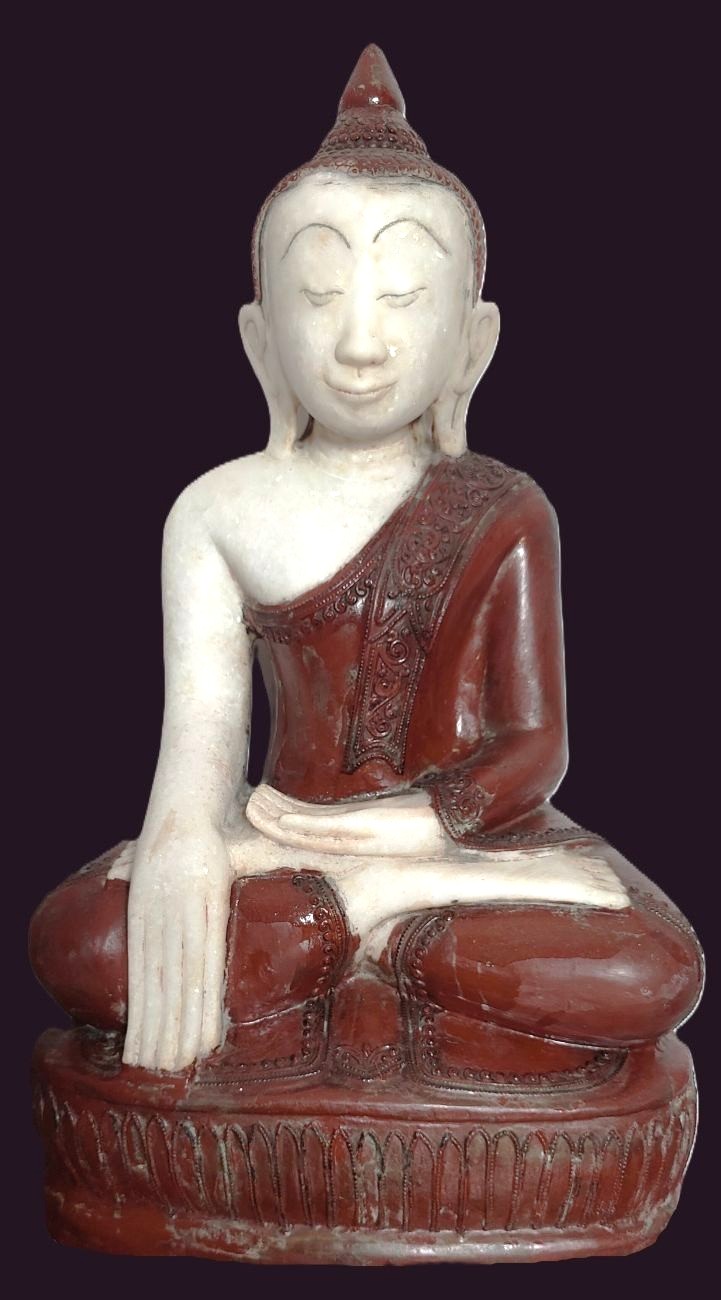
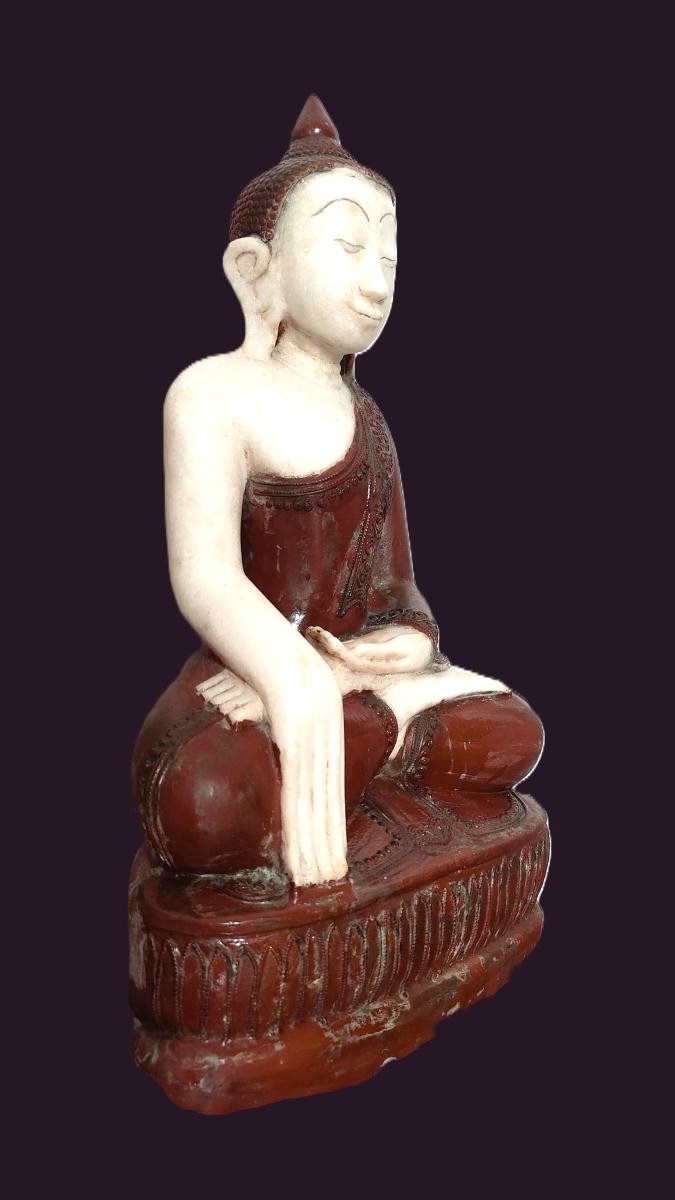
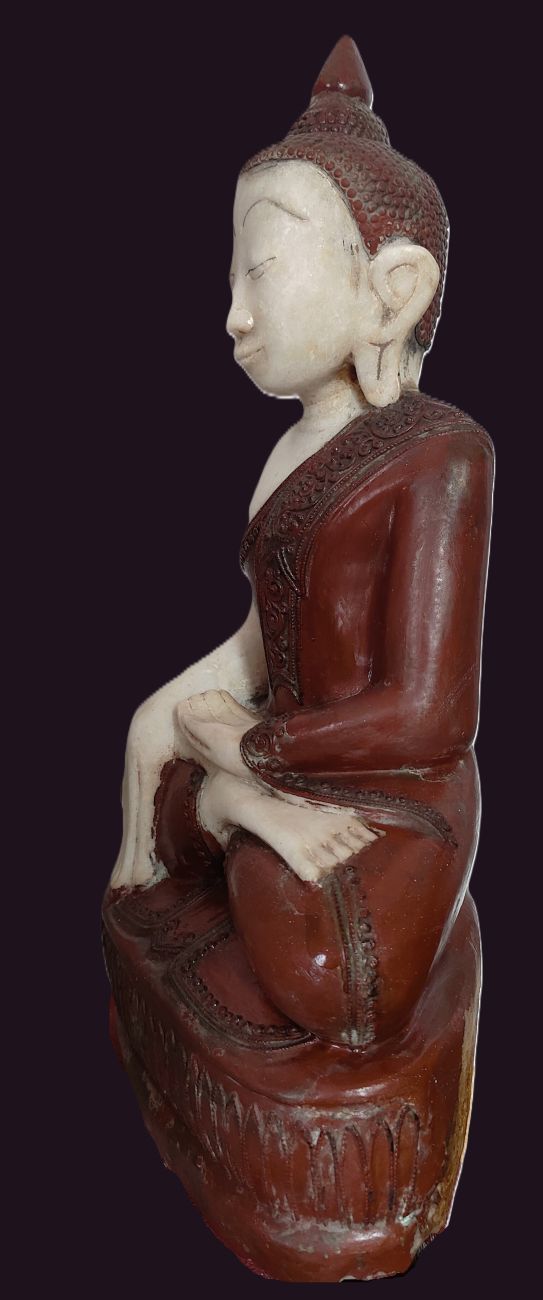
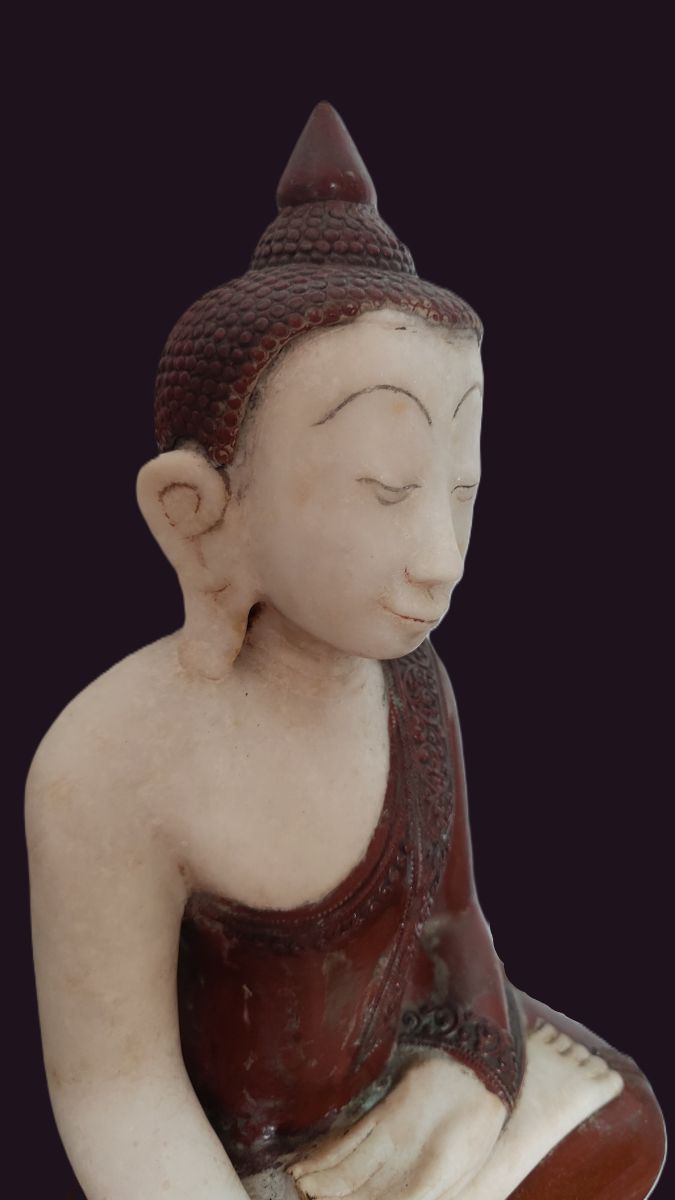
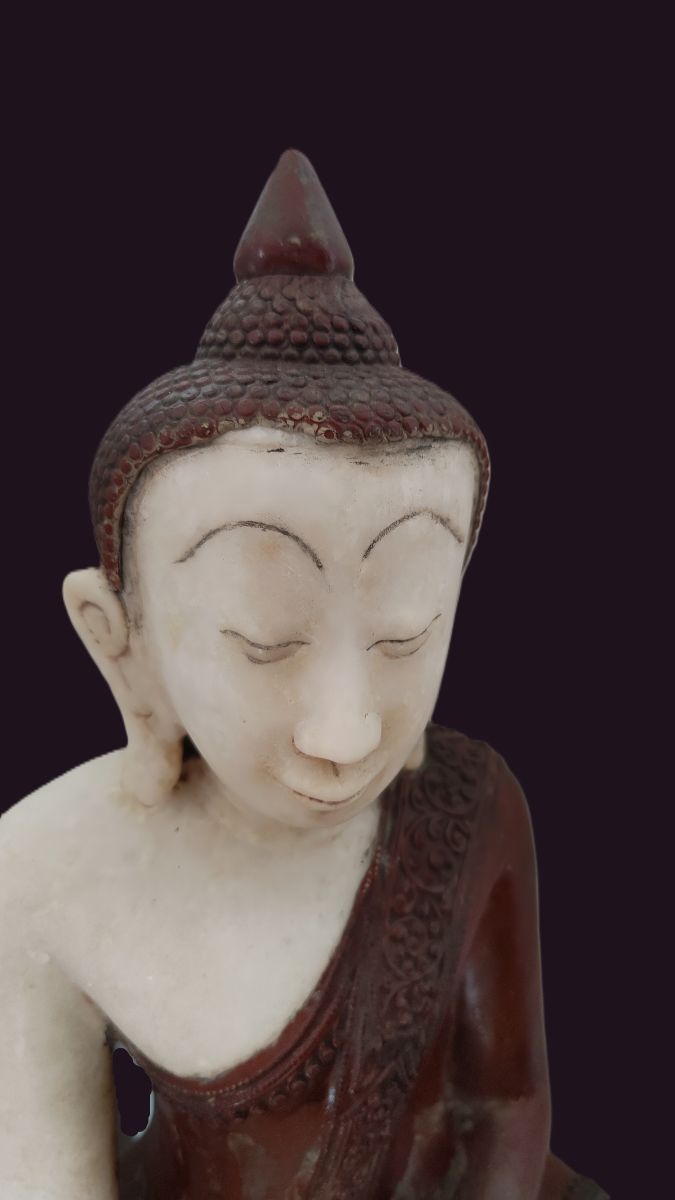
18th Century Burmese Ava marble Buddha statue carved from a single block of white alabaster marble, this statue embodies the serene, grounded iconography of 18th-century upper Burma (Ava period). The Buddha is seated in vajrasana (cross-legged position) on a single lotus pedestal (padmasana) set above a plain marble base.
His right hand is depicted in the Bhumisparsha Mudra (Earth-Touching Gesture), symbolizing the moment of enlightenment beneath the Bodhi tree when Gautama Buddha touched the earth to summon the earth goddess to testify to his accumulated merit, overcoming the temptations and forces of Mara.
SPECIFICATIONS:
- AGE: This statue features a 17th- to 18th-century (Nyaungyan to early Konbaung iconography) with later thayo lacquer scrollwork embellishments.
- HEIGHT: 56 cm
- WIDTH: 28 cm
- DEPTH: 14 cm
- WEIGHT: 27 kg
- CONDITION: A small strip of lacquer has flaked away along the hairline above the forehead. As is common with Burmese statues of this period, the red lacquer finish shows evidence of historical refreshing.
- #819
18th Century Burmese Ava Marble Buddha Statue
During the Ava (Innwa) Period from the 14th to 16th centuries, Buddhist iconography evolved to reflect the kingdom’s resilience and monastic devotion amidst regional conflicts. Artisans moved away from the softer, elongated lines of classical Pagan, developing a distinct stylistic identity characterized by stockier proportions, broader shoulders, and serene, oval faces with downcast eyes and subtly curved lips. Images of the Buddha were predominantly crafted in wood, lacquer, bronze, and alabaster, almost universally depicting the Bhumisparsha Mudra (earth-touching gesture) seated atop a low, plain pedestal. The monastic robes feature thick, heavy folds draped naturalistically over the shoulder, with a broad lapel band reaching down to the navel.
Iconographic & Stylistic features of the Nyaungyan to early Konbaung period
The statue features a 17th- to 18th-century (Nyaungyan to early Konbaung) marble core exhibiting traditional Ava proportions and facial carving. The thayo lacquer robe decoration and hair curls represent a 19th-century or early 20th-century embellishments, a common practice that updated the piece with ornate surface details without altering its earlier, stocky stone structure underneath.
The borders of the monastic robe (sanghati) and the lapel over the left shoulder are adorned with hand-molded thayo lacquer relief work. Applied in traditional scrolling vine (thazin) patterns and coated in deep red cinnabar lacquer, these raised borders outline the crisp contrast between the polished white marble flesh and the draped garment.