Antique Burmese Ava Alabaster Buddha Statue
Antique Burmese Ava Alabaster Buddha Statue
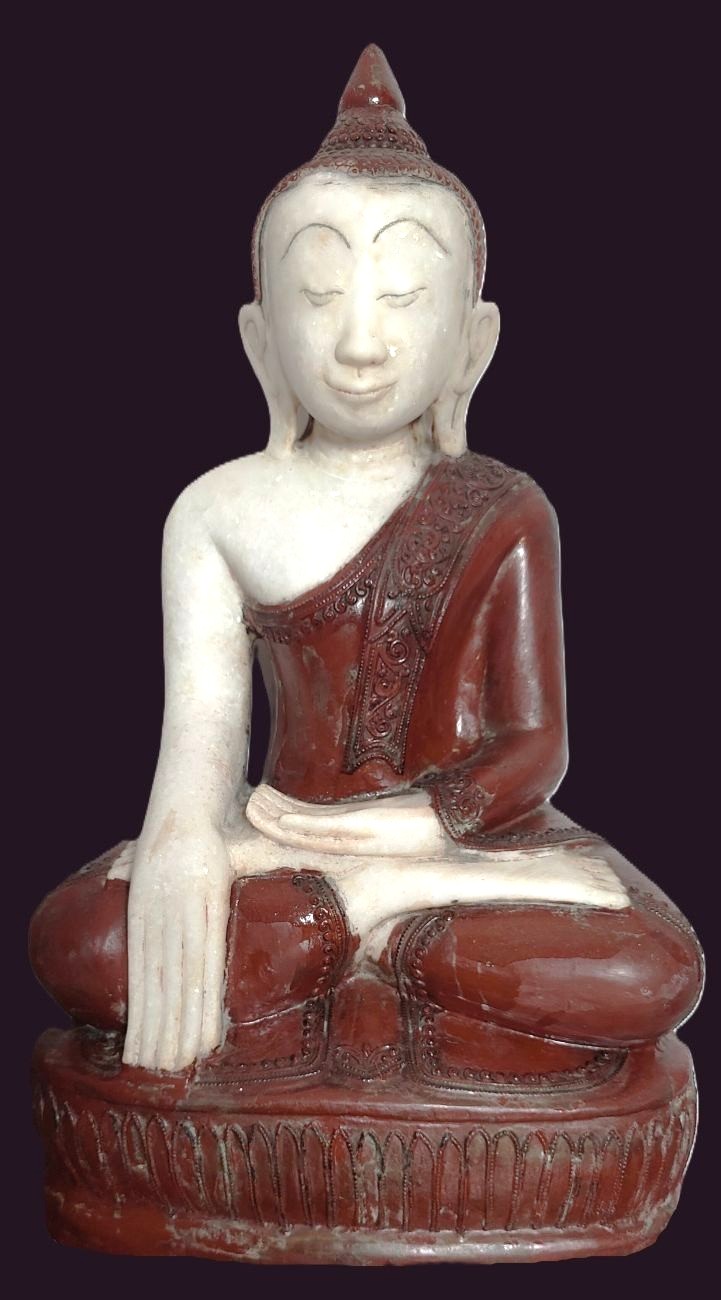
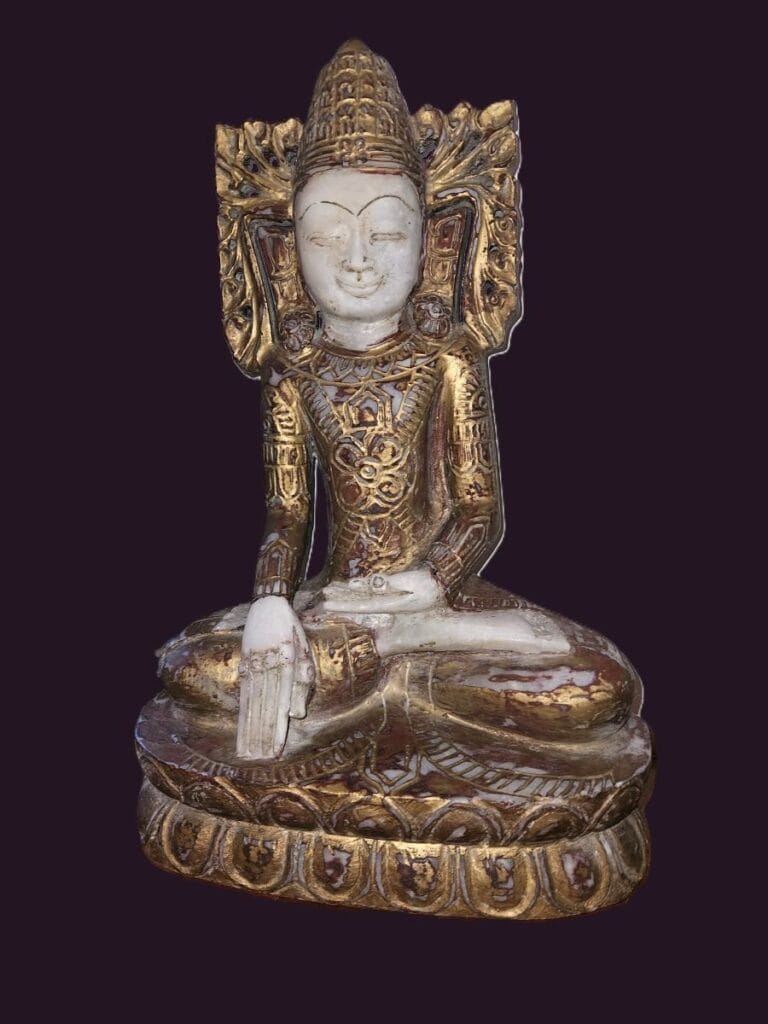
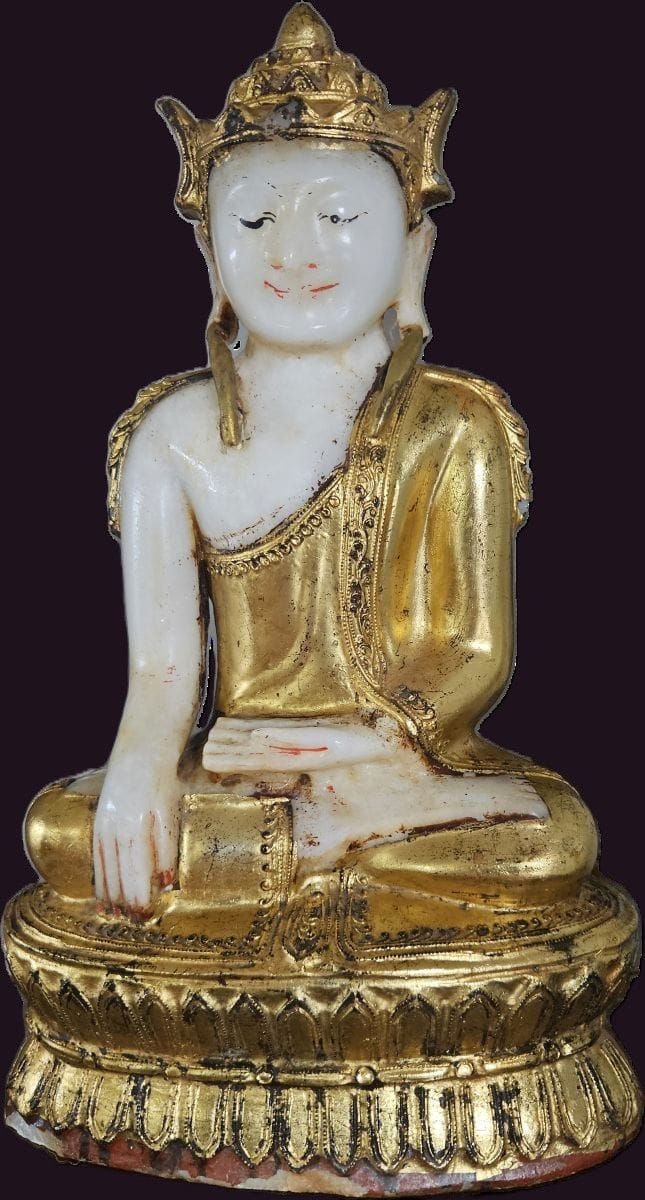
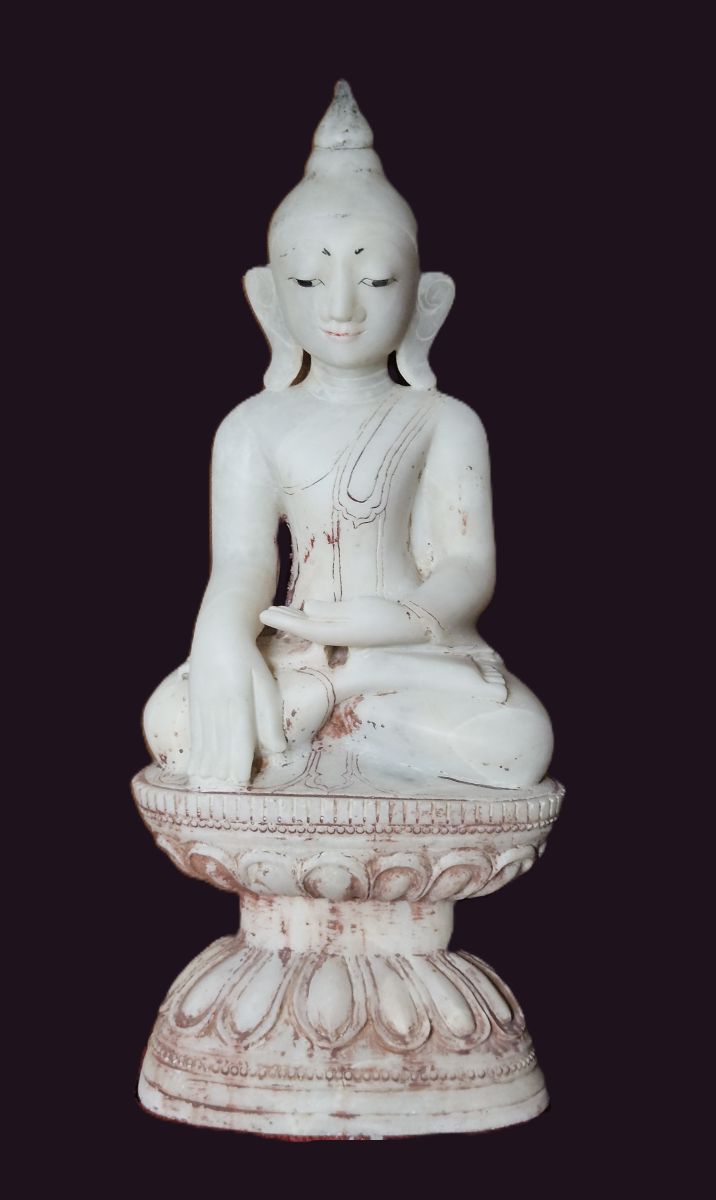
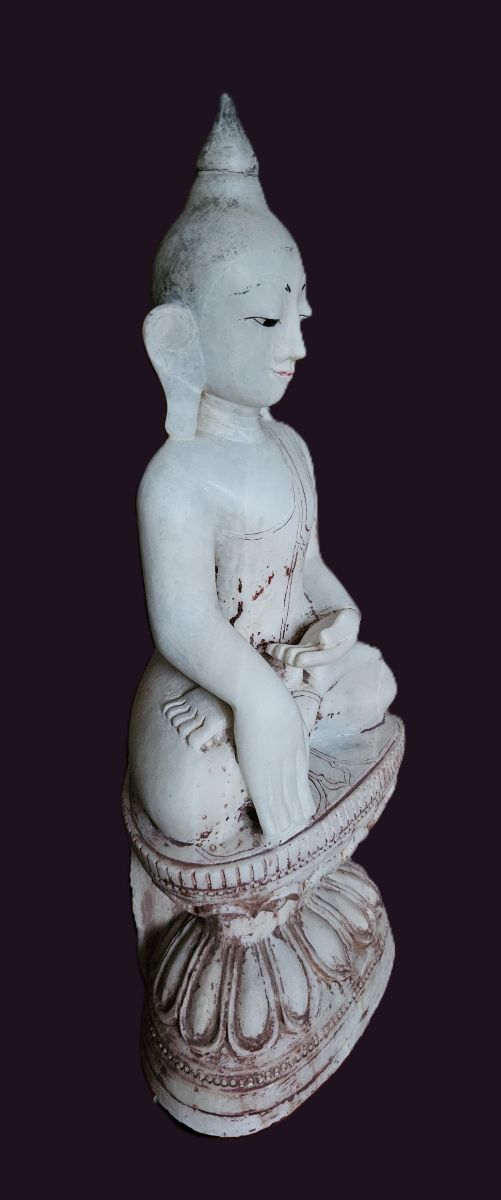
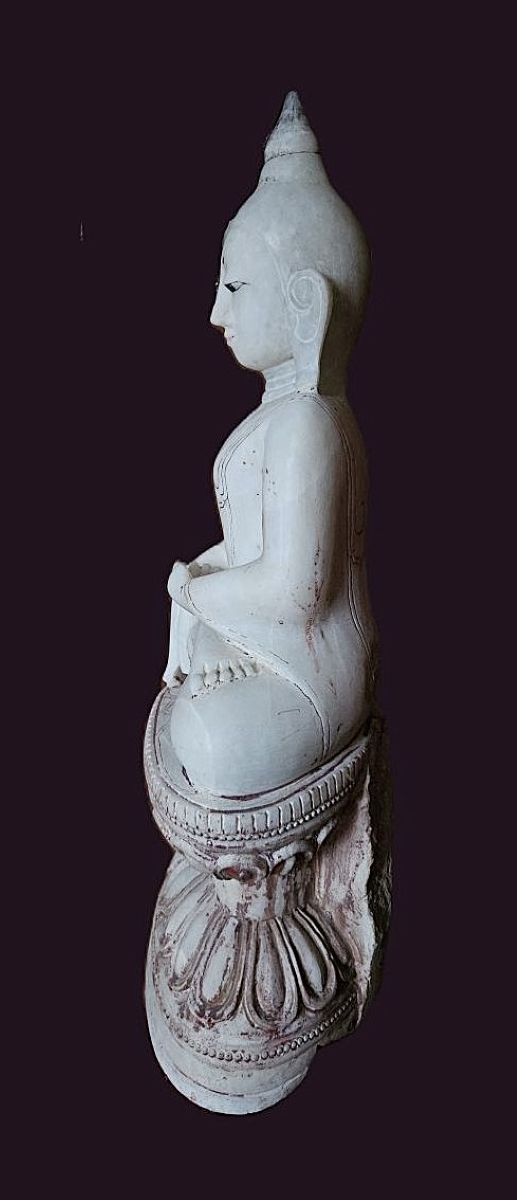
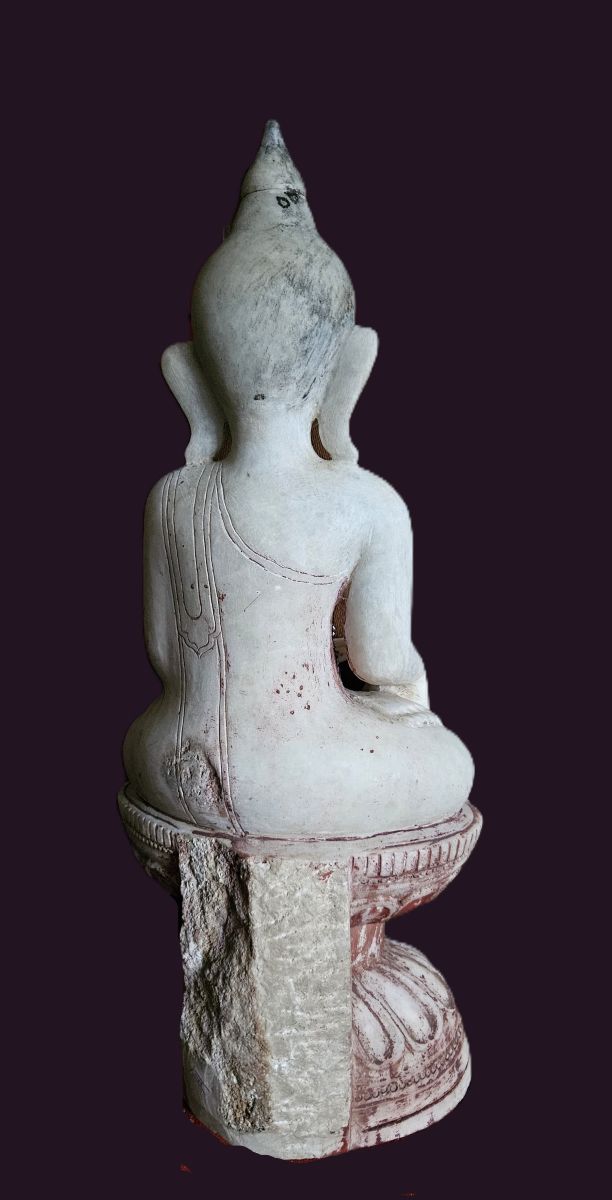
This is a beautiful museum quality 18th Century Antique Burmese Ava Alabaster Buddha Statue crafted during the second Ava period (1597 – 1752), also referred to as the Toungou Dynasty. This figure is seated with right-hand gesture in Bhumisparsa mudra, with fingers reaching down to touch the earth, as he called the earth Goddess to bear witness to his enlightenment.
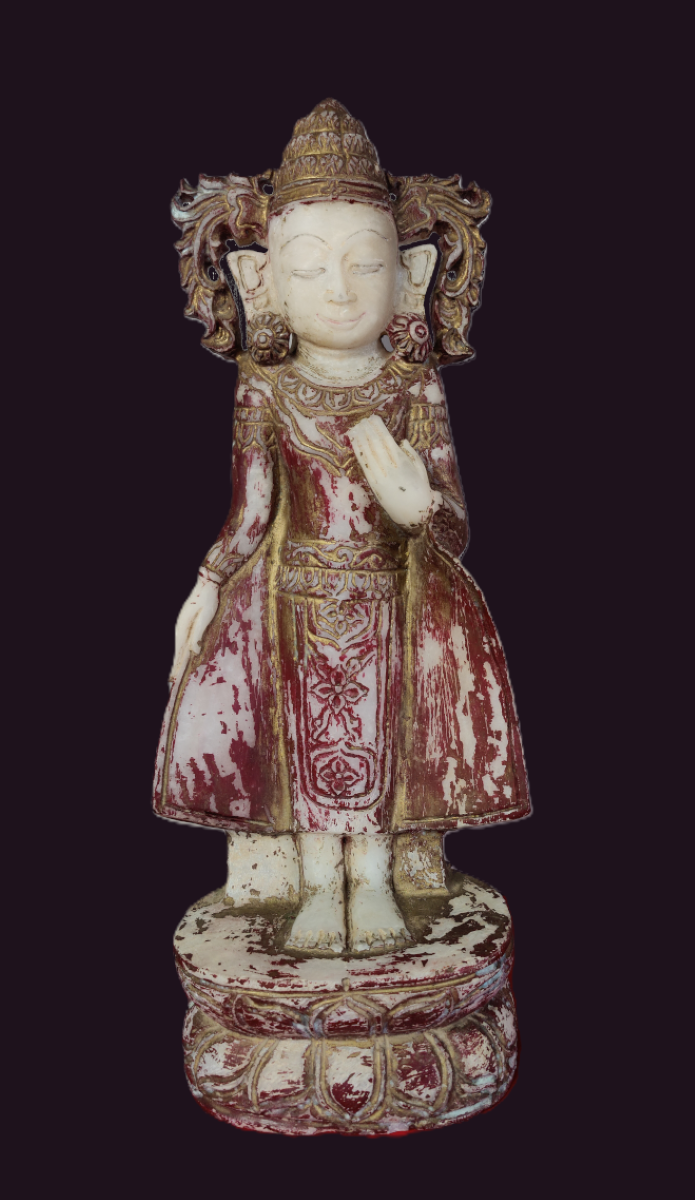
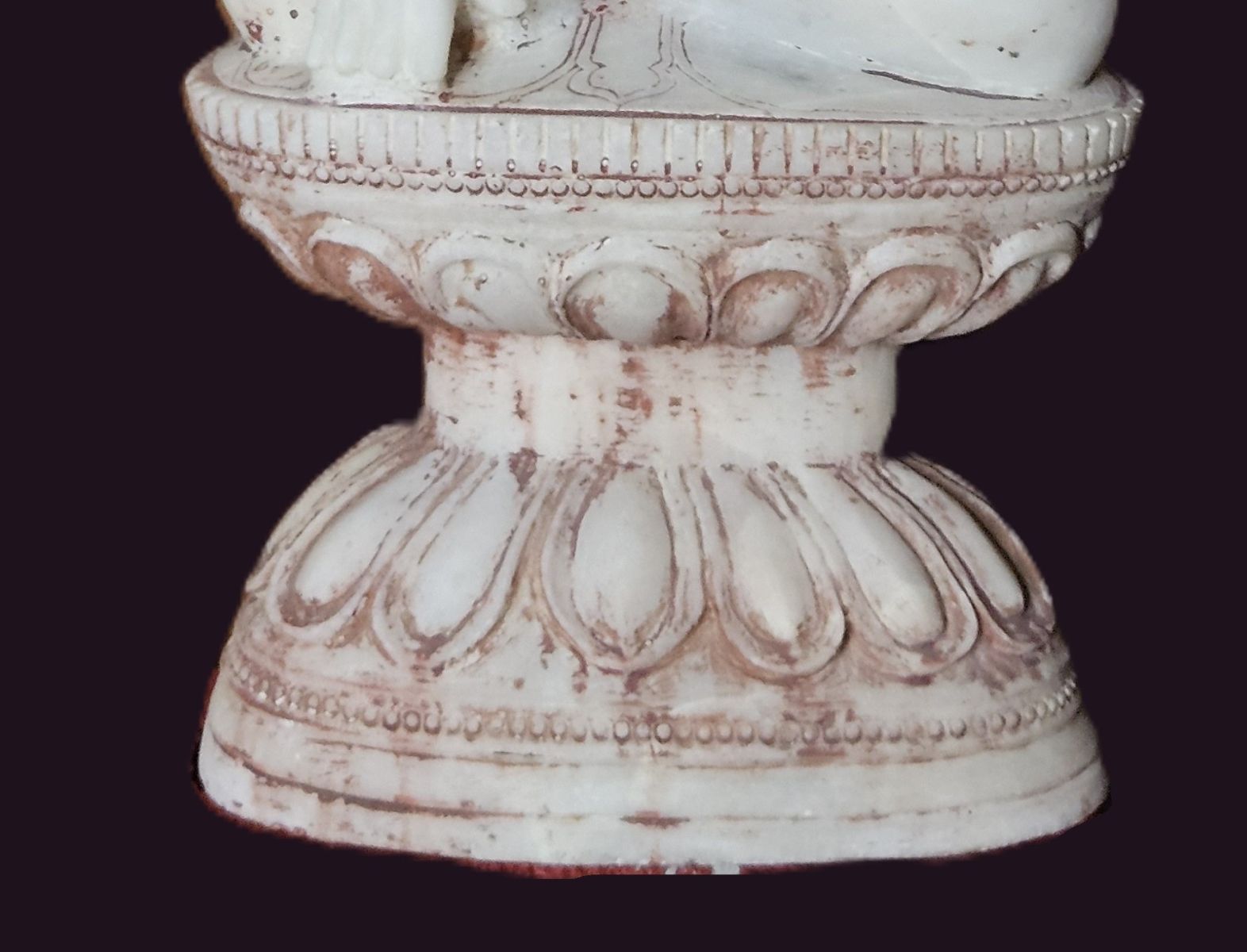
Seated on a high thin waisted double lotus carved pedestal with legs crossed. The face shows a serene expression, eyes cast downwards. The figure features the characteristic elongated, flared earlobes typical of the Ava style, curving outward from the head
In Buddhist art, elongated and prominent ears are a crucial lakshana (sacred mark) symbolizing the Buddha’s spiritual wisdom, his status as a former prince with the ability to hear the suffering of all beings.
SPECIFICATIONS:
- AGE: 18th Century
- HEIGHT: – 73cm
- WIDTH: – 32cm
- DEPTH: -17cm
- WEIGHT: 37.8
- 811
Antique Burmese Ava Alabaster Buddha Statue
The Ava Kingdom and Sculpture Style (1364–1555)
The Ava (Inwa) Kingdom arose in Upper Burma following the collapse of the Pagan Empire. As a major center of power and Buddhist culture, Ava developed a distinct artistic identity that bridged the classic grandeur of Pagan with later, more stylized regional traditions.
Ava period Buddha images are highly prized by collectors for their distinct, stylized features and serene, introspective expressions. Key iconographic hallmarks of the Ava style include:
- Facial Features: A round, youthful face with a sweet, serene expression. The eyes are often downcast and inlaid or incised, paired with gently arched eyebrows and a softly smiling mouth.
- The Ushnisha and Finial: The ushnisha (the cranial bump) rises prominently from the head and is typically topped with a tall, distinctively pointed, conical finial (cunamani).
- Pronounced Ears: The ears are large, prominent, and stylized. The earlobes are elongated, flaring outward away from the head in a graceful curve before descending toward the shoulders.
- Monastic Robes: The sanghati (monastic robe) is carved with simple, clean lines. The lapel or fold of the robe draped over the left shoulder often ends in a distinct, incised wavy or jagged pattern.