Ming Dynasty Swatow Blue & White Plate
Ming Dynasty Swatow Blue & White Plate Zhangzhou ware (historically referred to as Swatow ware).
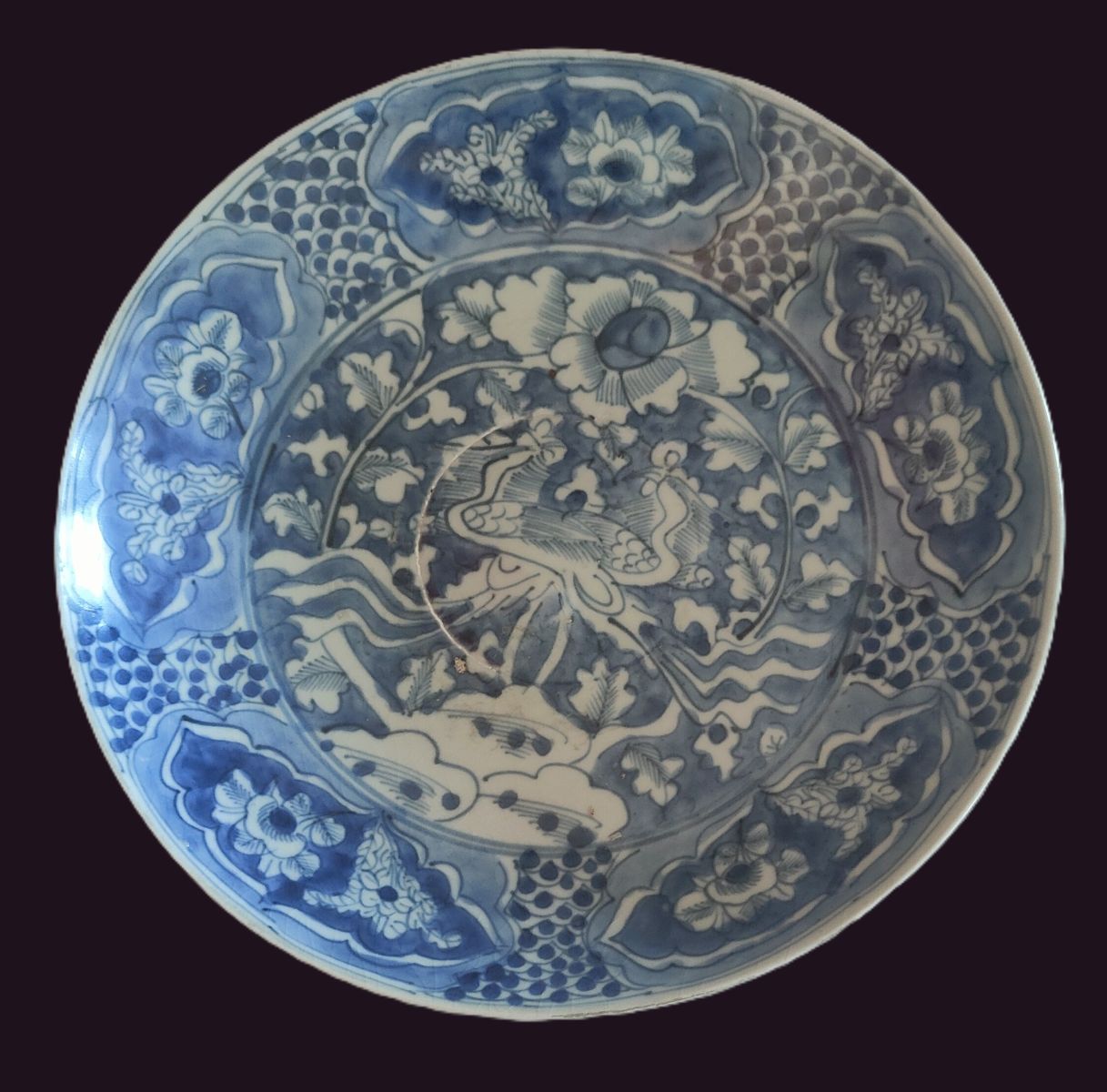
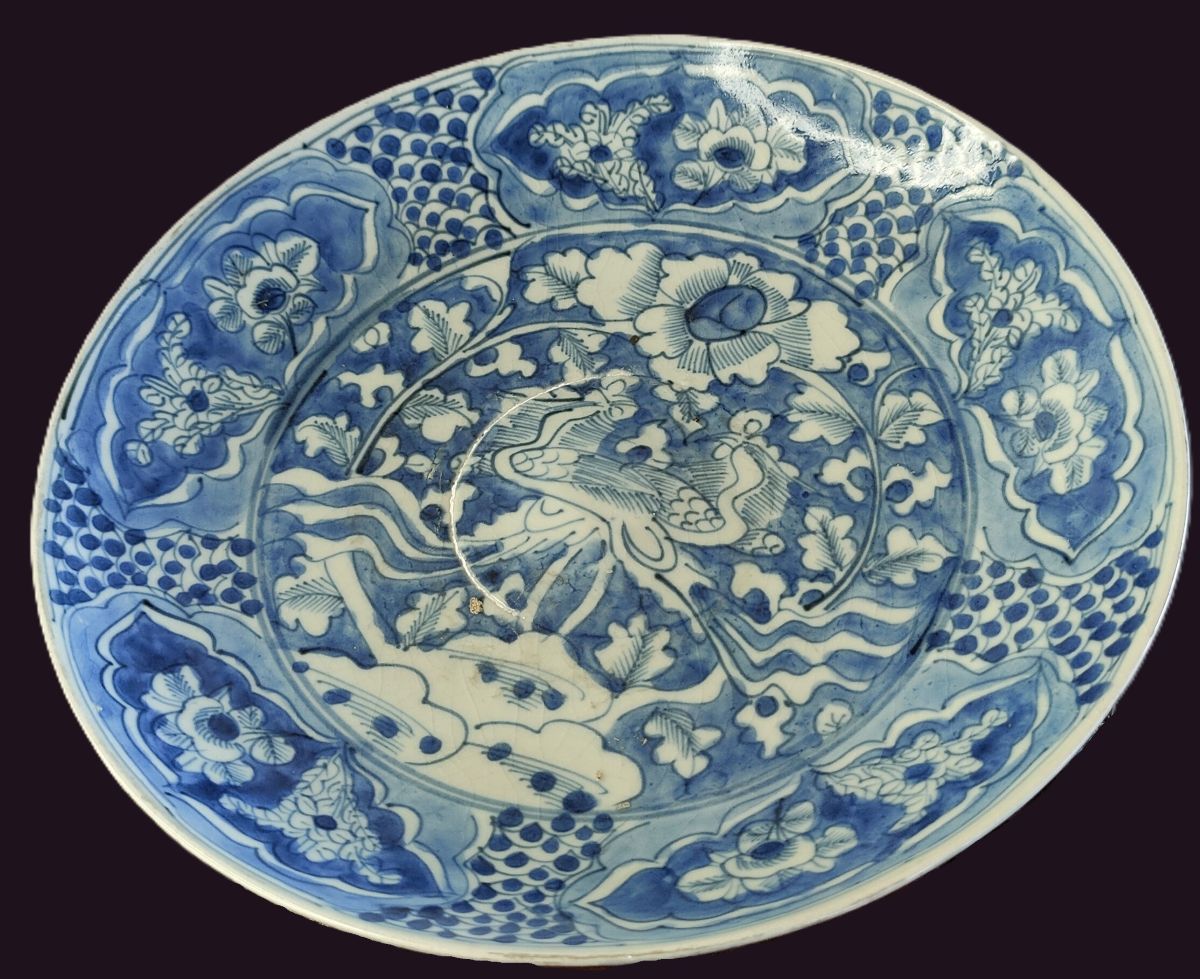
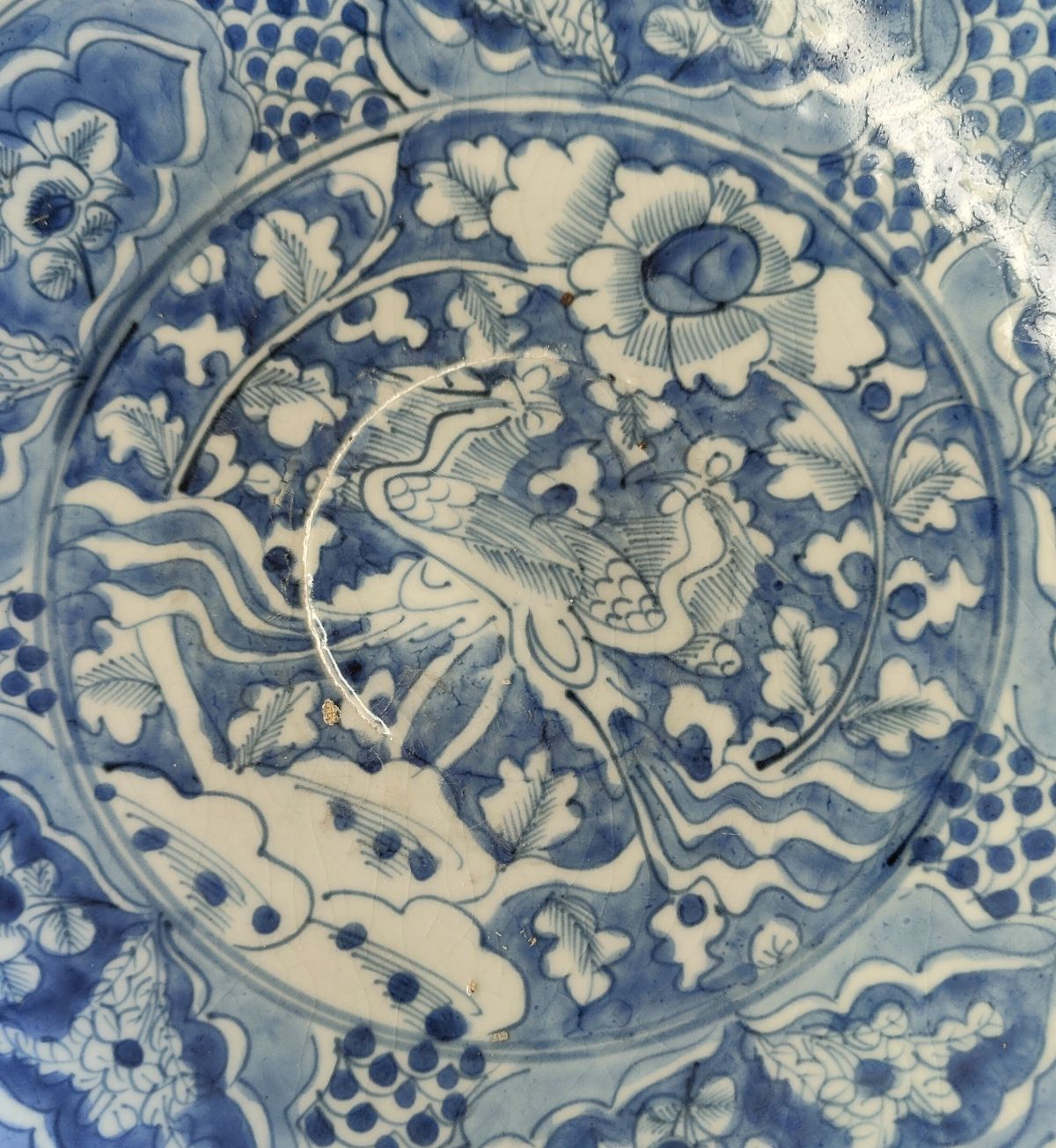
Chinese Blue and White Swatow Ware Ming Dynasty Binh Thuan shipwreck dish, circa 1608, Wanli period, the Swatow low form bowl with underglaze blue decoration with a double phoenix in the center surrounded by a garden setting.
Central Motif & Composition
- Iconography: The center features a stylized phoenix (fenghuang) perched on or amidst rockwork, surrounded by leafy peony scrolls.
- Border Design: The cavetto features dynamic, scale-like diaper grounds interspersed with shaped cartouches enclosing flower sprays—a design influenced by Jingdezhen Kraak porcelain formats.
- Brushwork: The execution uses rapid, confident, freehand lines with cobalt wash. This quick, uninhibited style is a key marker of private regional kilns servicing the Southeast Asian maritime market.
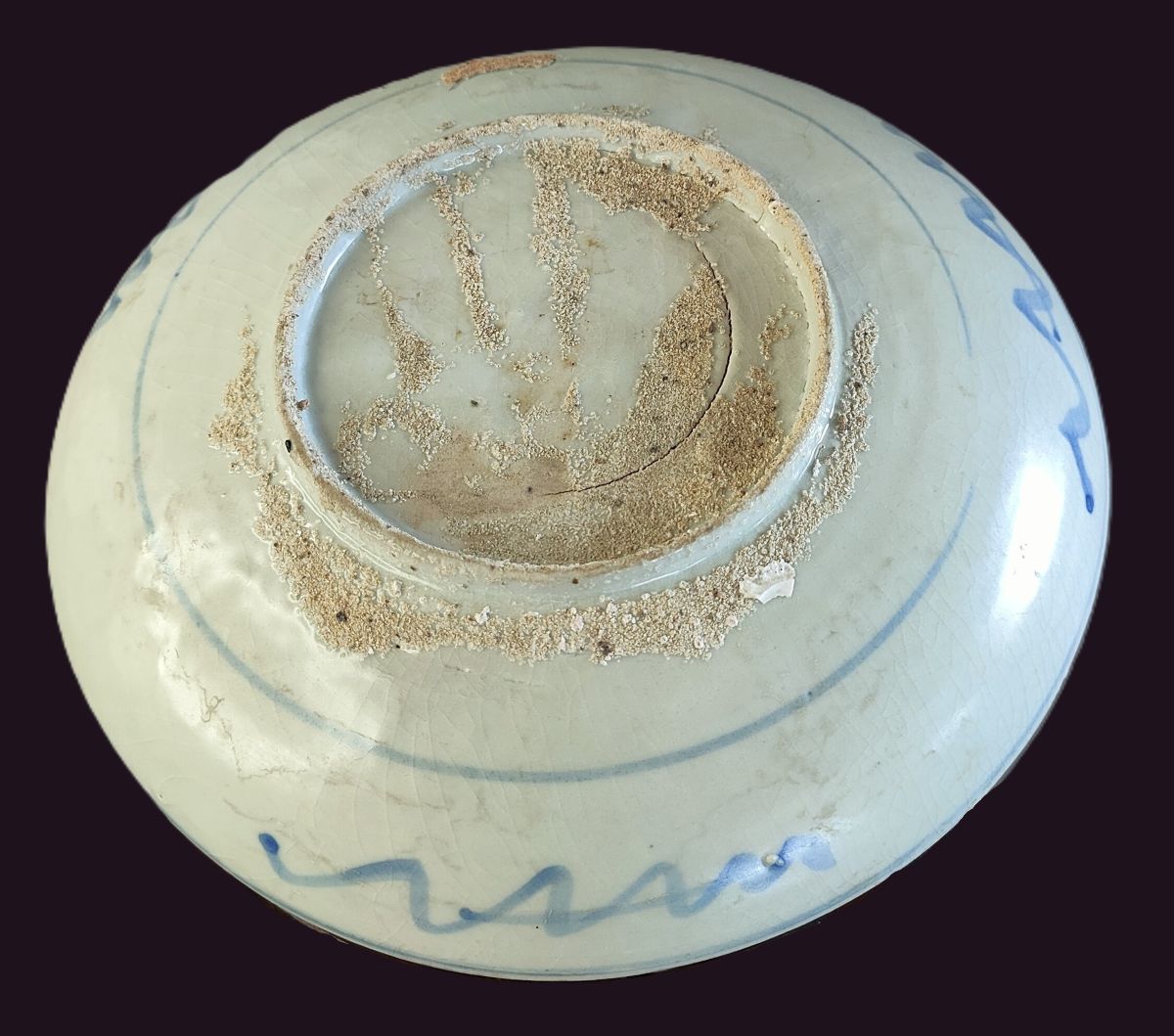
- Coarse Sand / Kiln Grit: The underside shows a thick ring of coarse beach sand fused to the glaze edge near the foot ring. Zhangzhou potters placed dishes directly on beds of coarse river or sea sand inside saggars to keep the soft glaze from fusing to the container during firing.
- Glaze Characteristics: The base glaze exhibits an uneven, milky blue-grey tone with fine age crackle and small iron impurities (pinholes).
SPECIFICATIONS:
- AGE: – 1600 – 1620
- CONSTRUCTION: – Porcelain
- DIAMETER:– 28 cm
- #03
Ming Dynasty Swatow Blue & White Plate
In 1608, a Chinese merchant junk called Binh Thuan captained by I Sin Ho departed Fujian laden with thousands of freshly fired Zhangzhou ceramics bound for the bustling port of Johore. It never reached its destination. Striking a reef 40 miles off the southern coast of Vietnam, the ship settled into the seabed, preserving its cargo for nearly four centuries. Around 20,000 blue and white ceramics from Zhengzhou were salvaged on this wreck.
When fishermen accidentally snagged the wreckage in 2001, divers revealed an unprecedented maritime cache, the first dedicated, single-cargo shipment of late Ming “Swatow” porcelain ever recovered. Characterized by rapid freehand painting such as central phoenixes, peony scrolls, and fish-scale borders and foot rings encrusted with native kiln sand, the surviving pieces offer an unfiltered snapshot of the early 17th-century South China Sea trade network.
The production centre for Swatow wares originated in the Zhangzhou prefecture with several kiln sites producing provincial porcelains often with boldly painted decoration, these were referred to as Swatow, the name Swatow refers to the Port of Shantou in the southern province of Guangdong, although Swatow wares were not produced in the Port area. The main kiln site manufacturing Swatow ware was in Huaan, with several lesser sites in surrounding areas.
Chinese ceramics were part of an extensive maritime trade to Europe and to other parts of Southeast Asia such as Indonesia, and Malaysia. Swatow ware ceramics were manufactured mainly for export to the Southeast Asian and Japanese markets and were transported by large Chinese junks through the South China Sea where many ships floundered due to the volatility of the region caused by bad weather conditions such as cyclones.