Chinese Han Dynasty Tripod Ding – Mingqi Pottery
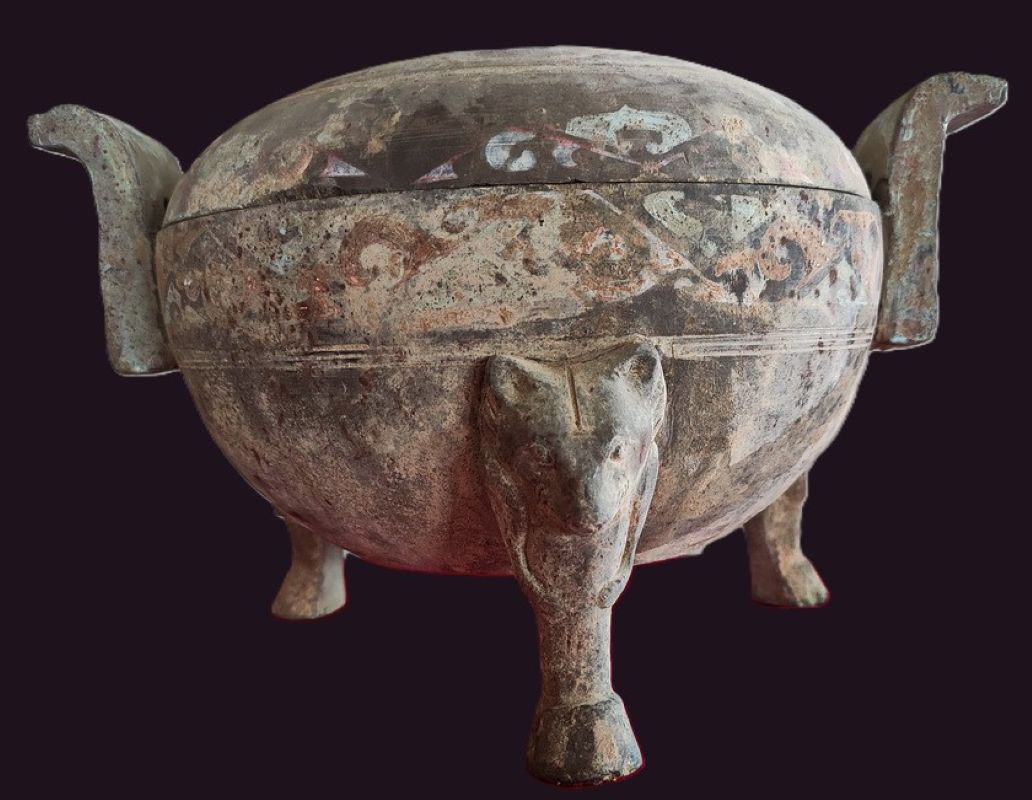
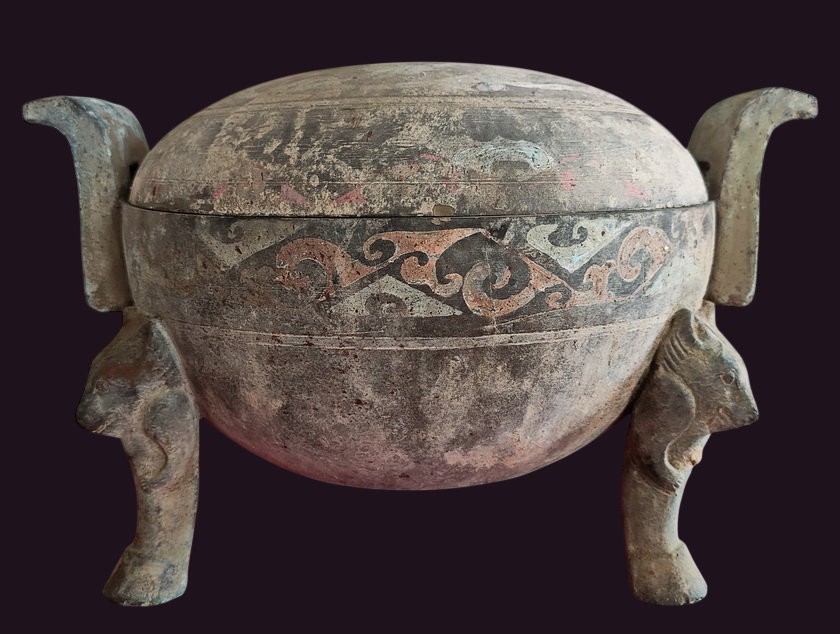
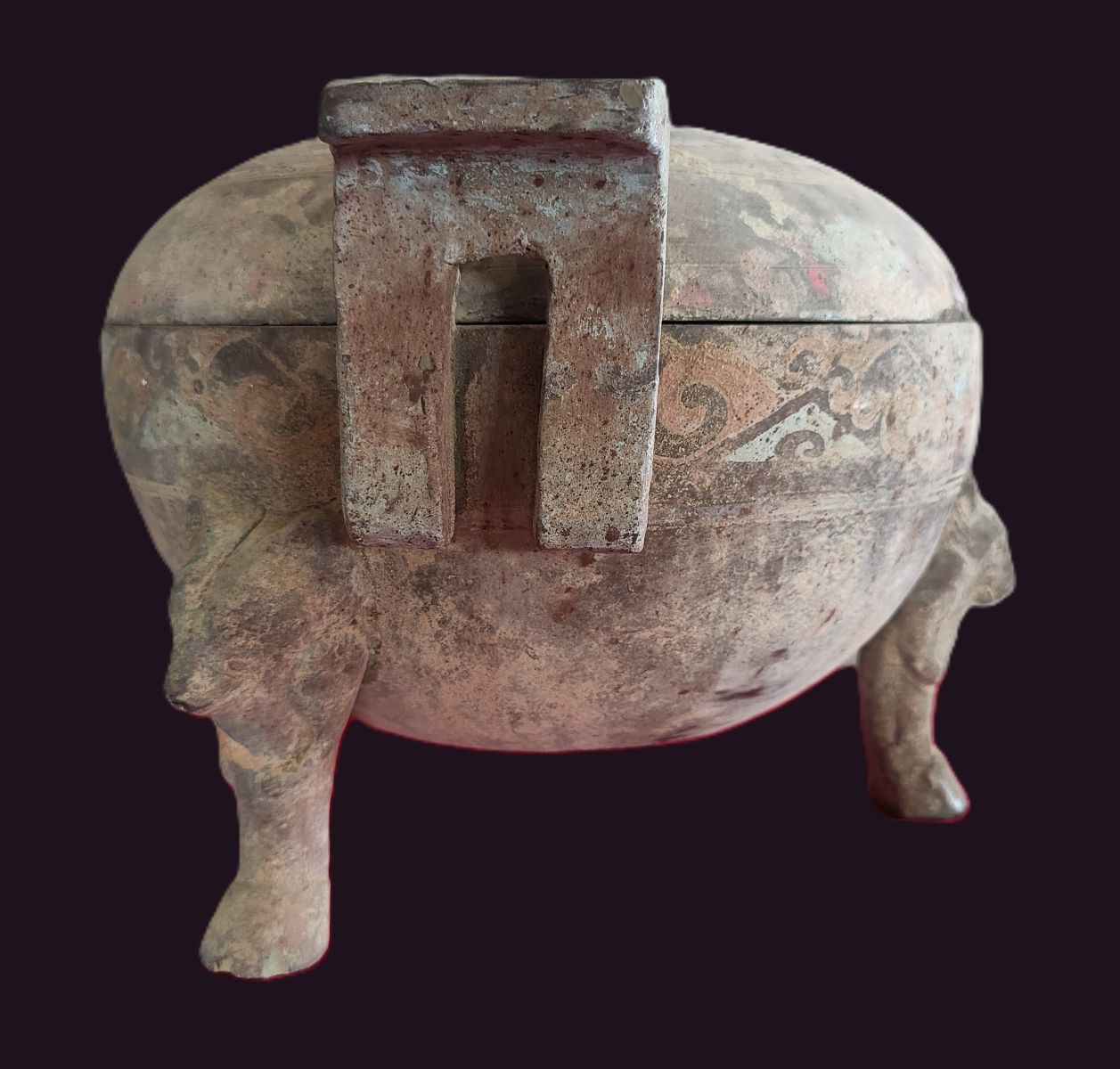
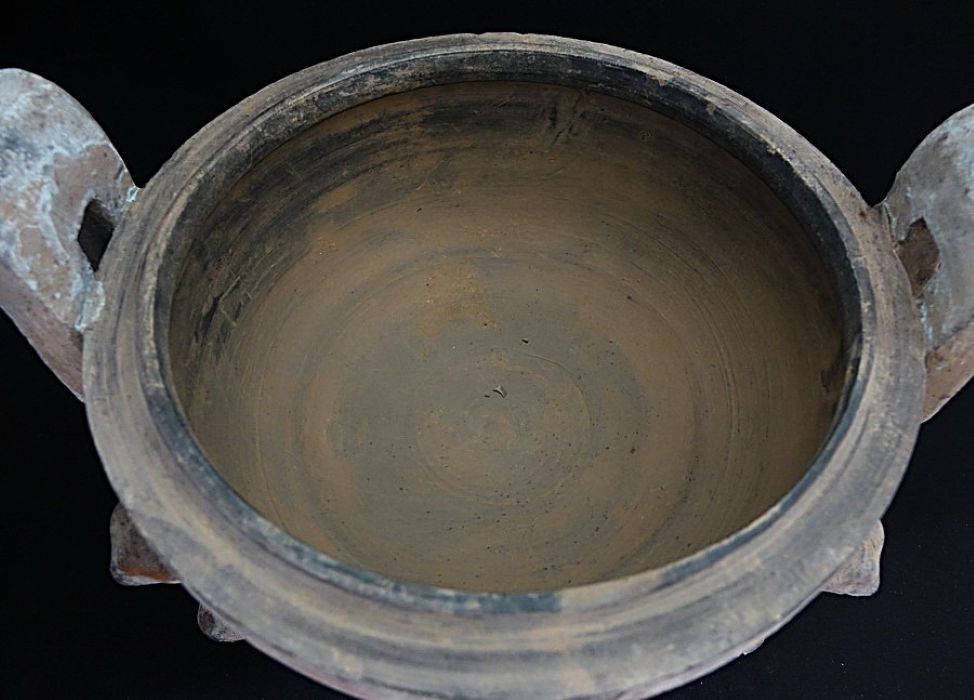
This pottery ding is a classic tripod (three-legged) mingqi spirit object made during the Han Dynasty to accompany the deceased into the afterlife. The Han Dynasty spanned four centuries following the collapse of the Qin Dynasty, a transformational period when Chinese philosophical traditions and funerary customs evolved rapidly.
To honour and serve the departed in the afterlife, artisans crafted ming qi across a wide range of materials, including bronze, jade, gold, silver, and painted terra cotta/earthenware. Tripod vessels of this specific form were especially popular during both the Western Han (206 BC – 9 AD) and Eastern Han (25 – 220 AD) periods.
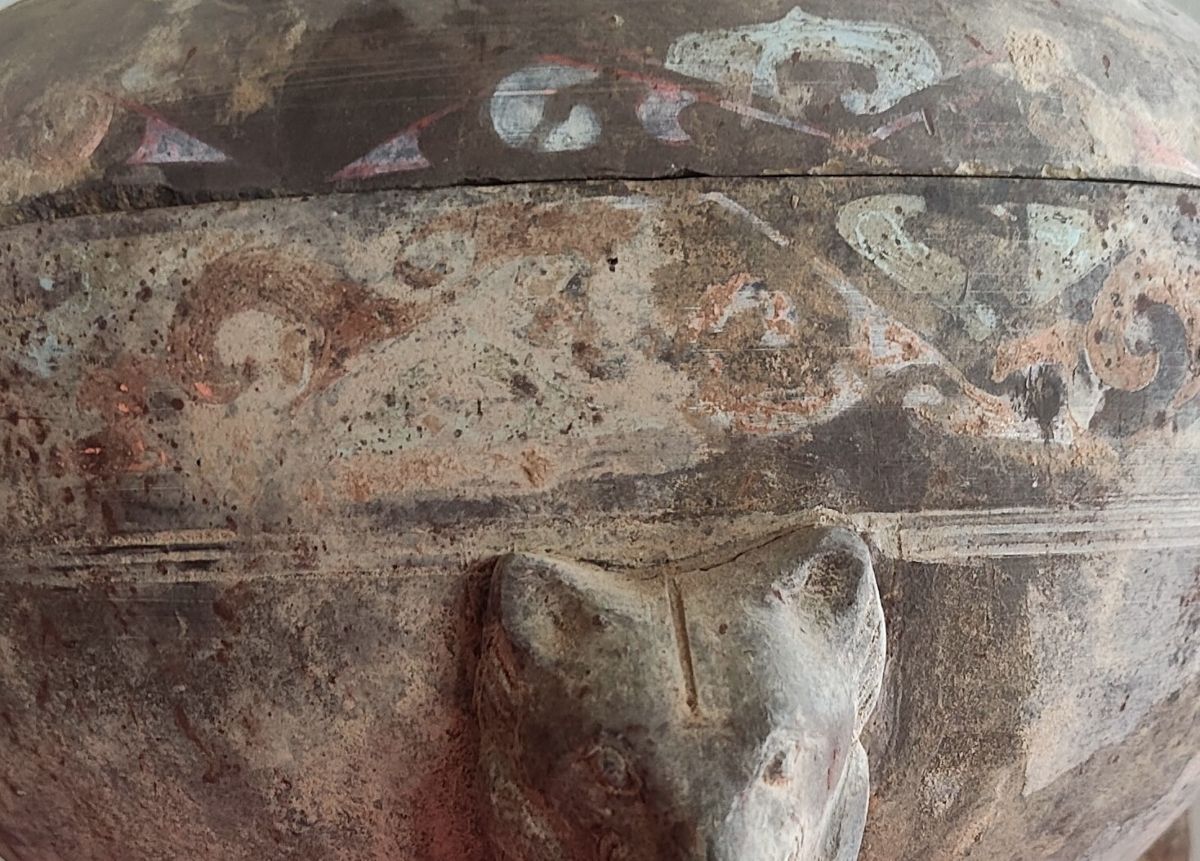
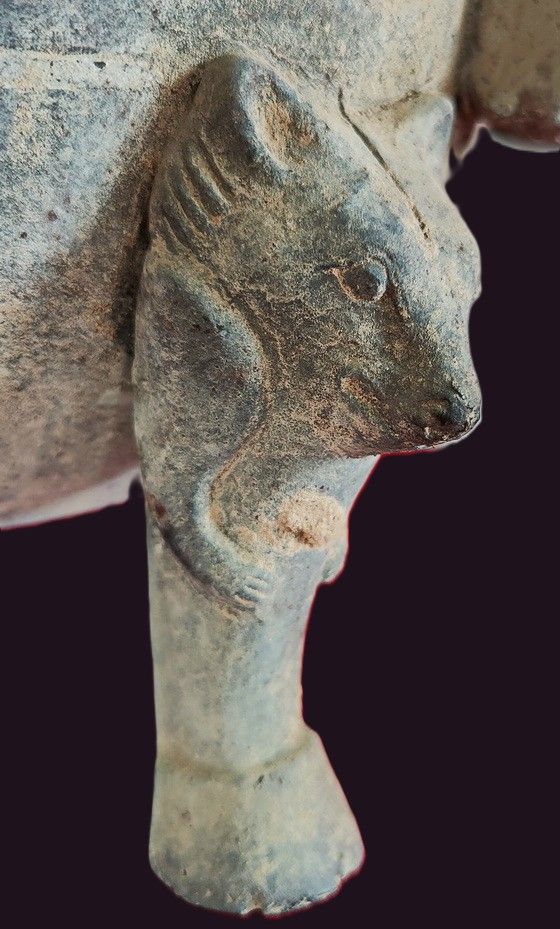
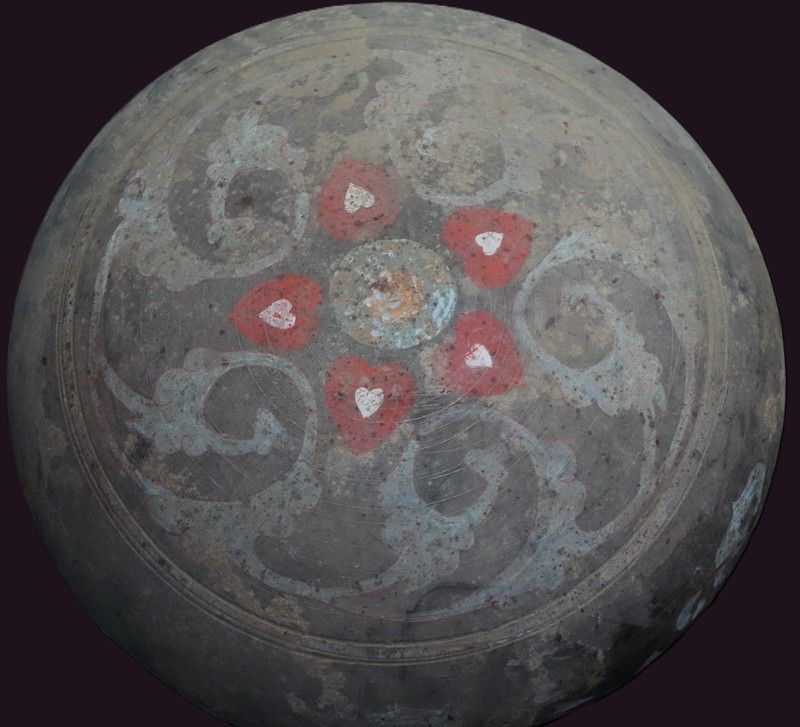
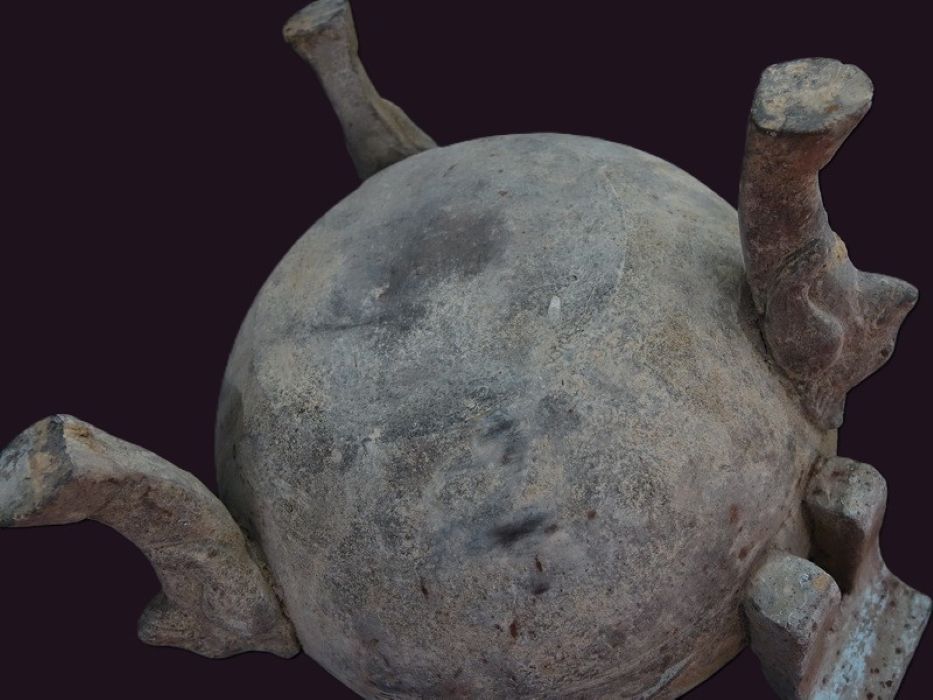
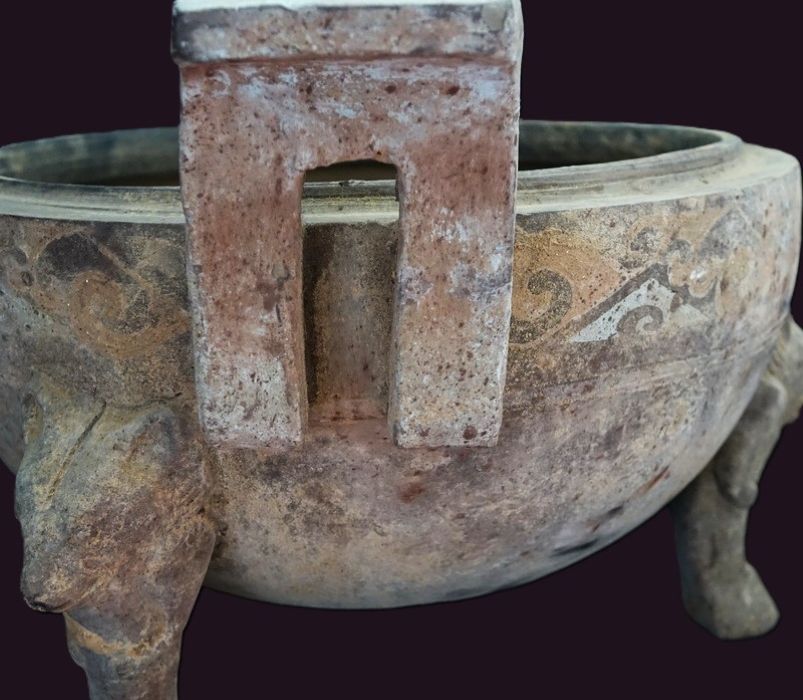
Despite two millennia spent underground, this piece retains much of its original detail. Three sturdy legs support the body, each featuring an outward-facing sculpted bear-like mask, a traditional protector motif common to Han pottery. A geometric pattern is cold-painted on the upper body in cream and red pigment, while the lid bears a painted floral design centred around five pink and white heart motifs.
SPECIFICATIONS:
- AGE: – Han Dynasty, 206 BC – 220 AD
- CONSTRUCTION: – Pottery
- HEIGHT: – 24cm
- DIAMETER: – 29cm
- WEIGHT:– 5.5 kg.
- #58
Chinese Han Dynasty Tripod Ding – Mingqi Pottery
Preservation Conditions: Wet vs. Dry Tombs
The survival of Han Dynasty mingqi, particularly their delicate cold-painted details, depends heavily on a stable tomb environment. Whether sealed dry or permanently waterlogged, consistent conditions preserve these fragile pieces, provided the tomb remains intact and undisturbed over time.
Dry Tombs: Desiccation and Pigment Survival
In arid regions or well-sealed high-ground tombs, the absence of moisture is the primary preservation mechanism. Low humidity prevents the expansion, contraction, and clay breakdown that occur when porous earthenware absorbs water. As a result, low-fired terracotta vessels retain their original shape and structural strength.
Unfired cold-painted pigments like the white geometric bands and pink-and-white floral motifs typical of Han pottery are extraordinarily delicate. In dry environments, these water-soluble mineral colours adhere securely to the clay body without dissolving or washing away.
Wet Tombs: Anaerobic Immersion
Waterlogged tombs, often found in low-lying areas or regions with high water tables, preserve artifacts through a process of oxygen deprivation rather than drying. Once a tomb chamber fills with water and exhausts its oxygen supply, microbial activity drops to near zero. This halts the biological decay of organic materials and prevents chemical oxidation.
Earthenware or pottery that remains continuously submerged without exposure to flowing water reaches chemical equilibrium with its environment. Without turbulent currents or fluctuating water levels, delicate details like moulded bear-head shapes such as those on this mingqi remain relatively sharp and intact.
While the fired ceramic body of Han dynasty mingqi pottery survives submersion well, unglazed, post-firing pigments often dissolve or flake away into the surrounding water over centuries.