




Rare 17th c Mrauk-U Sanghadisesa Padani Palm Leaf Manuscript
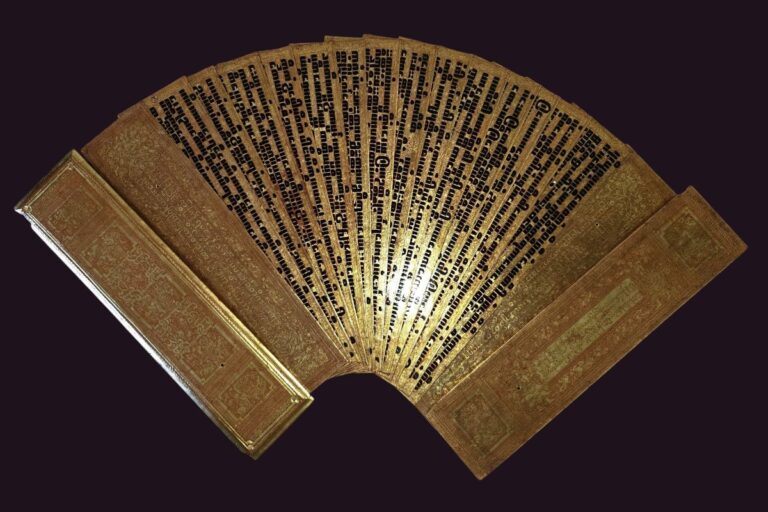
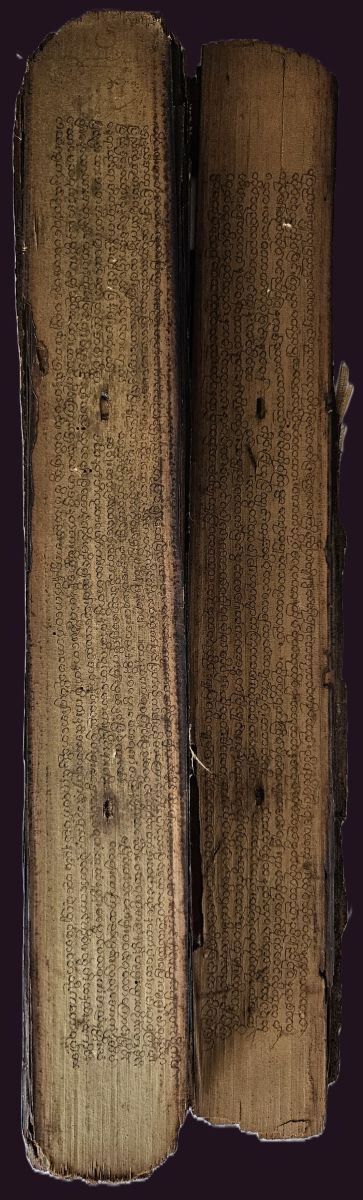
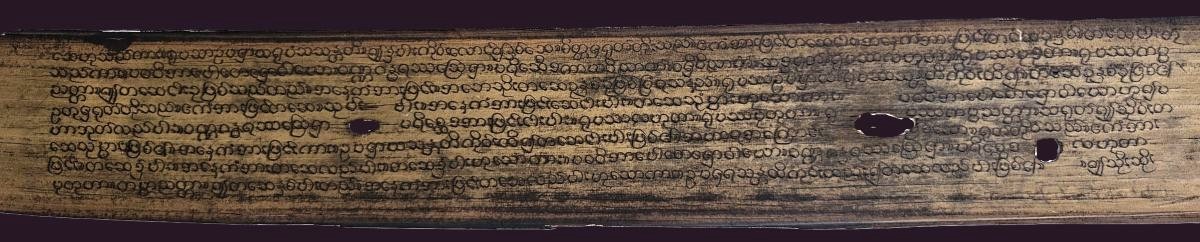
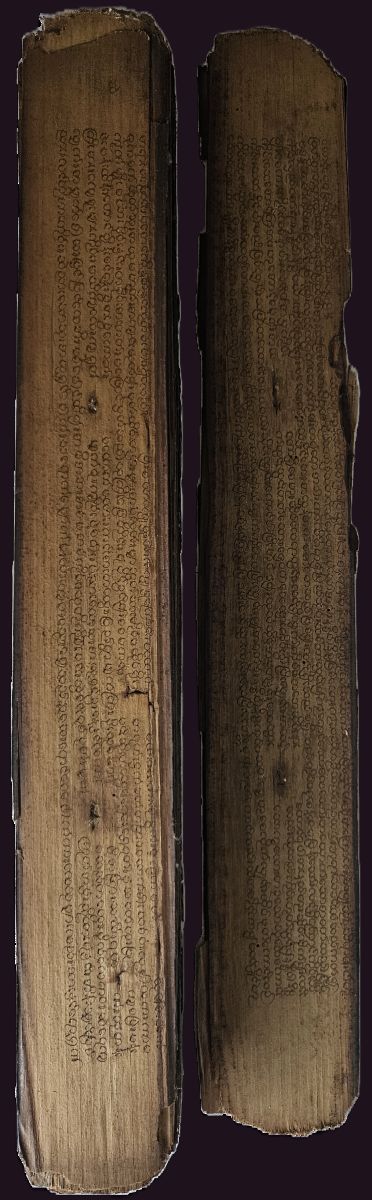
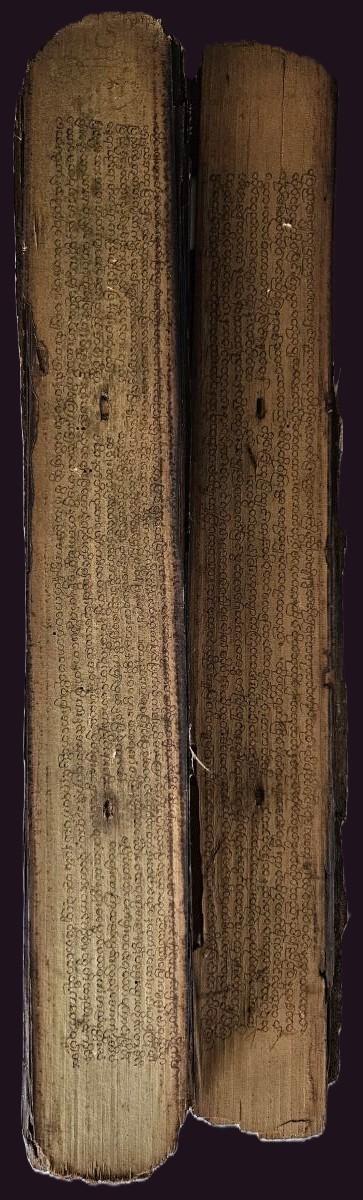
This is an authentic 17th–18th century Sanghadisesa Padani talipot palm-leaf manuscript from Mrauk-U. The script across these 47 leaves features the rare Pali-Burmese Saṅghadisesa Padanīi Vinaya code of conduct, a specialized legal handbook detailing monastic rules and regulations for the Sangha.
We acquired this artifact in Mrauk-U in 2012. Mrauk-U is the former capital of the independent Arakanese Kingdom. While the market is populated with 19th-century palm leaf manuscripts from the Konbaung Dynasty’s workshops in Upper Burma, authentic material from the coastal Arakanese region is scarce. The geopolitical upheavals following the Konbaung annexation of Arakan in 1784, coupled with subsequent colonial-era conflicts, resulted in the widespread destruction of regional monastic libraries (pitakat-taik). This specimen represents a rare survival of pre-colonial West-Burmese Buddhist epigraphy and material culture.
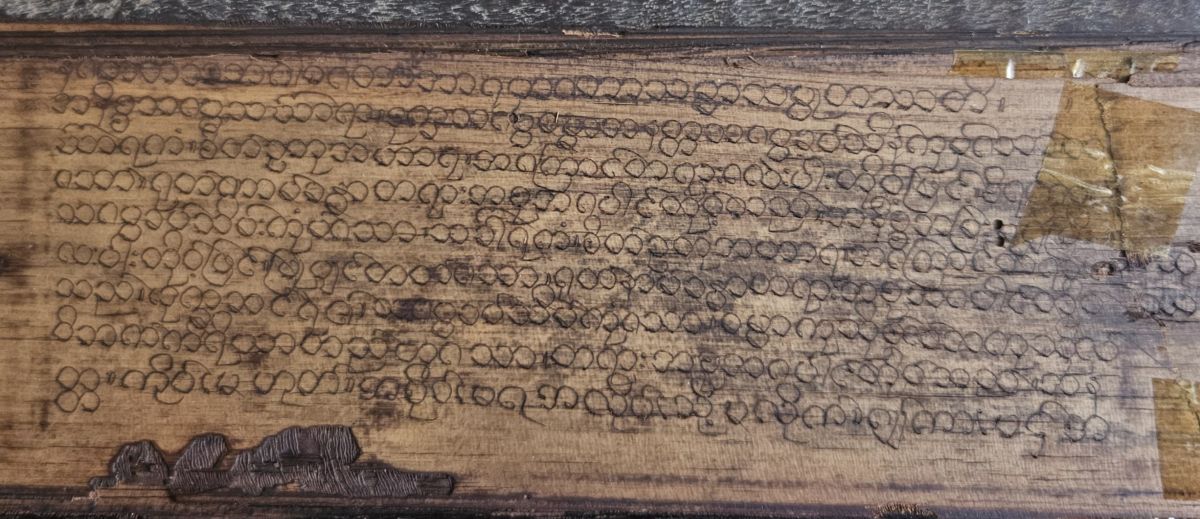
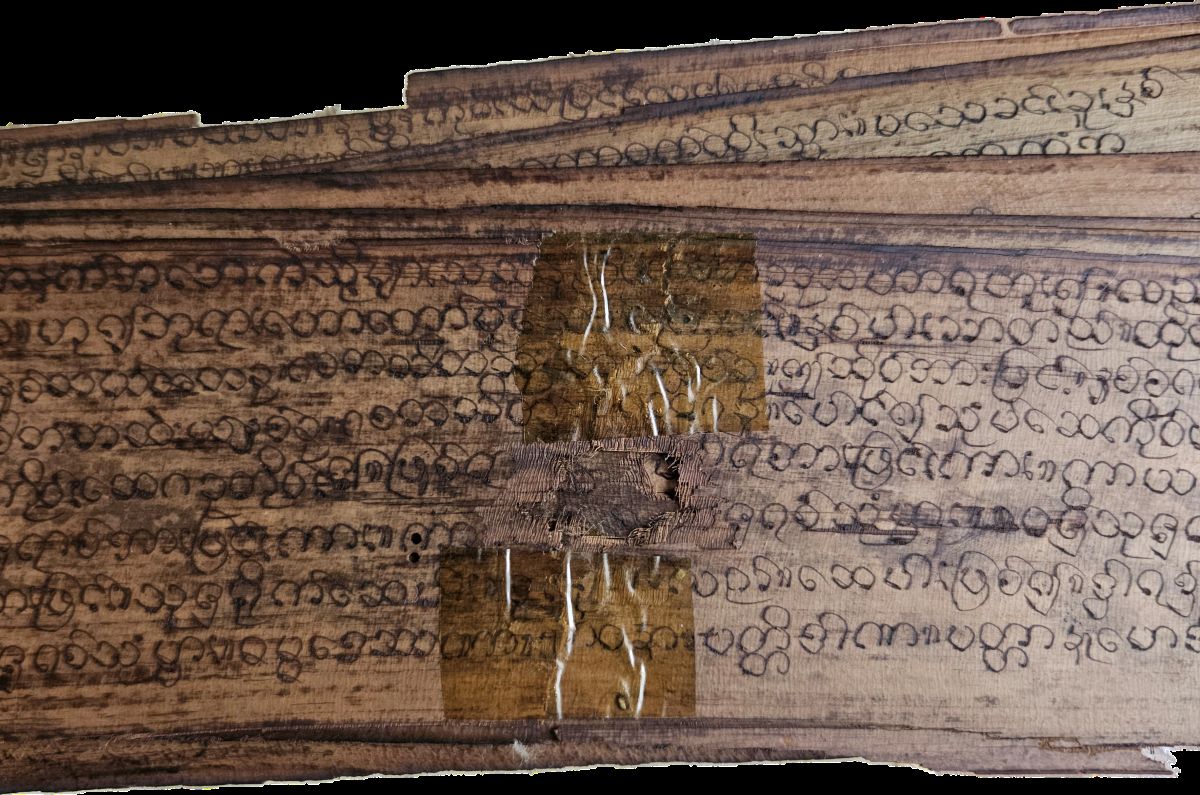
The text is executed using traditional incised scribal technique rather than surface pigmentation. The characters were engraved into the prepared Corypha (talipot) palm-leaf fiber using a fine steel stylus (kanyit). The incised grooves were subsequently filled with a traditional mixture of carbonaceous soot and natural wood-oil (nan-man-si).
SPECIFICATIONS:
- AGE: Late Mrauk-U period or early Post Mrauk-U period (ca. Late 17th – early 18th century)
- FOLIOS: 47
- LENGTH: 50 cm
- PAGE WIDTH: 6.5 cm
- CONDITION: See state of preservation below
- #28
Rare 17th c Mrauk-U Sanghadisesa Padani Palm Leaf Manuscript
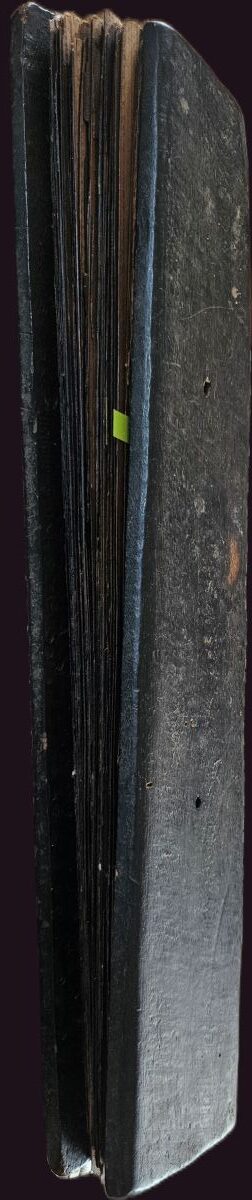
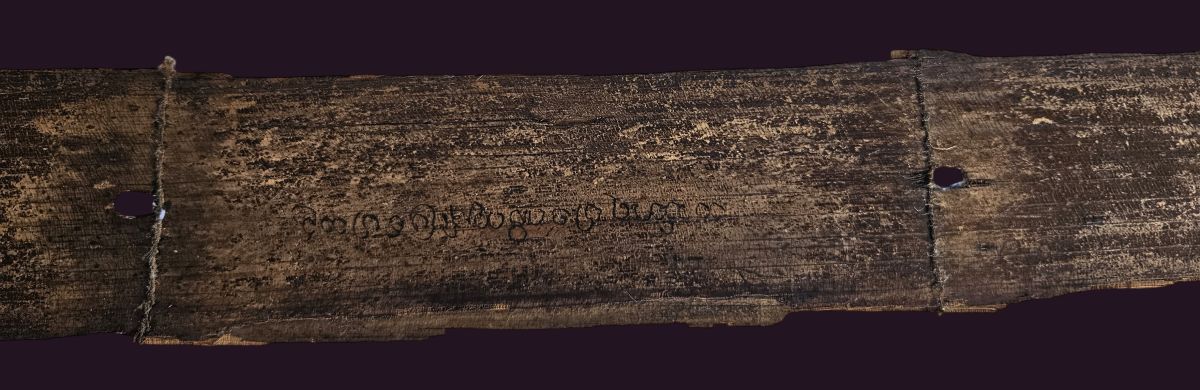
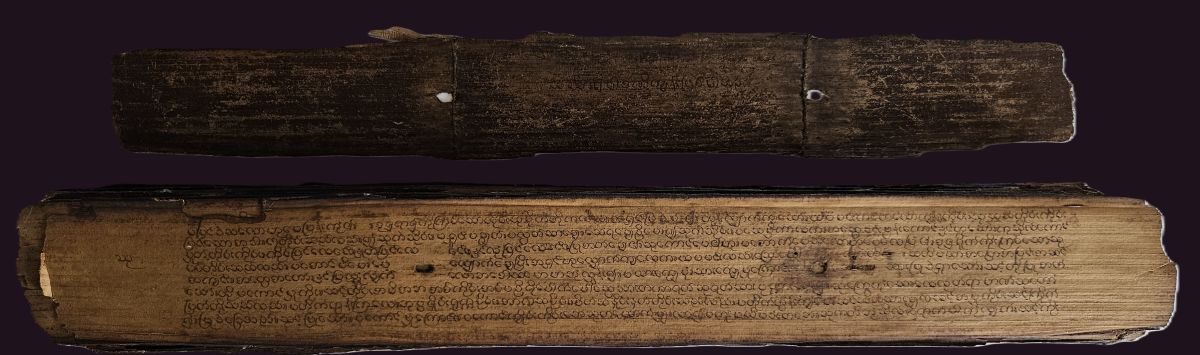
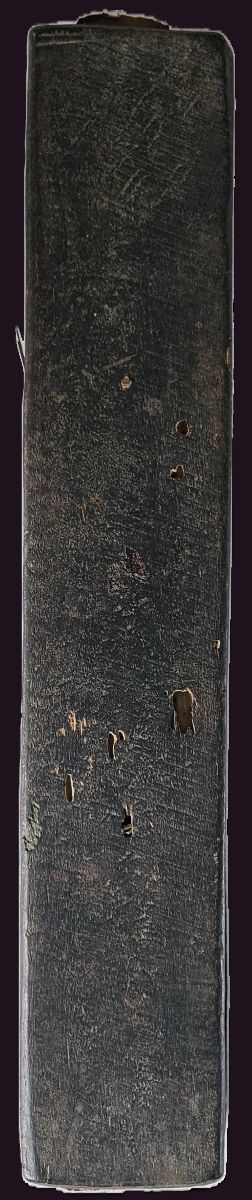
These palm leaves containing the Sanghadisesa Padani Viniya texts are sandwiched between plain, unlacquered hardwood protective covers (kyam-bhōn). The covers lack the heavy lacquer, glass inlay, and gilding typical of late-period royal commissions, pointing instead to localized monastic utility. Coarse tool marks on the outer faces indicate the planks were split and planed using basic hand tools. The alignment of the cord-holes (sa-kyō-pauk) across both the wood covers and the leaves confirms that the entire bundle was drilled and processed as a single unit during its original assembly.
STATE OF PRESERVATION:
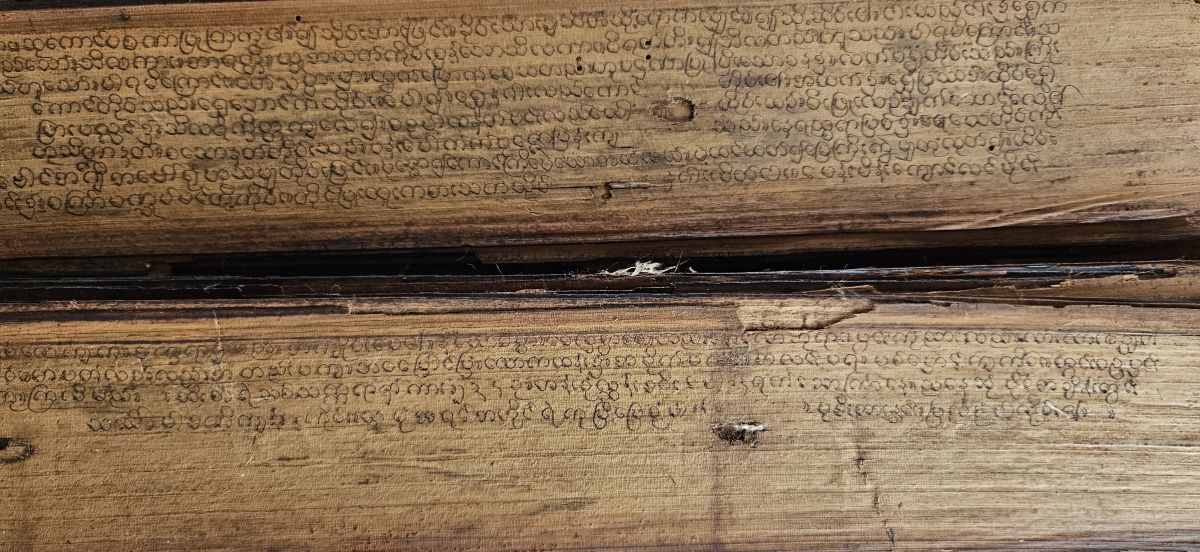
The palm-leaf substrate exhibits advanced cellulose degradation, resulting in significant structural brittleness. The longitudinal splitting and frayed, ragged edges at the leaf boundaries are driven by centuries of hygroscopic expansion and contraction. This natural weathering was accelerated by the extreme relative humidity fluctuations characteristic of the Bay of Bengal’s coastal monsoon climate.
This palm leaf manuscript is written in a dense, uniform cursive variant of the Burmese script, arranged in an eight line horizontal layout. The text utilizes the Nissaya format, a scholarly structural method where original Pali passages are systematically followed by vernacular Burmese translations and word-for-word glosses.
Damage: One page with half the page missing and two pages that have been held together with tape (we purchased it like this). A few minor worm holes on the first leaf and wooden end covers.
Interesting information related to Palm Leaf manuscripts by Noel F Singer