





Antique Burmese Bronze Buddha Triad Shrine
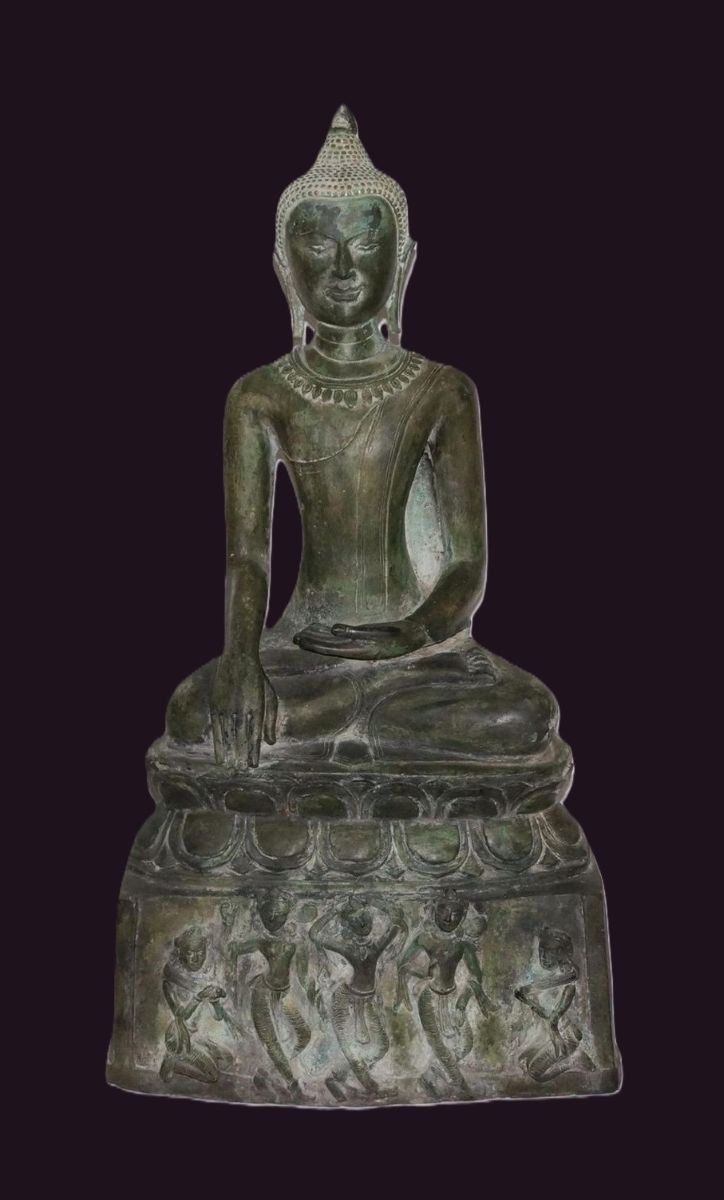
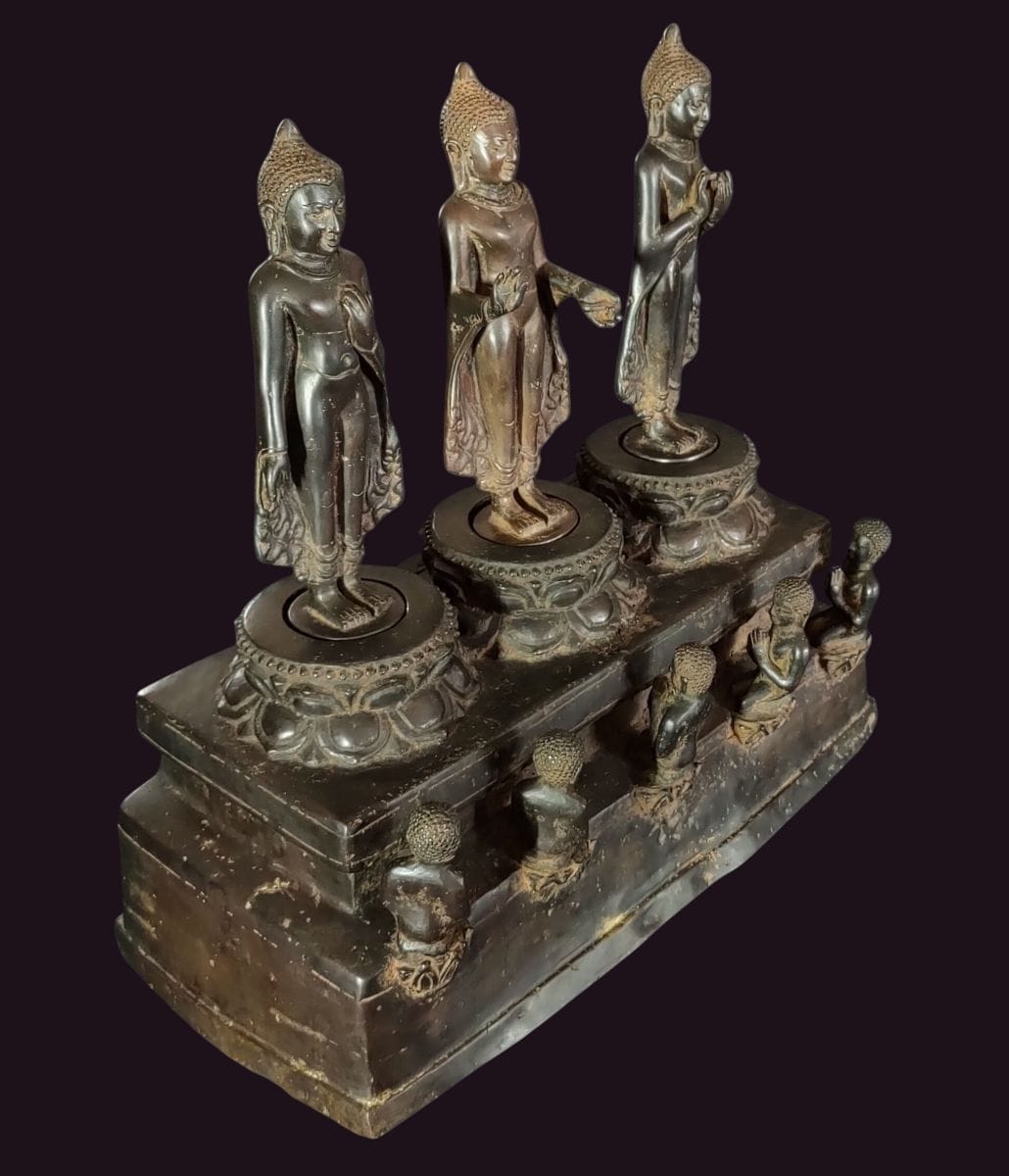
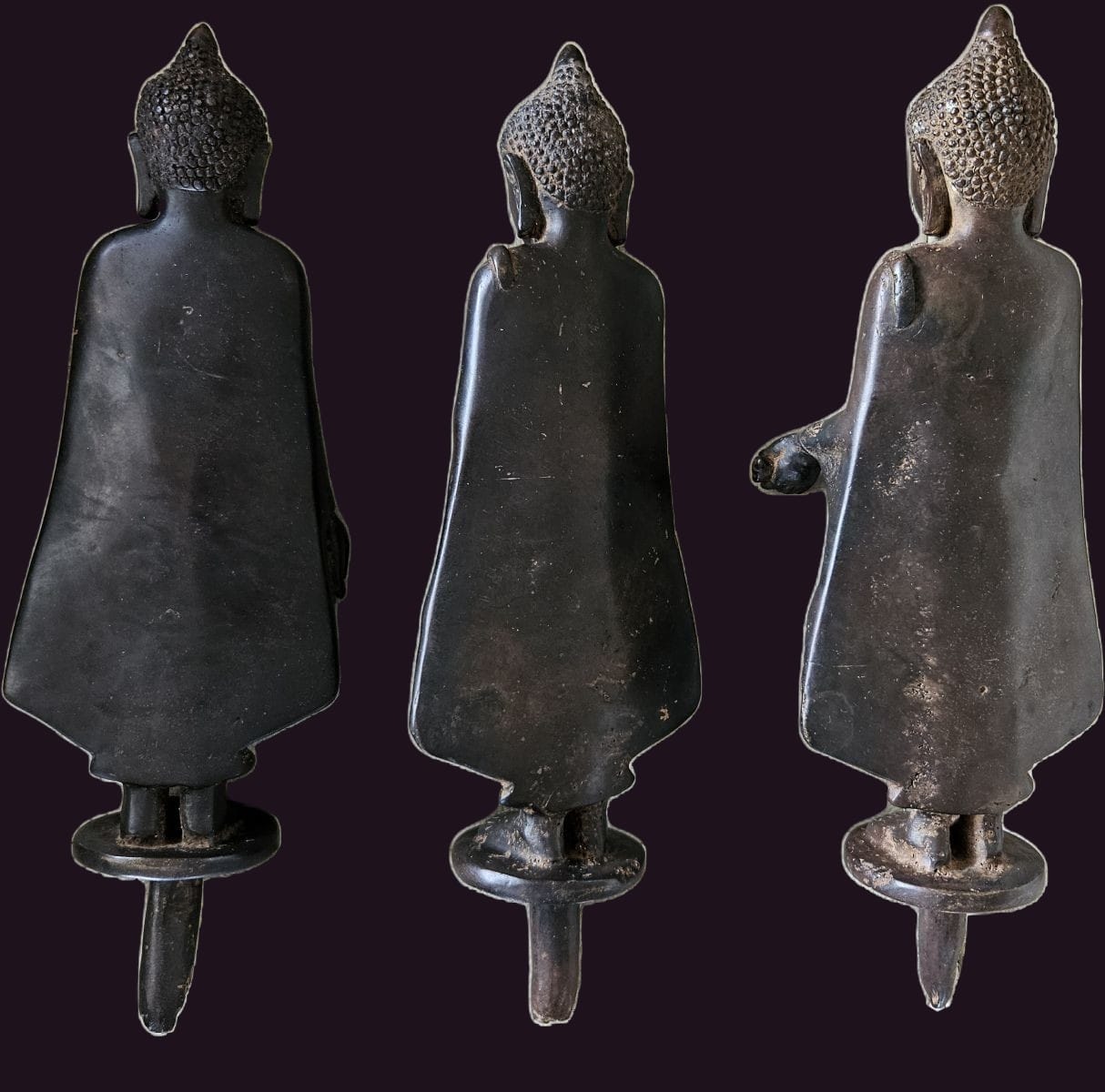
This rare antique Burmese bronze Buddha Triad Shrine reflects the classic iconography of the Pagan period (11th–13th century). The three standing figures feature the distinct conical, pointed usnisha and tight flame finial derived from Pala-Indian prototypes. Their translucent, body-hugging robes (sanghati) flare symmetrically at the lower hem, a hallmark of early Pagan standing bronzes.
First Buddha statue: The first statue features its right hand in the Varada Mudra, characterized by a lowered arm and an outward-facing palm. This is the classic gesture of compassion, generosity, and the granting of wishes. In some artistic interpretations, the hand position echoes a variation of the Vajrapradama style, with the palm turned inward near the heart region. A left hand oriented toward the chest is a distinctive feature frequently documented in Burmese Buddhist art.
Second Buddha Statue: Second Buddha Statue’s right-hand gesture is in Abhaya Mudra, the gesture of fearlessness with the left hand holding what may be the myrobalan fruit, a small fruit thought to have medicinal properties. In myth and legend this fruit was given to the Buddha by the Hindu god Indra soon after attaining enlightenment.
Third Buddha Statue: The third statue is posed in the Dharmachakra Mudra, the gesture of teaching and cosmic order. Representing the turning of the wheel of Dharma, this mudra commemorates one of the most pivotal moments in the Buddha’s life: his delivery of the first sermon to his disciples in the deer park at Sarnath.
SPECIFICATIONS:
- AGE: Stylistically Pagan – pre 17th century
- HEIGHT: – 47 cm
- LENGTH: – 46 cm
- DEPTH: – 22 cm
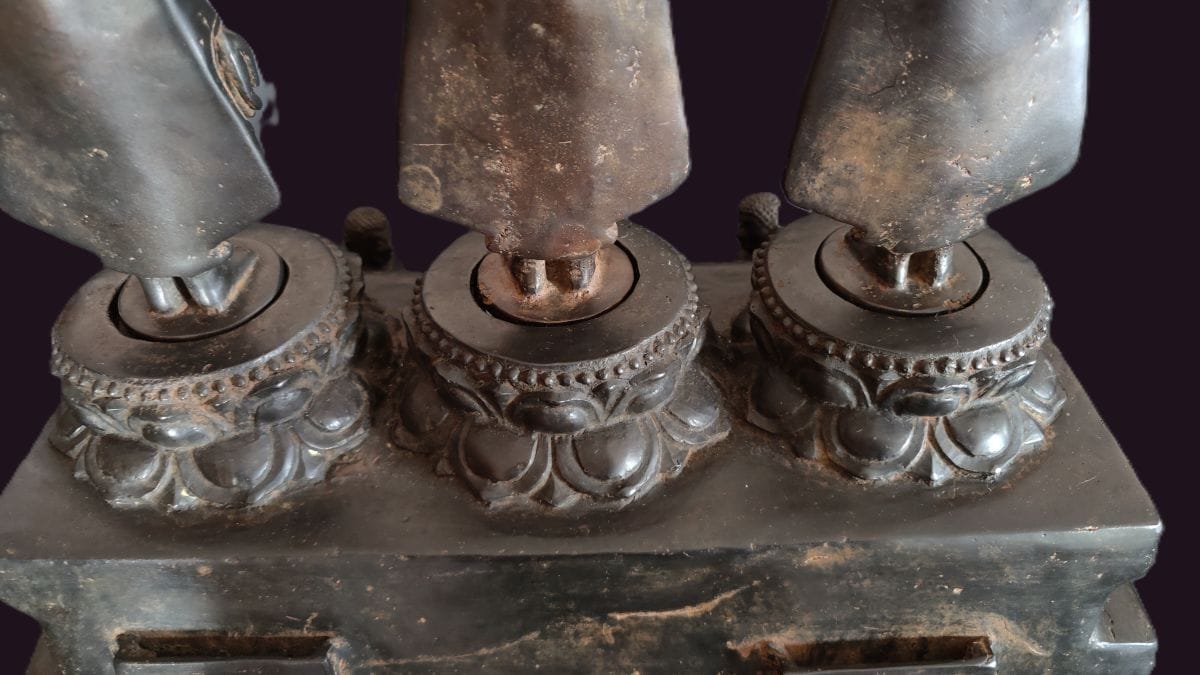
- WEIGHT: – 22.05 kg (each statue approx. 1.45 kg)
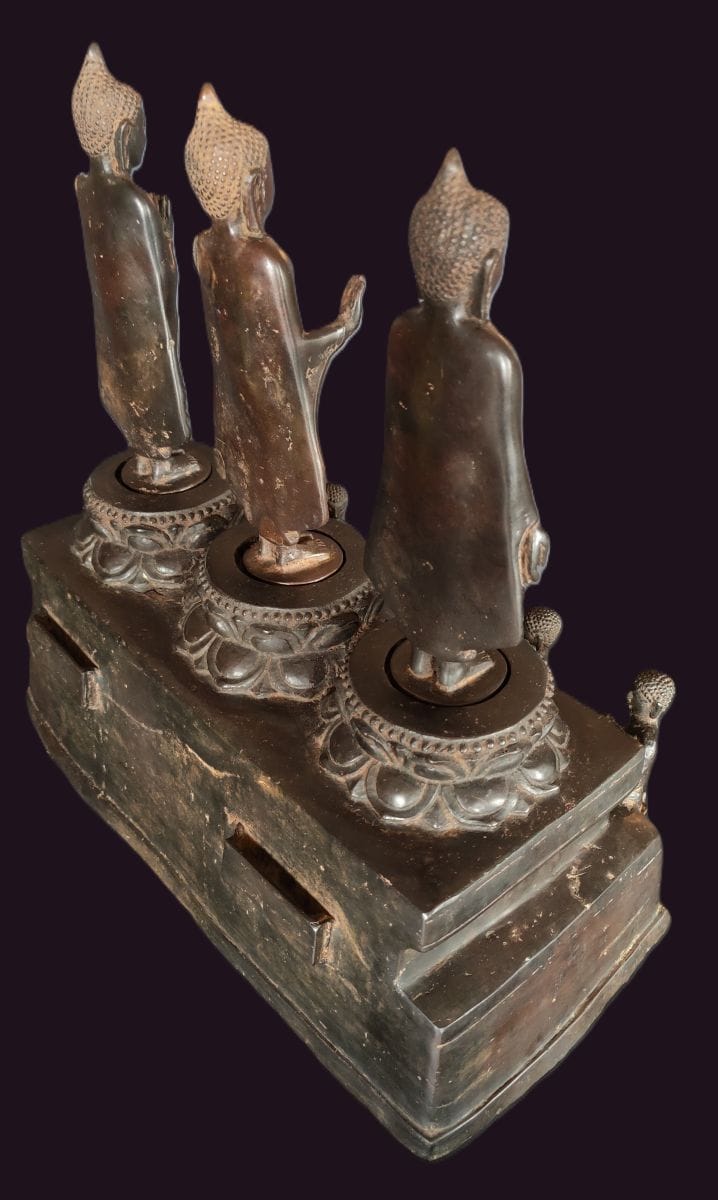
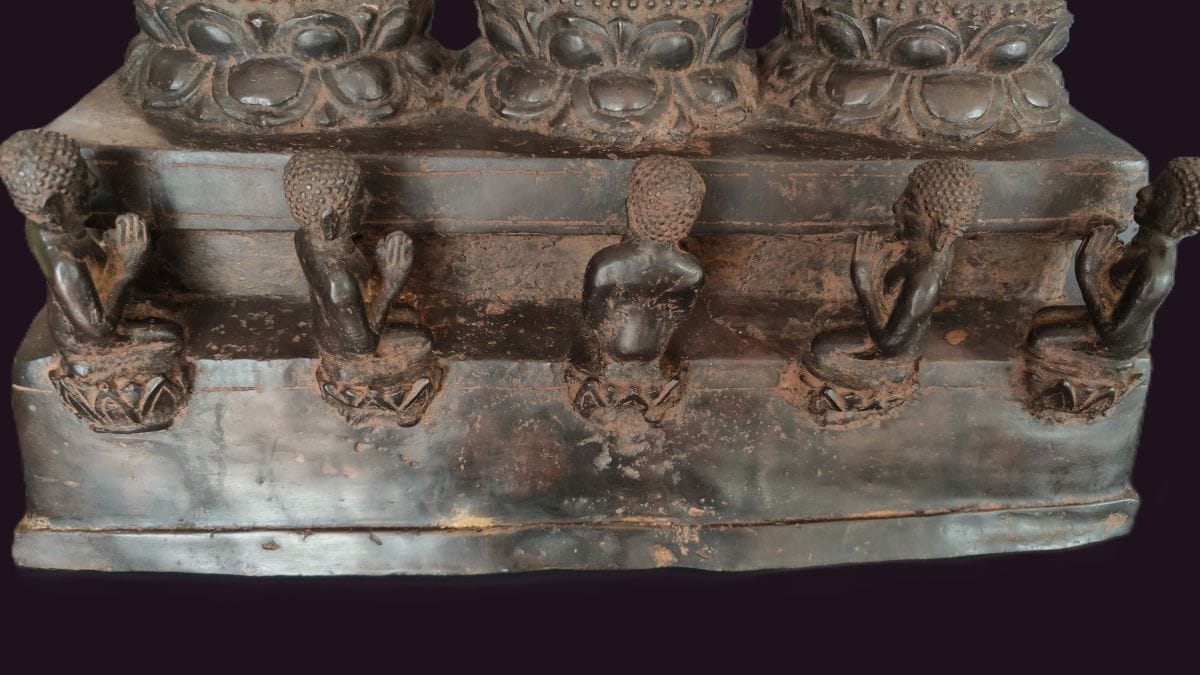
- CONDITION: Two slots at the back of the shrine would indicate that it once held a reredos. Metal layering (age, environmental or casting related) across the front, behind the kneeling monks with loss and impact damage to the pedestals on which they are kneeling.
- #124
Antique Burmese Bronze Buddha Triad Shrine
Below the main triad of standing Buddha statues are five kneeling disciples depicted in prayer, likely represent the Pancavaggiya, the Buddha’s first five disciples or possibly representative of his five closest disciples Sariputta, Maha Moggallana, Ananda, Maha Kassapa and Upali.
This Burmese bronze triad shrine demonstrates the enduring architectural legacy of the Pala period (8th–12th century Northeast India), which heavily shaped early Pagan-era art in Myanmar. The stepped pedestal and raised lotus seats derive directly from Indian/Hindu iconographic altars, adapted here into a distinctly Burmese Theravada composition.