Mandalay Royal King Buddha – 19th Century
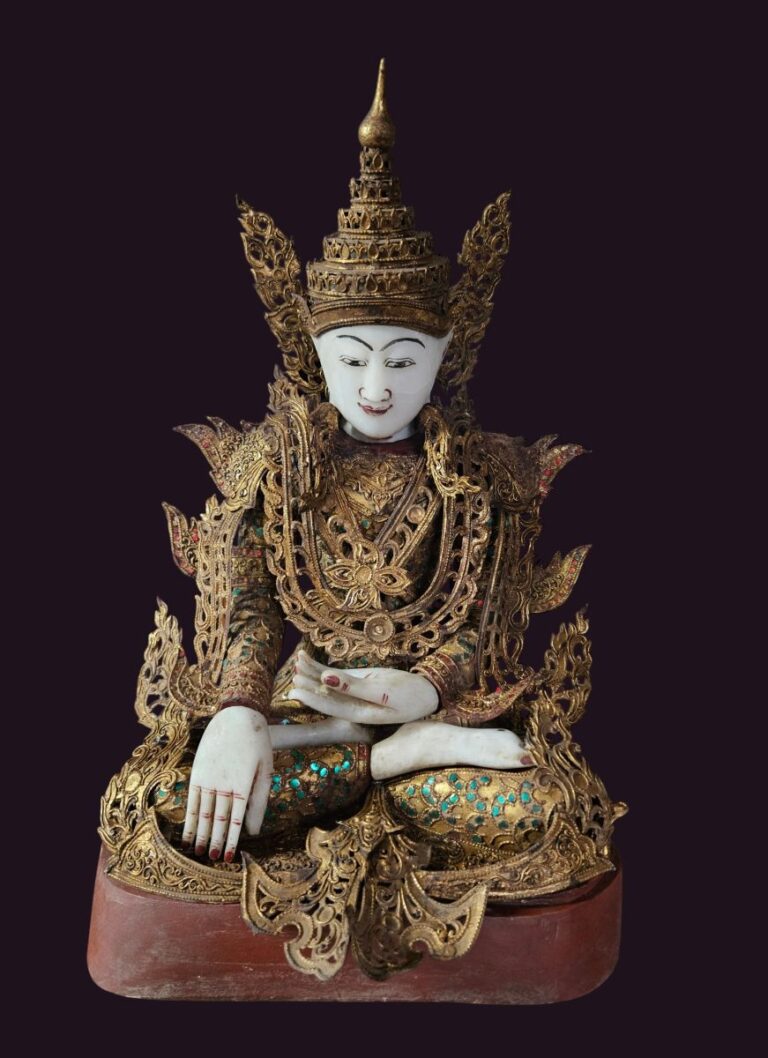
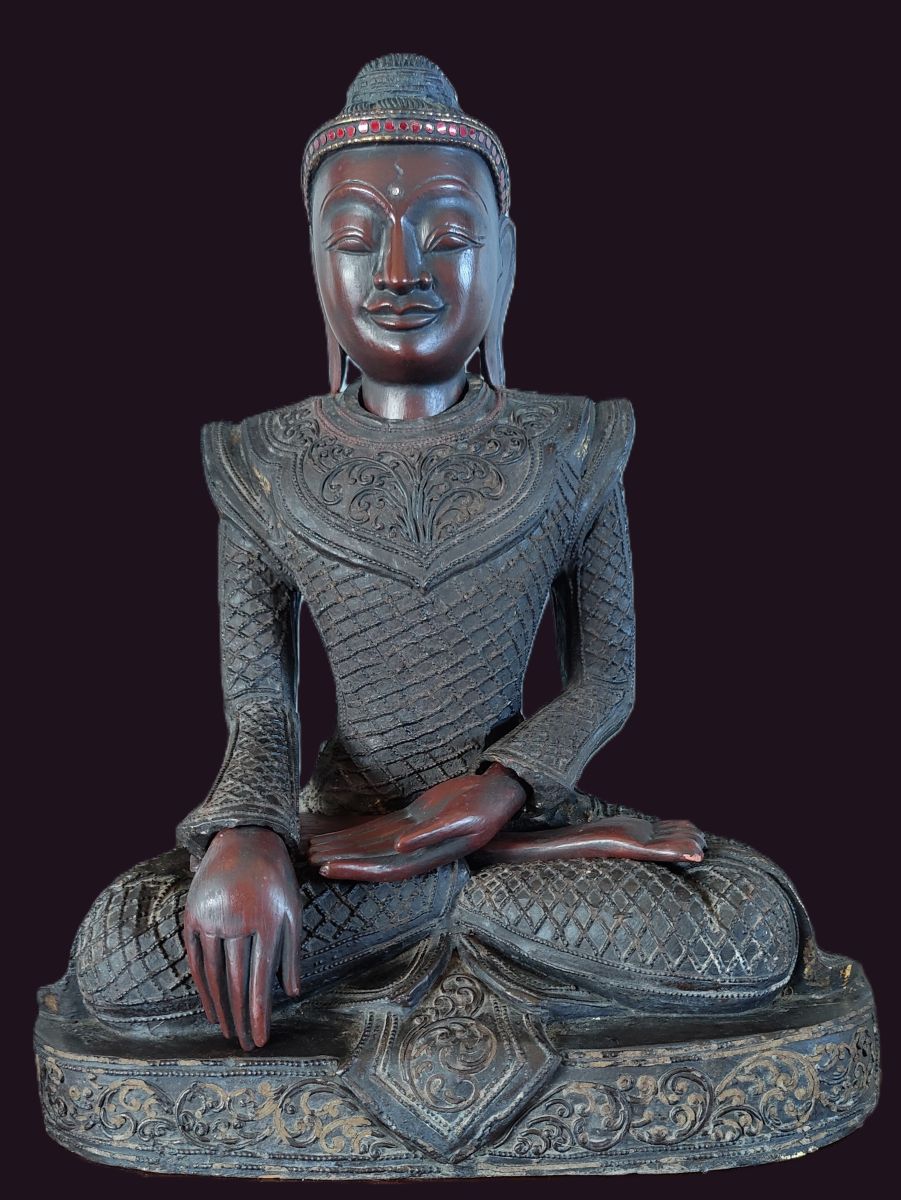
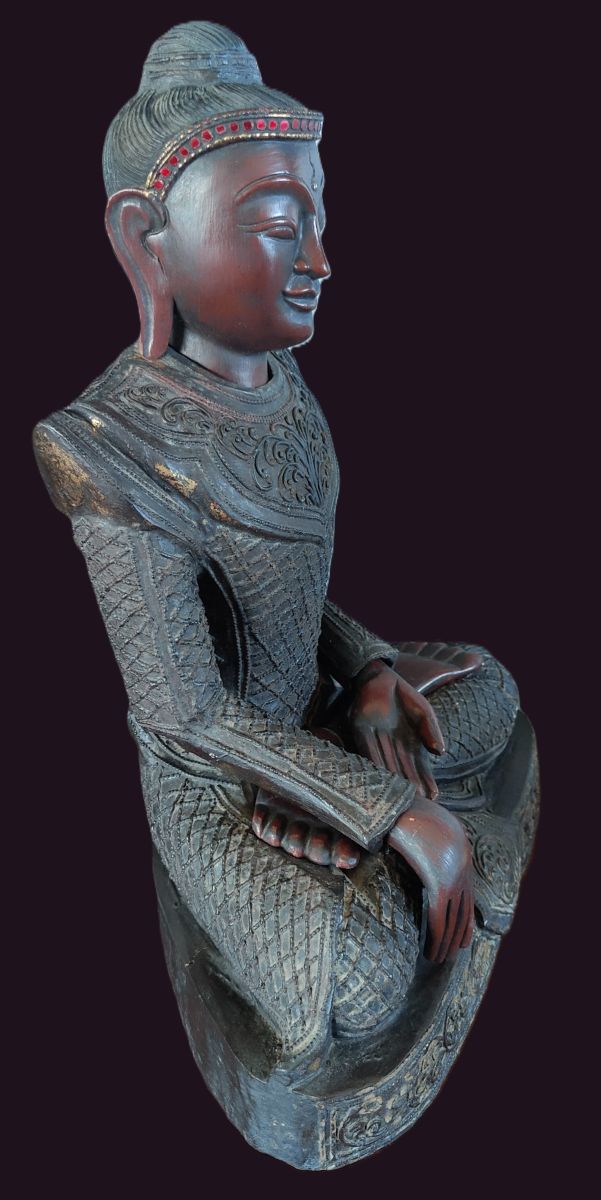
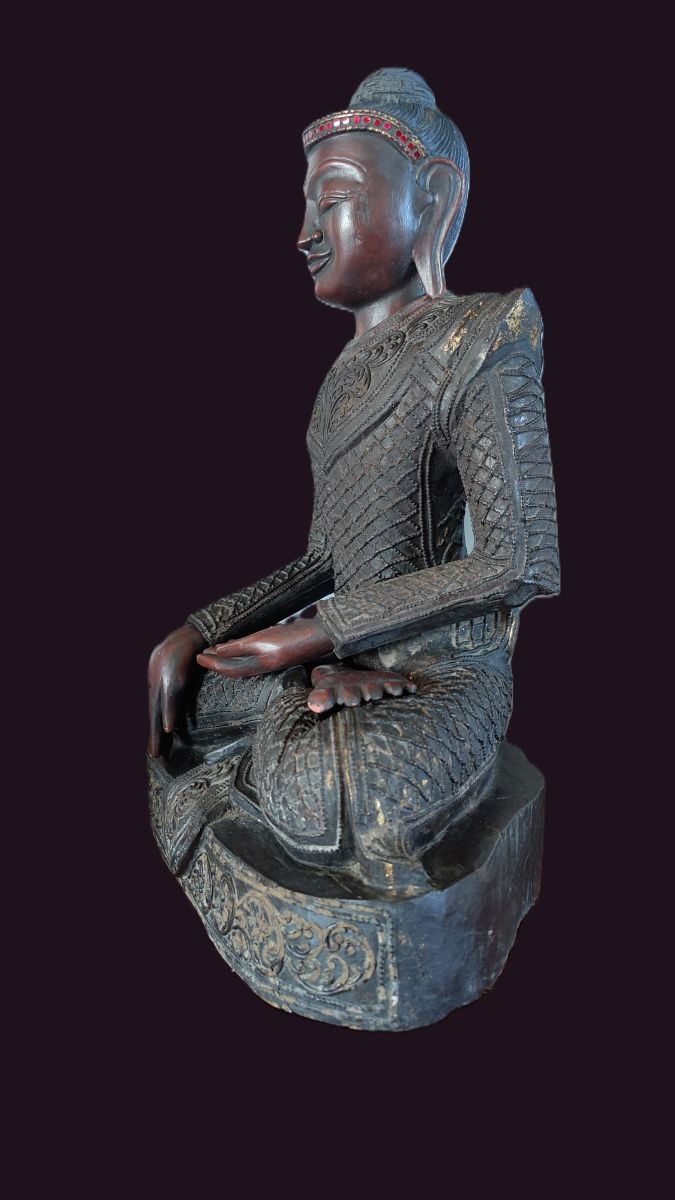
This Mandalay Royal King Buddha – 19th Century wood sculpture depicts the Buddha in the Royal King (Jambhupati) iconographic tradition, seated in the Bhumisparsha Mudra. This specific “earth-touching” gesture signifies the historical moment of enlightenment, wherein the Buddha’s right hand extends over the knee to touch the pedestal, summoning the earth goddess to witness his spiritual triumph. The left hand remains resting in the lap, palm oriented upward in a meditative posture.
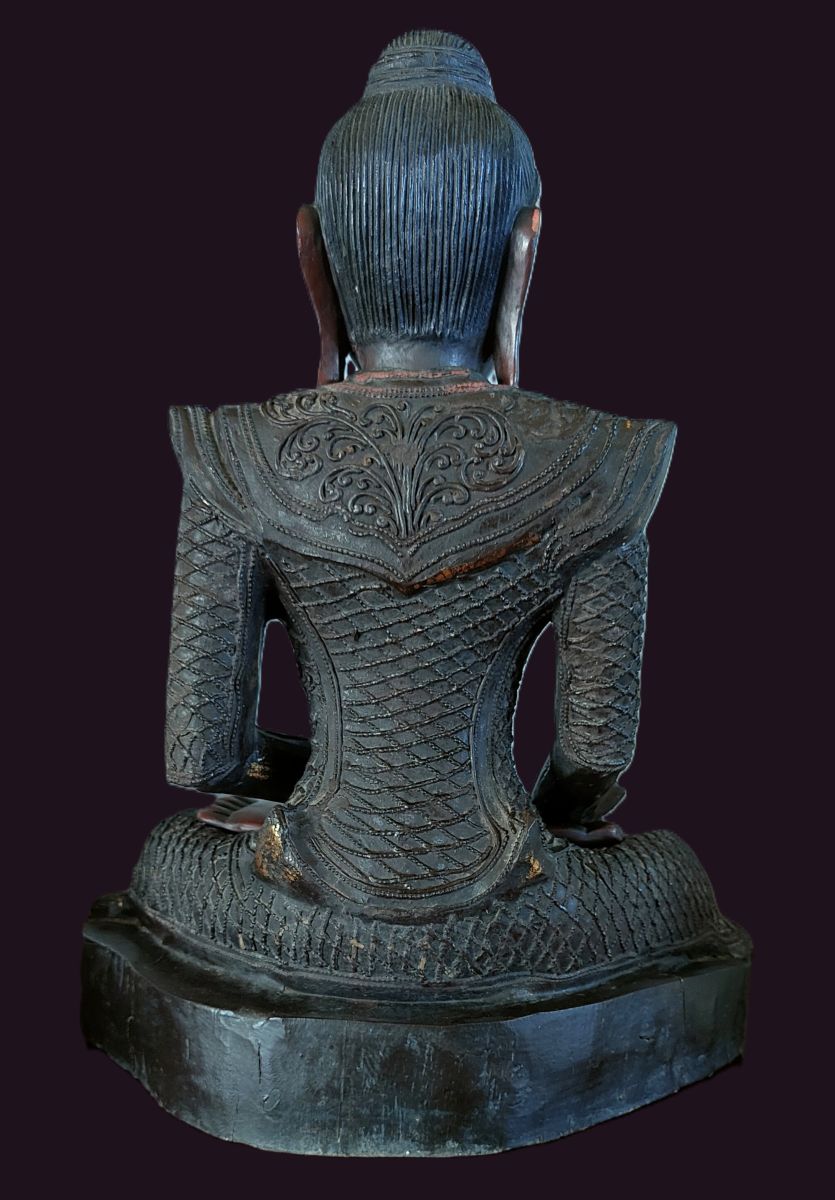
The figure is elaborately adorned with traditional Thayo lacquer relief, featuring a fish-scale motif that represent the ceremonial robes. Vestiges of the original gilding are still visible across the surface, complemented by a horizontal band of red glass mosaics referred to as hman-zi-shwe-cha adorning the forehead.
Thayo scrollwork characterizes the borders of the robe and the front rof the pedestal.
SPECIFICATIONS:
- AGE: – 19th Century
- HEIGHT: – 54cm
- WIDTH: – 41cm
- DEPTH: – 23cm
- WEIGHT: – 9 kg.
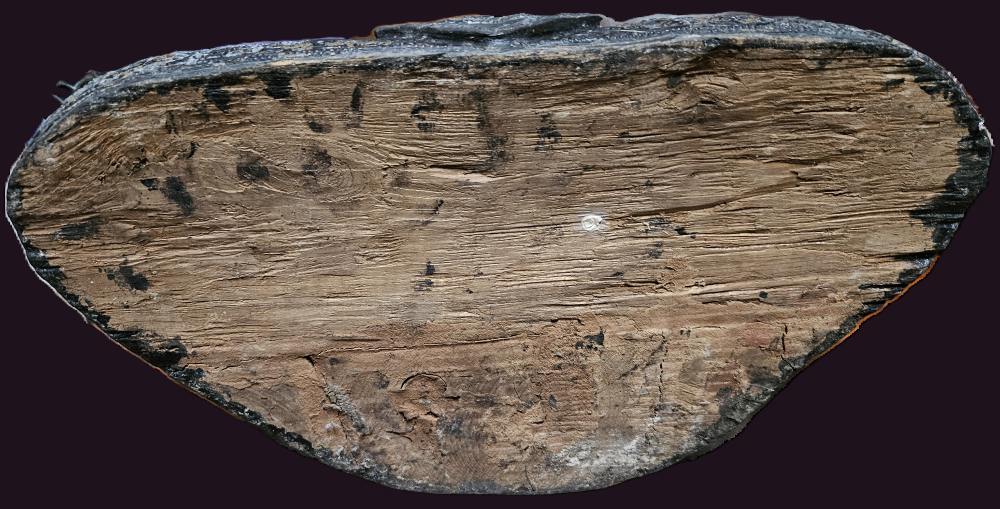
- DESCRIPTION: Age related wear to thayo lacquer, traces of gilding. Head, hands and feet are separate pieces, some small chips to lacquer on tips of ears and finger. Hands, feet and head are separate pieces and removable.
- #011
Mandalay Royal King Buddha – 19th Century
This Mandalay period Buddha statue is an unusual representation of the Buddha in that he is represented here with a dark skin colour. While the Tipitaka details thirty-two marks of a Great Man (Mahapurisa), it describes the Buddha’s complexion as “golden-hued” or like “bright gold”. The dark or black appearance found in specific 19th-century Mandalay or Shan statues is rarely a literal attempt to depict dark skin; rather, it often results from the lacquer process.
These are mythic attributes, not ethnographic ones. When “golden skin” appears in later texts, it is metaphorical, symbolising radiance, purity, and merit, not literal pigmentation. As a historical person born in the Sakya clan of the Himalayan foothills (present‑day Nepal/India), he would have had the complexion typical of people of that region, but this is inferred anthropology, not scriptural documentation.
Cultural and Artistic Contexts
The “Forest Tradition” Influence: Some scholars suggest that darker statues represent the Buddha during his years of asceticism or his life as a wandering teacher under the sun.
This statue features a modular construction where the head, hands and feet were carved separately and slotted into the body. This technique allowed for finer detail in the extremities, though it created points of vulnerability where lacquer frequently chips or wears away, as seen in the neck area of this statue. The loss of lacquer on the neck post is a common feature where the friction of the removable head has abraded the protective coating over decades.