65cm Antique Burmese Pagan Style Wood Buddha
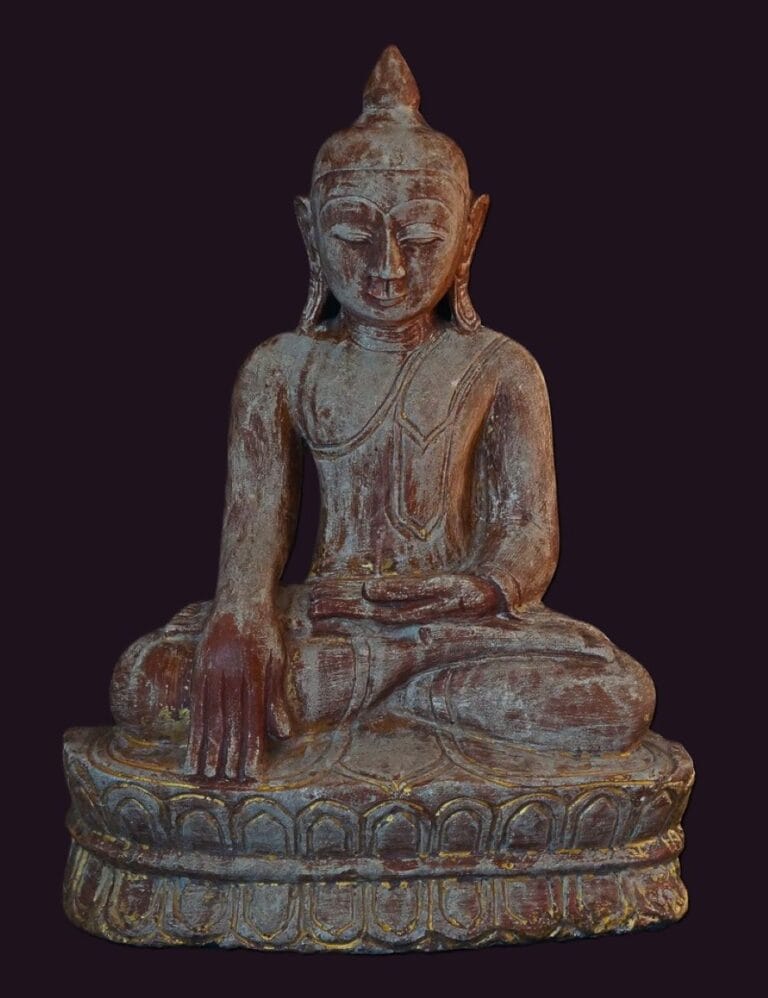
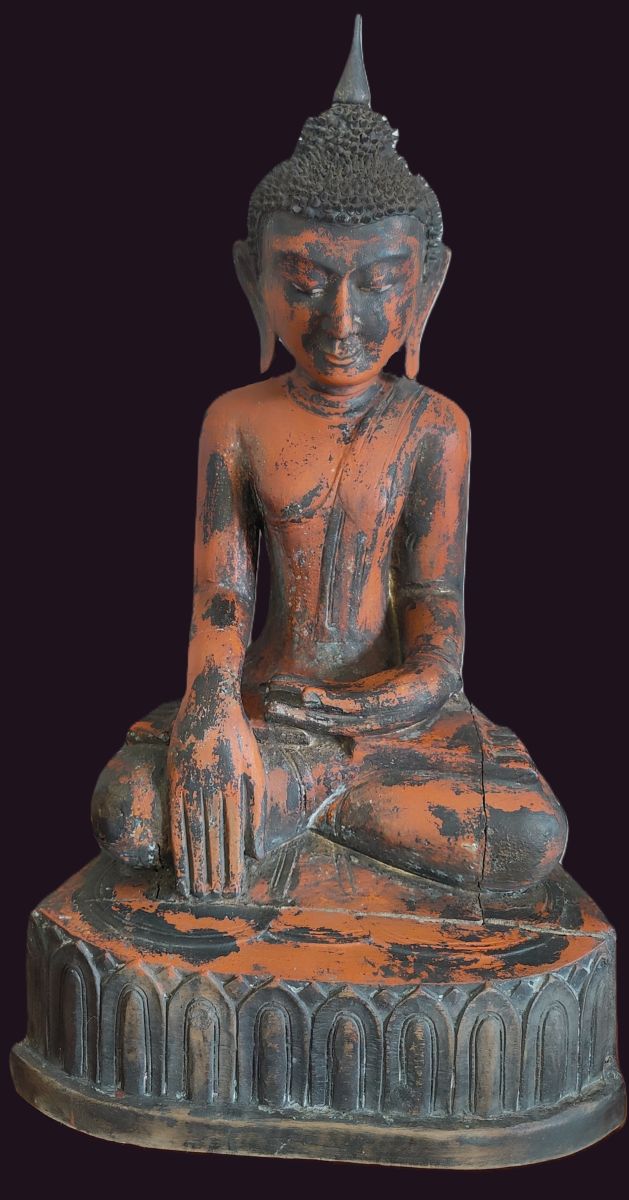
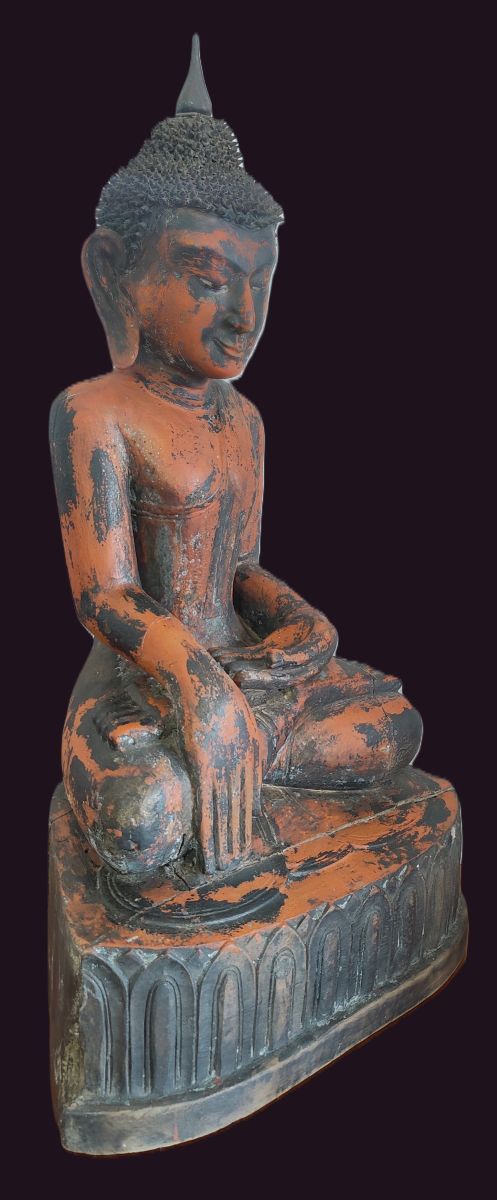
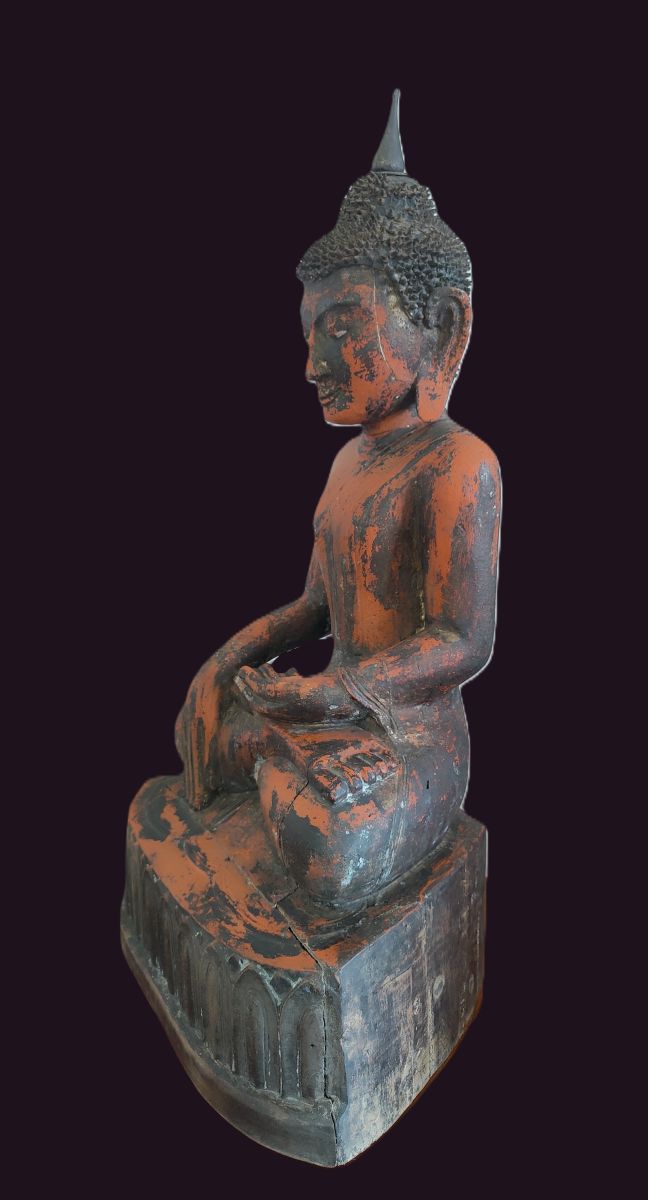
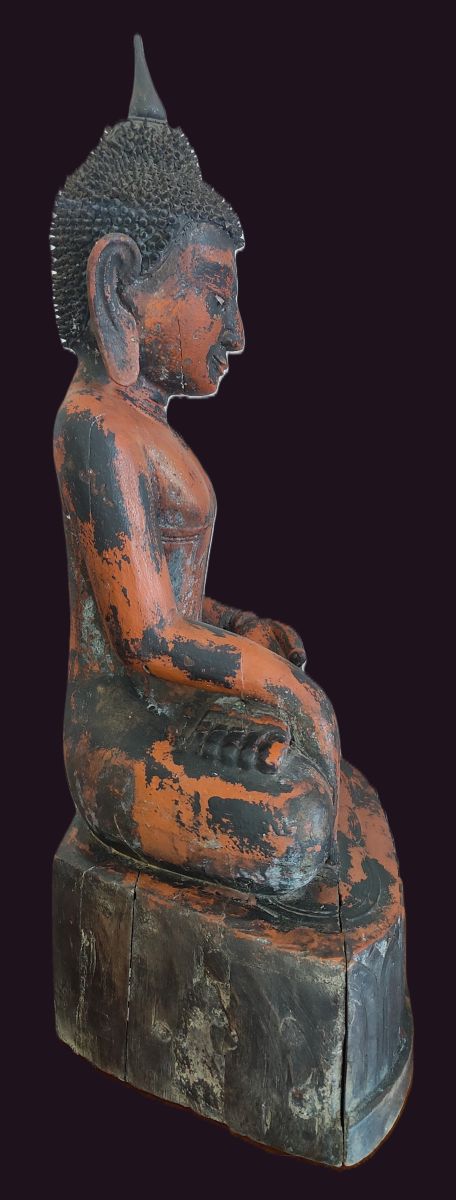
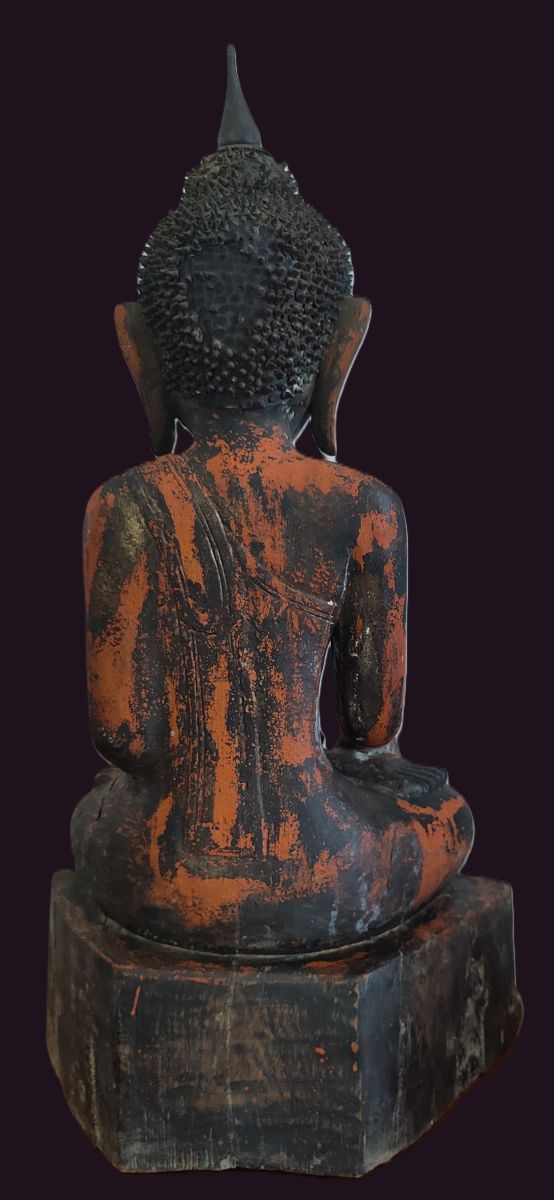
65cm Antique Burmese Pagan style wood Buddha statue rendered in the timeless Bagan (Pagan) tradition showing traditional Burmese joinery of the era.
Unlike modern mass-produced carvings, this piece utilizes a sophisticated composite construction designed to withstand the “breathing” of tropical hardwoods over centuries.
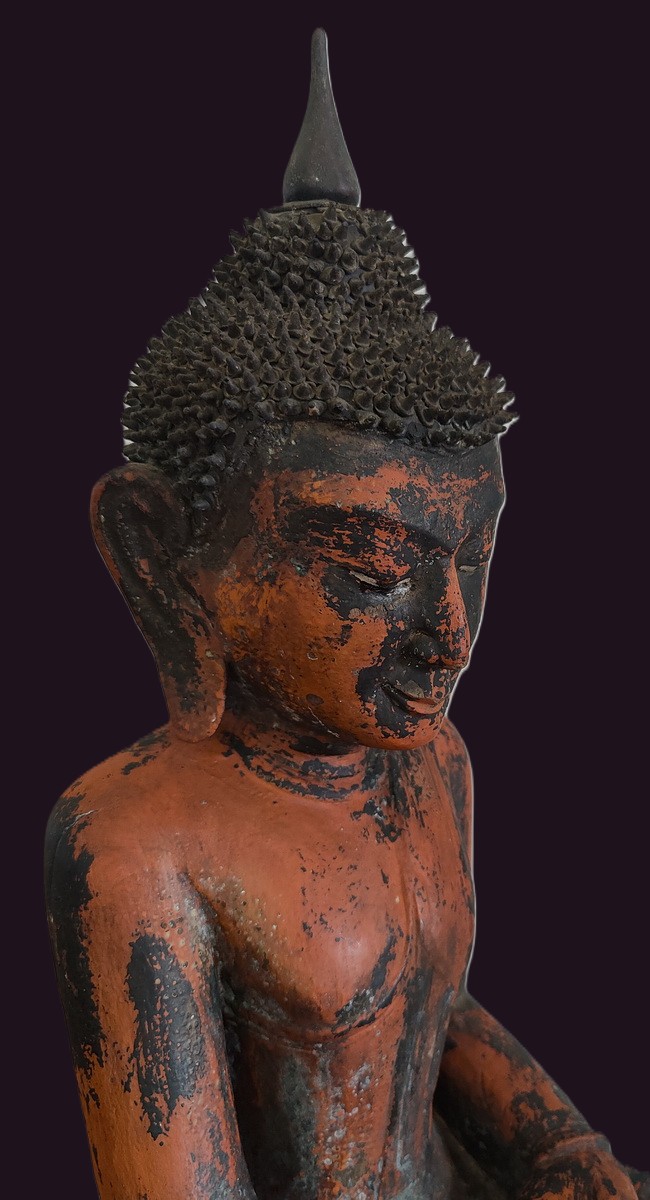
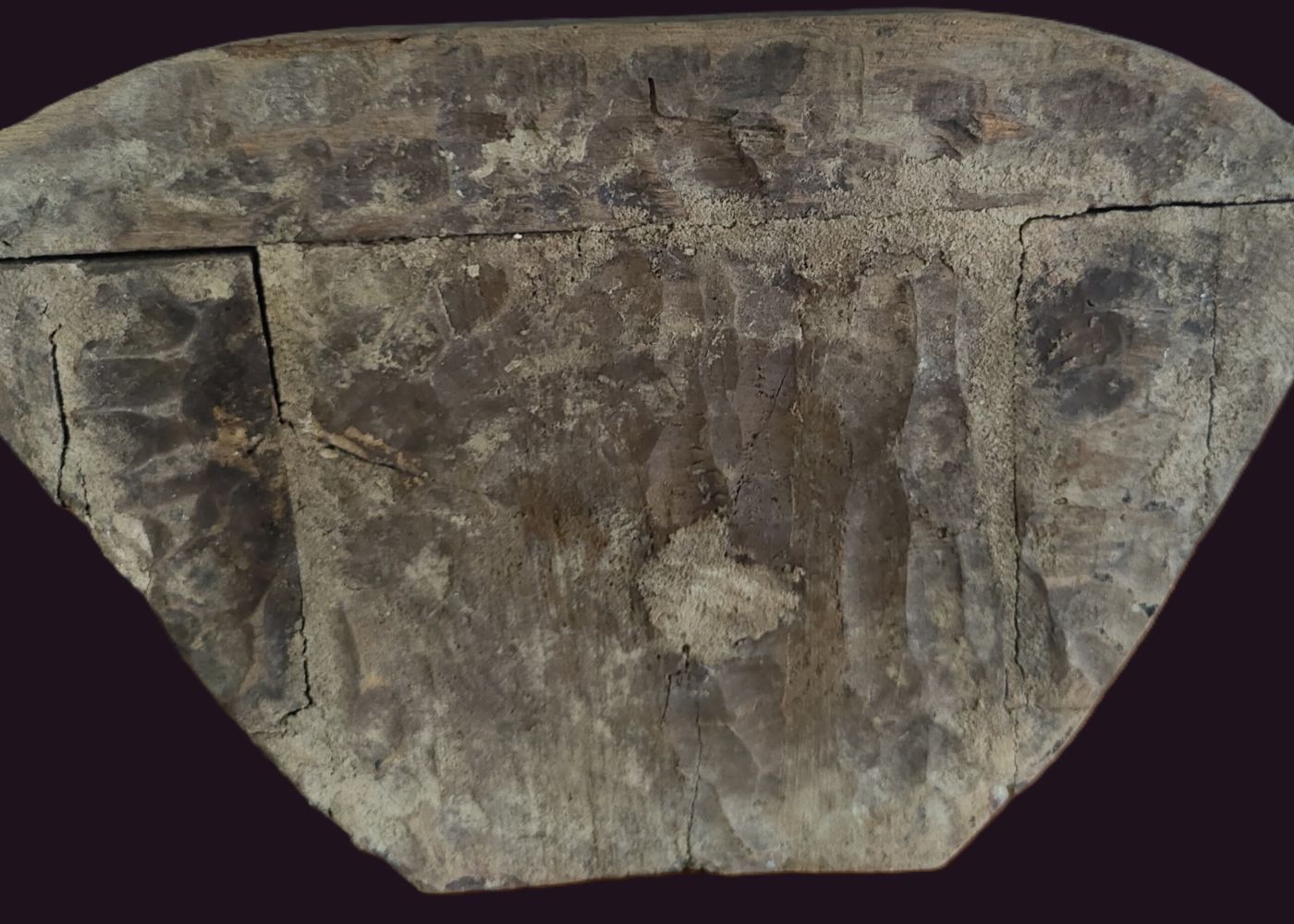
This Buddha statue shows authentic age-related contraction at the joints and natural friability of the original lacquer curls, some are missing. The carvers of the Ava period ensured that the ‘Face of the Buddha’ remained a constant, grounding presence in the Burmese landscape.
SPECIFICATIONS:
- Origin: Myanmar (Burma) Estimated age: 14th – 15th Century
- Material: Wood
- Dimensions: H: 65 cm W: 39cm x D: 26cm
- Weight: 12.6 kg
- Condition: The thayo lacquer representing hair curls has become brittle and several are missing.
#9199
65cm Antique Burmese Pagan Style Wood Buddha
This Burmese Pagan style Wood Buddha image serves as a powerful bridge between the monumental era of the Bagan Empire (11th–13th Century) and the refined court styles of the Ava (Inwa) Period. While the Bagan Kingdom eventually fractured, images such as this carry the “Bagan Template”.
The statue is depicted in the Bhumisparsha Mudra, “Earth Touching” gesture depicting the moment the Buddha overcame the temptations of Mara and summoned the earth goddess, Wathundaye, (Pali- Vasundharā) to witness his enlightenment. In the Burmese consciousness, this specific form is more than an icon; it is a symbol of national identity and spiritual resilience that has remained unchanged for centuries.
Whilst the earlier Bagan period is famous for its massive brick temples and stone monoliths, the subsequent Ava (Inwa) Period saw a flourishing of master woodcarving. As the capital shifted to the riverbanks of the Irrawaddy, local artisans adapted the classical Indian-influenced proportions of Bagan into a distinctly “Burmese” aesthetic.
In Buddhist iconography, a statue was never merely a “decoration.” The segmented construction and the separate front panel may suggest this piece was a consecrated vessel. It represents a period of intense devotion, where the mastery of lacquer (thit-si) and timber was used to create a permanent reminder of the Dhamma.
The Block Construction of Old Burmese Buddha Statues:
Sectional Block Construction: (or Composite Carving). This method allowed the artisan to utilize high-quality teak or hardwood grain effectively, reducing the internal tension that leads to large cracks. The separate lotus throne facade is a classic example of “applied relief,” where the carving was done on a stable horizontal plank before being joined to the vertical grain of the main torso.
The construction reflects traditional Burmese composite joinery as documented by Fraser-Lu. The separate lateral sections and throne facade were originally integrated using thayo (a lacquer-ash paste), designed to stabilize the piece against the tropical expansion and contraction of the hardwood core.
The components were tightly fitted, secured with wooden dowels, and then completely sealed. The red lacquer layer (than-yo) and subsequent gilding or pigment application served a structural purpose beyond decoration: they acted as a flexible, waterproof membrane that bound the joints together and hid the seams from view. Over centuries, as the wood aged and the lacquer degraded, these underlying construction seams naturally became visible, as seen on the proper left knee joint in the full-length view.
The “Thitsi” Layers: The surface shows the classic “stratigraphy”. The red (cinnabar or vermillion lacquer) is heavily layered over the black (base lacquer). The black lacquer is evident through the worn red areas, particularly on the chest and face.
Burmese Buddhist imagery of Early Bagan Period By Charlotte Kendrick Galloway