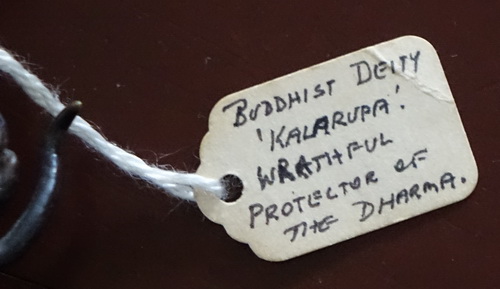
Yama Dharmaraja Kalarupa Bronze 18th-19th c
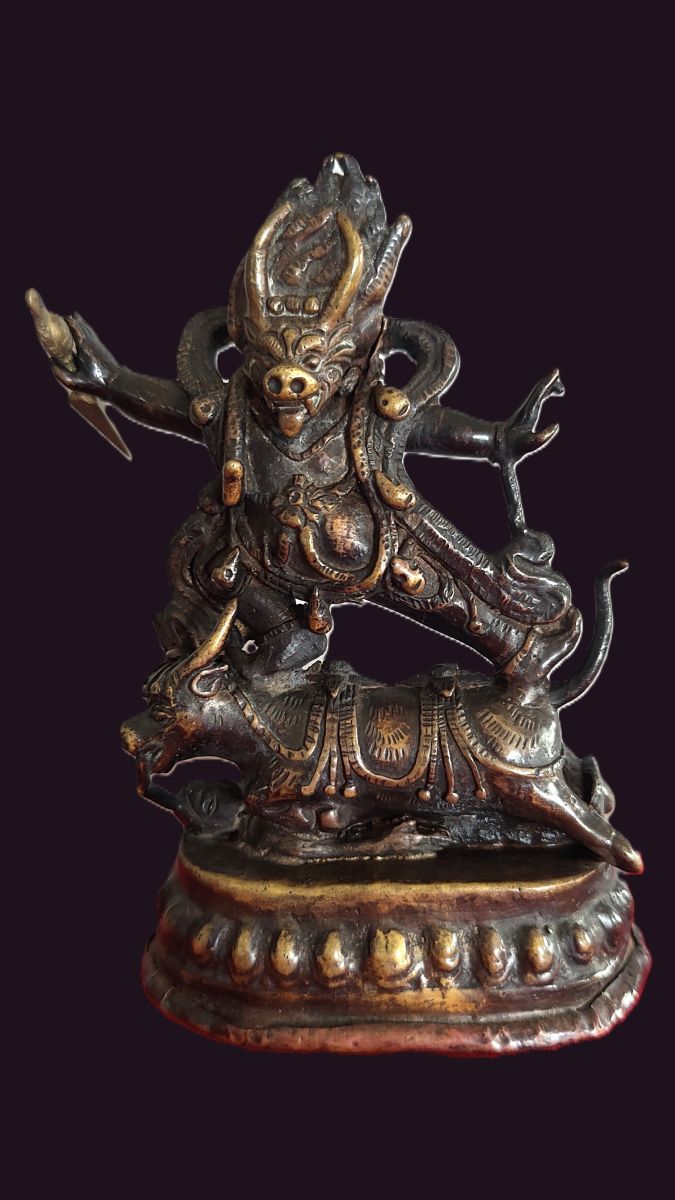
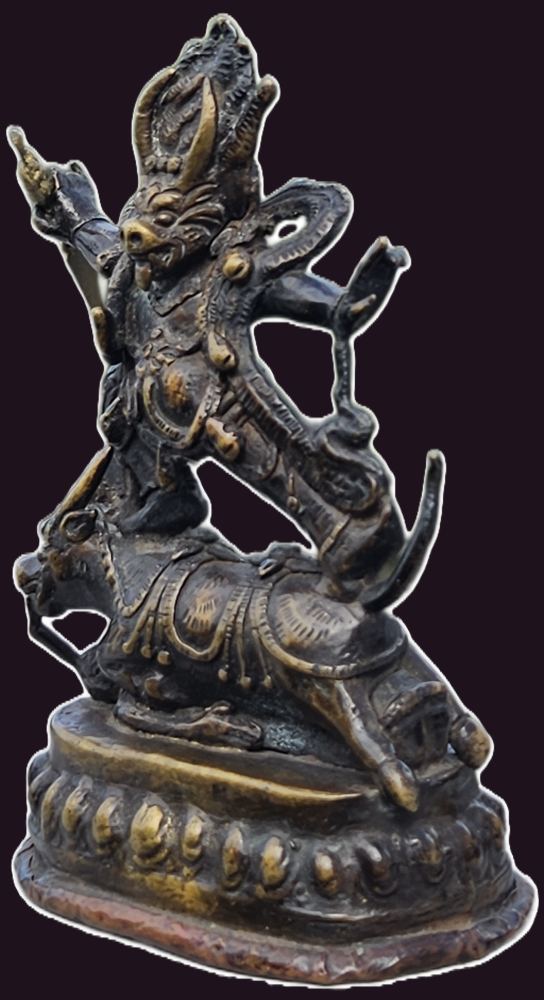
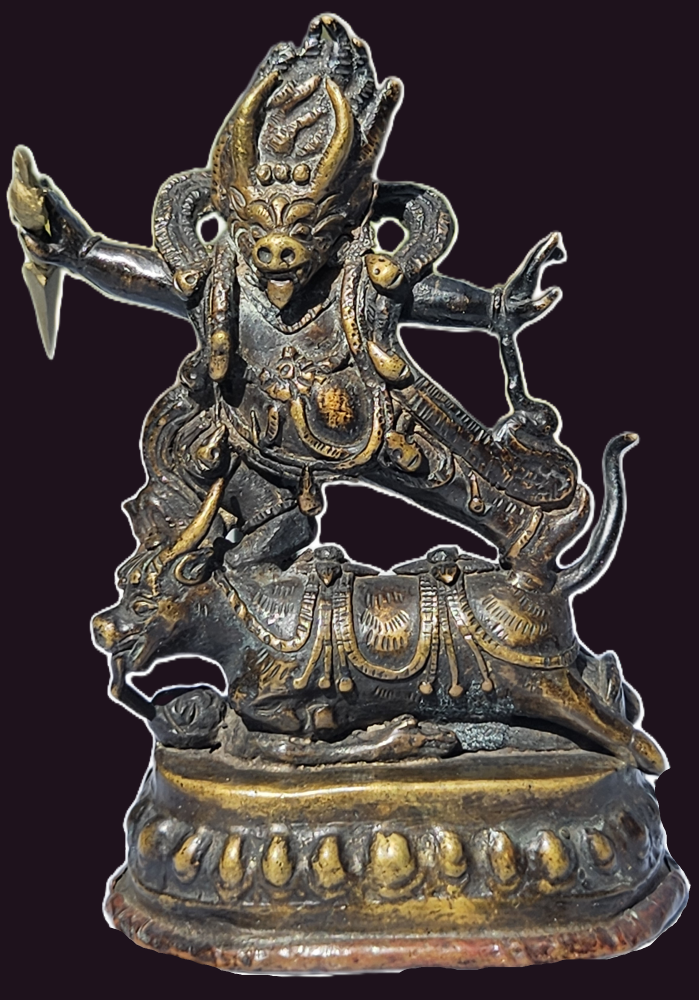
Yama Dharmaraja Kalarupa Bronze 18th-19th C a Nepalese deity worshiped by both Tibetan and Nepalese Mahayana Buddhists. Also referred to as Kalarupa, he is the protector of the Vajra Vairab cycle of tantra referred to as the Dharma and protector of the higher training of wisdom and is one of three main Buddhist deity protectors.
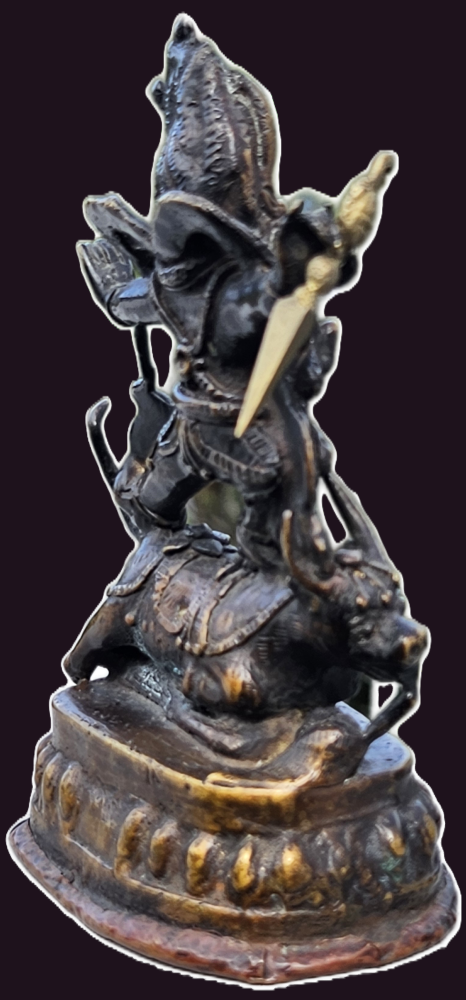
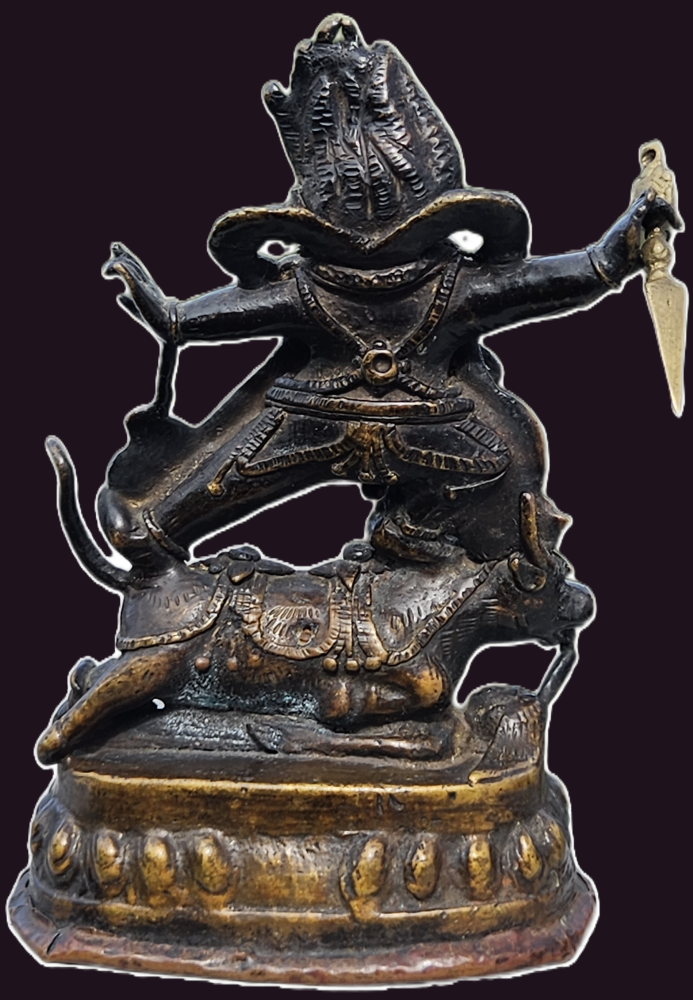
This deity is usually shown with the head of a buffalo with horns, appearing angry and wrathful. A trident is held in the outstretched right hand, a necklace adorned with skulls hangs from his neck, and he stands on top of a buffalo in which a human form lies prostrate on her back, supported by a lotus pedestal.
SPECIFICATIONS:
Yama Dharmaraja Kalarupa Bronze 18th-19th C
Although this deity shows himself in an angry, ugly, wrathful stance his message is to show how we may appear to others when they are angry, jealous, hatefulness and full of negativity. While he originates from the ancient Vedic god of death, in Tibetan and Nepalese Buddhism, he was tamed by Manjushri (in the form of Yamantaka) and bound by oath to protect the practitioners of Buddhism.
The “Outer” Form (Kalarupa): This is the version most commonly depicted in bronze and stone sculptural traditions. He is shown with the head of a buffalo, representing his power over death and the ego.
He is the primary protector for the Gelug school of Tibetan Buddhism but is widely venerated in the Kathmandu Valley’s Newar Buddhist tradition as well. He is associated with the concept of karma and the judgment of one’s actions.
The Buffalo Head: Kalarupa is depicted with a ferocious buffalo face, wide-open mouth, and three bulging eyes, signifying his ability to see through past, present, and future.
The Buffalo Mount: He stands in a “pratayalidha” (active, lunging) posture on a recumbent buffalo. In many depictions, the buffalo is shown crushing a human figure, symbolizing the trampling of ignorance and death.
Adornments: He wears a crown of five skulls, a necklace of severed heads, and is often depicted with an erect phallus, symbolizing the potent, creative power of his wrathful energy.
Right Hand: He holds a Danda (bone club or mace) topped with a skull, which he uses to strike down enemies of the Dharma.
Left Hand: He typically holds a Pasha (noose) to catch souls or bind obstacles.
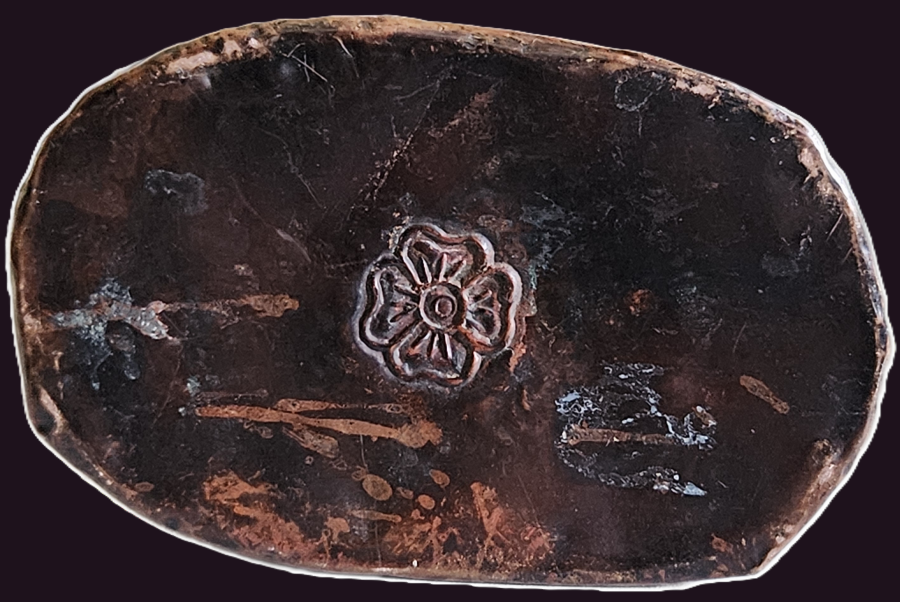
The Central Visvavajra / Lotus Mark: Rather than the complex, double-crossed thunderbolt (visvavajra) commonly stamped onto later Sino-Tibetan or Gelug bronzes, this plate features a stylized, central four- or six-petaled rosette/lotus motif. This specific style of clean, hand-chiseled or stamped central flower mark on a plain copper plate is characteristic of Newari metalcraft from the Kathmandu Valley in Nepal.
The “lotus base” (throne) is well-defined with rounded petals and the fire-like hair (flame aureole) are characteristic of 18th or 19th-century Himalayan metalwork. The dark patina suggests a high copper content or a “cold gold” application that has worn over time.