

19th Century Shan Crowned Buddha Statue Tai Yai Art
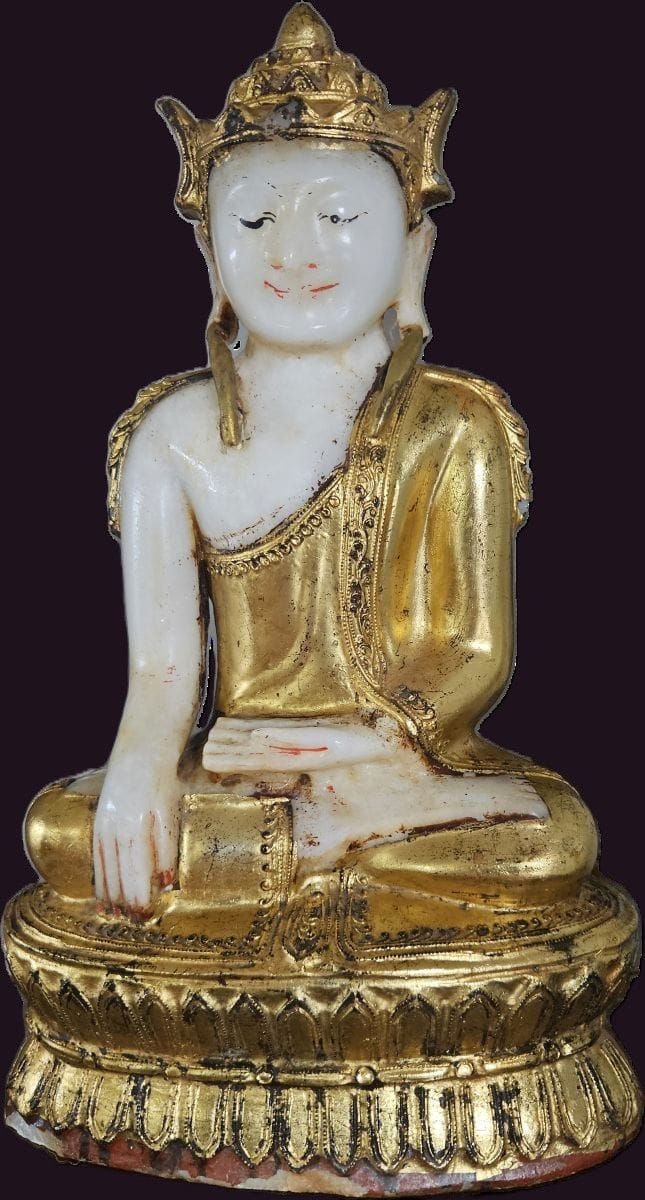
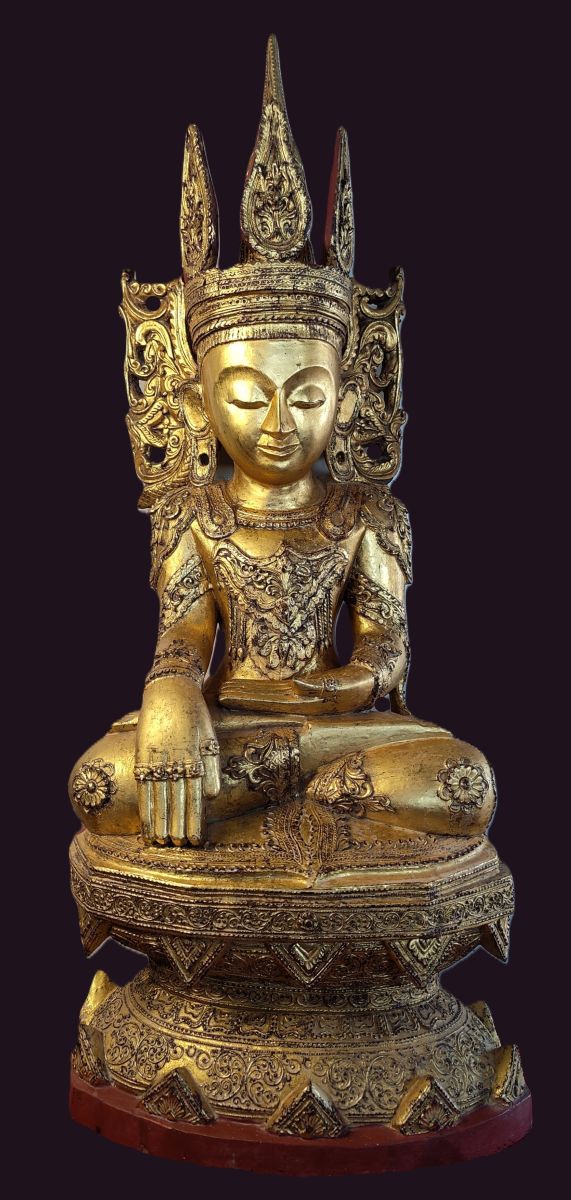
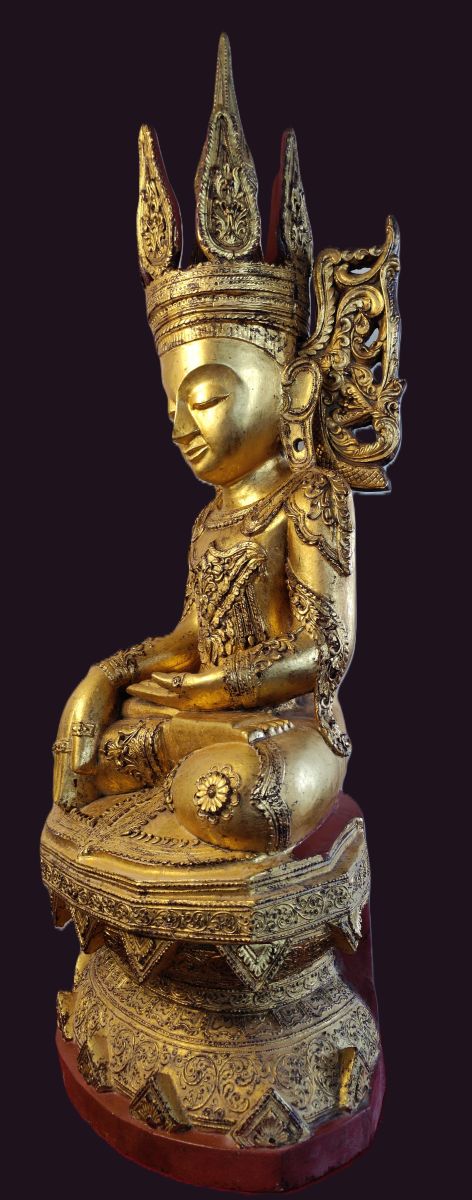
This Tai Yai 19th-century Shan-crowned Buddha statue is from the Southern Shan State. Attributed to the Aungban region of Myanmar (Burma), this statue displays traditional Jambhupati (Royal King) iconography. The Buddha is depicted in ornate monarchical attire, symbolising his supreme authority over both physical and spiritual domains.
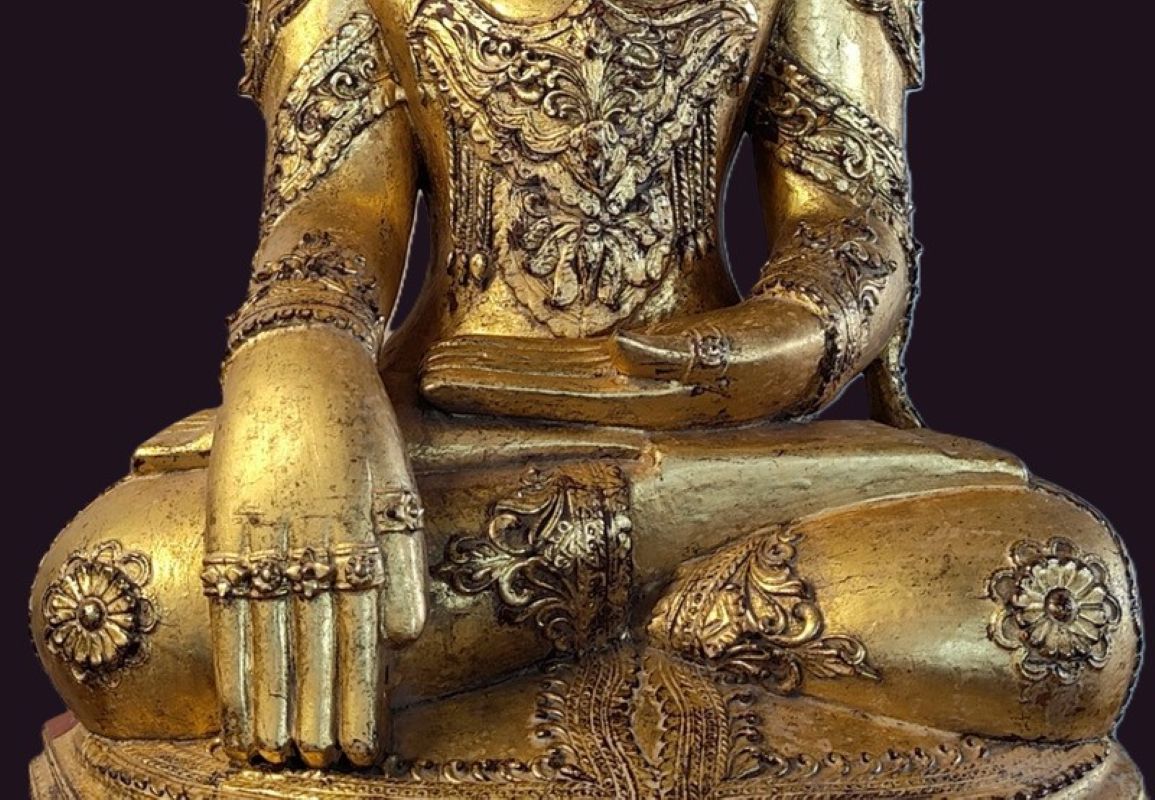
The figure is extensively embellished with thayo lacquer, a traditional Burmese relief paste used here to simulate intricate royal regalia and jewelry.
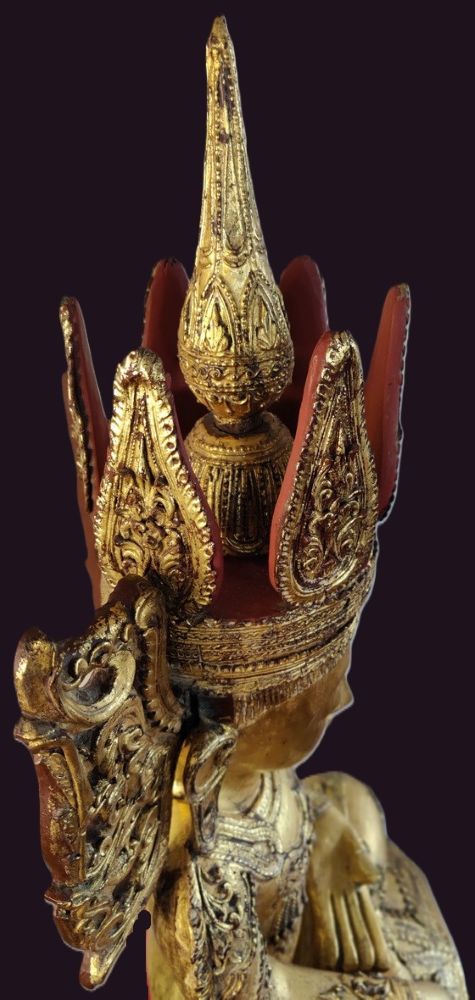
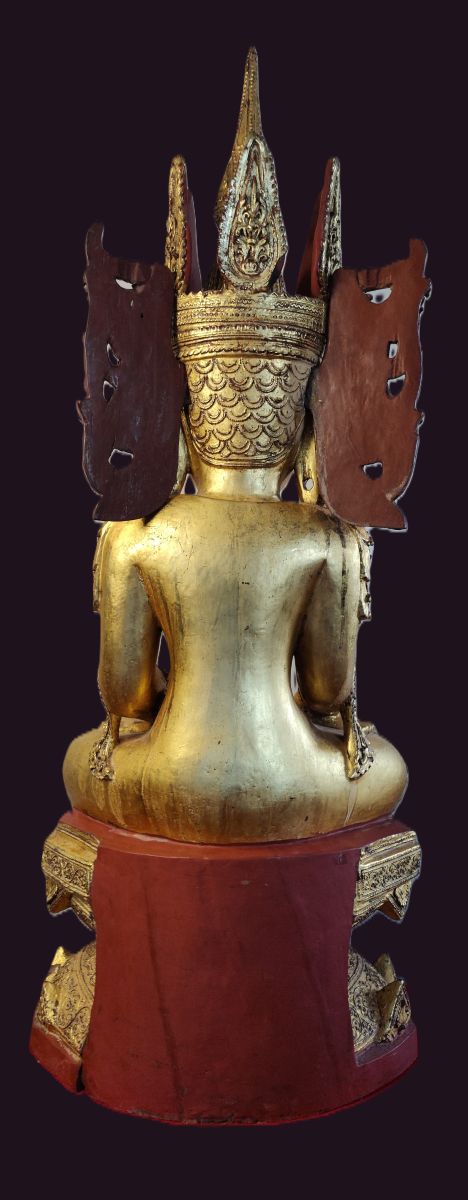
Lateral Adornment: The crown is flanked by intricate, open-worked flanges (ear ornaments) decorated with thayo relief work.
Cranial Structure: The crown consists of a prominent tiered band surmounted by four lotus-bud prongs.
Finial: A central, elongated finial of a removable design rises from the tiered base, characteristic of the stylistic verticality found in Shan-period Buddhist art.
SPECIFICATIONS:
- AGE: 1850 – 1890 Century Tai Yai Art
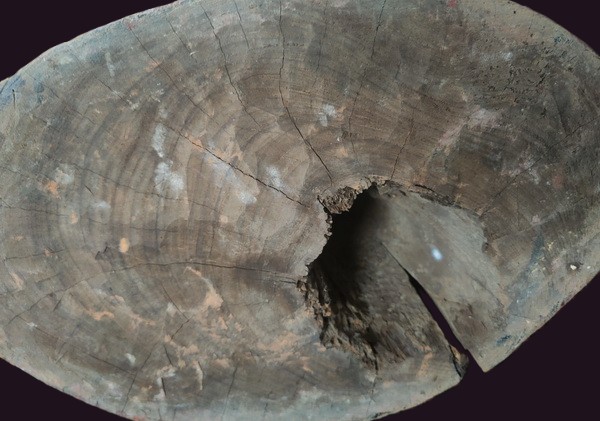
- CONSTRUCTION: – Teak Wood
- HEIGHT: – 102cm
- WIDTH: – 50cm
- DEPTH: – 30cm
- WEIGHT: – 22.3 kg
- #850
19th Century Shan Crowned Buddha Statue Tai Yai Art
Iconographic and Stylistic Analysis
This Crowned Tai Yai style Buddha is depicted in the padmasana (lotus position) atop a high, constricted “waist” pedestal adorned with intricate thayo lacquer scrollwork. The sculpture features specialized ornamentation, including digital rings carved with floral motifs that are mirrored in a larger scale upon both patellae. The figure is rendered in the Bhumisparsha Mudra (earth-witness gesture) and is characterized by a comprehensive gilded finish.
Ethnographic Context
The Shan (Tai Yai) people possess a complex migratory history across Southeast Asia and Southern China. This ethnic group is also present within the borders of Laos, where they are categorized under the broader Lao-Tai designation. This classification encompasses various sub-groups, including the Tai Dam (Black Tai) and Tai Daeng (Red Tai).
In the Indian state of Assam, these populations are identified as the Tai Ahom, Tai Assam, or Tai Khamti. Within Vietnam, the ethnic landscape includes the Black Tai and White Tai, alongside local groups such as the Tai Tho and Tai Nung, representing various branches of the original Tai migrations into the region. In Thailand, the group is designated as the Tai Yai, a term that translates literally to “Great Tai”.
This is an interesting paper on the Shan Tai Yai group of people