Jambhupati-Style Alabaster Buddha, 19th Century
Jambhupati-Style Alabaster Buddha, 19th Century
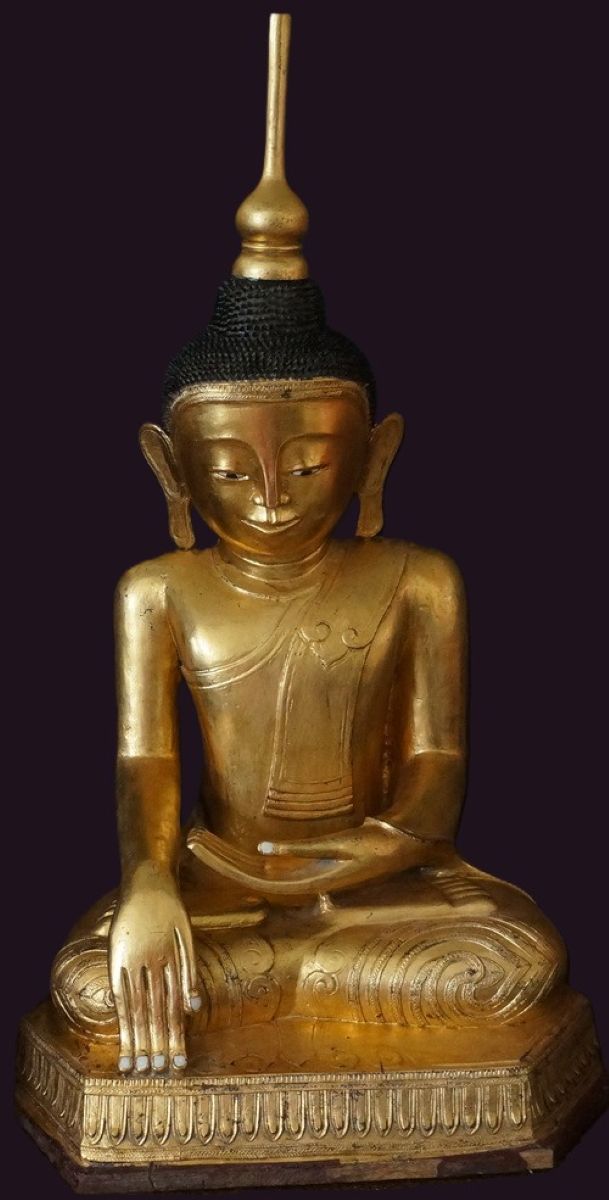
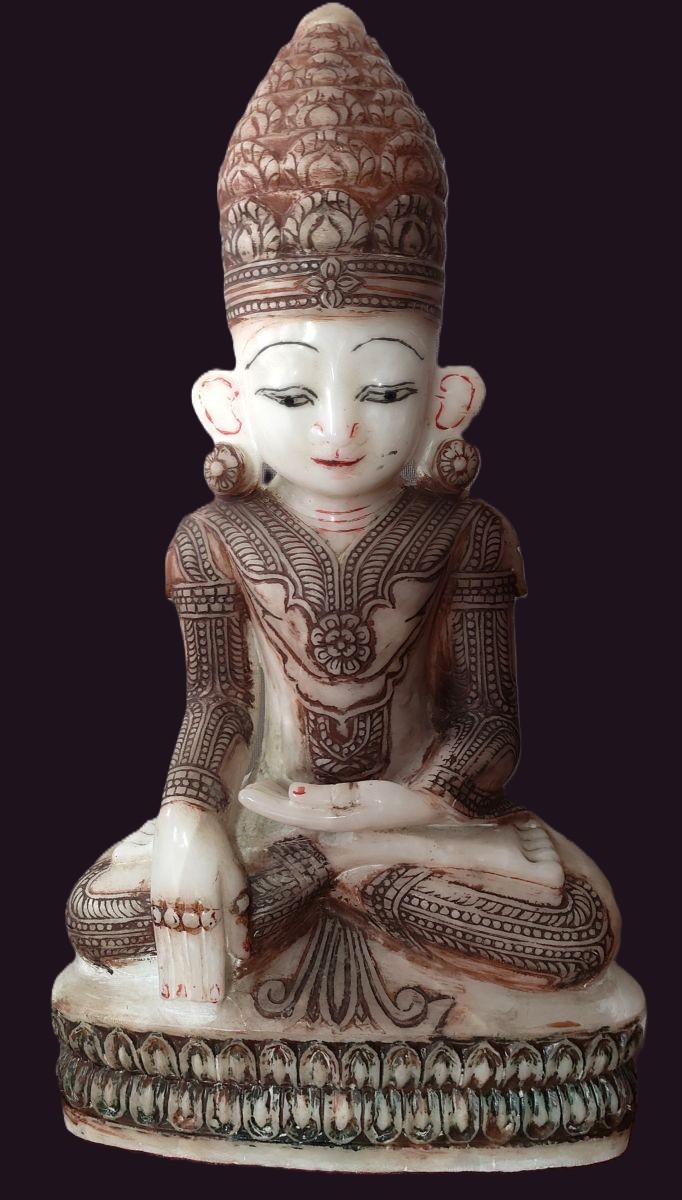
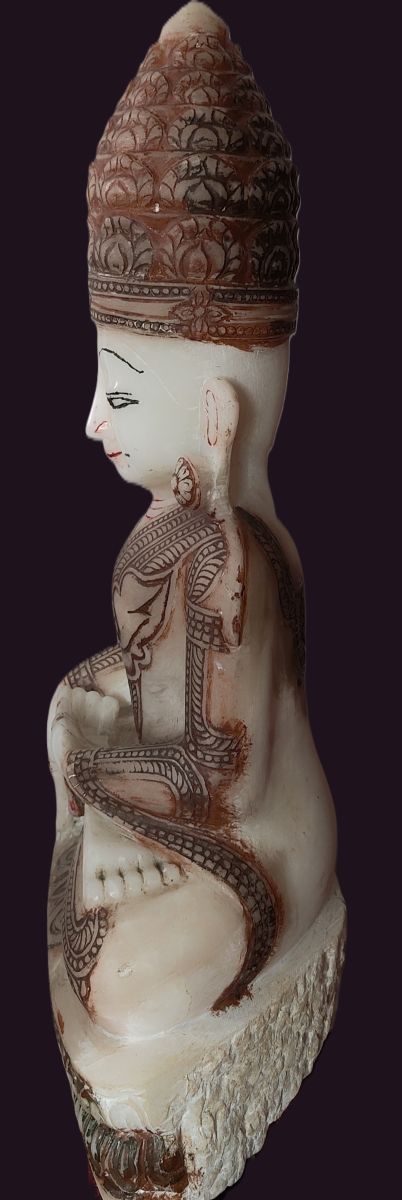
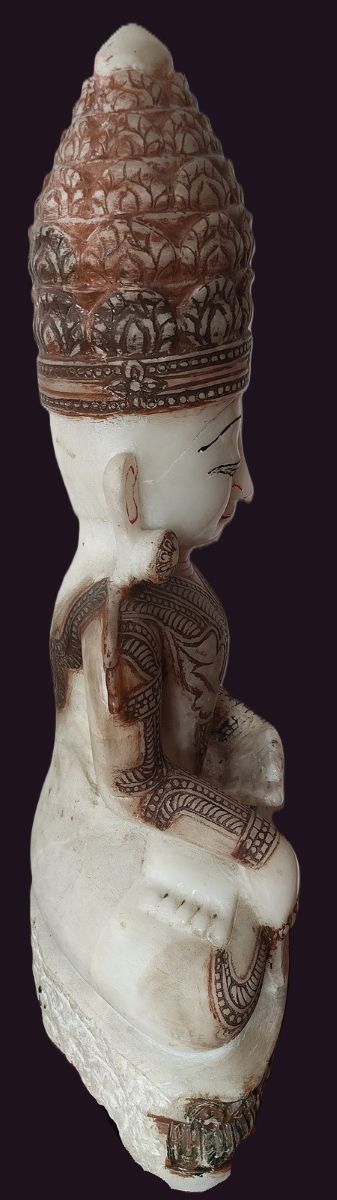
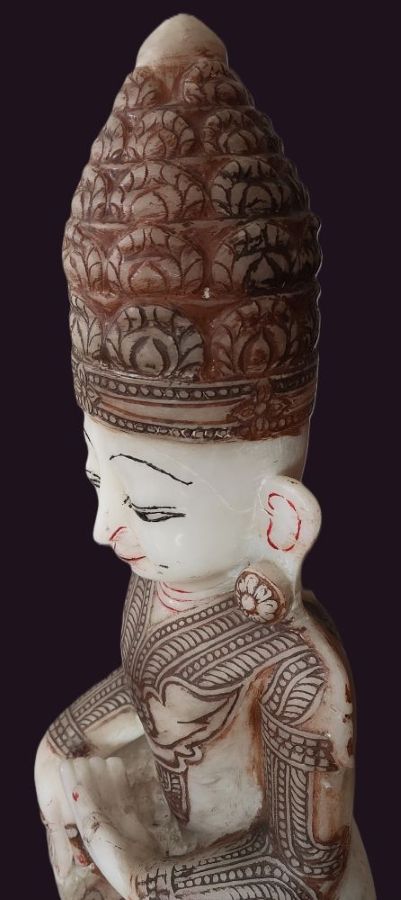
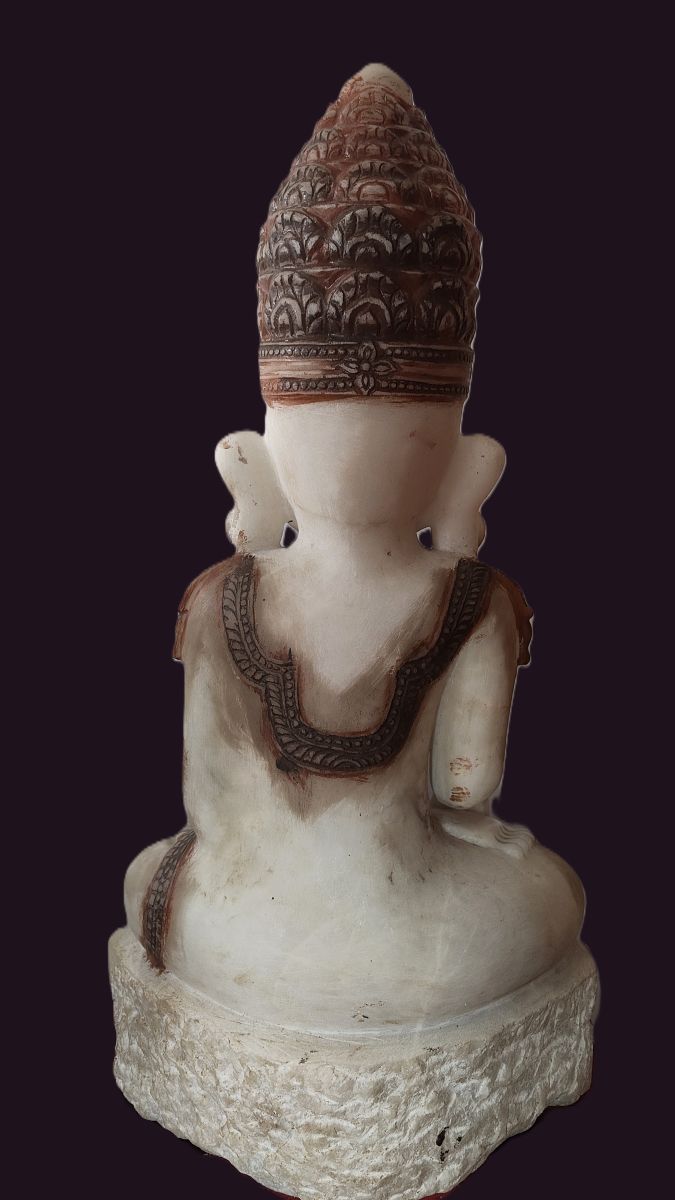
Burmese Jambhupati-style alabaster Buddha, 19th century with intricately incised detail representing the royal attire, a visual representation of the Buddha’s legendary confrontation with the arrogant King Jambhupati. This statue is carved from white alabaster with intricate incised detailing.
This iconography is deeply rooted in the legend of King Jambhupati, a powerful and arrogant monarch who believed his worldly wealth and status made him superior to all others. According to the story, the Buddha sought to humble the king by manifesting himself in a magically created palace, appearing as a supreme universal monarch (Chakravartin) adorned in robes even more magnificent than the king’s own.
By assuming this regal form, the Buddha demonstrated that the grandeur of enlightenment and spiritual truth vastly outshines any earthly power. Upon witnessing this divine manifestation, the humbled king recognized the emptiness of material riches and the impermanence of worldly status. He subsequently abandoned his arrogance, submitted to the Dhamma, and became a monk. Consequently, these crowned images serve as a powerful reminder that while the historical Buddha renounced his royal origins, his spiritual message possesses a sovereignty that transcends all temporal authority.
Postures and Mudra: Seated in the earth-touching position (Bhumisparsa), characteristic of the Shan-Ava influence.
SPECIFICATIONS:
- AGE: Jambhupati-Style Alabaster Buddha, 19th Century
- HEIGHT: – 70cm
- WIDTH: – 35cm
- DEPTH: – 15cm
- CONDITION: The back on this statue like many Myanmar statues was not given the care that was given to the front of the statue, and the lacquer has seeped into the surrounding alabaster.
- #841
Jambhupati-Style Alabaster Buddha, 19th Century
Royal Regalia and Iconography: This figure is distinguished by a five-tiered, incised crown topped with a smooth, rounded finial, accented by stylized lotus petals around each tier. The base of the crown is supported by a band featuring a central floral medallion, a motif echoed by a larger medallion at the center of the robe. Complementing this regalia are elaborate ear ornaments and rings on the fingers. The hands on this Jambhupati sculpture display rings on the fingers of one hand and on the thumbs of both hands, with remnants of pink paint on the fingernails.
The crowned Buddha is highly significant within the art history of Burma, and are made in alabaster, bronze and wood, reflecting on a period where Buddha statues were frequently depicted with kingly adornments to symbolize spiritual authority.The entire figure rests gracefully upon a traditional double-lotus pedestal, grounding the ornate upper details with the classic structure of the Ava style.
Asian Art Museum with a beautiful Jambhupati Buddha statue seated on a throne