Ming Dynasty Ming qi – Table with Offerings
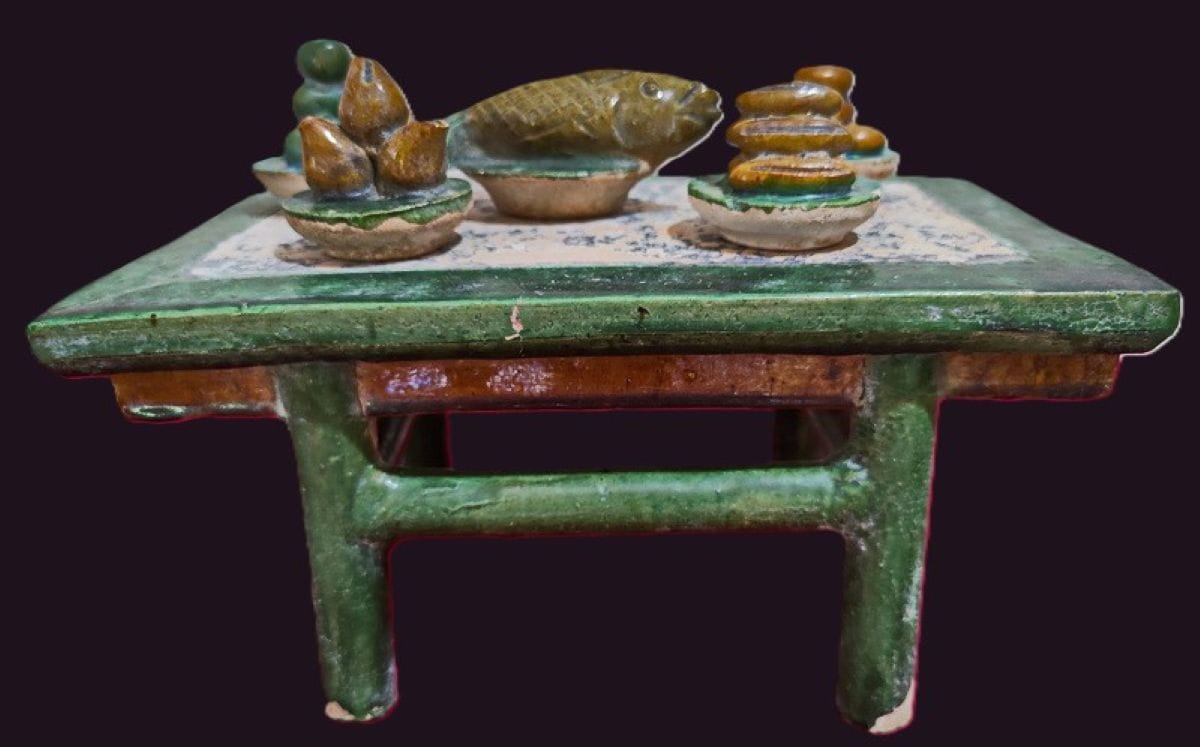
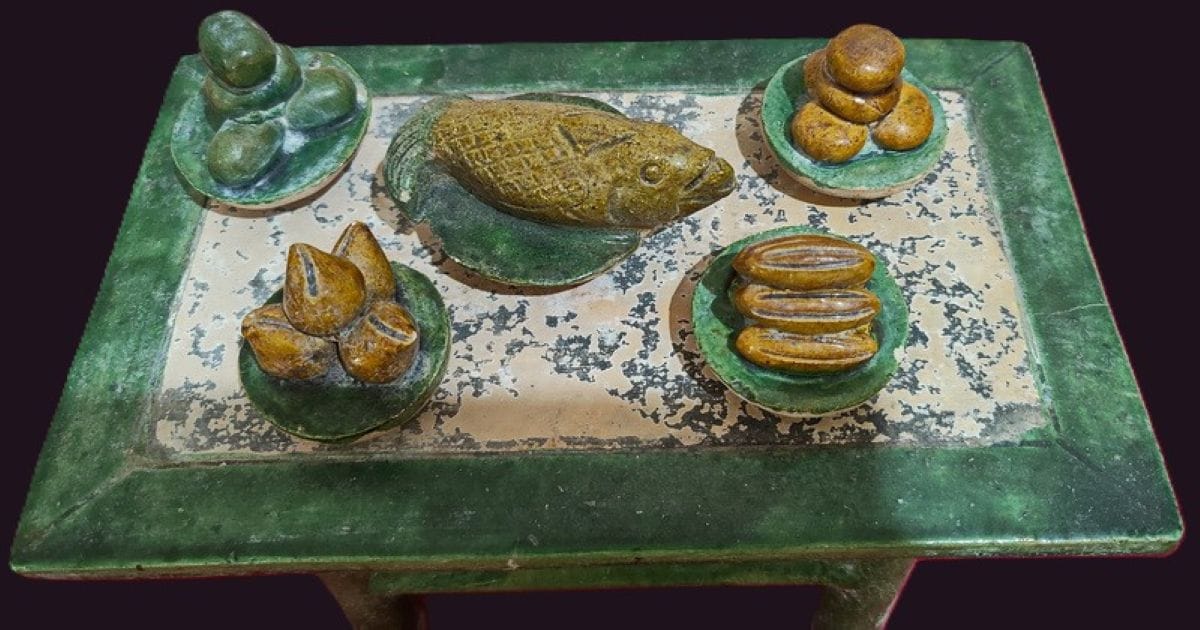
Ming Dynasty Ming qi – Table with Offerings
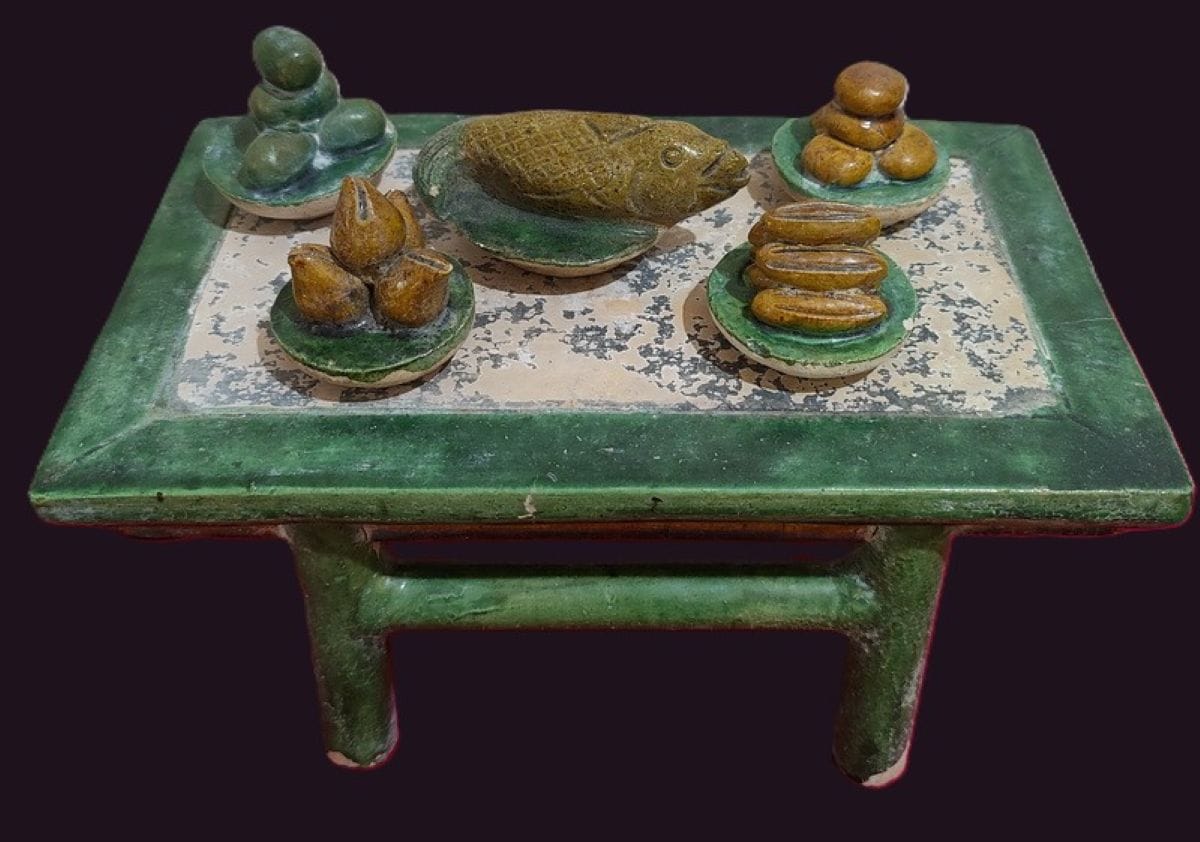
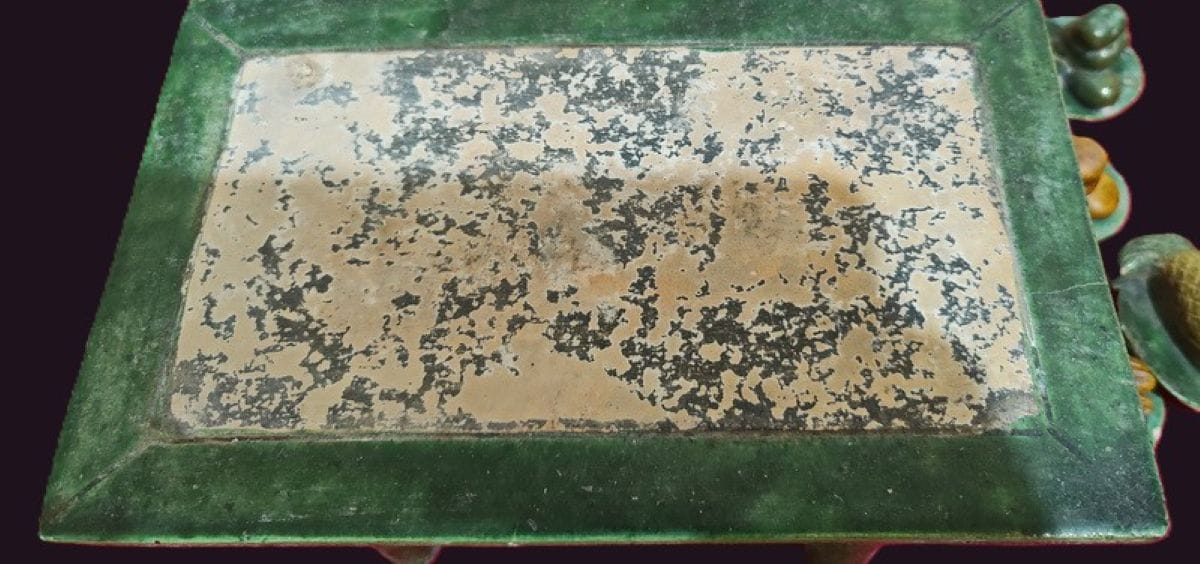
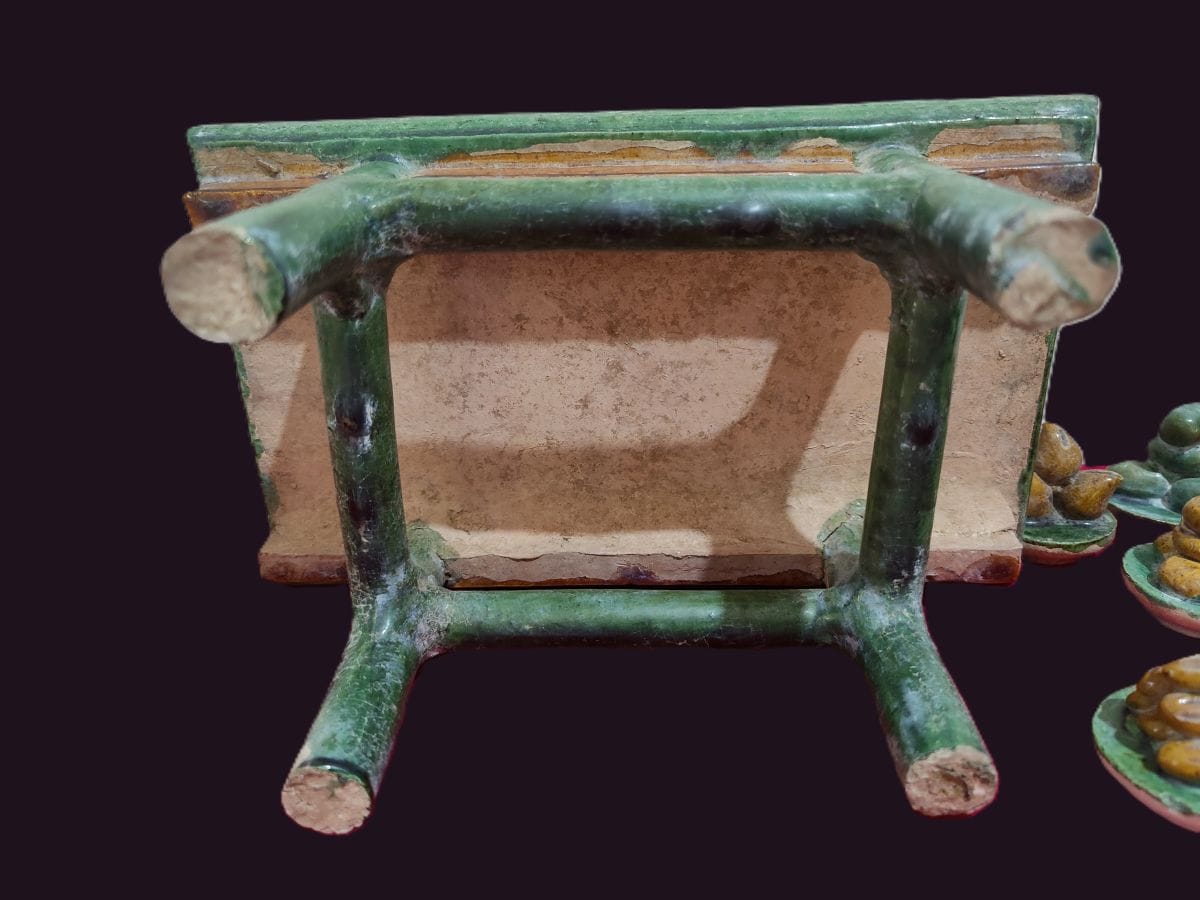
Chinese Ming Dynasty Ming qi – table with offerings made from terracotta for funerary purposes. The offerings on this table include large fish, dumplings, and other Chinese delicacies (5 plates).
Everyday people were buried with practical goods, simple replicas of items they used, treasured, or needed in daily life. Royalty and wealthy elites took this custom to great lengths, creating massive, elaborate displays like the famous Terracotta Warriors crafted to accompany Qin Shi Huang, the first Emperor of China, into the afterlife.
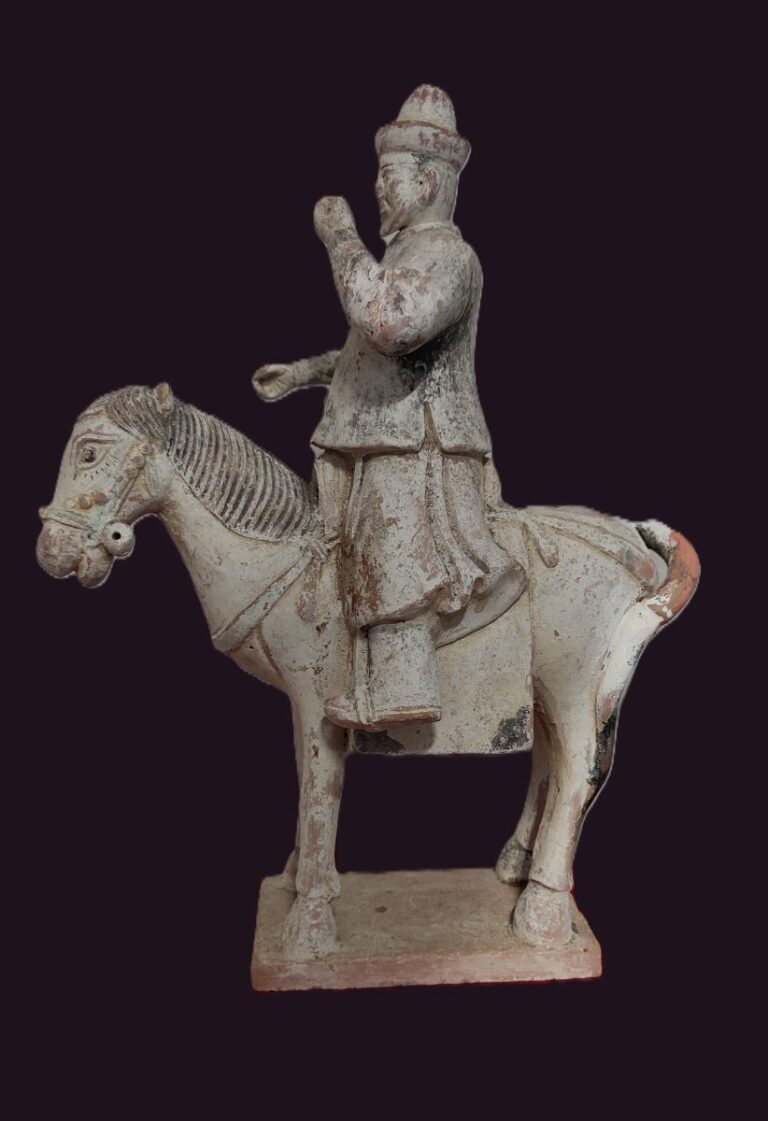
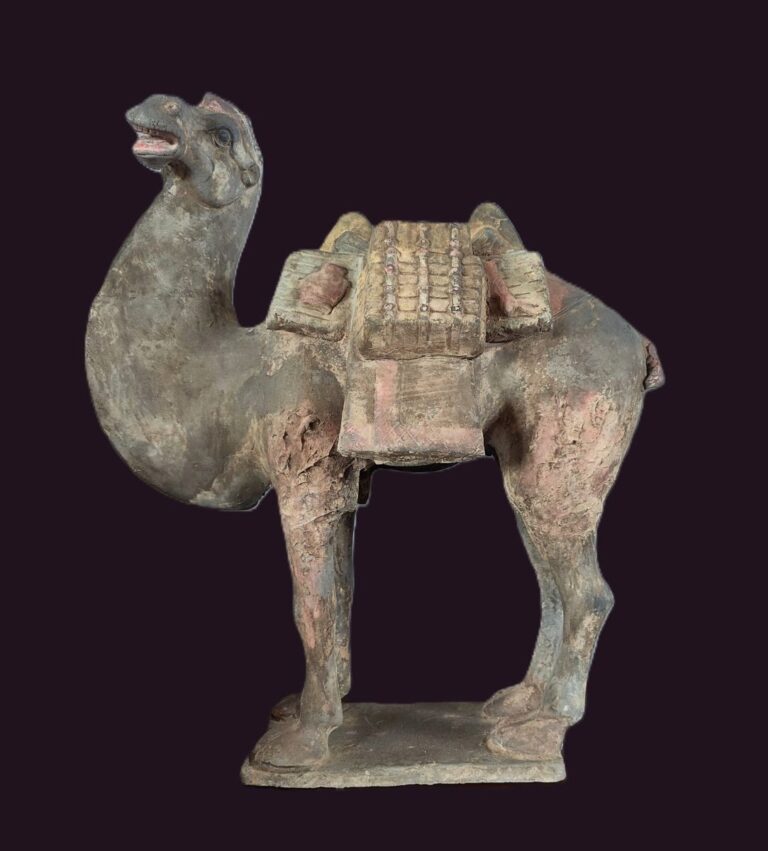
The most common items interred with a deceased person were practical utilitarian objects such as miniature replicas of houses, horses, working animals, food items as well as a range of miniature pieces of furniture such as these, made from clay (terracotta).
The wealthy and those of royal lineage were buried with more lavish items, such as jade, jewellery, and objects made from gold, jade, silver, paintings, books and silks.
SPECIFICATIONS:
- AGE: Ming Dynasty 1368 AD – 1644 AD
- HEIGHT: 13 cm
- LENGTH: 27 cm
- DEPTH: 16.5 CM
- WEIGHT: 2.75 kg
- #417B
Ming Dynasty Ming qi – Table with Offerings
Human sacrifice in Chinese burial chambers (renxun) peaked during the Shang dynasty (c. 1600–1046 BCE), when thousands of servants and captives were executed to serve deceased rulers in the afterlife. This practice declined under the Zhou dynasty due to ethical shifts, eventually leading to the widespread adoption of substitute ceramic or terracotta tomb figurines (ming qi), rather than living victims.
Though nomadic conquest dynasties and early Ming emperors occasionally revived the custom for imperial concubines, the Ming Tianshun Emperor banned it at court in 1464. The final, definitive abolition occurred in 1673 under the Qing dynasty, when the Kangxi Emperor issued a strict imperial decree permanently outlawing sacrificial burials across the entire empire.