18th Century Burmese Ava Innwa Marble Buddha Statue

18th Century Burmese Ava Innwa Marble Buddha Statue
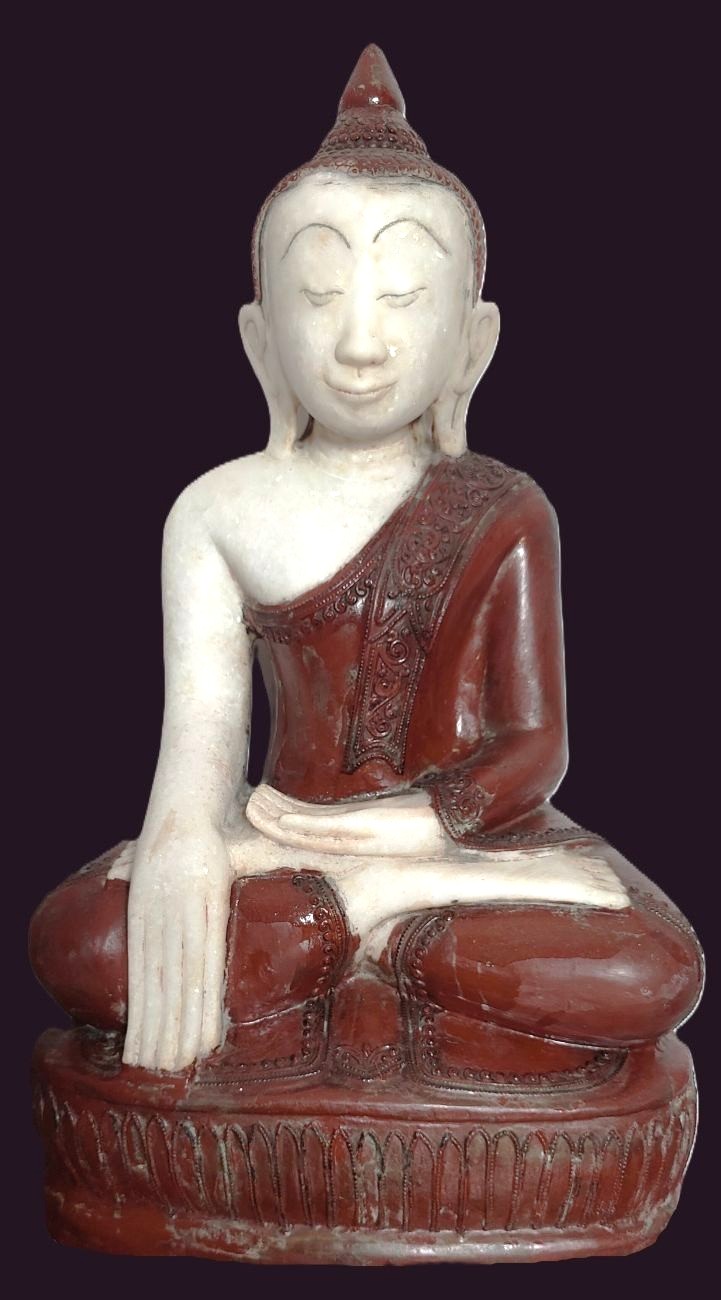
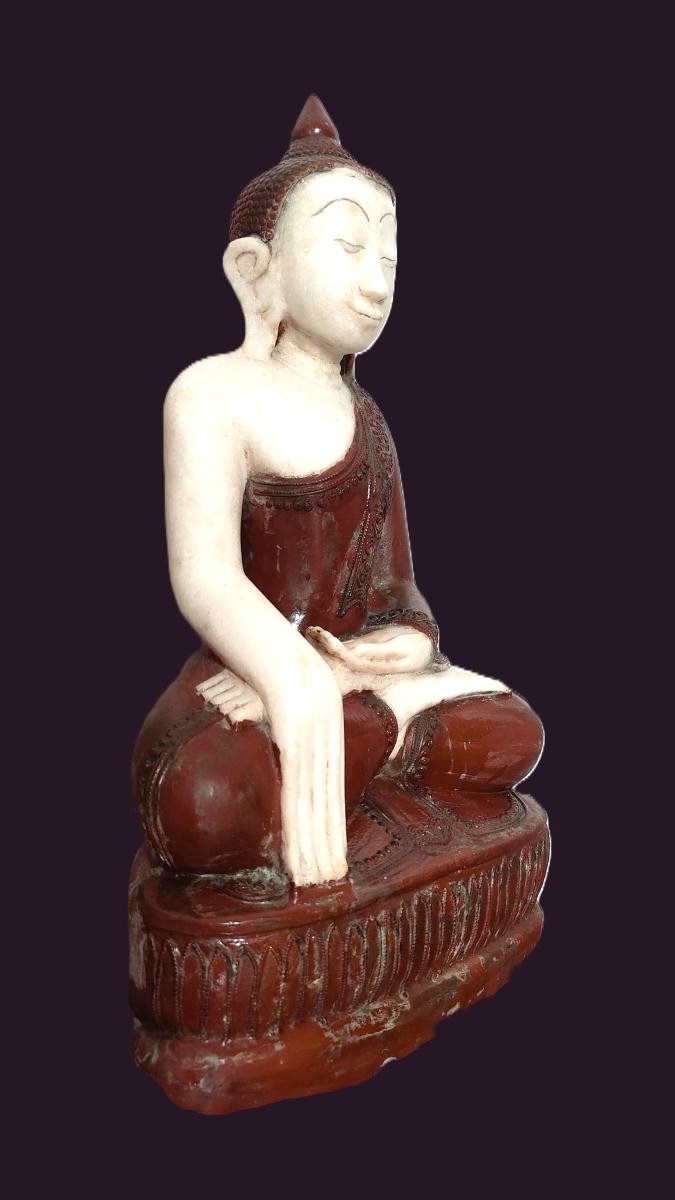
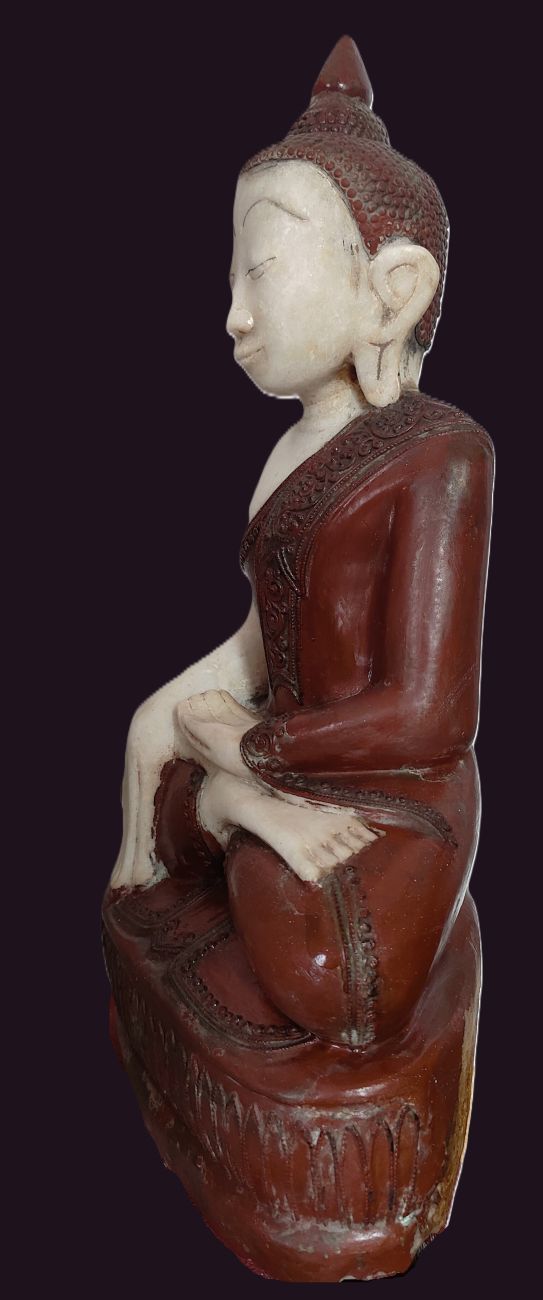
18th Century Burmese Ava (Innwa) Marble Buddha statue carved from a single block of white alabaster marble, this statue embodies the serene, grounded iconography of 18th-century upper Burma (Ava / Innwa period). The Buddha is seated in vajrasana (cross-legged position) on a single lotus pedestal (padmasana) set above a plain marble base.
His right hand is depicted in the Bhumisparsha Mudra (Earth-Touching Gesture), symbolizing the moment of enlightenment beneath the Bodhi tree when Gautama Buddha touched the earth to summon the earth goddess to testify to his accumulated merit, overcoming the temptations and forces of Mara.
SPECIFICATIONS:
- AGE: 18th Century Century Burmese Ava Innwa Marble Buddha Statue -could be earlier
- HEIGHT: 56 cm
- WIDTH: 28 cm
- DEPTH: 14 cm
- WEIGHT: 27 kg
- CONDITION: A small strip of lacquer has flaked away along the hairline above the forehead. As is common with Burmese statues of this period, the red lacquer finish shows evidence of historical refreshing
- #819
18th Century Burmese Ava Innwa Marble Buddha Statue
Iconographic & Stylistic Features:
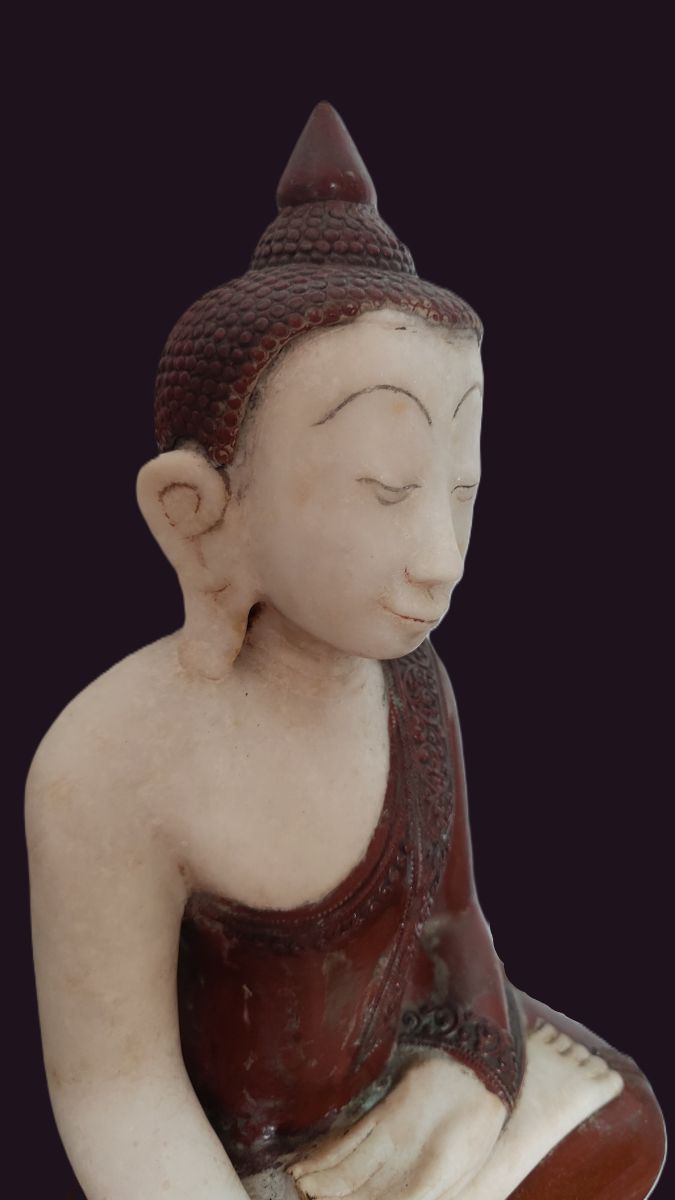
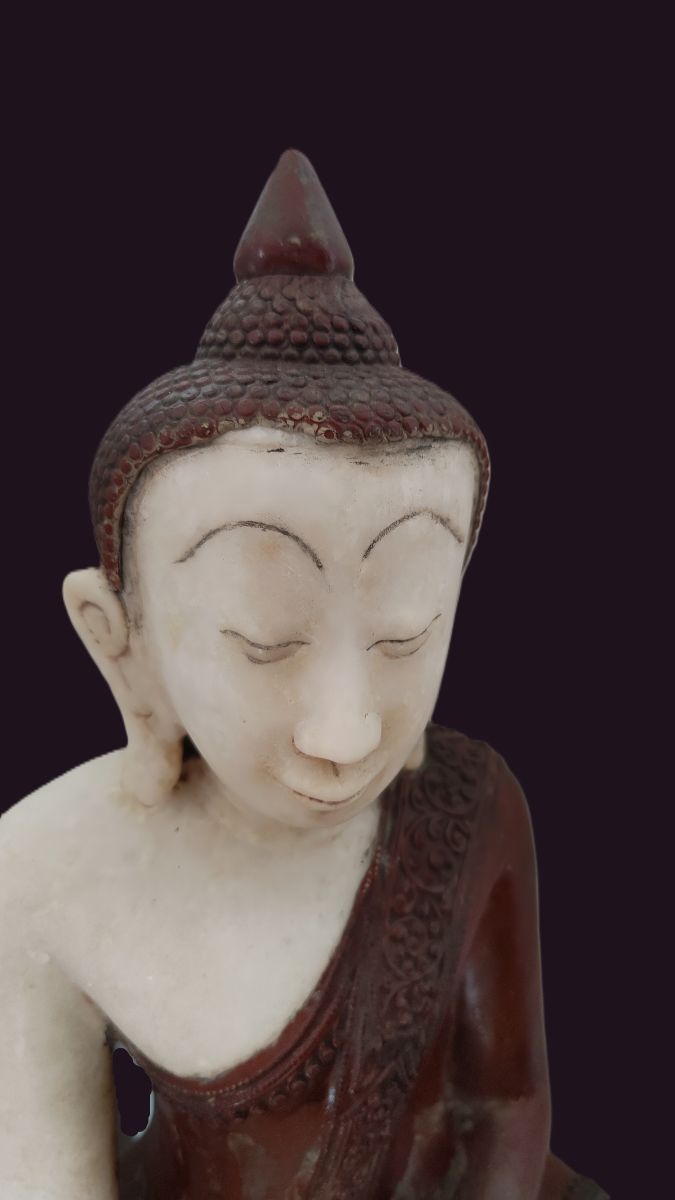
- Facial Structure & Expression: Features classic Ava proportions with a full, round face, high arched eyebrows curving into the bridge of the nose, downcast painted eyes conveying deep meditation, and extended earlobes nearing the shoulders.
- Ushnisha and Finial: A conical finial sits on top of the ushnisha with thayo lacquer representing hair curls a characteristic of late Ava/Innwa regional sculpture.
- Torso & Posture: Broad shoulders, a short neck, and a sturdy chest anchor the form, demonstrating the powerful, solid posture favored during the Nyaungyan and early Konbaung dynastic periods.
- Thayo Lacquer Relief Work: The borders of the monastic robe (sanghati) and the lapel over the left shoulder are adorned with hand-molded thayo lacquer relief work. Applied in traditional scrolling vine (thazin) patterns and coated in deep red cinnabar lacquer, these raised borders outline the crisp contrast between the polished white marble flesh and the draped garment.