
Antique Javanese Keris with Filagreed Pendhok
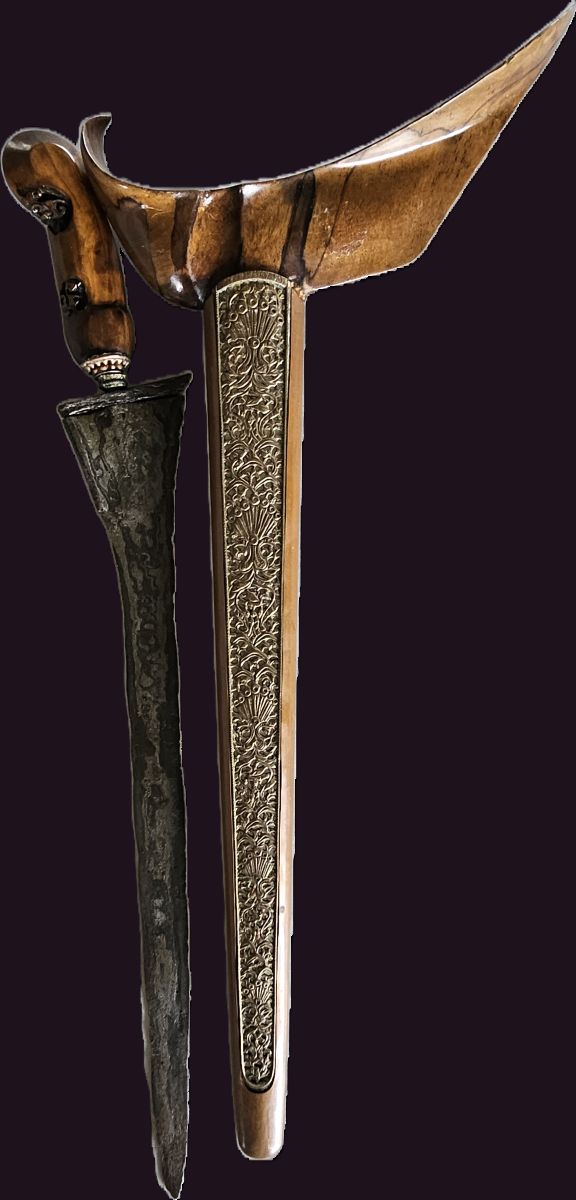
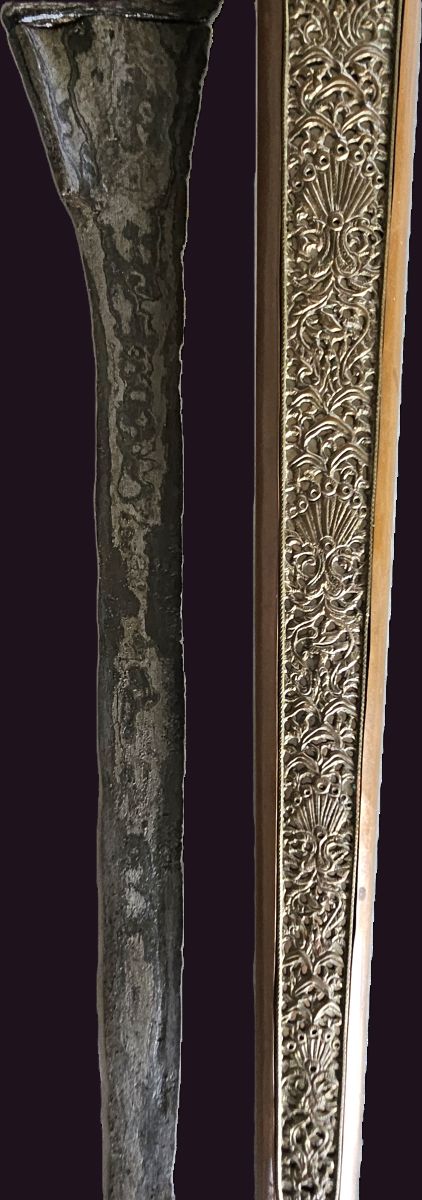
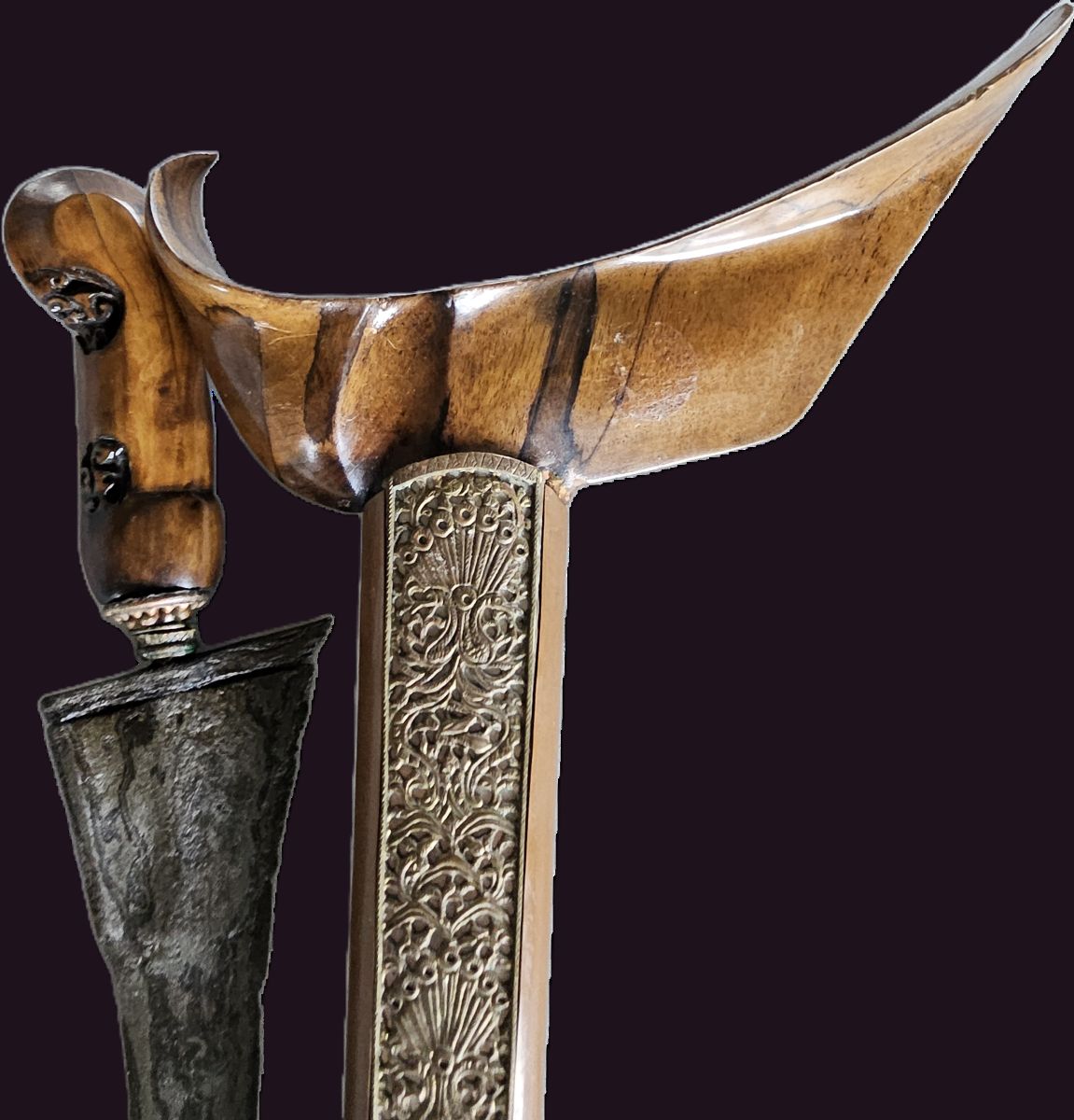
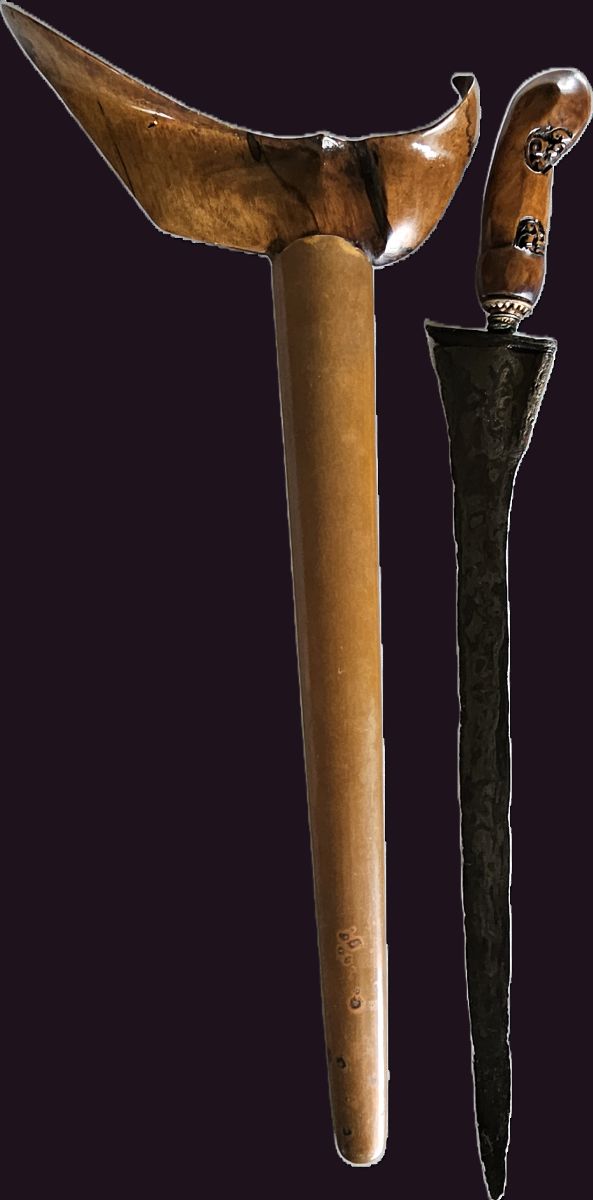
This antique Javanese keris with filigreed pendhok features a straight bladed (dapur lurus), with a layered pamor grain running along the dark iron surface.
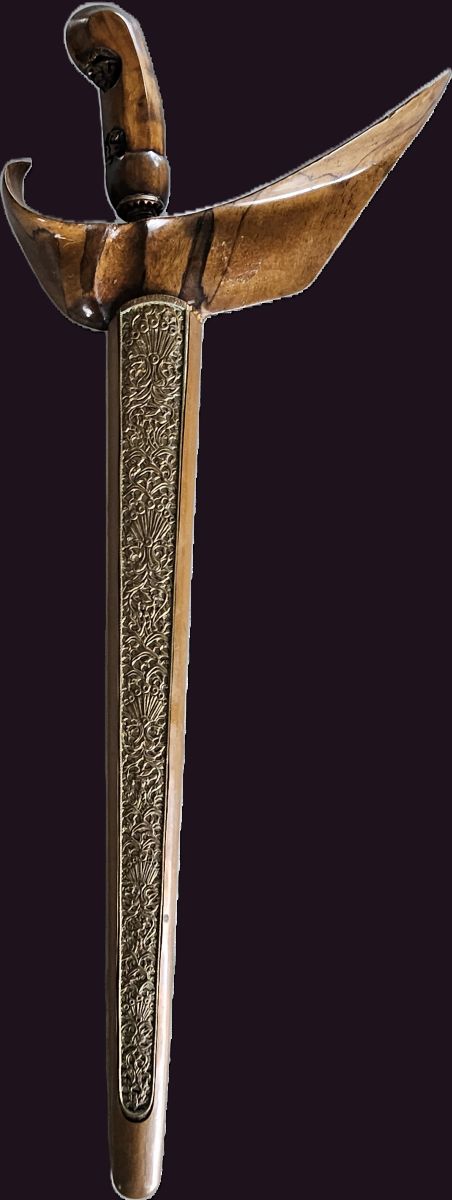
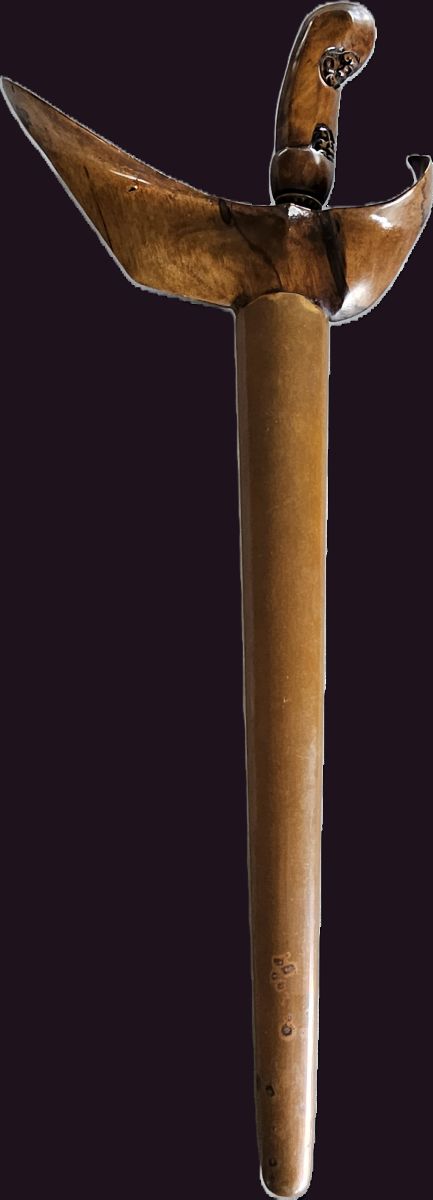
The hilt (ukiran) is carved from polished hardwood in the stylized planar Javanese form, set above a beaded metal mendak ring. It sits in a matching wooden sheath (warangka) rendered in the swept, boat-shaped ladrang style, showing rich natural wood grain.
The sheath stem (gandar) is fitted with a slotted brass pendhok bleblehan, open along the front to expose the silver coloured metal beneath. The filligreed front section features repeating fan-shaped motifs (resembling stylized peacock tails or floral bursts) framed by scrolling vine work (lung-lungan).
The decorative motifs on Javanese pendhoks are symbolic and can include a variety of motifs such as plants, animals, vegetation, birds or a geometric or floral design.
The designs emphasize symmetry, repetition, and harmony as their basic principle. The ornament style is believed to embody the ‘syncretic mystique’ of Javanese Islam. The designs embossed on the surface were sometimes adopted from of pre-Islamic or Hindu-Buddhist influence.
Traditionally a Javanese male would own a keris which is believed to hold special powers. The ordinary man or noblemen traditionally bought their kris, sheaths, and pendhok from an empu, special craftsmen (mranggi).
SPECIFICATIONS:
- AGE: Guessing between 18th – 19th Century
- OVERALL LENGTH: 49 cm
- BLADE LENGTH: 38 cm
- WEIGHT: 200 gms
- #134
Antique Javanese Keris with Filigreed Pendhok
Yogya style Javanese keris
This Yogyakarta (or Yogya) style keris represents one of the two main Central Javanese artistic traditions.
Rooted in the legacy of the Mataram Sultanate following the division of the kingdom in 1755, the Yogyakarta aesthetic favors a more understated, austere, and conservative design. Where Surakarta keris tend to be elaborate, wide, and ornate (gebyar), Yogyakarta keris are known for their sharp, clean lines, restraint, and adherence to classical forms.