



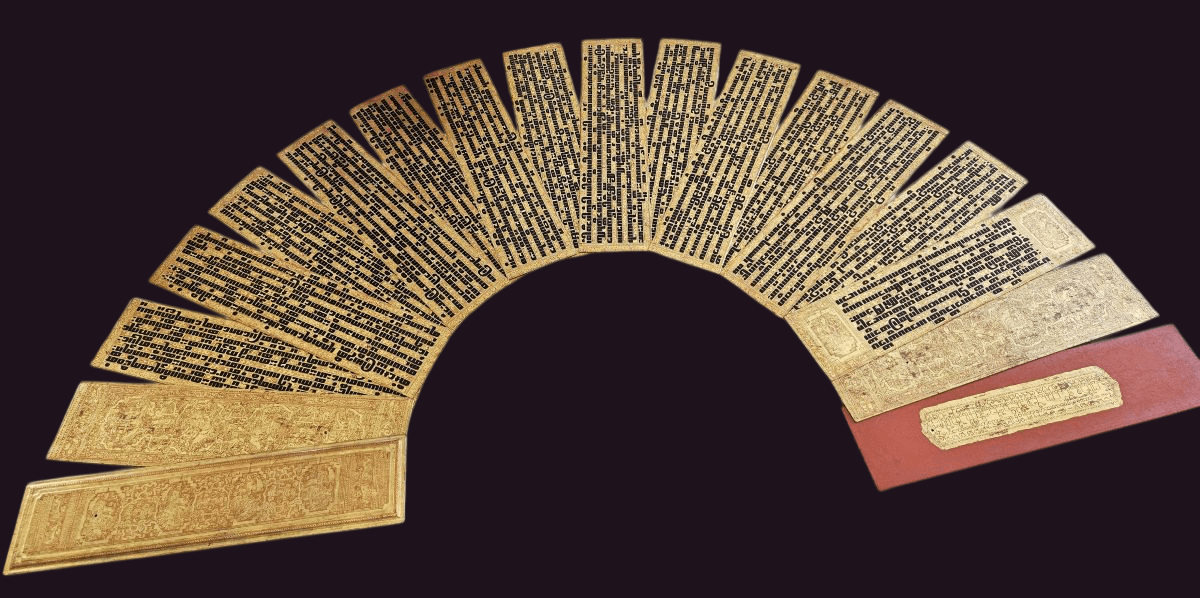

19th-Century Burmese Gilded 16-Leaf Kamma Vaca
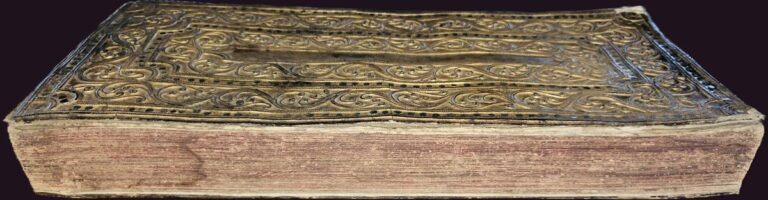
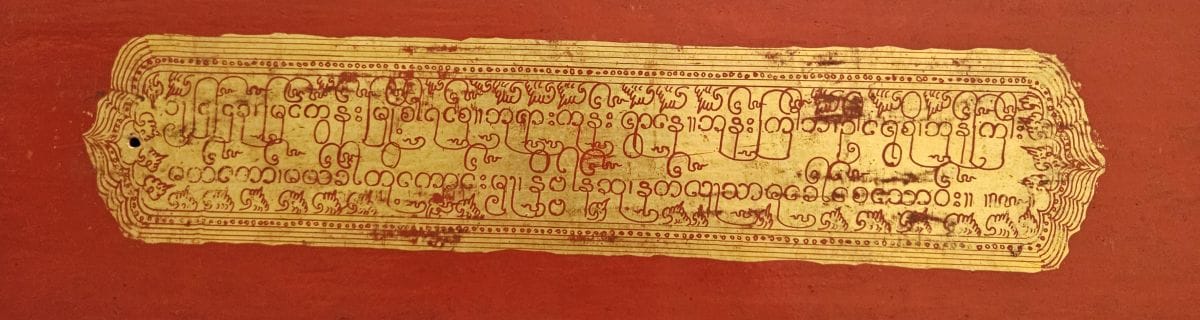
These beautiful Burmese gilded 16-leaf Kamma Vaca manuscripts were usually made as meritorious gifts to monasteries; sometimes, as in this Kamma Vaca, the donor’s name is written on the inside of the cover.
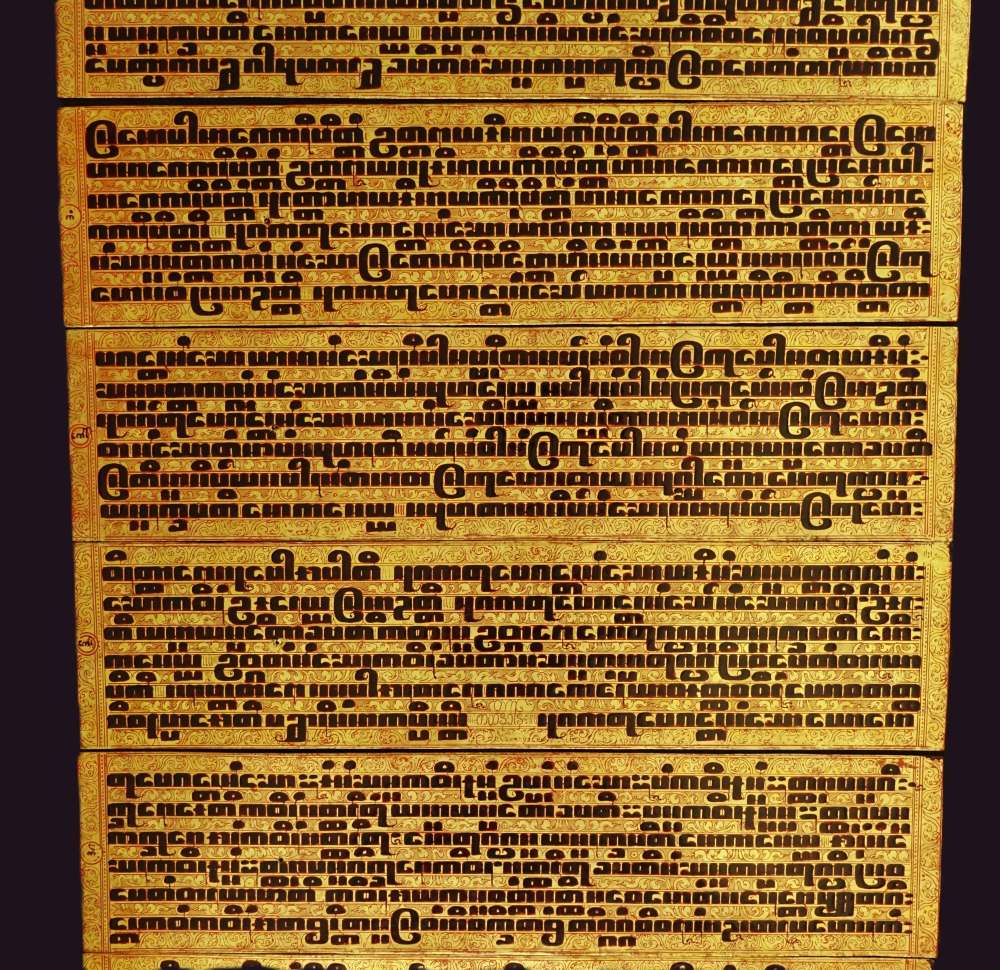
This Burmese square script in the Pali language, known as the “tamarind seed” script, is written in bold black lacquered letters that stand out against a gilded background. Unlike palm-leaf pe-za manuscripts, leaves of this style are typically crafted from lacquered cloth. Once cured, the treated fabric hardens into a dense, flexible board that is sanded smooth before gilding and lettering.
Every leaf (16) features fine red-lacquer scrollwork over gold leaf. The opening text leaf includes outer end panels depicting devas set within cartouches. The first and last leaves on both ends display four distinct panels of celestial beings along the full length of the leaf, with a floral arrangement on the outside edges. The surface wear on the red lacquer reflects authentic, long-term monastic handling.
The inside front cover of the kamma vaca features a donor dedication inscribed in Burmese within a gilded cartouche. An AI translation dates the inscription to 1885 AD, although this date remains unverified (AI translation). Small binding cord holes pierce both covers and every leaf.
SPECIFICATION:
- COMPLETE SET – A kamma vaca in good condition with a legible dedication, covers, and 16 leaves is increasingly hard to find. Minimal corner damage on one page.
- AGE: – (1247 ME (1885 CE) (AI generated)
- LENGTH: – 61 cm
- WIDTH: – 14.5 cm
- HEIGHT: – 4 CM
- SASEGYO: – 4 Metre hand-woven narrow band has faded Burmese script running along the full length)
- WEIGHT: 3 kg.
- #12