Chinese Mingqi Tang Style Terracotta Guardian Lions



Chinese Mingqi Tang Style Terracotta Guardian Lions
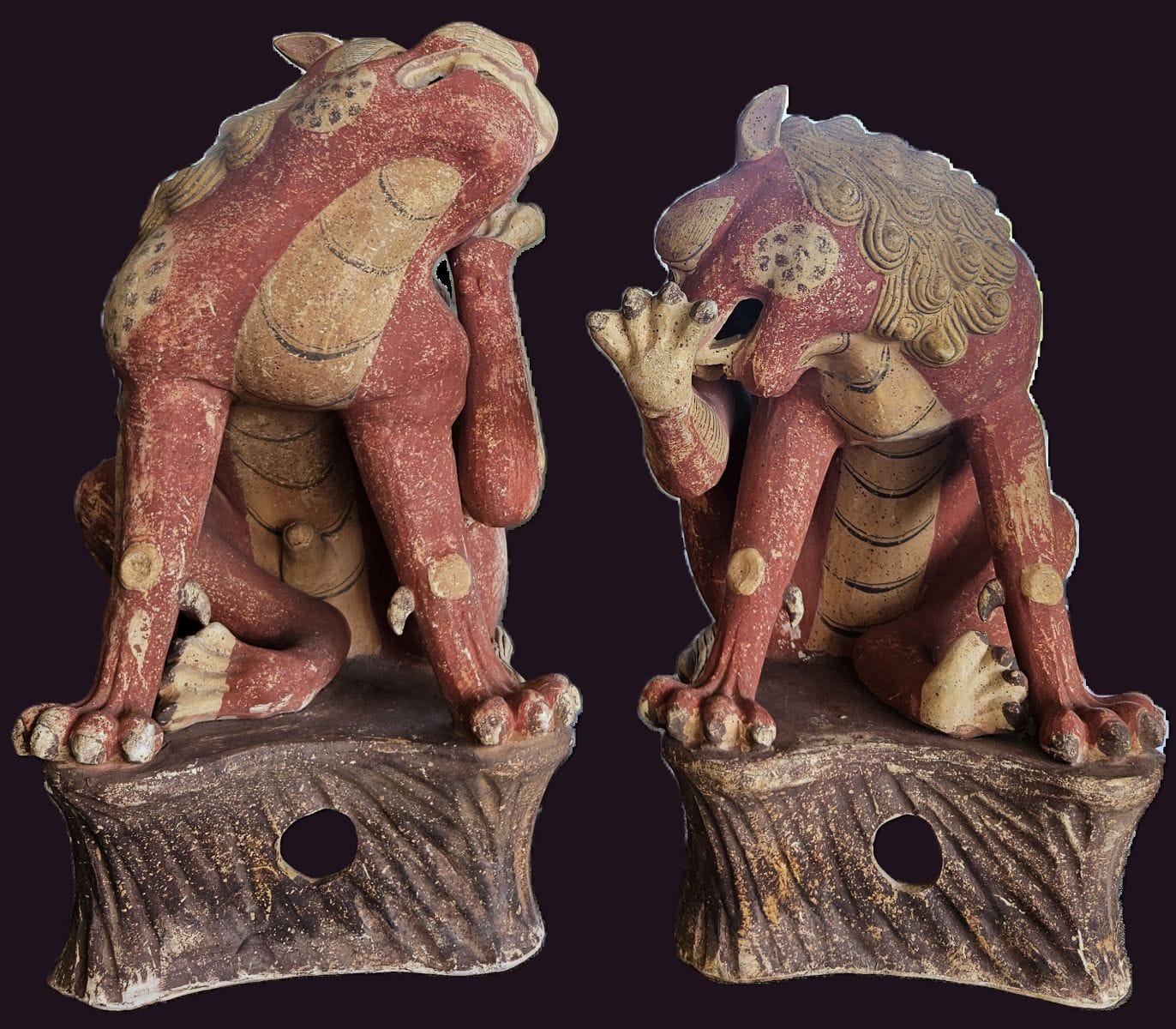
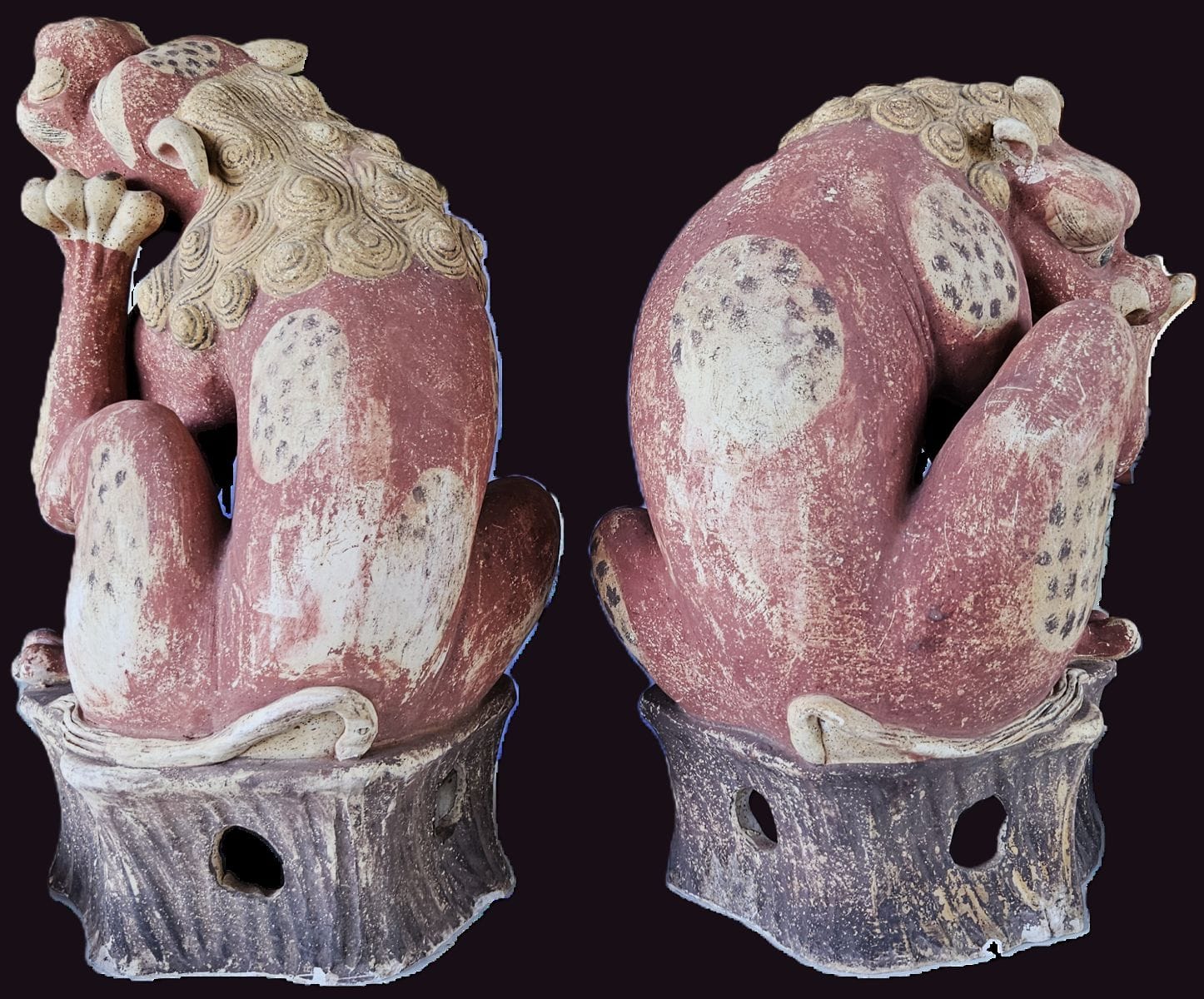
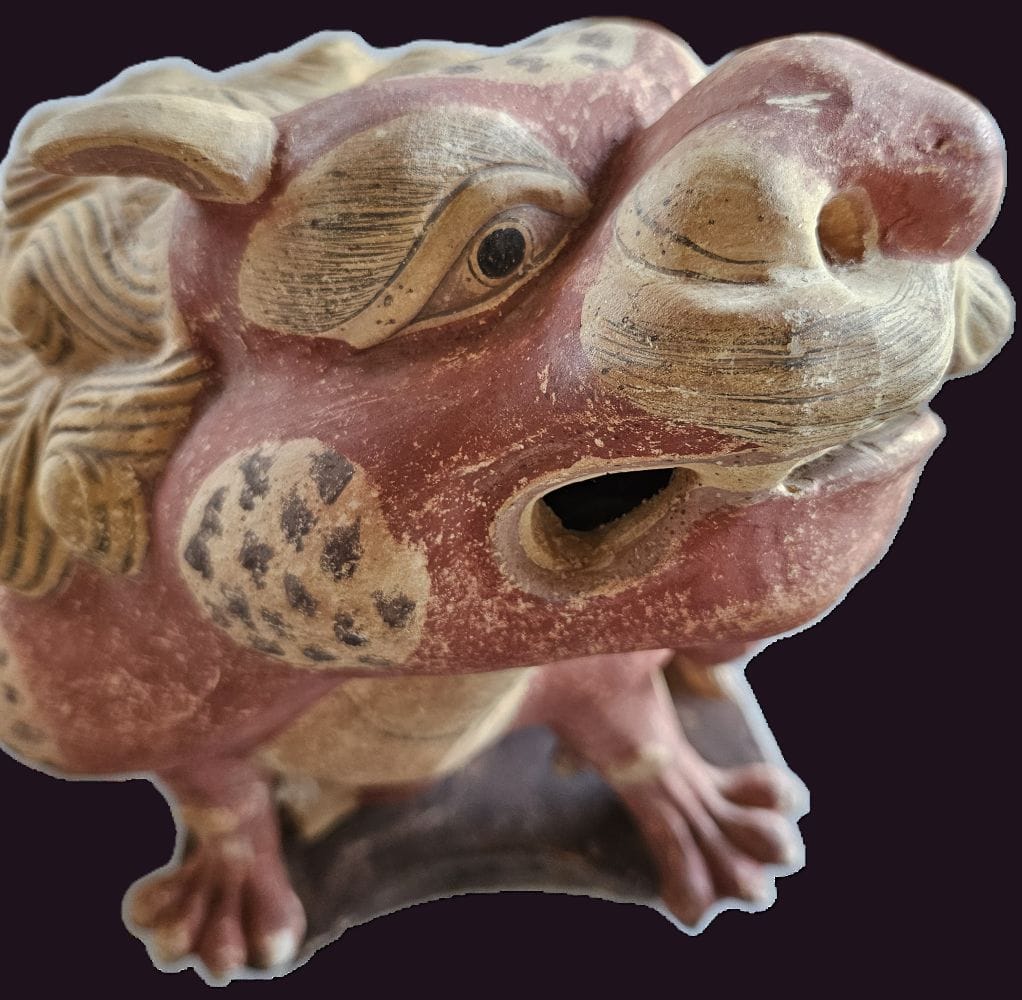
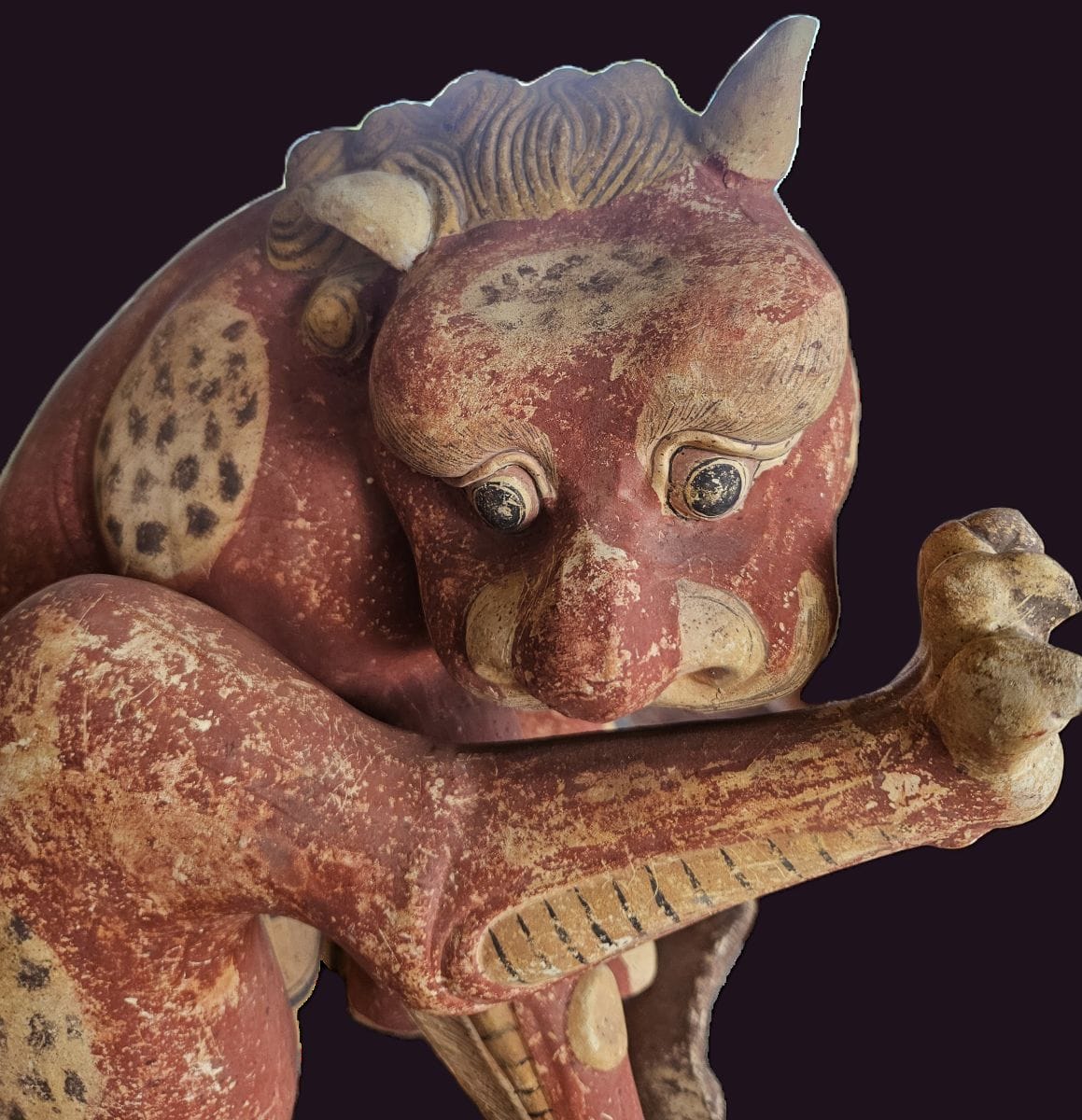
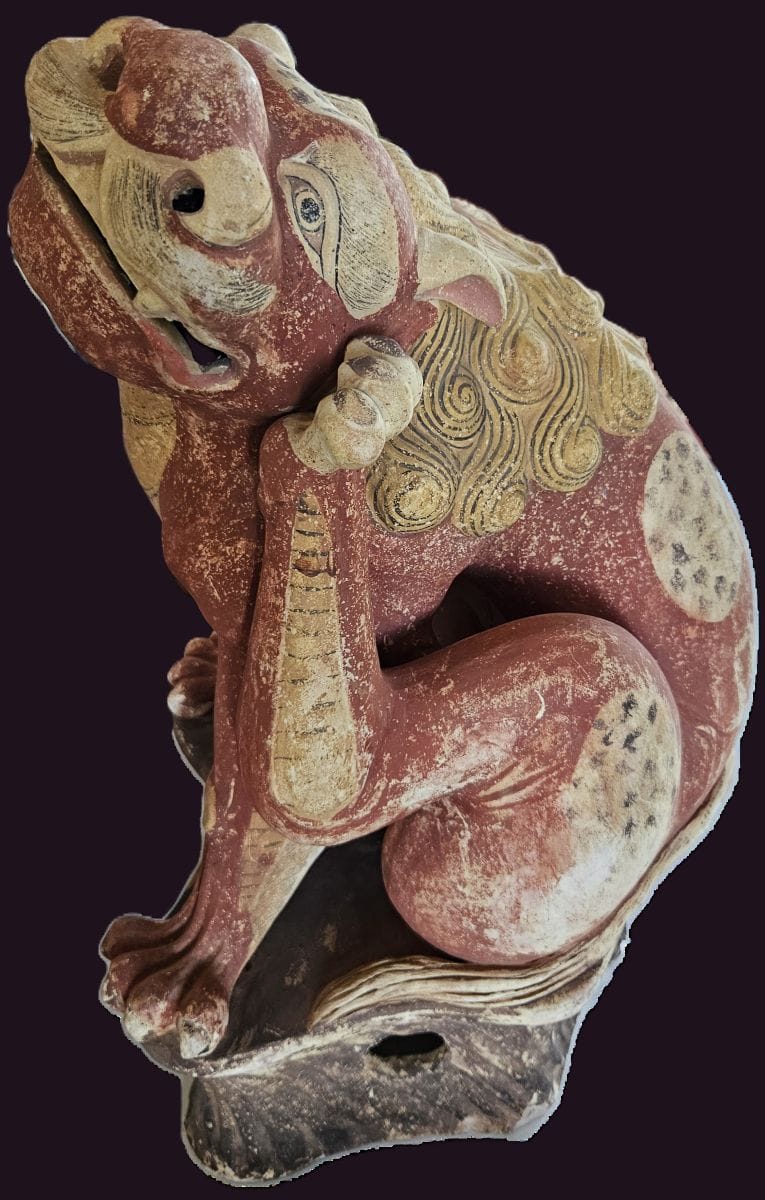
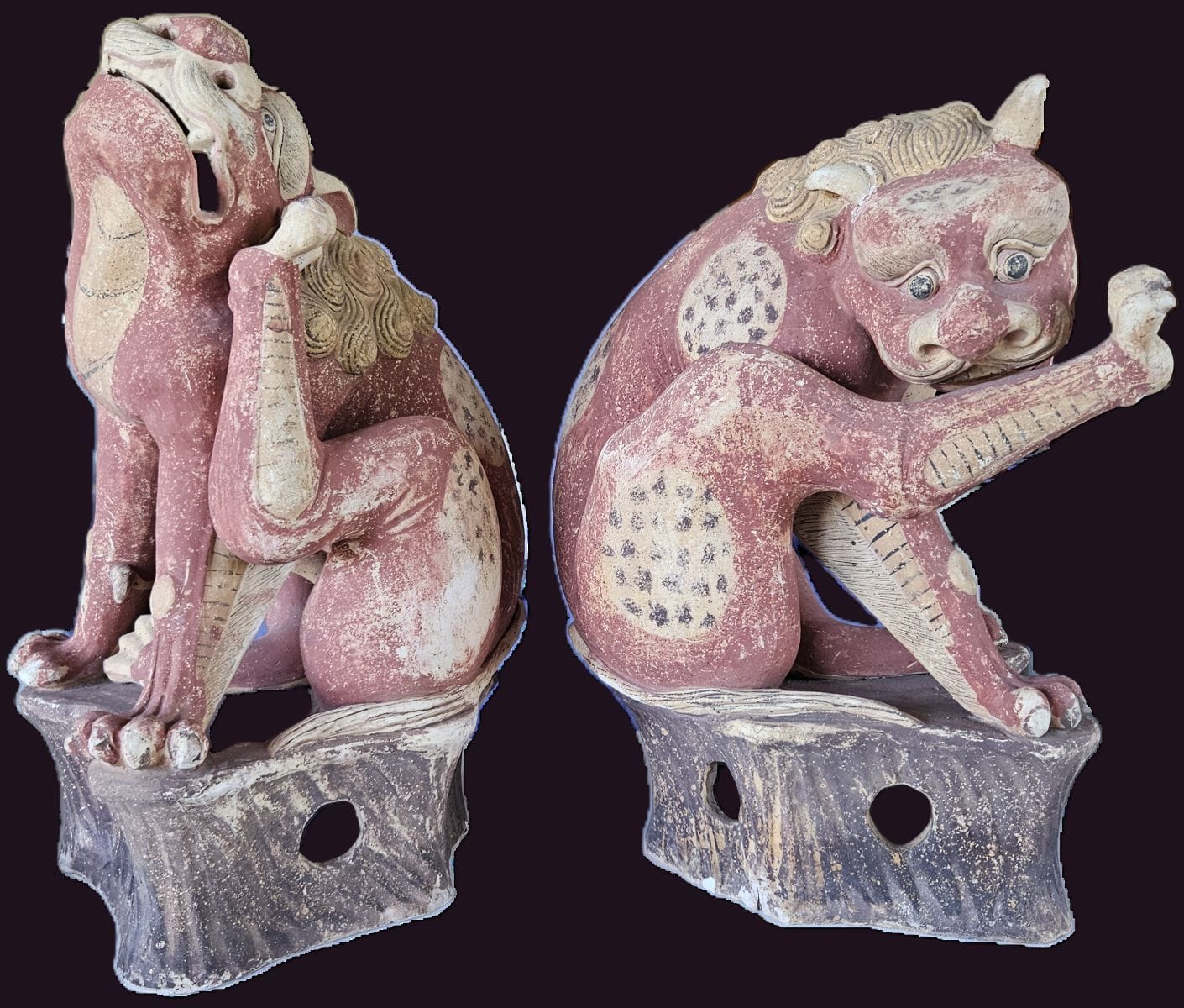
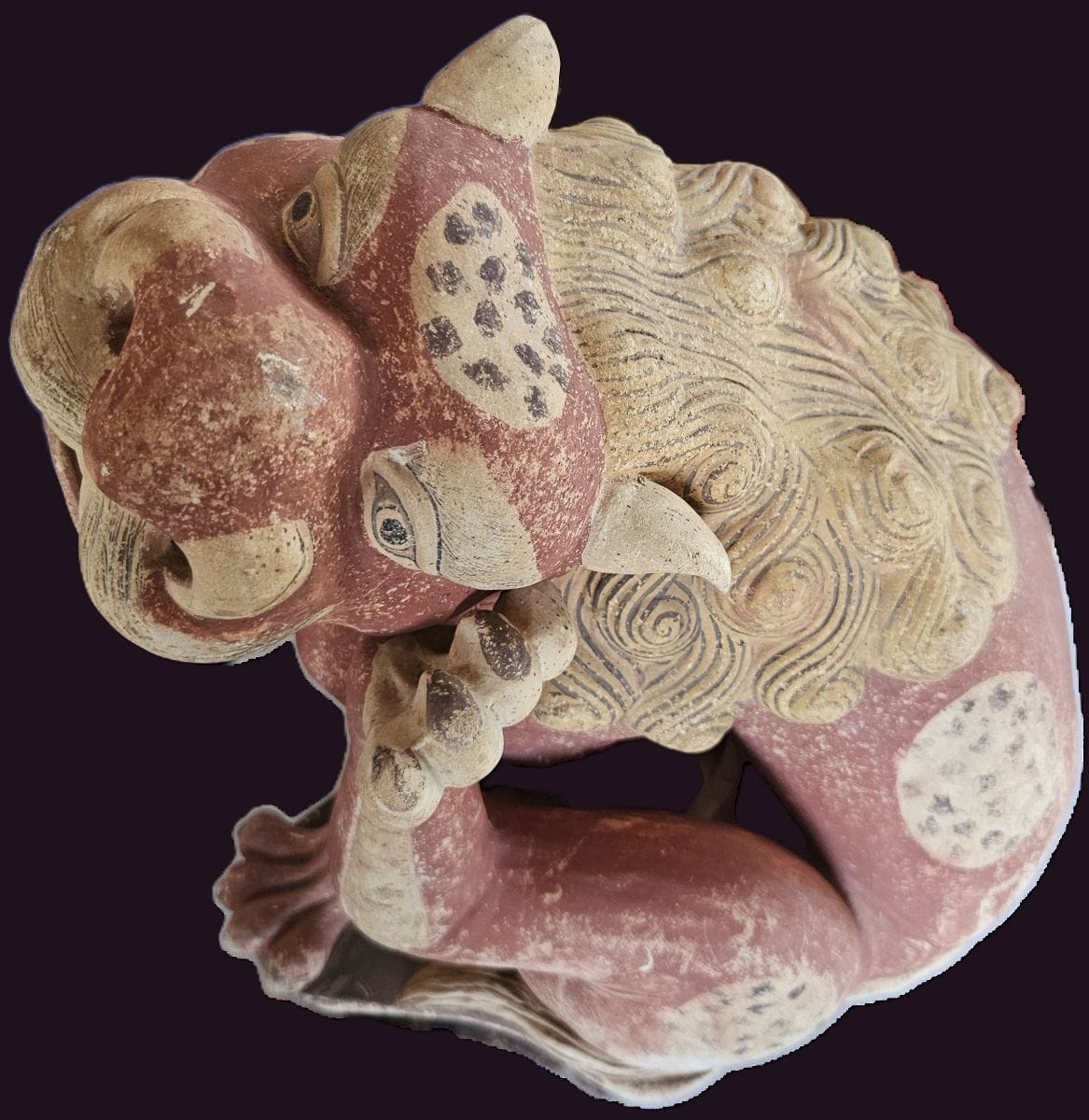
This pair of painted Chinese Mingqi Tang style terracotta Guardian Lions stands approximately 49 cm tall, executed in the classic Tang dynasty mingqi tradition. Modeled in dynamic, animated poses, one scratching behind its ear and the other grooming a paw, the figures display expressive facial features, detailed manes, and a distinct posture rarely seen outside specialized museum collections.
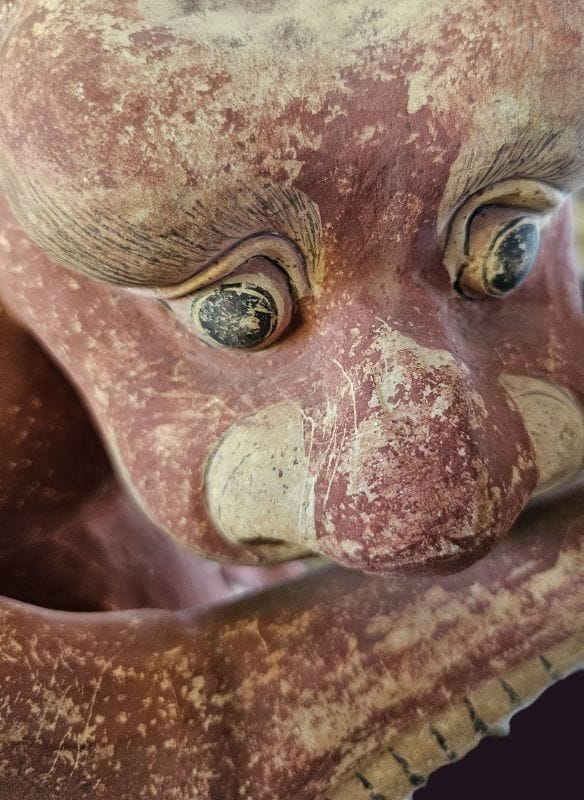
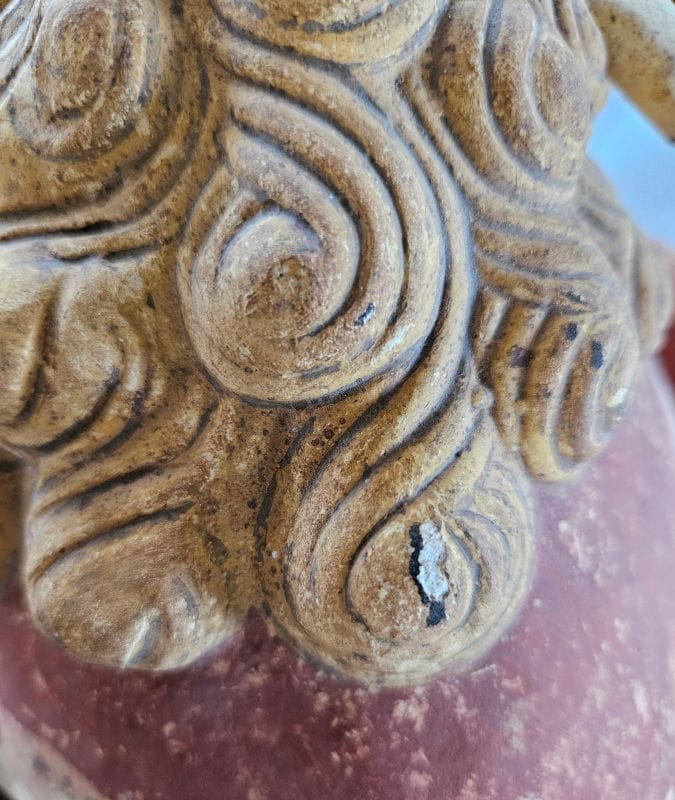
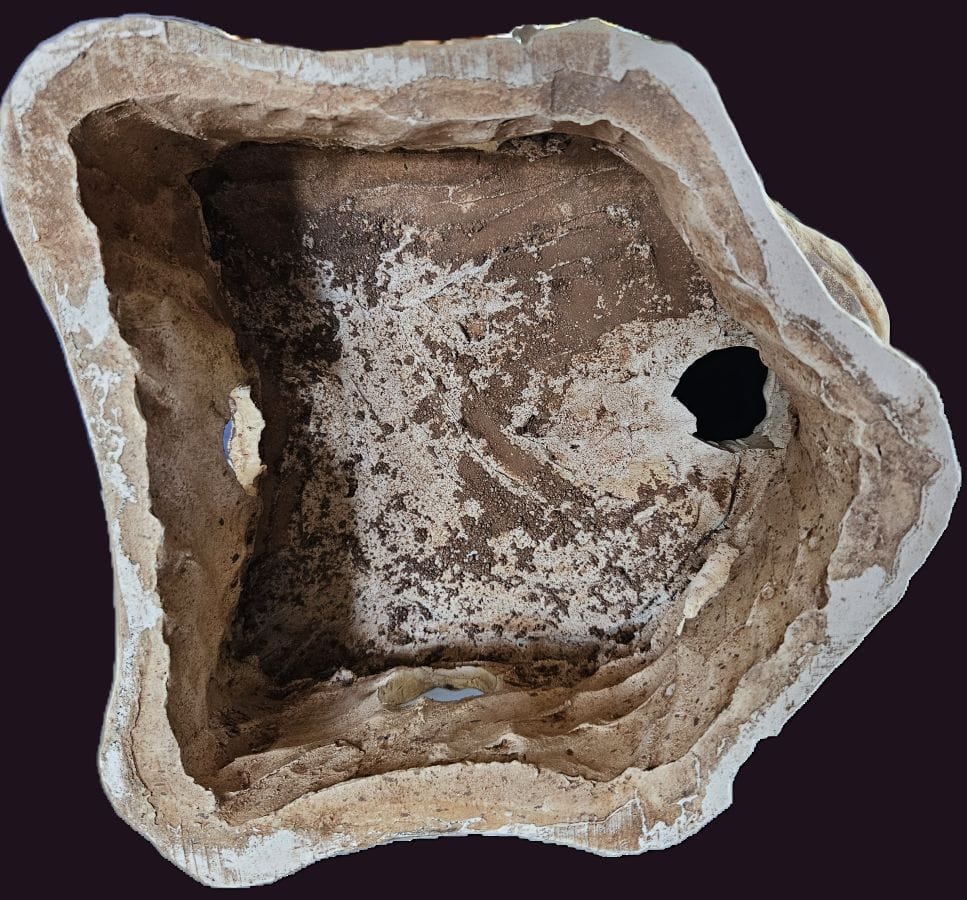
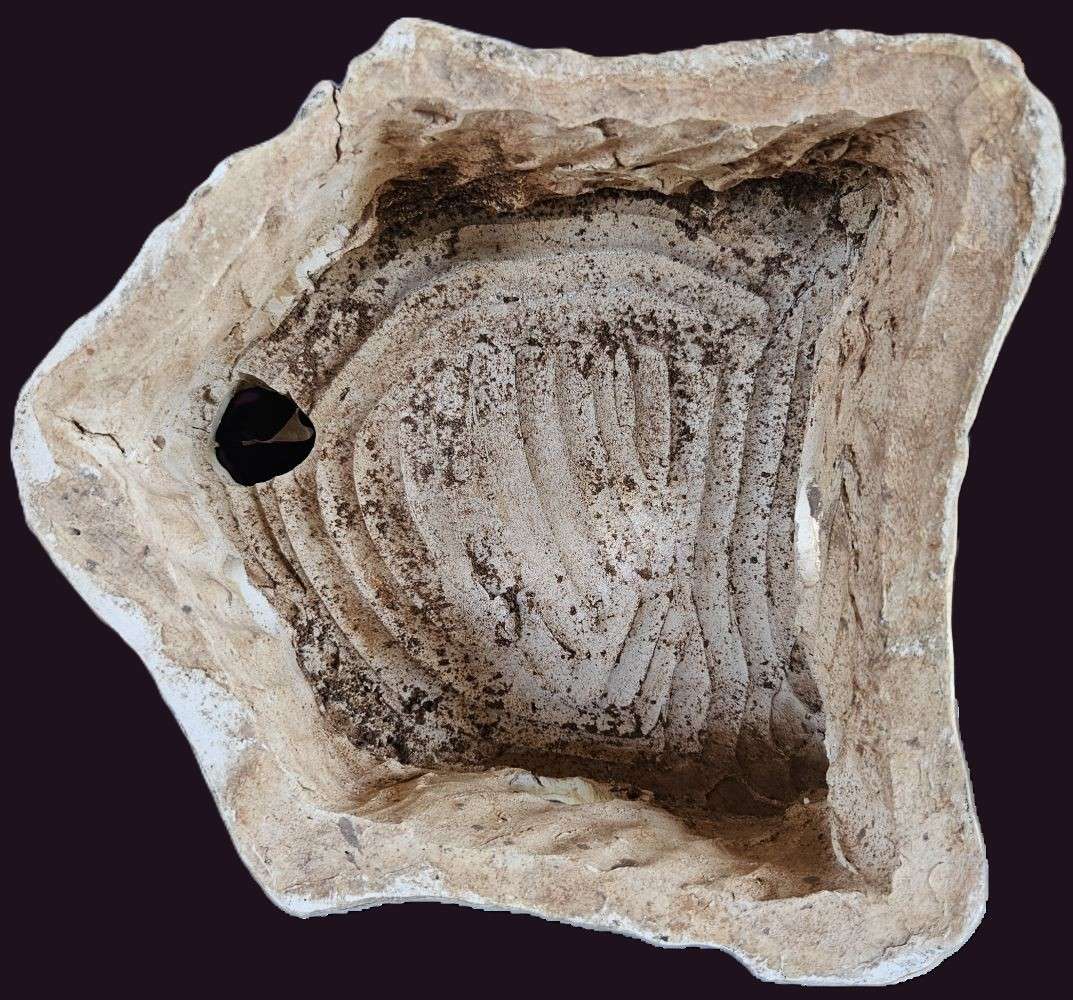
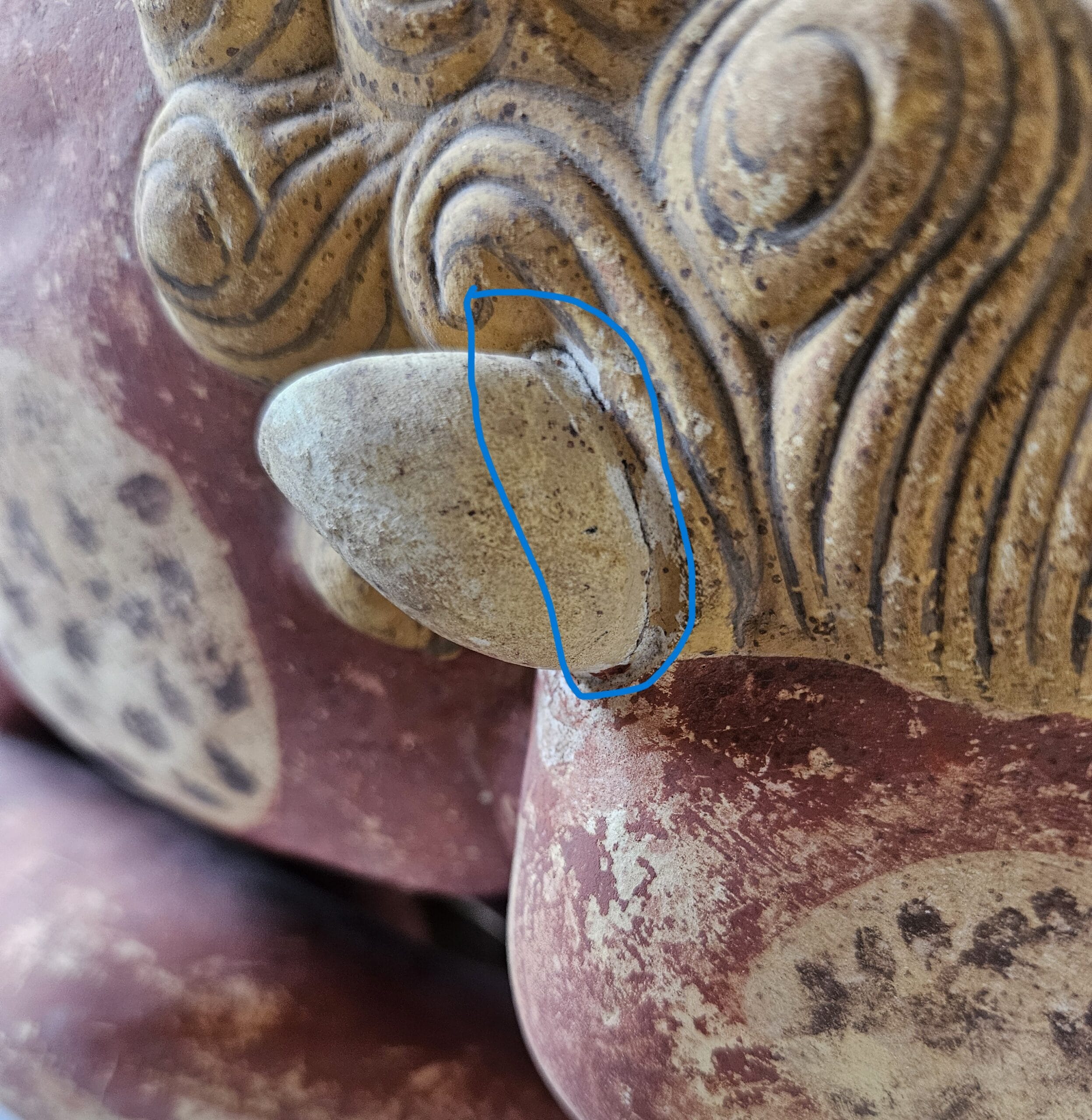
The surface retains multi-layered cold-painted pigments, featuring a pale slip ground, deep red ochre, and black brushwork details defining the eyes and body patterns. Looking closely, they show realistic pigment loss, flaking along the red surface layers, and mineralized encrustation settled into the carved grooves of the mane. The bases are hollow-formed with traditional firing vents, showing hand-molded inner walls consistent with period manufacturing techniques.
While these pieces have not undergone scientific thermoluminescence (TL) testing, the physical construction, pigment layering, and alignment with rare period precedents strongly support their potential authenticity.
SPECIFICATIONS:
FEMALE GUARDIAN LION
- HEIGHT: 48 cm
- WIDTH ACROSS FRONT: 22 cm
- WEIGHT: 9.5 kg.
MALE GUARDIAN LION
- HEIGHT: 49 cm with similar dimensions give or take a centimetre
- WEIGHT: 9.7 cm
CONDITION: Historical repair to base of one year with wear to the red ochre paint (view images in full screen mode for general condition of paintwork)
Chinese Mingqi Tang Style Terracotta Guardian Lions
This specific pairing represents painted earthenware Zhenmushou, mythical tomb guardians modeled as stylized, scratching lions or “earth spirits”.
The “Scratching” Posture: While many zhenmushou stand menacingly flat on all fours, pairs showing this anthropomorphic, cat-like grooming behavior (one scratching behind its ear, the other grooming its paw) are heavily documented in Sui and early Tang Dynasty tomb excavations across northern China.
The Perforated Pedestals: The hollow circular holes in the bases are functional artifacts of the kiln-firing process. They allowed hot air to circulate inside the hollow earthenware body, preventing the heavy clay from cracking or exploding under extreme temperatures.
Pigments: The remaining red slip, dark painted accents defining the ribs, and leopard-like spots on the ears or manes are typical of unglazed, cold-painted pottery from this era.