12th-14th Century Bronze Pagan Buddha Statue
12th-14th Century Bronze Pagan Buddha Statue
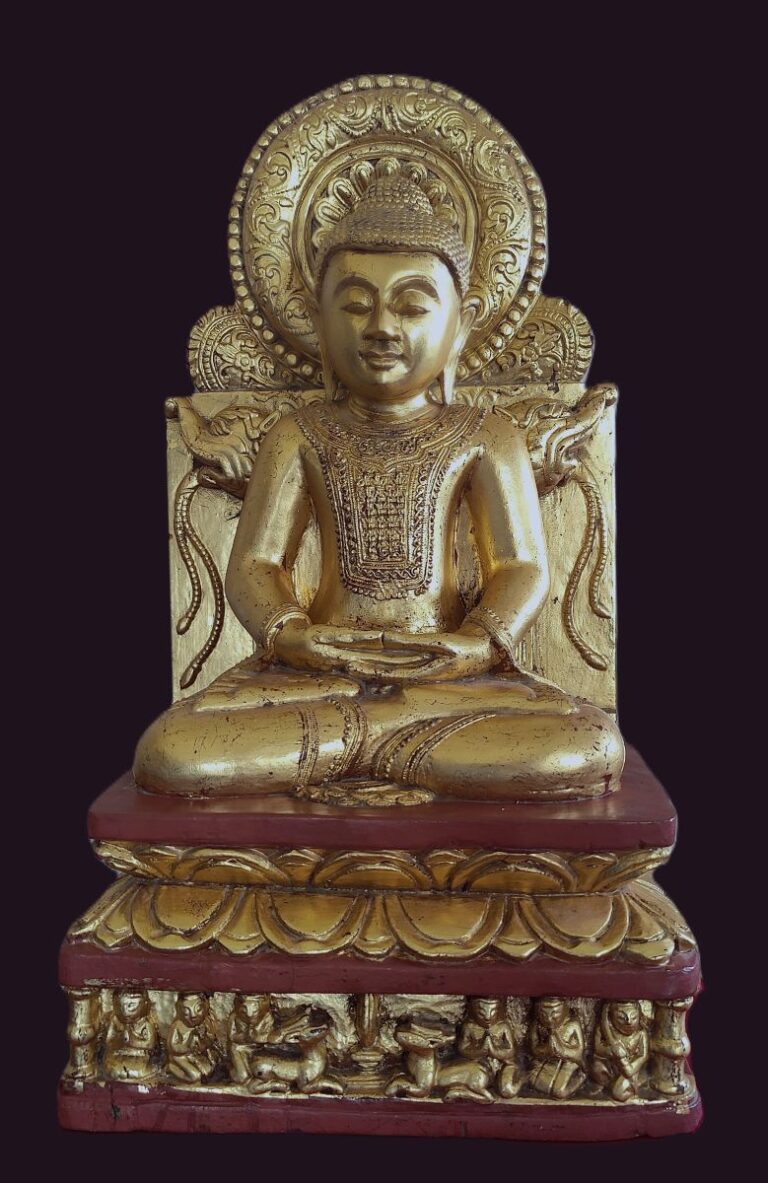
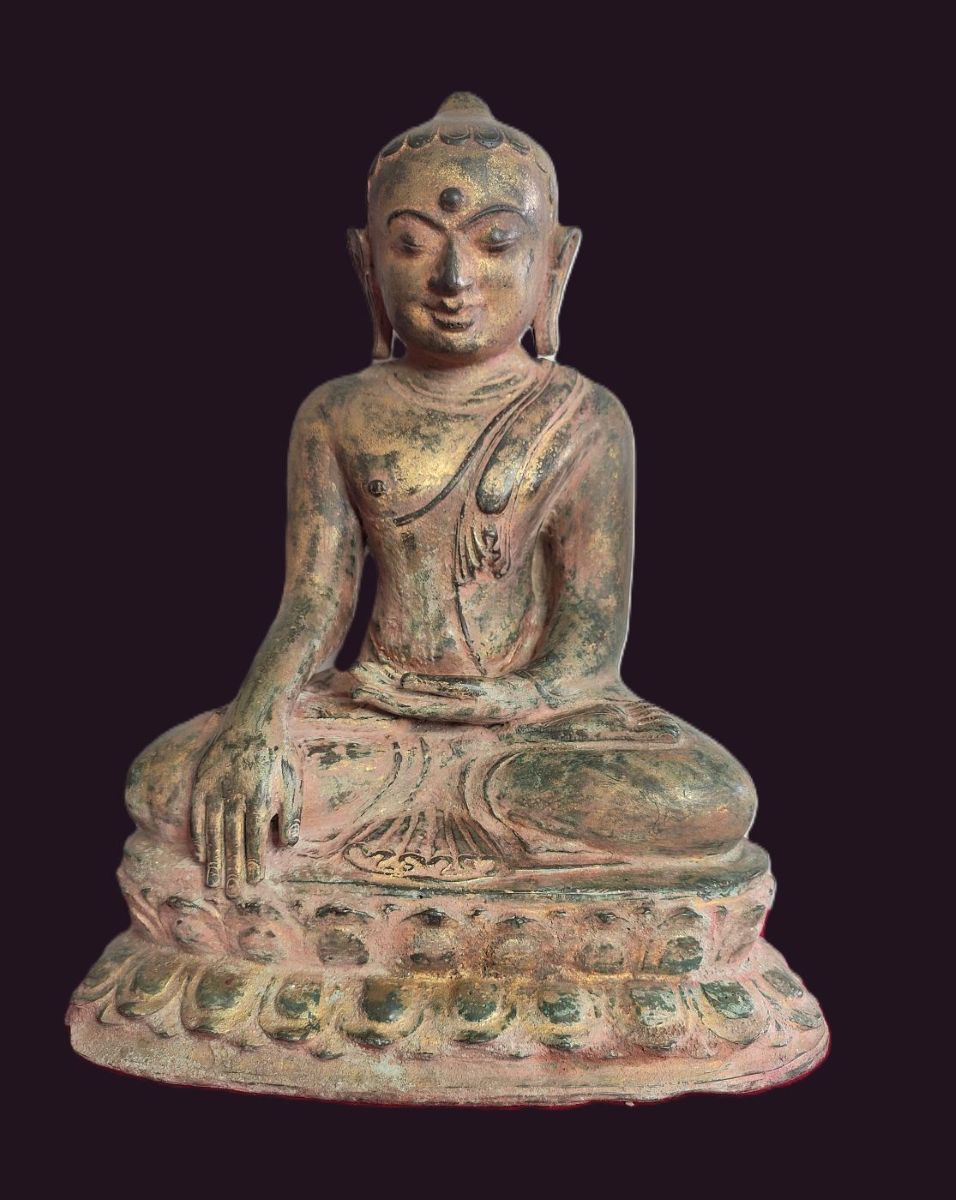
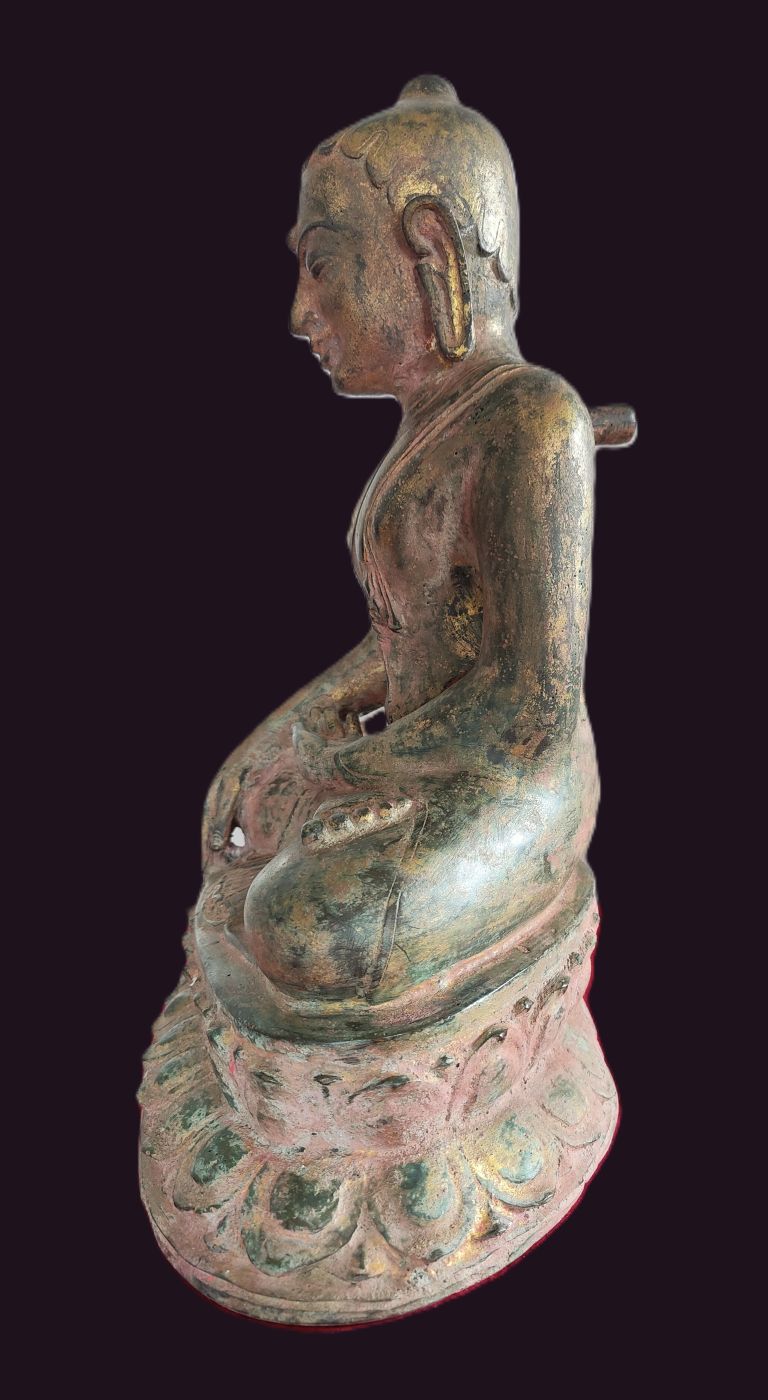
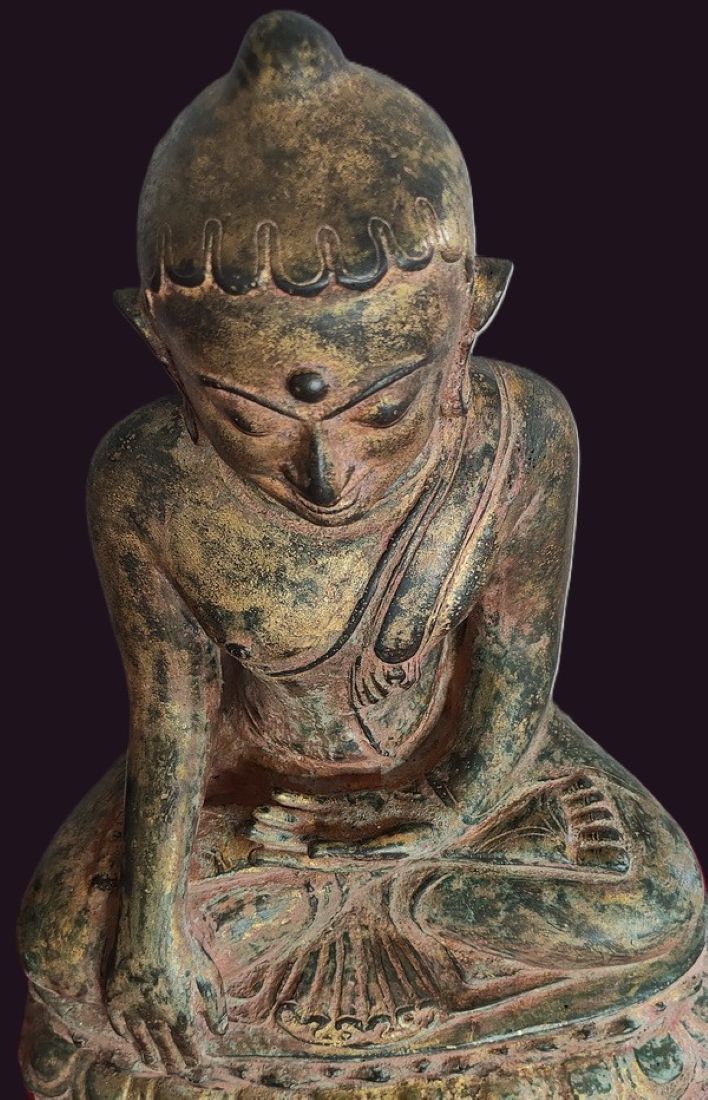
This rare 12th-14th Century Bronze Pagan Buddha statue is a significant bronze figure depicting the Buddha seated in vajrasana (diamond throne) on a double-lotus pedestal. The right hand is in the bhumisparsha mudra (earth-touching gesture), marking the moment of his enlightenment.
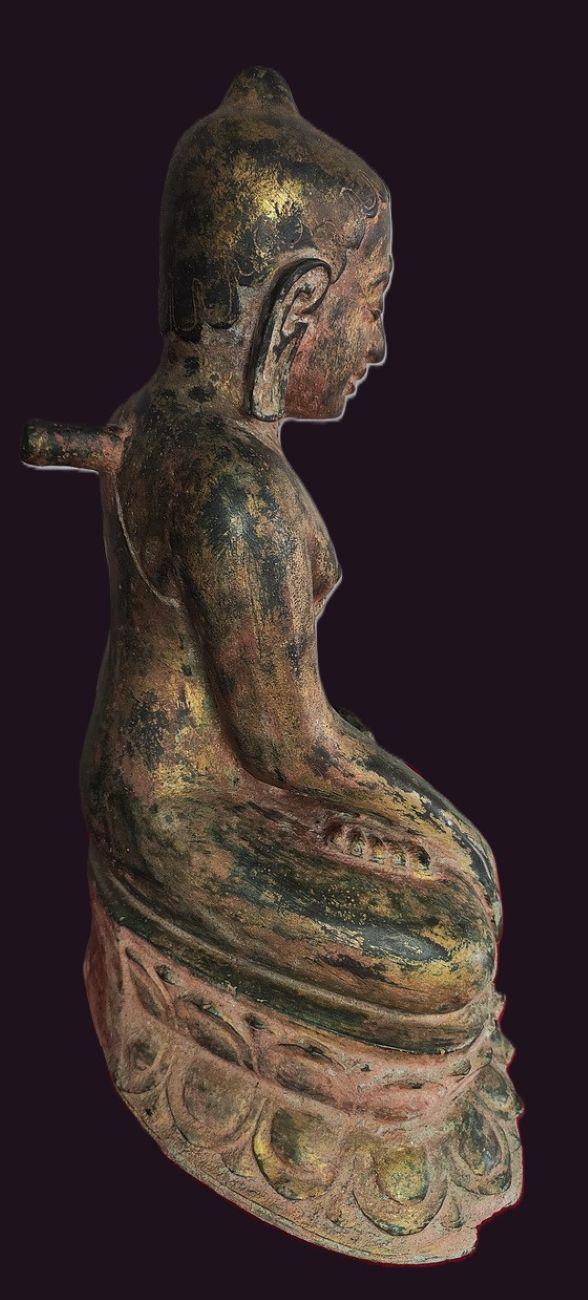
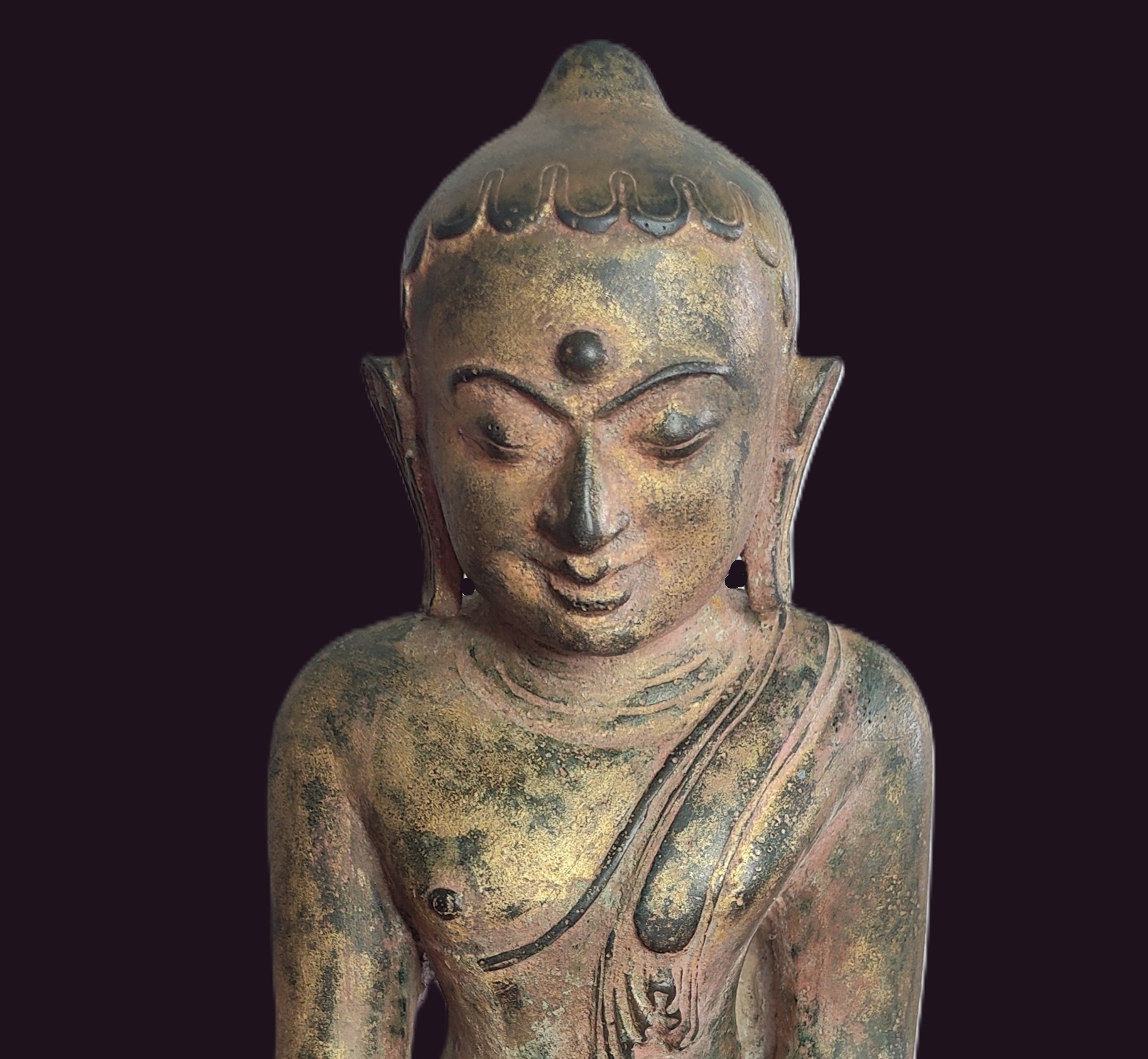
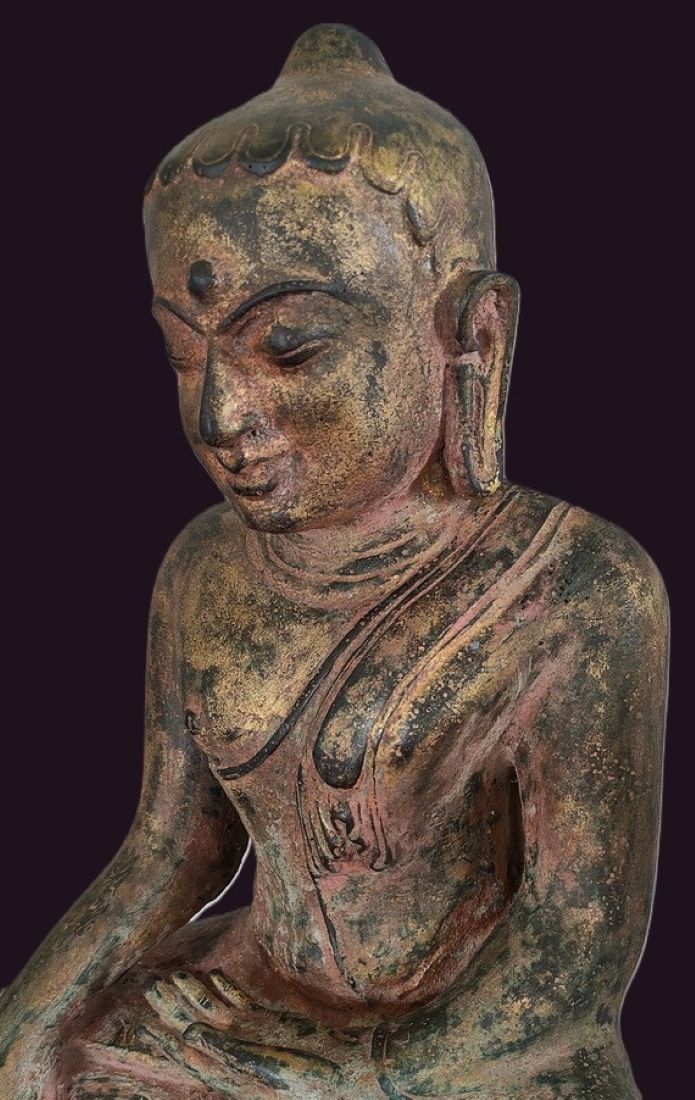
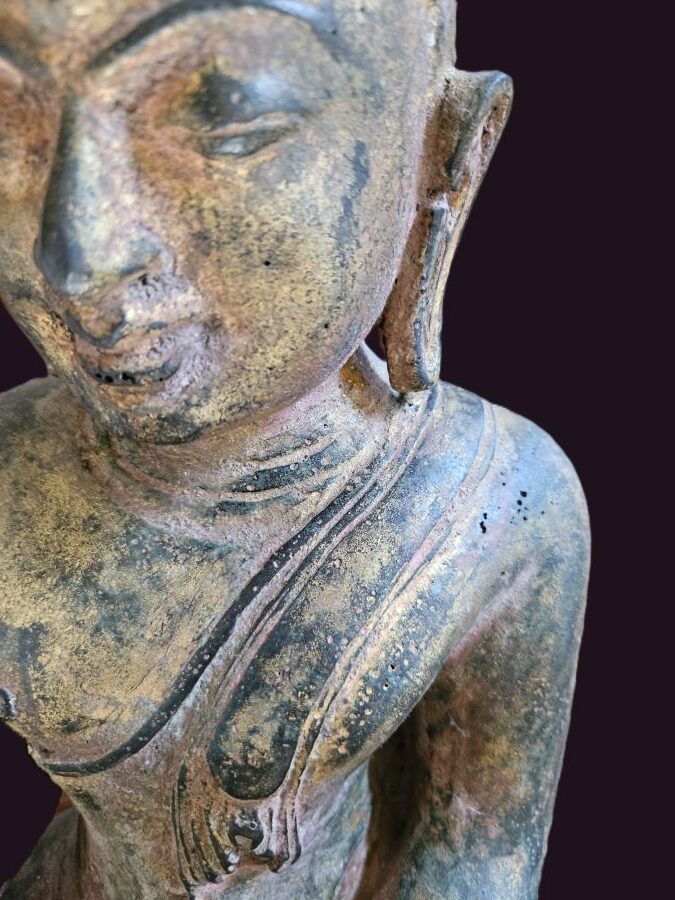
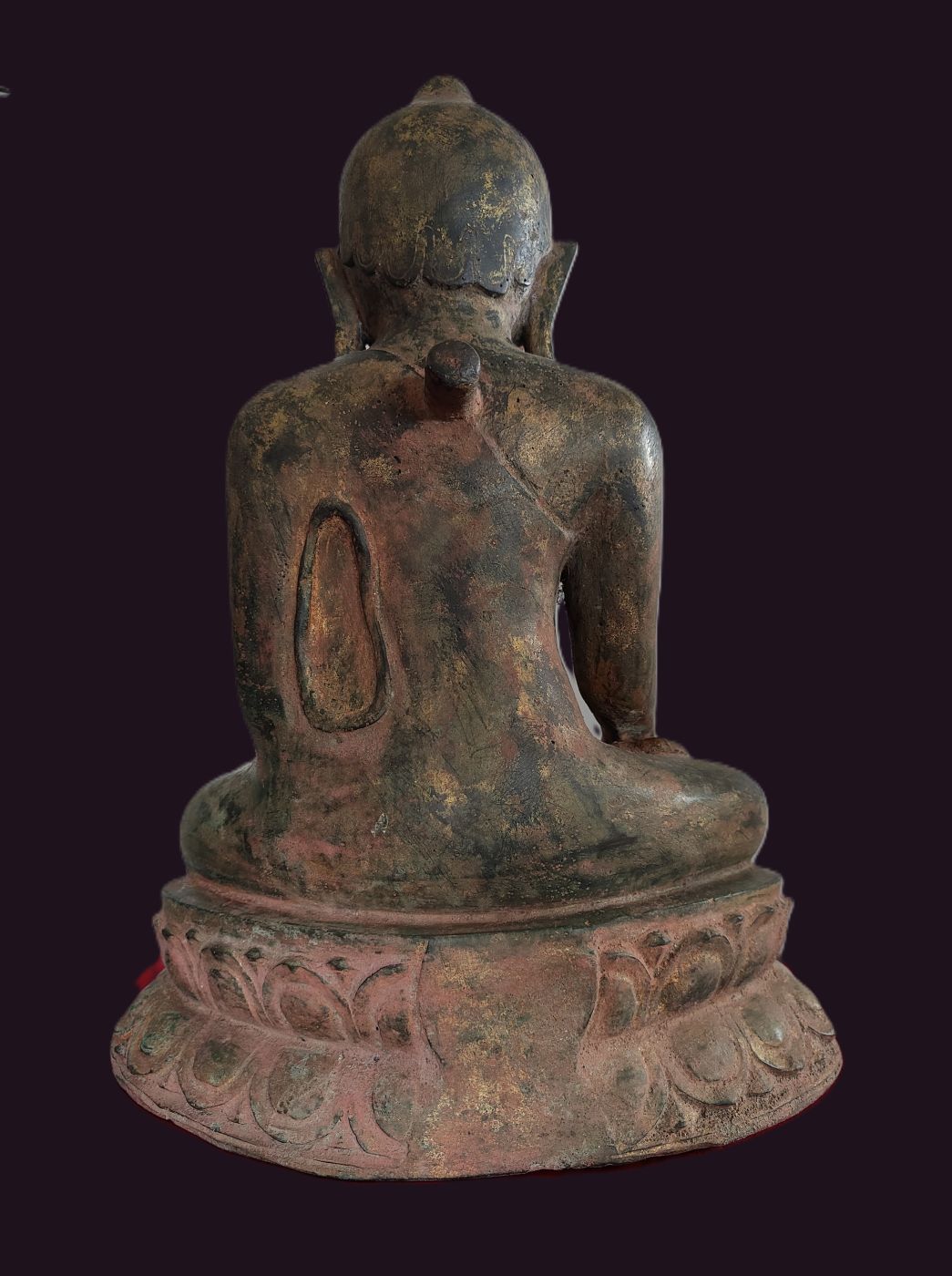
The statue exemplifies the “Pala-Burmese” synthesis characteristic of the Pagan Golden Age, featuring a prominent urna on the forehead, a scalloped “lotus hairline,” and a tall, conical ushnisha. A row of downturned scalloped lotus petals decorates the forehead and extends to the back.
Although I have stated this as being a Pagan Buddha statue this scalloped hairline together with the prominent urna mark on the forehead with long earlobes ending just above the shoulders, and fan-shaped drapery fold (swallow-tail sanghati), possibly points to regional workshop traditions from the transitional Rakhine/Arakanese or Mon-influenced periods.
SPECIFICATIONS:
- ORIGIN: Myanmar (Burma)
- PERIOD: 11th–14th Century
- DIMENSIONS: HEIGHT: 49 cm
- WIDTH: 38 cm
- WEIGHT: 16.15 kg
- #123
12th-14th Century Bronze Pagan Buddha Statue
A prominent, raised urna occupies the center of the forehead referred to as the “Eye of Wisdom” or “Third Eye,” this auspicious mark represents the Buddha’s transcendental vision and the attainment of ultimate enlightenment. The lotus bud style hairline are not surface marks they work in tandem with the raised ushnisha (cranial bump).
The figure is seated in vajrasana on top of a double lotus pedestal (padmasana) with the hand gesture in bhumisparsha mudra, the “Earth Witness” gesture. This represents the pivotal moment under the Bodhi tree when Siddhartha Gautama summoned the earth to witness his victory over the demon mara and his army.
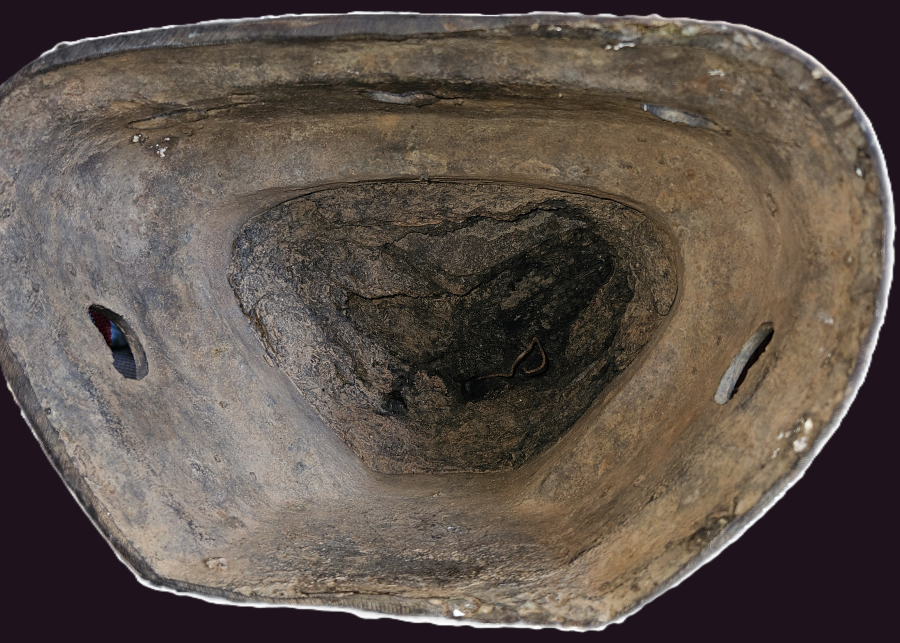
Structural Integrity: An integrated bronze lug on the reverse suggests the piece was originally anchored to a temple niche or served as the support for a separate backplate (torana). The metal exhibits deep microscopic pitting that penetrates through to the hollow interior, a hallmark of slow, natural corrosion over centuries. The base retains a heavy, petrified mineral encrustation that has become part of the bronze’s structure.