Toraja Tau Tau Male & Female – Sulawesi Wood Art
Toraja Tau Tau Male & Female – Sulawesi Wood Art
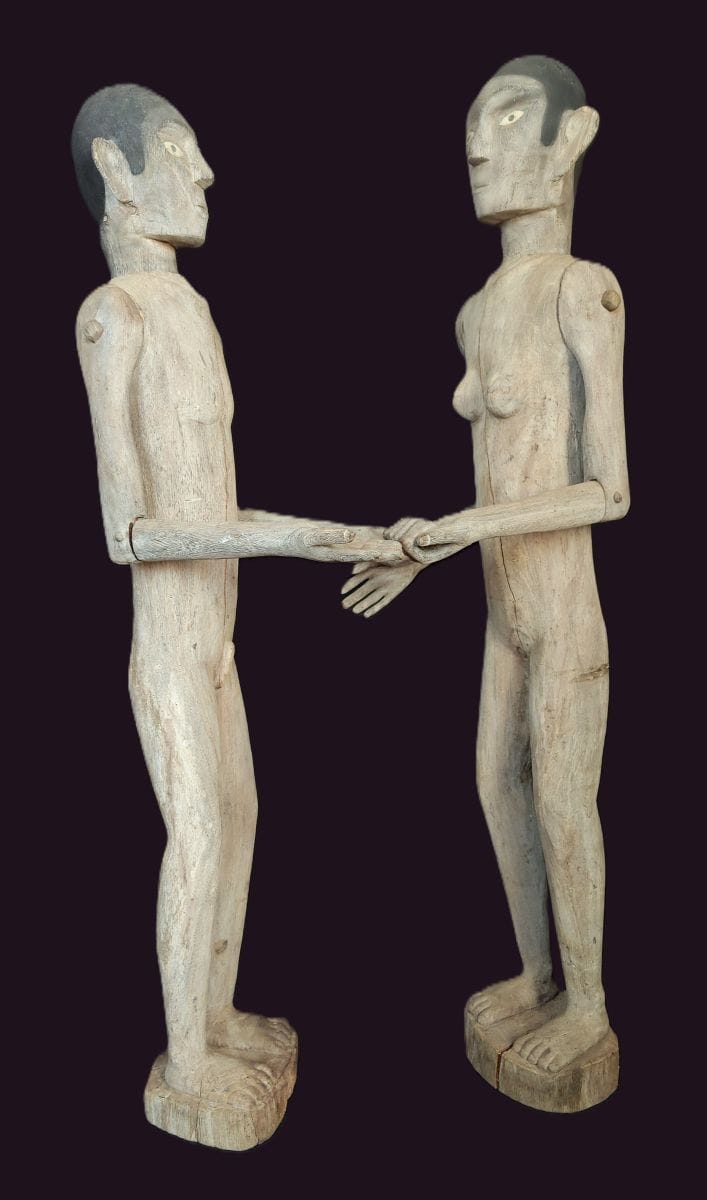
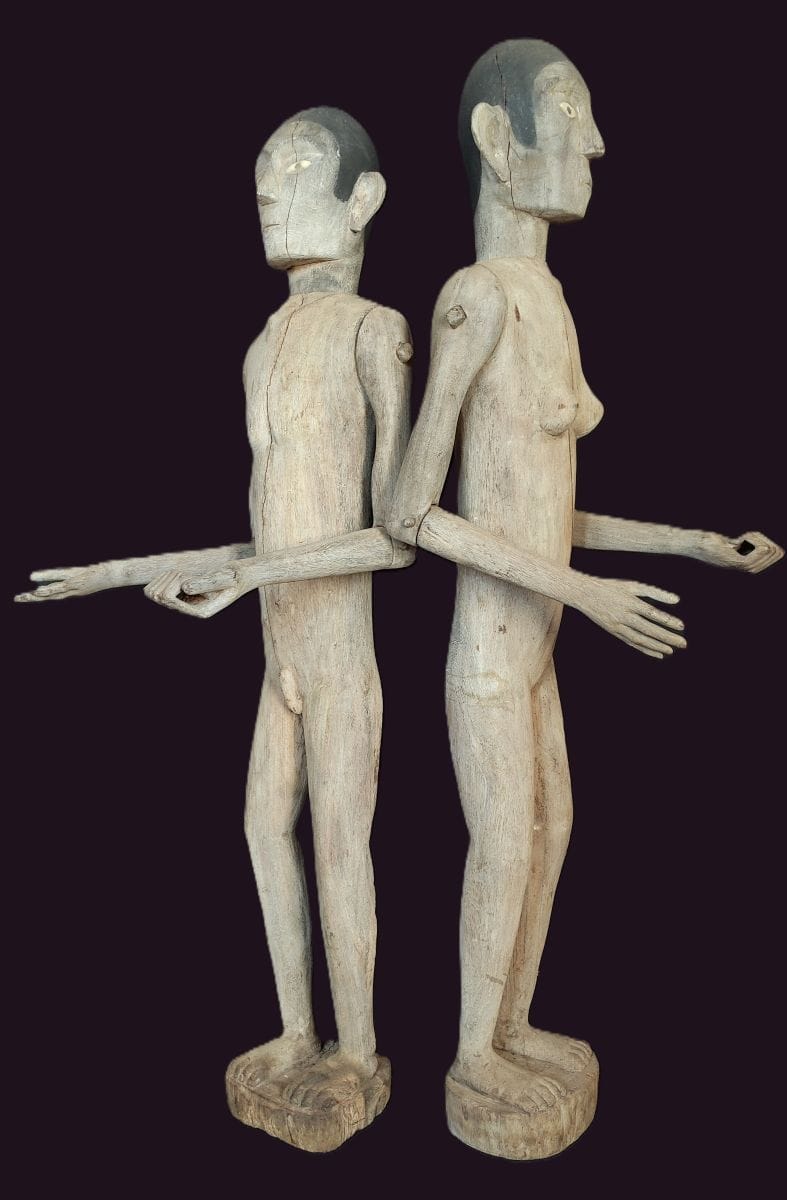
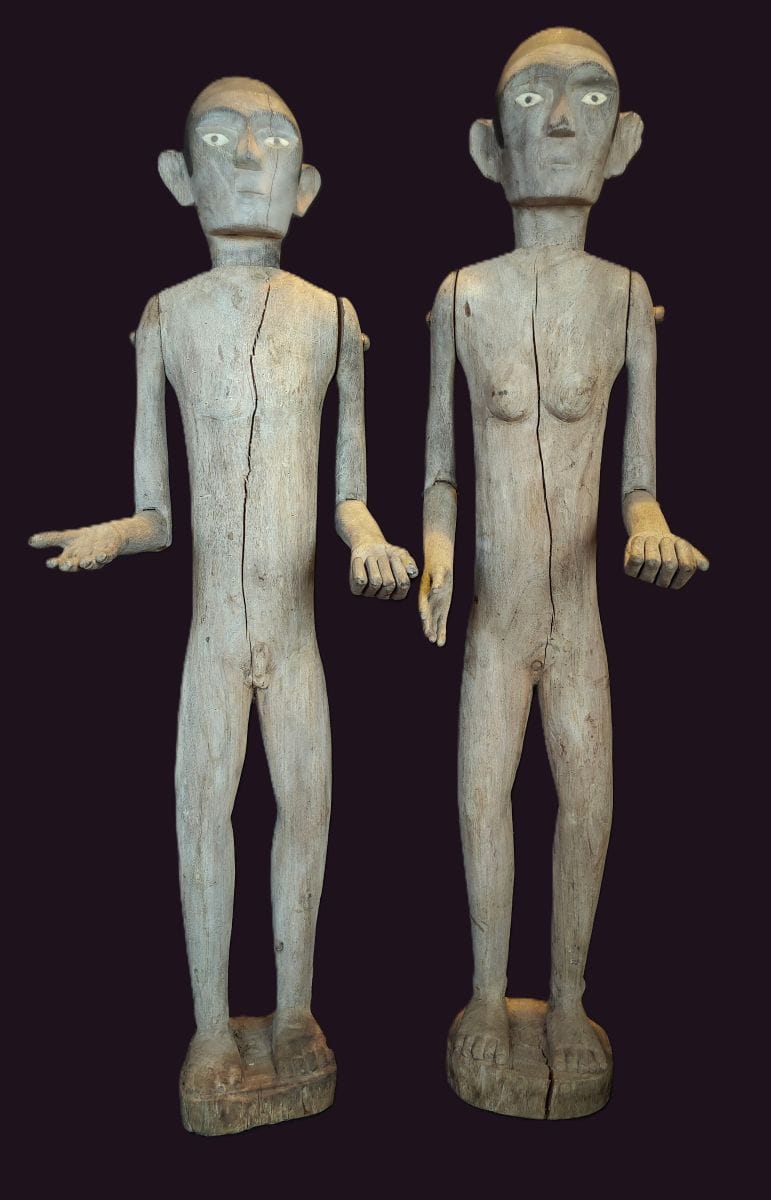
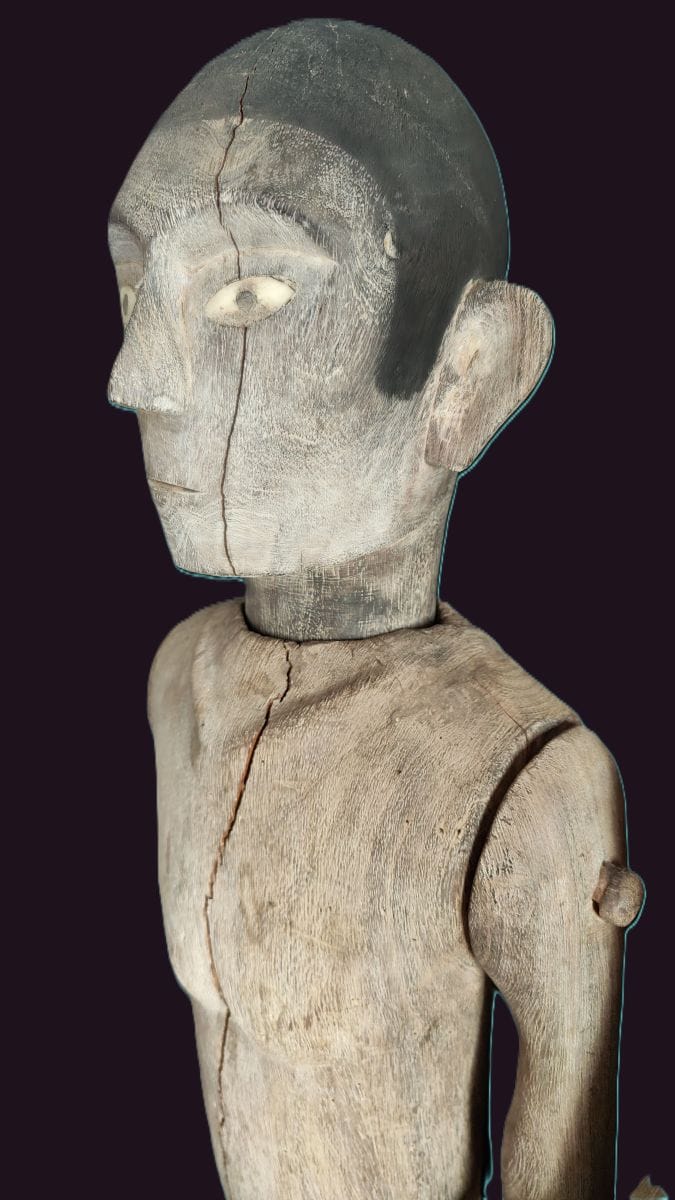
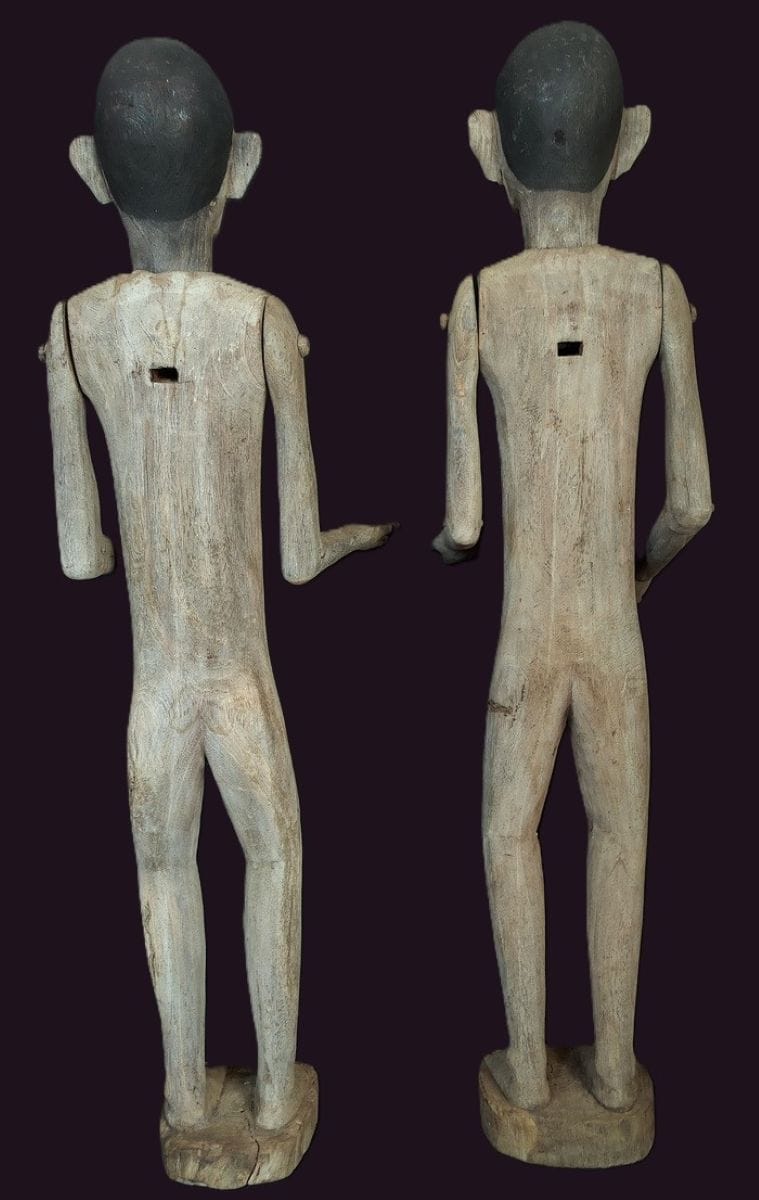
Pair Toraja Tau Tau Male & Female – Sulawesi Wood Art dating to the first half of the 20th century. Carved from dense jackfruit wood (nangka). This male and female pair of Tau Tau represents high-status ancestors of the Toraja people in the highlands of South Sulawesi. In traditional Aluk Todolo belief, these effigies serve as physical resting places for ancestral spirits, carved to protect living descendants and watch over family lineages.
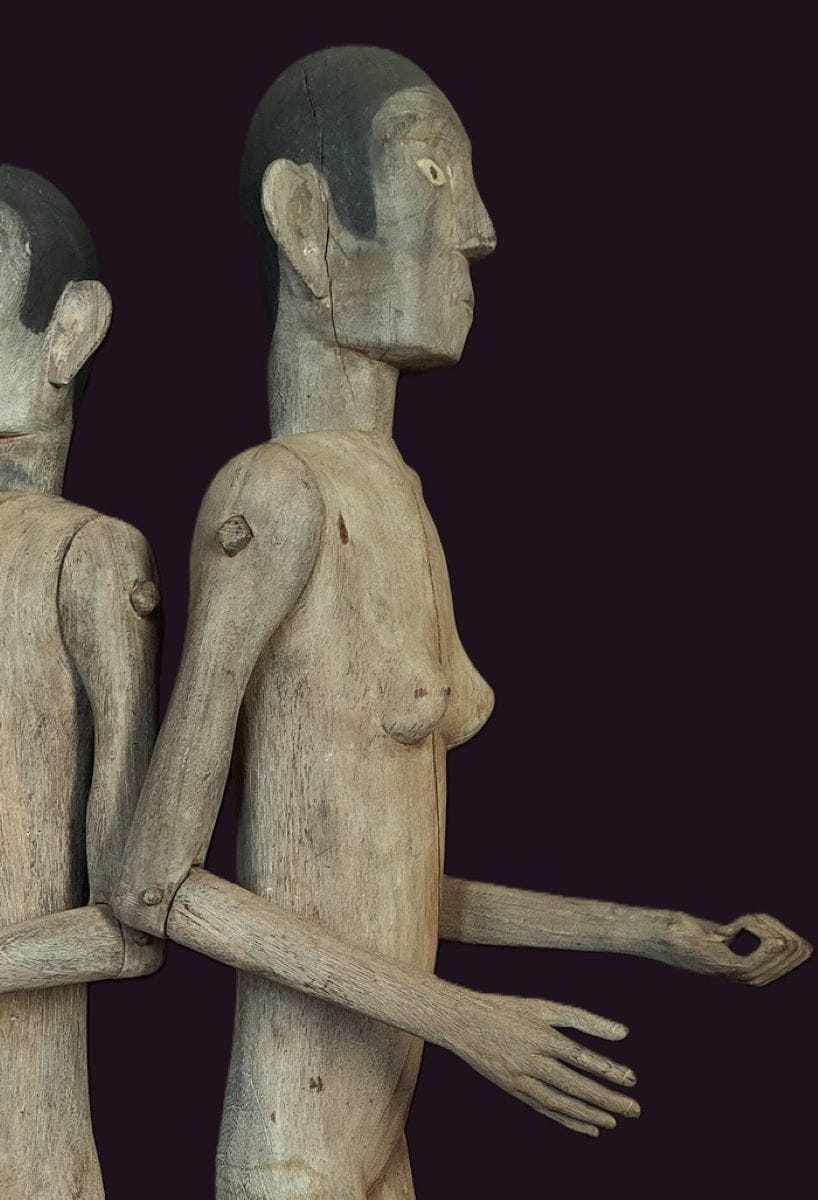
Unlike earlier rigid 19th-century carvings, mid-century Tau Tau incorporates articulated, peg-jointed arms, a style influenced by European doll-making introduced to the region in the early to mid-20th century.
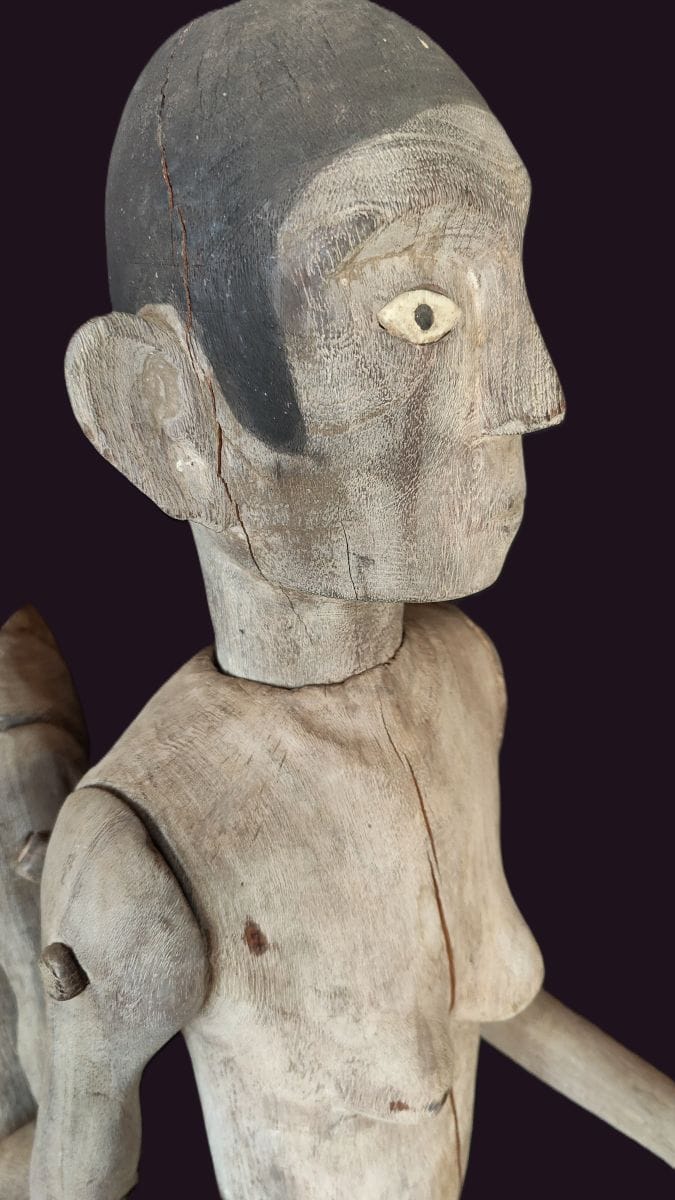
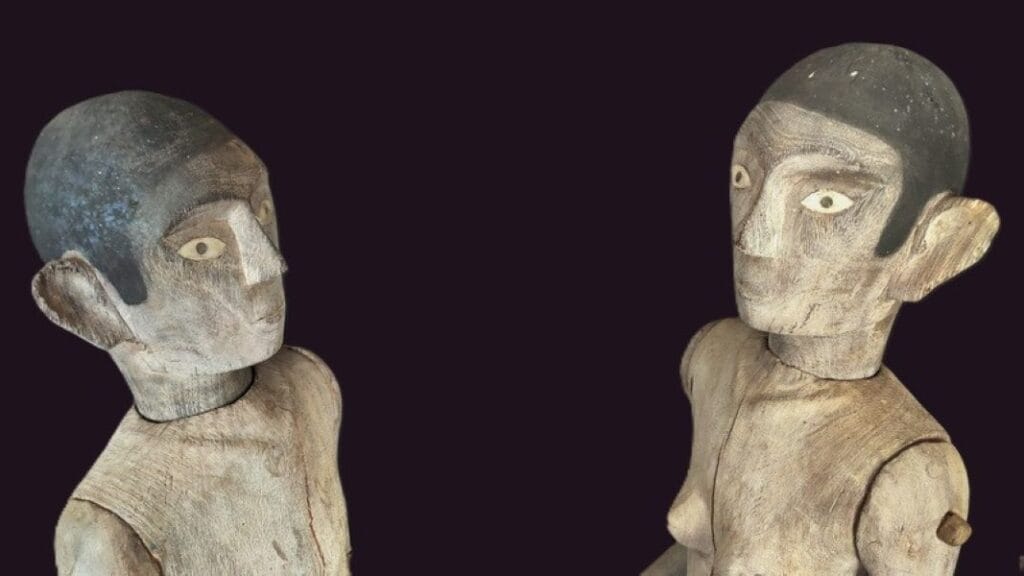
This pair are carved as a matching male and female couple, reflecting the balance of family lineage and ancestral protection. The eyes are almond shaped inllaid with bone/shell with hand painted pupils capturing the lifelike gaze essential for guarding the living.
The shoulders and elbow are hand fitted with pegs that hold the arms in a traditional gesture of receiving. This pair both show cracking related to the fluctuations in temperature with natural weathering.
This pair were acquired by us in Indonesia during the 1980’s
SPECIFICATIONS:
- HEIGHT: Male: 119 cm – Female 122 cm
- WEIGHT: 8.05 kg and 8.15 kg
- #1300A
Toraja Tau Tau Male & Female – Sulawesi Wood Art
In the high, misty valleys of Tana Toraja, death is not viewed as a sudden end, but as a gradual journey toward the realm of the ancestors (Puya). Central to this spiritual transition are the Tau Tau, carved wooden effigies created to represent deceased nobility and revered elders.
Literally translating to “person” or “little person,” a Tau Tau figure was traditionally carved from durable jackfruit wood and placed on high, hand-carved balconies cut directly into vertical limestone cliffs. Positioned near the family tomb, the effigy served as a physical vessel for the ancestor’s spirit (todolo), allowing them to watch over their living descendants, safeguard crops, and preserve clan lineage.
Moveable armed tau-tau figures are a relatively late innovation, introduced in the late 19th to early 20th century, they were not part of the earliest Toraja effigy traditions. The moveable arms allowed the figures to participate more dynamically in elaborate funeral ceremonies (Rambu Solo), where their open, extended hands held offerings of food, textiles, and betel nut presented by grieving families. tau‑tau themselves became more formalized and restricted to aristocratic funerals.