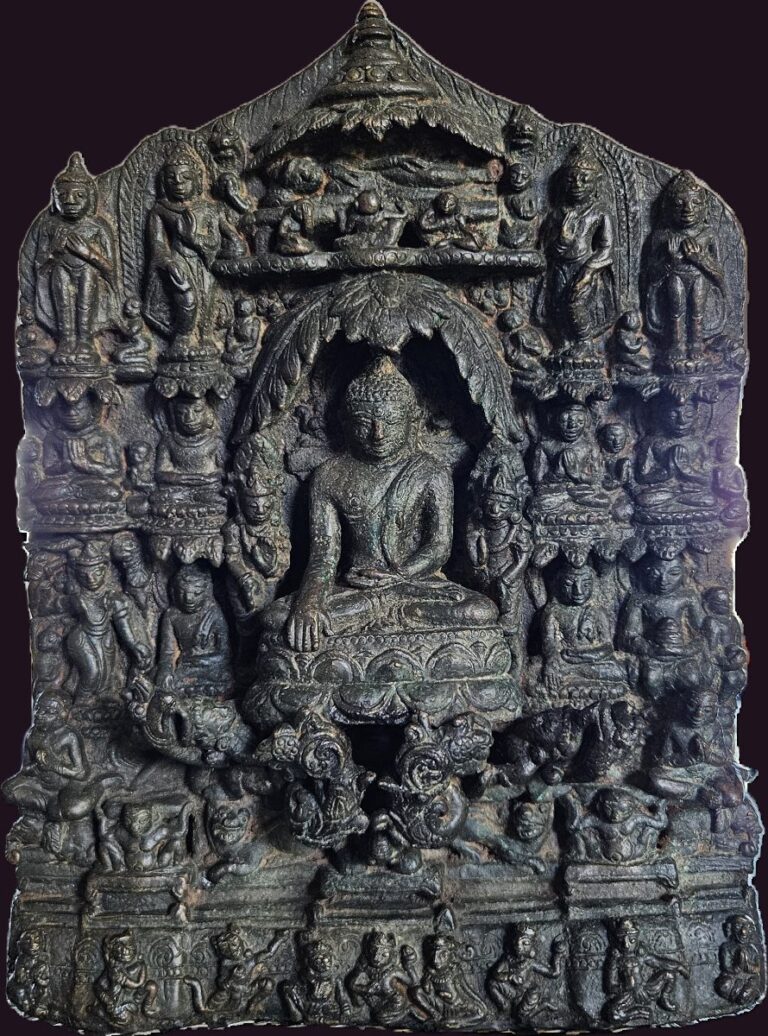
The Ari Monks – Burma’s Misunderstood Religious Order
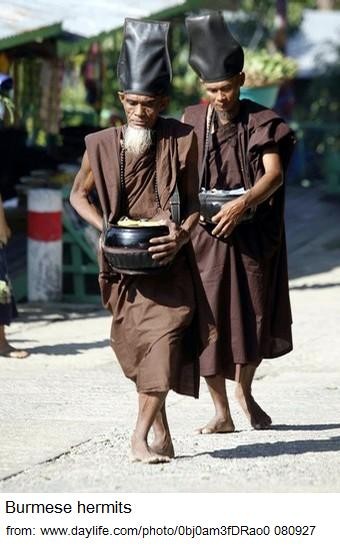
The Ari Monks – Burma’s Misunderstood Religious Order
The Ari Monks – Burma’s Misunderstood Religious Order – Prior to the rise of Theravada orthodoxy in 11th-century Bagan, the Ari monks represented the region’s primary monastic tradition. Later Theravada chronicles written to delegitimize the order often depicted the Ari as worldly and corrupt, claiming their 30 masters commanded tens of thousands of followers who drank alcohol, engaged in battle, and rode elephants. These same texts contrast the Ari with standard Theravada monks, describing them as bearded, long-haired figures who wore dark blue, black, or brown robes.
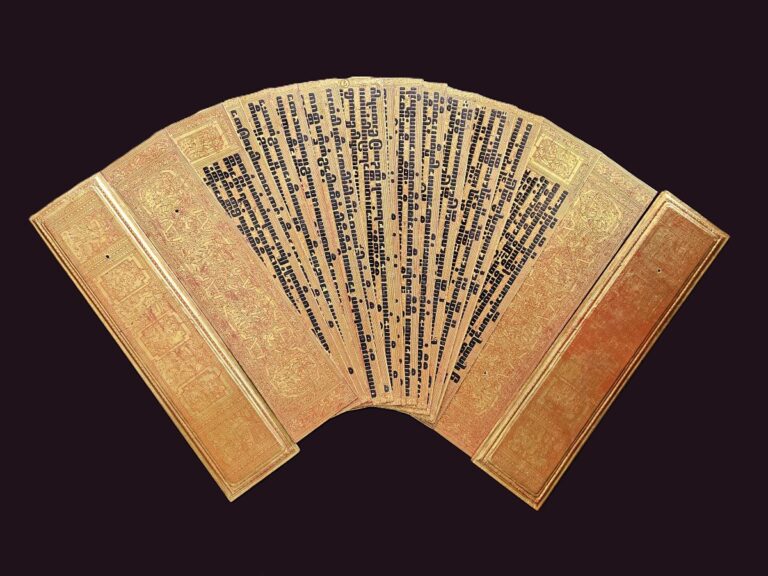
King Anawrahta sought to reshape the state religion by partnering with Shin Arahan, a monk from Thaton who advocated for Theravada Buddhism. According to the chronicles, Anawrahta secured 32 sets of Tipitaka scriptures from Thaton to establish this orthodox doctrine. To solidify the transition, the king exiled the leading Ari monks and conscripted their followers into military service or forced labor.
This transition was a gradual process rather than an overnight eradication; the influence of the Ari persisted well past Anawrahta’s reign. Shin Arahan remained a central figure, serving four successive kings until his death at age 81. His work solidified Theravada Buddhism as the foundation of Burmese spiritual life, a status it maintains today. While the Glass Palace Chronicles serve as a primary reference for this period, historians emphasize that its portrayal of the Ari reflects the partisan biases of the later royal court in which it was compiled.
The Ari Monks – Burma’s Misunderstood Religious Order
Historical context
The “Depraved” Ari Narrative: The characterization of the Ari as drunkards and warriors is heavily contested by modern historians. It is widely viewed as polemical writing designed by later chroniclers to legitimize the transition to Theravada Buddhism by casting the previous order as corrupt.
The Thaton Conquest: The narrative that Anawrahta attacked Thaton specifically to retrieve the Tipitaka is a cornerstone of Burmese national identity. However, modern scholars suggest the religious and political shifts of this period were likely more complex and gradual than the simplified “conquest for scriptures” narrative suggests.
The “Purest” Form: The claim that Myanmar practices the “purest” form of Theravada Buddhism is a matter of tradition and reputation rather than an objective academic measurement. It reflects the high status of the monastic Sangha and the strict adherence to the Vinaya (monastic code) within the country.
Shin Arahan’s Legacy: Shin Arahan is a historically significant figure, but his presence and actions are often mythologized in the Glass Palace Chronicles. While he was undoubtedly pivotal in the spread of Theravada, specific anecdotes about his life should be read as traditional hagiography rather than strict biography.
Information source: Maung Htin Aung’s book “Folk Elements in Burmese Buddhism” (1981), published by the Religious Affairs Department Press in Rangoon, utilizes various historical royal Burmese chronicles, pagoda legends and oral traditions to examine the lives and practices of the Ari monks.
The Ari Monks: Heresy or Religious Reform
Traditional Burmese chronicles trace the decline of early Buddhism following Ashoka’s missions back to the reign of King Thaittaing in the early 6th century. These historical accounts attribute the religion’s decay to a lack of complete Pali scriptures within the kingdom, which allowed non-orthodox practices to gain traction. Taking advantage of this void, the Ari monastic order secured royal patronage, expanding their influence over several centuries until reaching their zenith under King Nyaung-u Sawrahan in the 10th century.
Ari Monks: Why the Chronicles Labeled them Heretics
The chronicles frequently condemned the Ari for interpreting Buddhist scriptures independently and for teaching that reciting a specific religious formula could absolve any sin. While these accusations reflect the strong anti-Ari bias of later Theravada writers during King Anawrahta’s era, such practices were not necessarily evidence of a corrupt order. Instead, they align with core doctrines that historically distinguished the Mahayana tradition from Theravada: the belief that the spiritual intent of scripture outweighs its literal text, and the idea that liberation can be reached through faith and the invocation of the Buddha’s name. The term “Ari” derives from the Pali word Ariya, meaning “Noble Ones”, a title traditionally reserved for the Buddhist clergy, confirming that the Ari were indeed an established monastic order.
The chronicles frequently condemned the Ari monks for drinking toddy wine. While ritual consumption of palm wine was common among devotees during offerings to indigenous nat spirits, a practice the Ari incorporated, this accusation also echoes long-standing doctrinal disputes within early Buddhism. During the early Buddhist councils of Ashoka’s era, one of the key debates between orthodox Theravada elders and non-orthodox schools centered on whether drinking sweet, unfermented palm juice violated monastic rules against intoxicants. The non-orthodox factions maintained that unfermented palm wine was non-intoxicating and therefore acceptable, suggesting that chronicle complaints about the Ari may simply reflect old sectarian arguments over monastic discipline rather than outright depravity.
King Nyaung-u Sawrahan (AD 931 – 964)
According to traditional Burmese chronicles, King Nyaung-u Sawrahan (r. 931–964 CE) was originally a cucumber farmer, earning him the royal epithet Taungthugyi Min, or the “Great Farmer King.” His official name translates to the “Noble Monk of Nyaung-U,” indicating that, like several early Pagan rulers, he served in the monastic order prior to taking the throne and gained renown for his mastery of esoteric astrology and protection rituals. Royal records also bestow upon him the epithet Nat-tawkyaung-daka, meaning the “Royal Patron of Spirit Shrines,” reflecting his active role in building and supporting local nat worship sites throughout the Pagan countryside.
Despite chronicle claims of his non-orthodox practices, Nyaung-u Sawrahan was also a dedicated patron of Buddhism. Epigraphic records confirm he constructed a formal Buddhist Ordination Hall making him the only pre-Anawrahta monarch directly verified by surviving stone inscriptions. The necessity of a consecrated ordination hall strongly suggests that the monastic order he patronized maintained structured Buddhist rites, directly challenging the later chronicle portrayal of the Ari as purely lawless heretics.
Guided by the Ari monastic leadership, the king researched traditional zigon stupa architecture from the southern centers of Yathepyi and Thaton. He went on to construct five distinct shrines across Pagan: Pahtogyi, Pahtonge, Pahtothamya, Thinlinpahto, and Seittipahto. Rather than housing standard Theravada imagery, these temples contained esoteric ritual figures, where attendants performed morning and evening offerings of rice, prepared foods, and ceremonial wine.
For generations, according to later royal histories, the rulers of Pagan followed the non-orthodox doctrines of thirty Ari masters and their vast monastic community based at Thamahti. The chronicles state that these monks abandoned traditional monastic law, writing independent texts to spread their own teachings across the kingdom.
Chief among these controversial doctrines was the claim that severe negative karma, even from the worst offenses could be erased simply by chanting specific protective formulas. The chronicles further accuse the order of enforcing a sacred right over marriages, requiring families across all social ranks to send brides to the monastery on their wedding eve. While modern scholars view these extreme claims of moral corruption as later court propaganda designed to justify King Anawrahta’s purge, the Glass Palace Chronicle framed these practices as lawless traditions that threatened the spiritual foundation of the state.
Note: Inscriptions and Devotion: King Nyaung-u Sawrahan was notable for being one of the few pre-Anawrahta figures mentioned in later historical epigraphy. The contrast between the chronicler’s account of “heretical” practices and the archaeological evidence of Buddhist merit-making (like building an Ordination Hall) is a recognized subject of debate among historians studying the religious landscape of early Pagan.
King Kunsaw Kyaungpyu, Anawrahta’s father
Traditional Burmese chronicles record that King Kunsaw Kyaungpyu, Anawrahta’s father, was forced into the monastic life after being deposed by his stepsons. Since the established religious order of pre-Anawrahta Pagan was the Ari, it is commonly accepted that he entered their ranks. This historical context is often cited to explain the tension between Anawrahta and the Ari establishment; after Anawrahta killed his stepbrother, King Sokkaté, the existing clergy likely opposed his claim to the throne.
While some interpret Anawrahta’s subsequent religious reforms as a personal act of penance for his brother’s death, modern historians view these events through a broader political lens. Anawrahta’s adoption of Theravada Buddhism served as a tool for state-building, allowing him to replace the decentralized and influential Ari order with a state-sanctioned orthodoxy. The narrative of “heresy” served as a convenient moral justification for the king to consolidate power and establish a unified religious identity for the emerging Pagan Empire.