Early Mandalay Wood – Alabaster Buddha
Early Mandalay Wood – Alabaster Buddha
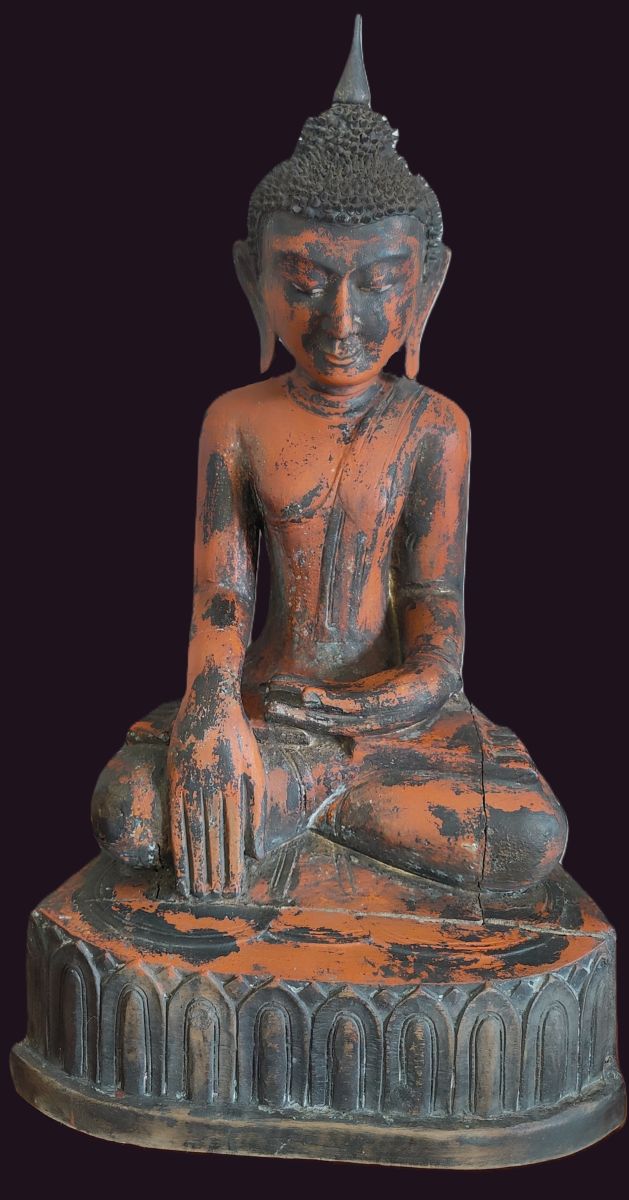
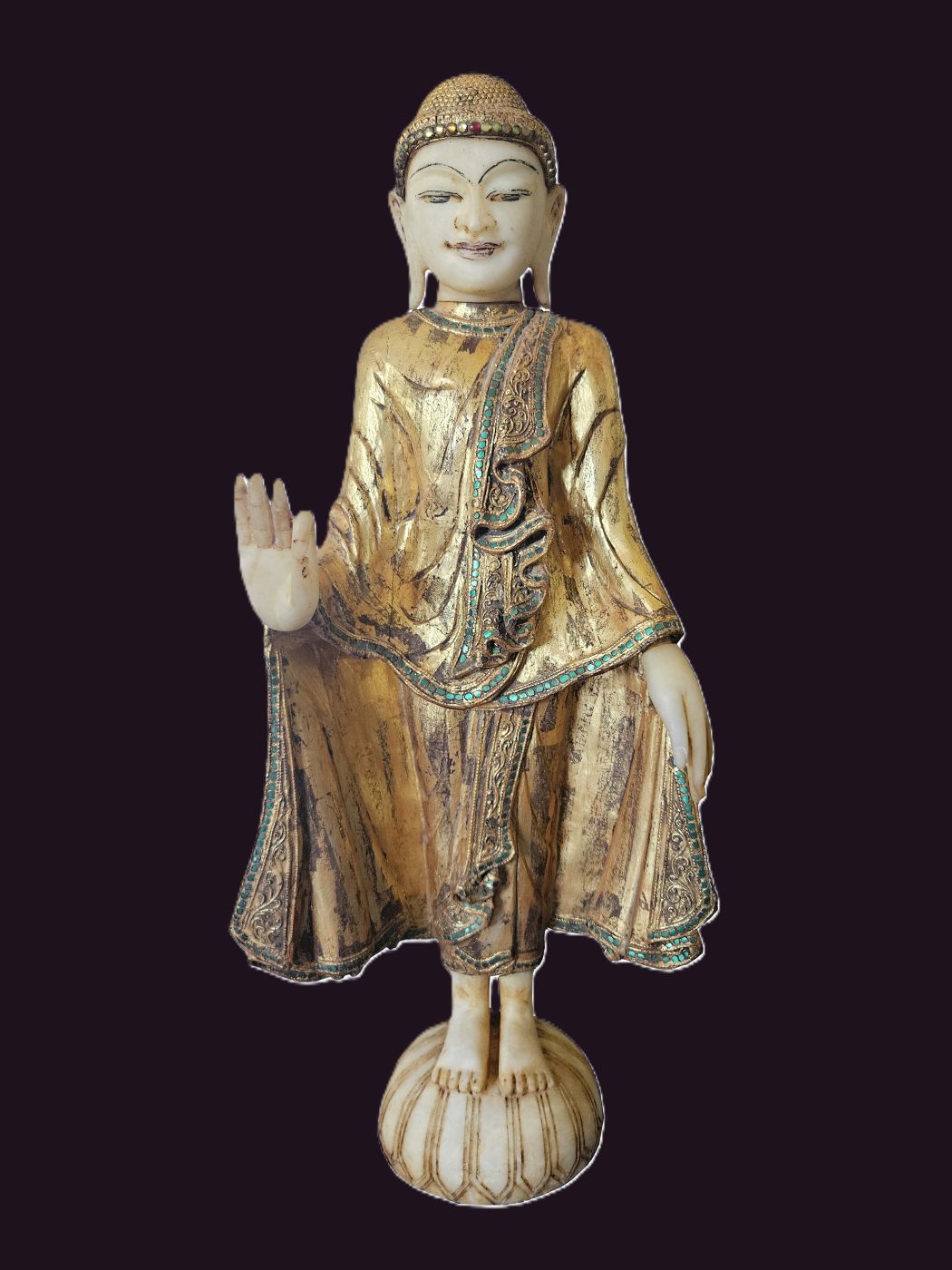
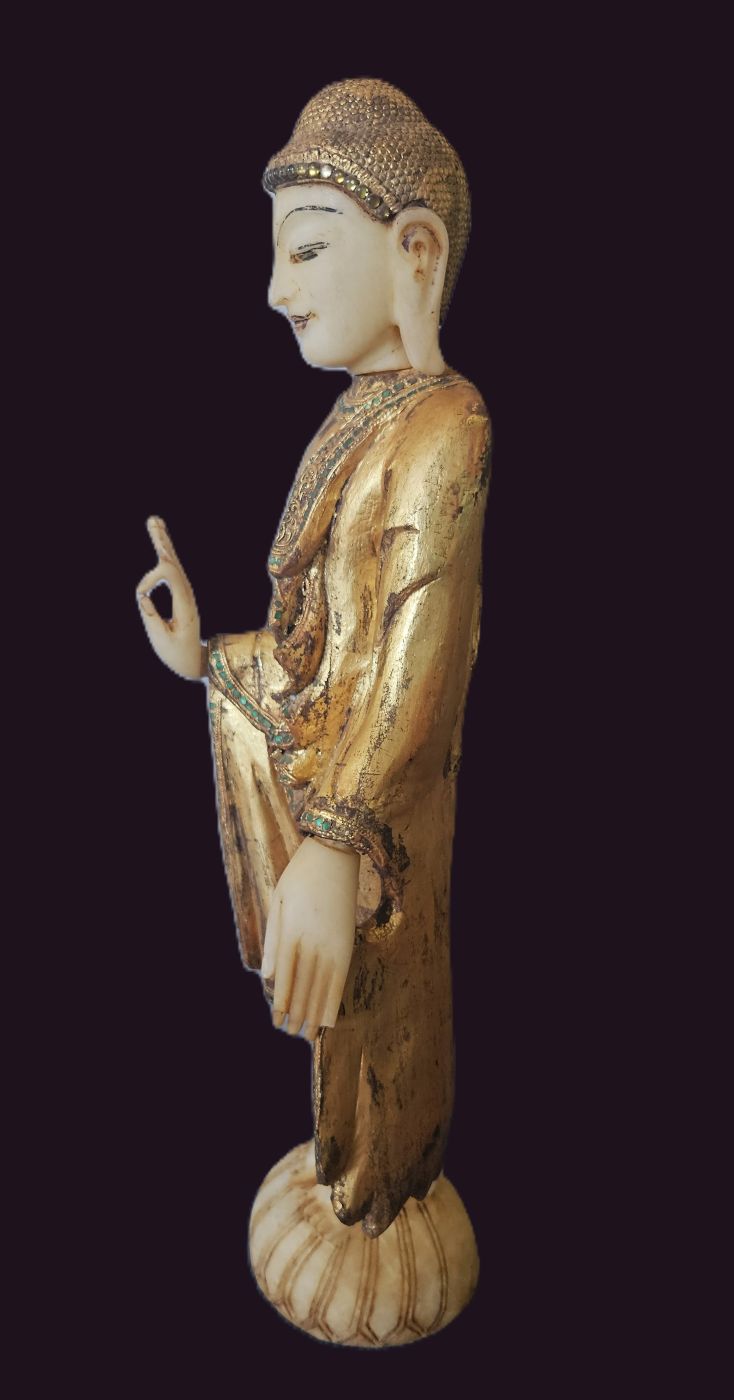
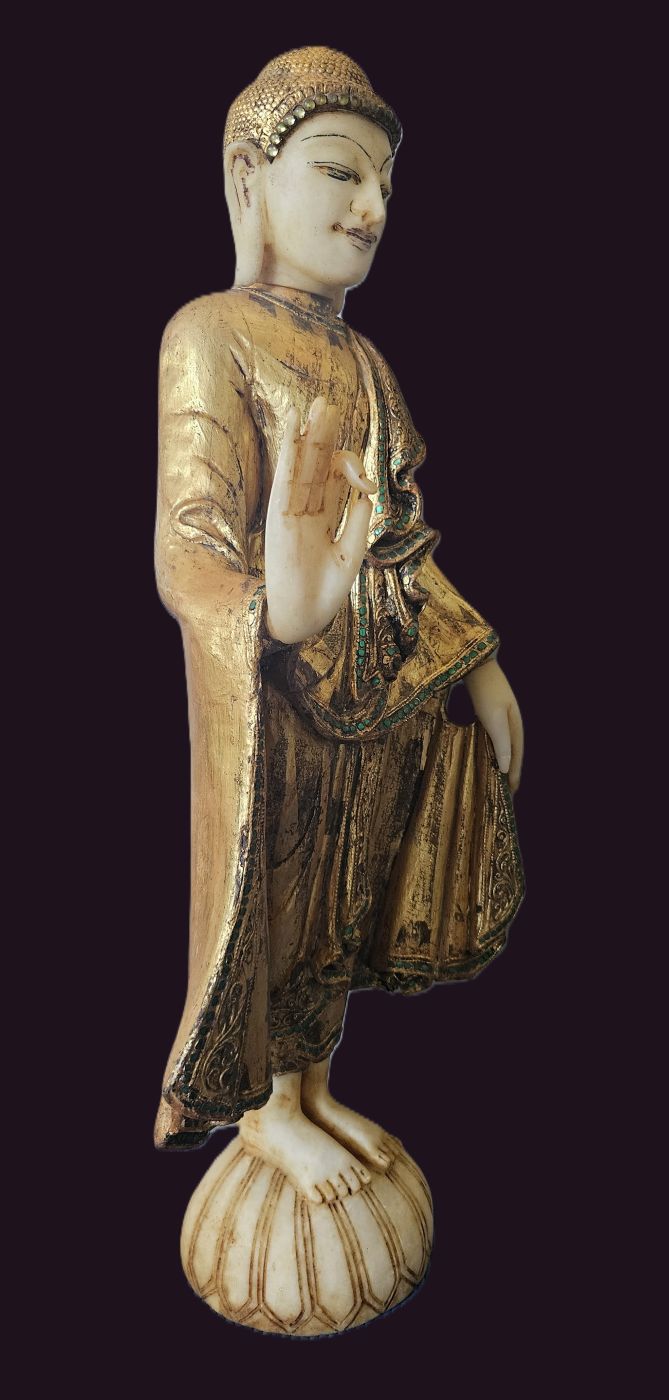
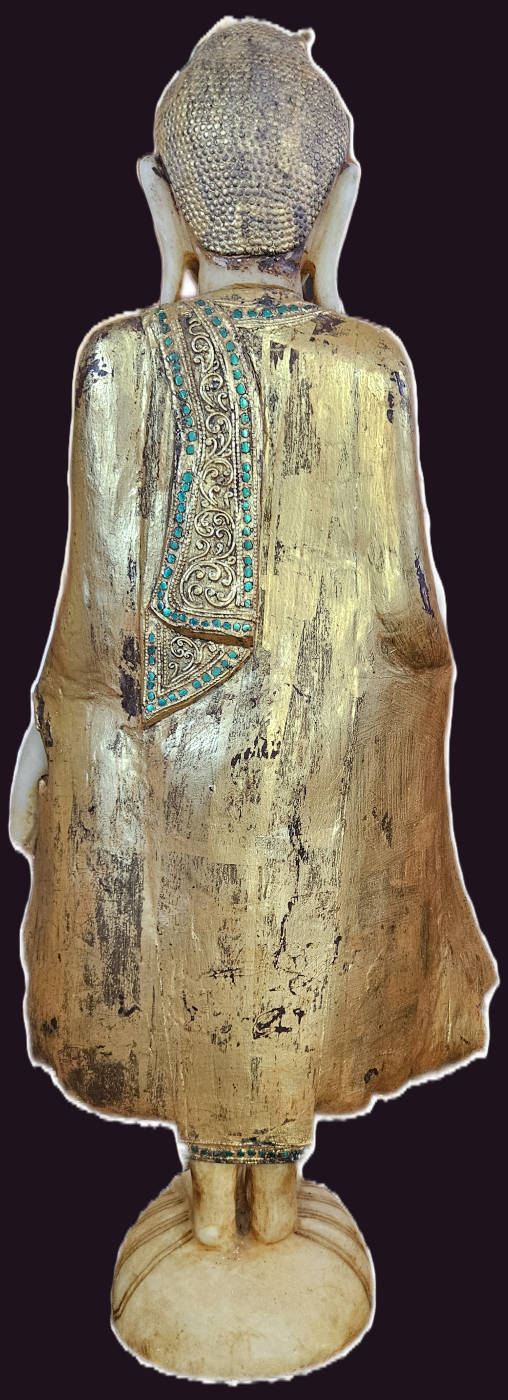
Early Mandalay Wood – Alabaster Buddha Statue, standing with the right hand gesture in Abhaya mudra (teaching gesture) representing the unified nature of human consciousness by forming a circle with the thumb and index finger.
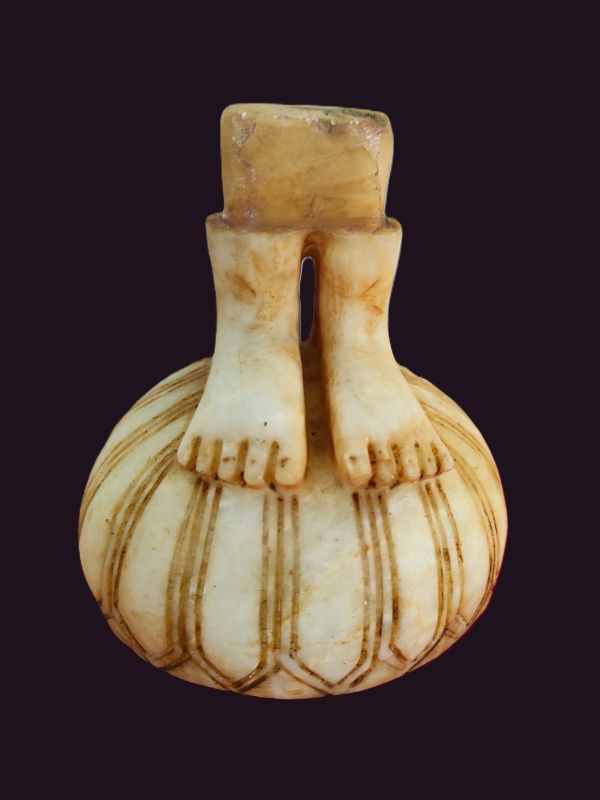
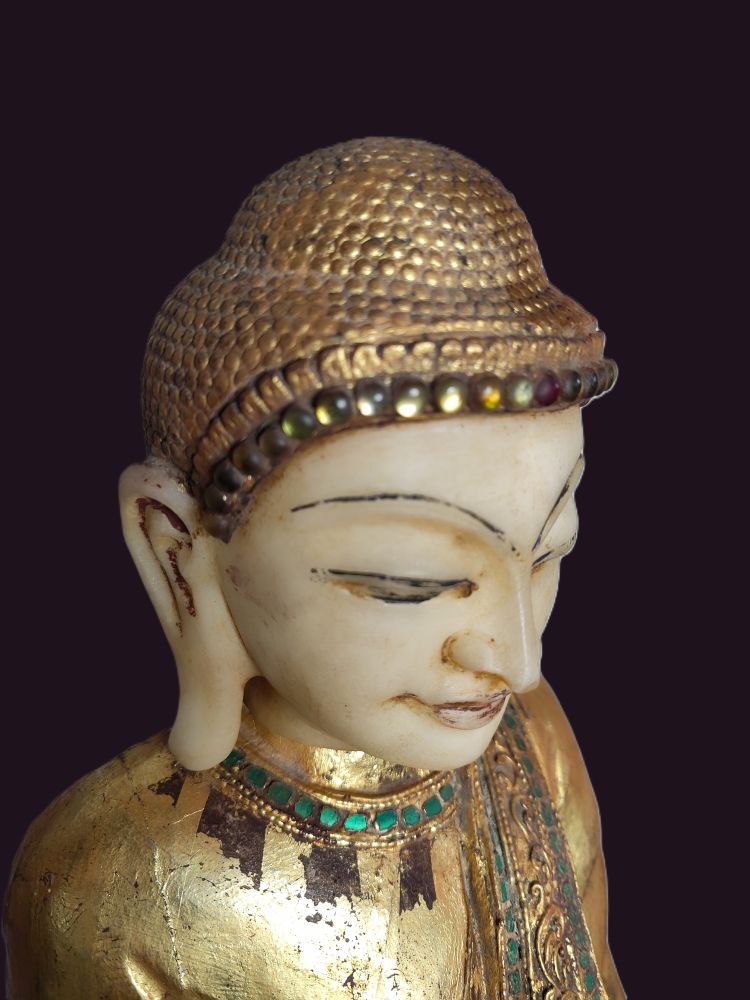
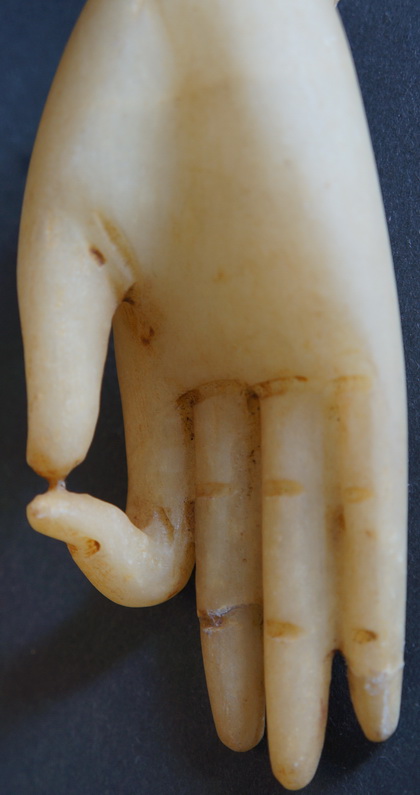
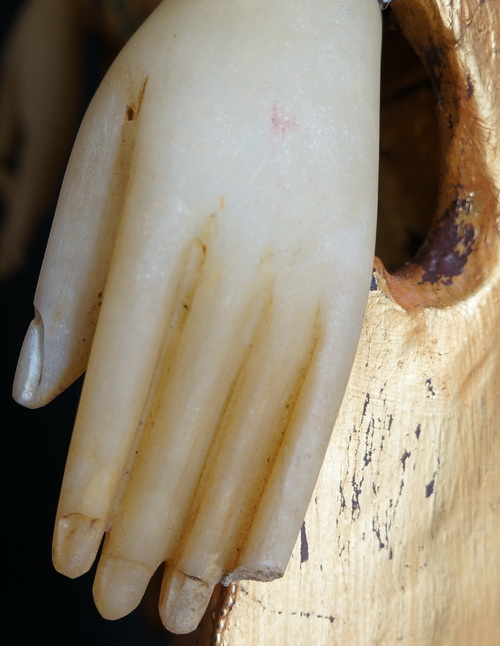
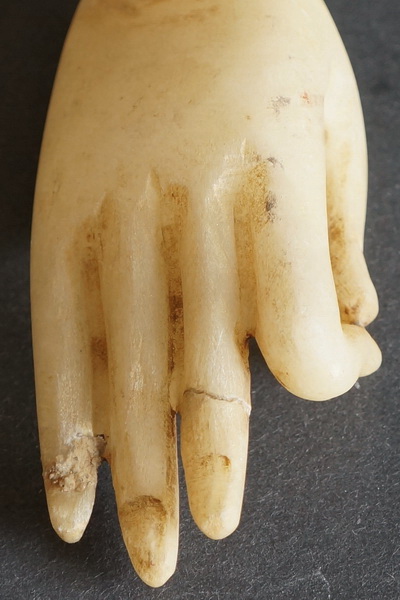
Glass green and red coloured half beads decorate the forehead, held in place by thayo lacquer. Mirror mosaics decorate the edges of the sanghati. Both hands on this beautiful Buddha Statue are damaged (see pictures). The head, hands, feet and base are separate pieces.
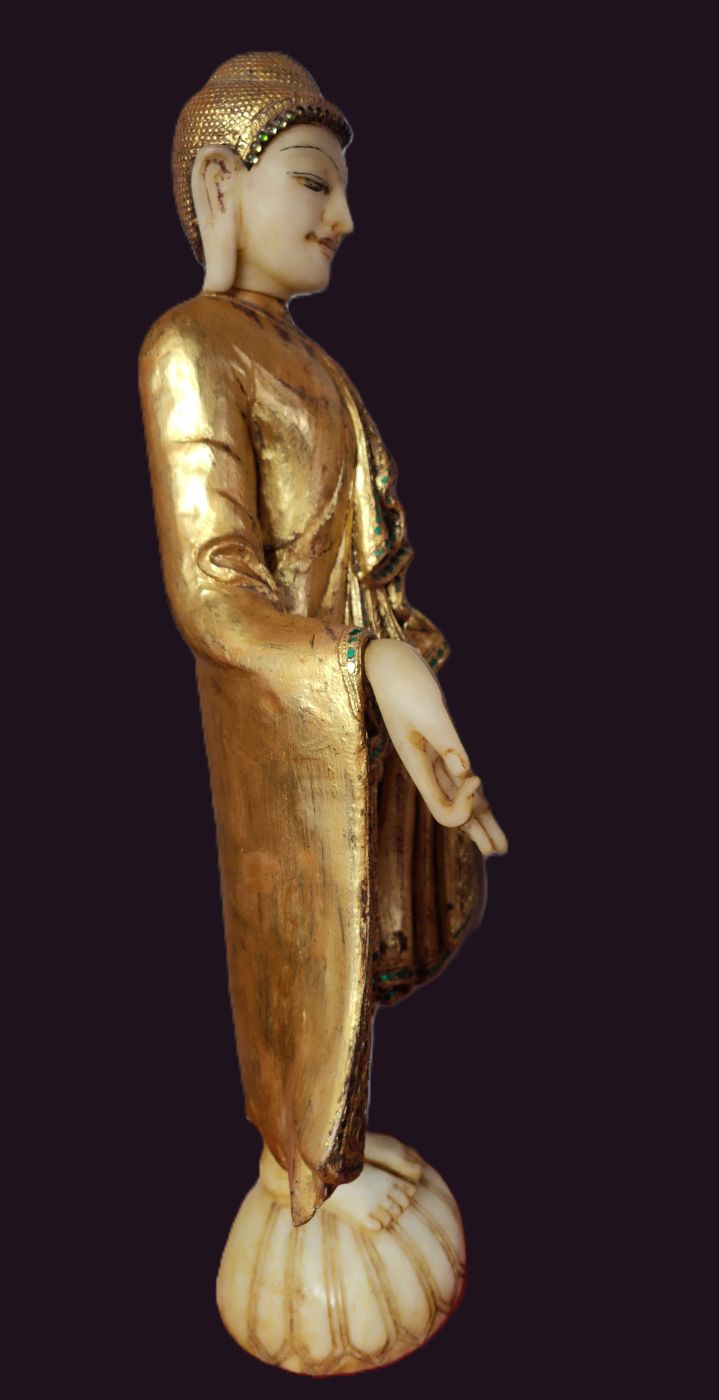
In the images the hand gesture in one is shown with the mudra pointing downwards and in others upwards, as the pieces are separate we are not sure of the original position, it could be either mudra.
Note: I have shown this Buddha statue in most images with his hand gesture in the Abhaya mudra but have included an image with the hand facing downwards in Vitarka Mudra.
Bestowal of Wisdom: The downward hand (Vitarka position) signifies the act of giving or granting a blessing. When the fingers form the circle (Vitarka), this is the mudrā used when the Buddha is shown teaching, explaining the Dharma, or engaging in intellectual discourse.
SPECIFICATION:
- AGE: – Early to mid 19th Century
- HEIGHT: – 80cm
- WIDTH: – 34cm
- DEPTH: – 18cm
- CONDITION: Both hands show historic losses and later village‑level repairs, consistent with long devotional use. These restorations do not detract from the presence of the piece and are typical of early Mandalay images that remained in active worship.
- #911