Han Greyware Hu with Trumpet Neck
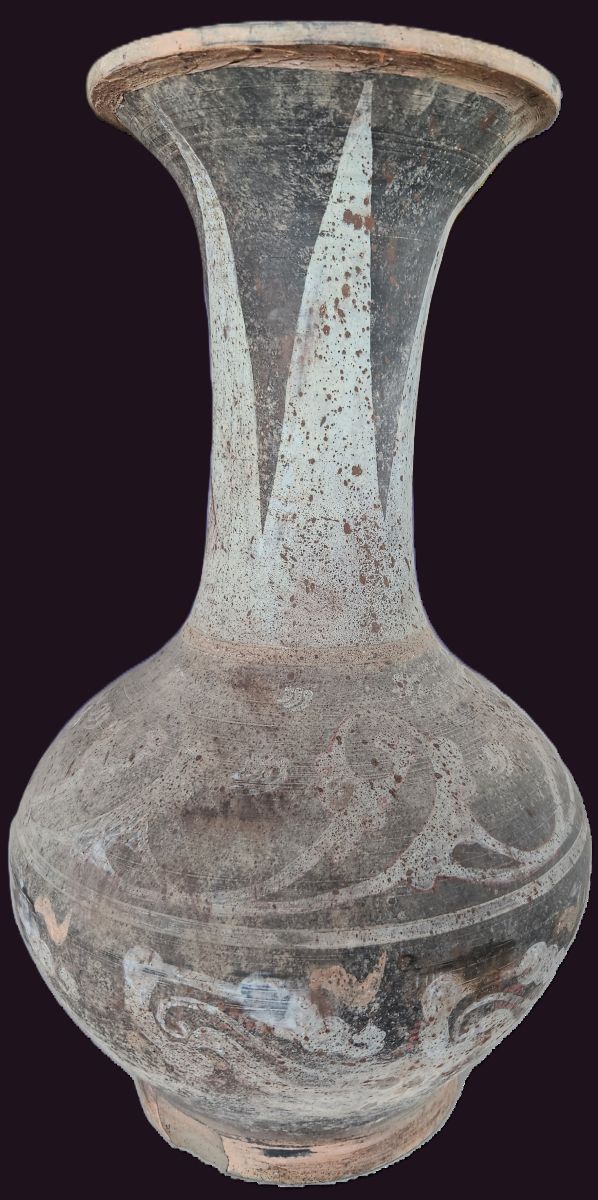
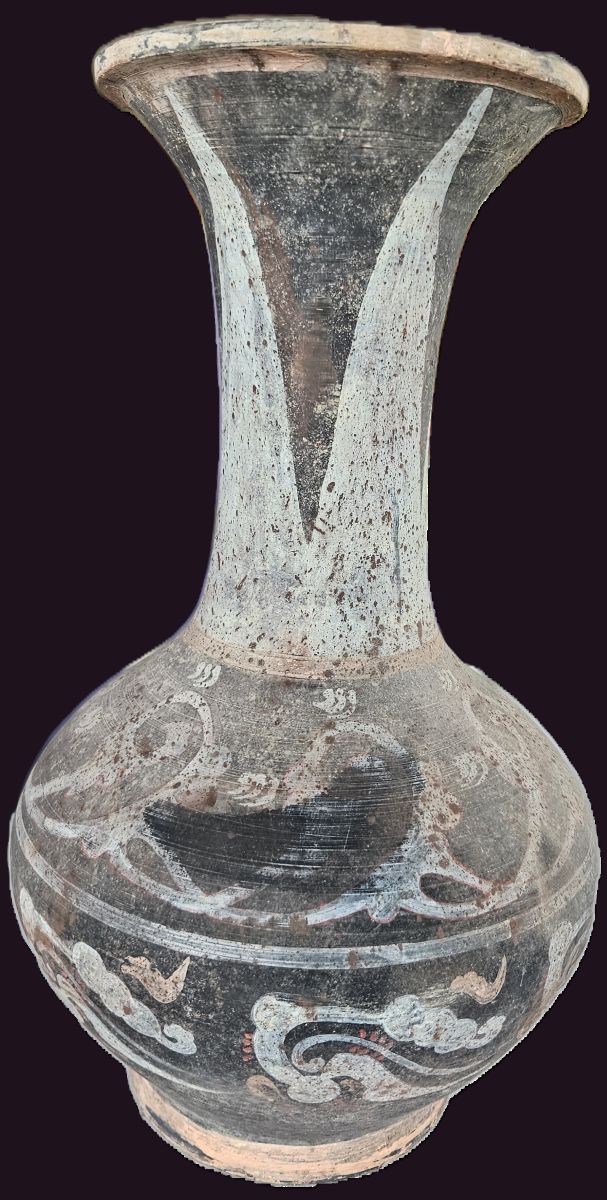
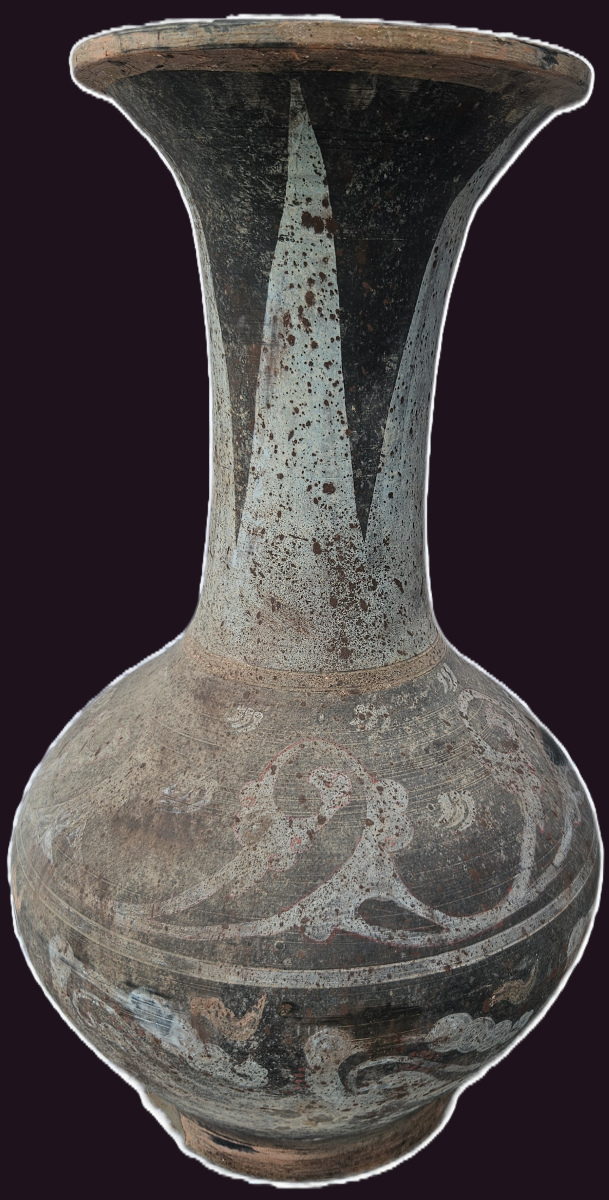
This is a rare form both in size and shape of a Han Greyware Hu with Trumpet Neck with an exaggerated large flared mouth dating from Han Dynasty (202 BC – 220 AD).
Vessels of this size, shape, and decoration were created specifically as mingqi burial goods designed to accompany high-status individuals into the afterlife, serving to hold grain, wine, or water in the tomb.
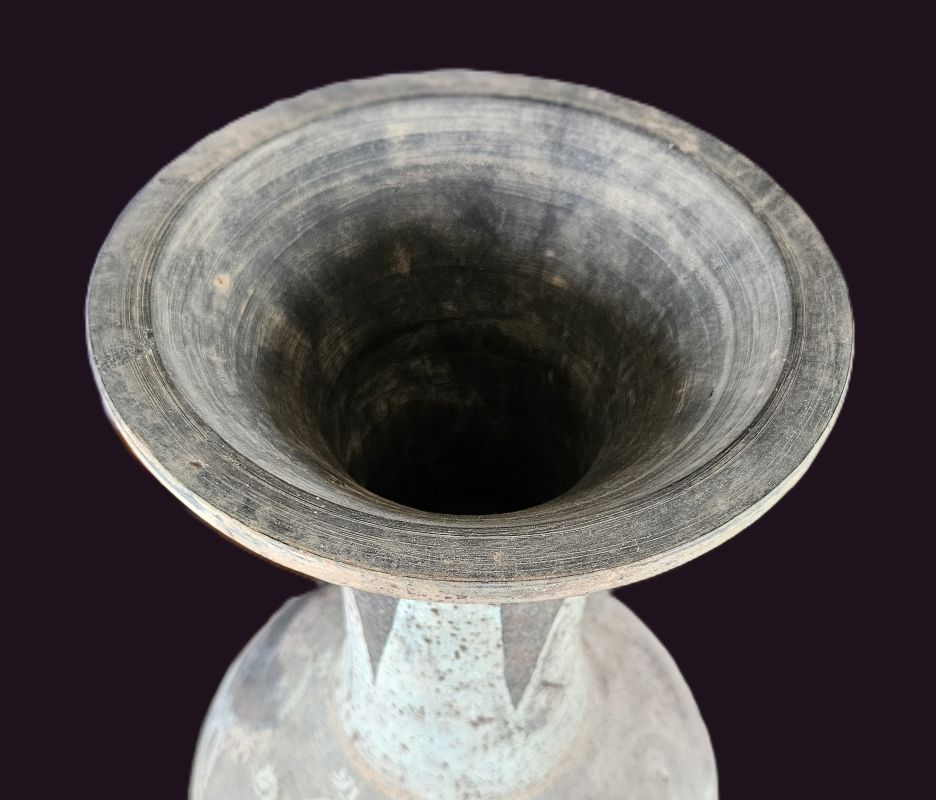
This is a classic hu or pear-shaped vase, characterized by a bulbous lower body, a long flaring neck, and a wide, trumpet-like mouth. The form is directly derived from contemporary elite ritual bronze vessels of the Western and Eastern Han periods.
The concentric turning lines visible on the flat inner lip show the ancient wheel-throwing technique. The dark, unpainted interior clay contrasts with the mineral accretion on the surface.
The vessel features a classic Han decorative layout utilizing mineral pigments (typically white kaolin clay, charcoal black, and red ochre) applied after firing (caihui).
SPECIFICATIONS:
- HEIGHT: – 49 cm
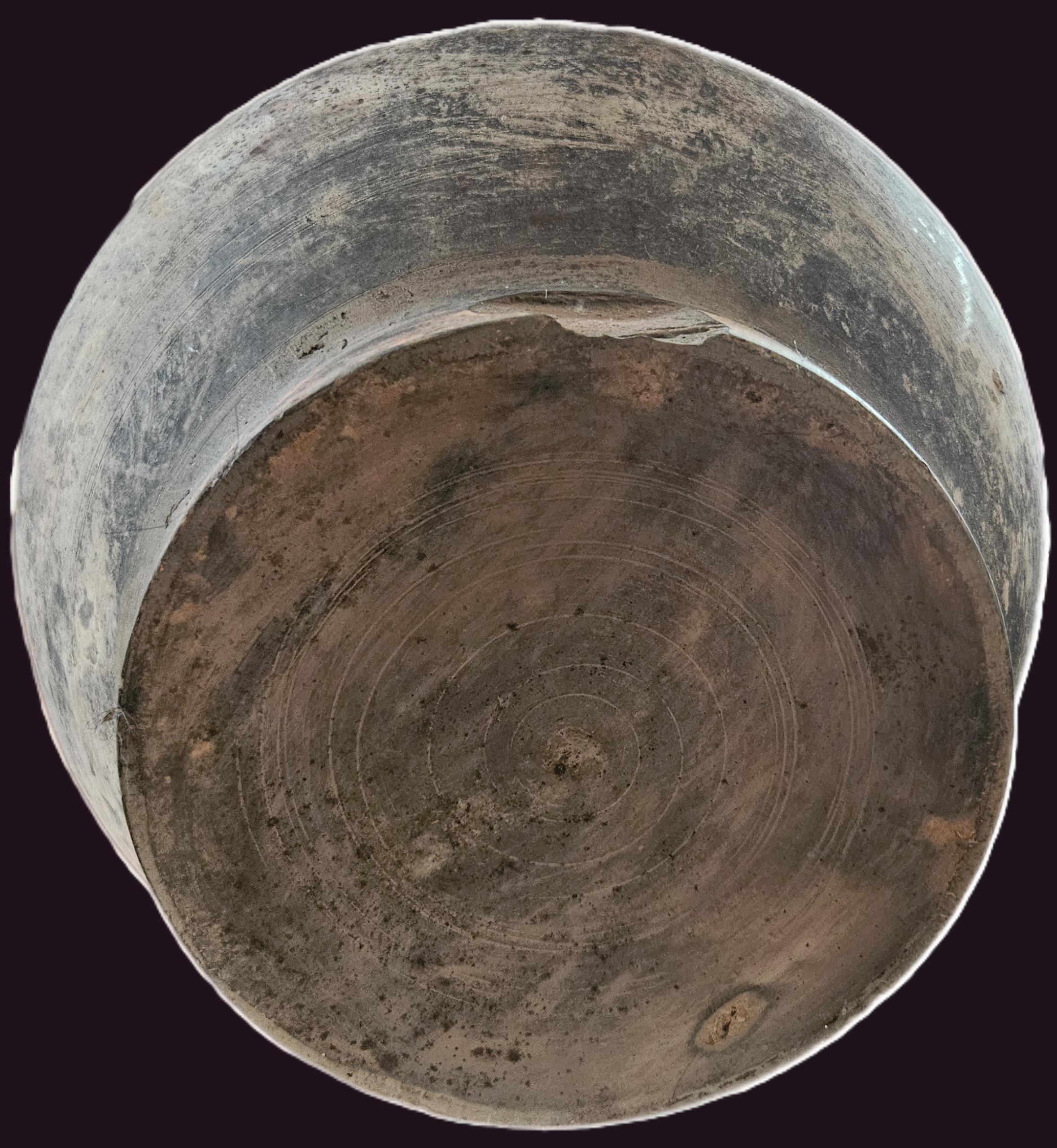
- BASE DIAMETER:– 19cm
- NECK OPOENING: 20 CM diameter
- WEIGHT:– 5.4 Kg.
- 49a
Han Greyware Hu with Trumpet Neck
- The Neck: The tall neck is decorated with bold, geometric triangular fields or stylized banana-leaf patterns, which draw the eye upward and accentuate the height of the vase.
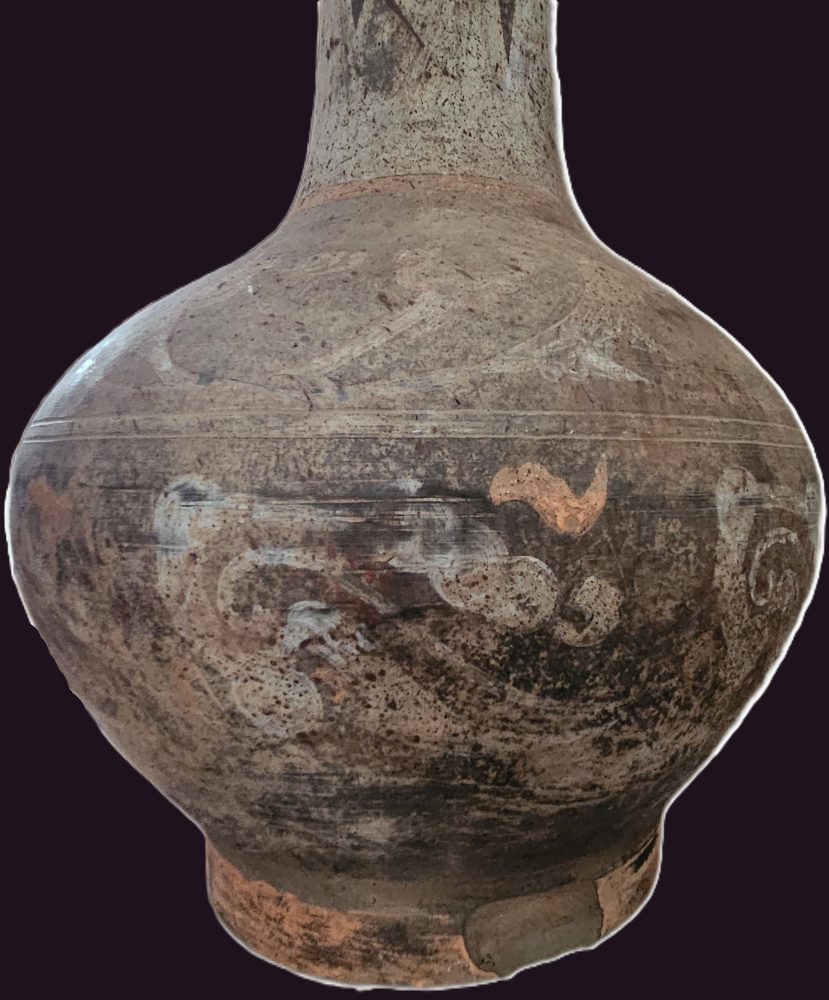
- The Upper Body: The main shoulder band features sweeping, fluid scrollwork. These stylized clouds or waves (wuyun) represent the celestial realms or the breath of life (qi), a central theme in Han Dynasty Daoist cosmic beliefs regarding immortality.
- The Lower Band: Below the central ridge, a secondary register depicts rolling waves or clouds interspersed with quick, impressionistic dashes of red pigment, adding dynamic movement to the static form.
- Surface Degradation: The white and red pigments show classic signs of degradation where the paint has partially bound with the surrounding soil over centuries, leading to a mottled, speckled texture rather than crisp, solid lines.
- Root Marks and Accretions: There are faint, scattered brown spots and mineral crusts across the surface. These are calcium or iron deposits that slowly leach from the tomb soil and fuse onto the earthenware over hundreds of years.
At 49 centimeters in height, this is a substantial, prominent example of Han Dynasty funerary art, showcasing the fluid brushwork and bronze-inspired forms typical of the period.