
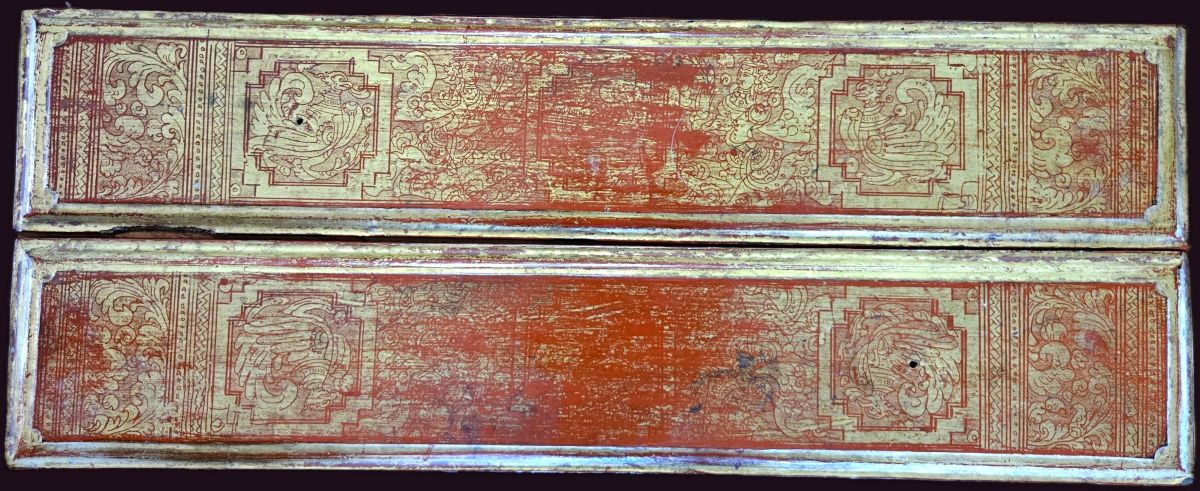

Rare 16-Leaf Burmese Brass Kammavaca
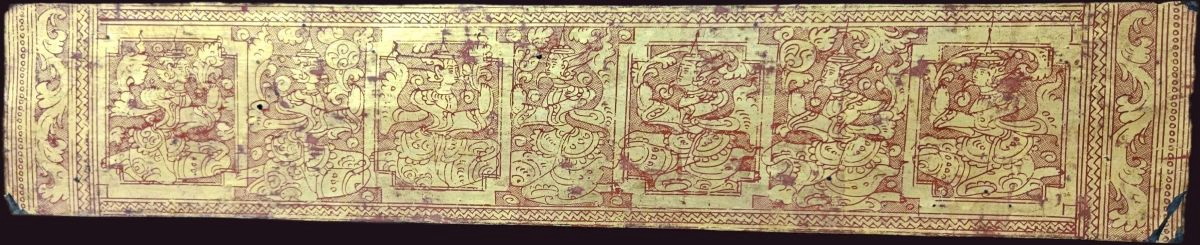
By the late Konbaung period and into the early decades of British rule, Burmese artisans began experimenting beyond the usual organic bases of lacquered palm leaf and cloth. This Rare 16-Leaf Burmese Brass Kammavaca is a sample of this experimentation by manufacturing the kammavaca with thin sheets of rolled metal, most often brass or copper. These plates, traded through Mandalay’s bustling markets, offered something the older substrates never could a perfectly rigid, perfectly flat surface.
That firmness changed the look of the manuscripts. It allowed scribes to execute the square magyi‑zi (tamarind‑seed) script with remarkable precision, each character crisp and evenly proportioned. Metal Kammavaca manuscripts quickly became prized ritual objects, especially among wealthy donors eager to commission something both spiritually potent and visually striking.
Mechanical Bond Failure and Modern Condition
The long-term preservation of brass kammavaca presents a fundamental material conflict. While fiber or wood bases absorb raw lacquer (thit-si) deeply into their pores, smooth metal provides no mechanical anchorage. The thick black lettering and shwe zawa gilding sit entirely on the surface, bonded only by surface adhesion.
As decades pass, natural resin cures into a hard, glass-like state, losing all internal flexibility. Because the metallic plate and the hardened resin shell expand and contract at completely different rates when ambient temperatures and humidity shift, stress builds along the bond line. This stress eventually breaks the adhesion, causing the dark lacquer script to micro-fracture and snap off, often leaving bare brass exposed beneath cleanly shed lettering.
SPECIFICATIONS:
Rare 16-Leaf Burmese Brass Kammavaca
- AGE: 19th – Early 20th Century
- LENGTH: 51 cm
- WIDTH: 10 cm
- WEIGHT: 2.05 kg.
- CONDITION: The majority of leaves show lacquer lifting on the corners (see enhanced and enlarged image). The sheets are highly flexible and springy.
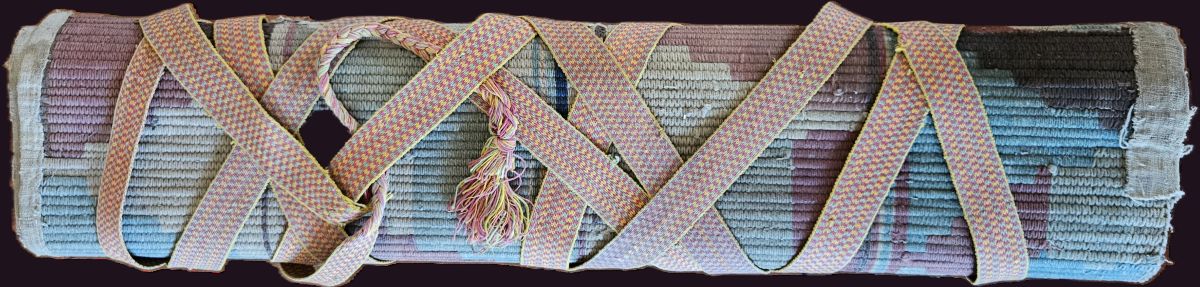
- This metal kammavaca comes with a bamboo & cloth cover and a 389 cm long hand woven sazigyi
- #1
Rare 16-Leaf Burmese Brass Kammavaca
The Burmese metal Kammavaca, especially brass and copper were a late innovation, a kind of luxury upgrade. They were admired, commissioned by wealthy donors, and technically impressive, but they never replaced the traditional lacquered folio. Most Burmese Kammavaca manuscripts that one encounters, whether in monasteries, private collections or museum collections, are still the classic Burmese Gilded thayo‑lacquer kammavaca.
Sources of Information:
Kammavaca | Collections | University of St Andrews
Noel F. Singer (Arts of Asia, 1993): Singer’s foundational essay, “Kammavaca Texts: Their Covers and Binding Ribbons,” documents the transition to metal. He notes that during the late 19th century (Mandalay period), pre-cut brass and copper sheets were sold specifically for manuscript production by metal merchants in Mandalay’s Zaygyodaw Bazaar.
John Falconer et al. (Myanmar Style: Art, Architecture and Design of Burma, 1998): Notes that while 17th- and 18th-century kammavaca relied on cloth and palm leaf, sheets of brass and copper were introduced in the late 19th century as a luxury alternative.
Sylvia Fraser-Lu (Burmese Lacquerware & Buddhist Art of Myanmar): Details the material composition and decorative techniques (shwe zawa gilding and magyi-zi script) applied across various metal substrates.