Antique Daoguang Mark & Period Famille Rose Bowl
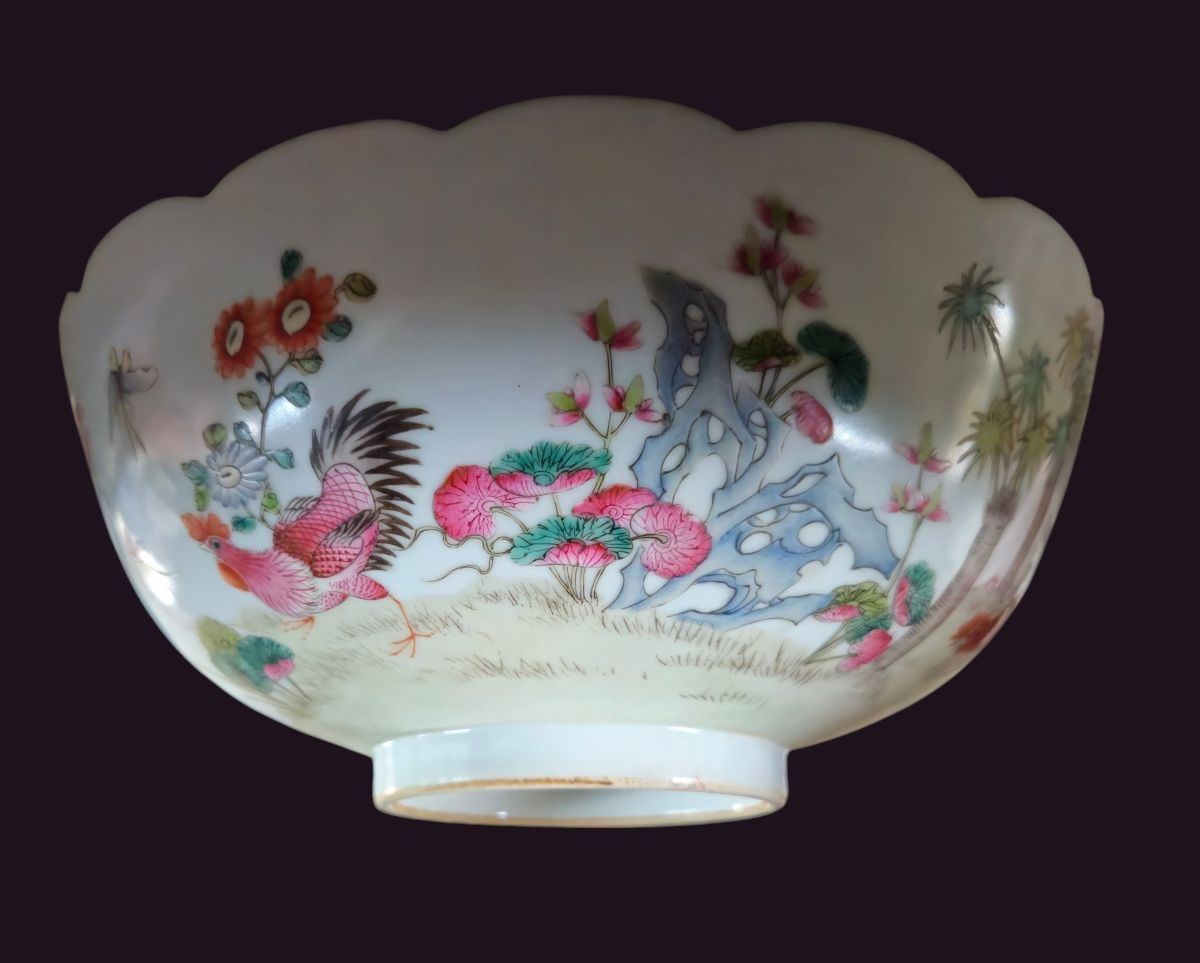
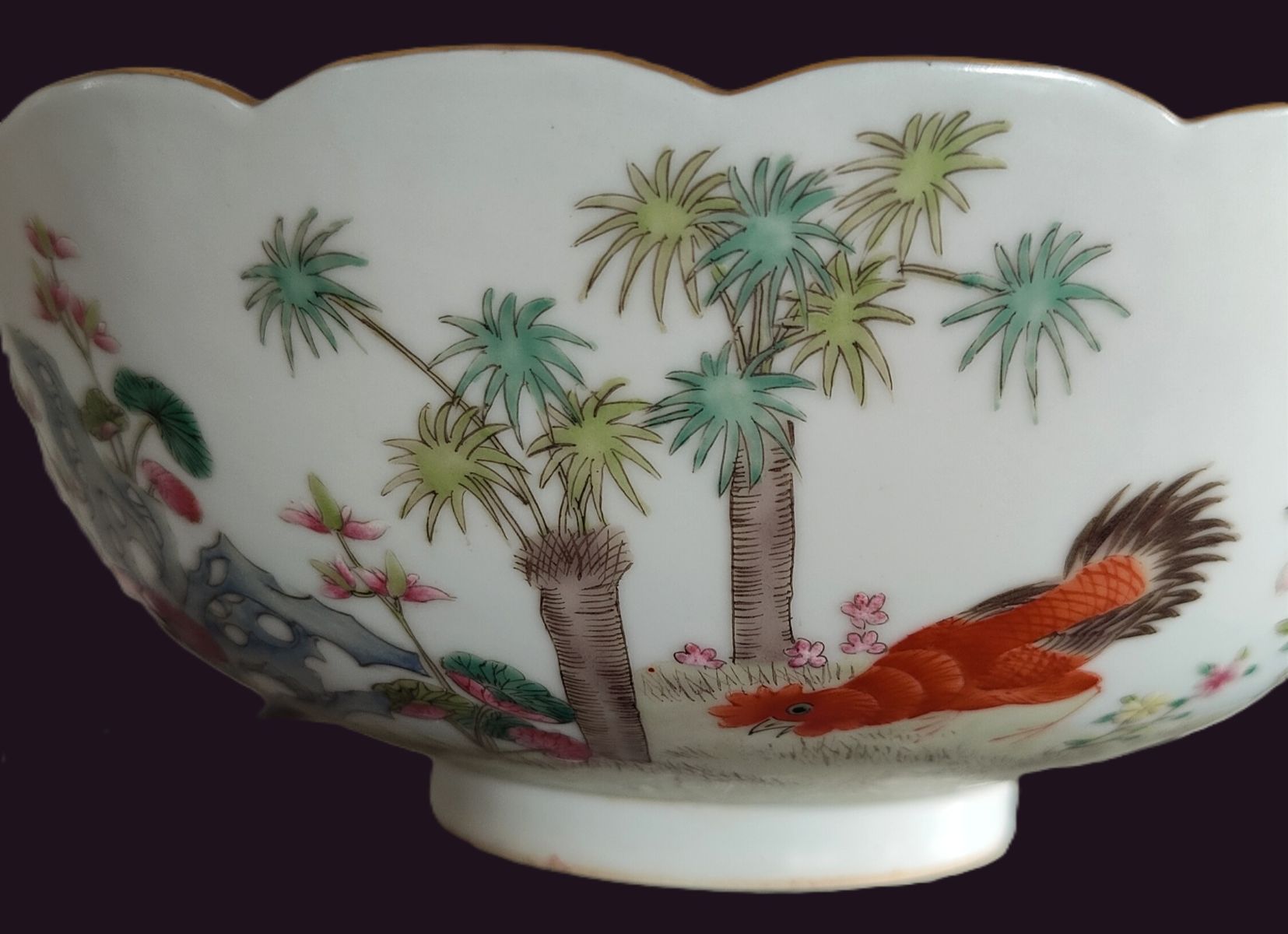
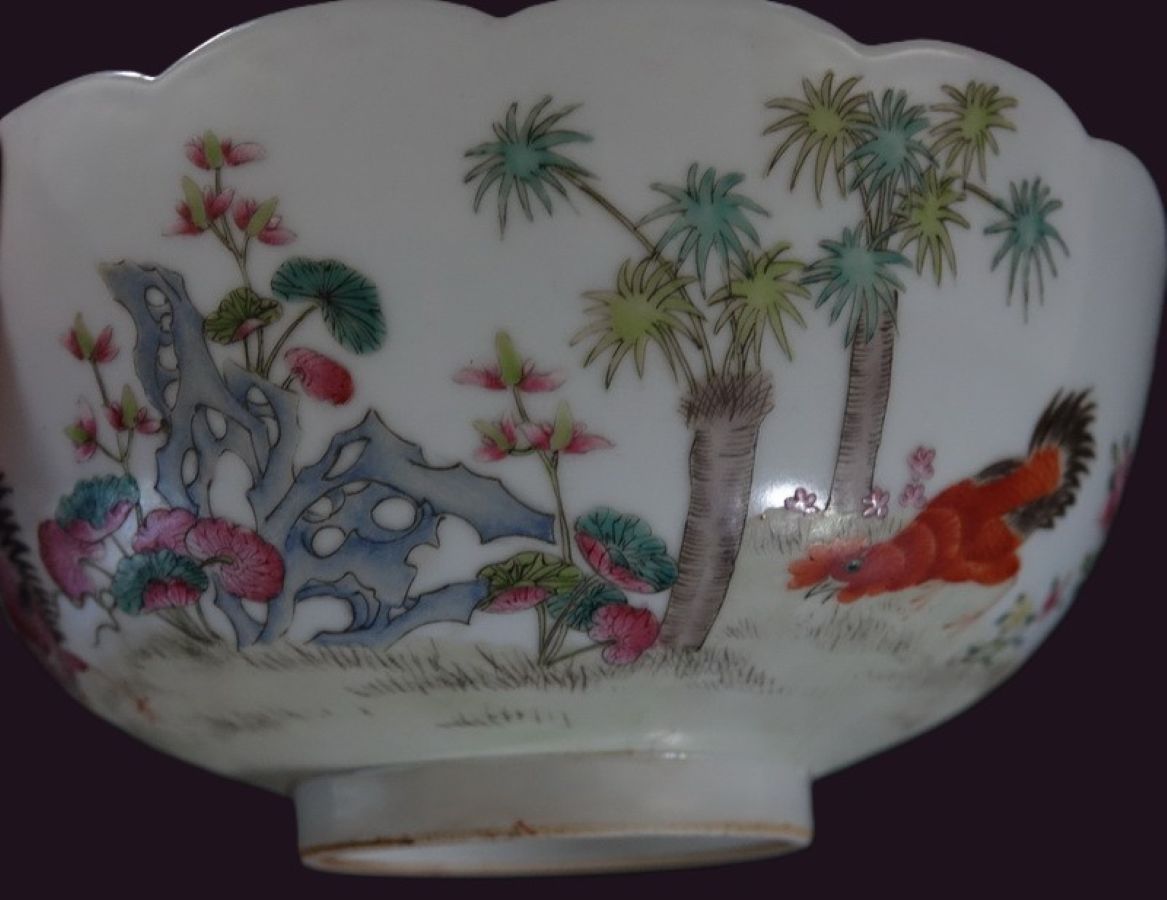
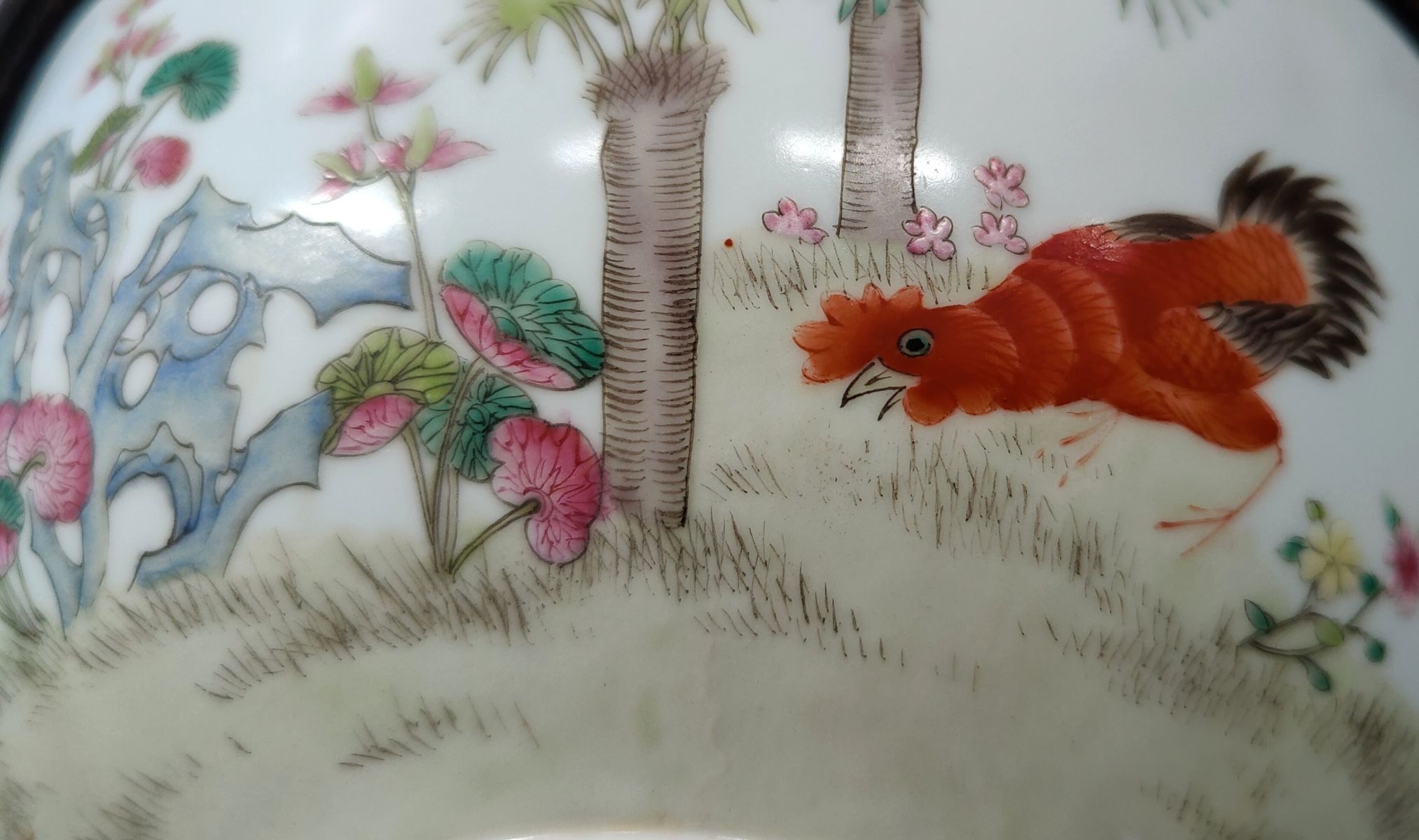
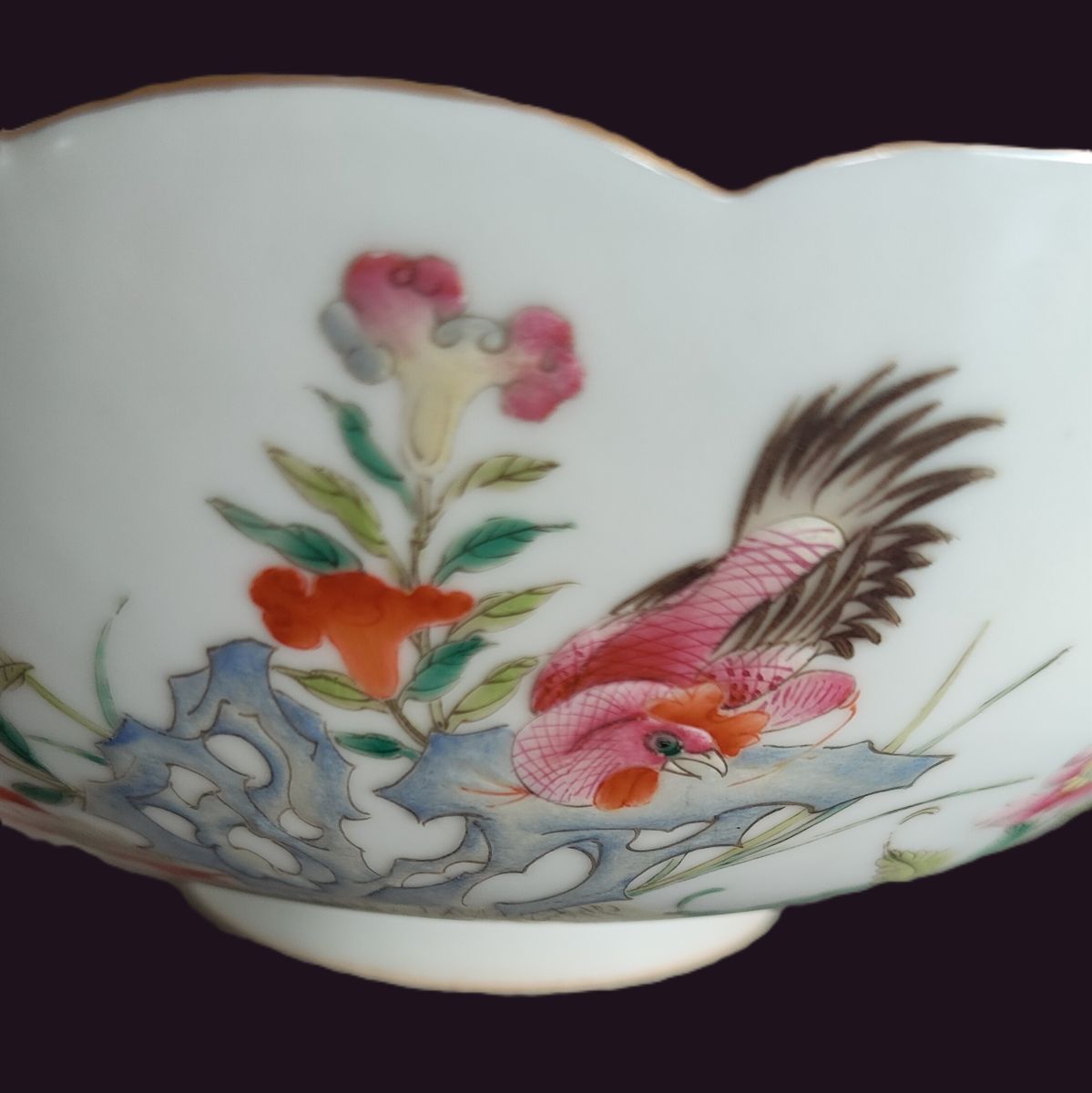
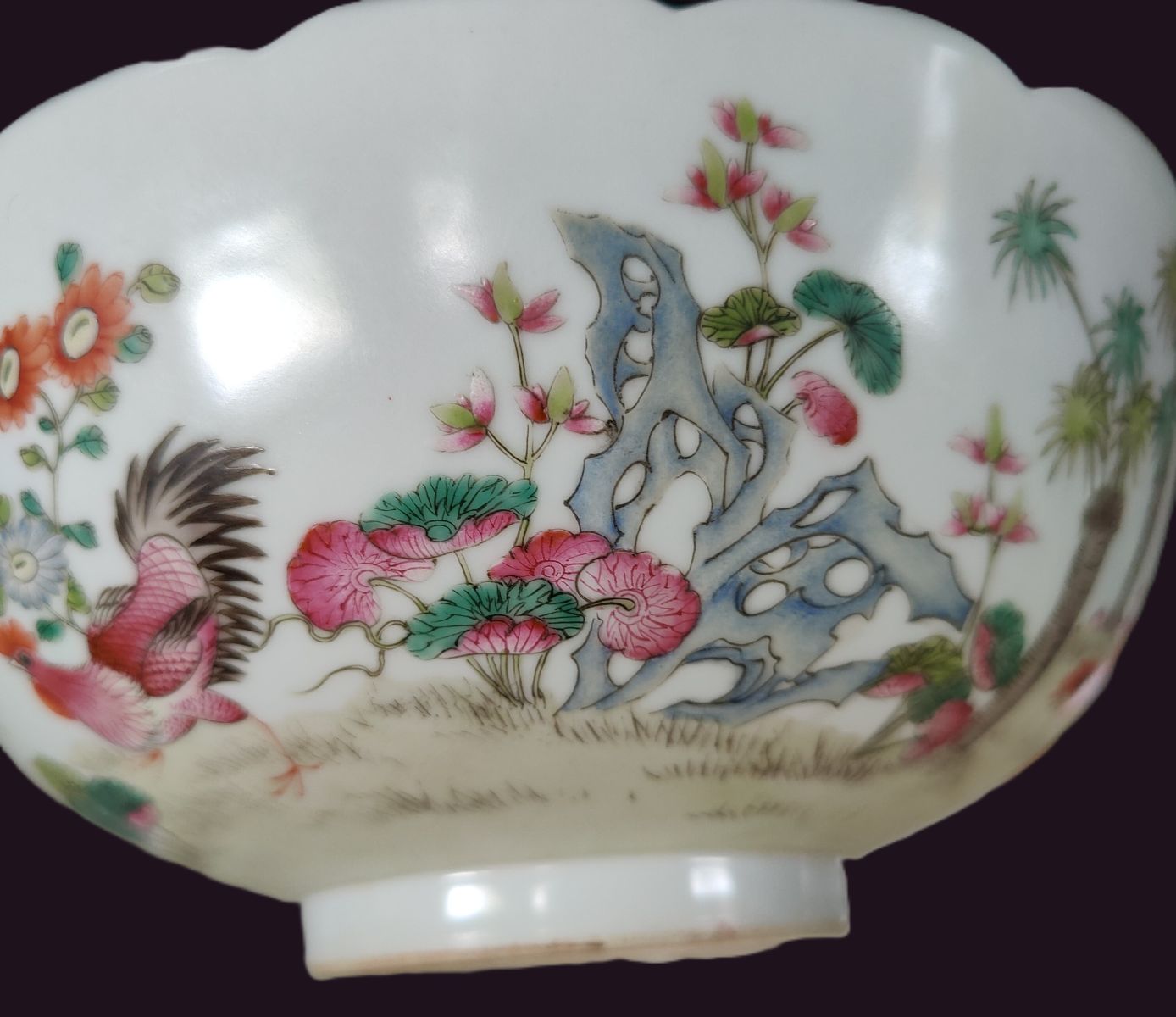
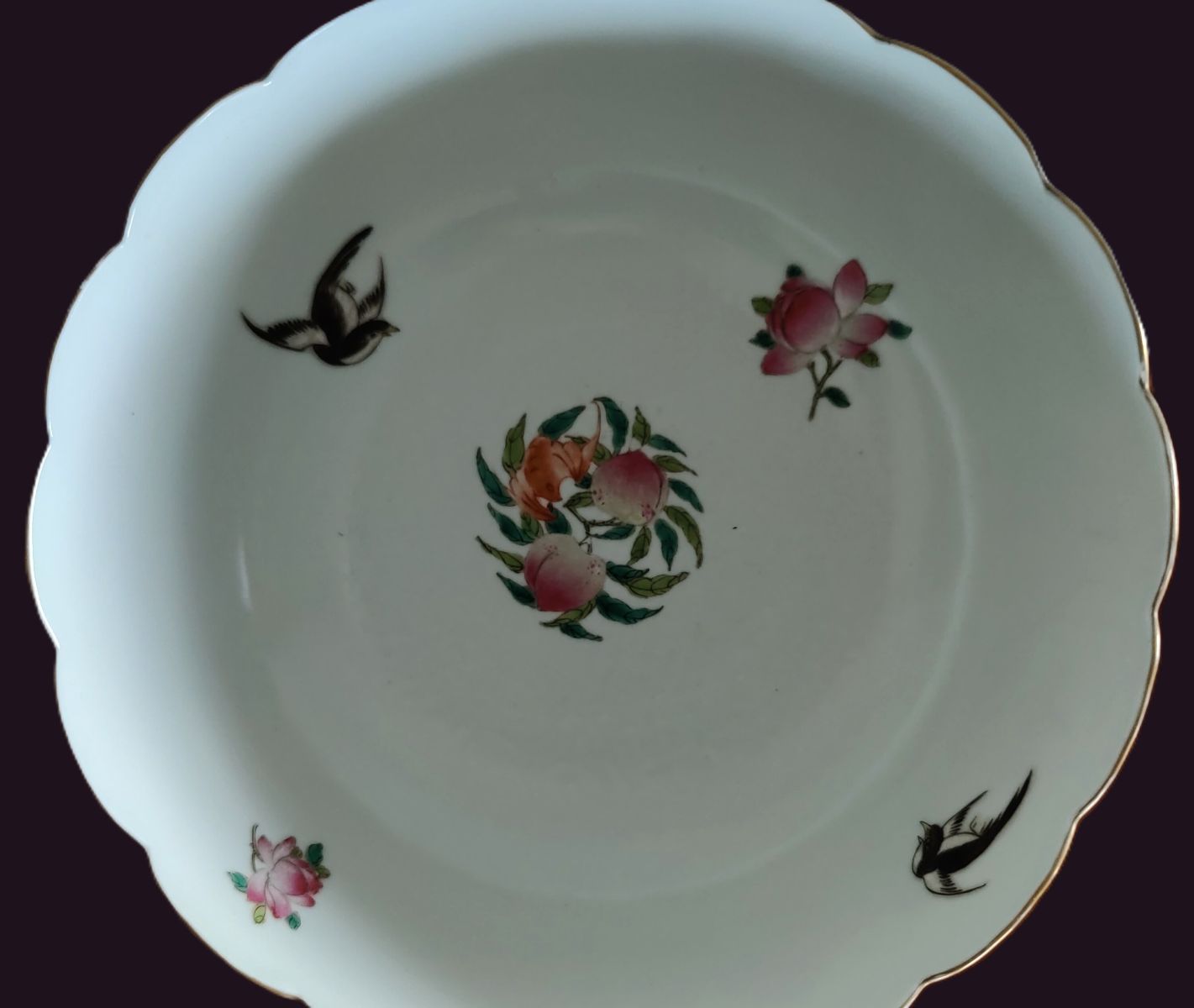
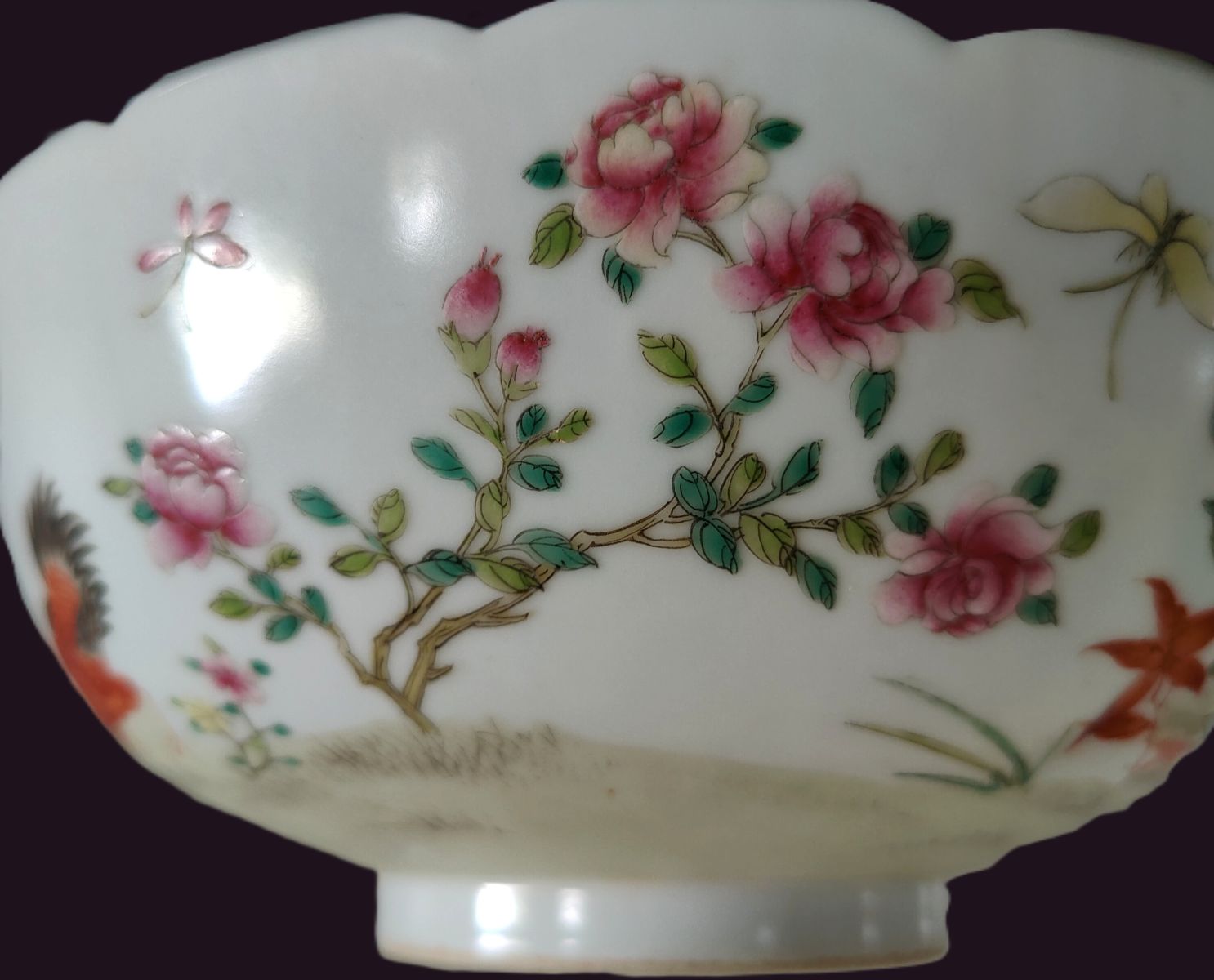
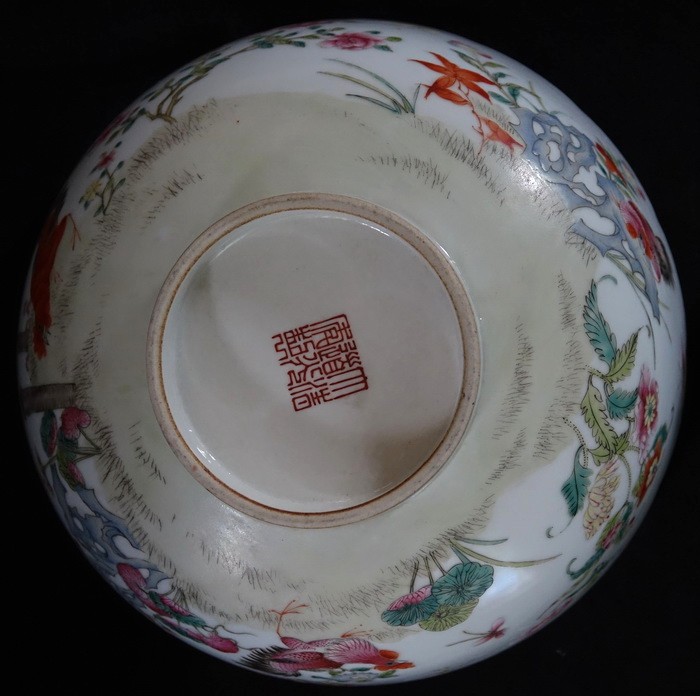
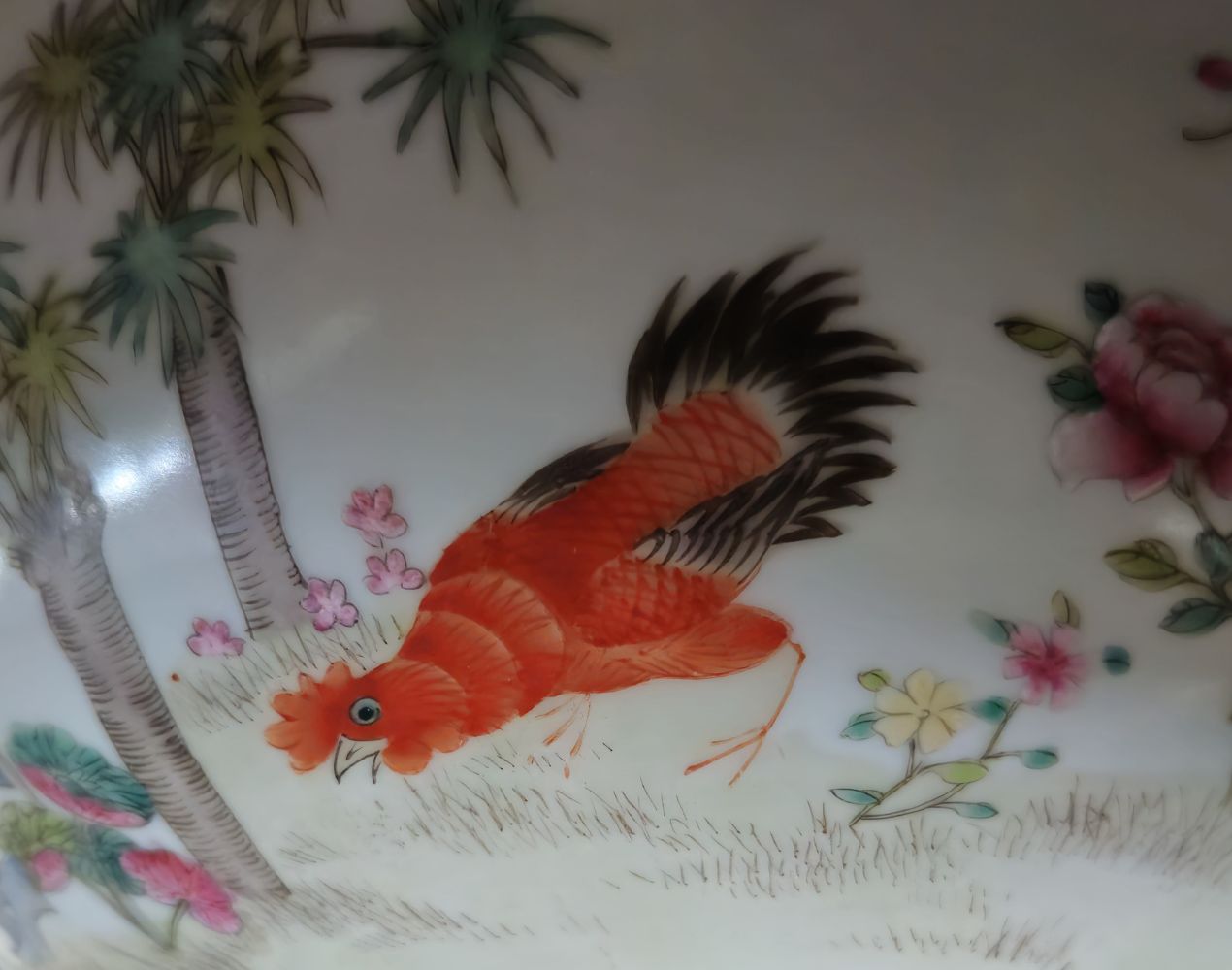
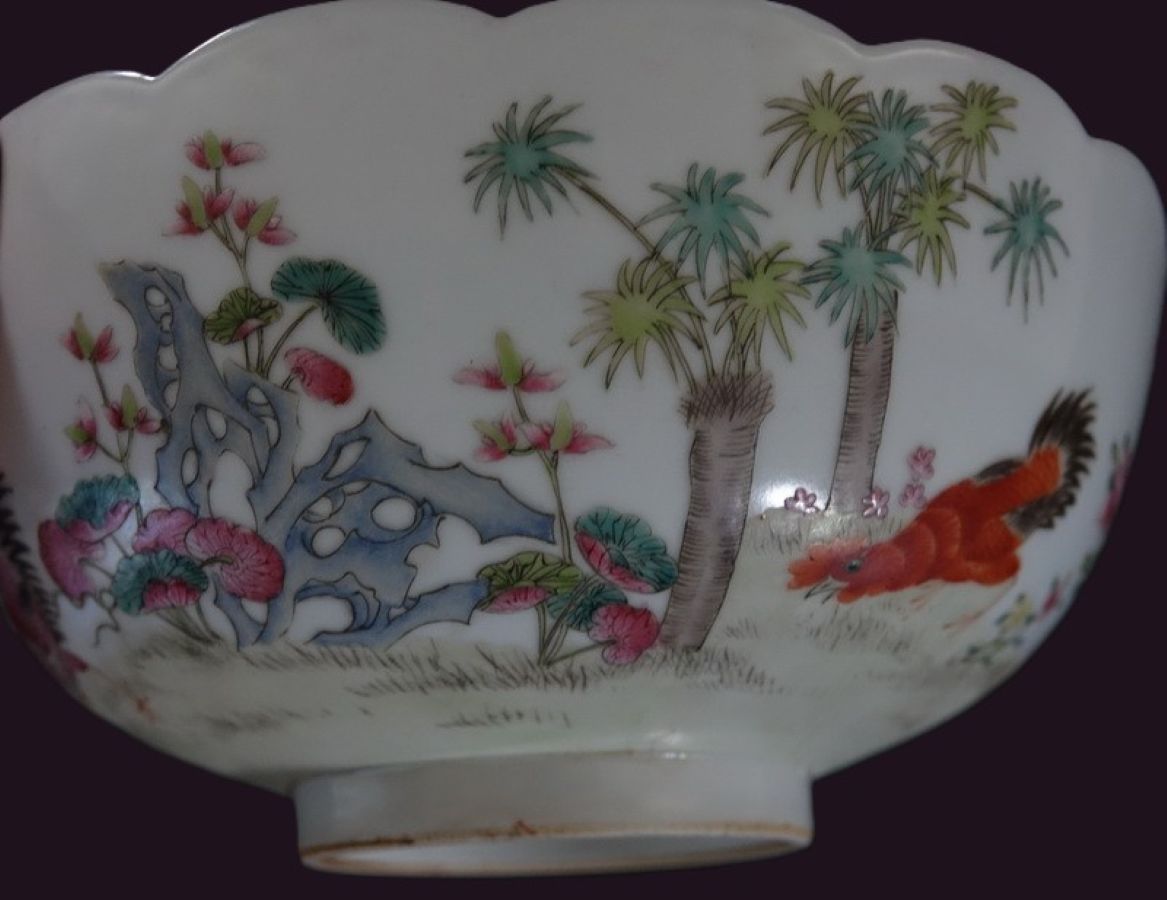
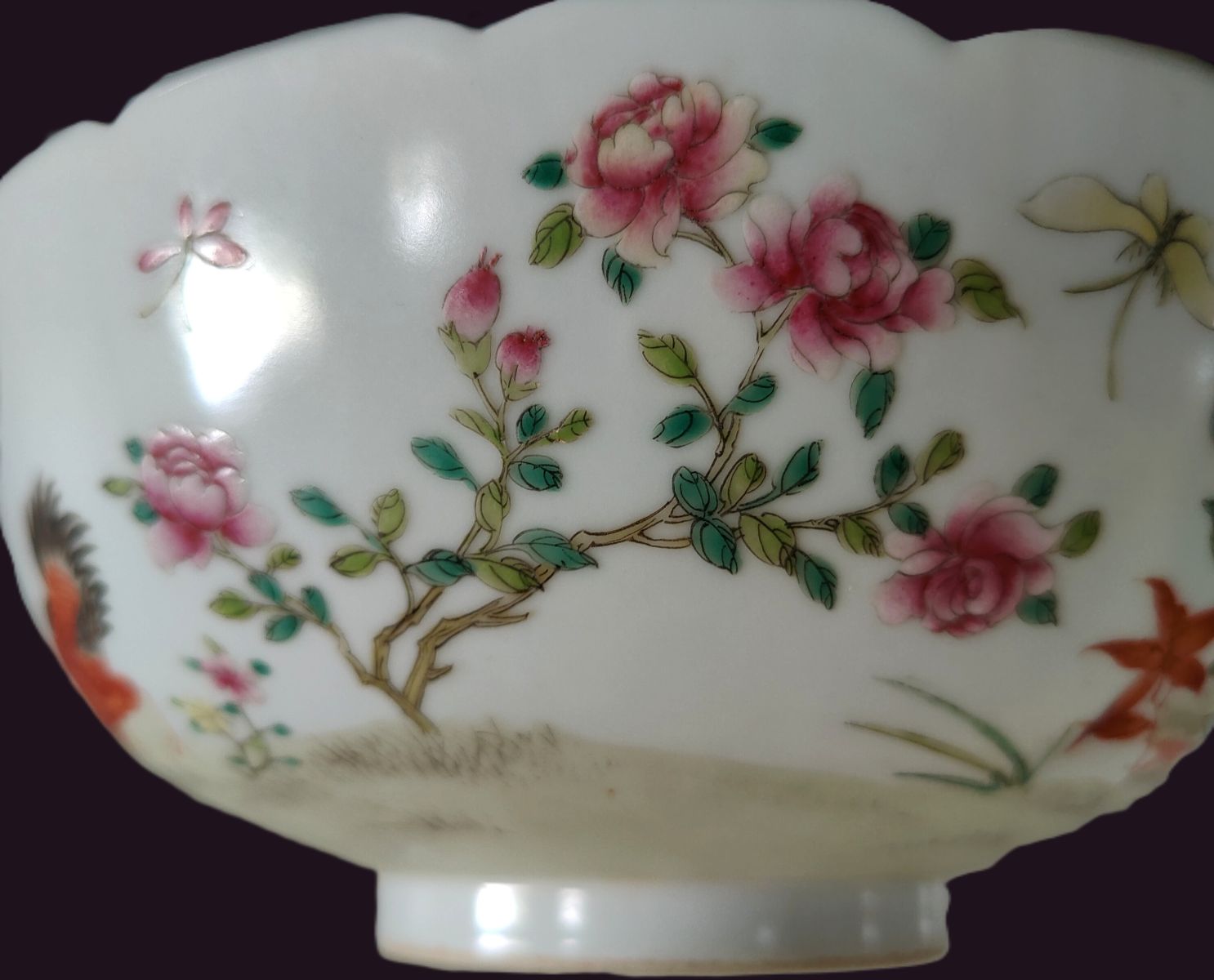
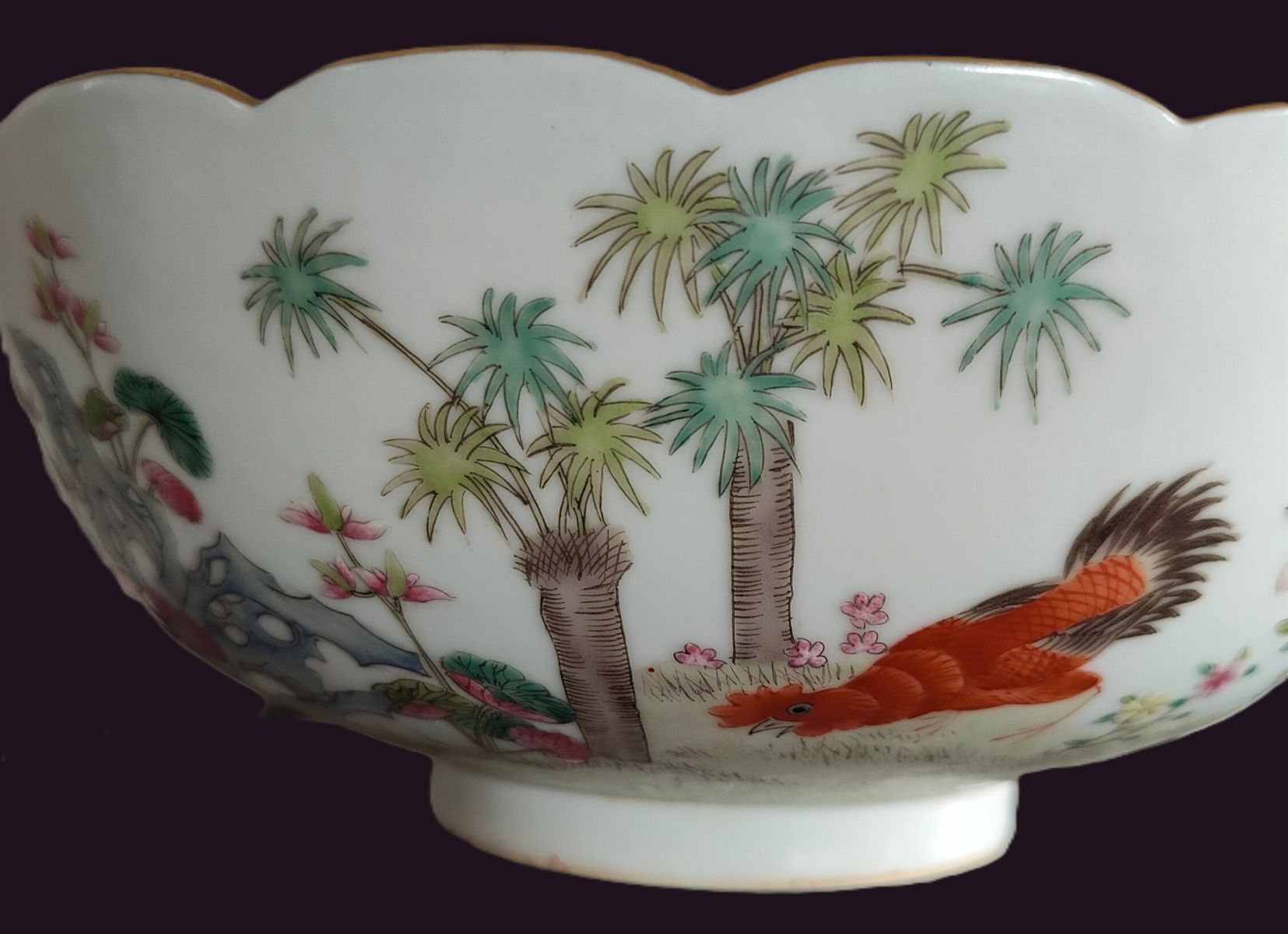
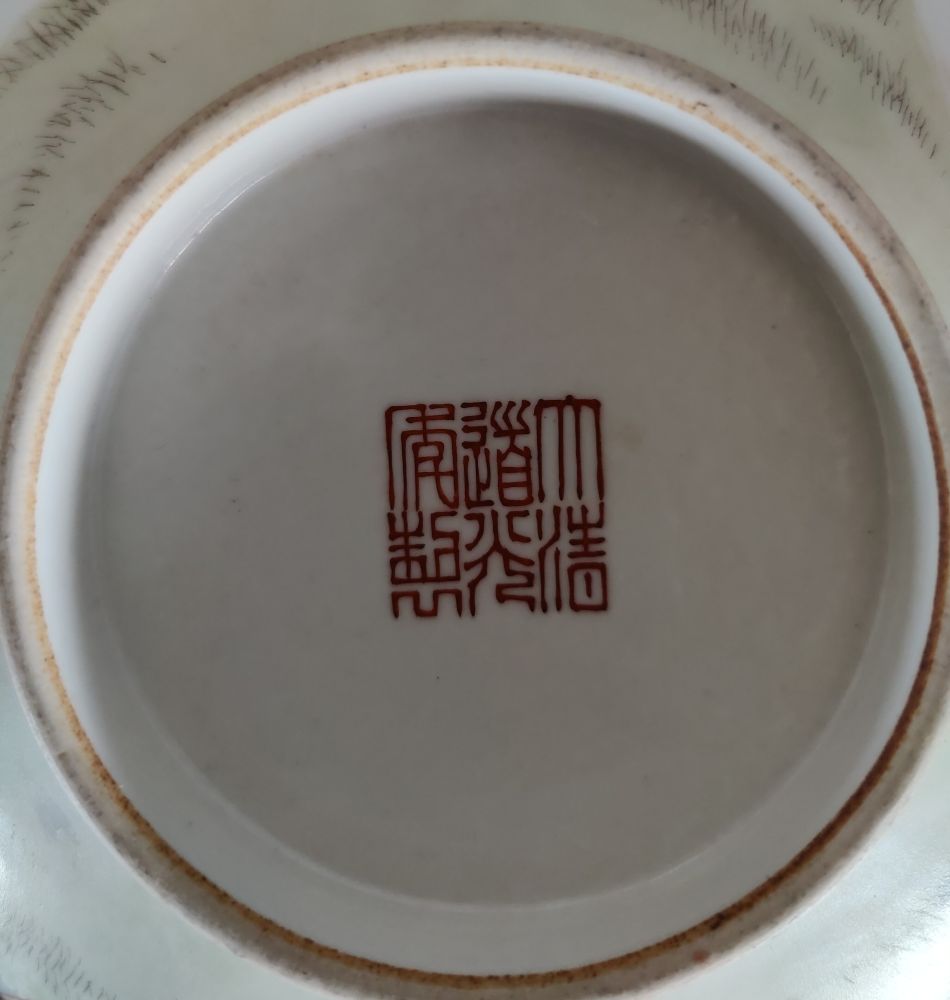
Antique Daoguang Mark & Period Famille Rose Bowl made during the Qing Dynasty featuring hand-painted exterior decoration of roosters, chicken, flowering peonies, plantains, and scholar rocks. The interior is decorated with swallows and peaches, symbolizing longevity and spring. The base bears an iron-red six-character Daoguang reign mark (Da Qing Daoguang Nian Zhi), dating it to the period of 1821–1850.
Emperor Daoguang maintained a strong interest in imperial porcelain production, continuing a tradition deeply tied to Chinese cultural identity and global prestige. He built on the legacy of previous Qing rulers, notably Kangxi (1662–1722), Yongzheng (1723–1735), and Qianlong (1736–1796) who had advanced the artistry, technology, and patronage of Jingdezhen imperial ceramics.
Condition: Wear to the rim gilding consistent with age; free of chips, cracks, or repairs.
SPECIFICATIONS:
- TOP DIAMETER: – 23 cm
- HEIGHT: – 9.5cm
- BASE DIAMETER: – 8.5 cm
- WEIGHT: – 70 gms
- #216a
Antique Daoguang Mark & Period Famille Rose Bowl
Qing Dynasty ceramics from the Daoguang period (1821–1850) fall into two main categories: Imperial wares (guanyao) and Export wares (minyao).
Imperial ceramics were made under strict royal commission for the emperor and the palace court. Produced at the imperial kilns in Jingdezhen, these pieces carried official six-character reign marks (nianzhi). Export ceramics targeted overseas markets in Europe and America, often featuring decorative motifs tailored to Western preferences.
Despite political turmoil during the 19th century, Jingdezhen artisans maintained high technical standards across four major ceramic categories:
1. Famille Rose (Fencai)
- Developed in the late Kangxi era and perfected under Yongzheng and Qianlong, famille rose uses opaque white enamel as a base for painting delicate flowers, figures, and landscapes.
- Daoguang craftsmen continued this tradition while introducing new surface treatments, including rich coral-red grounds and gilding.
2. Famille Verte (Wucai)
- Characterized by translucent enamels and brilliant green glazes, this style dominated the early Qing dynasty under Emperor Kangxi.
- During the Daoguang reign, elements of this classic palette were refreshed, often integrated with underglaze cobalt blue or copper-red details to create lighter, precise compositions.
3. Doucai (Contrasting Colors)
- Originating during the Chenghua period (1465–1487) of the Ming dynasty, doucai combines underglaze blue outlines with colorful overglaze enamel fills.
- Daoguang doucai wares followed the refined proportions of the Yongzheng era while featuring auspicious motifs like dragons, phoenixes, bats (fu), peaches (taozai), and lotus blossoms.
4. Monochromes
- Single-glaze porcelains reached exceptional refinement across the Qing Dynasty.
- Daoguang monochrome production produced a wide color spectrum, including yellow, celadon green, cobalt blue, white, and copper red, alongside specialized glaze effects like vibrant flambé and delicate peachbloom.
Export ceramics of the Daoguang period were produced primarily for European and American buyers, continuing a global trade in Chinese porcelain that began in the 16th century. Overseas demand directly shaped these wares, with foreign merchants ordering custom shapes, utilitarian forms, and decorative patterns tailored specifically to Western homes and dining traditions.
Historical Note: The Daoguang period was a transformative era in Qing history, marked by the First Opium War and growing internal unrest as the court struggled to maintain stability across the empire.
Brief History of Chinese Famille Rose Porcelain